The challenge of managing exposed secrets in code repositories and cloud environments continues to plague organizations of all sizes. While detection tools provide visibility, the crux of the problem lies in what happens after a secret is exposed: assessing its relevance, validating its status, and determining the most effective remediation strategy. This process is rarely contained within a single team or system; it often requires collaboration between security, development, and operations teams, which can lead to inefficiencies in mitigating risks.
Enter Vault Radar, a tool designed not only to detect secrets but to enhance the entire remediation workflow. Its goal is clear: to provide organizations with a framework for contextualizing findings, aligning workflows, clarifying ownership, and tracking progress through measurable metrics. This approach addresses a fundamental gap in current secret management practices, shifting the focus from mere detection to meaningful remediation.
Enhancing Secret Discovery with Contextual Insights
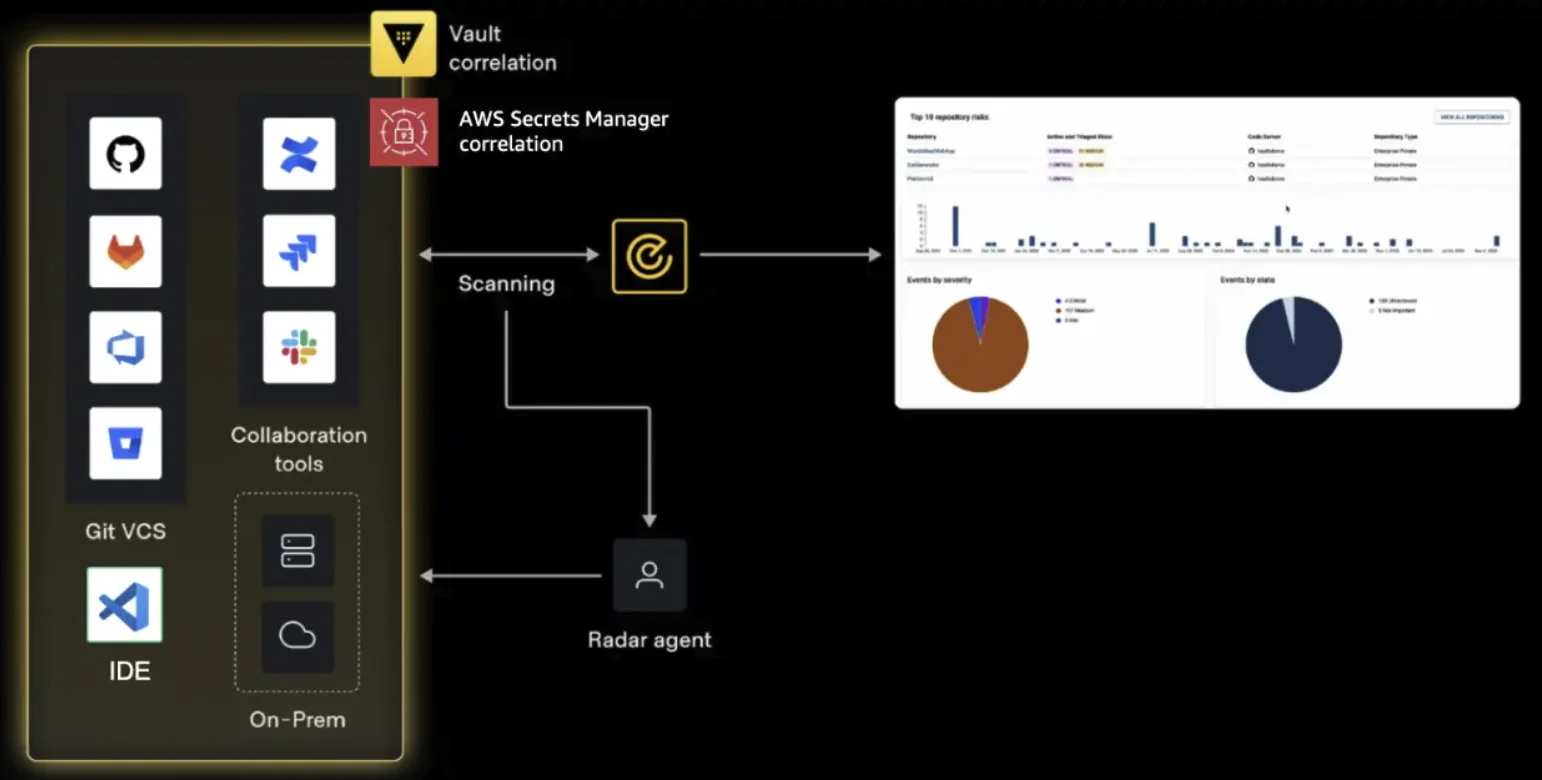
The process of identifying exposed secrets gains tremendous value when teams can distinguish between unmanaged exposures and those already under centralized control. This is critical because not all identified secrets necessitate the same level of urgency in remediation.
By leveraging integrations with tools like Vault and AWS Secrets Manager, Vault Radar can correlate findings with stored secrets, enabling teams to ascertain which secrets need rotation or management and which reflect deeper governance issues. Understanding these distinctions allows teams to strategize their responses more effectively, enhancing their overall security posture.
Integrating Remediation into Existing Workflows
A critical aspect of effective secret remediation is ensuring that the right team members are alerted quickly enough to act. Remediation rarely resides in a single tool; it often spans ticketing systems, collaboration platforms, and operational workflows.
Vault Radar's webhook support significantly enhances the integration of secret exposure alerts into existing operational processes. By facilitating immediate communication between secret detection events and operational teams, remediation efforts can be more coordinated and efficient. This integration reduces the lag between detection and response, embedding secret remediation into the fabric of daily operations, thus minimizing friction and improving scalability.
Progress Tracking and Reporting
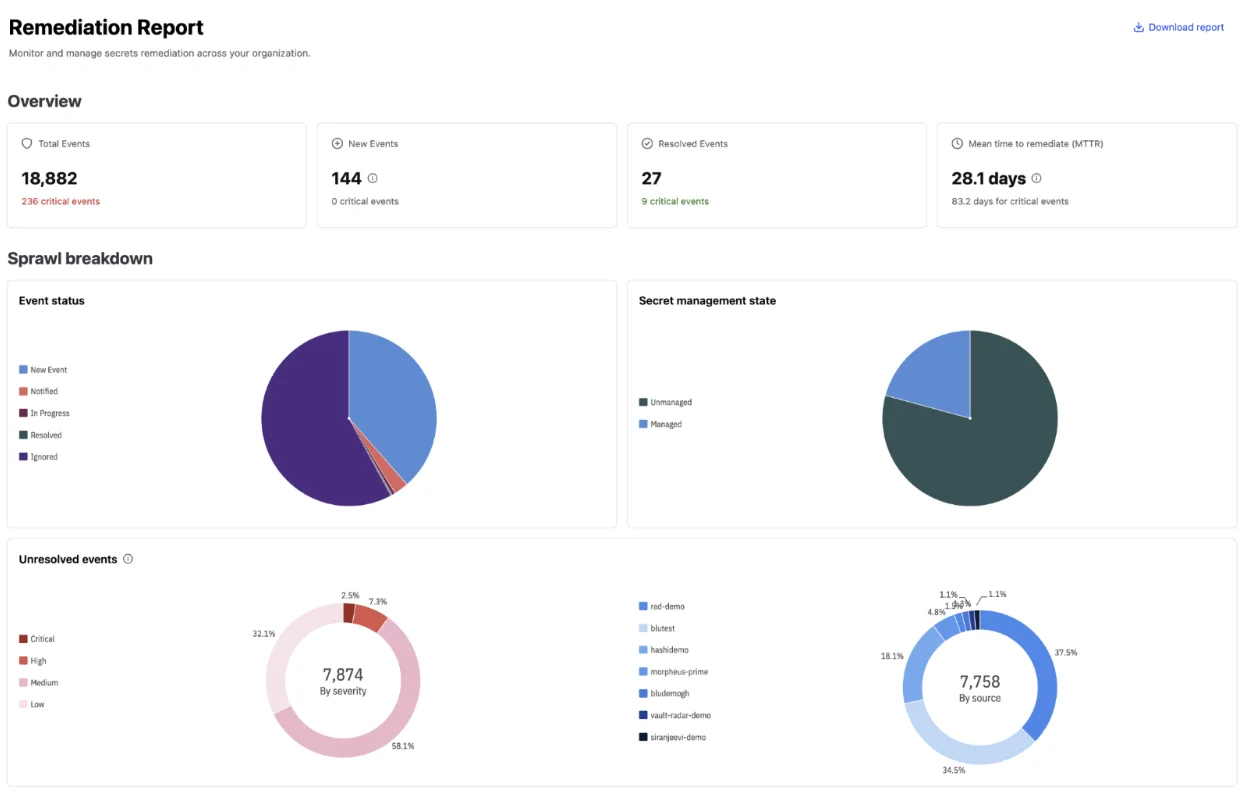
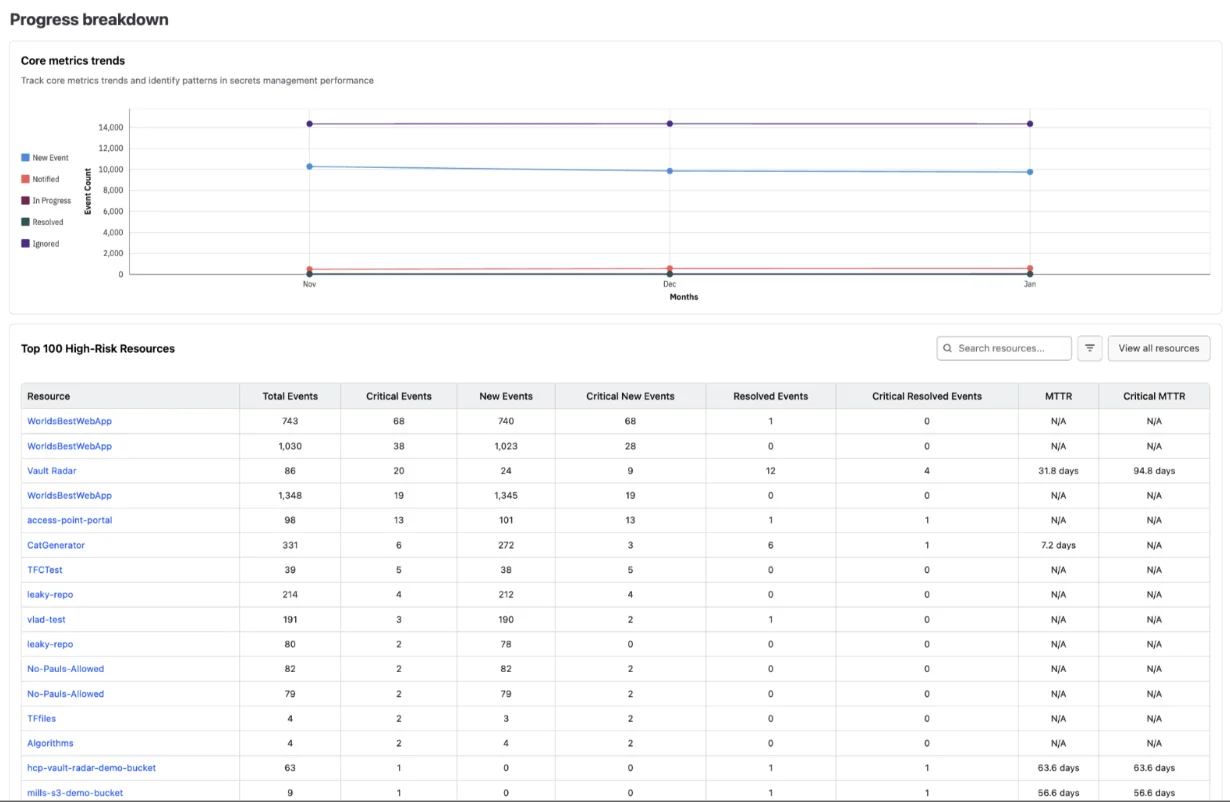
As secret detection programs evolve, insights into both findings and remediation progress are vital. Vault Radar offers reporting capabilities that allow teams to observe trends such as the ratio of open to resolved secrets, the time taken for remediation, and patterns across various data repositories.
This visibility shifts the focus from the sheer volume of detected secrets to the effectiveness of remediation efforts, empowering teams to prioritize wisely and reinforce accountability. For security leaders, these reports provide a critical view of whether programs are improving over time and highlight potential bottlenecks in the remediation process. As organizations scale, maintaining this visibility becomes increasingly important for demonstrating progress in risk reduction.
Traceability for Accountability
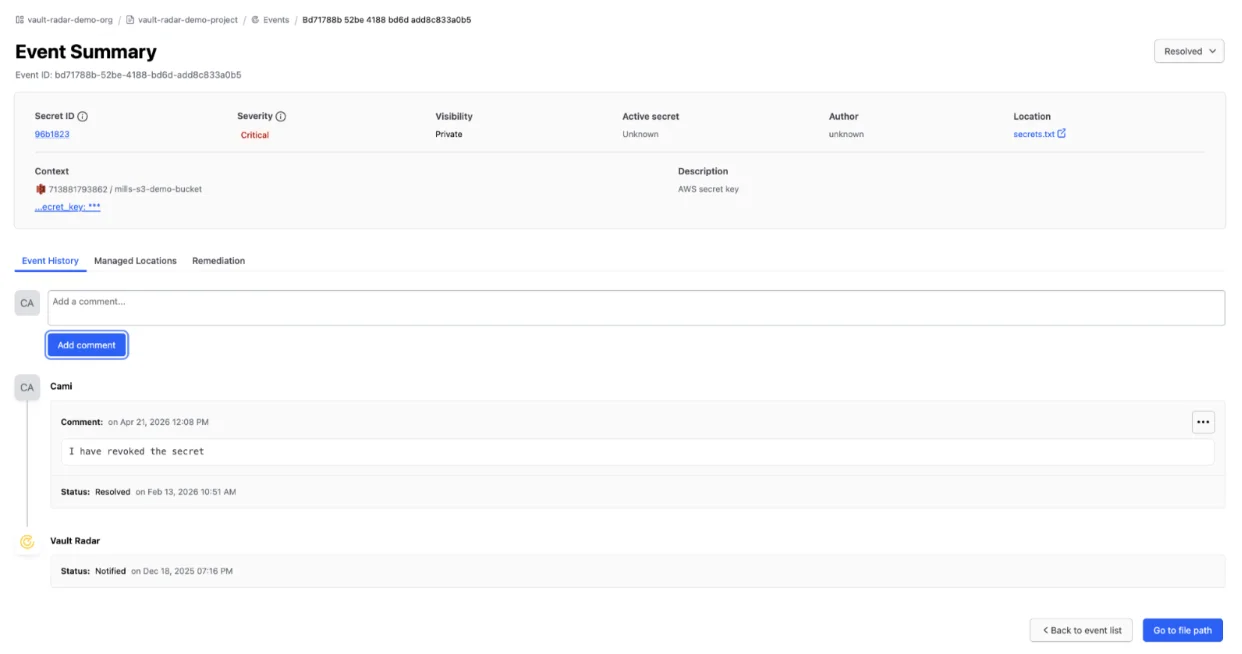
Traceability is a fundamental component of building trust in the remediation process. Vault Radar preserves a detailed history of each secret from the moment it is detected to its subsequent resolution, providing teams greater visibility into the remediation lifecycle.
This historical context allows every stakeholder, from security analysts to developers, to share a clear understanding of ownership and progress and enhances coordination among teams responsible for addressing exposures. This visibility also plays a crucial role during compliance audits and post-incident reviews, allowing organizations to demonstrate adherence to established processes and controls.
From Detection to Measurable Security Improvements
The journey from detecting exposed secrets to mitigating the risk associated with them hinges on how effectively organizations can act upon their findings. Vault Radar delivers a cohesive model that connects the dots: detecting secrets, informing operational workflows, and providing visibility through reporting and traceability.
Ultimately, the true value of secret detection lies in its capacity to help organizations not only identify vulnerabilities but also reduce these risks through consistent and scalable processes. By fostering better collaboration among teams, clarifying accountability, and ensuring measurable outcomes, Vault Radar positions organizations for more effective secret management and improved overall security.