Machine identity incidents expose a gap in response plans built around people: a stolen credential can be active while analysts are still trying to find who owns it, what it supports and who can approve shutting it down. Service accounts, API keys and OAuth tokens don’t answer a message asking whether a suspicious sign-in was theirs. The response has to rely on records, pre-agreed decisions and a tested path to replace credentials.
The scale makes that work hard to defer. CyberArk research puts machine identities at roughly 82 for every human identity. Many lack multifactor authentication, carry more access than their workload needs, and generate traffic that monitoring systems may treat as routine. My read is that the core challenge isn’t simply spotting a suspicious login. It’s being ready to act when the credential belongs to a system with no clear owner and a production dependency.
Why familiar response steps stall
For a human account, a SOC can usually identify the employee and contact their manager quickly. A service account may have no useful owner in its directory record. The trail can lead to an application team, a contractor who has left, or a description field that was never filled in. While the analyst reconstructs that history, the credential may still be in use by an attacker.
Even when the owner is known, containment has a business cost. Disabling an employee’s account may interrupt one person’s work. Revoking a credential used by a payments integration could disrupt a customer-facing service. Without a named approver and a clear threshold for action, an analyst on a late shift may wait for permission while an attacker keeps access.
Detection can be just as awkward. A valid token can make authenticated requests to the same endpoints as the legitimate integration, at its normal hours. Rules designed to flag a person signing in from an unfamiliar city may have little relevance. Monitoring needs to establish what each identity normally accesses and where it operates, then alert on meaningful departures from that pattern.
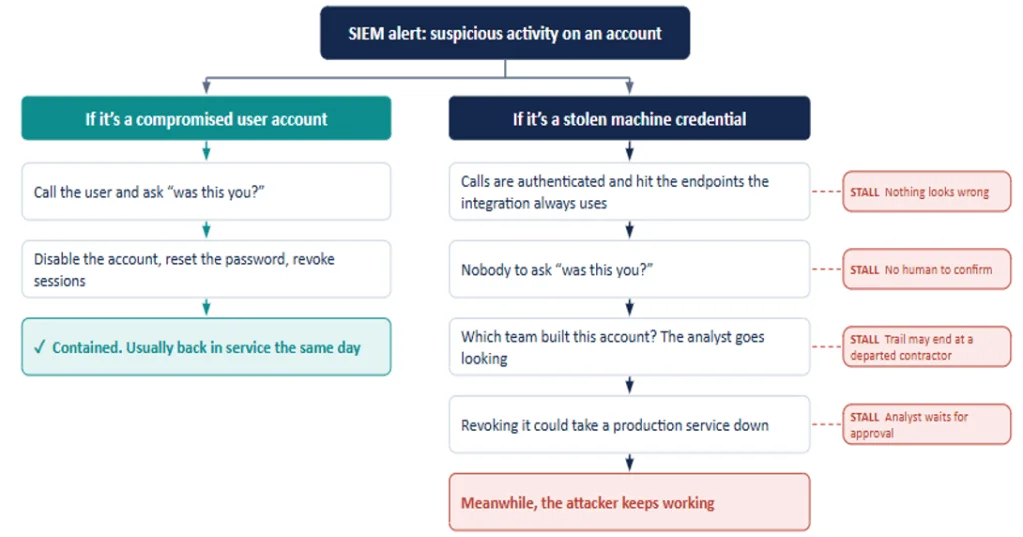
Figure 1: One alert split into two paths.
Ashish Mishra
Breaches point to credentials left behind
Recent incidents show how an identity created for a specific task can become an entry point after that task is forgotten. In Cloudflare’s account of its Thanksgiving 2023 security incident, attackers used one access token and three service account credentials taken in the earlier Okta support breach. Cloudflare had rotated thousands of credentials after the Okta incident but missed those four, believing they were unused. The alert came more than a week after the attackers first logged in, when they added a service account to an administrator group. The account is described in Cloudflare’s incident write-up.
Microsoft’s guidance on the Midnight Blizzard attack describes a different route through old access. Attackers used password spraying against a legacy test tenant account that lacked MFA. An outdated test OAuth application in that tenant still had elevated access to the corporate environment, and the attackers used it to reach corporate email accounts. The responder guidance makes the point clearly: test infrastructure can retain privileges long after its original purpose has passed.
The Drift incident adds the risk of credentials held by a third-party integration. In August 2025, attackers obtained the OAuth tokens used by Salesloft’s Drift chatbot to connect with Salesforce. For roughly ten days, they pulled records from one customer’s Salesforce instance after another. Google’s threat intelligence team, which tracked the campaign, concluded that the attackers were mainly seeking credentials. They searched the stolen data for AWS access keys and passwords that could open a path into other organizations.
These cases don’t hinge on an exotic exploit. Each involved access that had been issued for a legitimate purpose and then left in place. That’s why an inventory needs to say more than which credentials exist: it should explain who owns each identity, what depends on it and what could happen if it is disabled.
Build the inventory around response decisions
A list exported from Active Directory can be a starting point, but blank descriptions leave incident responders with the same late-night discovery work. For every high-privilege machine identity, record the responsible team and a brief explanation of the workload or service that would fail if the identity were removed. Getting that information from application owners takes effort up front. During an incident, it can spare analysts from trying to find those owners while suspicious activity continues.
Next, rank identities by the damage their compromise could enable. A read-only reporting token and a cloud administrator service principal need different response paths. For the highest-risk tier, name the person or role authorized to approve immediate revocation, including when doing so could interrupt production. Leaving that decision to whoever happens to be on shift creates delay precisely when the response needs clarity. The source guidance also points out that for SOCI-regulated entities, the 12-hour window for reporting a significant cyber incident to ASD may be running while approval discussions continue.
Make triage answerable with evidence
Machine credentials can’t confirm a sign-in through a phone call. Analysts need checks that logs can answer: where does this identity usually connect from, and what locations or services has it accessed recently? Cloud Audit Logs and workload identity platforms can provide useful records, provided logging is enabled before an incident.
Permission history adds context. Compare the identity’s granted access with the permissions it has actually used over the past few months. High-risk scopes that have sat idle deserve attention, since an attacker with a valid credential may target them. Also check for persistence created after the original credential was compromised. An attacker with access to a privileged service principal may create new secrets or register an application; revoking the first credential alone won’t remove those additions.
Prepare containment and recovery before an alert
The playbook should spell out when to rotate a credential and when to revoke it. Rotation may fit a situation where there’s reasonable confidence the attacker hasn’t escalated and the integration can’t be taken offline. Evidence of an active attack should trigger revocation under a decision rule agreed in advance. That way, analysts aren’t left debating the threshold in the middle of the night.
Replacement credentials make that decision easier to carry out. Application teams should practice generating a new credential and storing it in the organization’s secret management system. With a tested process, revocation may mean around ten minutes of downtime instead of a day-long disruption. The rehearsal should use current instructions and vault locations; a runbook that points to a renamed or removed location won’t help under pressure.
Scoping must cover the credential’s full lifespan, not just the period after the first alert. Machine identity misuse may remain unnoticed for months, so the earliest alert may come long after the first suspicious action. Investigators should also track changes to the identity and identify any other secrets it could access. Each exposed credential may need its own rotation.
Recovery should address why the credential could be misused in the first place. Where the workload allows it, teams can consider replacing a static secret with short-lived tokens through Workload Identity Federation, or issuing Just-In-Time credentials that expire automatically. Those changes often require application work and funding beyond the SOC, which makes ownership and planning part of the security response.
Finally, run a tabletop exercise with SOC staff and application owners using the highest-privilege integration. Simulate a stolen token from detection through recovery, including a production impact that requires approval. The time it takes to identify the decision maker is useful evidence about whether the playbook is ready. Machine identity response gets faster when the organization has already mapped ownership, dependencies and replacement steps before the credential becomes an incident.


