The new iPad mini reshapes Apple’s smallest tablet around a brighter OLED screen, faster processing and water resistance. Those changes make it a stronger fit for creative work, demanding apps and gaming, but the price starts $200 higher than before, and the display still runs at 60Hz.
Apple has equipped the tablet with a five-core, 2nm A20 Pro chip. The company says graphics performance can reach 2.7 times that of the previous A17 Pro, while AI workloads can run up to 4.5 times faster. Storage options remain 128GB, 256GB and 512GB; the top model adds a CPU core and a dual 16-core Neural Engine. Apple hasn’t disclosed the new tablet’s memory, though it likely has 12GB, up from 8GB in the outgoing model.
Both generations support Apple Intelligence and Siri AI. The newer chip should give the A20 Pro models more room for demanding on-device AI tasks. Apple’s battery-life claims haven’t changed, but the new iPad mini can charge to 50 percent in 30 minutes with a compatible adapter.
The entry-level 128GB model costs $699. Buyers who configure a 512GB version with cellular connectivity and nano-texture glass will pay $1,249. The color selection has also narrowed to Midnight and Starlight.
OLED brings a brighter, larger screen
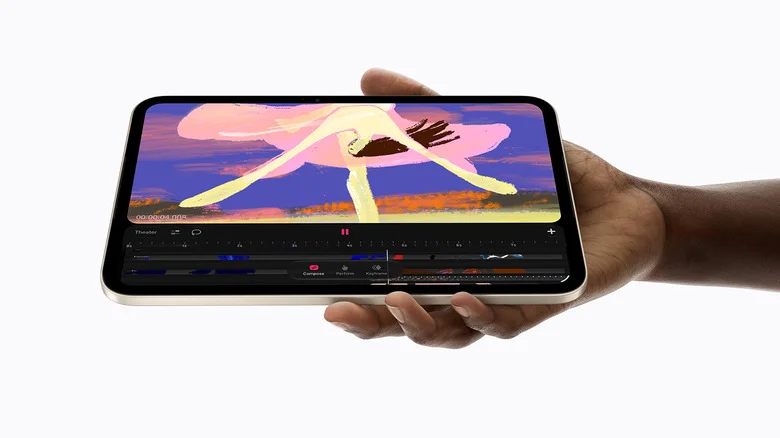
The display is the clearest day-to-day upgrade. At 8.5 inches, it’s slightly larger than the previous panel, thanks to bezels that are 24 percent thinner. Peak HDR brightness reaches 1,200 nits; the A17 Pro iPad mini tops out at 500 nits for SDR content. The new model also measures 5.4mm thick and weighs 255 grams, compared with 6.3mm and 293 grams for its predecessor.
There’s a notable omission: ProMotion. The screen remains at 60Hz, a conspicuous limitation on a tablet starting at $699. In an interview with Christopher Lawley, Apple vice president of Hardware Engineering Dave Pakula argued that the “display experience is about more than just a single spec.” He said OLED’s quicker pixel response time “makes everything really smooth.” That may help motion look cleaner, but it doesn’t change the panel’s refresh-rate ceiling.
For anyone coming from an older mini, OLED should make HDR content and creative work more compelling. Apple Pencil Pro support remains, giving artists and designers a smaller canvas with improved brightness and color. The panel’s faster response is welcome; the missing high refresh rate may still matter to people accustomed to smoother scrolling.
Water resistance and faster wireless connections
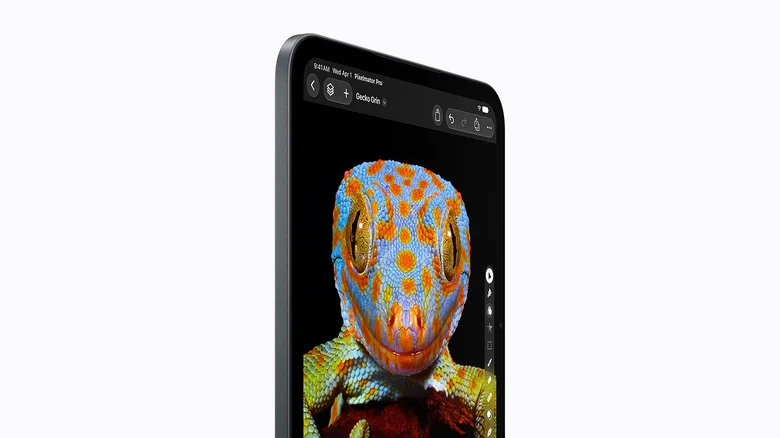
The tablet’s familiar shape conceals a significant durability change: it’s Apple’s first water-resistant iPad, with an IP67 rating. Apple’s Acoustic Display system replaces speaker grilles with tweeters between the glass and aluminum body, while woofers send sound through the display. Apple says the setup delivers fuller bass, clearer treble and greater volume. It recalls the Huawei P30 Pro’s acoustic display, though that phone used the approach mainly for its call earpiece.
Wireless support advances to Wi-Fi 7 and Bluetooth 6. Apple’s C2 cellular modem is rated for up to 50 percent faster data speeds. Touch ID remains built into the power button, while the front camera has moved to the tablet’s longer edge, a more practical position for landscape video calls.

A compact tablet with more headroom
The new iPad mini runs iPadOS 27, including Apple’s most capable on-device AI model, improved dictation and controls for Siri’s pace and expressiveness. Only the 512GB model gets the extra CPU and Neural Engine cores, but every configuration receives the A20 Pro’s performance gains.
That combination could make the mini more appealing for demanding games as well as creative apps. Titles such as Control and Death Stranding are available natively on the App Store, and the faster chip gives the small tablet more capacity to run them. The practical trade-off is clear: the OLED screen, water resistance and updated connectivity bring meaningful upgrades, while the higher starting price and 60Hz panel will shape whether they’re worth the jump.