A $220 million settlement puts connected car data under scrutiny
GM’s $220 million settlement puts a basic question about connected cars into sharper focus: who gets to decide what happens to information about a driver’s habits and location? That information can affect far more than a car’s settings. It can reach insurers and influence what drivers pay. The deal covers 35 states and the District of Columbia, and requires GM to get consumers’ express consent before collecting or sharing their driving and location data. That consent requirement gives drivers a clearer choice, though the details of how companies present that choice will matter.
The dispute centers on Smart Driver, a program dealerships offered from 2016 through 2024. A 2024 New York Times investigation found that information about some drivers’ habits could be used by insurance companies to set rates. One driver was told that information from a data broker had contributed to a 22% premium increase, according to New York’s attorney general. That example makes the stakes tangible: data gathered through a car program may follow a driver into a separate commercial decision. The data collection was described as “spying,” and GM ended Smart Driver in 2024.
That same year, GM faced public scrutiny over how it handled driver information. In 2025, it settled with the Federal Trade Commission, accepting a five-year ban on selling driver data related to Smart Driver and OnStar location services. The new multistate settlement adds a consent requirement, extending the response beyond the earlier agreement. The state lawsuit settlement makes the stakes plain: connected car data can become a financial issue for drivers, even when they may not realize it’s being shared. The practical problem is that a driver can understand a feature as a convenience while missing the chain of collection, sharing and use behind it.
Consent is only as clear as the choice
GM says it has strengthened its privacy practices since ending Smart Driver. The company told CNET it has revised its US privacy statement, launched a Privacy Center and is improving internal controls for connected vehicle data. Its stated case for collecting that data is that it can support safer, more helpful and personalized experiences. Those benefits may be real, but they don’t settle the question of what information is necessary, how long it’s kept or who else may receive it. A privacy statement and a settings page can explain a policy; they can’t make a confusing choice meaningful by themselves. That may be true; the settlement shows why customers still need clear choices about what they share.
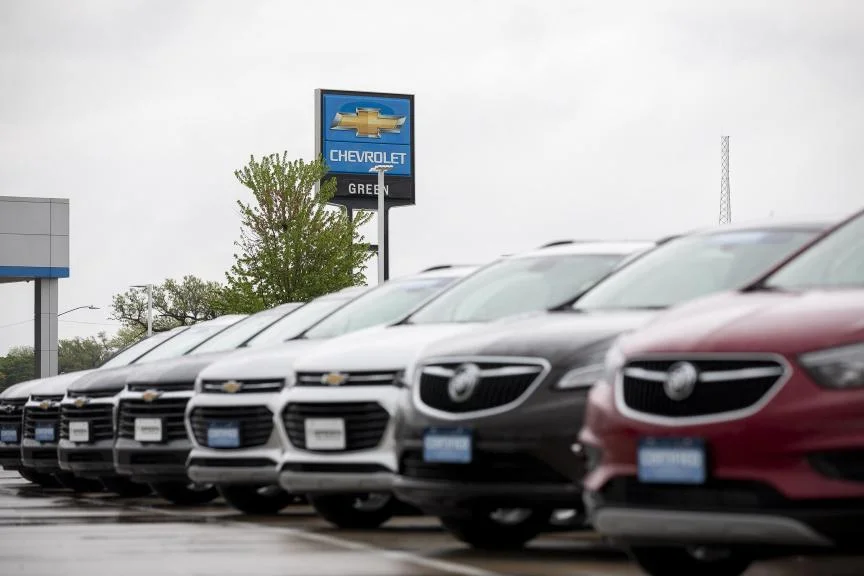
GM has settled a multistate suit over selling customer data without consent.
Bloomberg/Getty ImagesMaryland Attorney General Anthony G. Brown said GM sold customers’ driving and location data without permission, and that insurers used some of it to set rates. He said the settlement means GM can no longer put profit ahead of Marylanders’ privacy. The requirement for affirmative, express consent is a concrete change: it puts permission at the center of the data relationship rather than leaving customers to infer what a feature might share. This is more significant than it looks, because consent is meaningful only when people can understand the choice and decline without being left uncertain about what still works. Whether it changes how the broader industry treats vehicle data is the larger question.
What the settlement means for connected cars
Cars increasingly collect information as part of connected services, and this case shows why the resulting privacy questions aren’t confined to the vehicle itself. Similar systems typically involve multiple steps: a device records information, a company decides how to handle it, and outside parties may use it for purposes the driver didn’t have in mind. The settlement addresses GM’s conduct and sets a specific consent requirement for the company. It doesn’t, by itself, answer every question drivers might have about data practices across connected vehicles.
That said, the case gives drivers a useful way to evaluate these features: ask what data is collected, what service depends on it, and whether sharing is optional. If you’re working in this space, the lesson is that a privacy control has to be understandable at the moment a driver encounters it, not just available somewhere in an account portal. The distinction matters. A setting people can’t find or interpret offers little practical control.
What drivers can do
Consumers have limited control, but the advice is practical: opt out of data sharing where you can, skip permissions you don’t need, and check your Customer Disclosure Report for driving data. If your car’s modem can be switched off, consider doing that too. These steps can help you see which choices are available and may narrow what gets shared. They also take time and attention, and the options can differ between services. They can’t guarantee the data has never been collected.
Here’s the thing: drivers are being asked to manage privacy settings in systems they may barely know exist. A connected feature can feel like a routine part of owning a car, while the information it produces may have consequences outside the vehicle. The burden falls on the person least likely to have a clear view of how that information travels. A settings menu is a start. Not a full answer.
Omar Gallaga, who has reported on technology and digital culture for CNET, NPR, Wired and other outlets, has covered that gap throughout his career. Read his full bio.
Gallaga’s recent reporting includes GM’s $220 million payout over driving data, a report on a DHS breach tied to government surveillance, and Reddit’s new feed options.
 iPhone Duo passes 160,000 folds in CNET’s testing machine
 November 2026 skywatching guide: meteors, planets, stars and a full moon
 Daylight saving time ends Sunday
 How the iPhone Duo compares with other iPhone sizes