HP’s HyperX Omen 35L makes a strong case for a premium prebuilt through its finish and well-balanced performance. In our $6,210.98 test configuration, a Ryzen 9 9950X3D and GeForce RTX 5080 delivered smooth 4K gaming, while the mid-tower’s quiet operation and standard upgradeable parts make it feel built for enthusiasts. The price is the harder part to defend: this system has the hardware and presentation to compete with boutique PCs, but its entry configurations offer less compelling value.
A polished mid-tower with a distinctive interior
The Omen 35L measures 8.27 by 16.06 by 16.14 inches, placing it squarely in mid-tower territory. Its black-and-white metal chassis feels solid, with tempered-glass panels that put the RGB fans and components on display. The monochrome treatment gives the tower a clean, modern look, even if HP has used a similar design language before.
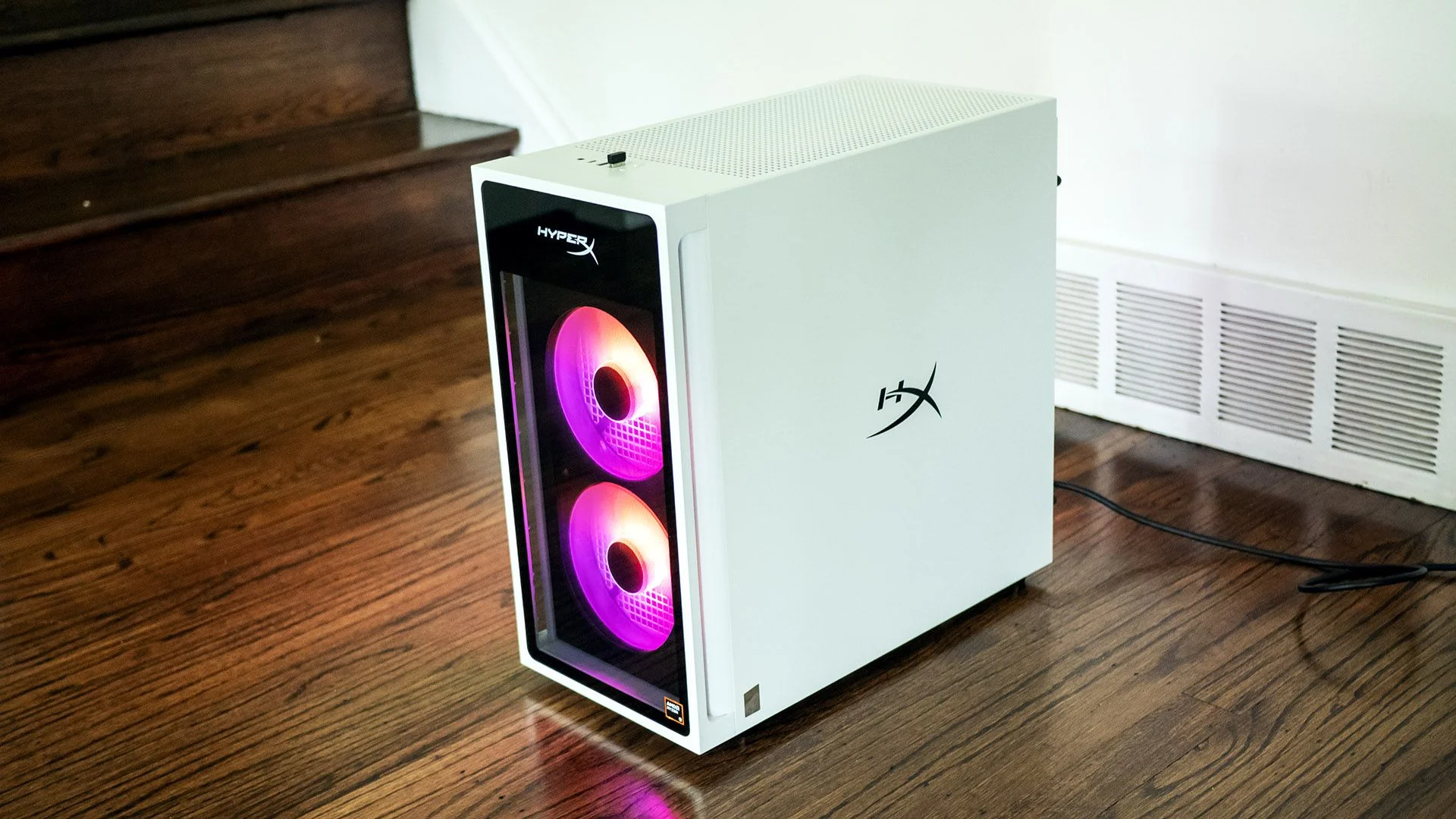
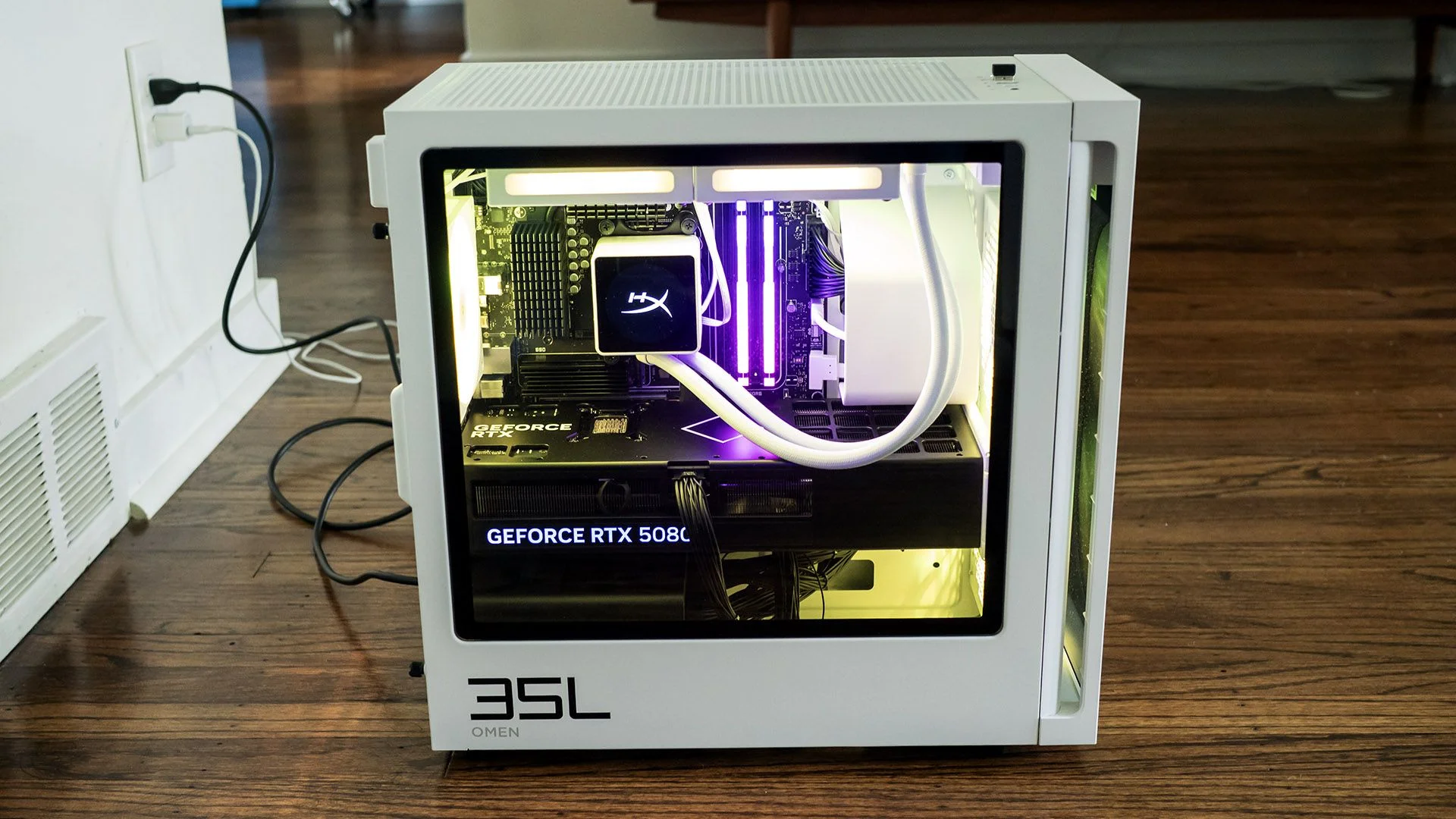
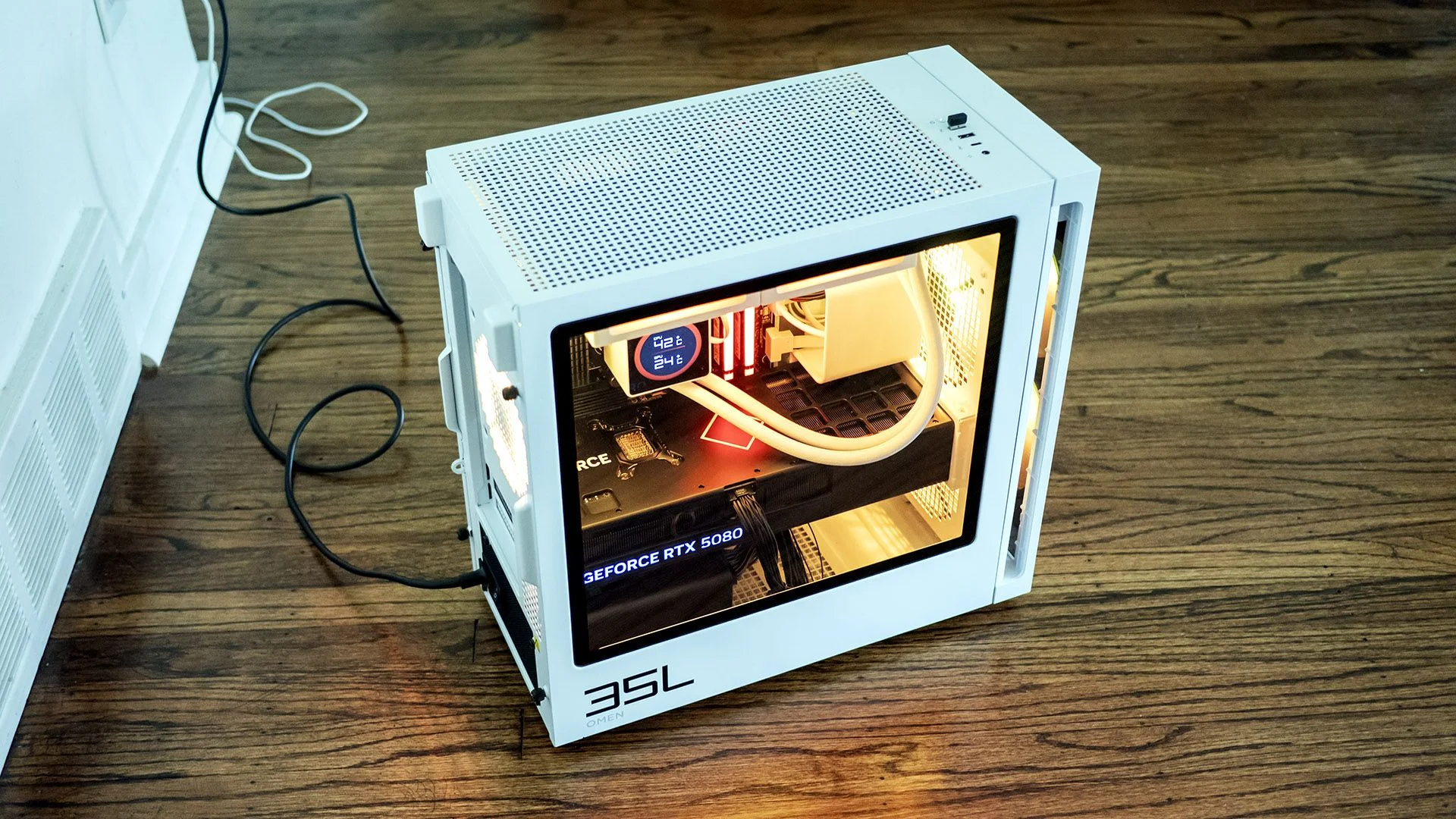
Inside, black components stand out against the light case. White liquid-cooling tubes add contrast, and the cooler’s LCD can show CPU and GPU temperatures. The effect is coordinated without making the system look overly busy.
Hardware and connections
The tested machine pairs AMD’s Ryzen 9 9950X3D with 64GB of DDR5-6000 memory and an Nvidia RTX 5080 with 16GB of GDDR7. Storage comes from two separate 1TB PCIe 5.0 SSDs, one for Windows 11 Pro and the other for files. A 1,000W fully modular power supply and 240mm LCD liquid cooler round out the build.
CPU | AMD Ryzen 9 9950X3D |
Motherboard | HP AMD B850 |
Memory | 64GB DDR5-6000 (2x 32GB) |
Graphics | Nvidia GeForce RTX 5080 (16GB GDDR7, 2,617 MHz boost clock) |
Storage | 2x 1TB PCIe 5.0 SSDs (non-RAID) |
Networking | Realtek 8922AE Wi-Fi 7 and Bluetooth 6.0 |
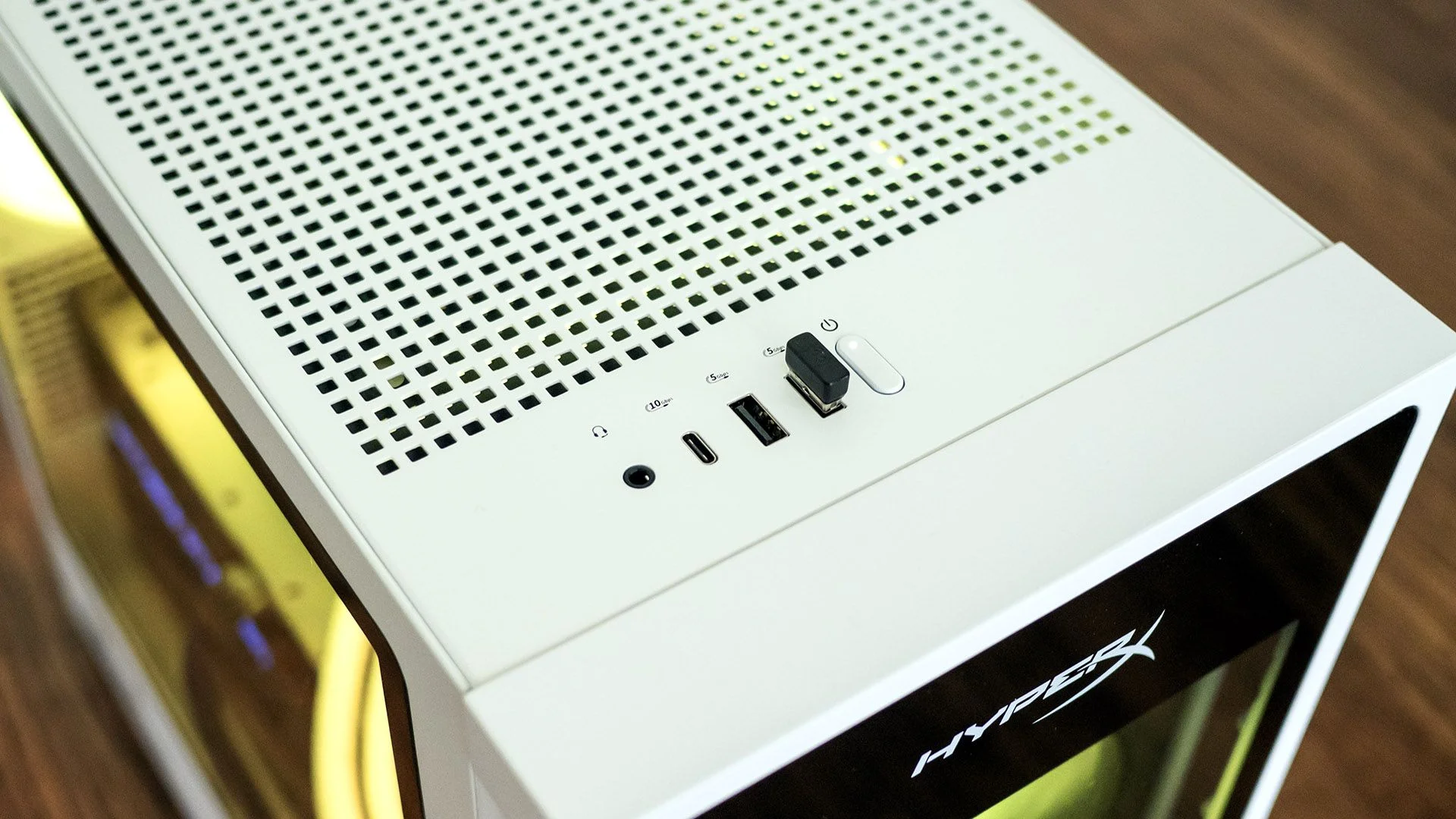
Front Ports | 10 Gbps USB-C, 2x 5 Gbps USB-A, audio combo jack |
Rear Ports | 2x 10 Gbps USB-C, 2x 5 Gbps USB-A, 4x USB 2.0, DisplayPort 1.4, Ethernet |
Power Supply | 1,000 W fully modular |
Cooling | 240 mm LCD liquid cooler |
Operating System | Windows 11 Pro |
Dimensions (WxDxH) | 8.27 x 16.06 x 16.14 inches (210 x 408 x 410 mm) |
Price (as configured) | $6,210.98 |
Front connections sit along the top edge: one 10Gbps USB-C port, two 5Gbps USB-A ports and a combined audio jack. That placement is practical if the tower sits below a desk. At the rear, there are two more 10Gbps USB-C ports, two 5Gbps USB-A ports, four USB 2.0 ports, DisplayPort 1.4, Ethernet and audio connections.
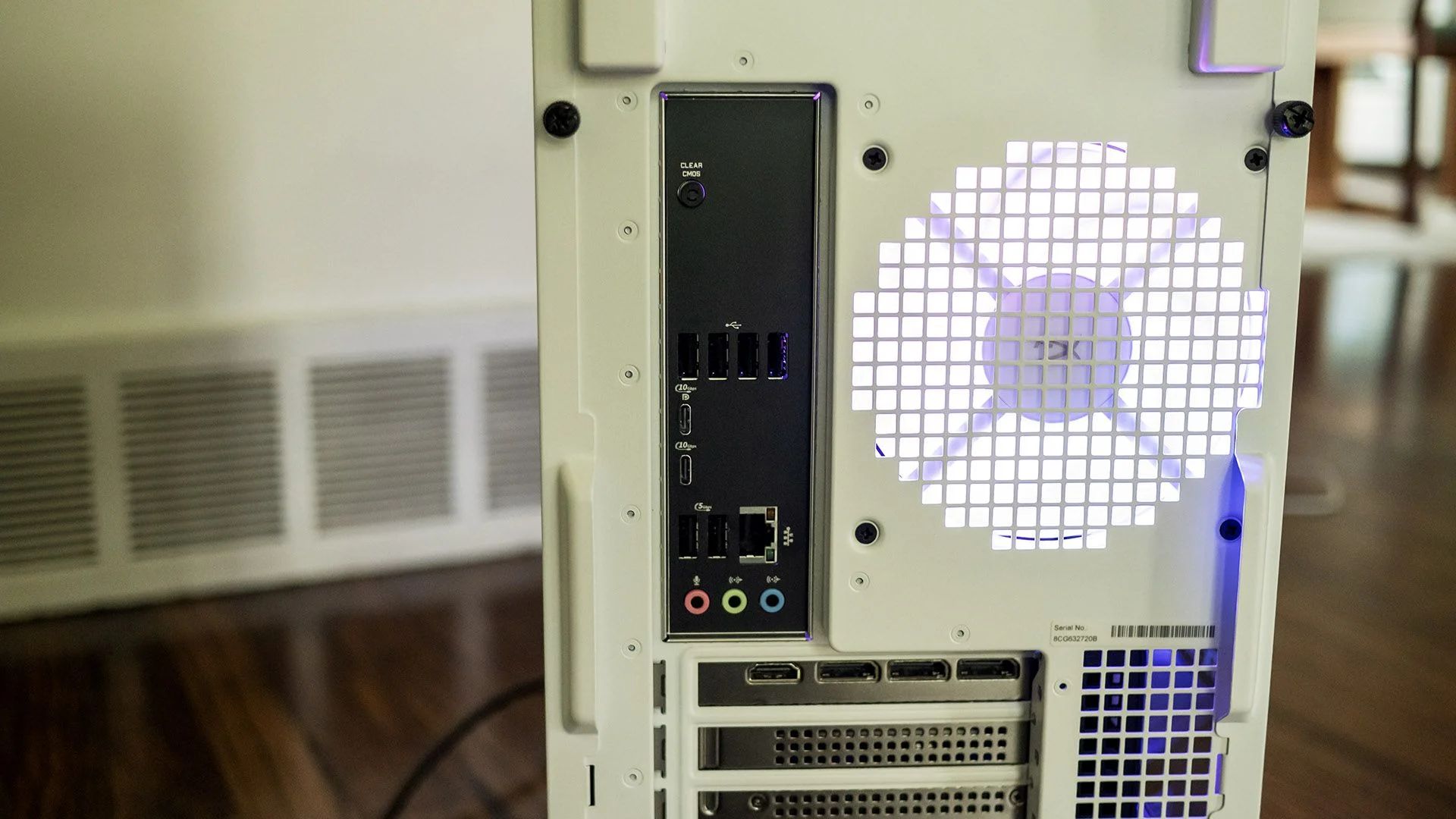
Wi-Fi 7 and Bluetooth 6.0 come from a Realtek 8922AE card, with antennas built into the chassis. A Clear CMOS button is a useful extra. The omission that stands out at this price is USB4 or Thunderbolt 4.
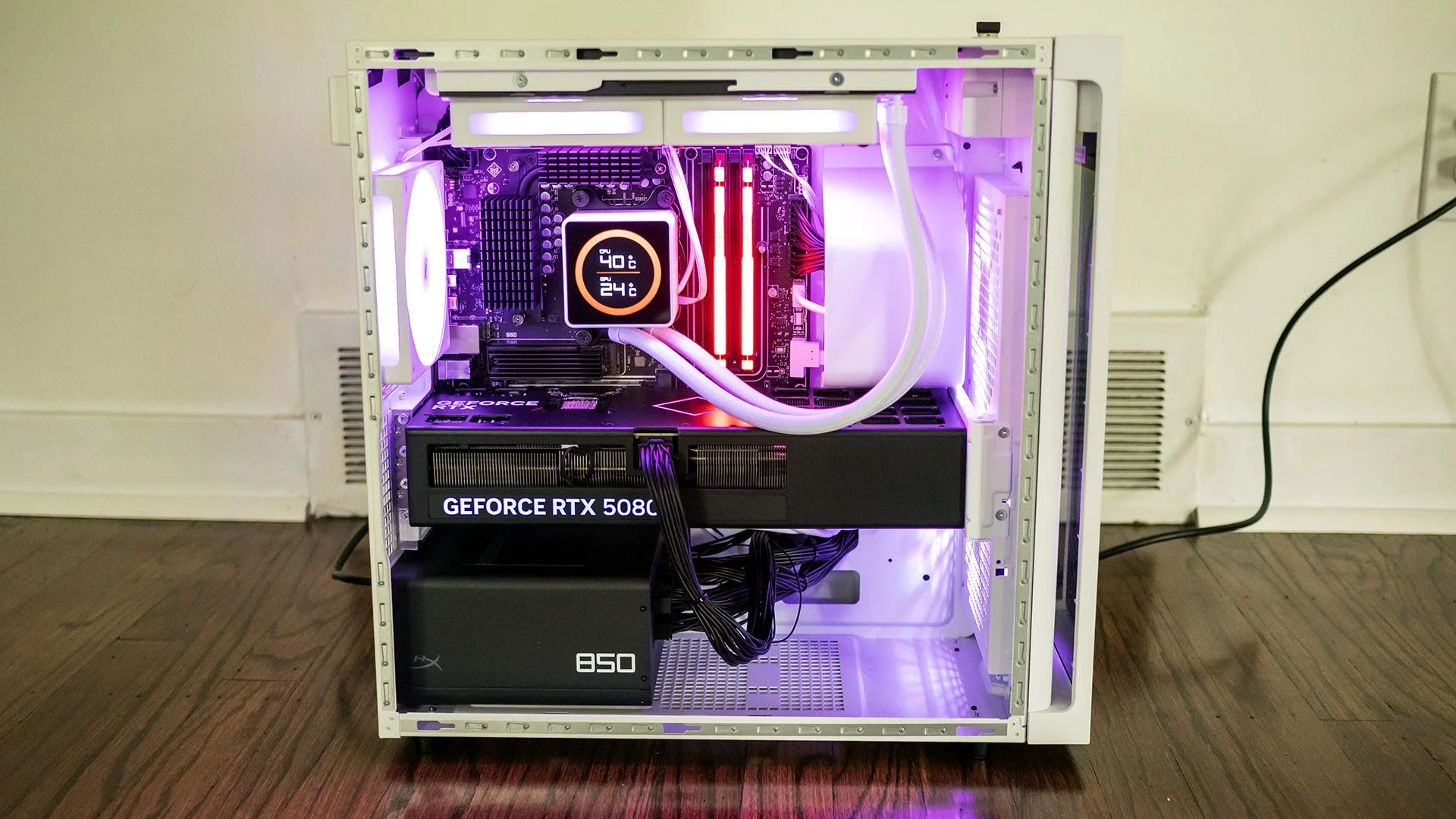
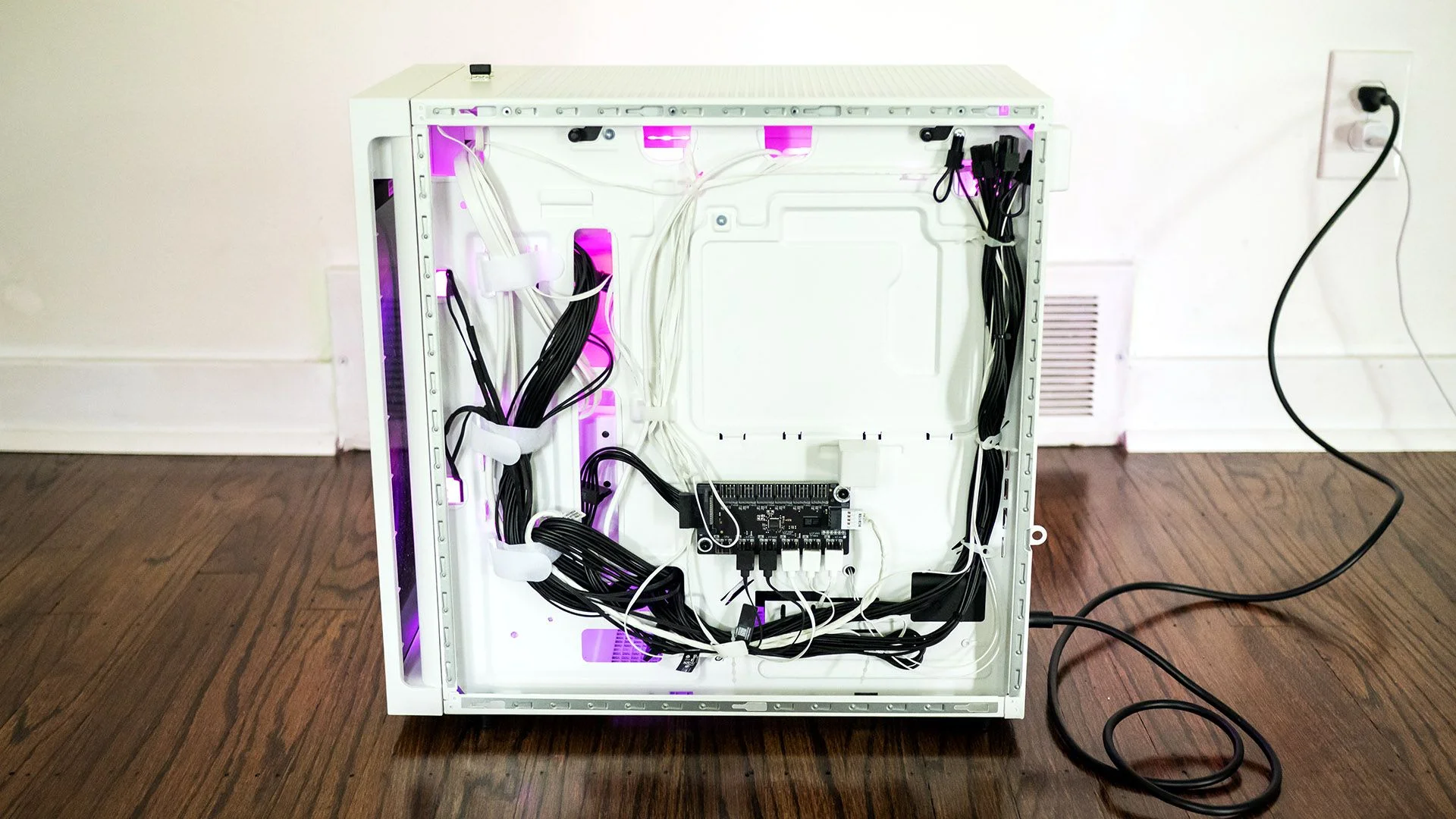
Upgrade access is straightforward. Thumbscrews secure the side panels, and the mATX-style motherboard has four DDR5 slots, with two occupied in our review unit. The system supports two M.2 2280 drives; reaching the second slot means removing the RTX 5080. The graphics card is held by five screws, including two attached to a front support bracket, so reinstalling it takes some care.
HP’s cable routing is tidy, though sleeved cables would better match the exterior finish. The modular power supply is a welcome inclusion in a mainstream prebuilt. Its standard parts and accessible layout should make future memory, storage and component changes manageable.
RTX 5080 performance targets 4K
In 007 First Light, the system reached up to 120 frames per second at 3840 by 2160 with high settings and post effects enabled. More demanding scenes ran in the mid-90 fps range without DLSS, and gameplay remained smooth.
The comparison systems included two RTX 5090 towers: the Alienware Area-51 with a Ryzen 9 9950X3D, and the Maingear MG-1 with a Ryzen 9 9950X3D2. The third rival, Corsair’s Vengeance a7500, combines a Ryzen 7 9800X3D and RTX 5070 Ti. Against these machines, the Omen’s RTX 5080 generally landed where its hardware suggests: behind the RTX 5090 systems at 4K, but capable of strong results in its own right.
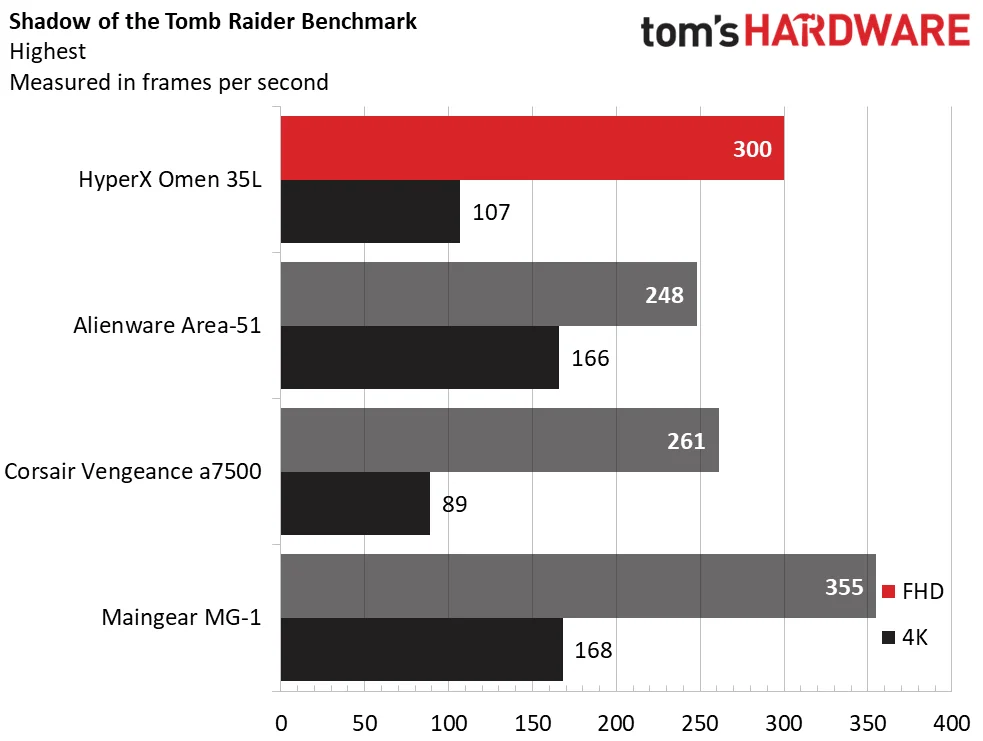
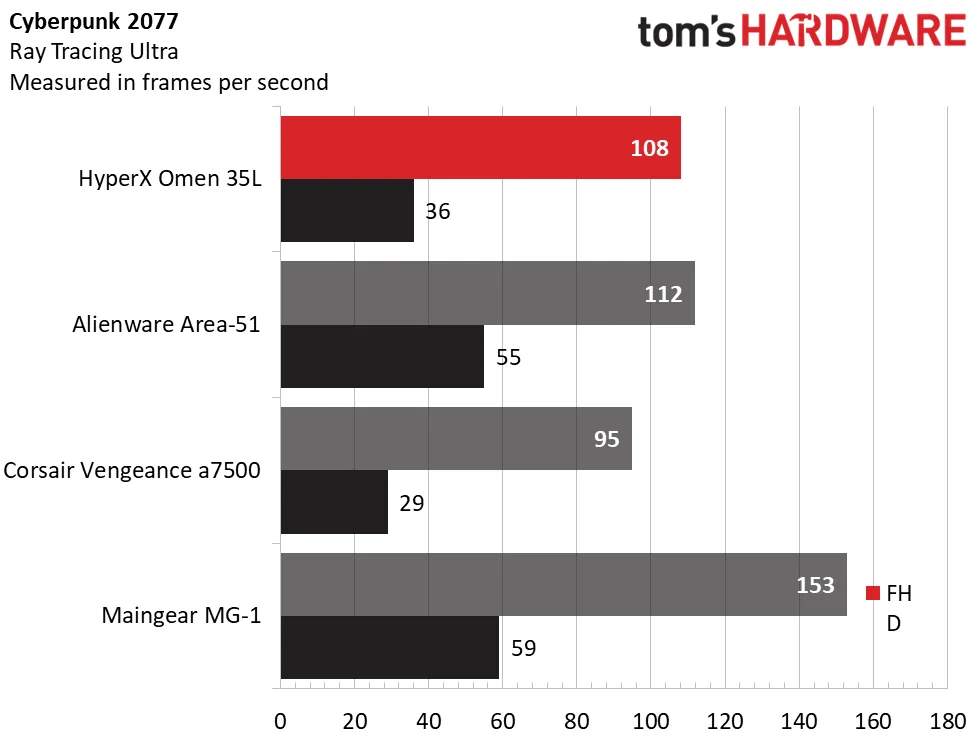
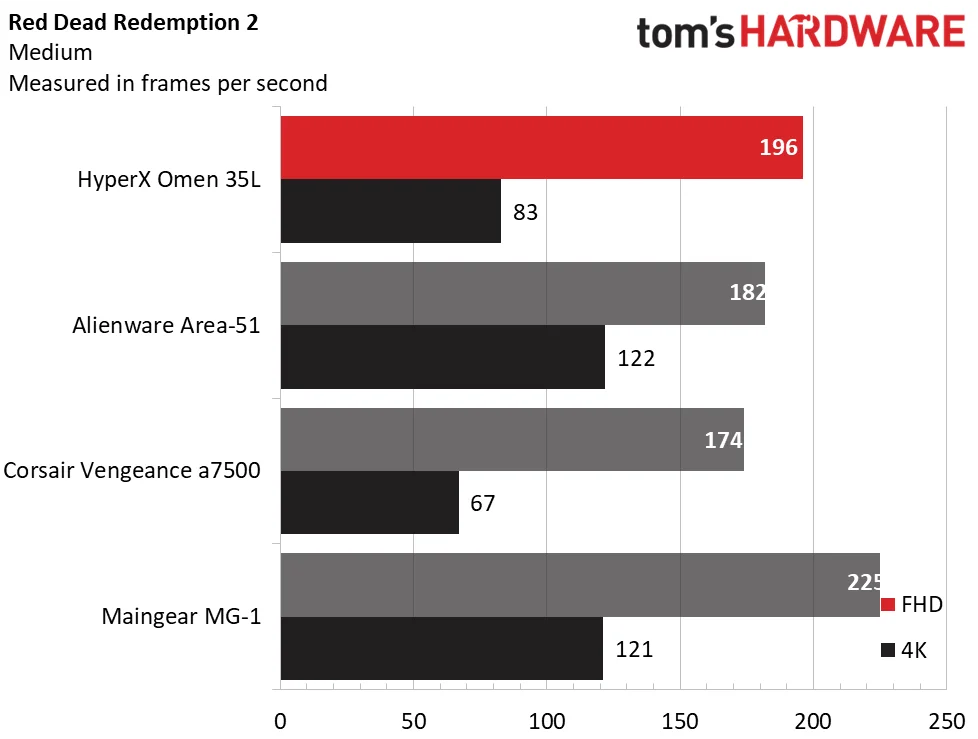
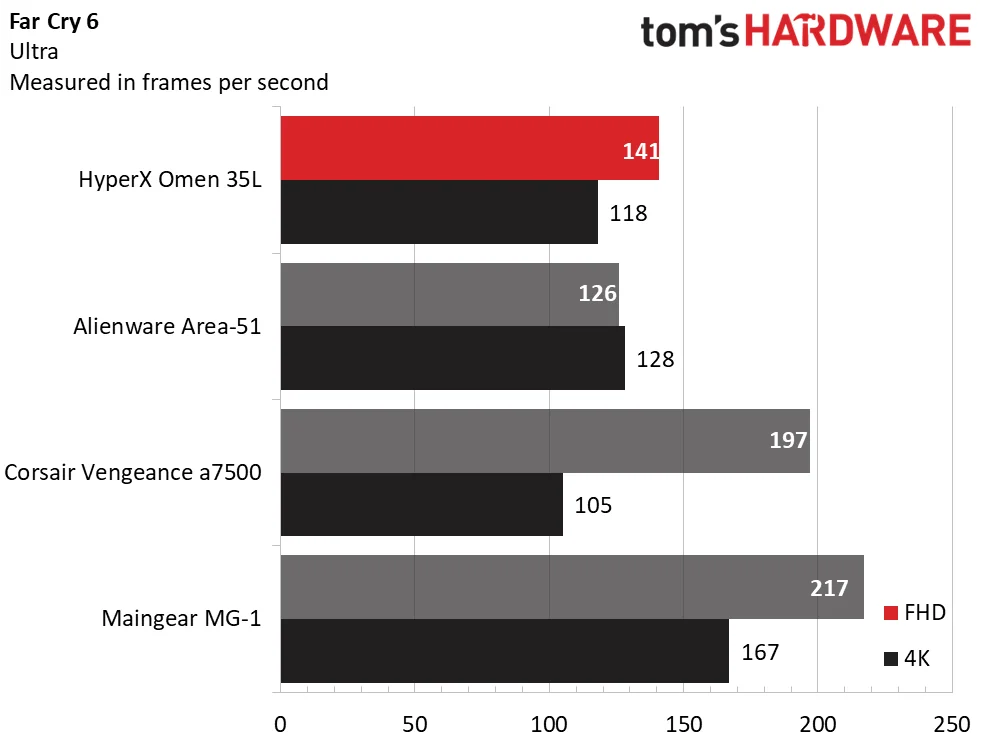
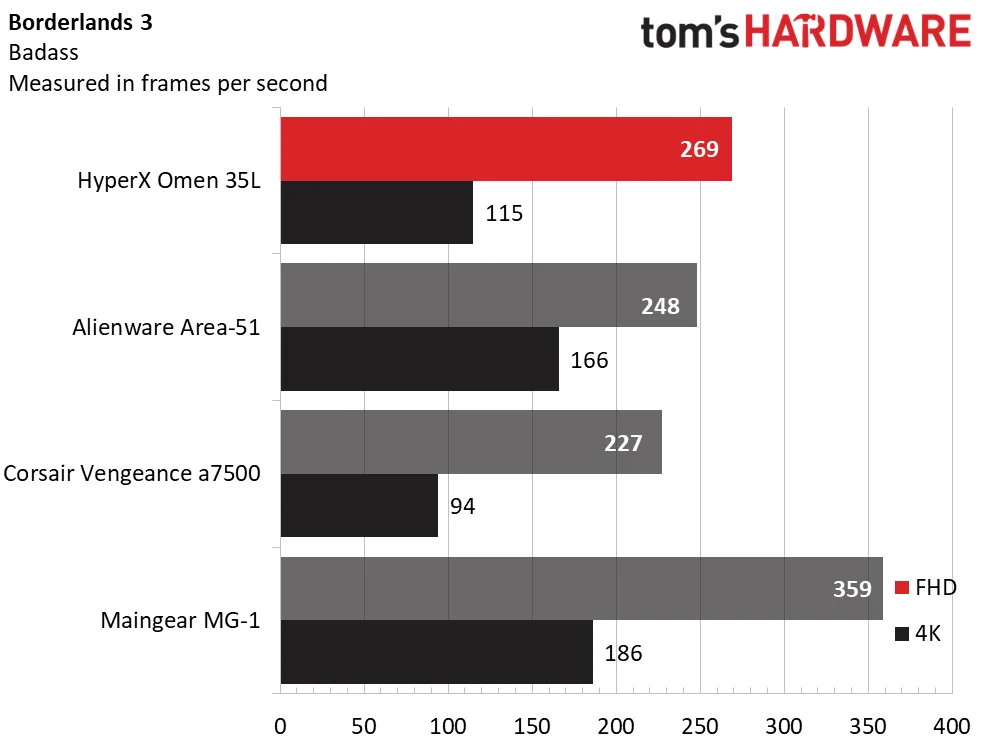
At 1080p, results varied substantially by game. The Omen scored 300 fps in Shadow of the Tomb Raider at the Highest preset, beating the Alienware’s 248 fps but trailing the Maingear’s 355 fps. In Far Cry 6 at Ultra settings, the Corsair’s RTX 5070 Ti reached 197 fps, ahead of the Omen’s 141 fps.
At 4K, the gap to RTX 5090 systems was clearer. In Red Dead Redemption 2 at Medium settings, the Omen posted 83 fps, compared with 122 fps for Alienware and 121 fps for Maingear. In Borderlands 3 at Badass settings, it delivered 115 fps against their 166 and 186 fps. Far Cry 6 narrowed the difference: 118 fps for the Omen and 128 fps for Alienware. In Cyberpunk 2077 with Ray Tracing Ultra, the Omen managed 36 fps, ahead of the Corsair’s 29 fps but well below Alienware’s 55 fps. The pattern points to a capable 4K PC, with the usual trade-off against more expensive RTX 5090 builds.
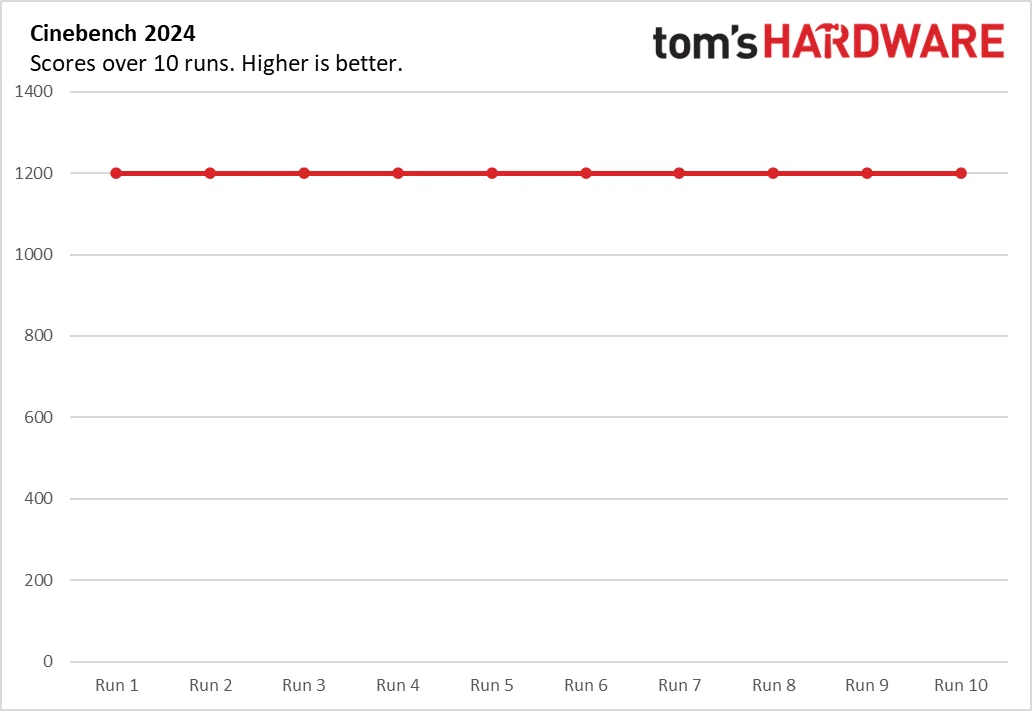
Thermal and frame-rate consistency held up during a 15-loop Metro Exodus RTX stress test, which runs for about half an hour. The system averaged 172.21 fps with less than one fps of variance. The Ryzen 9 9950X3D averaged 4.79GHz at 48 degrees Celsius; the RTX 5080 averaged 2.74GHz at 50 degrees Celsius.
Workloads, tuning and lighting controls
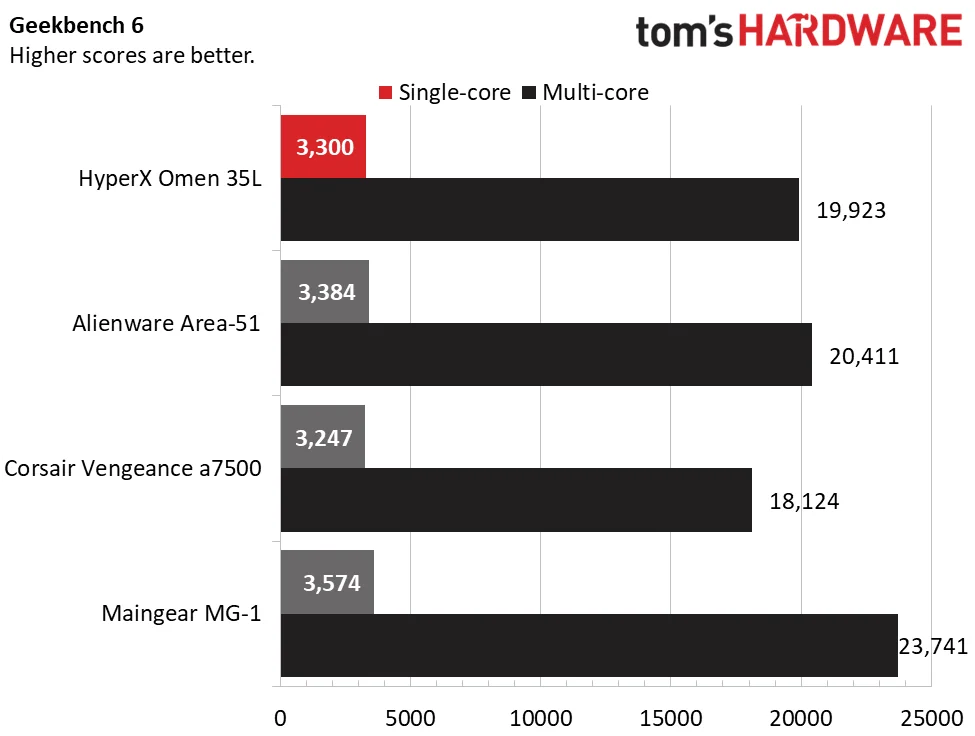
CPU results were close to the Alienware’s, which uses the same Ryzen 9 9950X3D. The Omen scored 19,923 in Geekbench 6, just behind Alienware’s 20,411. Maingear’s Ryzen 9 9950X3D2 reached 23,741, while the Ryzen 7 9800X3D-powered Corsair scored 18,124.
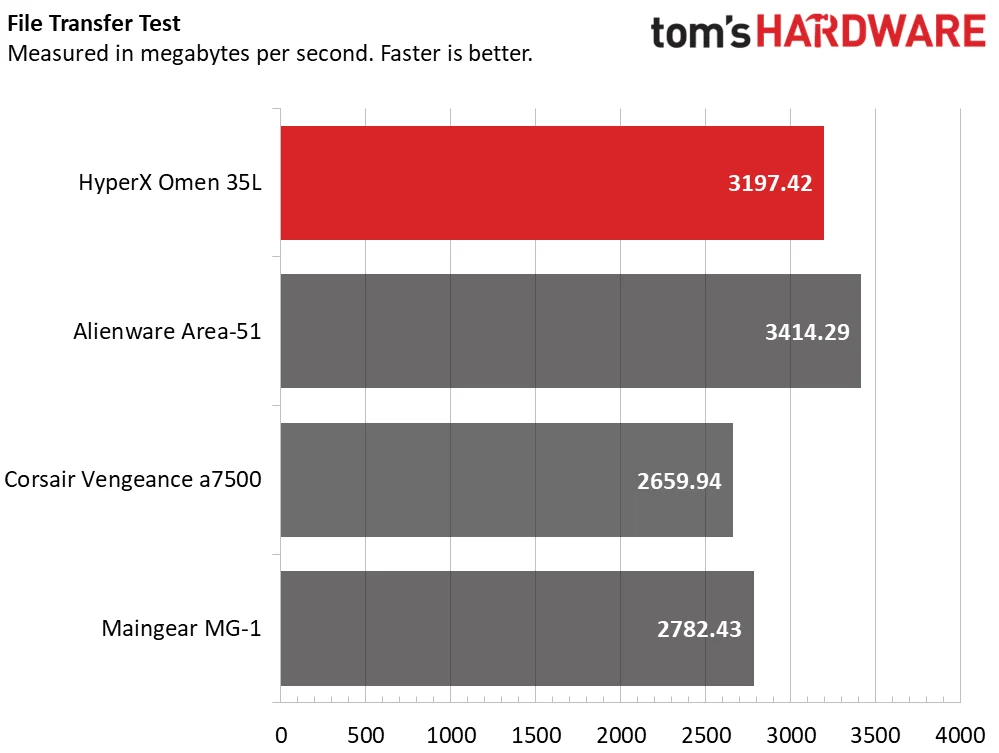
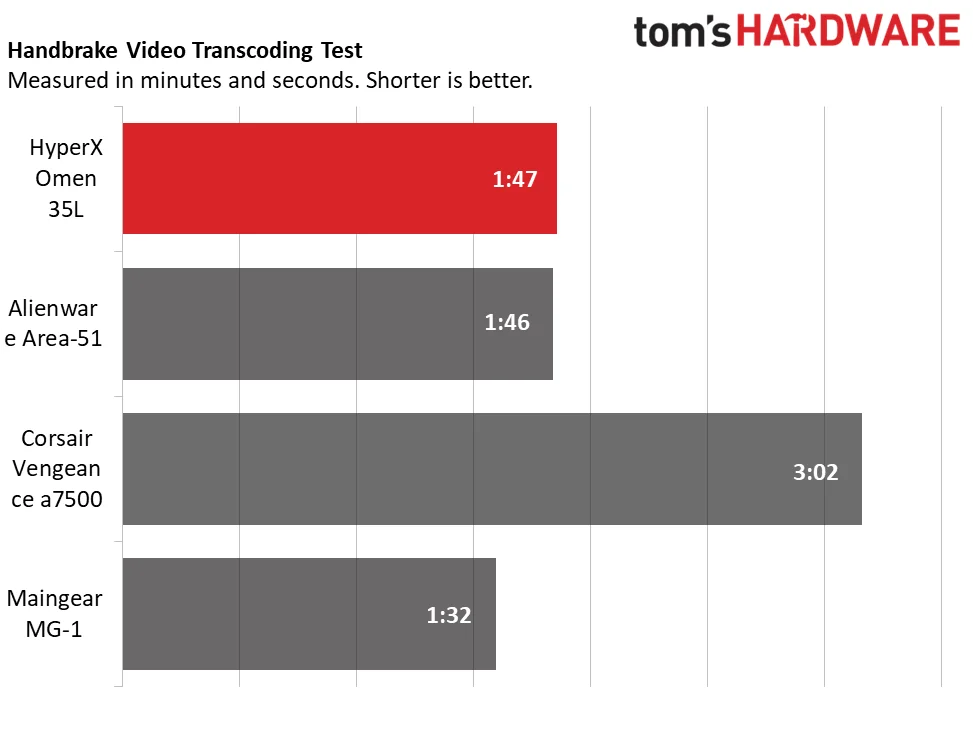
For 4K-to-1080p Handbrake transcoding, the Omen finished in 1 minute 47 seconds, matching Alienware. Maingear took 1:32, while Corsair needed 3:02. In a 25GB file transfer, the Omen averaged 3,197.42MBps. That trailed Alienware’s 3,414.29MBps and beat the Corsair’s 2,659.94MBps and Maingear’s 2,782.43MBps.
HP’s Omen Gaming Hub offers fan-speed controls and, in Extreme mode, CPU PPT and EDC settings. Its advanced tuning panel includes PBO, CPU Boost and voltage-curve options, plus a benchmark for checking changes. An on-screen overlay displays performance profiles, temperatures and fan speeds.
The same app controls the cooler’s LCD, which can show system data, a clock, still images, GIFs or videos. Omen Light Studio handles RGB effects across the five fans, with each fan’s 10 LEDs selectable individually. Presets include Galaxy, Ocean, Jungle, Volcano and Omen, while effects range from static color and breathing to audio visualization and radial patterns. Users can adjust effect speed and direction, layer effects, and save or exchange profiles. HP provides a one-year warranty.
Configuration and value
The $6,210.98 review configuration sits at the top of the Omen 35L range. The starting models are much less powerful: AMD versions begin at $2,399.99 with a Ryzen 5 9600X, while an Intel Core Ultra 5 250KF Plus option starts at $2,589.99. Both use an RTX 5060 Ti with 8GB of memory, 16GB of system RAM and a 1TB PCIe 4.0 SSD. Memory capacity reaches 128GB, and the system supports two SSDs up to 2TB each.
The Omen 35L’s strongest argument is the complete build: a well-finished case, configurable lighting, quiet and consistent operation, enthusiast-level components and practical upgrade access. Its RTX 5080 performs as expected for high-end 4K gaming, while the Ryzen 9 handles productivity work with results close to comparable systems.
At the tested price, buyers are paying for presentation and a complete premium system as much as raw frame rates. The entry models are harder to recommend on hardware value. For shoppers set on a finished, upgradeable tower with an RTX 5080, the Omen 35L earns a place on the shortlist; the key decision is whether its polish is worth the premium over a less expensive build.