Vera’s case rests on more than AI marketing
Nvidia’s Vera is a serious attempt to make the CPU a first-class part of the AI data center. That matters because agentic systems can keep CPUs busy with tool calls, code execution and data handling even when GPUs are doing the model inference. Nvidia says Vera was built for this shift. The timing invites skepticism: demand for agentic workloads has surged only recently, and the company’s framing can make a fast-moving trend sound like a design target it anticipated all along.
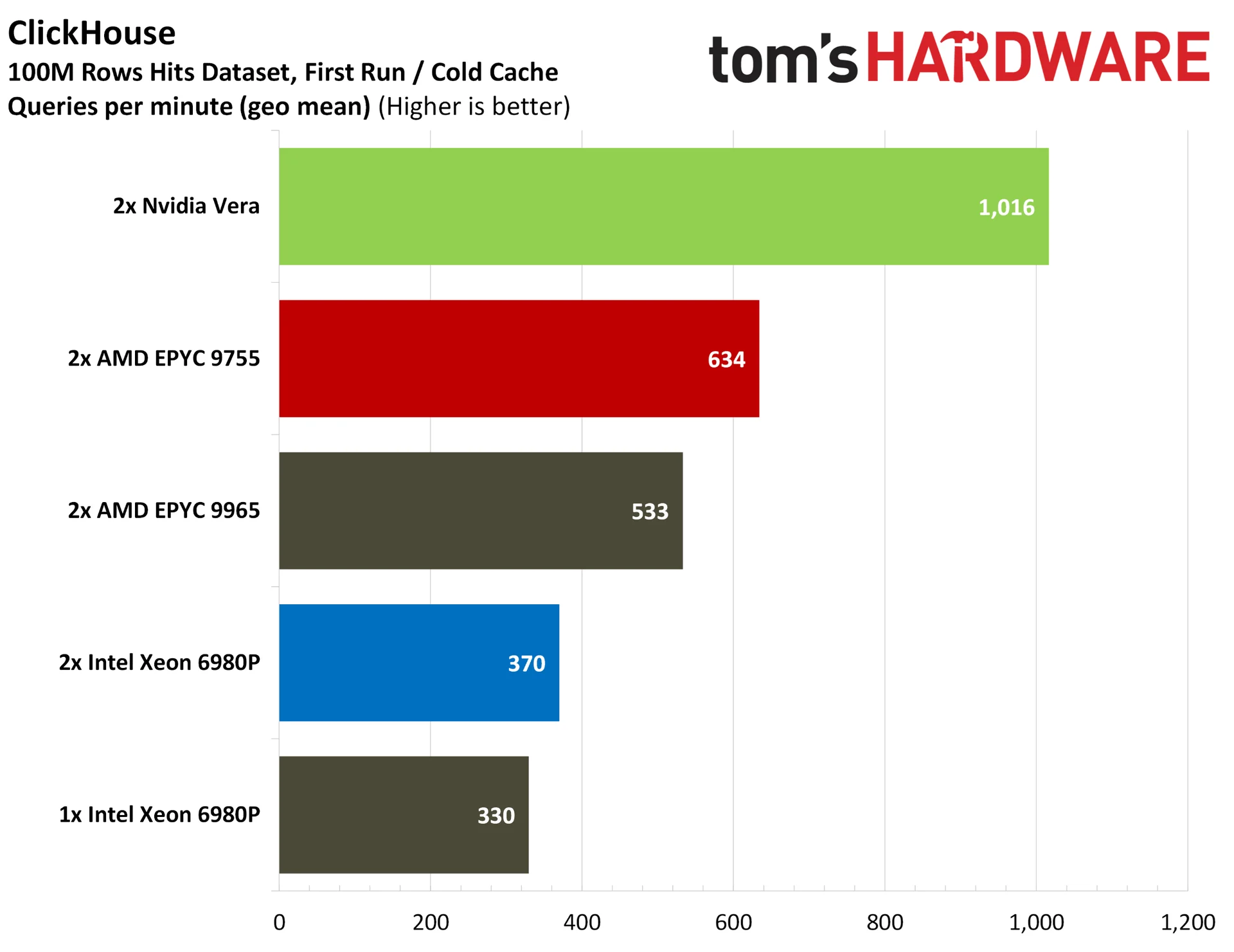
The performance evidence is more persuasive than that story. There still aren’t standardized benchmarks for the full agentic loop, so no one can yet measure Vera’s suitability with a single definitive test. But the workloads we can test point to strengths that fit the job. Vera performs especially well in Python, a foundation of much AI software, and delivers high memory bandwidth at both the socket and system level. That bandwidth could matter when many agents are querying large databases at once.
Vera also has to earn a place in a crowded server market. Custom Arm processors are gaining ground, while AMD and Intel bring established data center platforms and extensive customer relationships. The surprise in our results is that Vera isn’t limited to agentic-adjacent tasks: it often matches or beats comparable AMD Turin and Intel Granite Rapids-AP systems on general server workloads. X86’s greater core density can still help in frontend tasks. Vera’s advantage is more apparent in backend work that moves and processes large amounts of data.
| Cores / Threads | 88 / 176 |
| L2 cache | 2 MB per core |
| L3 cache | 164 MB per CPU |
| Memory | Up to 1.5 TB SOCAMM2 LPDDR5X |
| Memory speed | Up to 9600 MT/s |
| Memory bandwidth | Up to 1.2 TB/s aggregate; 14 GB/s per core |
| PCIe | 88 PCIe 6.4 lanes for the CPU alone; 96 PCIe 6.4 lanes in Vera Rubin; bifurcation down to x2; CXL 3.1 |
| Configurable TDP | 250W–450W |
Vera is Nvidia’s first processor built around its own custom Olympus core, and it improves on Grace, which used an off-the-shelf Arm core design. The 88-core chip follows the Armv9.2-A architecture and supports two threads per core through Nvidia’s “spatial multithreading.” Its 10-wide decode is similar to Arm’s AGI, and it pairs the core with Nvidia’s second-generation Scalable Coherency Fabric (SCF).
SCF is central to the design: its mesh distributes L3 cache across the die and provides up to 3.4 TB/s of on-die bandwidth. Our Vera deep dive covers the Olympus core and SCF in more detail. The memory system is another standout. Replaceable SOCAMM2 LPDDR5X runs at up to 9600 MT/s, for as much as 1.2 TB/s of total bandwidth—about 14 GB/s per core, more than twice the figure for AMD’s dense Turin designs.
Those specifications set expectations. The more useful question is how Vera behaves in real workloads, and where it fits against today’s x86 servers before AMD Venice and Intel Diamond Rapids begin arriving.
| Test platform | Memory | Tested processors |
|---|---|---|
| 2P Nvidia MGX Vera reference platform | 16 × 96 GB (1.5 TB) Samsung LPDDR5-9600 ECC SOCAMM2 | Nvidia Vera |
| 2P Supermicro SYS-222HA | 24 × 64 GB (1.5 TB) Micron DDR5-8800 ECC MRDIMM | Intel Xeon 6980P |
| 2P AMD Volcano reference platform | 24 × 64 GB (1.5 TB) SK hynix DDR5-6000 ECC RDIMM | AMD EPYC 9965, EPYC 9755 |
What an agentic workload asks of a CPU
“Agentic CPU” still means different things to different people. Nvidia and AMD have helped define the term around concurrency and the varied work agents perform. Those are useful ideas, but the clearest definition comes from looking at how agent platforms are being deployed.
Systems such as Meta Muse and OpenAI Dots use persistent agents that receive a slice of cloud compute. CPU-only racks coordinate with inference servers, where the models run. In that setup, the important question isn’t how quickly one sandbox completes a task; it’s how well thousands of sandboxes keep working when the CPU is heavily loaded.
Some agent tools, including code compilation and large database queries, can demand substantial CPU time. Others—reading or writing files, running tests, or browsing the web in a headless browser—are modest in isolation. At scale, though, small per-call differences accumulate. CPU topology also affects whether performance holds up as more sessions run concurrently.
Concurrency is only part of the problem. Agent workloads vary, and the bursts can be separated by long idle periods. Mark Lohmeyer, Google Cloud’s VP and GM of AI and computing infrastructure, described the pattern to Tom’s Hardware with an example: an agent might help plan a vacation over a month, receive a burst of instructions, then sit idle until the user returns days later.
“The actual use of the underlying compute, it's happening in basically bursts, right? There's like a burst of use at the start, maybe for an hour, and then it goes away, and then a couple days later, [it] bursts again for some other purpose and goes away,” Lohmeyer said. “They're very long-running workloads, effectively long-running, but often idle, basically.”
That burstiness complicates scheduling. When several agents’ bursts overlap on a server already under contention, sessions can slow to a crawl. Their work may include compilation, graph traversal and large database queries, mixed with lighter tasks. Each agent runs its own loop, and those loops don’t line up neatly.
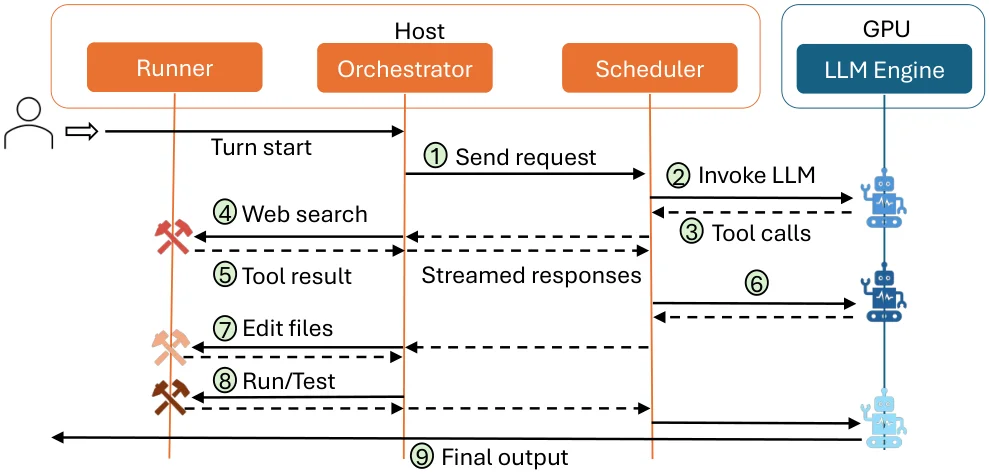
An August 2026 study, Architectural Implications of Agentic AI Workflows, by researchers at The University of Texas at Austin and Microsoft Azure, describes three CPU roles in an agentic system. The CPU schedules GPU inference, as it does for a one-shot LLM query; orchestrates agent state and communication; and runs tools and agent logic, often in Python.
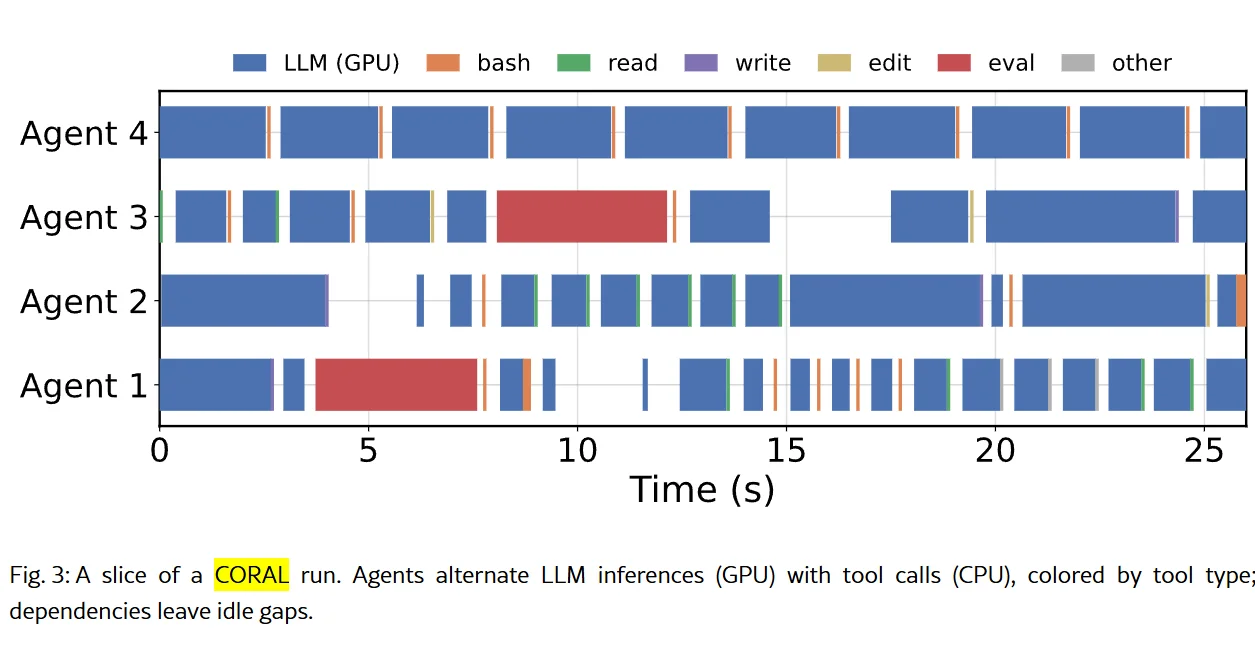
The study illustrates contention as four agents send requests to a GPU, receive results and continue their work over less than 30 seconds. Even brief CPU tasks can collide, creating gaps in GPU activity while agents wait. That’s a reminder that faster inference hardware alone won’t keep an agent system busy.
Nvidia calls Vera an agentic CPU, but the industry still lacks a settled way to score an agentic loop. “The industry built a pretty good way to benchmark traditional workloads,” Lohmeyer said. “I think this is happening now for GPUs and TPUs for inference, for example. I think we're going to need the same type of industry-level benchmarks for agentic workloads that are probably still emerging.”
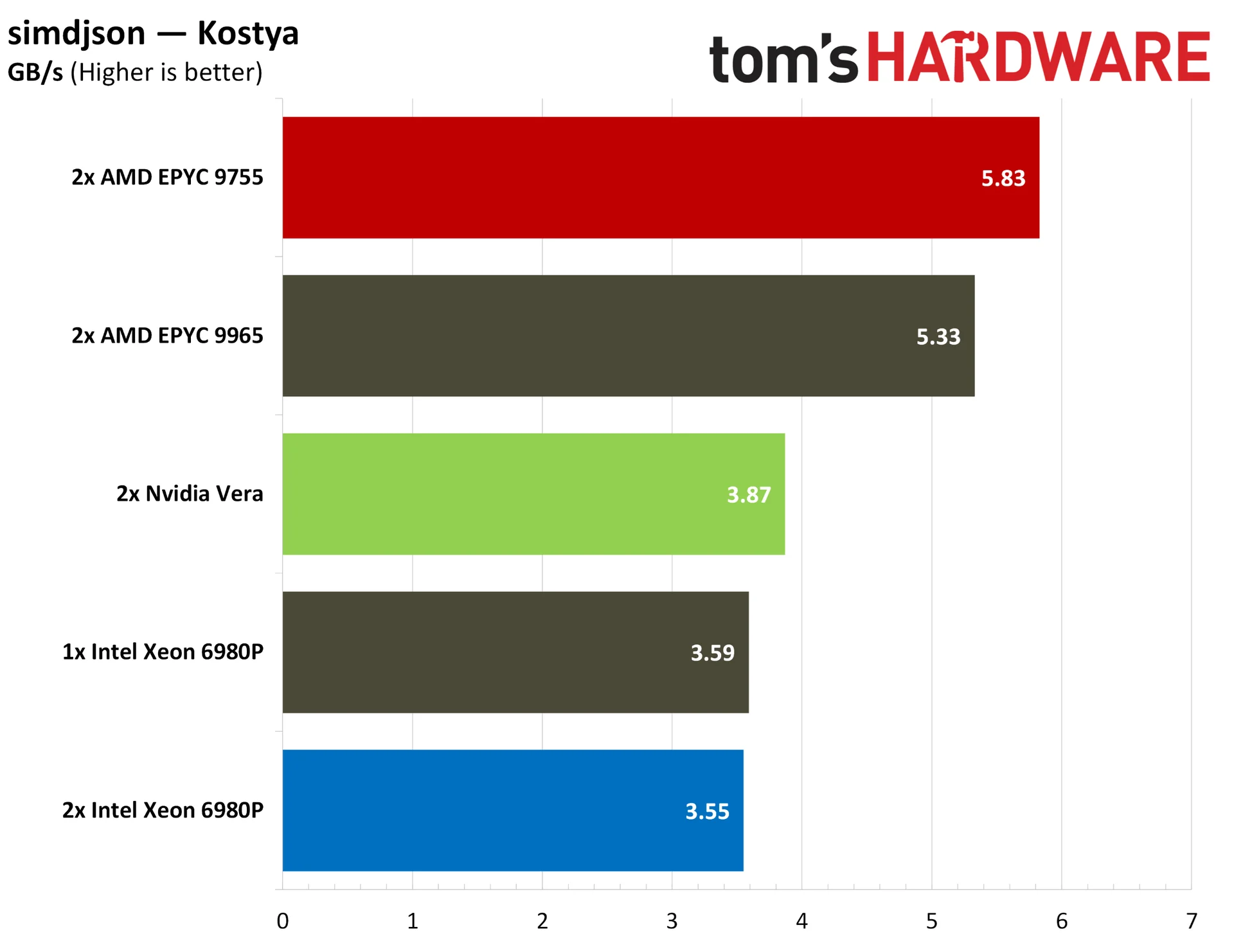
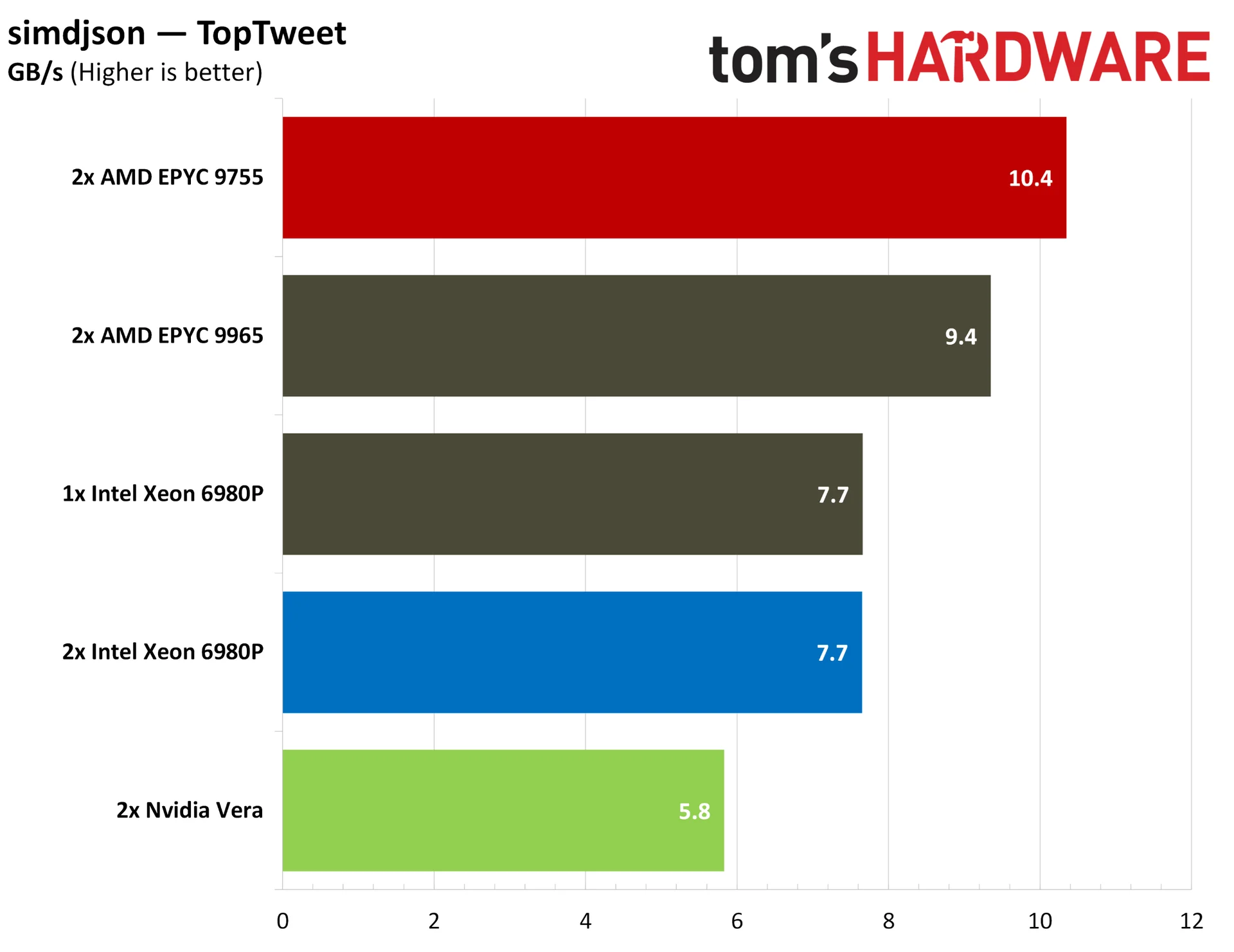
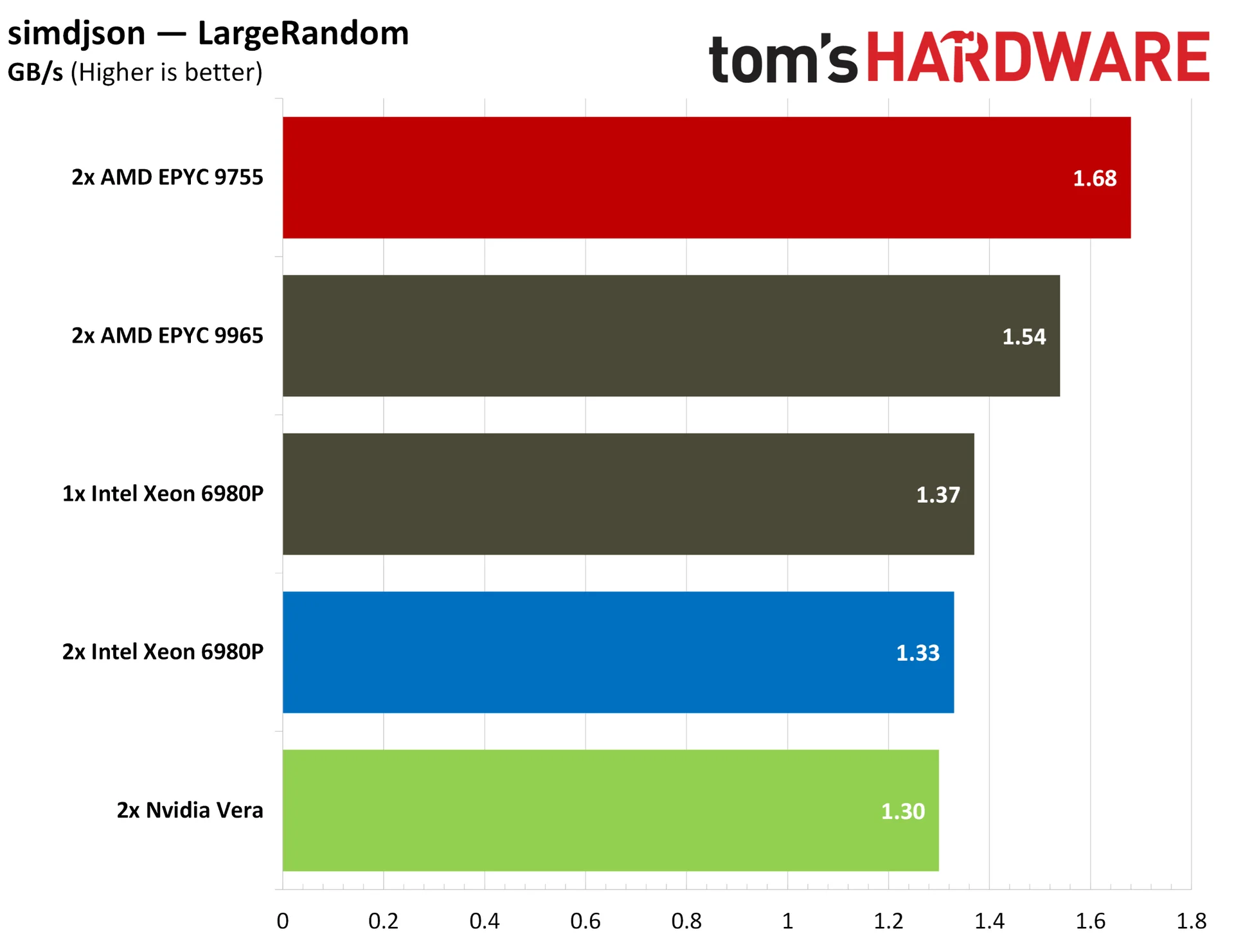
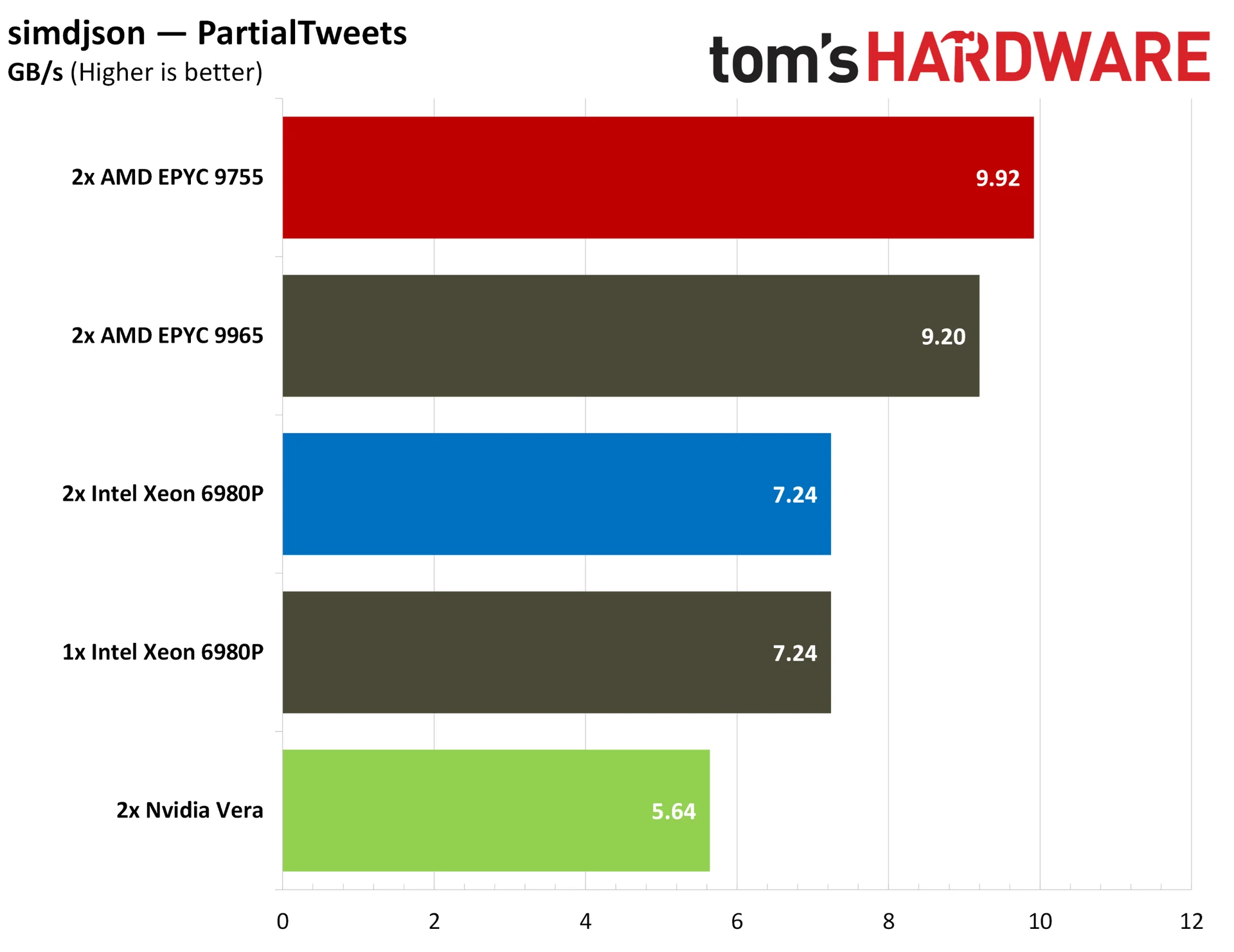
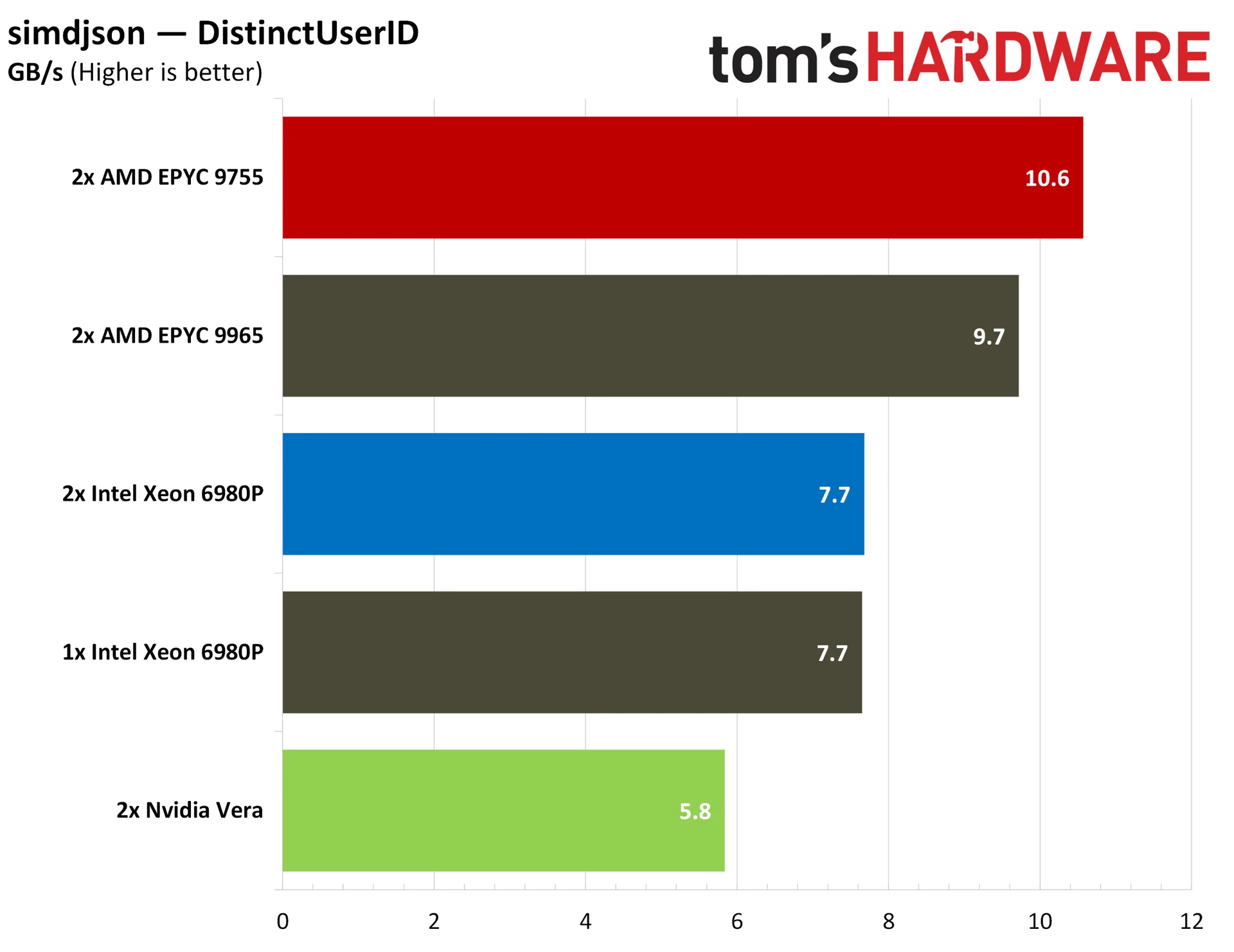
There are no standardized end-to-end agent benchmarks comparable to SPEC or TPC yet. We’re developing internal tests, and companies such as Modal have published vendor-level results, but the industry has not settled on a common full-loop method. For now, we can test components that matter to agents: code compilation for coding systems, database performance for retrieval, JSON parsing with simdjson, and Python performance across a large part of the AI software stack.
That’s the basis for comparing Vera with AMD and Intel in established benchmarks, while leaving room to test full agent loops once a sound procedure is available. Nvidia provided remote access to a dual-socket Vera system and did not restrict our tests or coverage. We checked the platform configuration, then ran our own workload choices—including agent-relevant tests and general server benchmarks for Java, cryptography, compression and rendering.
A server result depends on the job
Server CPUs don’t map neatly to client-PC recommendations. Operators have deeper access to the hardware and often tune software for a specific workload. A gaming recommendation can point to an AMD X3D chip, or a single-threaded performance lead can identify Intel’s latest flagship. Server choices depend much more on what the systems need to do.
That makes broad winner-and-loser verdicts less useful here. Hyperscalers run large fleets with different hardware for different tasks, while enterprises must weigh workload fit, total cost of ownership and many other business-specific constraints. Performance figures matter, but they don’t make the purchasing decision by themselves.
SPEC CPU 2026 estimates
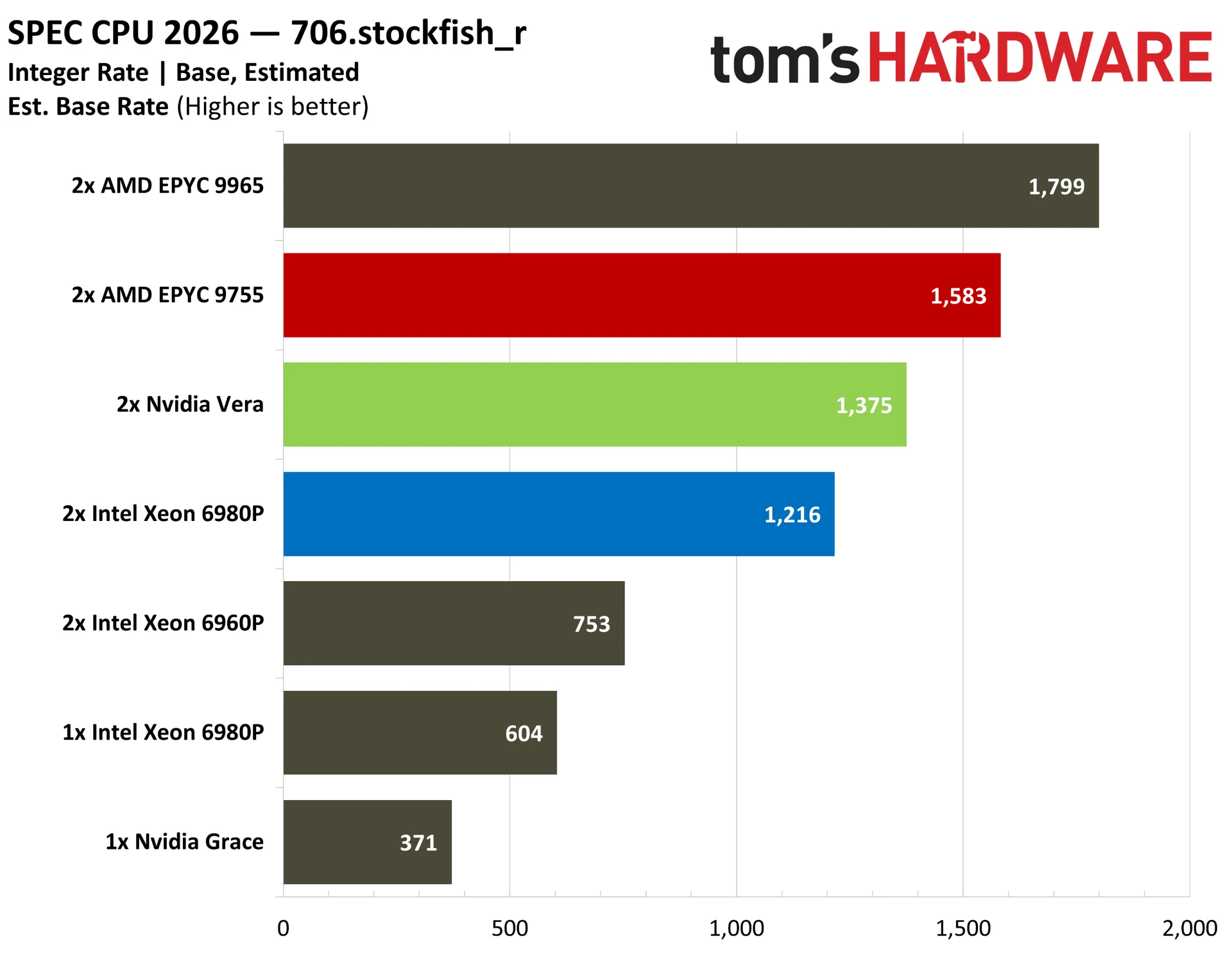
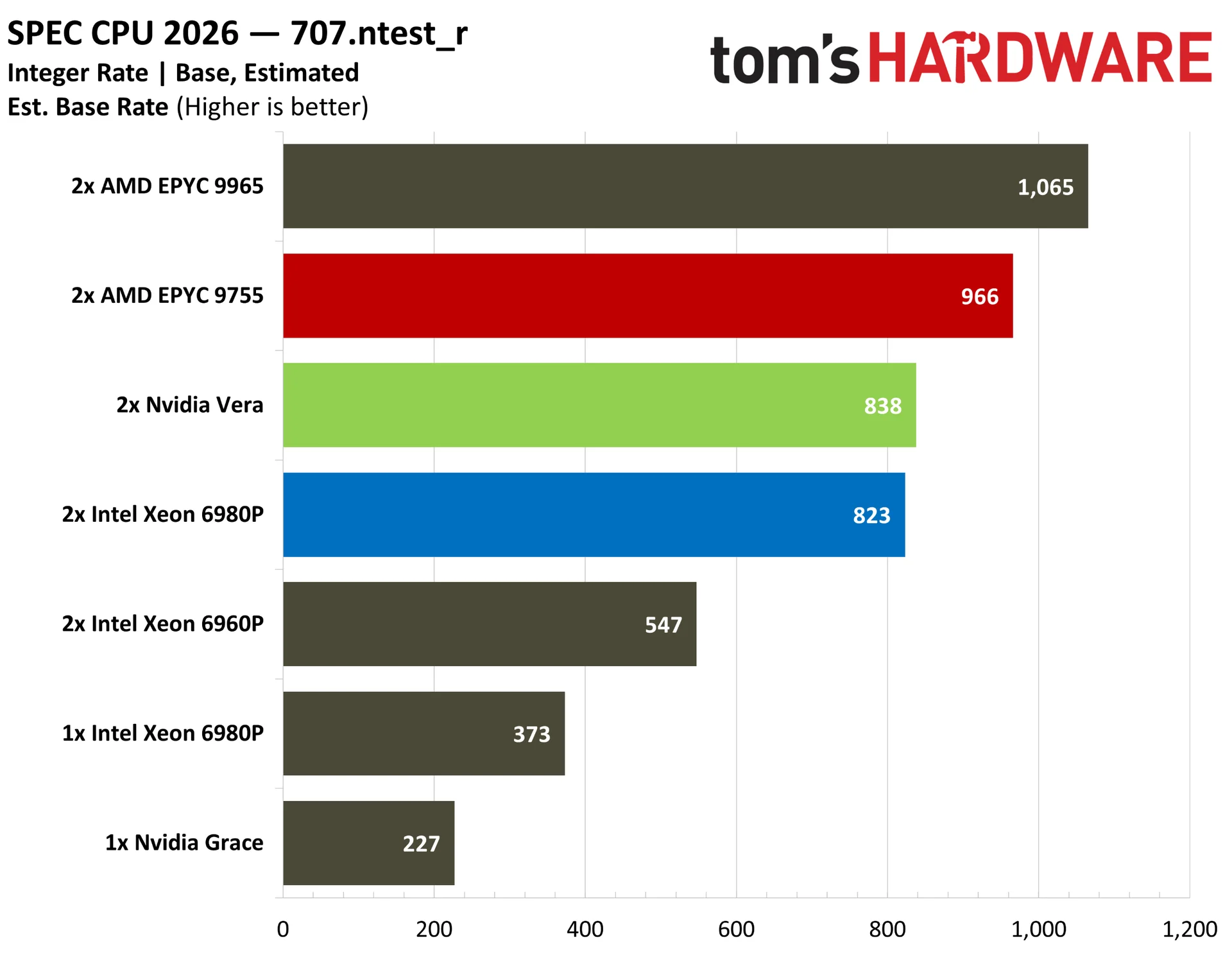
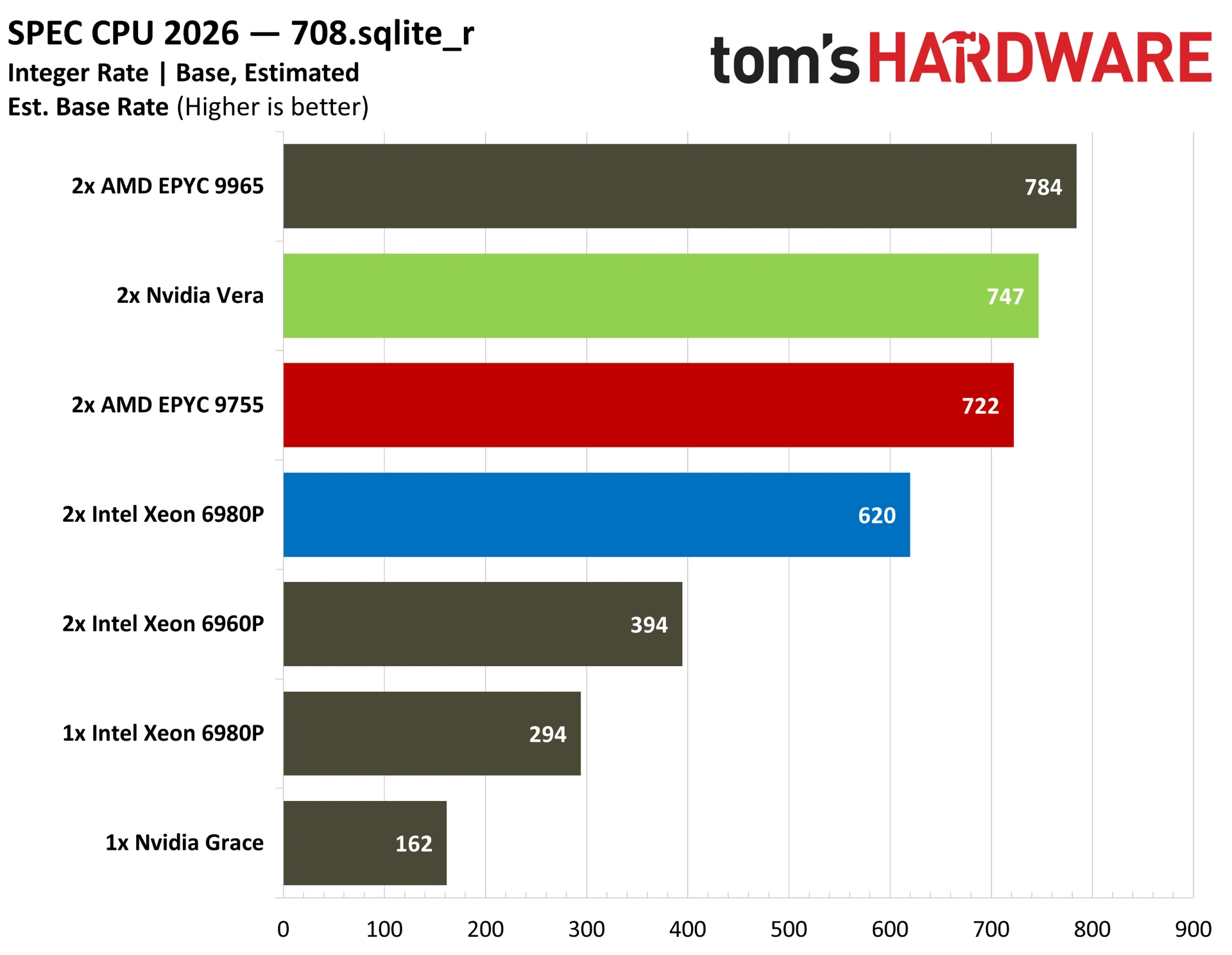
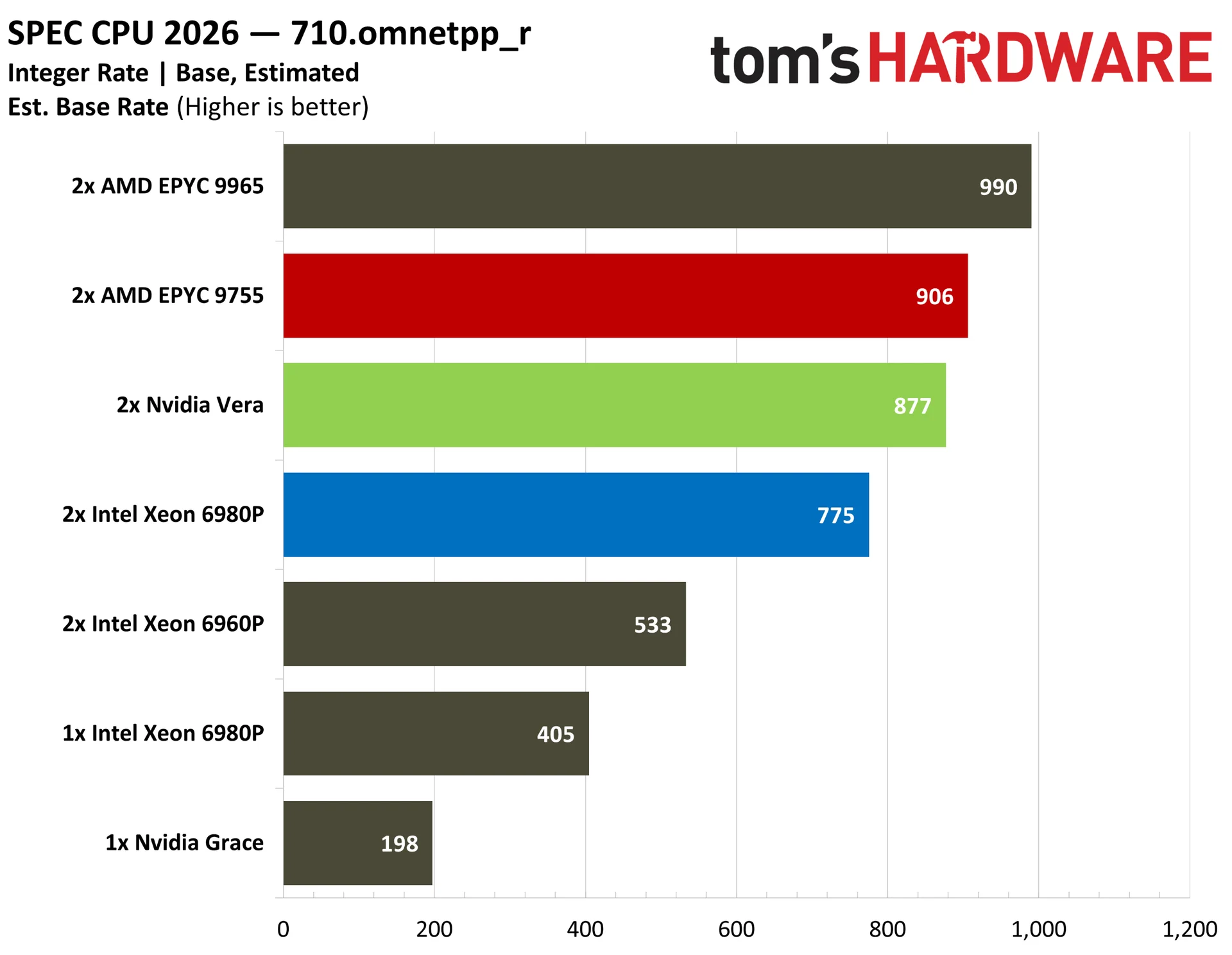
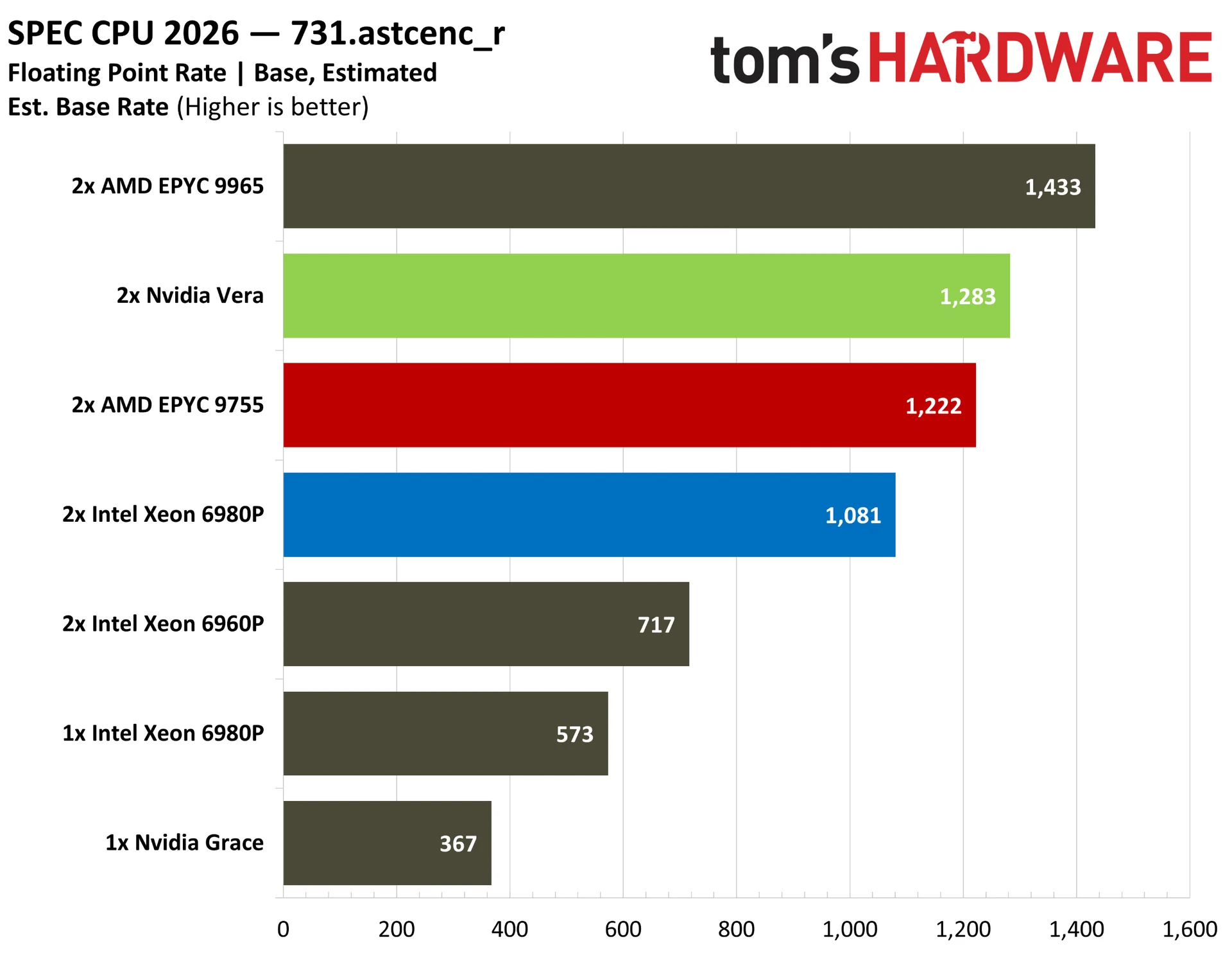
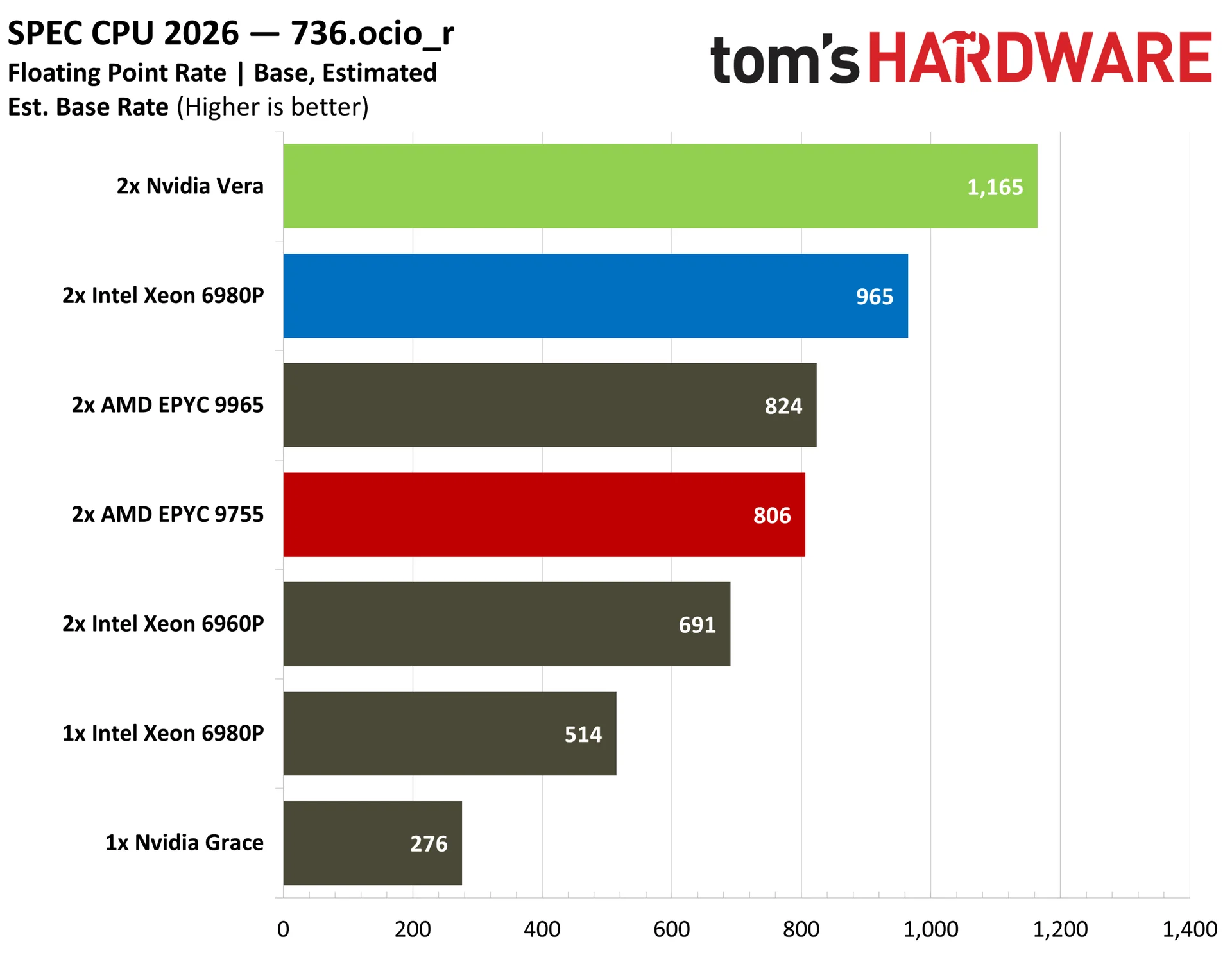
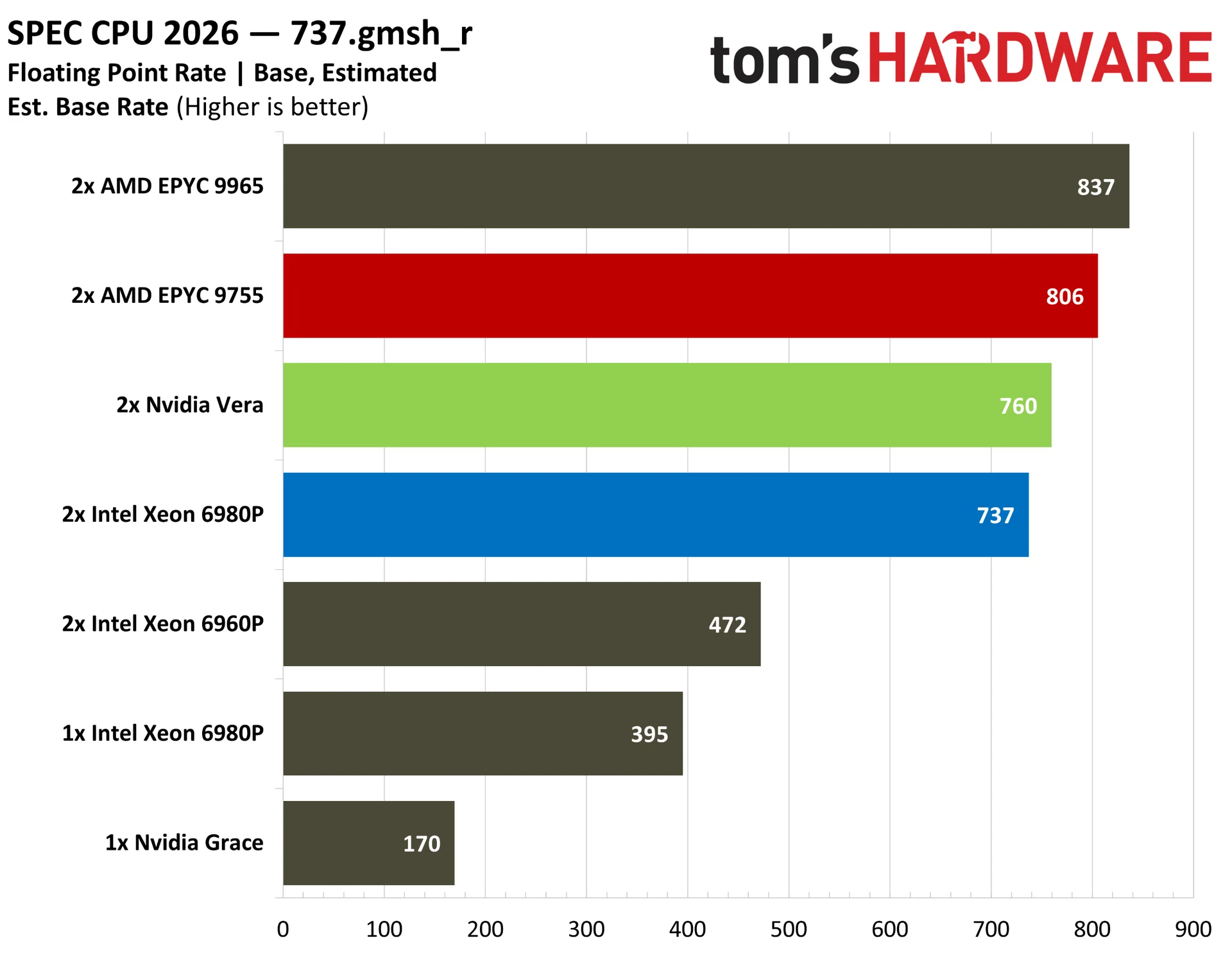
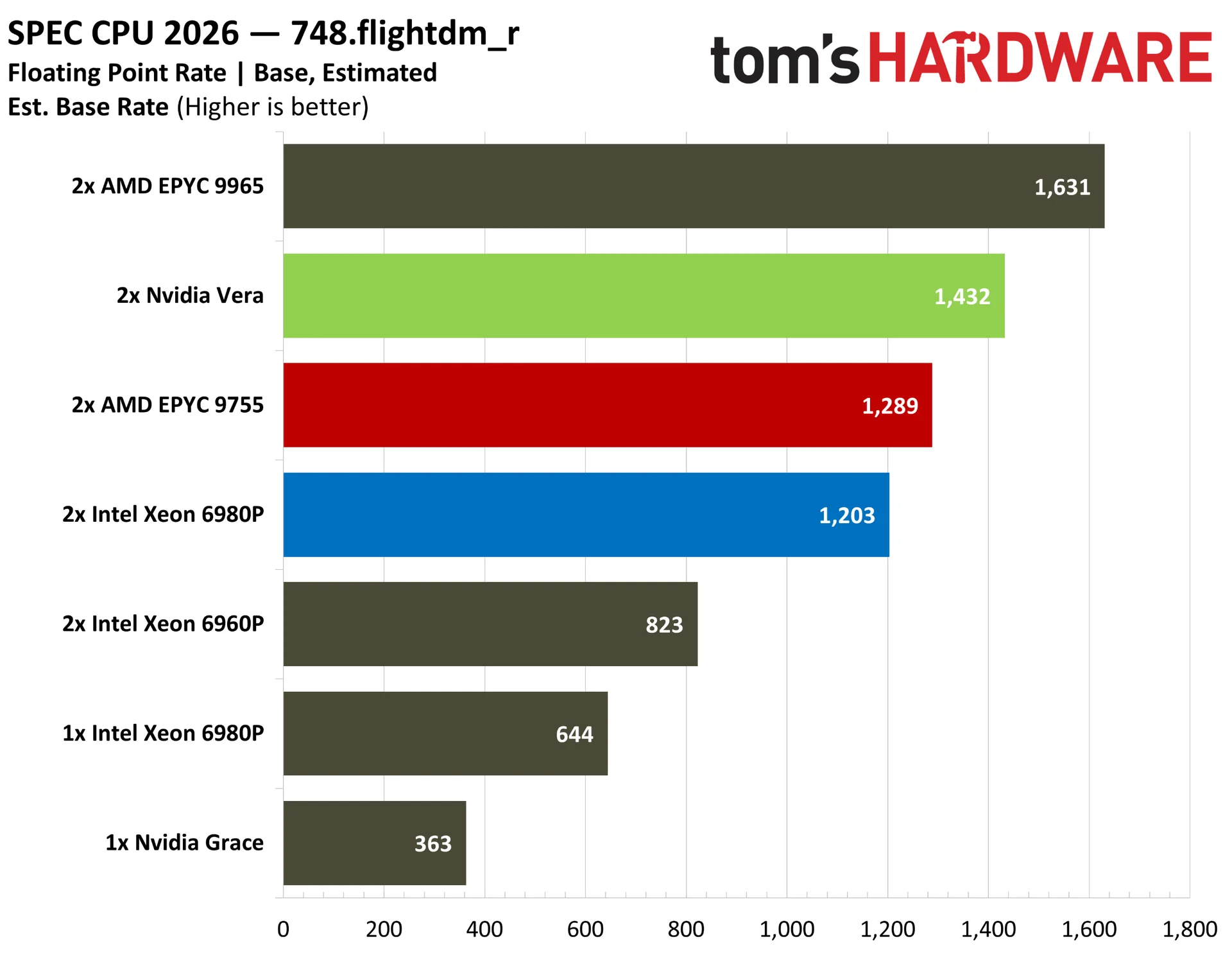
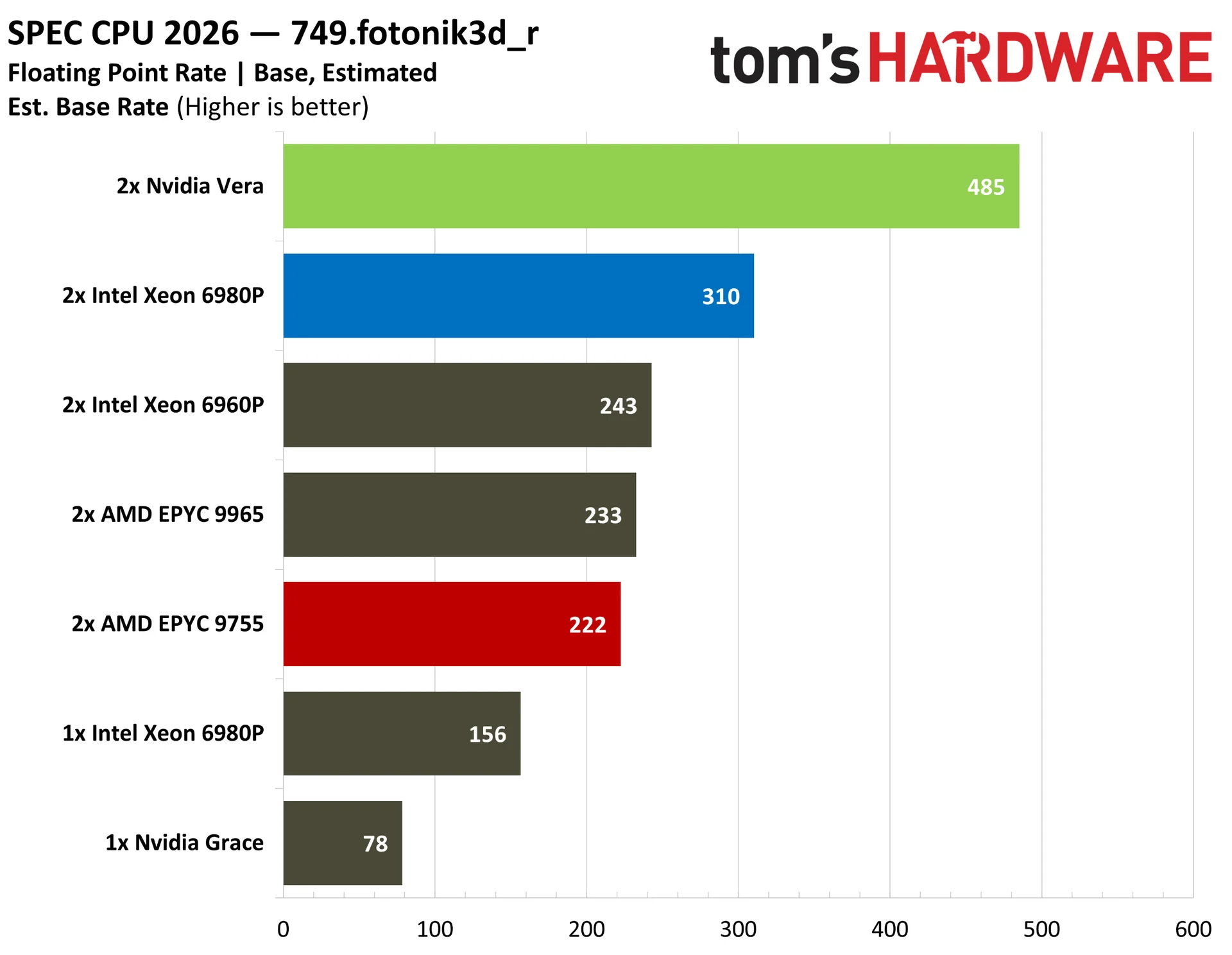
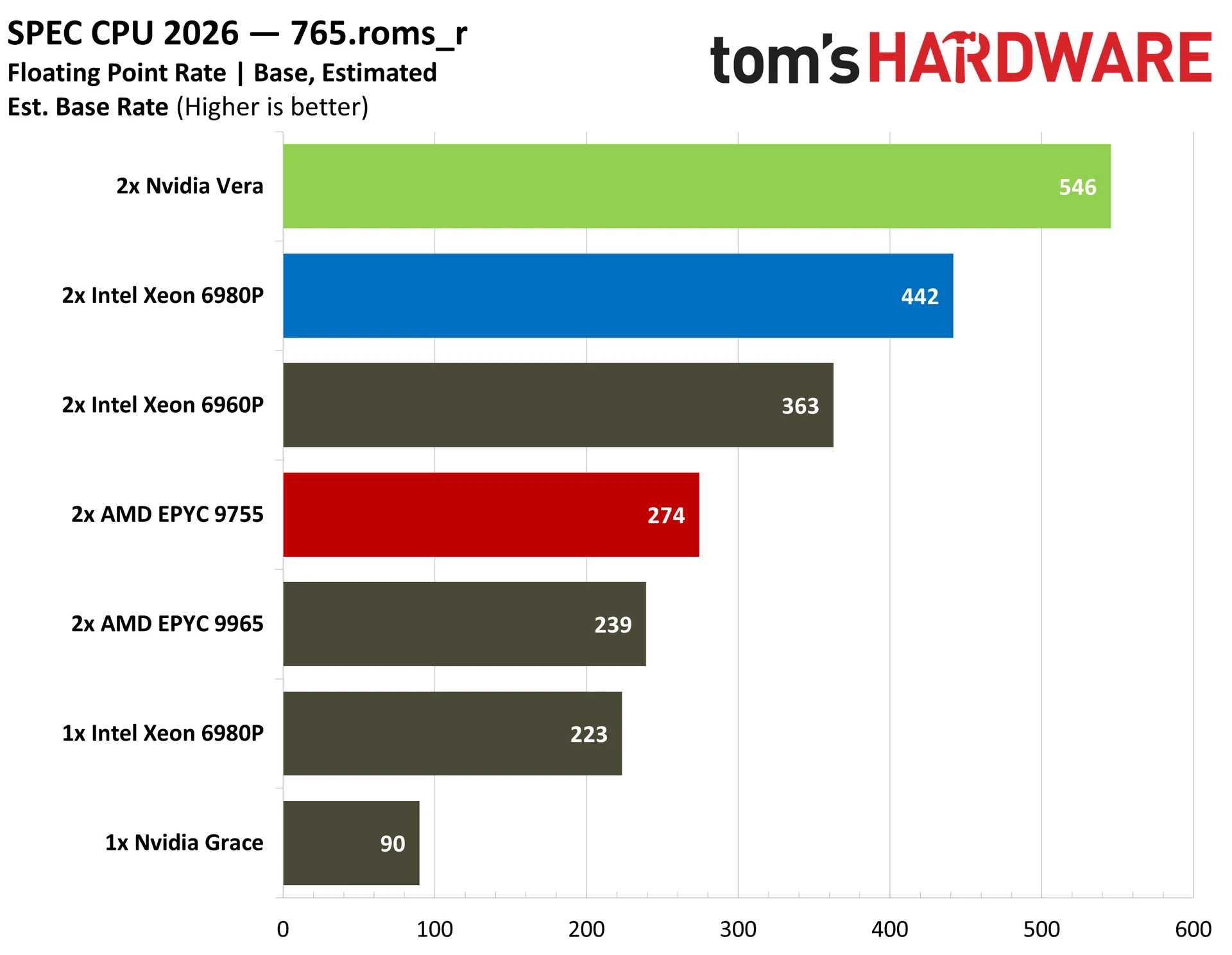
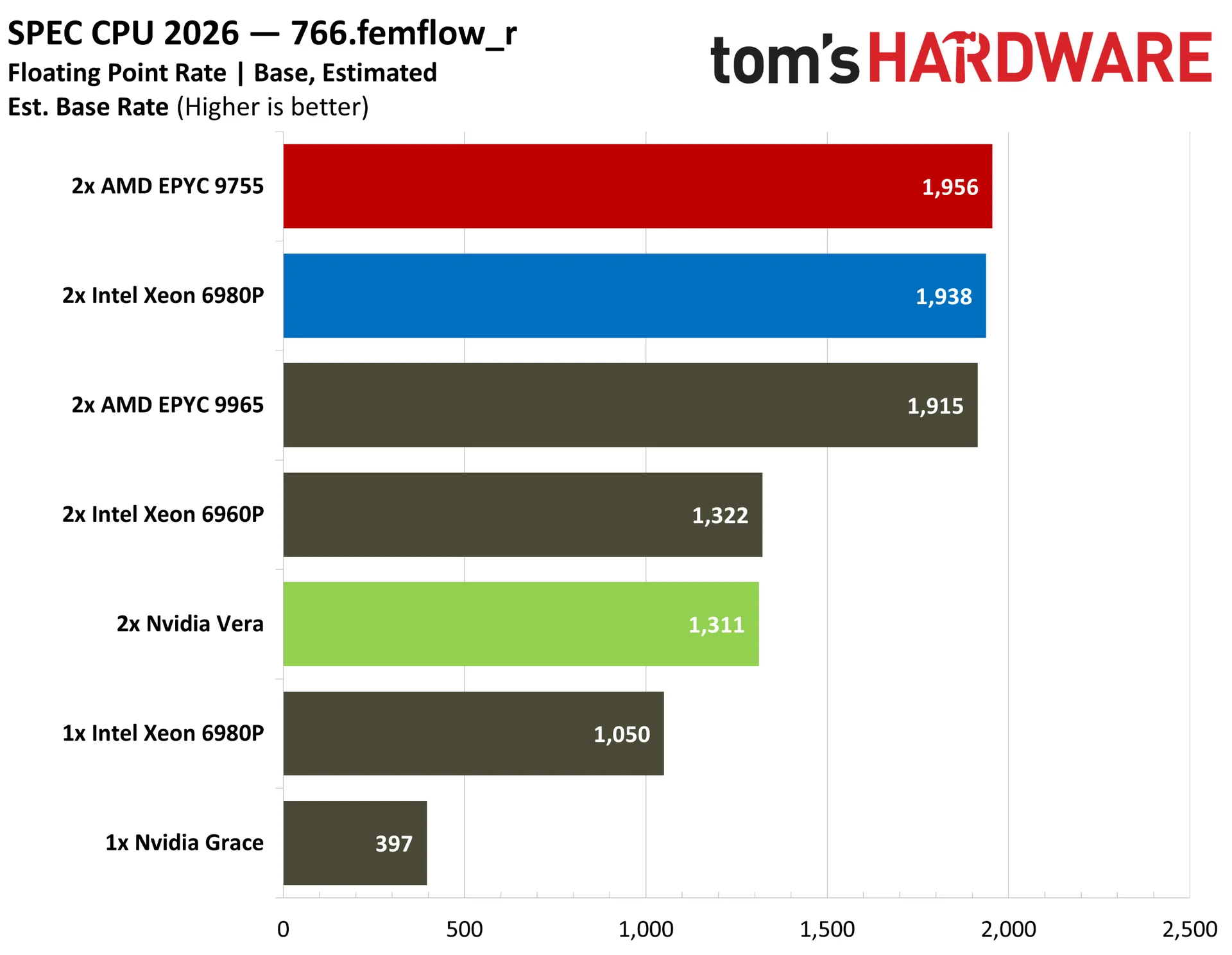
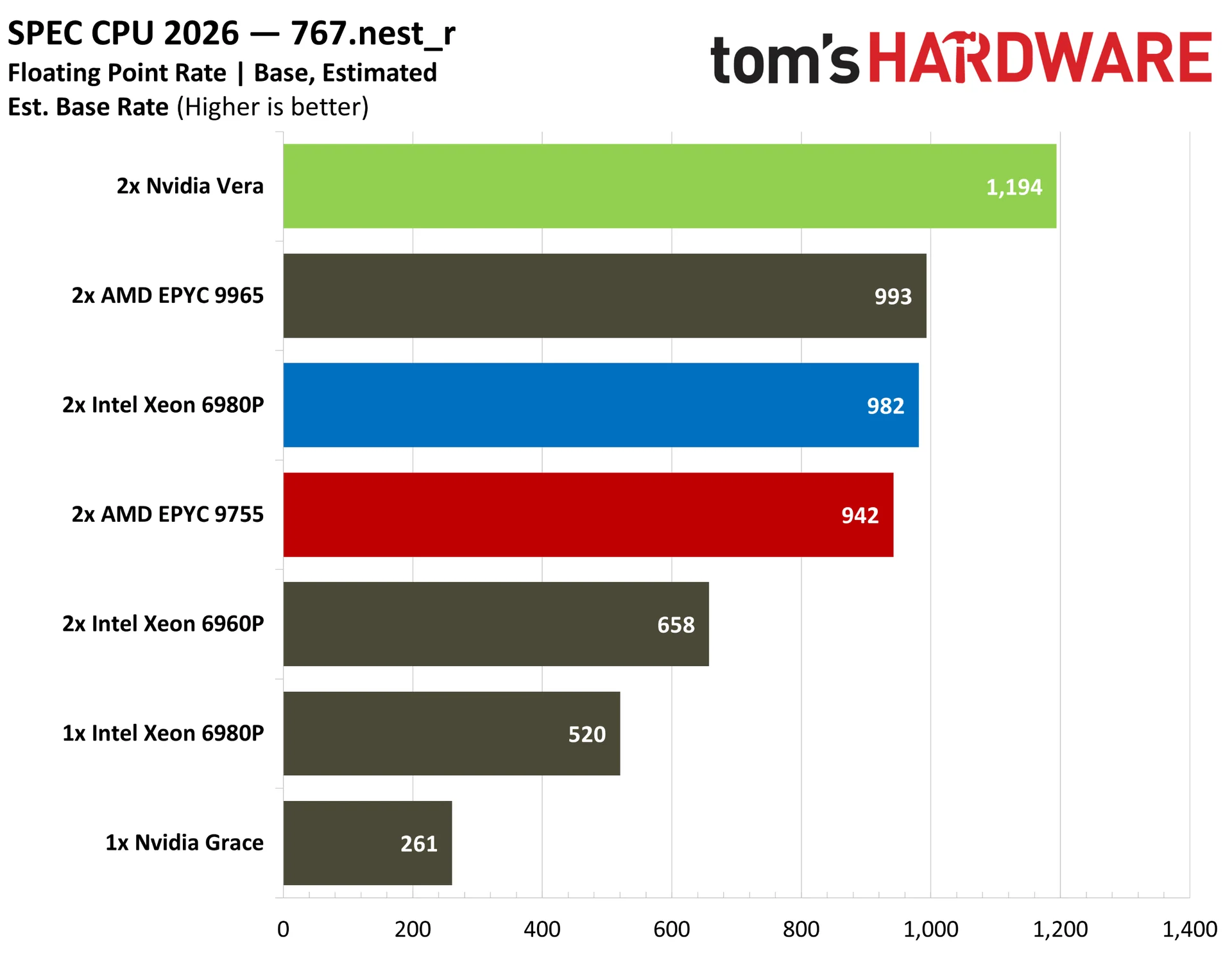
SPEC CPU 2026 intrate has been the main published benchmark for Vera so far. We ran the full SPEC CPU 2026 suite to check Nvidia’s claims and examine floating-point performance. The results below are estimates because we aren’t submitting them to SPEC, whose reporting rules are strict. “Estimated” does not mean guessed: we followed the standard procedure and used the same compiler and flags across the CPUs.
We compiled with GCC 15.2, using common options including link-time optimization and -march/-mcpu settings to expose each processor’s supported instructions. We used the general-purpose jemalloc allocator throughout.
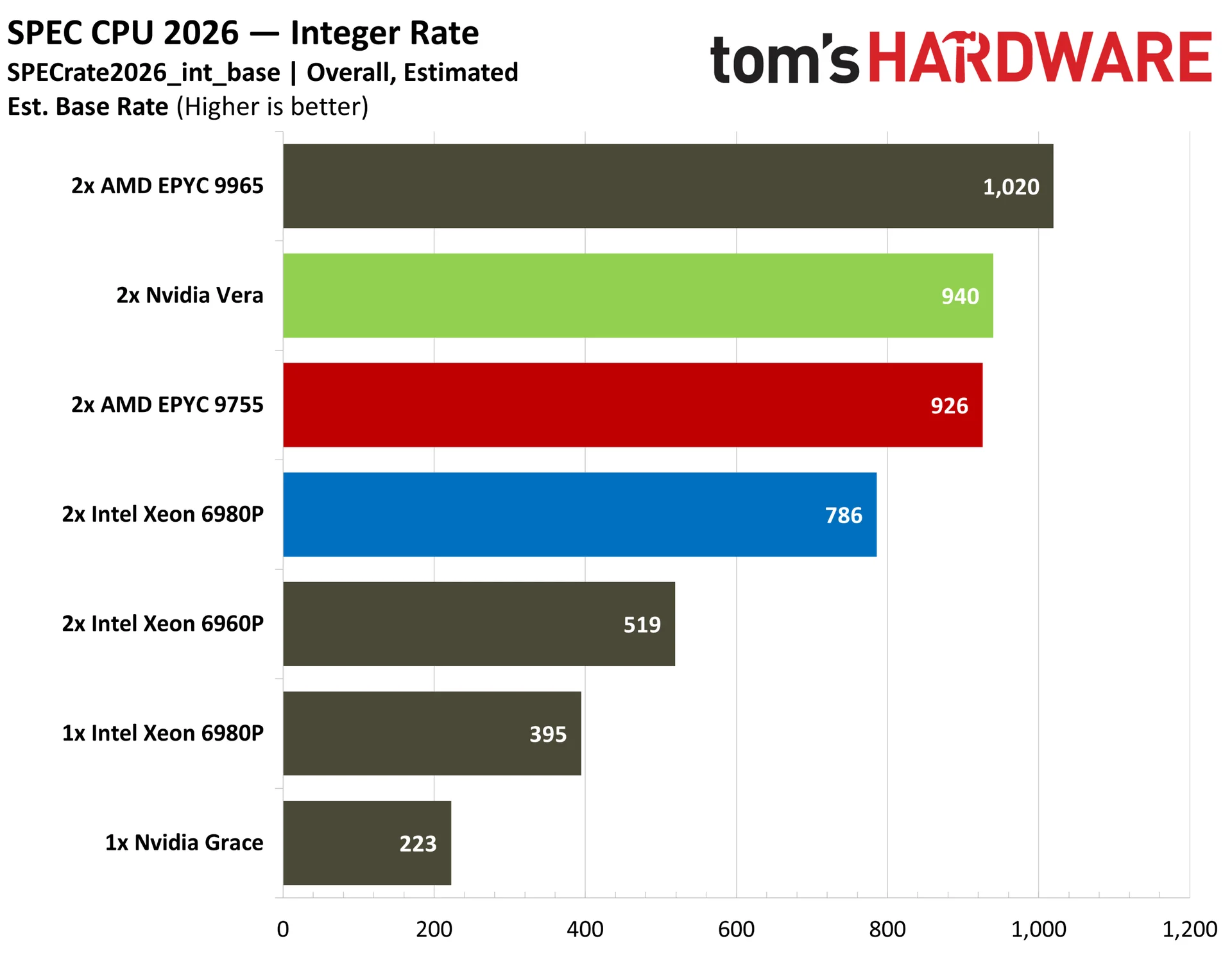
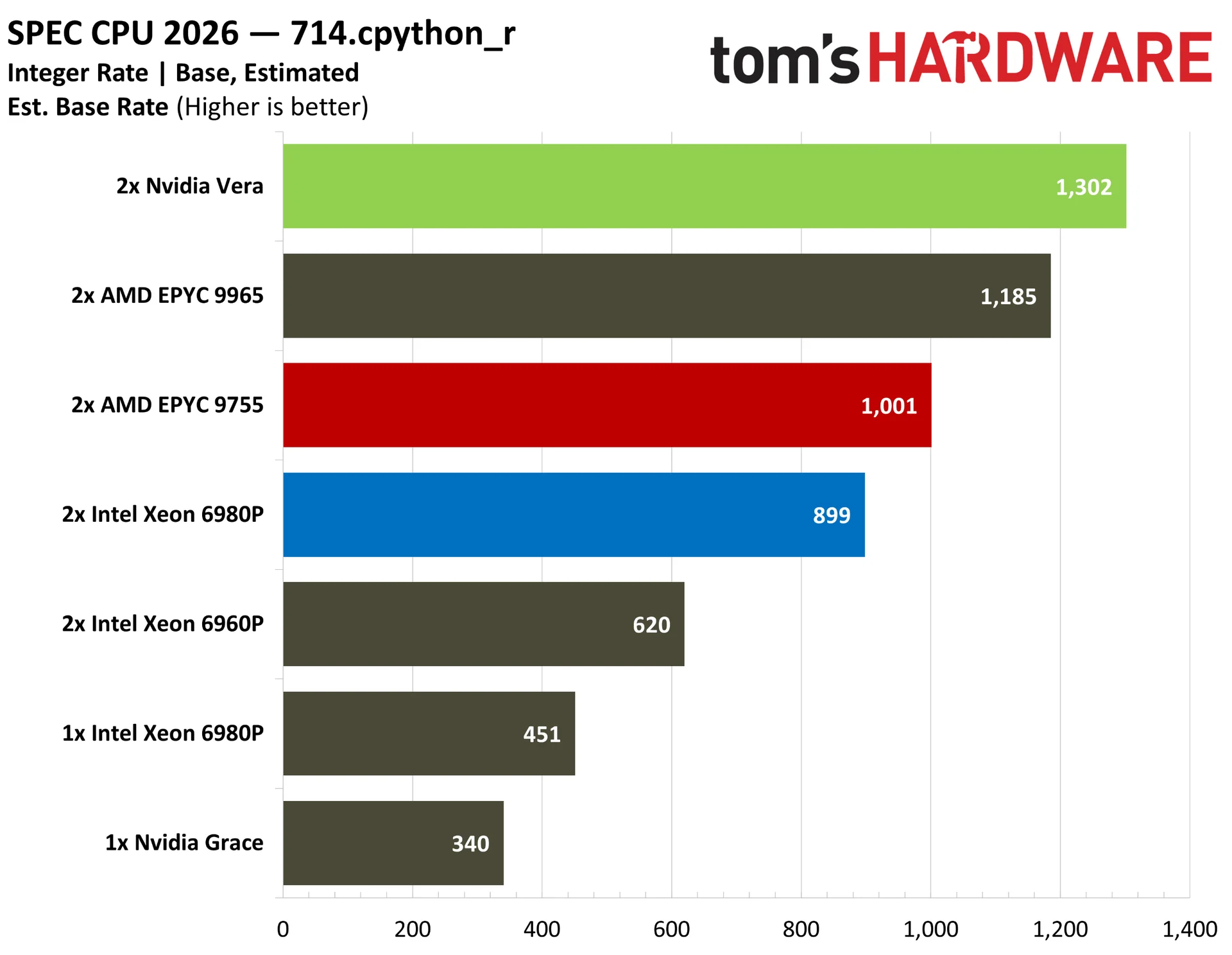
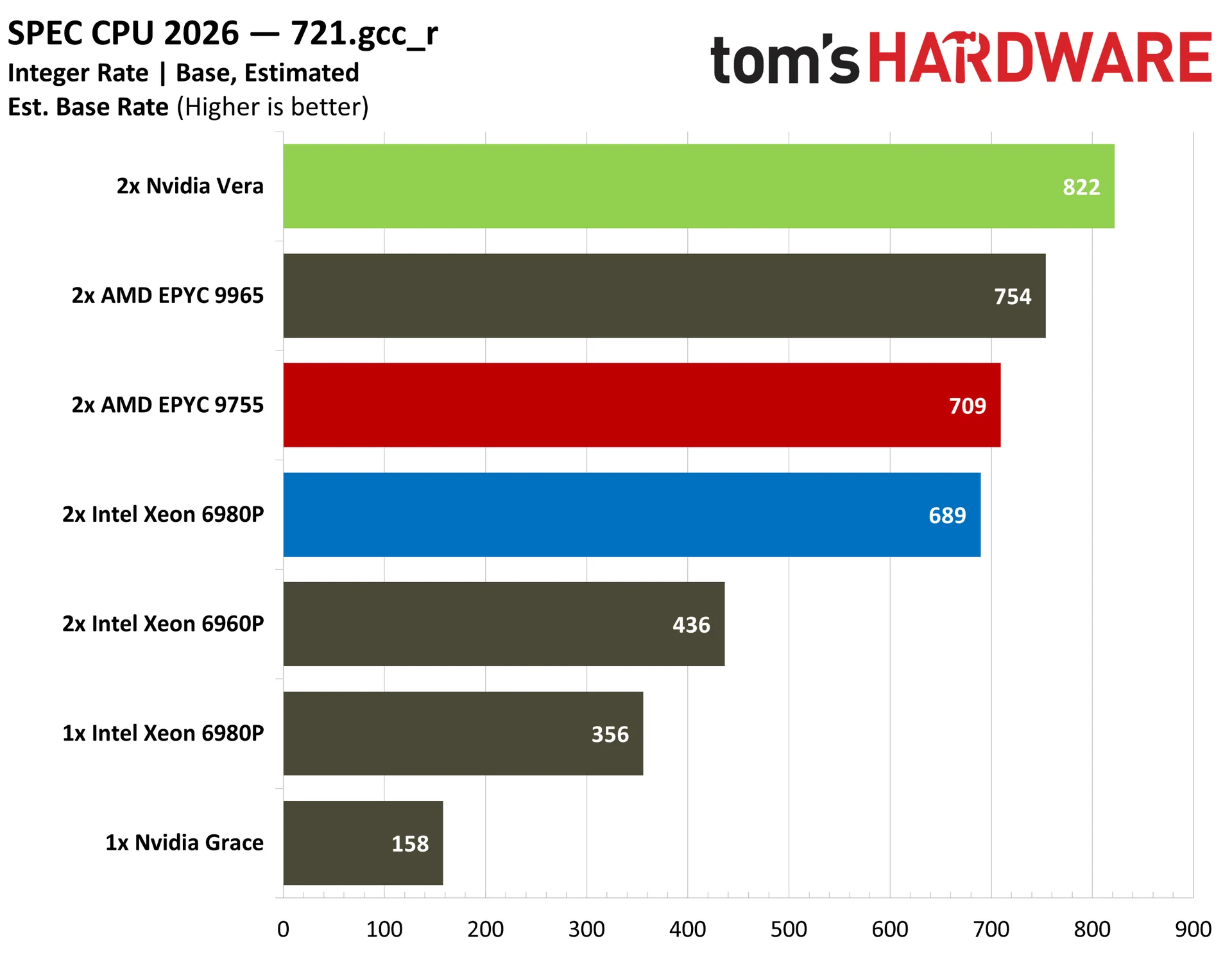
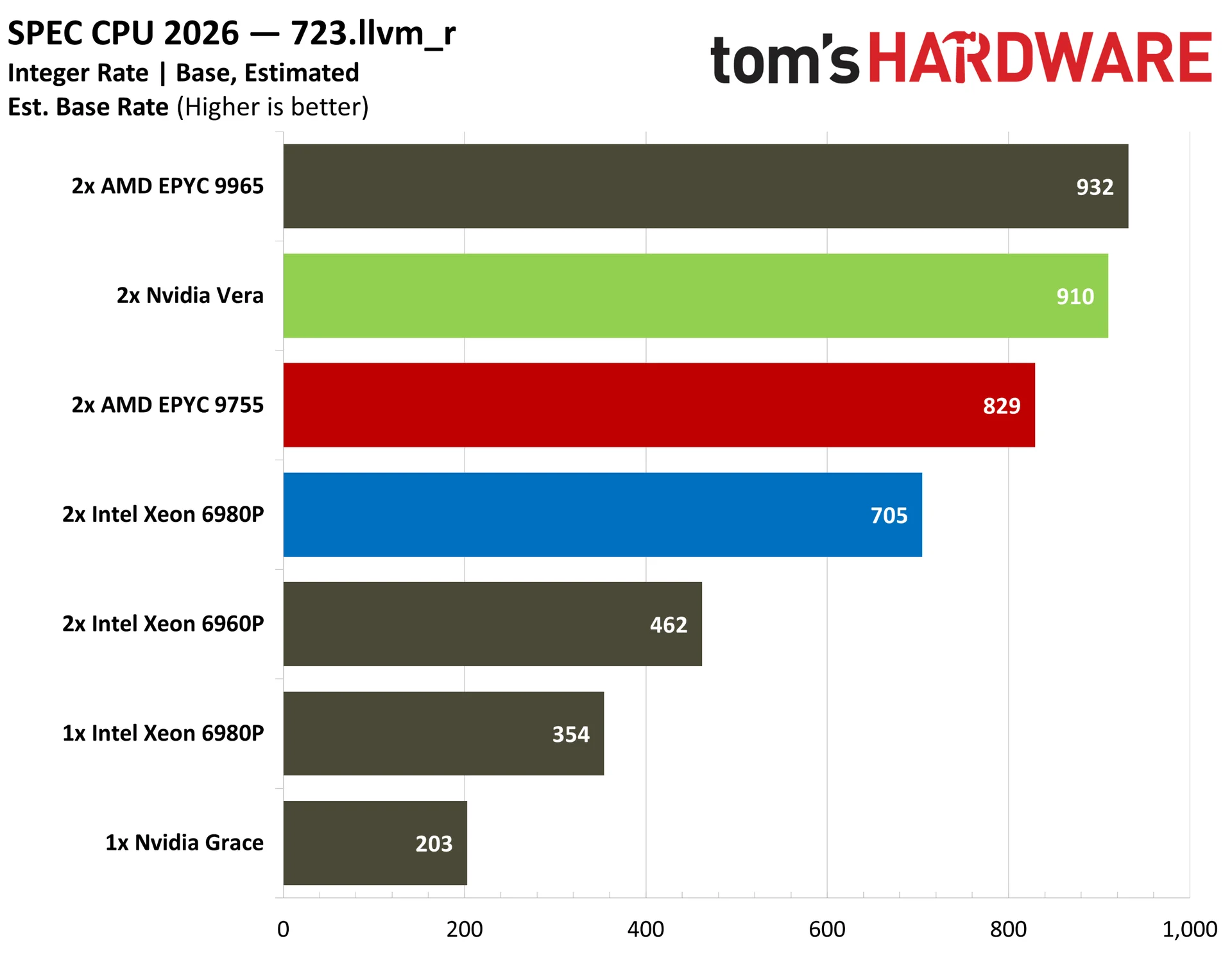
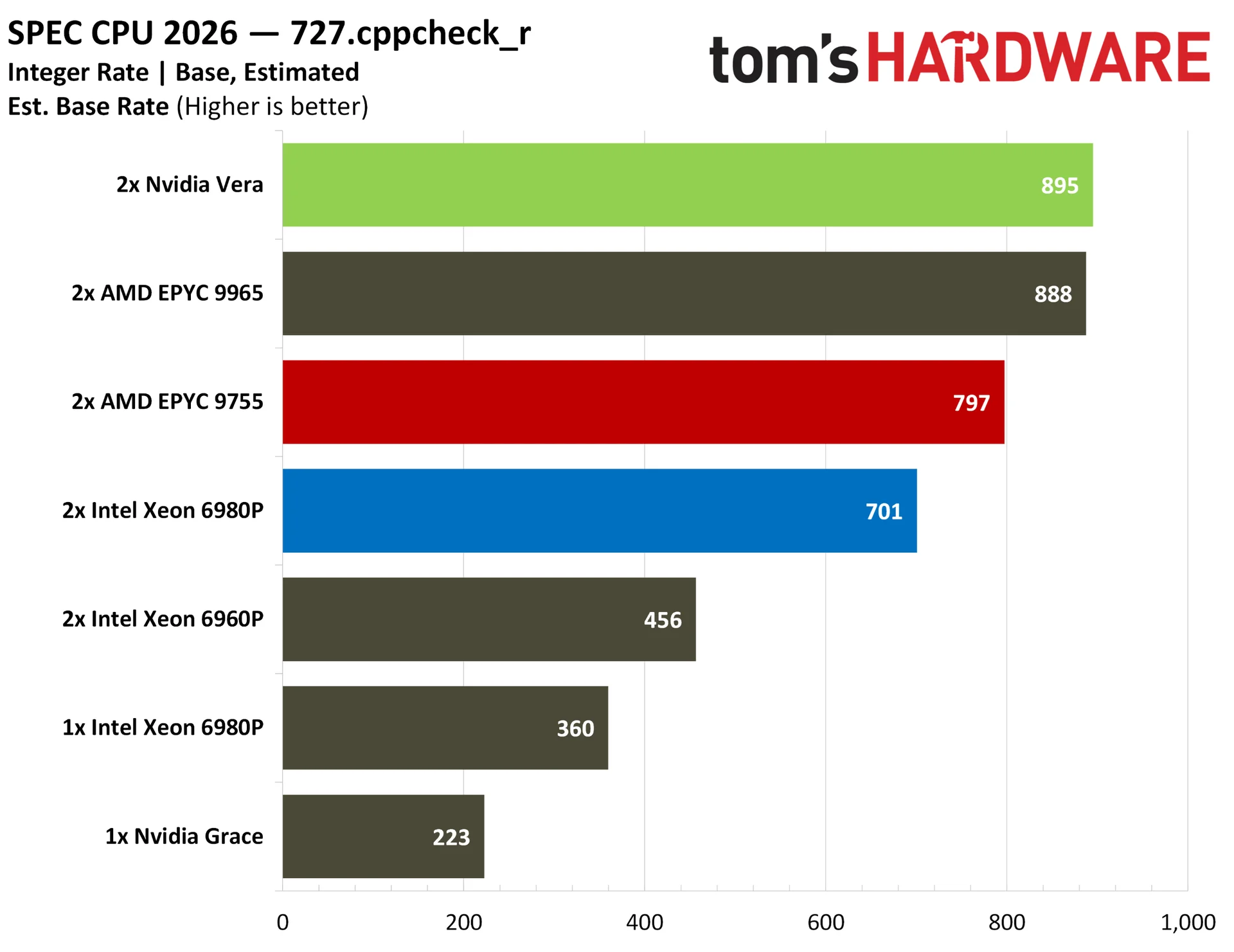
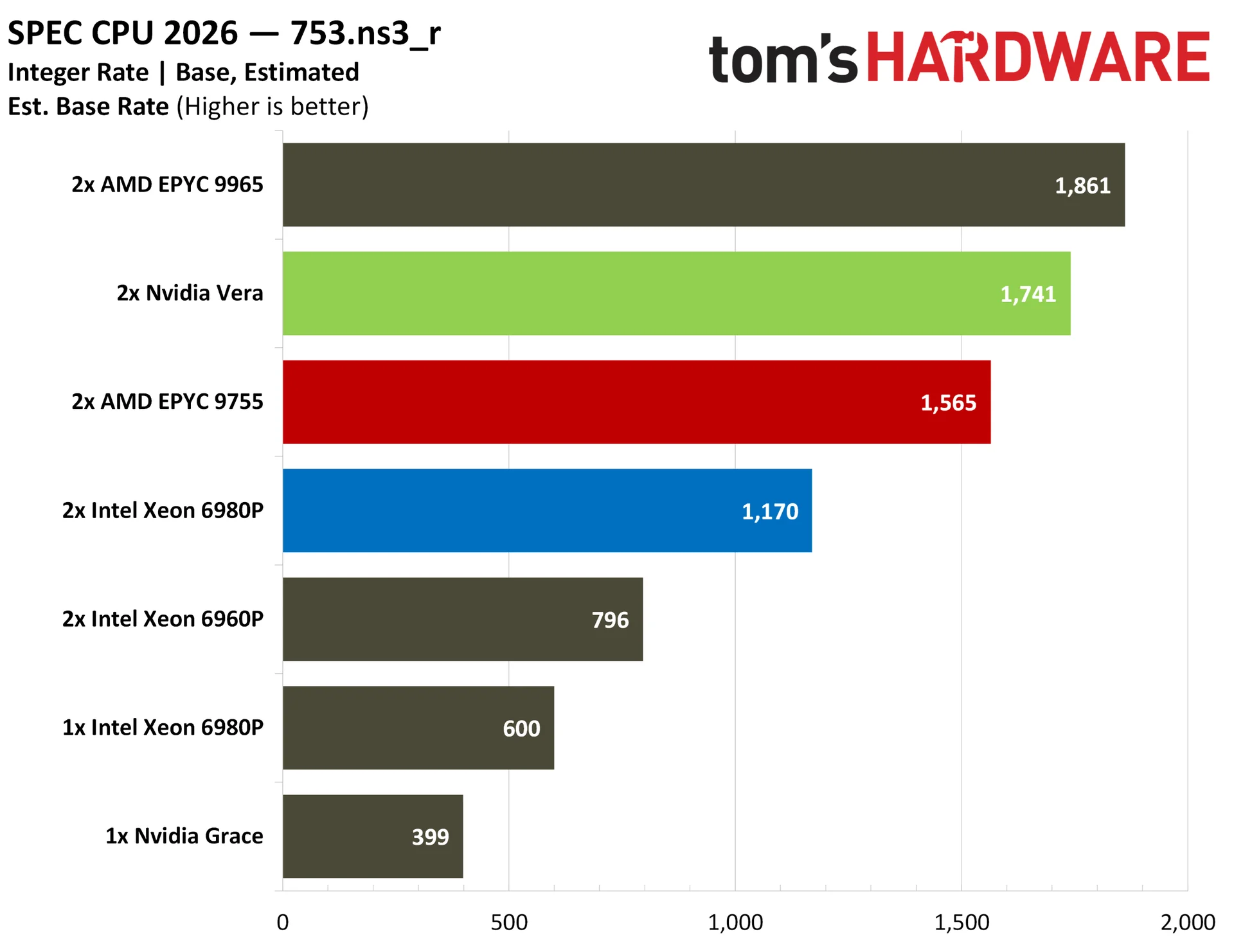
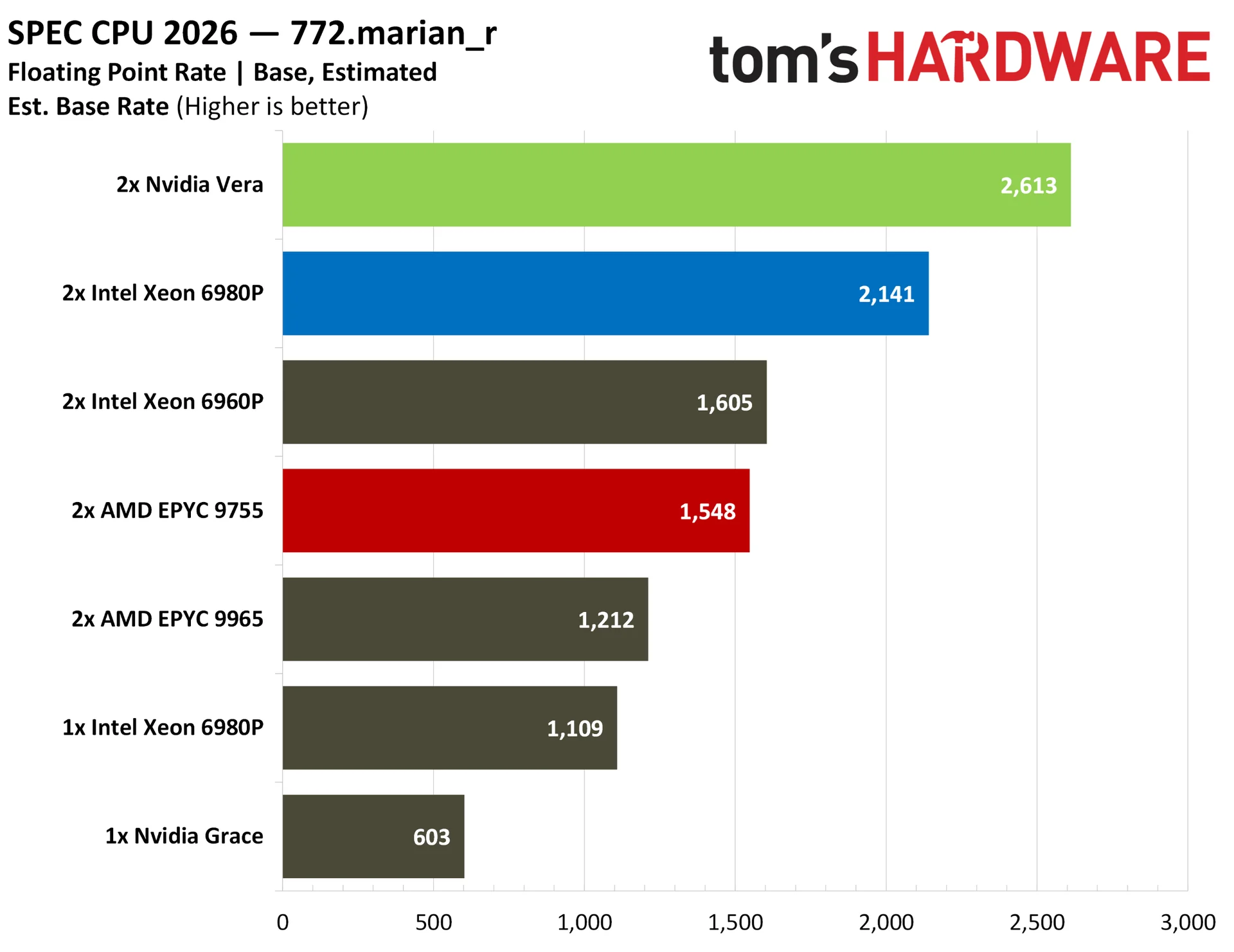
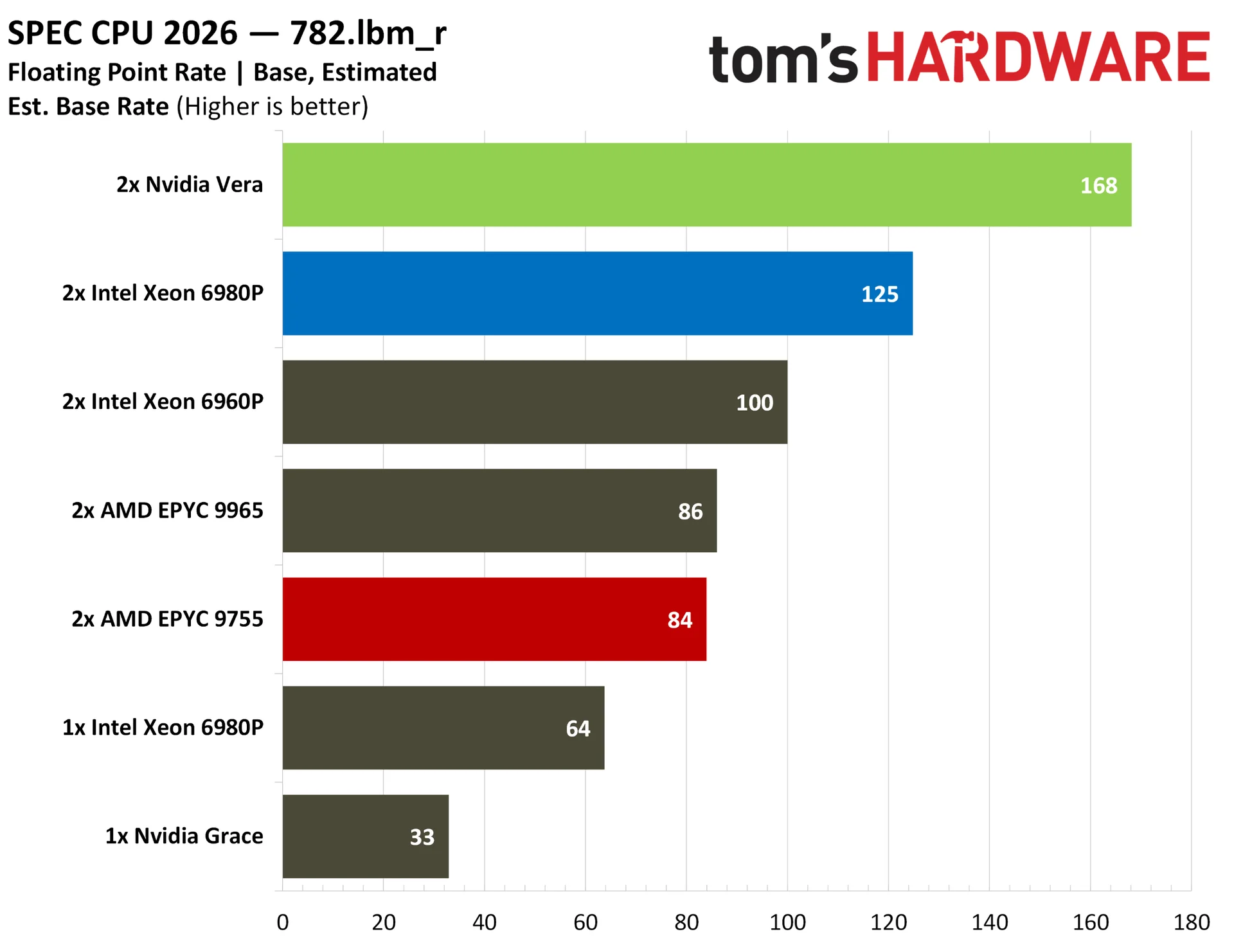
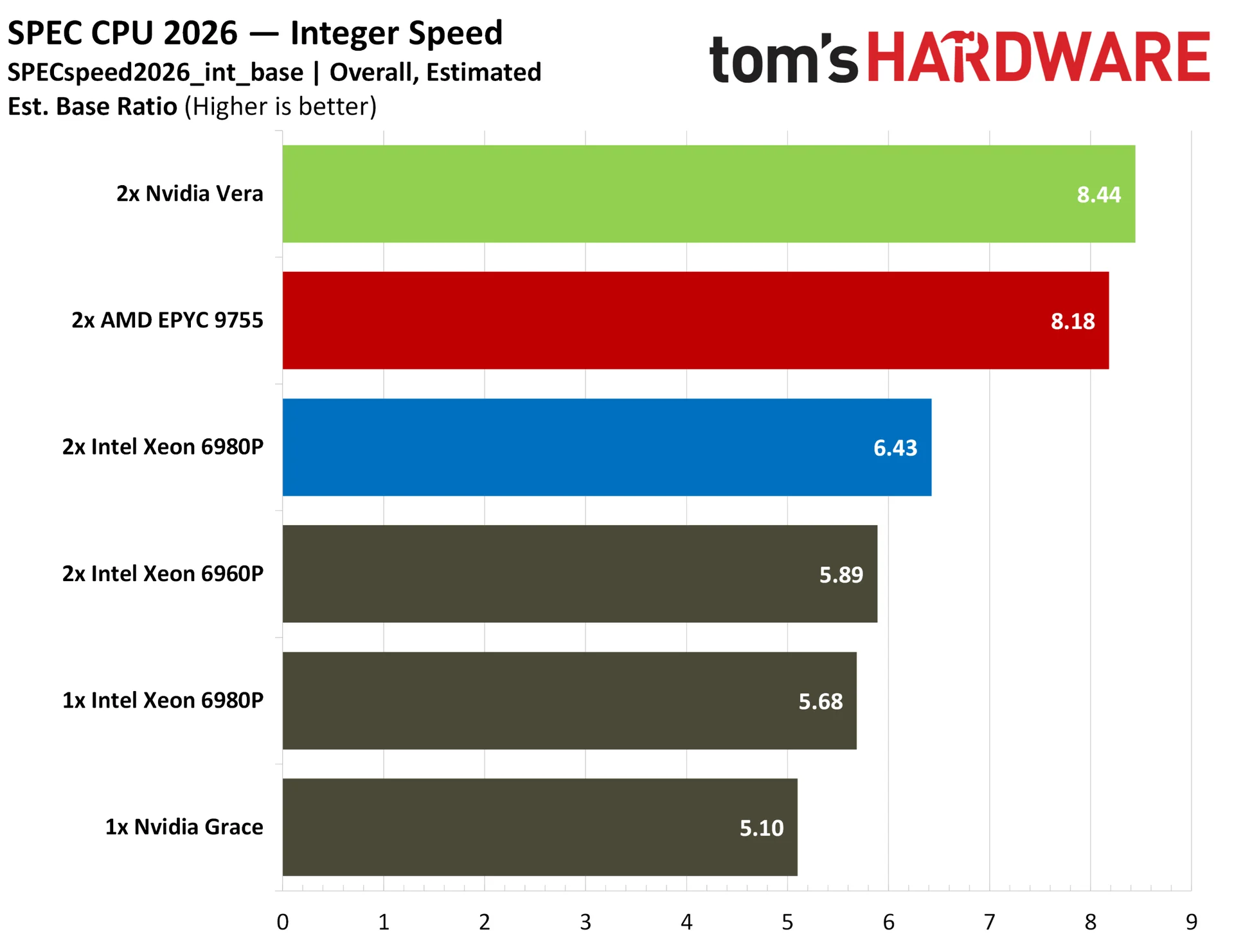
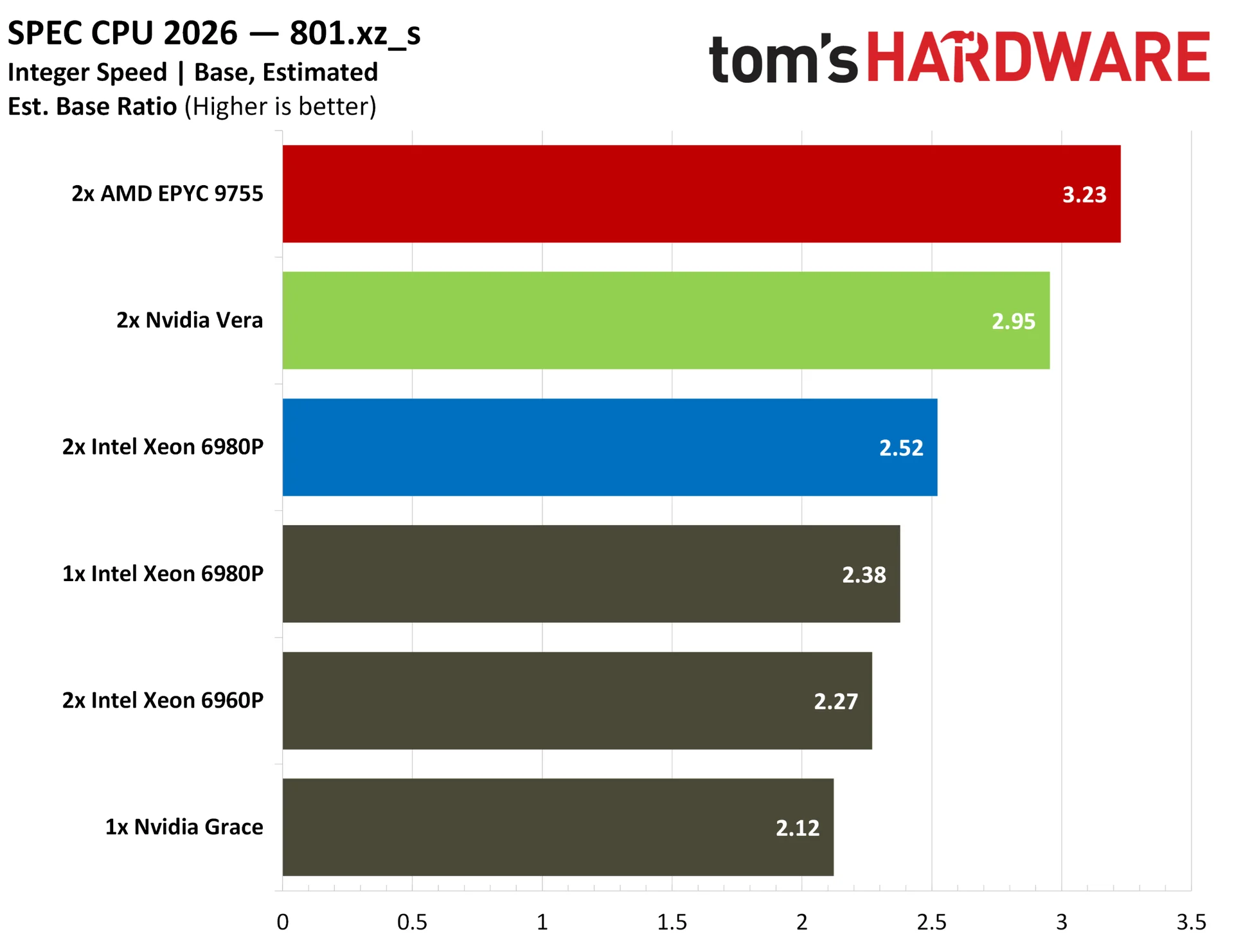
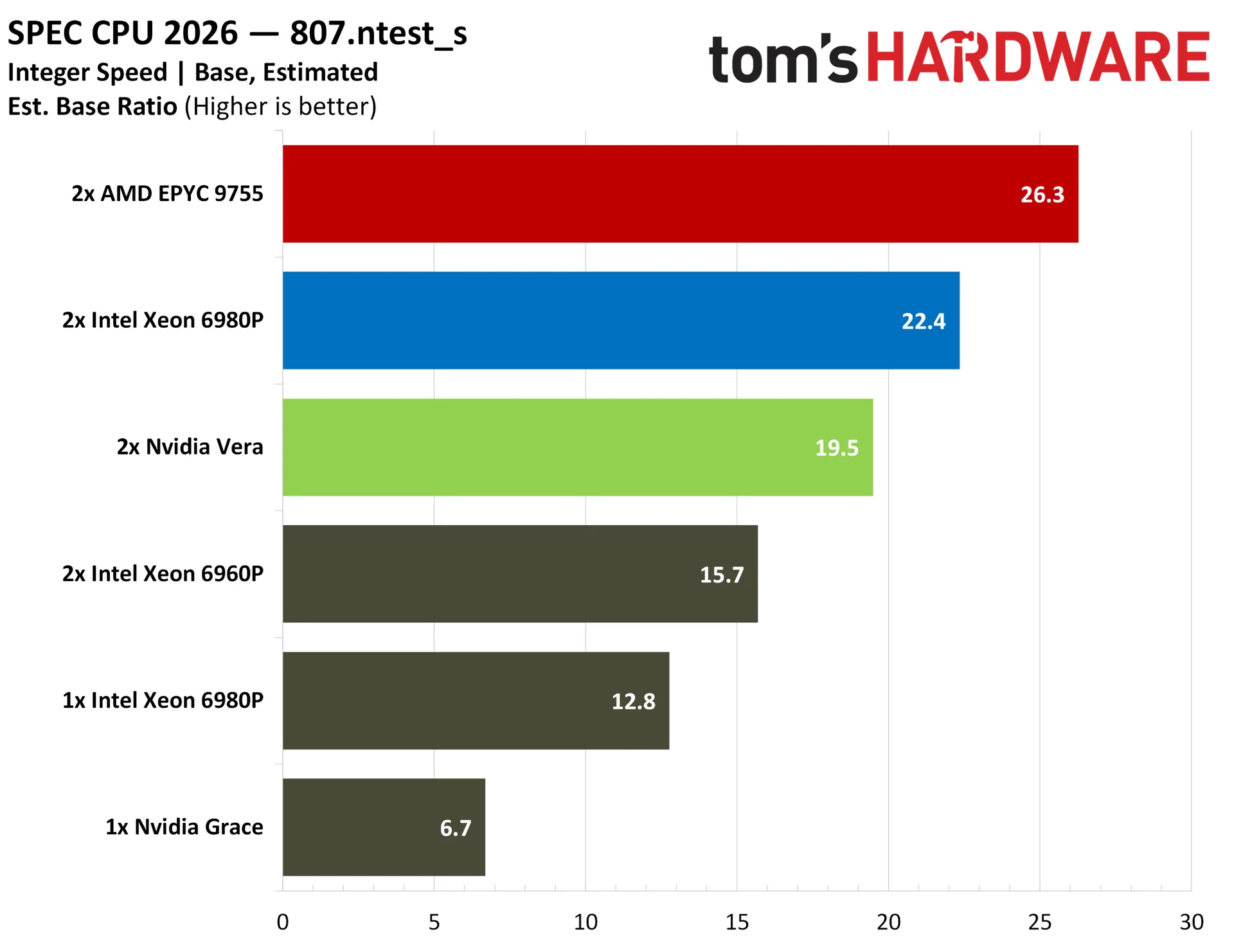
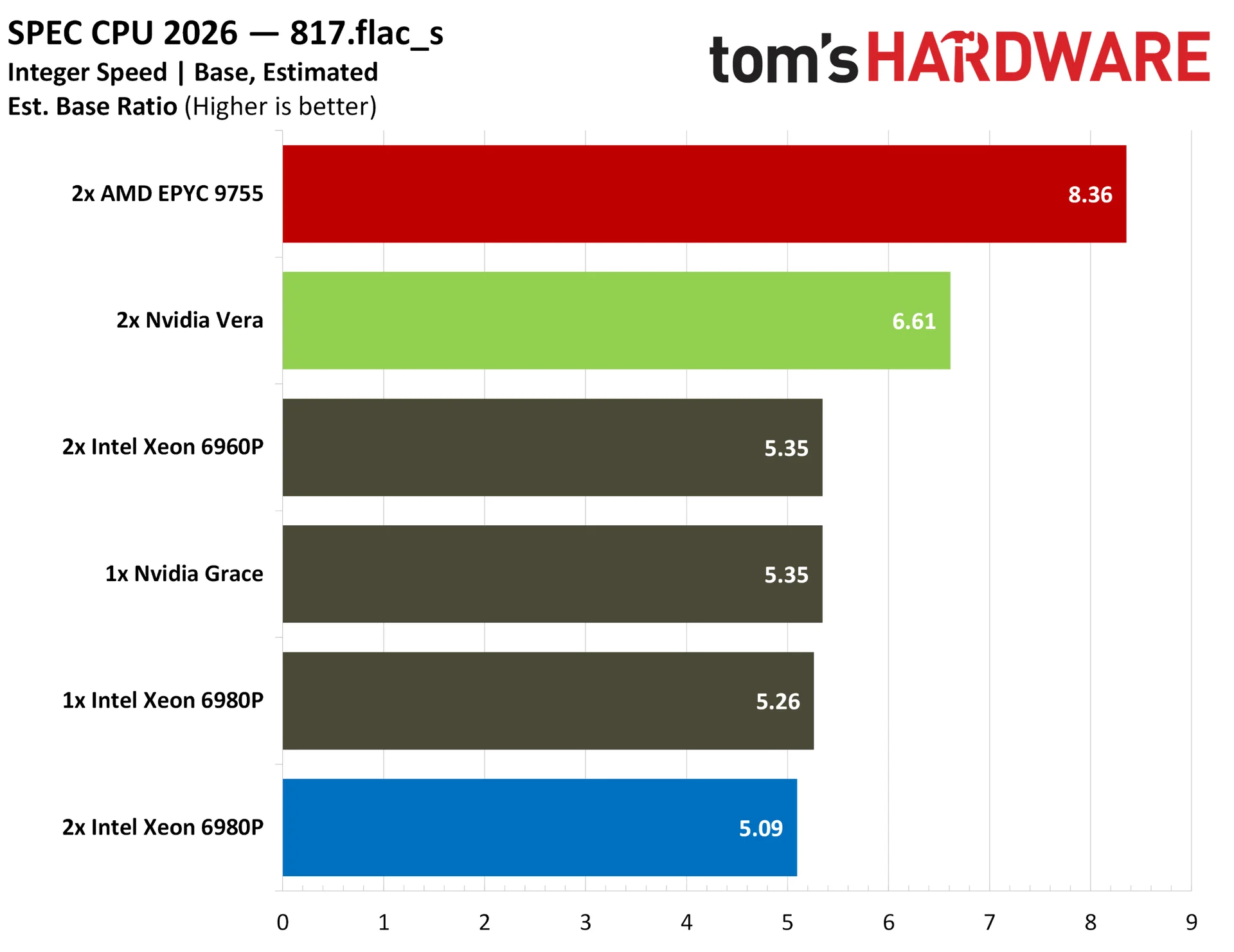
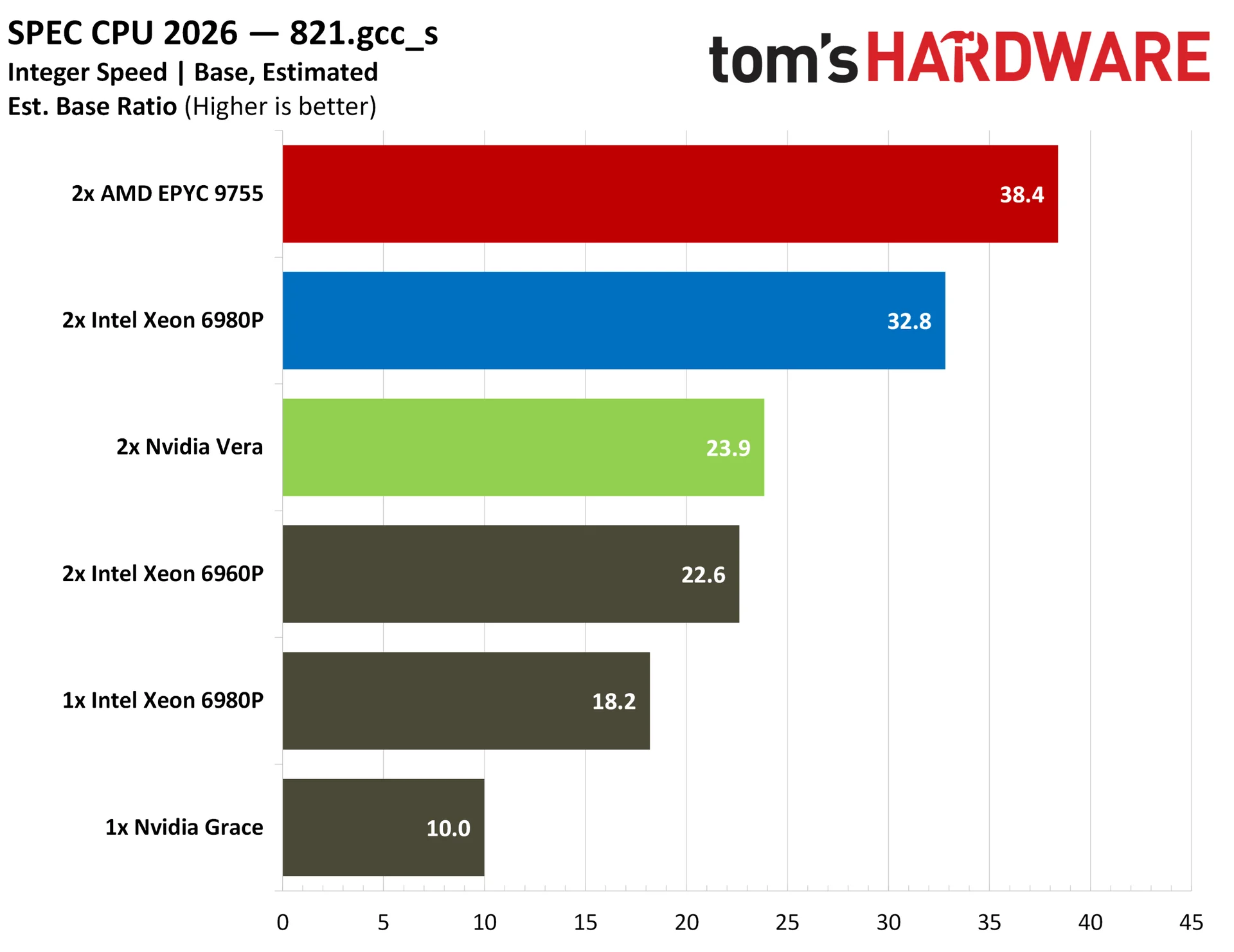
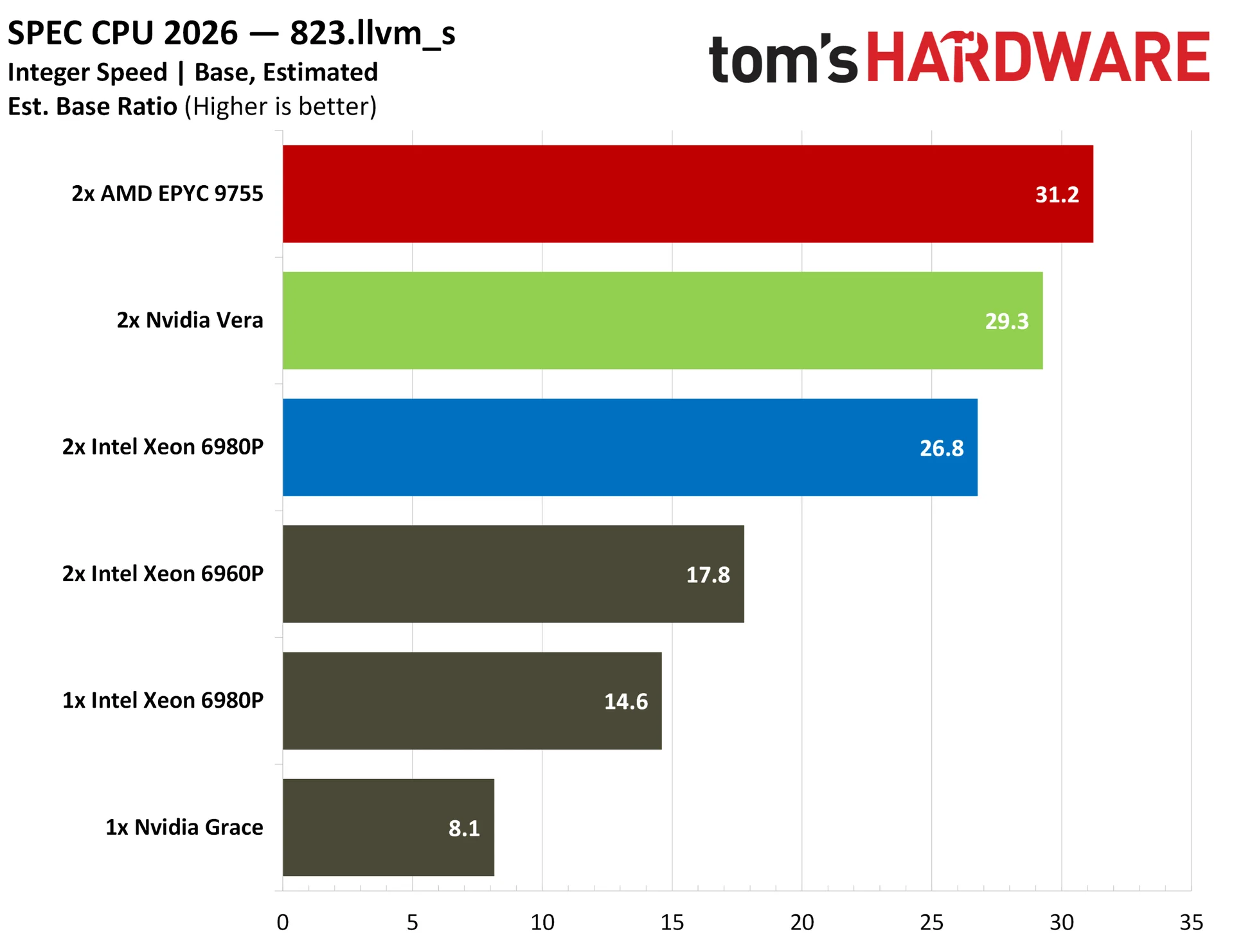
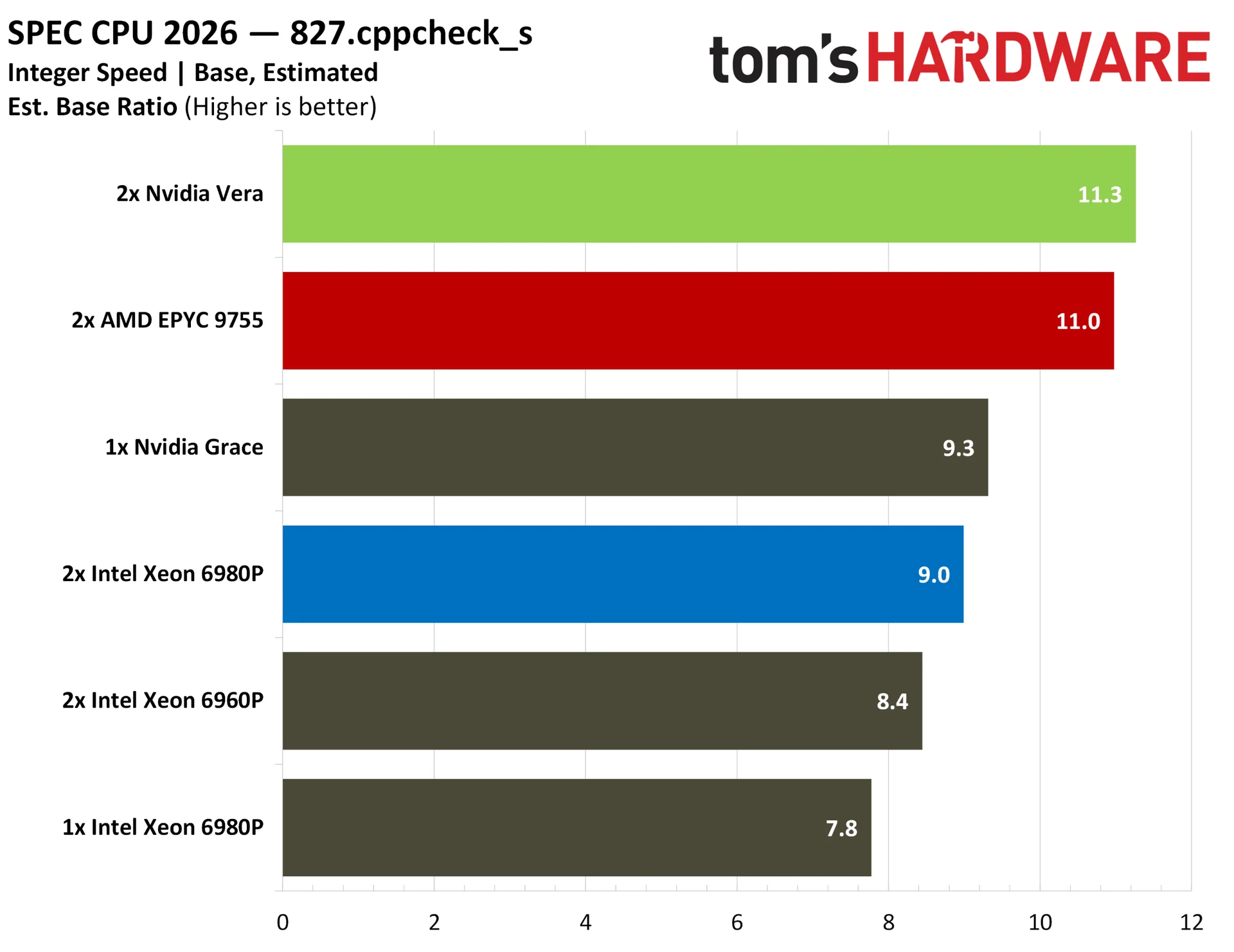
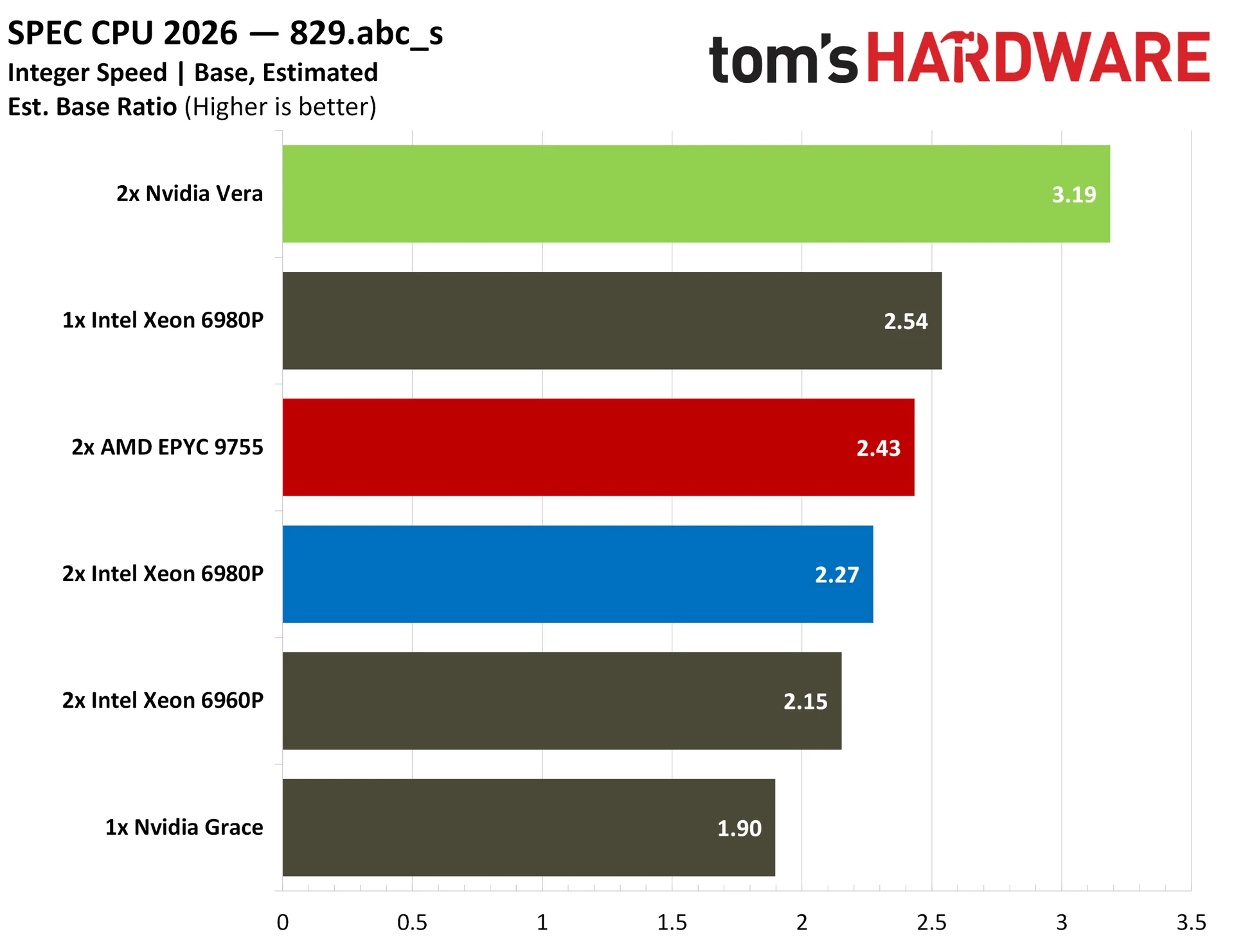
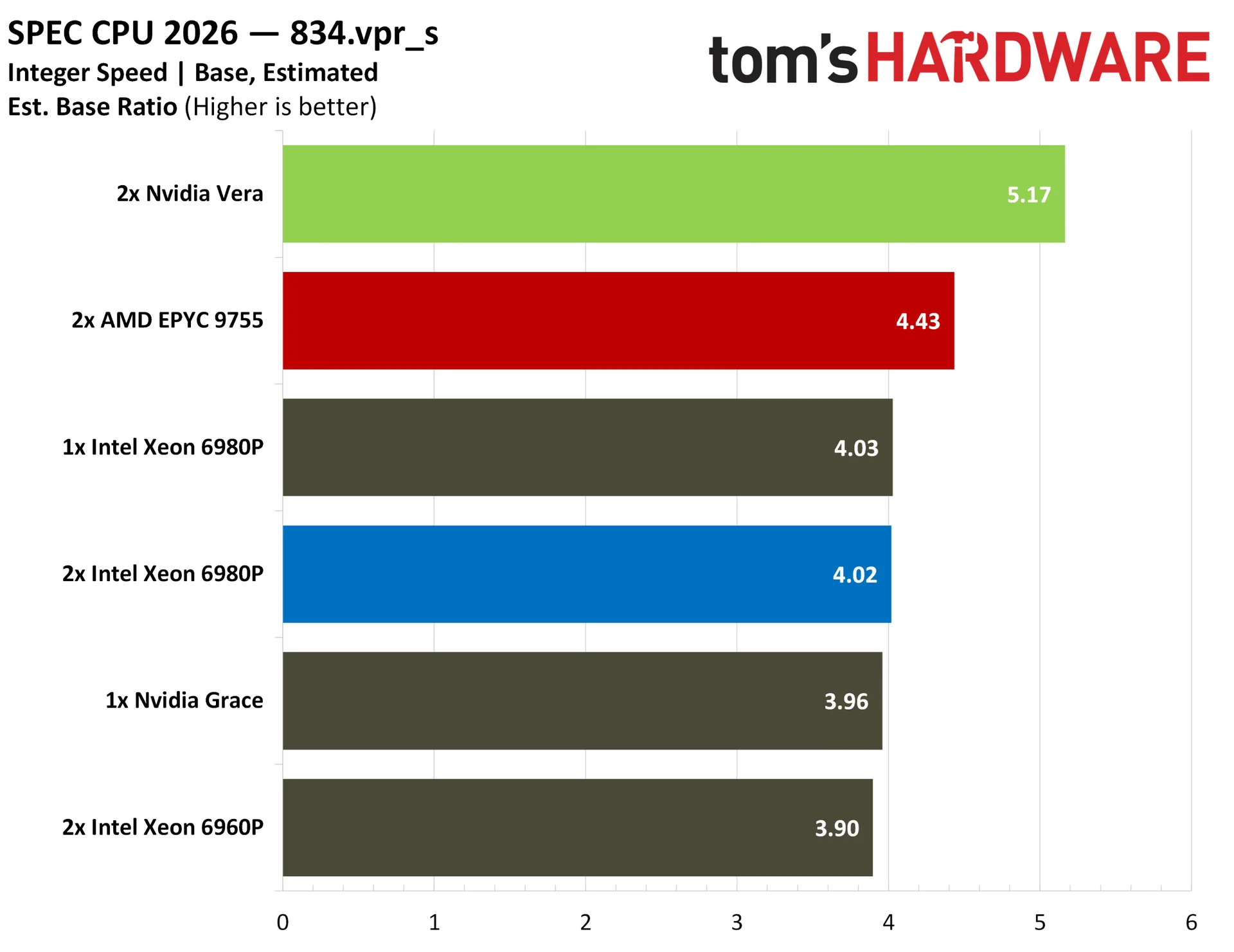
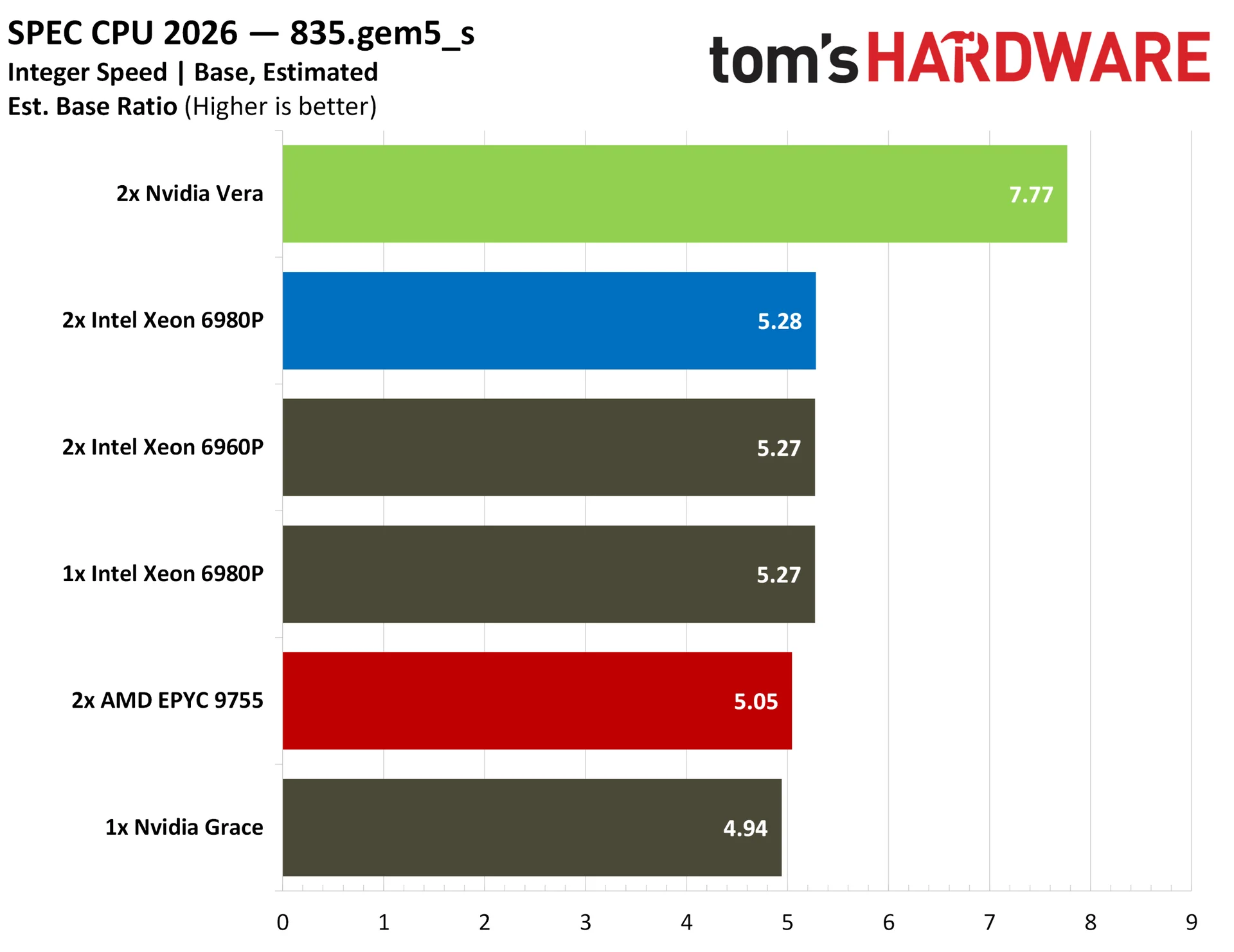
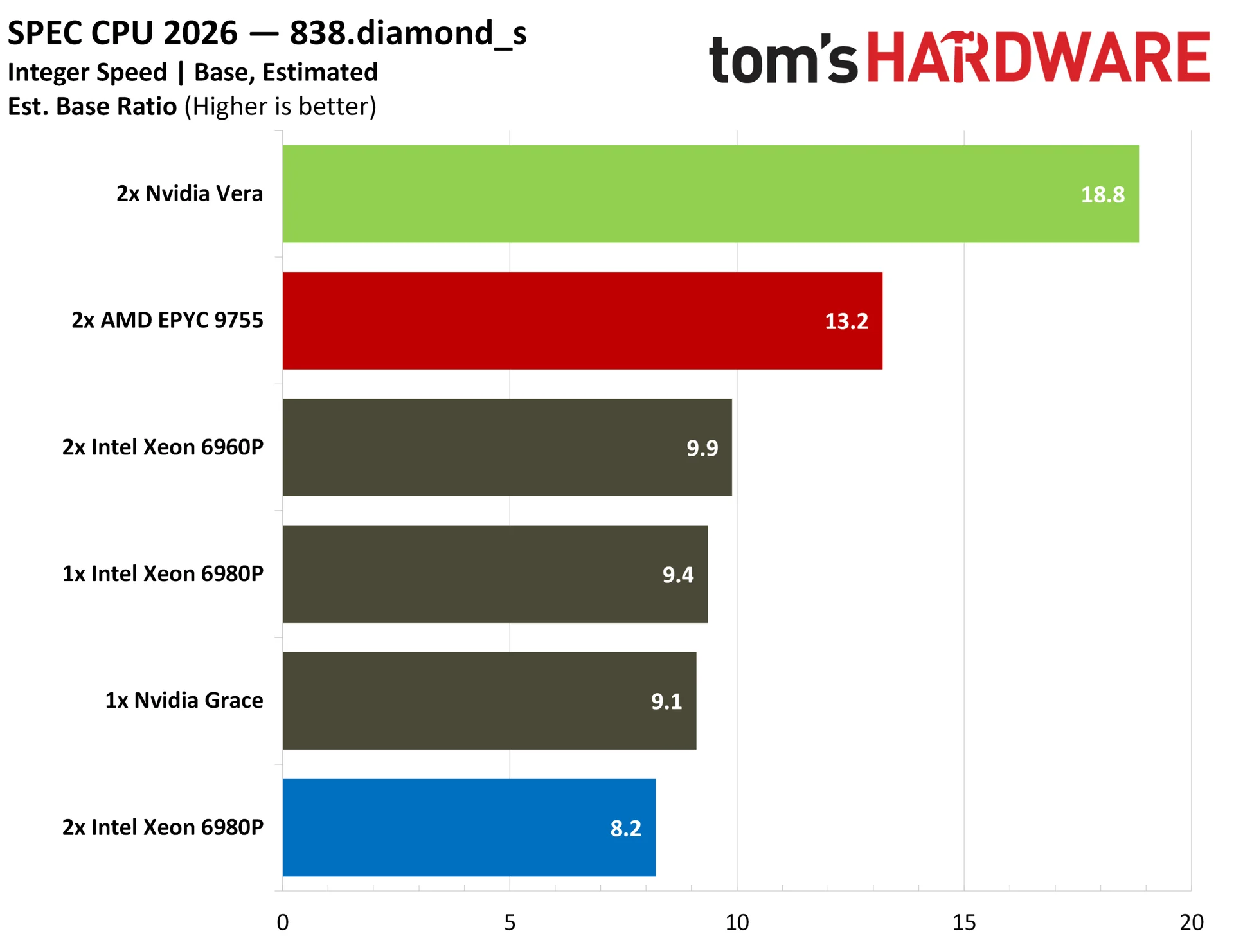
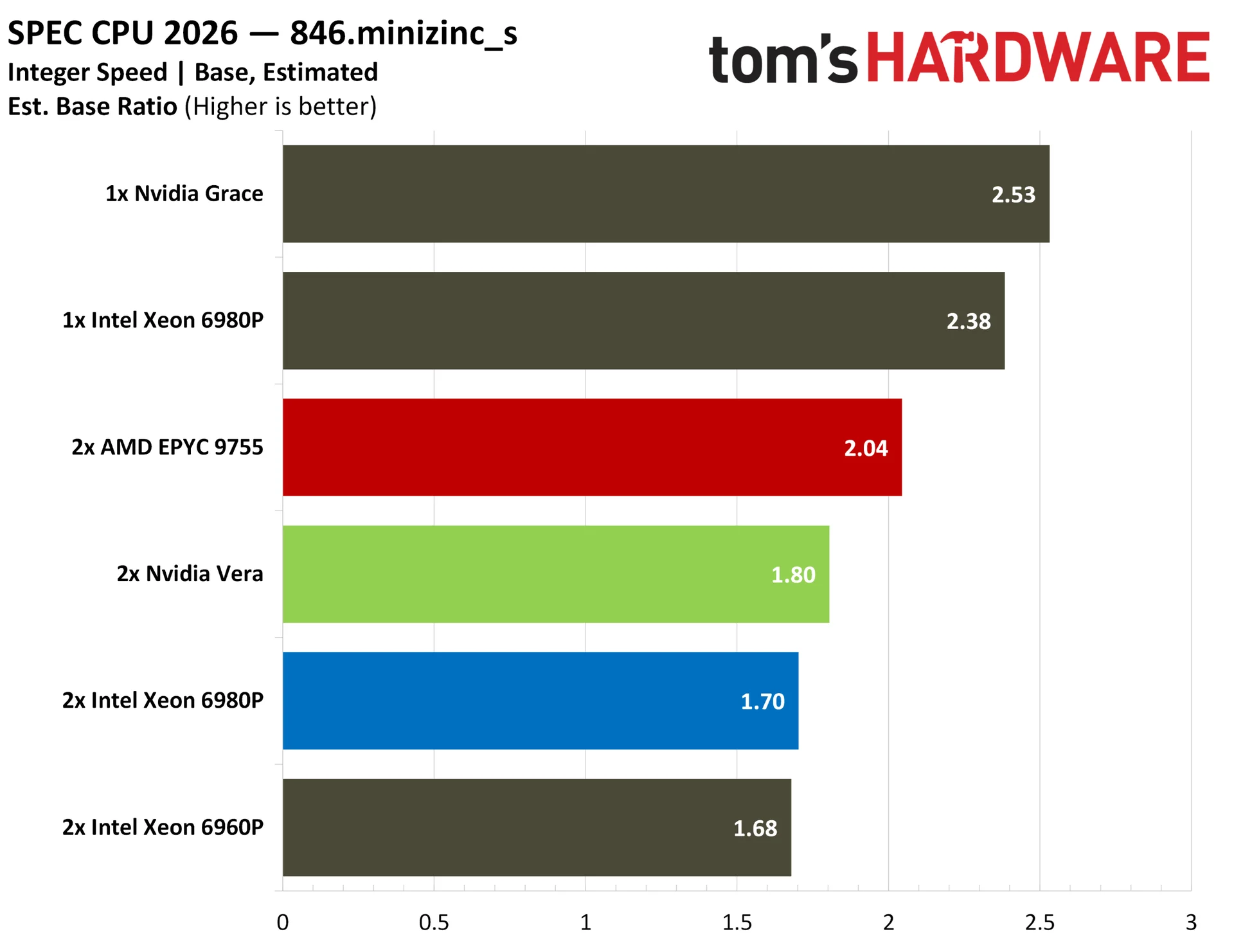
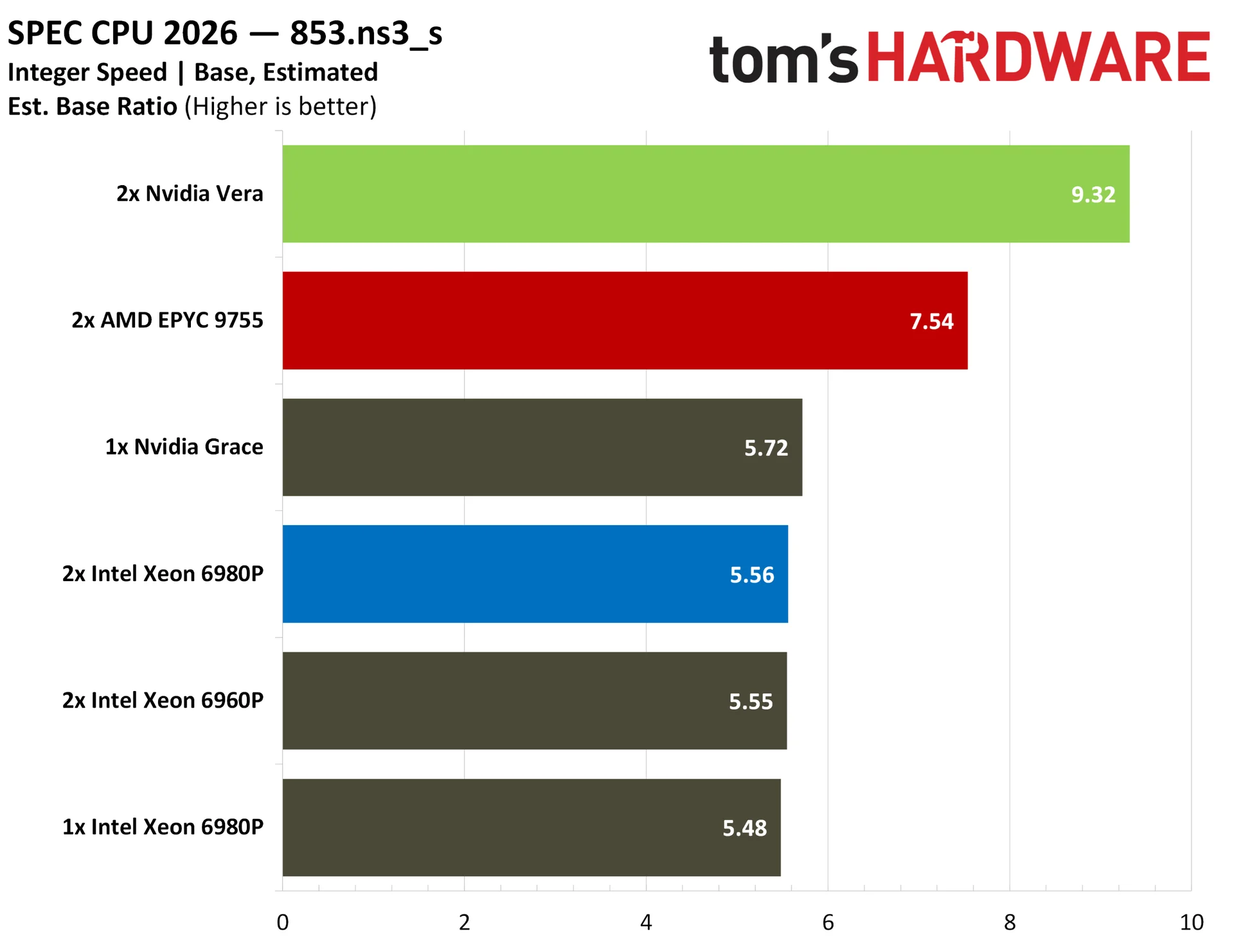
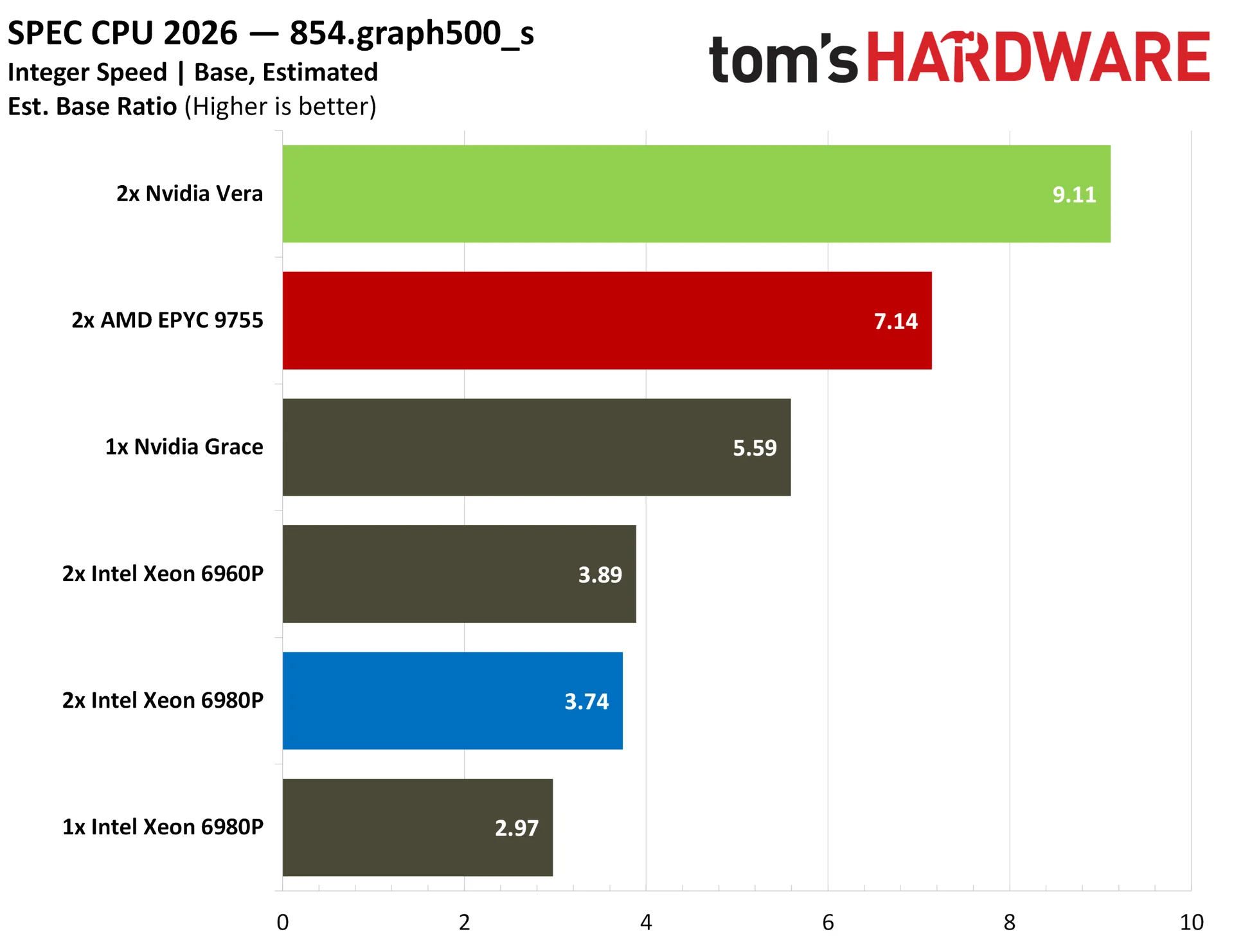
SPEC intrate runs copies of integer-heavy applications across available threads to measure throughput under simultaneous workloads. Vera’s overall result is close to Nvidia’s published figure: Nvidia reported a 3% lead over EPYC 9755, while our tests put the lead at 1.5%. That comparison needs context. The two-socket EPYC 9755 system has 512 threads, against 352 for Vera, and Vera’s per-core performance is markedly stronger.
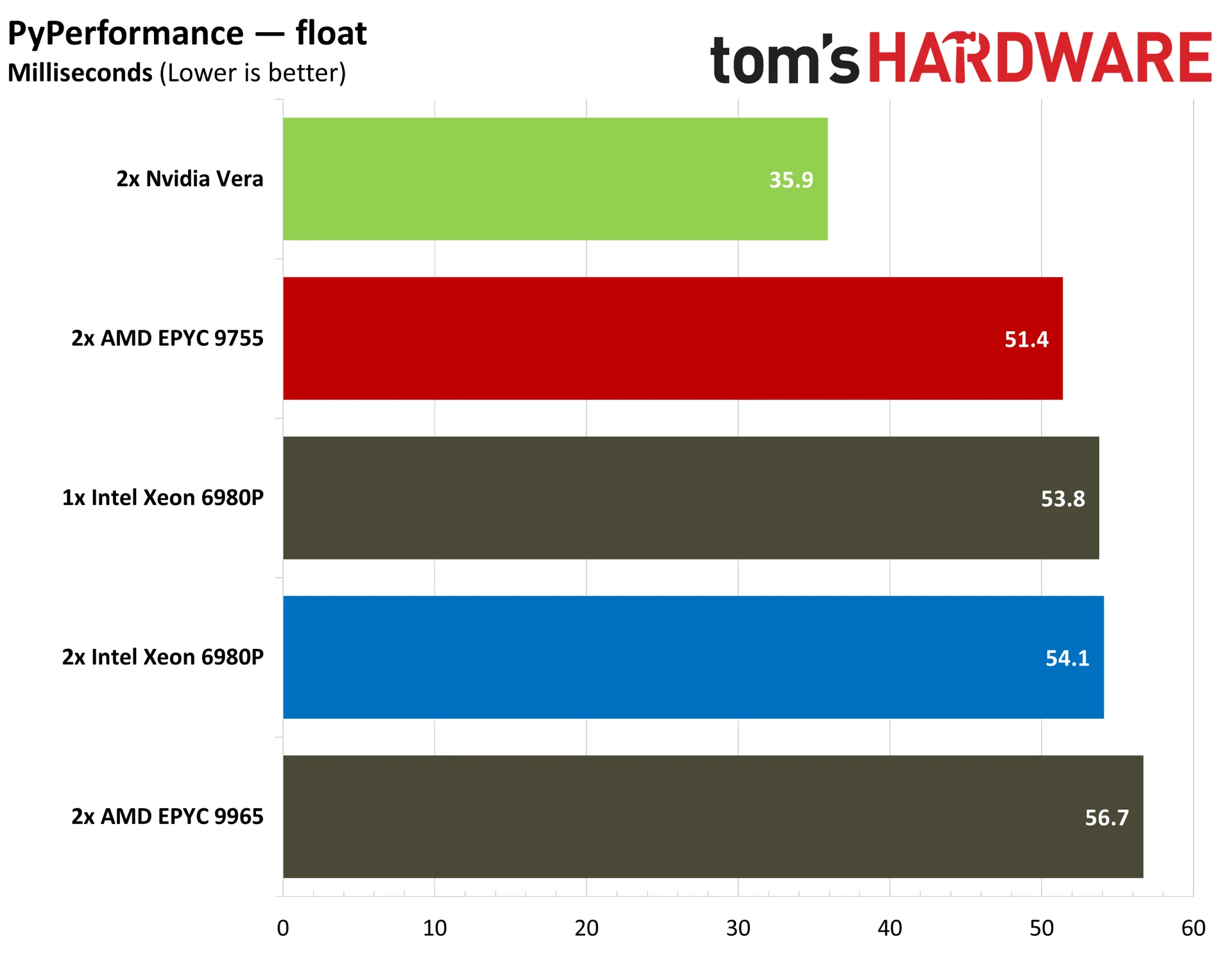
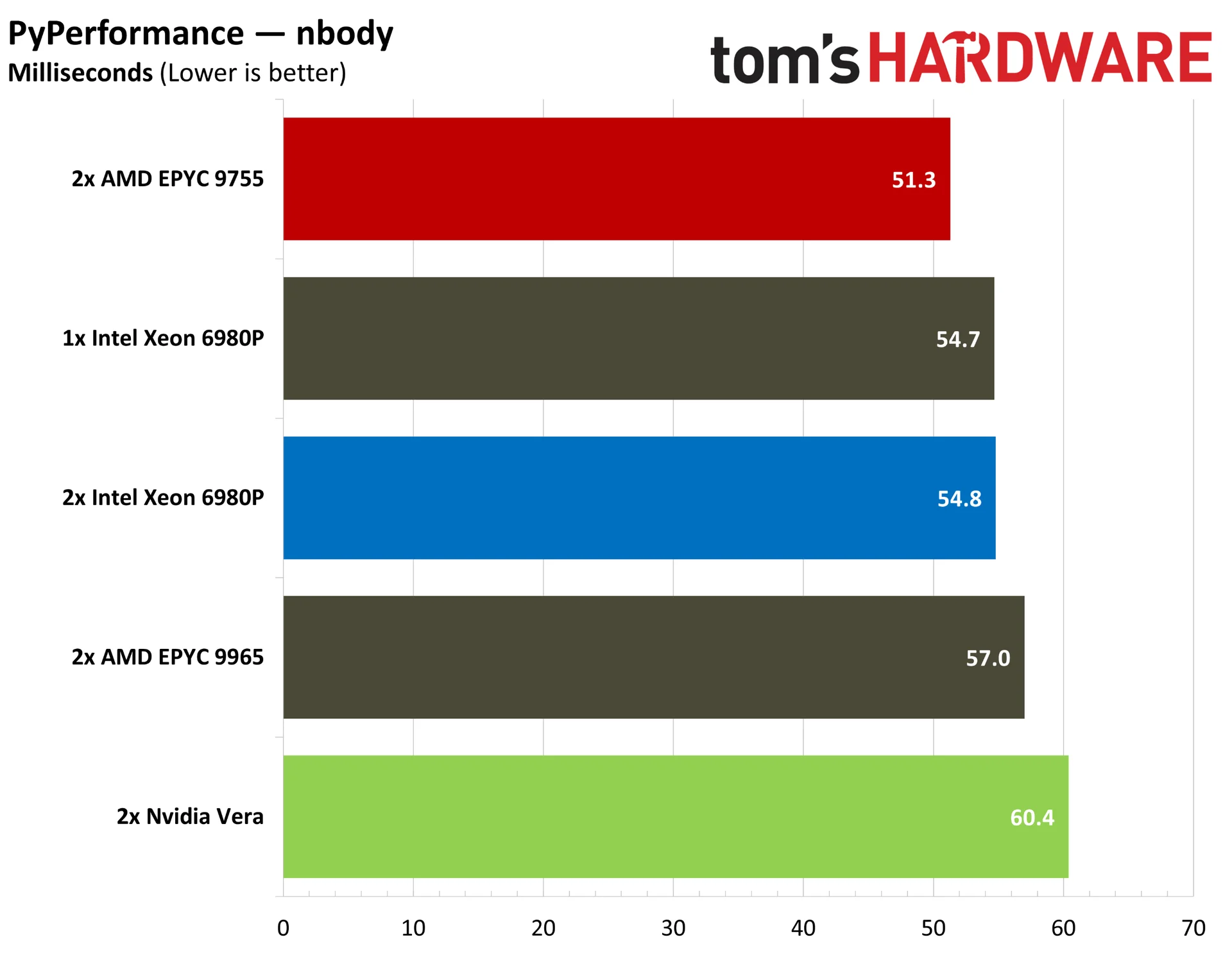
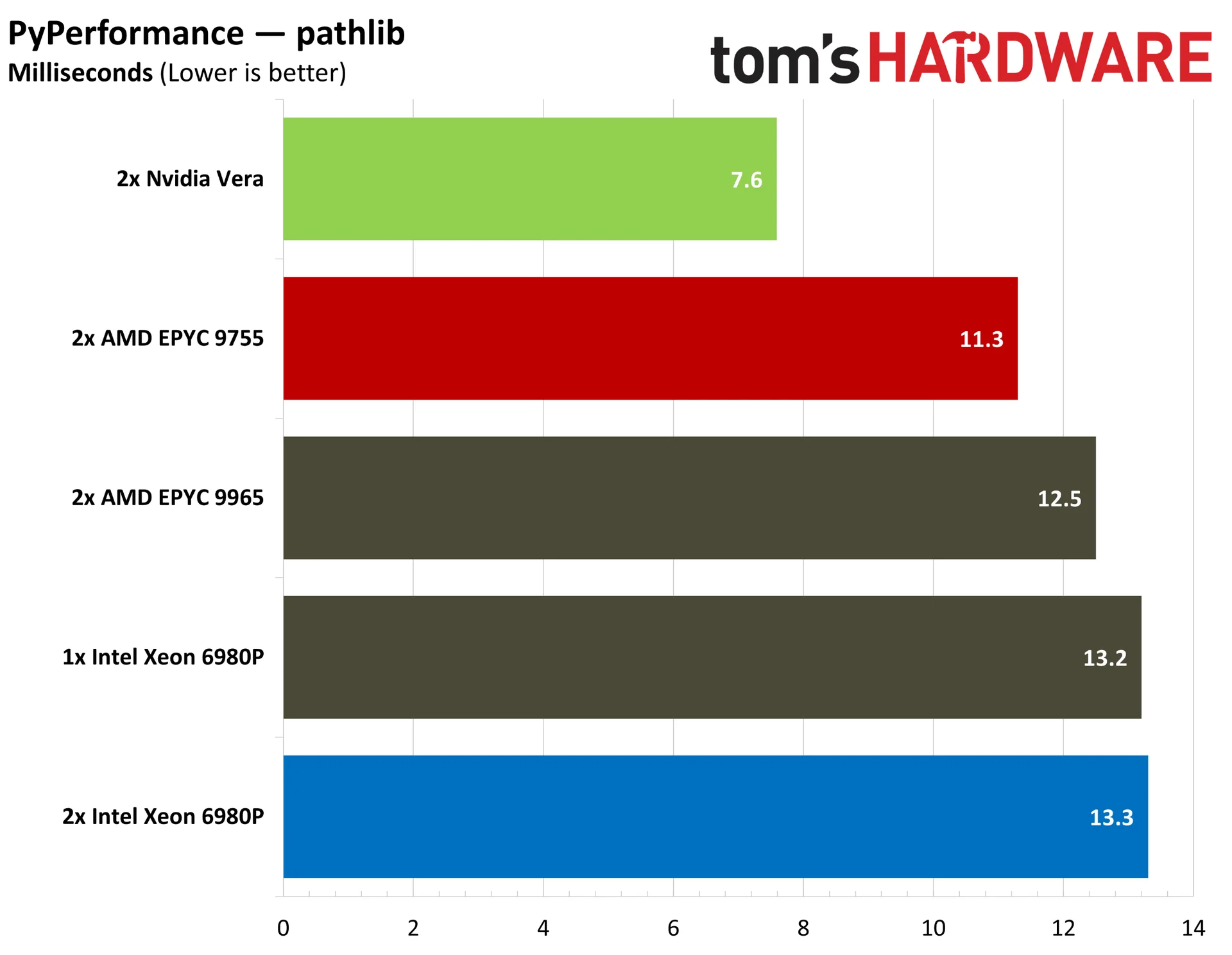
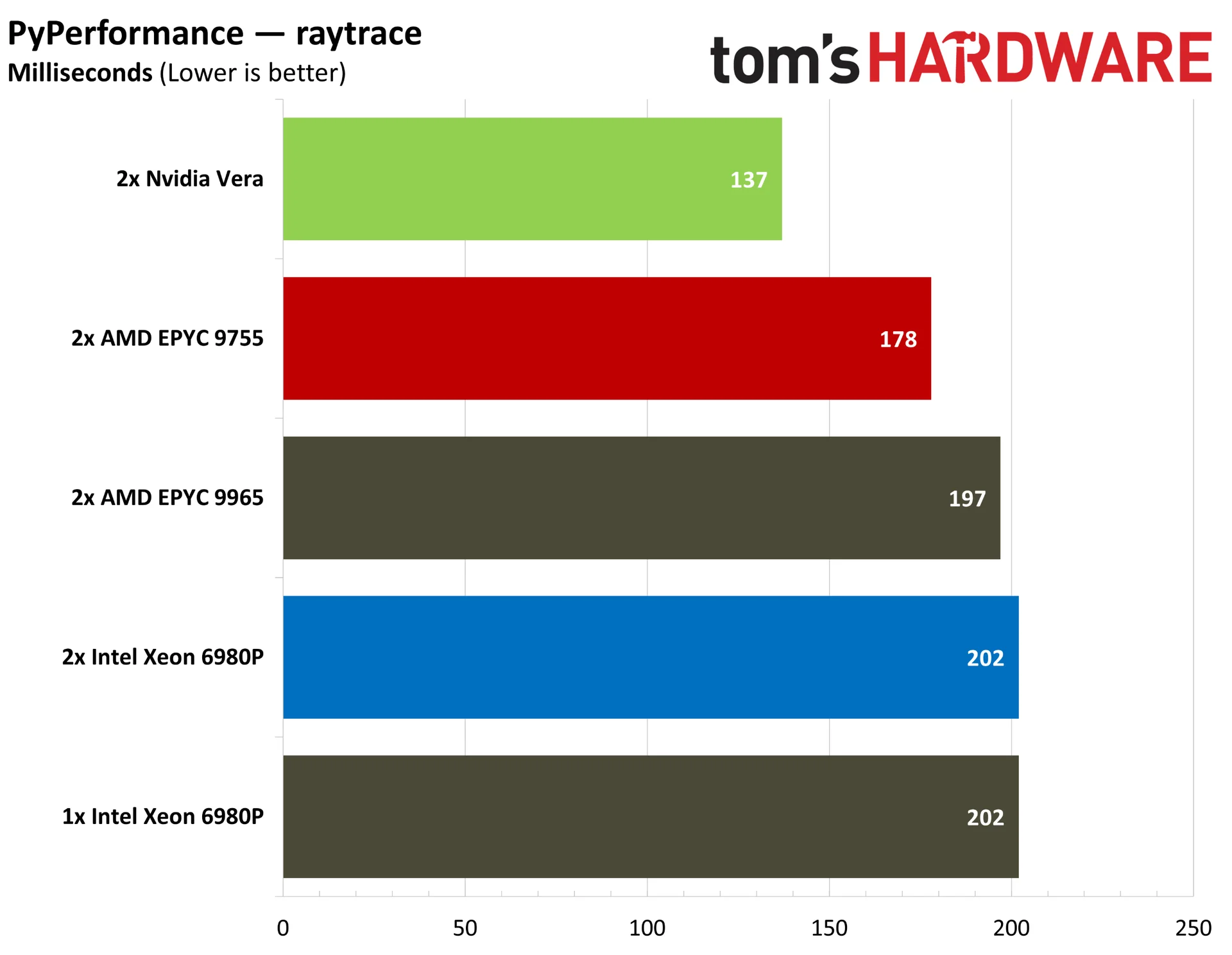
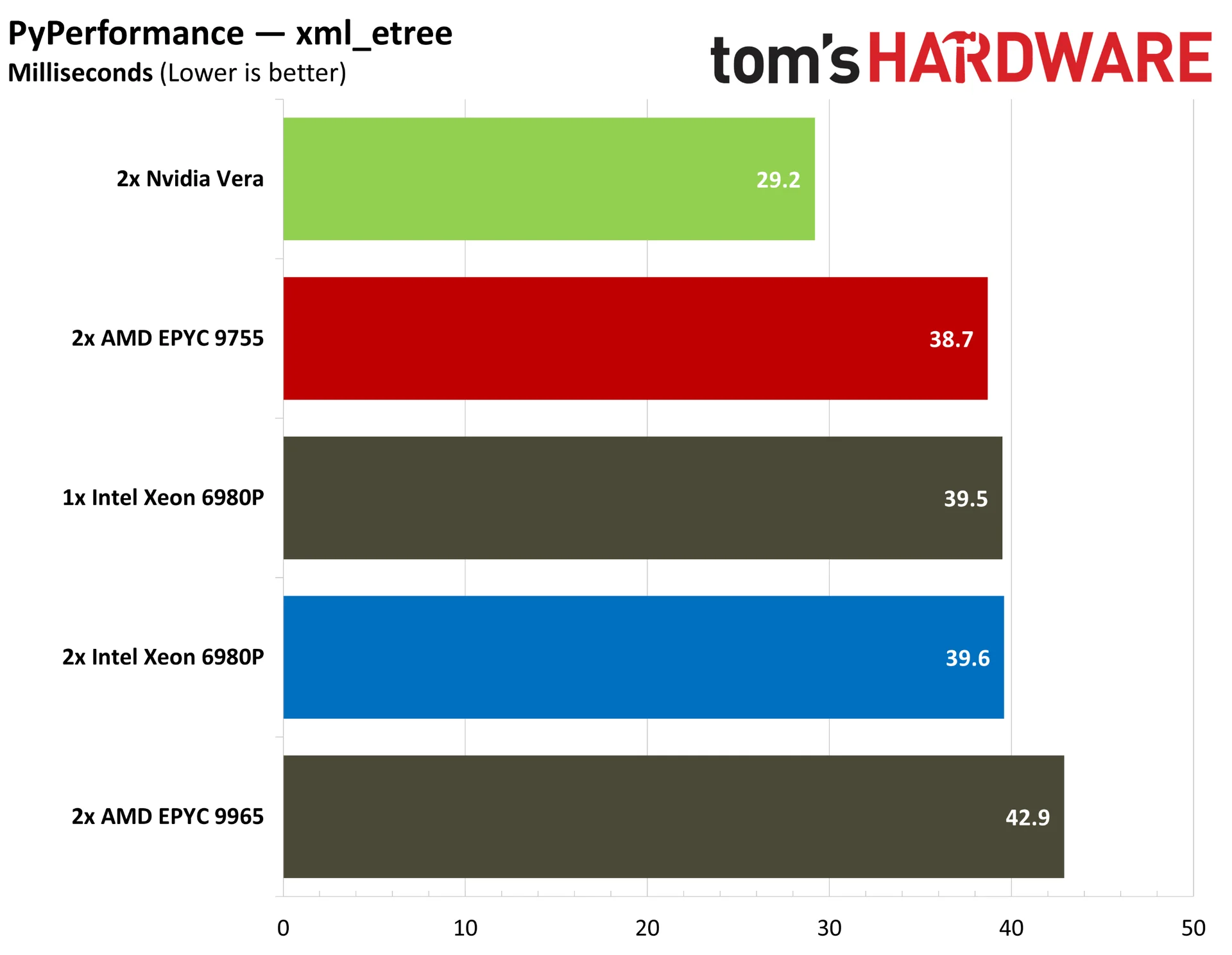
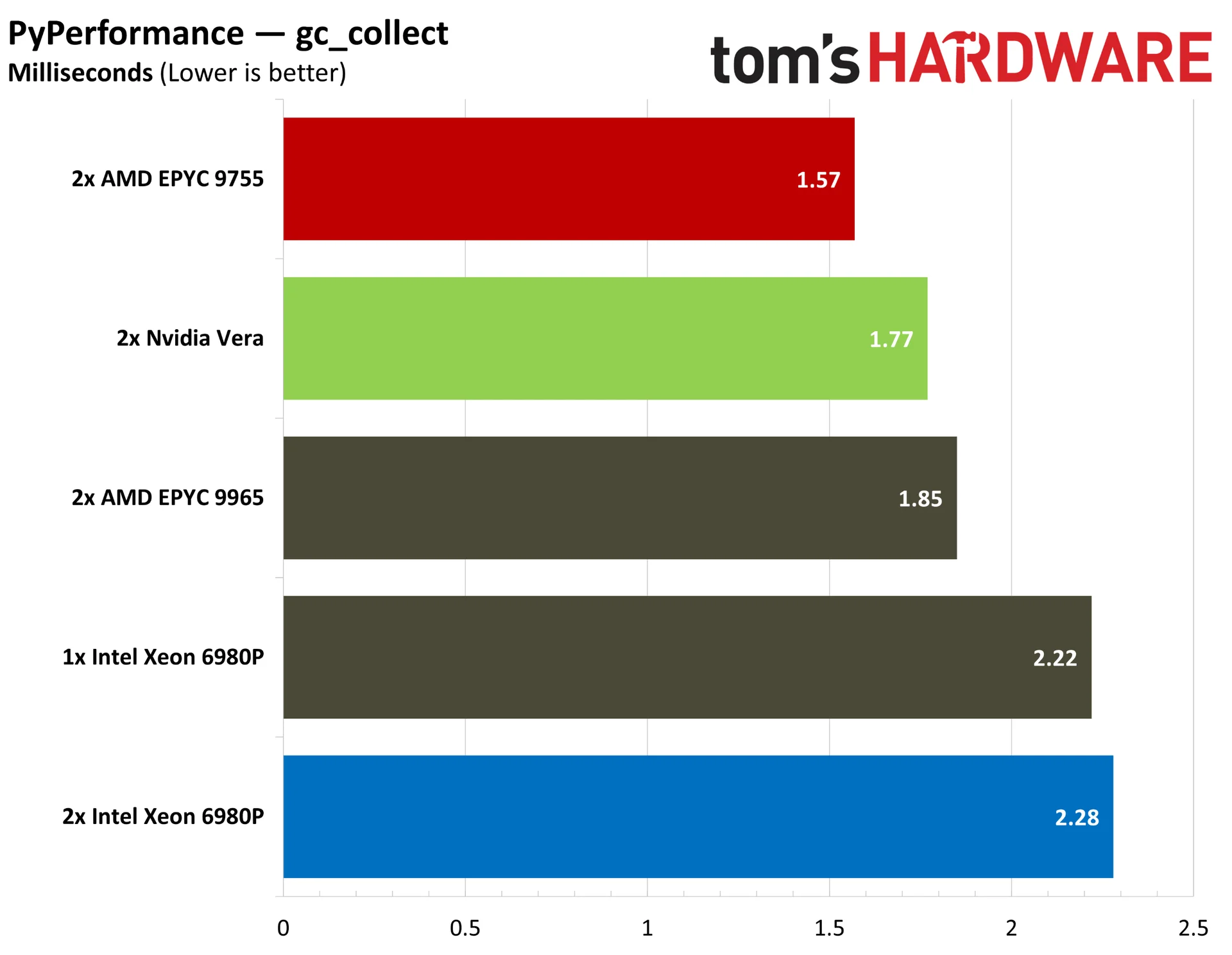
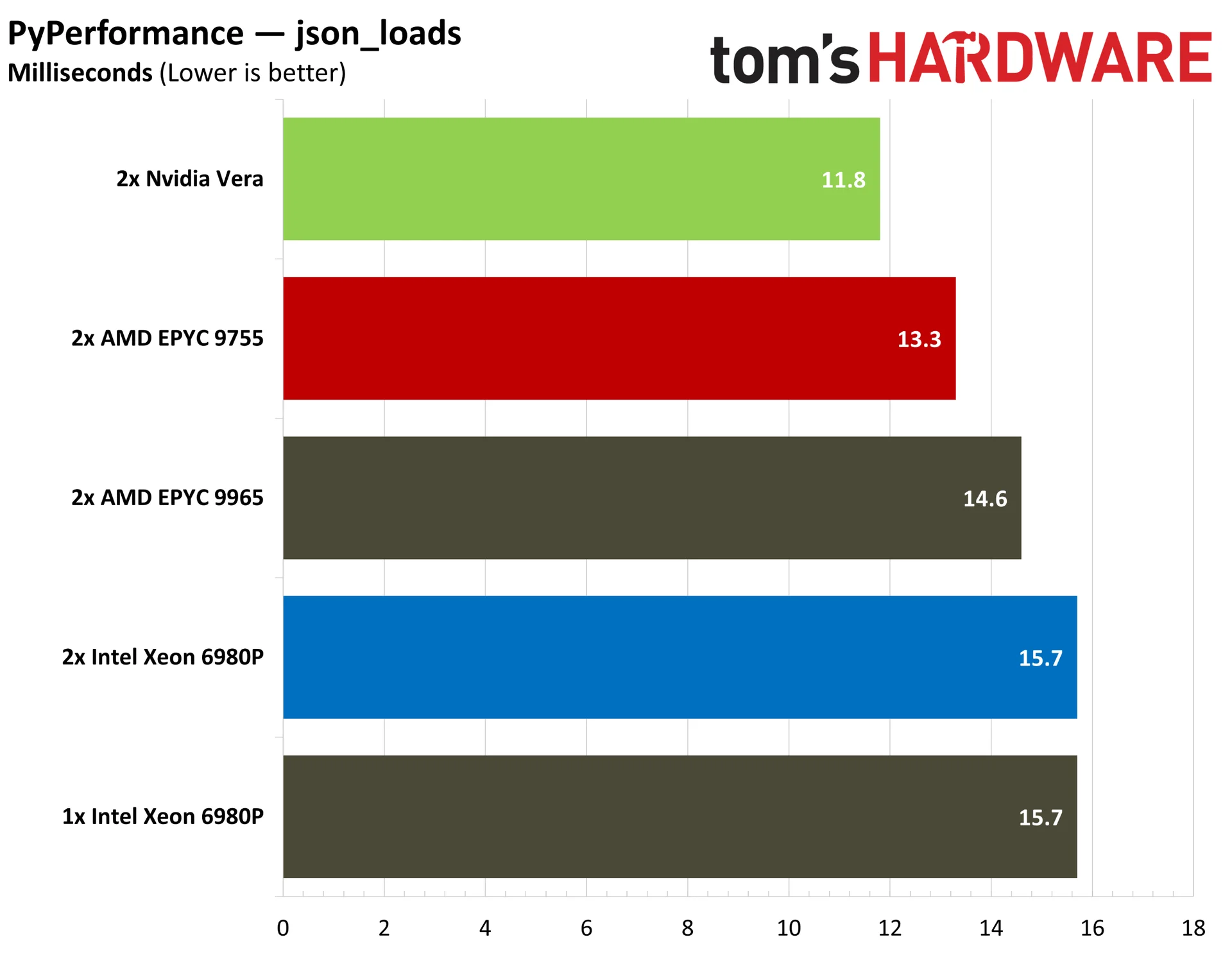
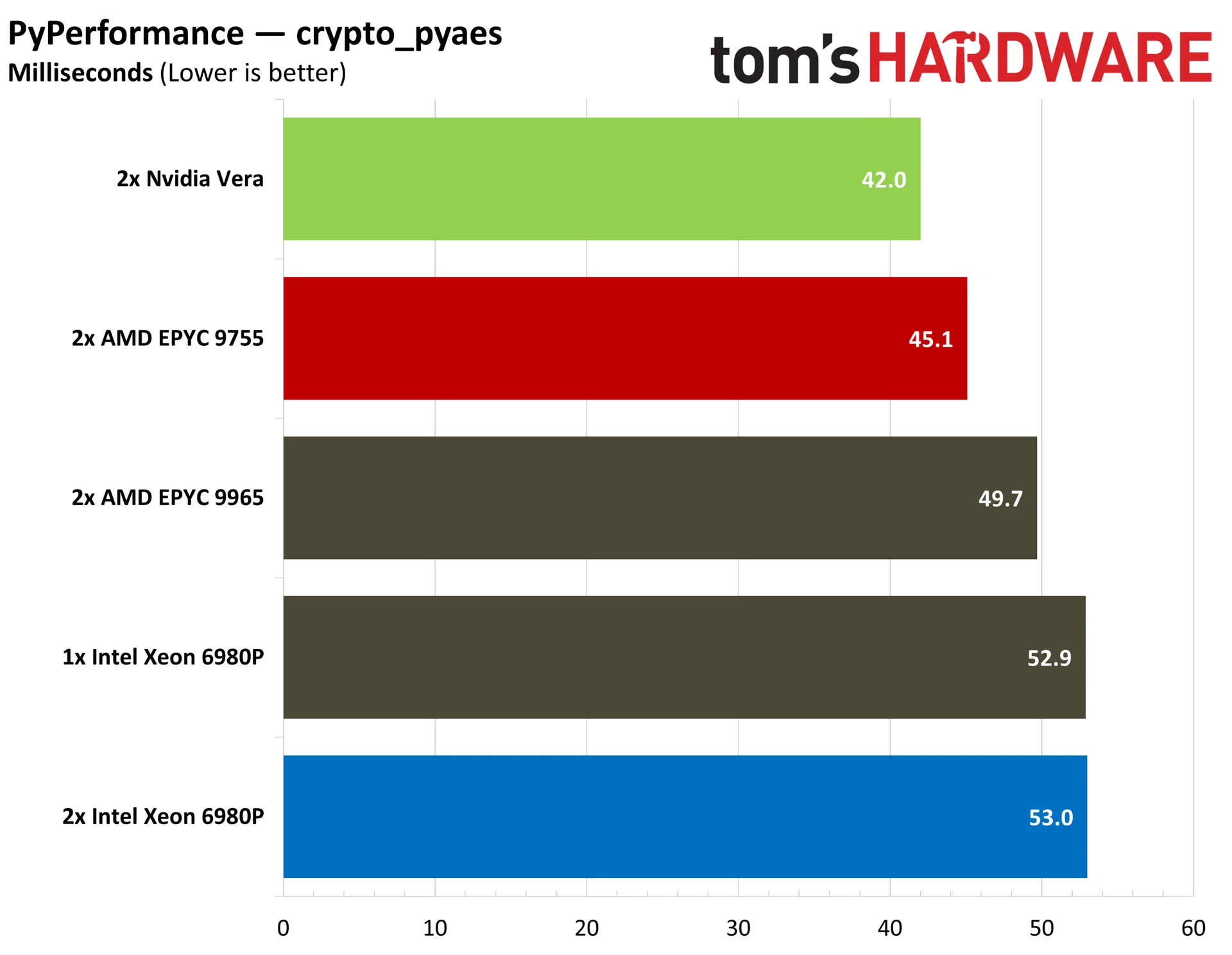
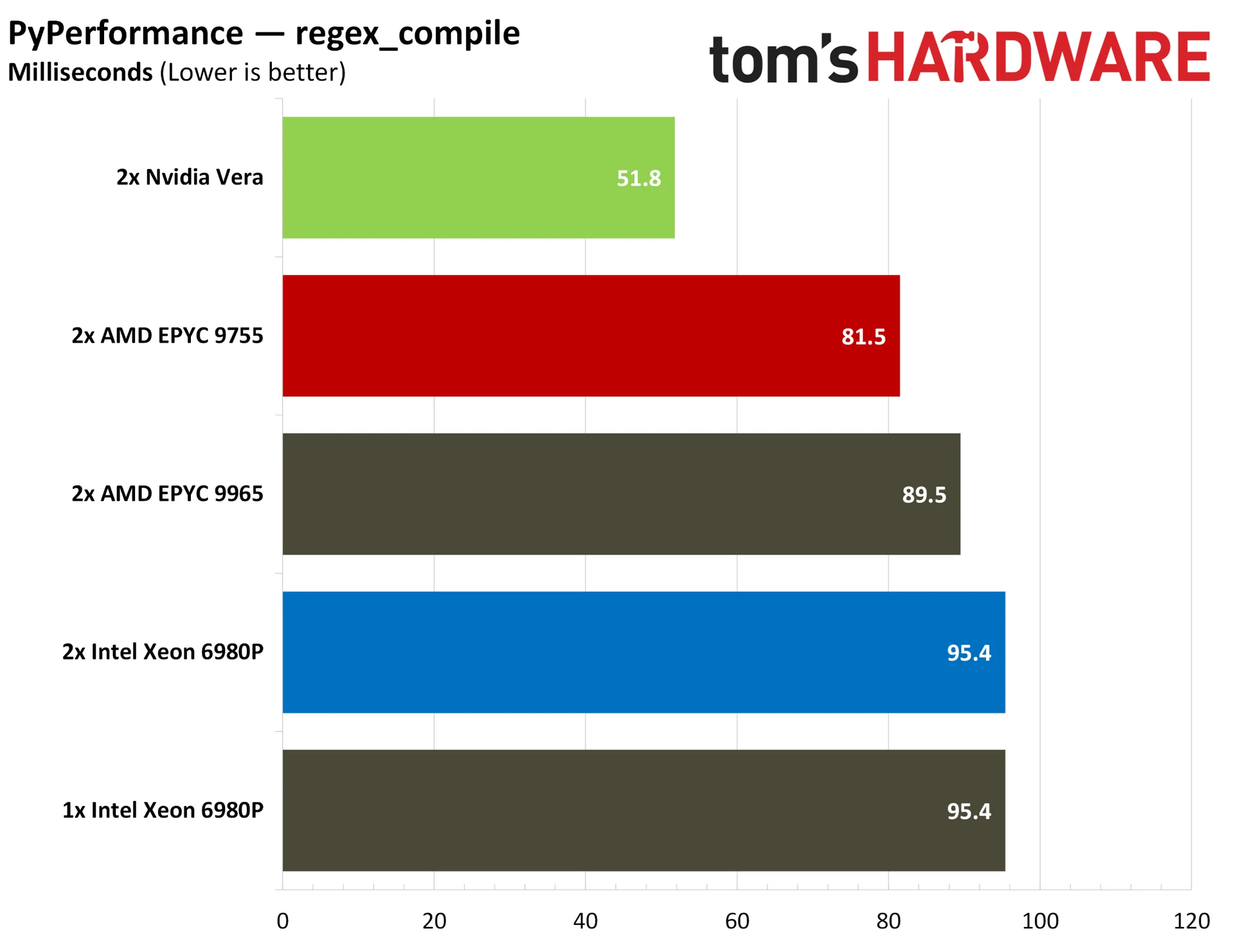
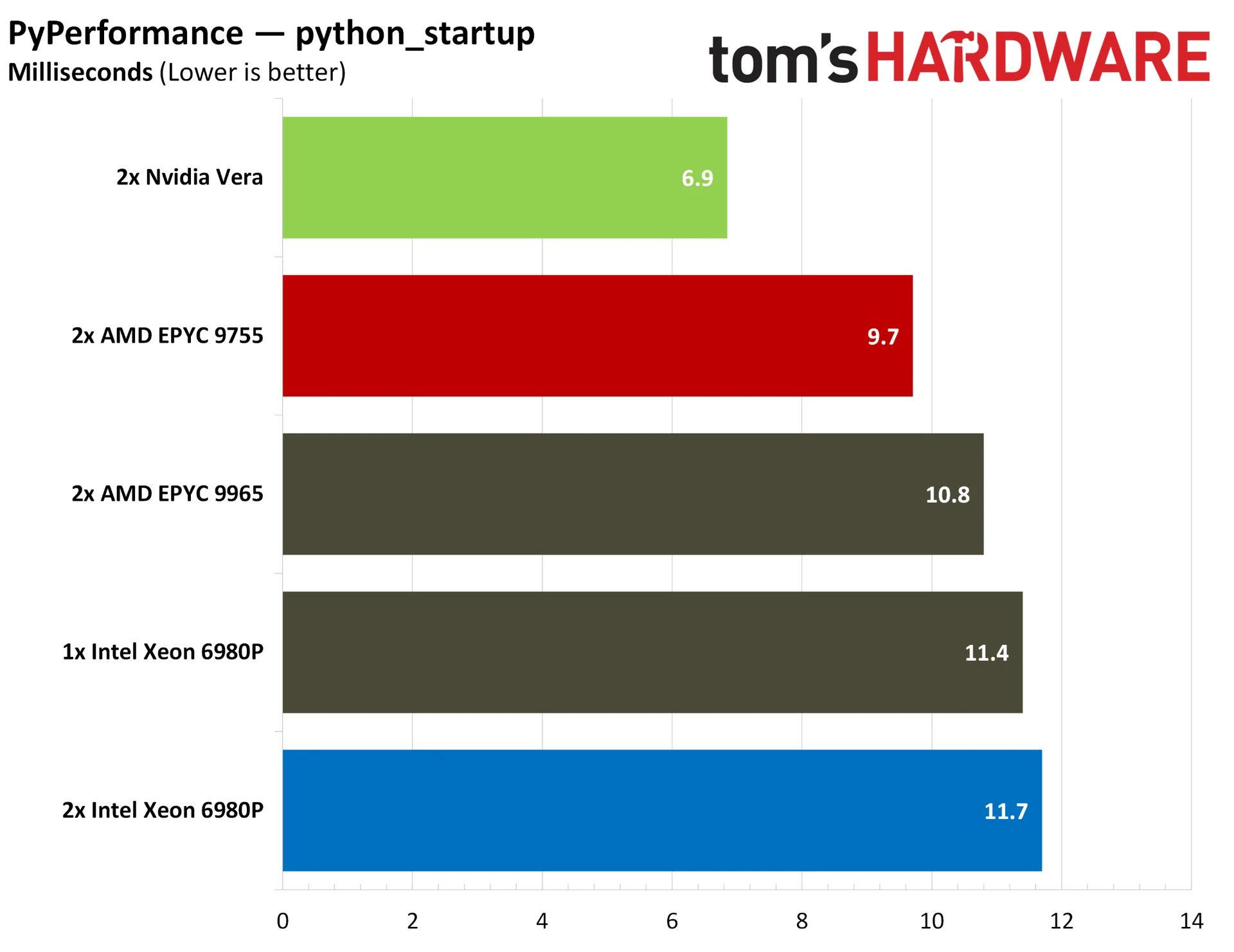
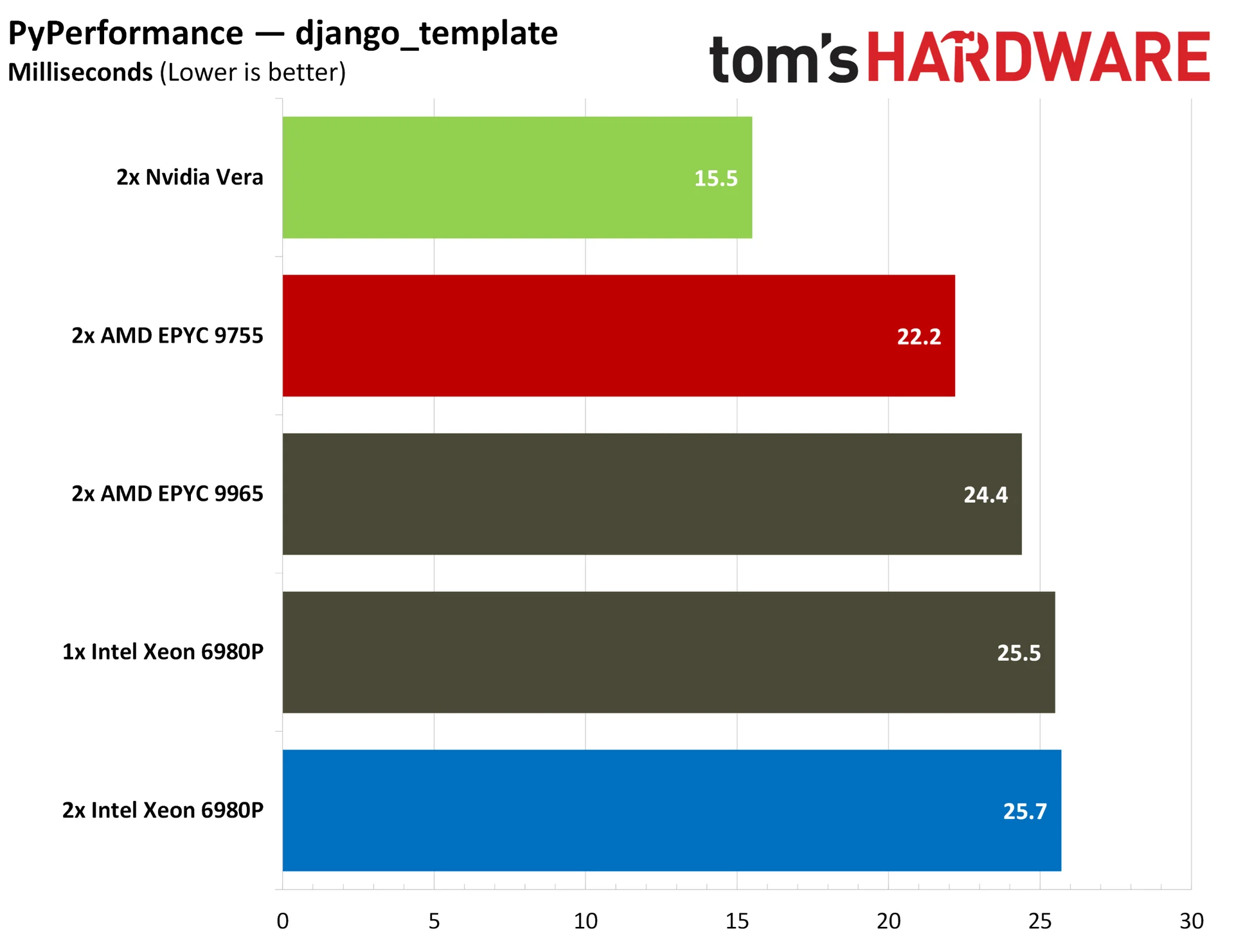
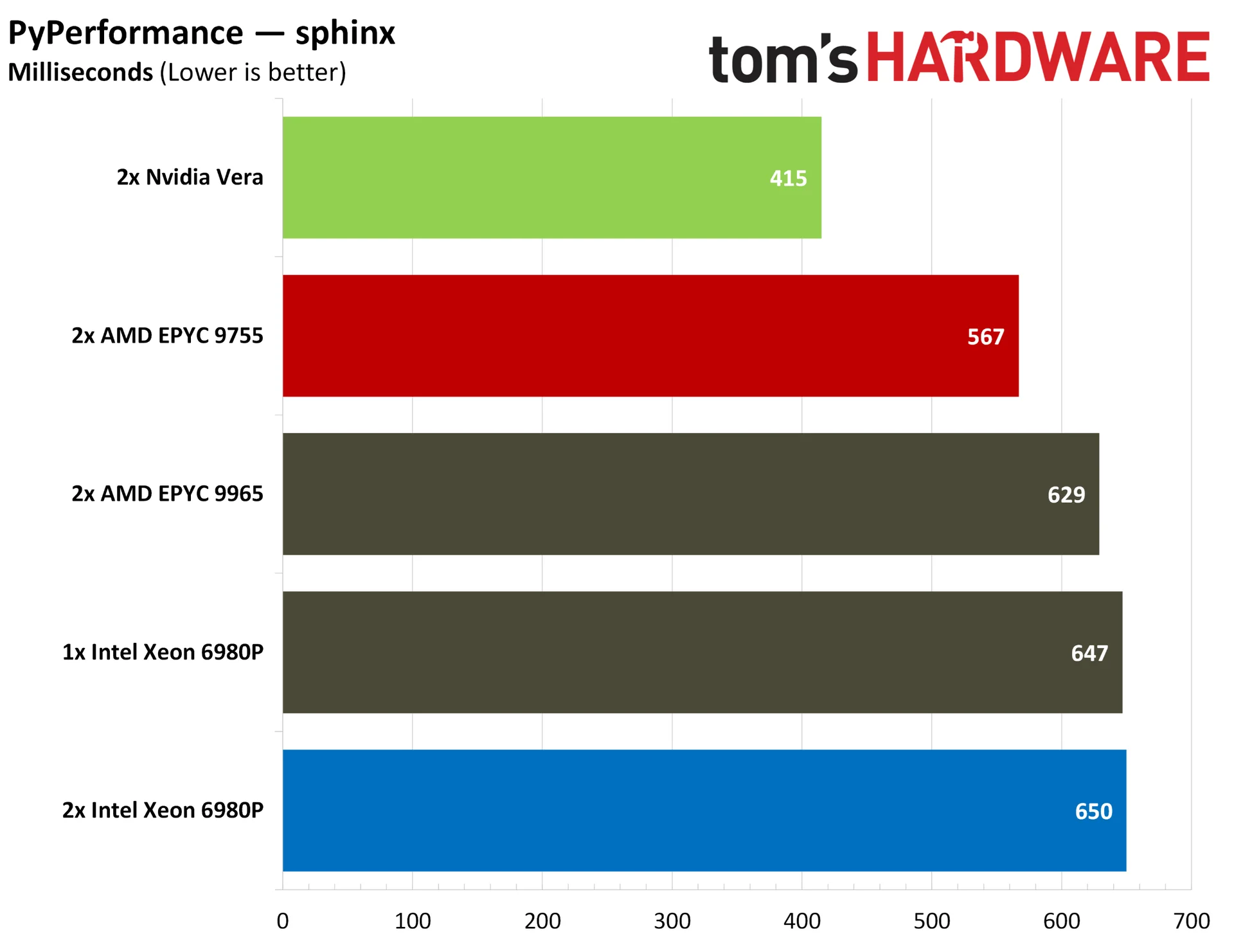
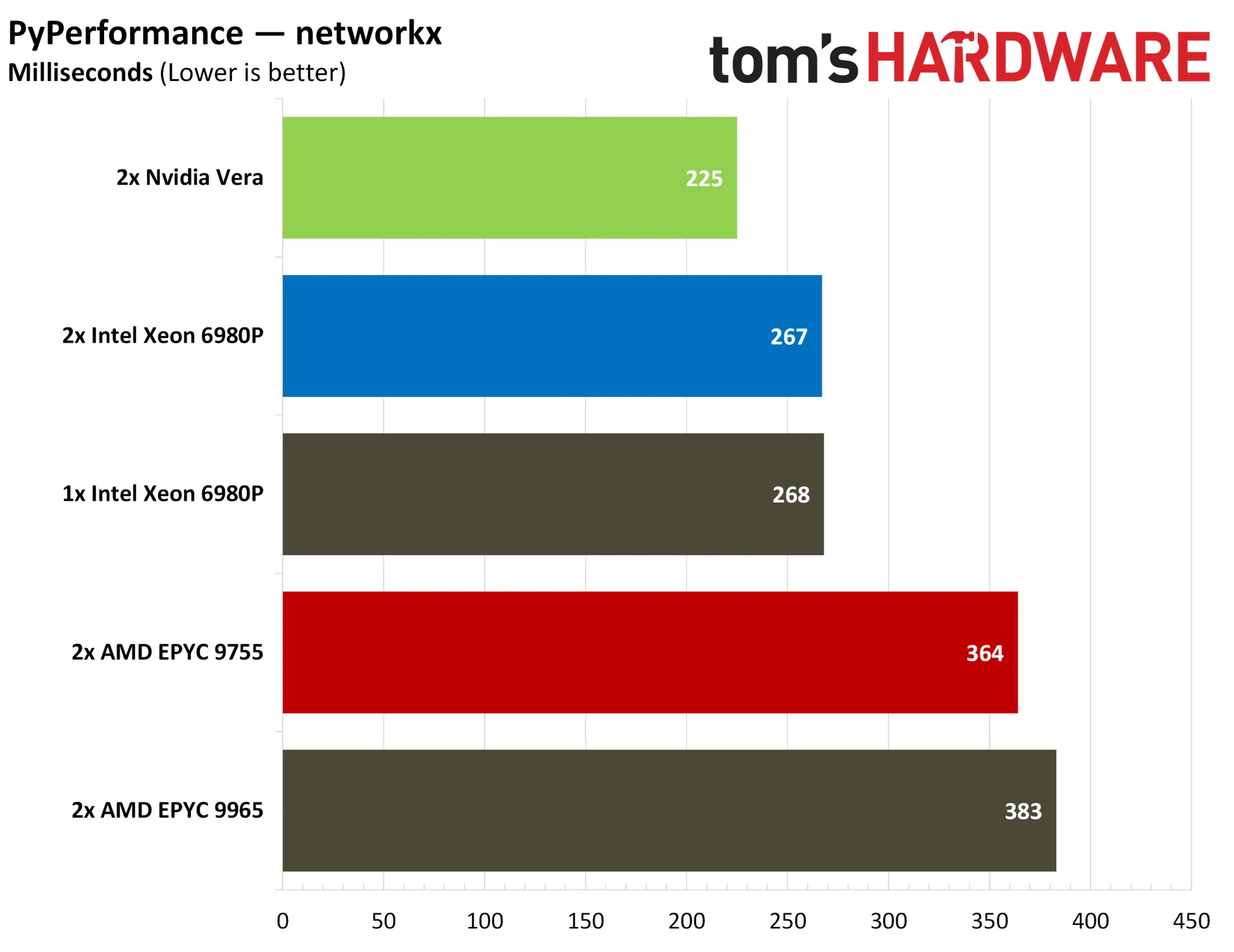
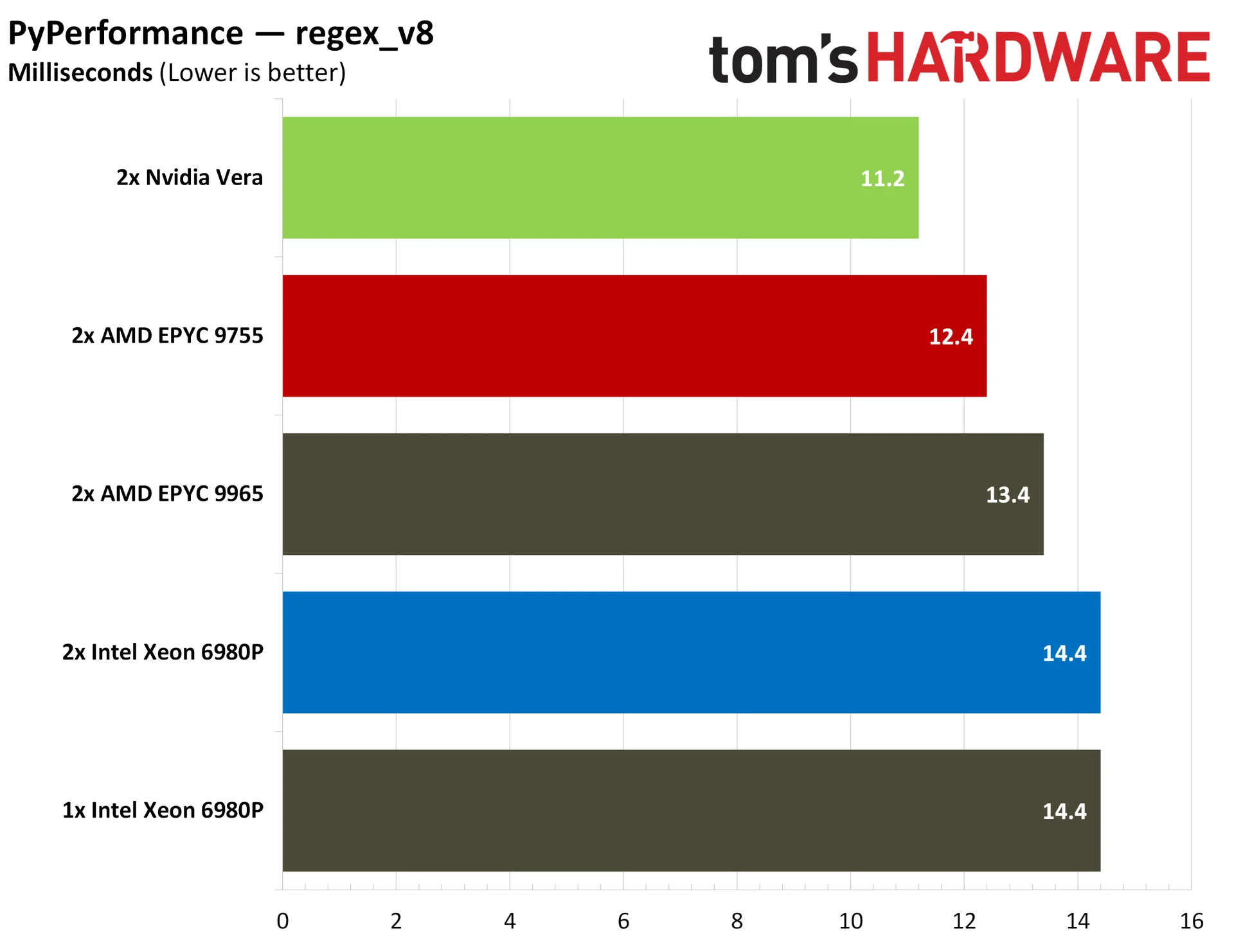
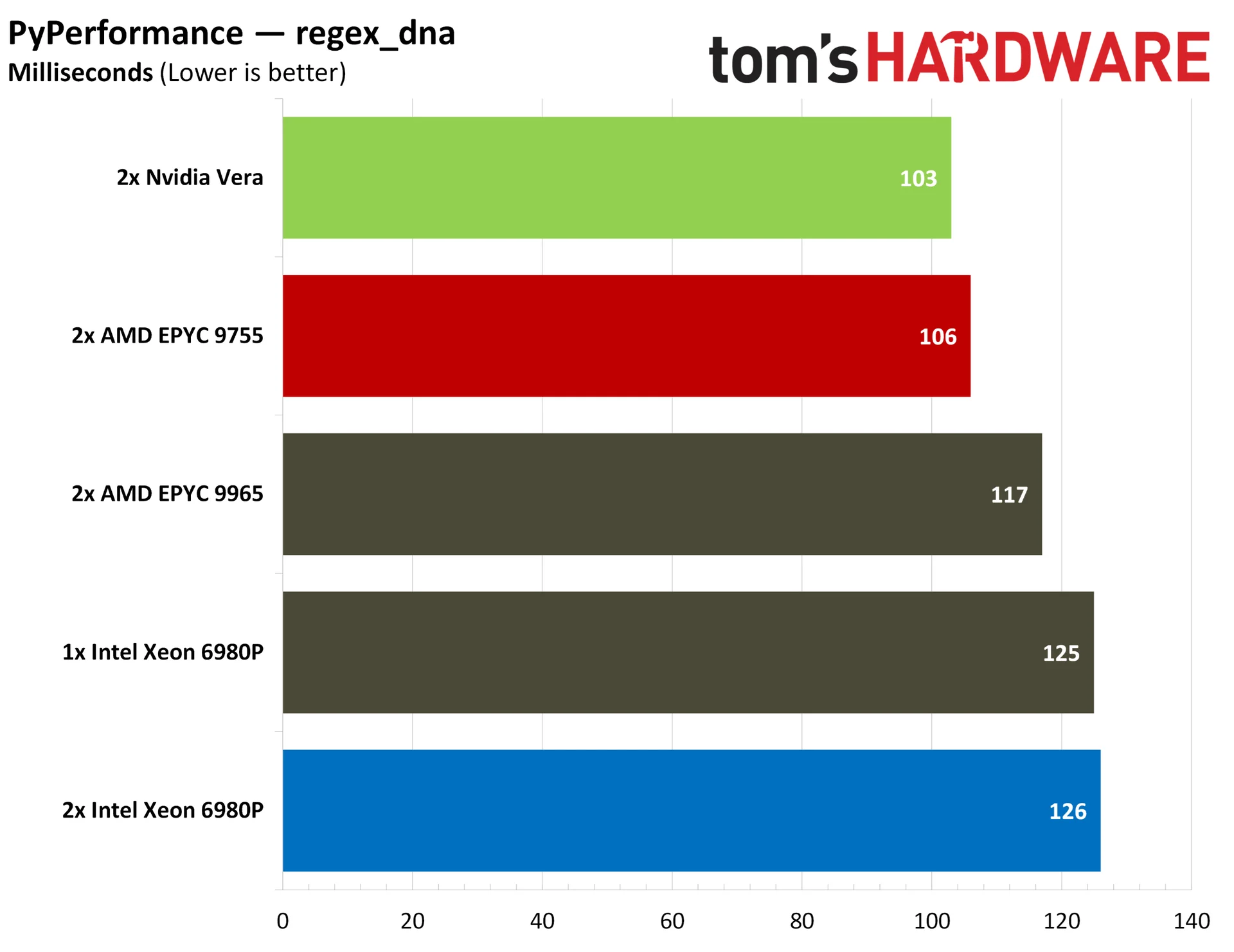
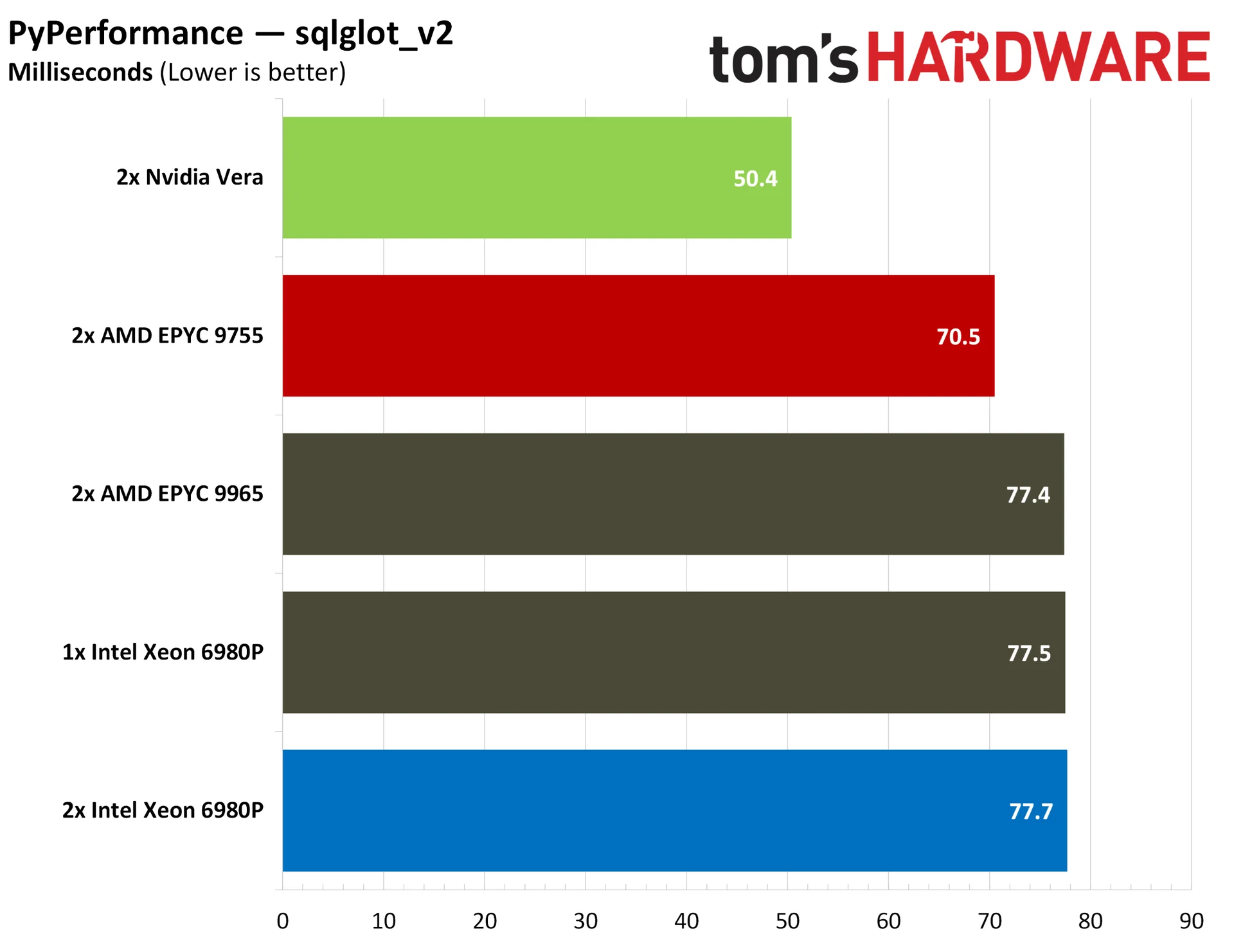
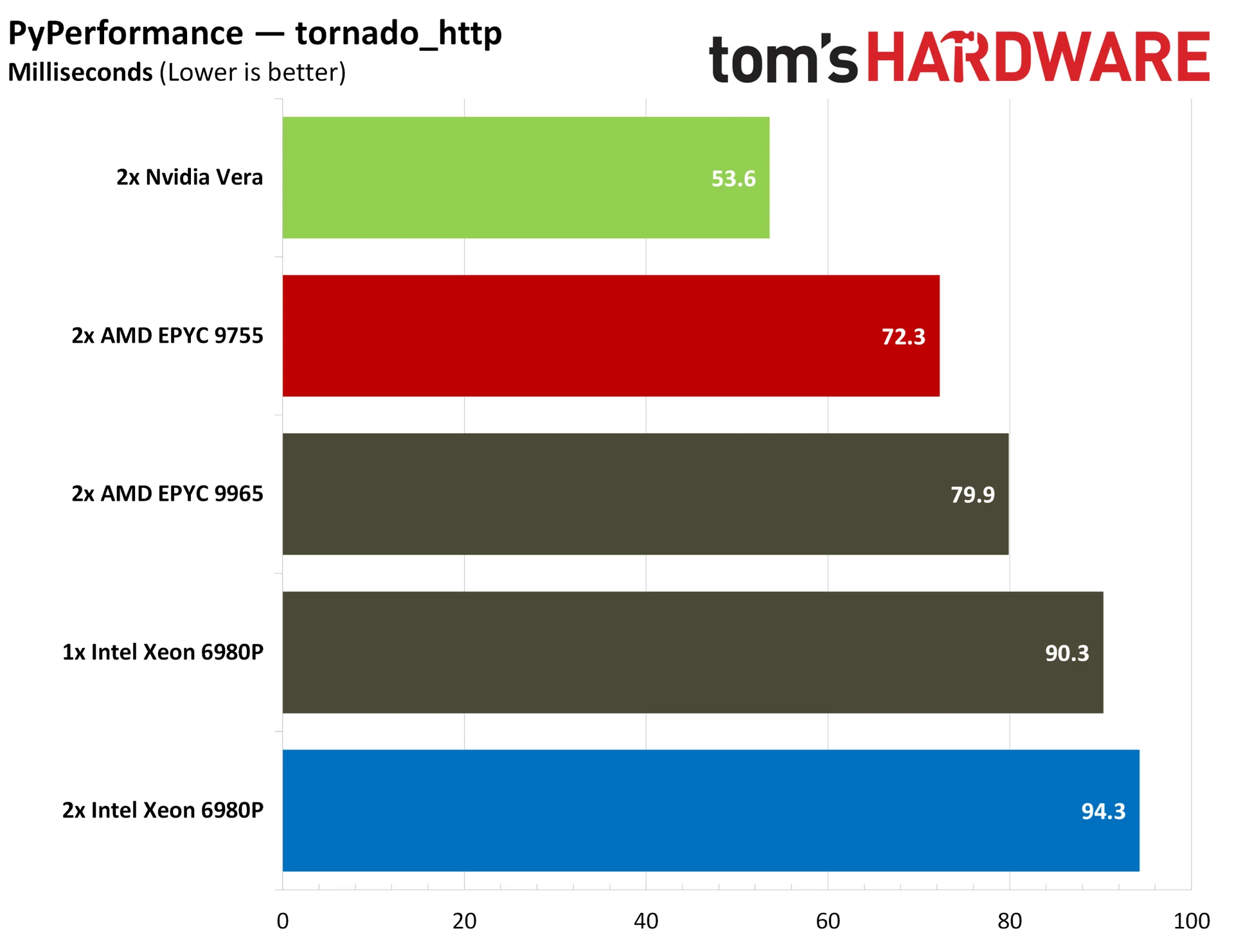
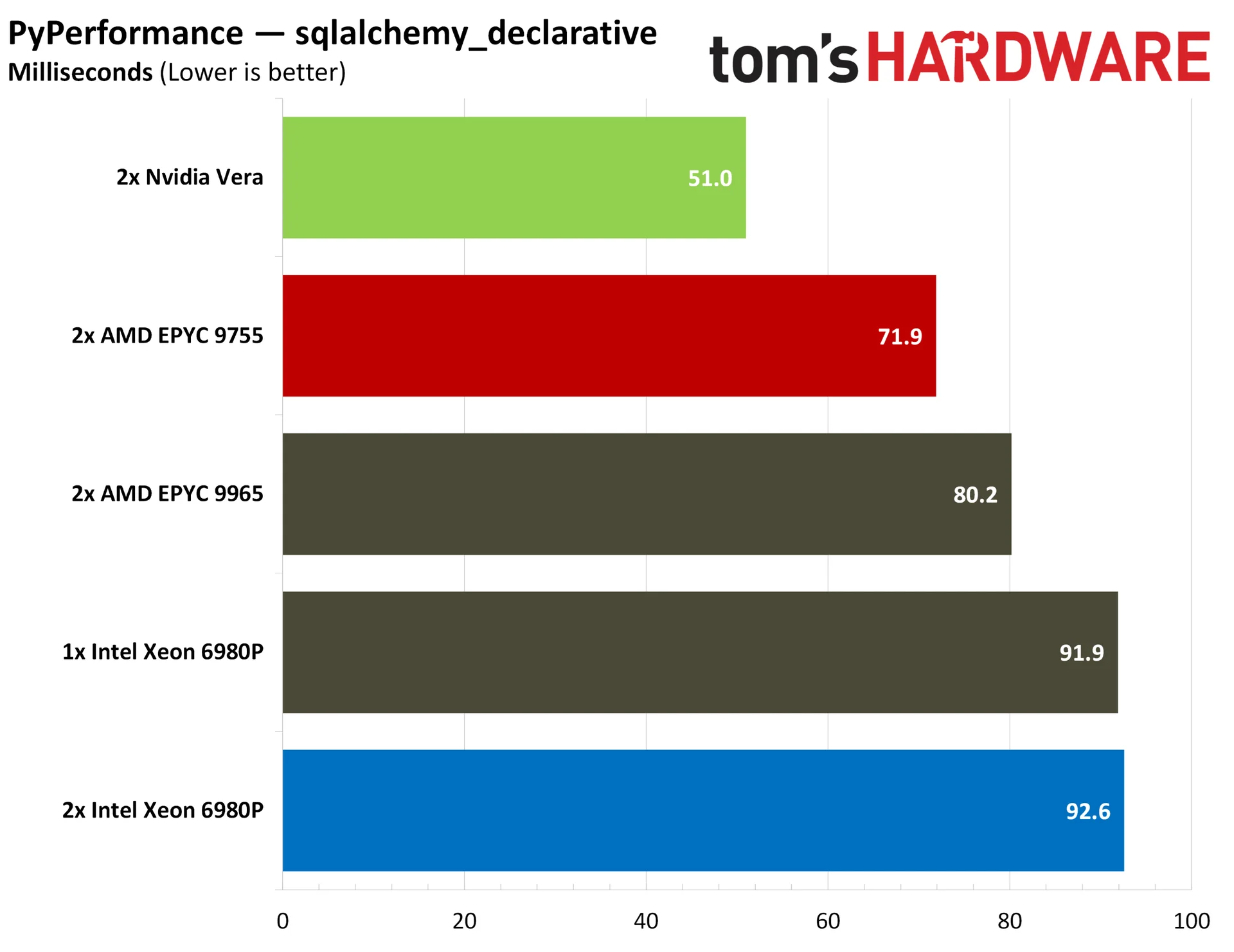
Intel’s two-socket Xeon 6980P also has 512 threads, but its core count doesn’t put it in contention here. Switching to Intel’s oneAPI compiler improved its score by 10%. Even then, Vera running generic GCC remained 8.6% ahead. The results vary by test: Vera leads some workloads and trails in others, as the charts show. GCC and Python stand out as strengths, with Vera even beating AMD’s top-end EPYC 9965 in those areas.
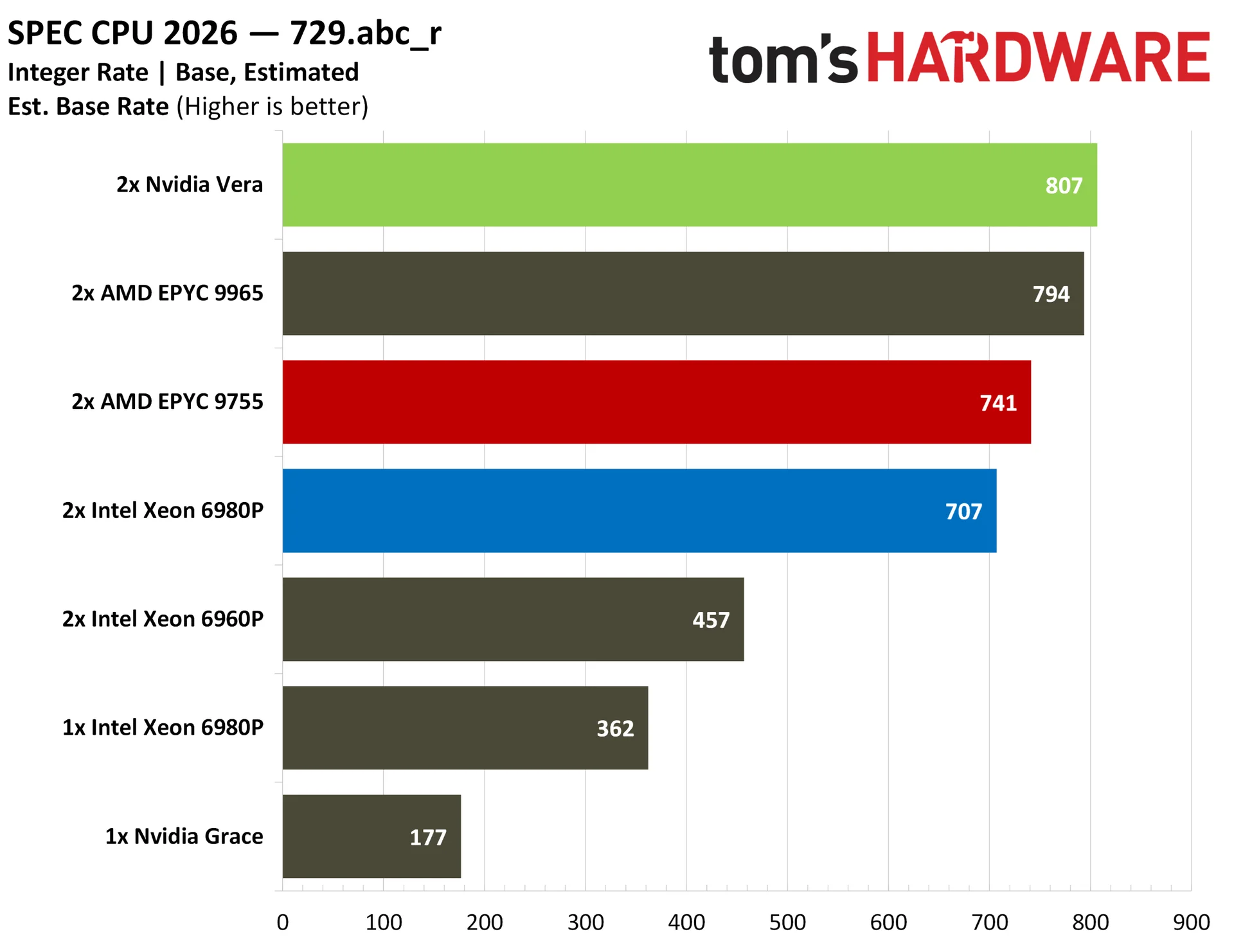
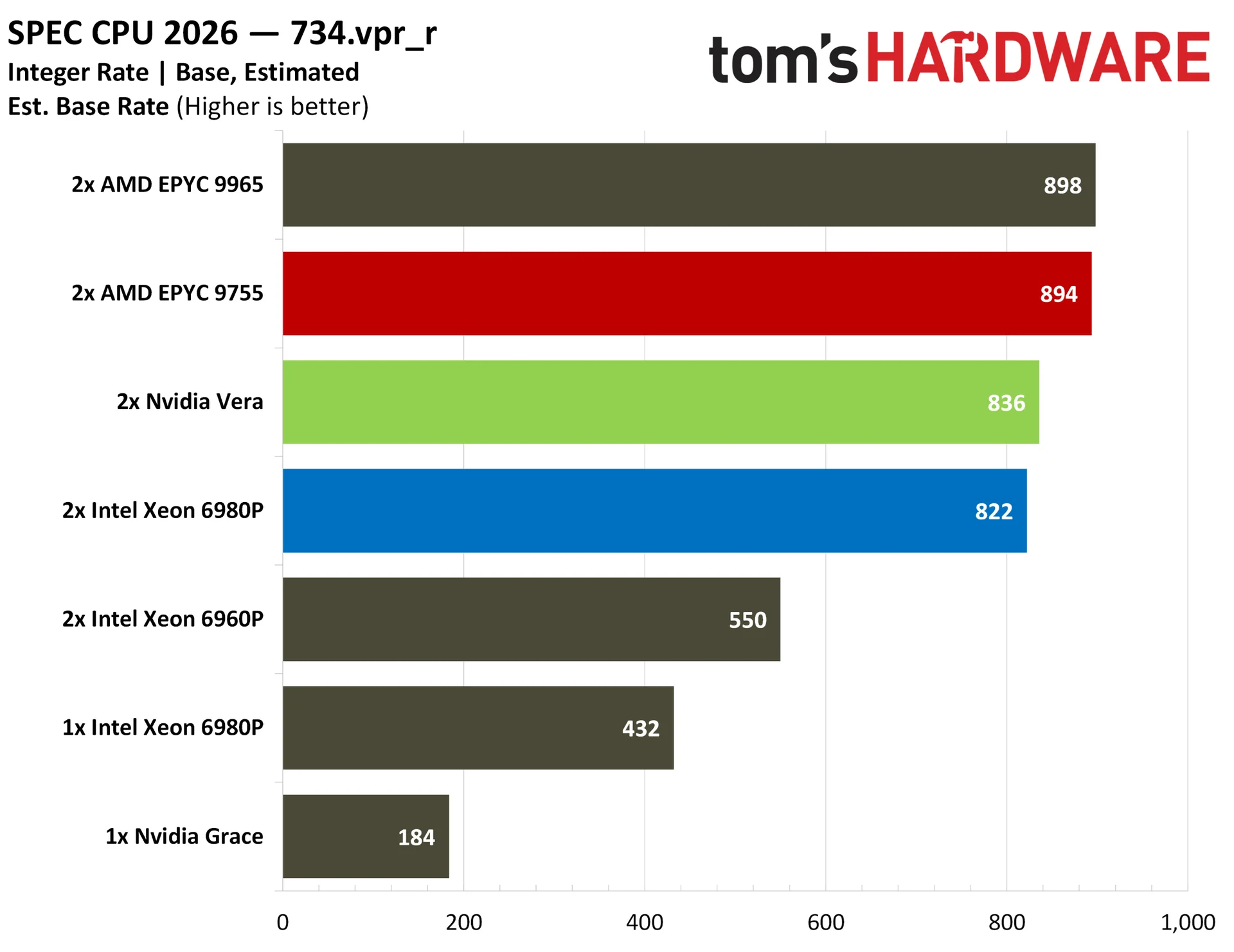
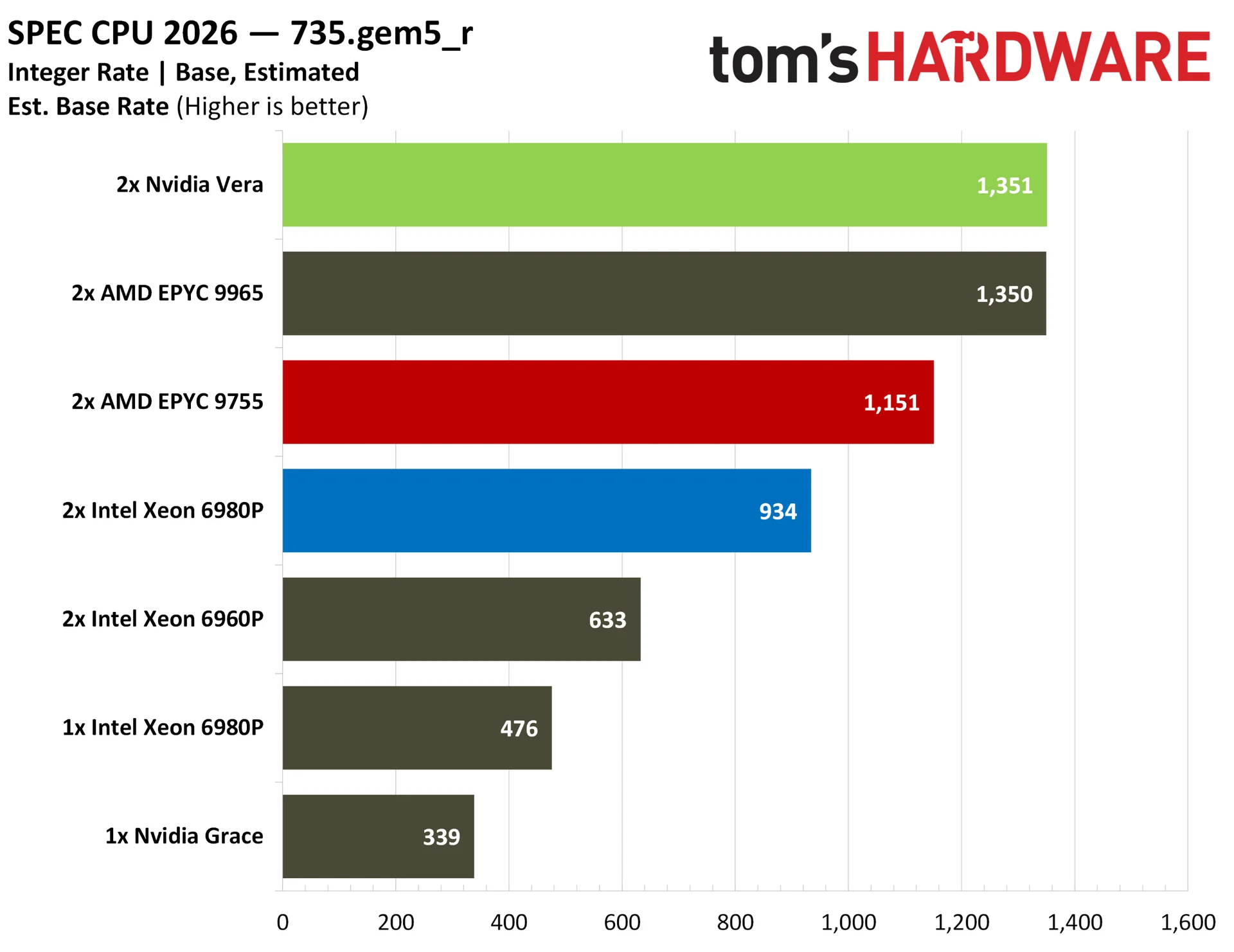
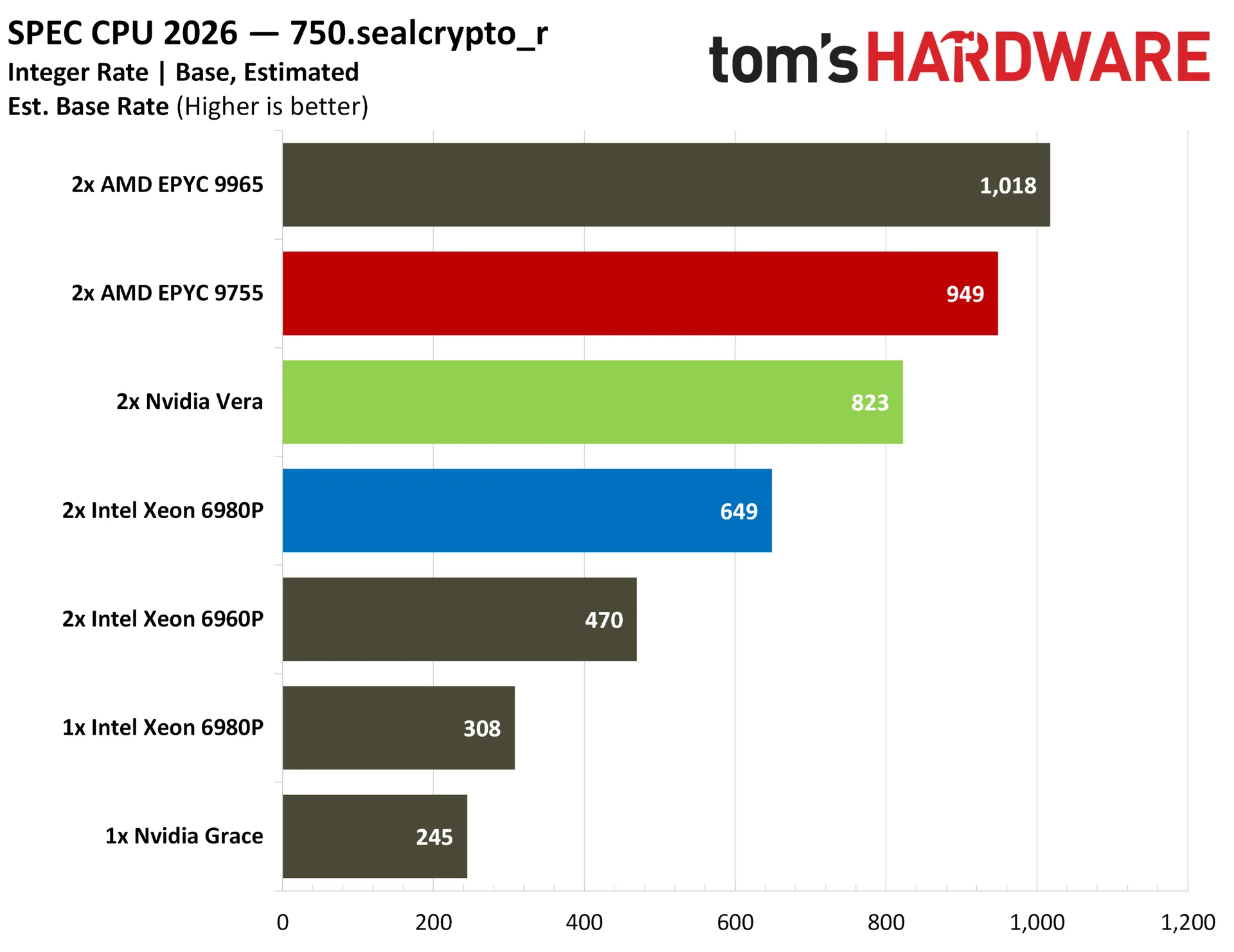
Vera’s results depend on the workload
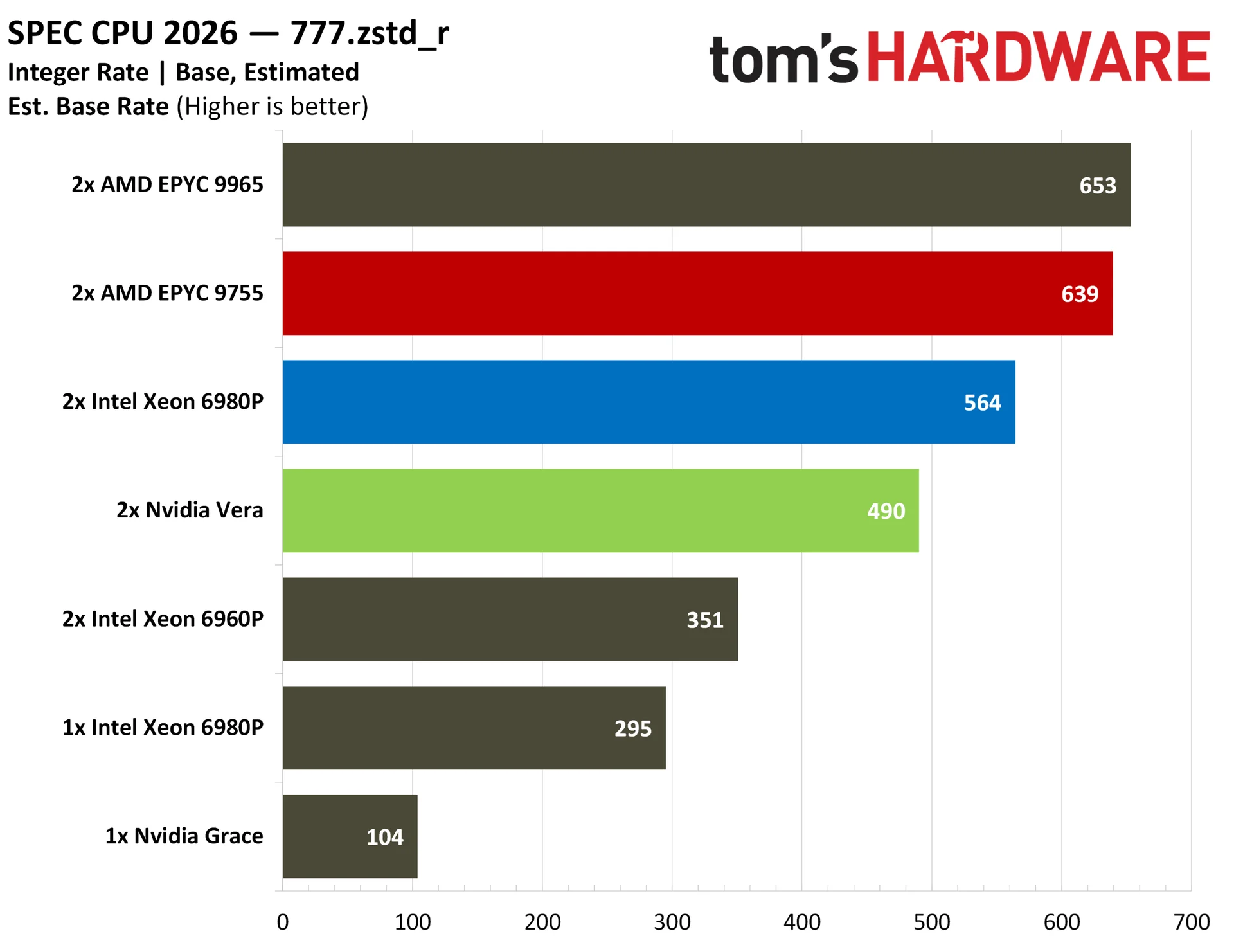
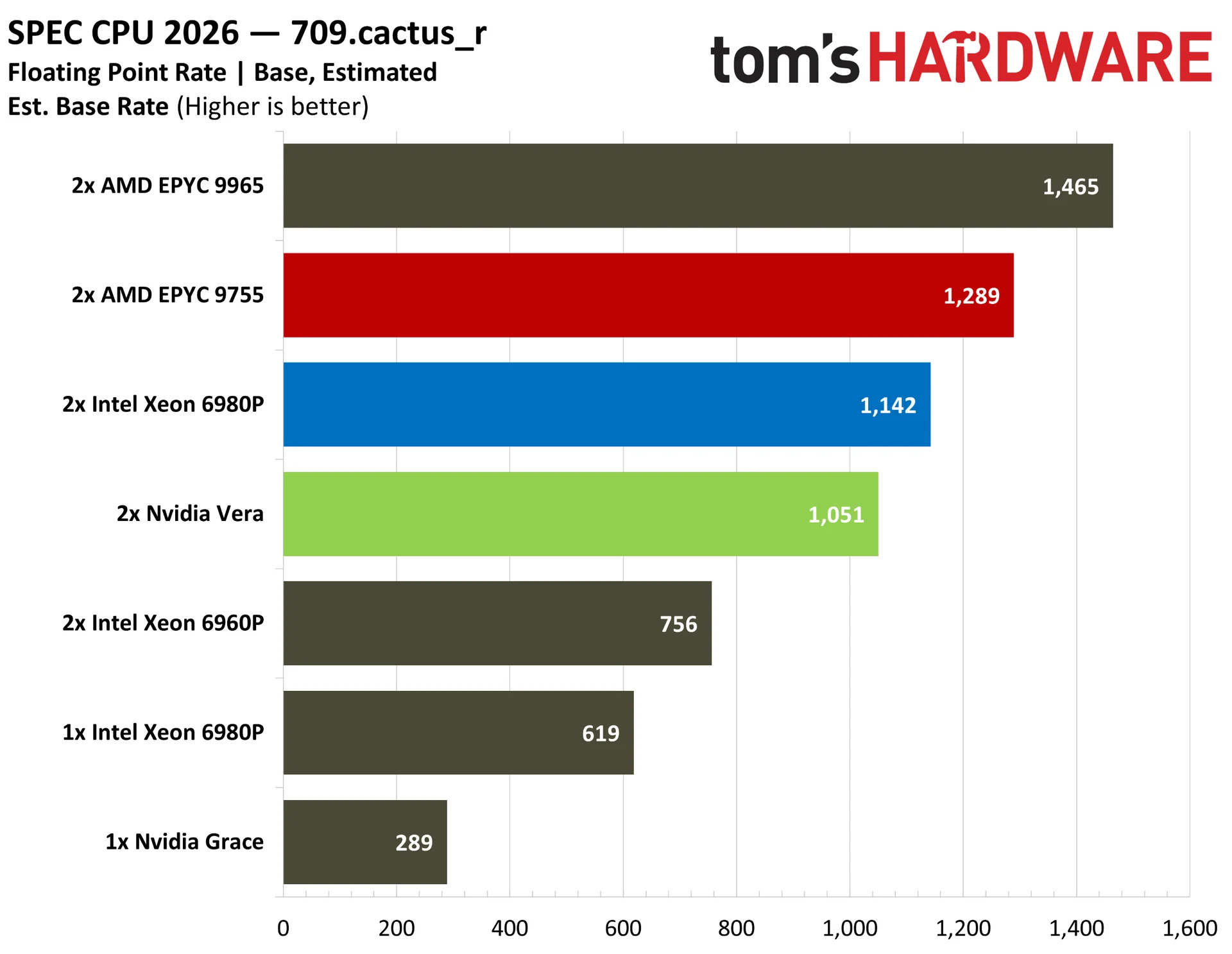
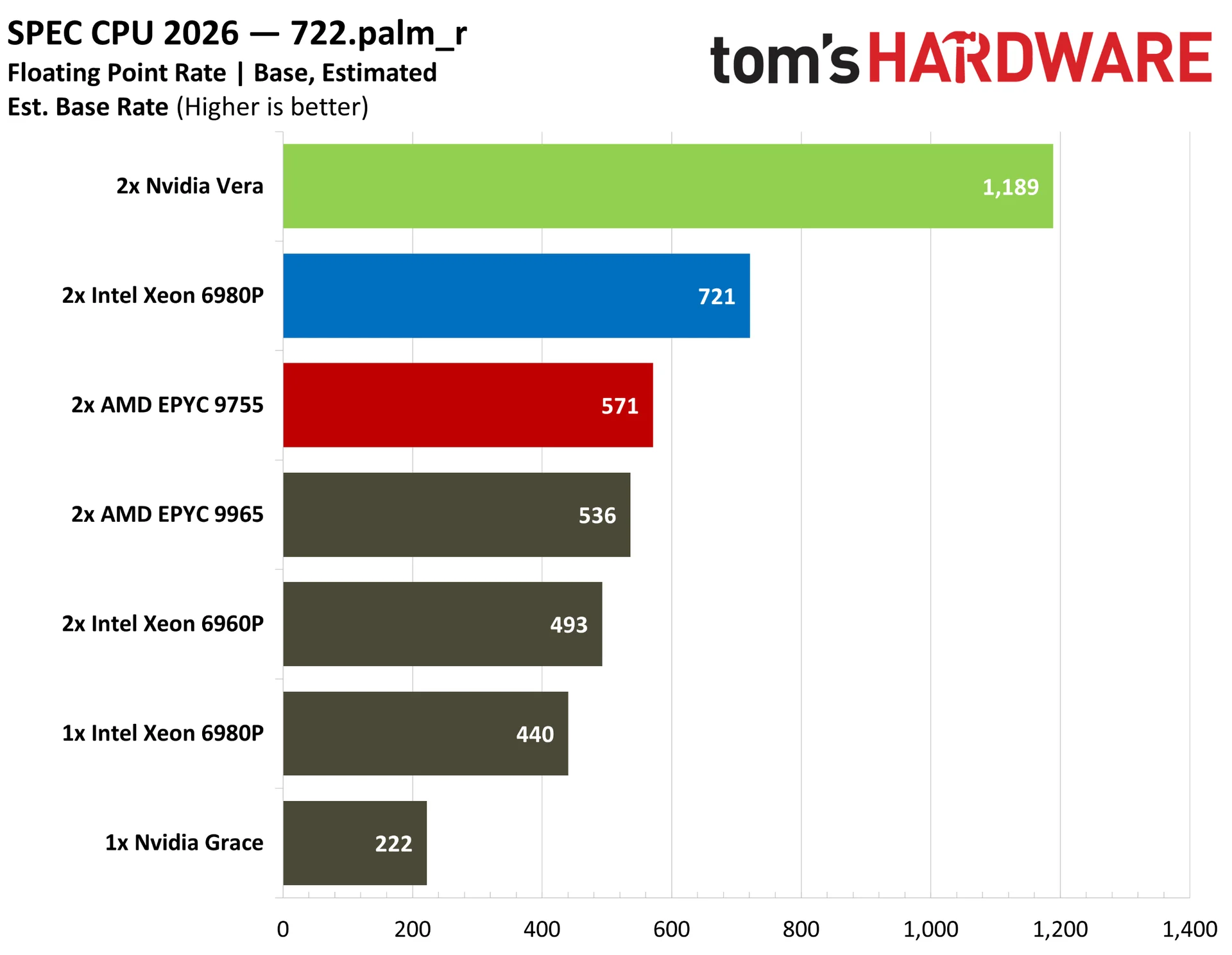
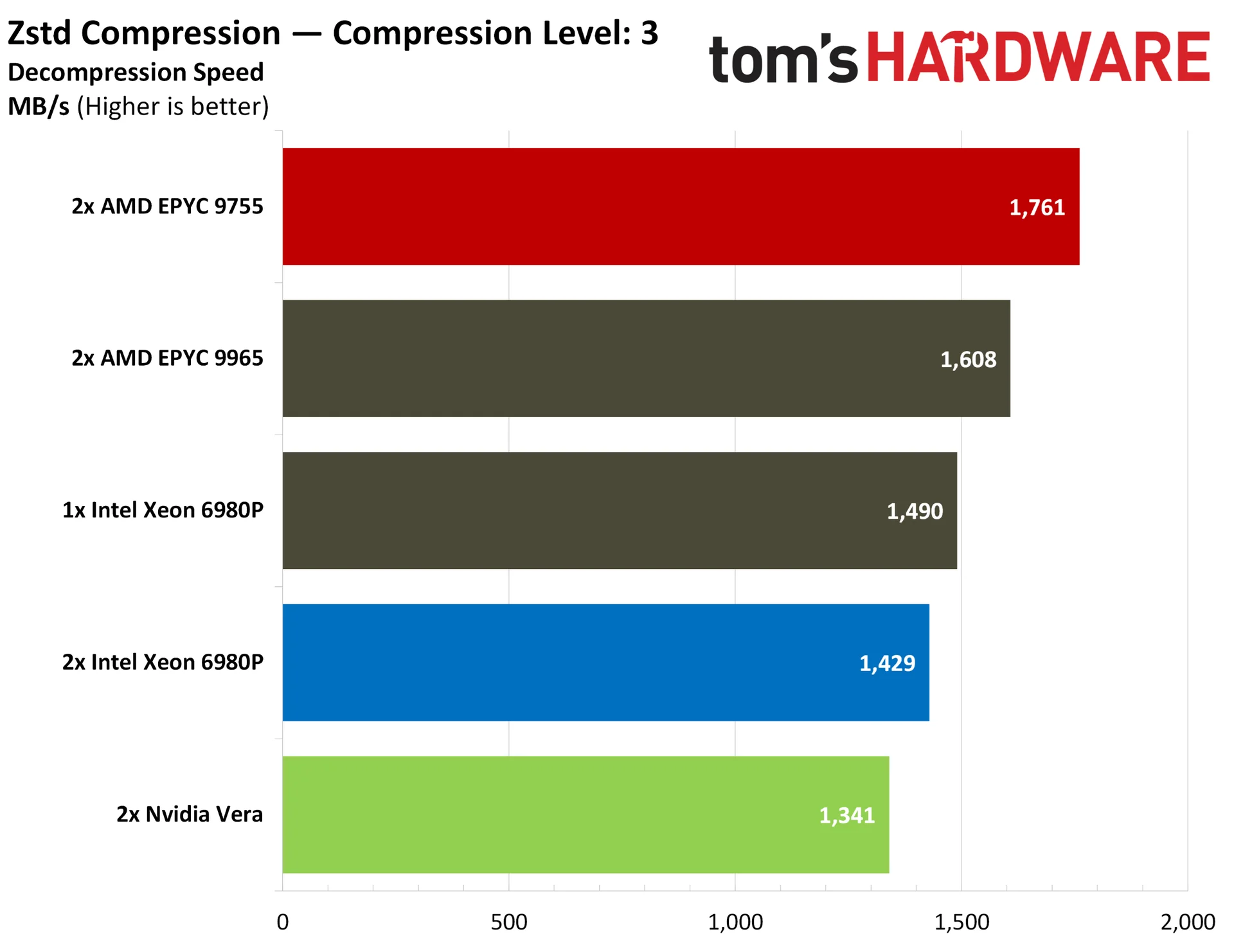
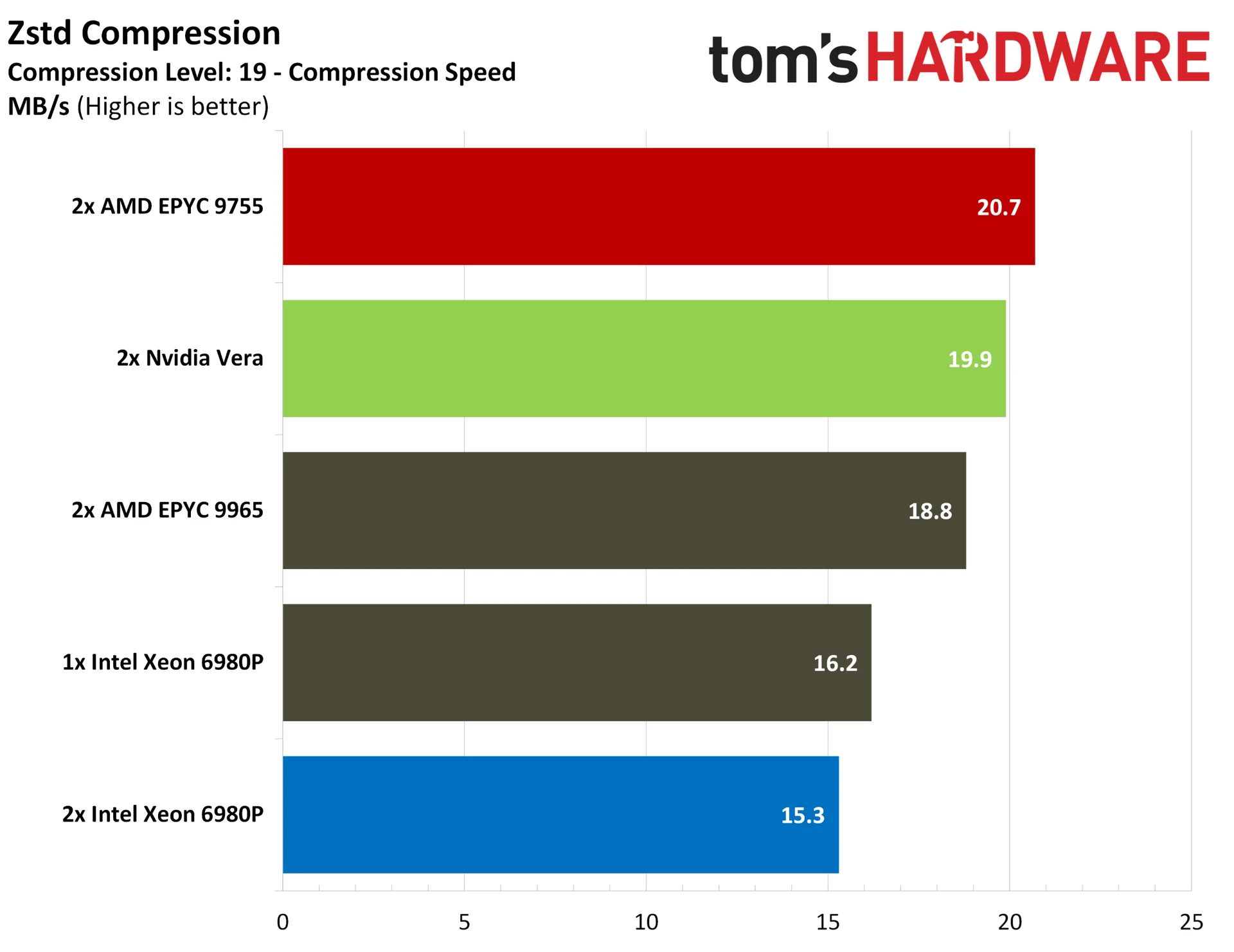
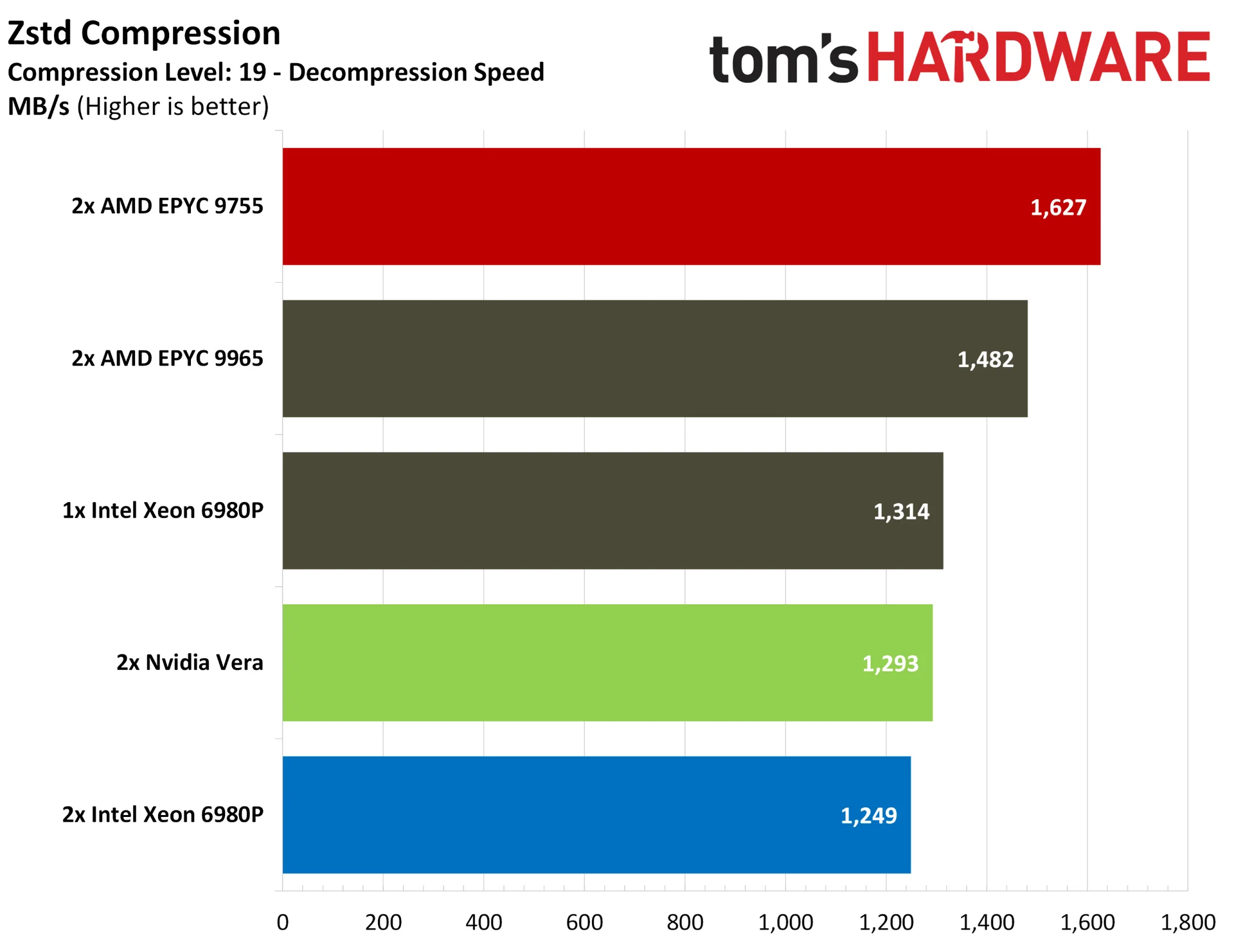
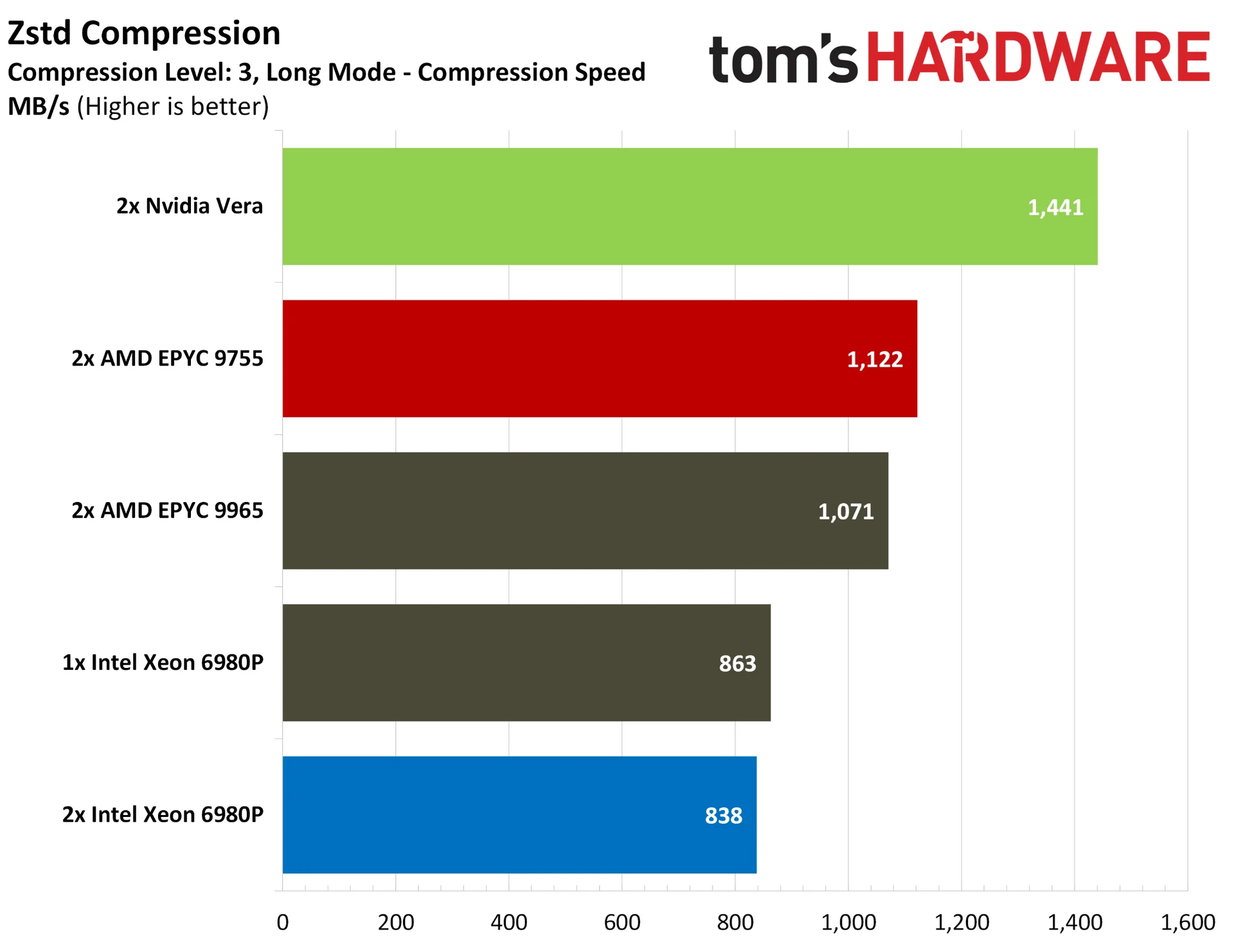
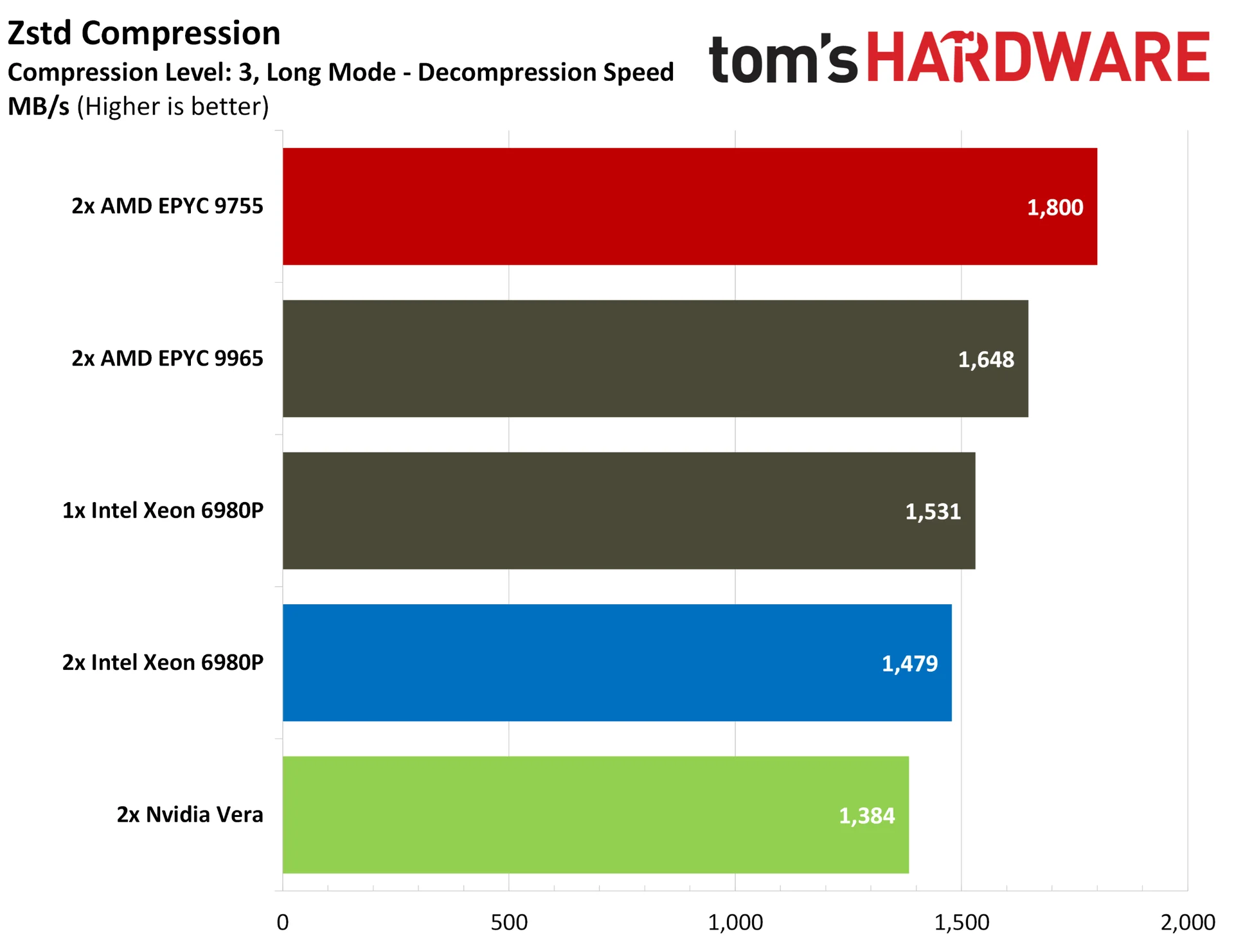
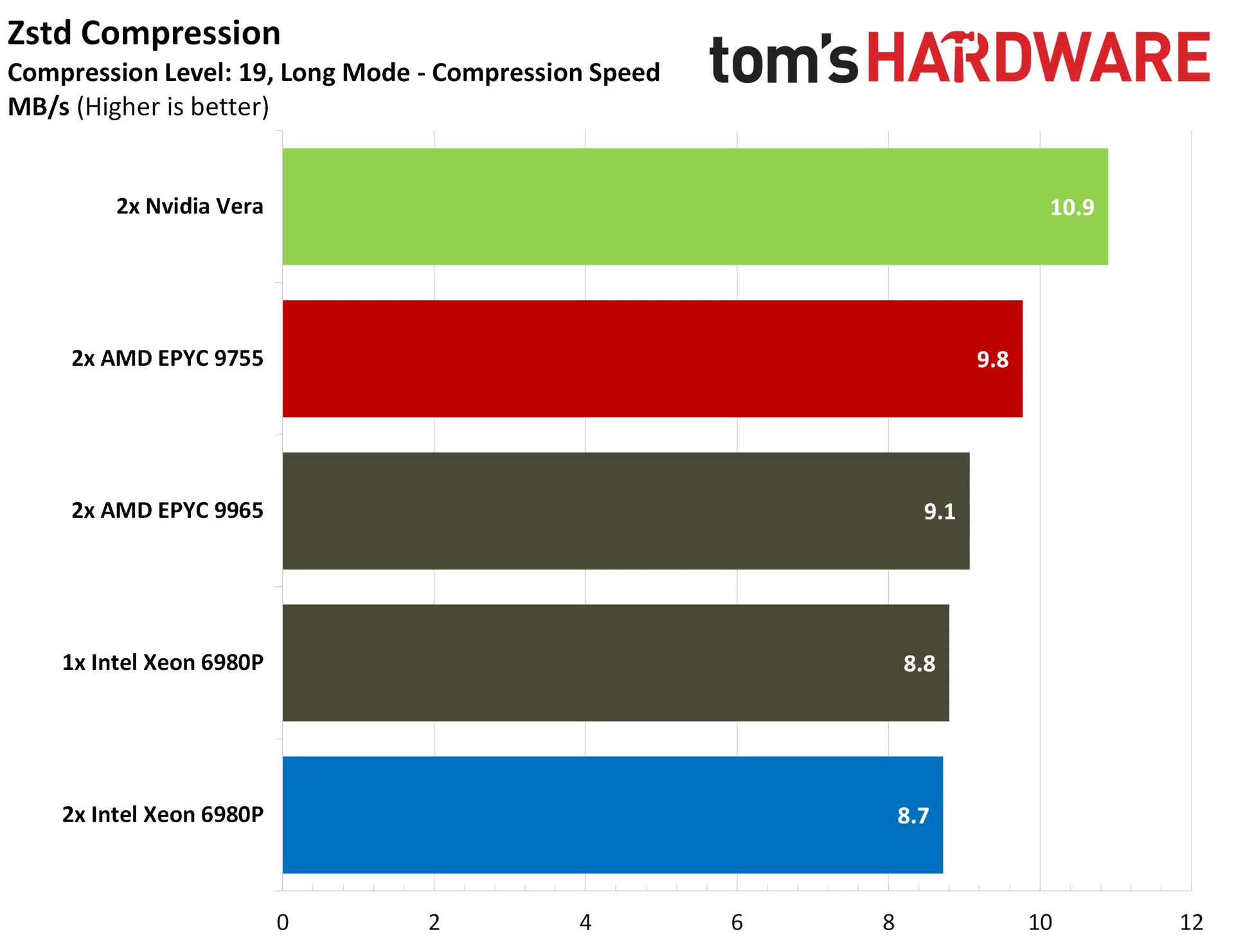
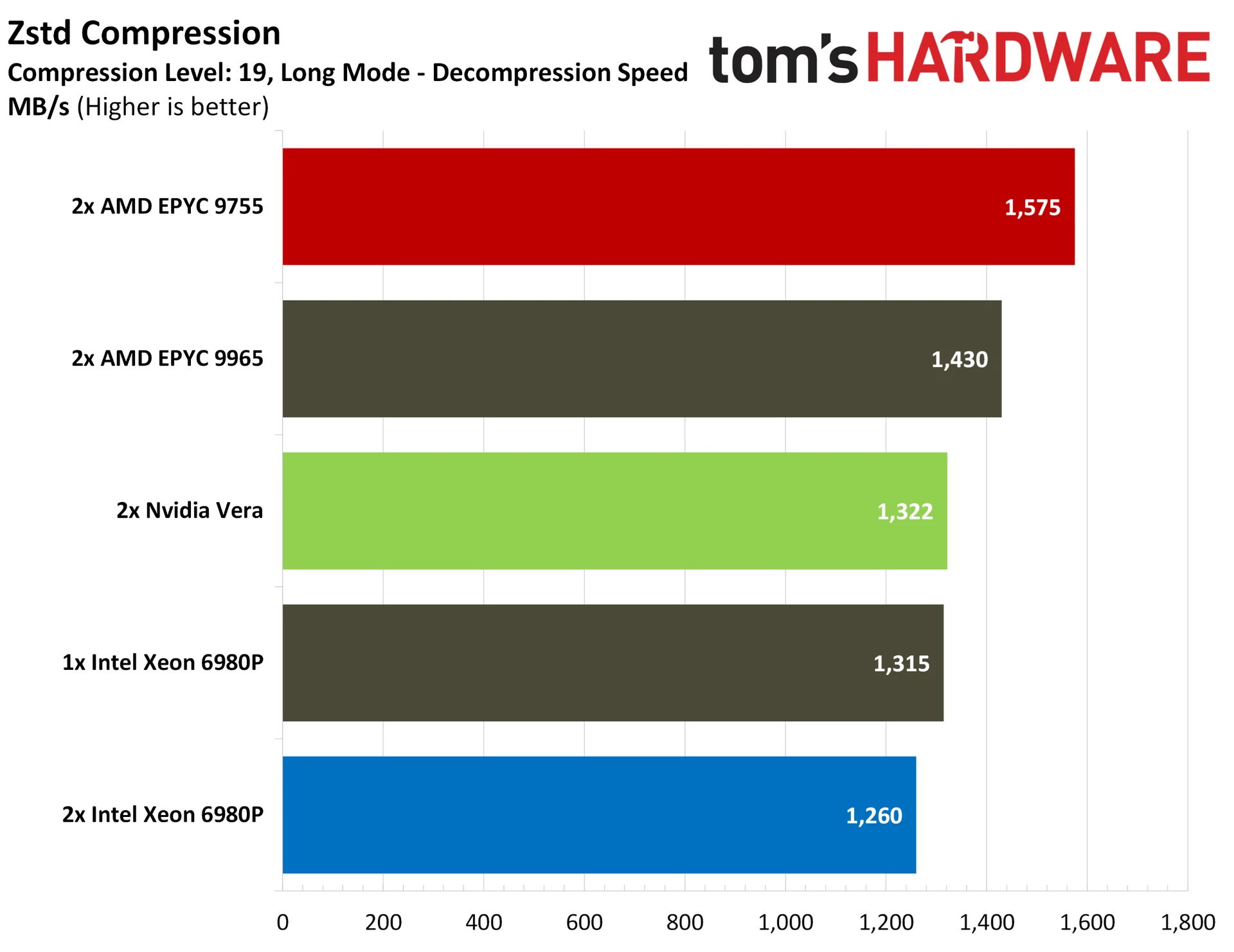
Vera’s strongest numbers come with a caveat: it doesn’t lead every test. SEAL’s crypto benchmark exposes weaker cryptography performance, consistent with our other results. Zstd tells a similar split story. Vera compresses well, but our separate tests found it slower at decompression, leaving it behind AMD and Intel overall.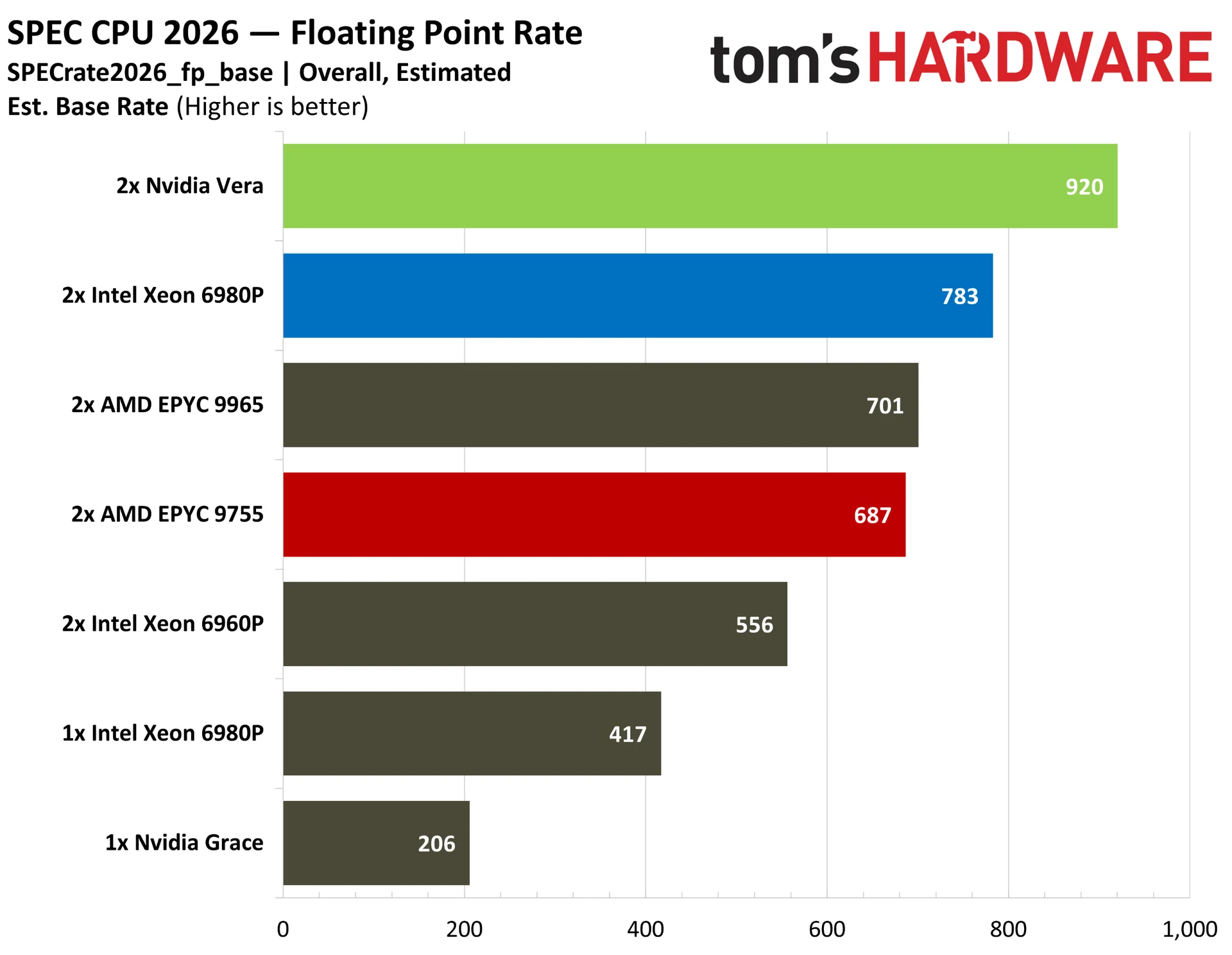
Nvidia Vera Python and AI benchmarks
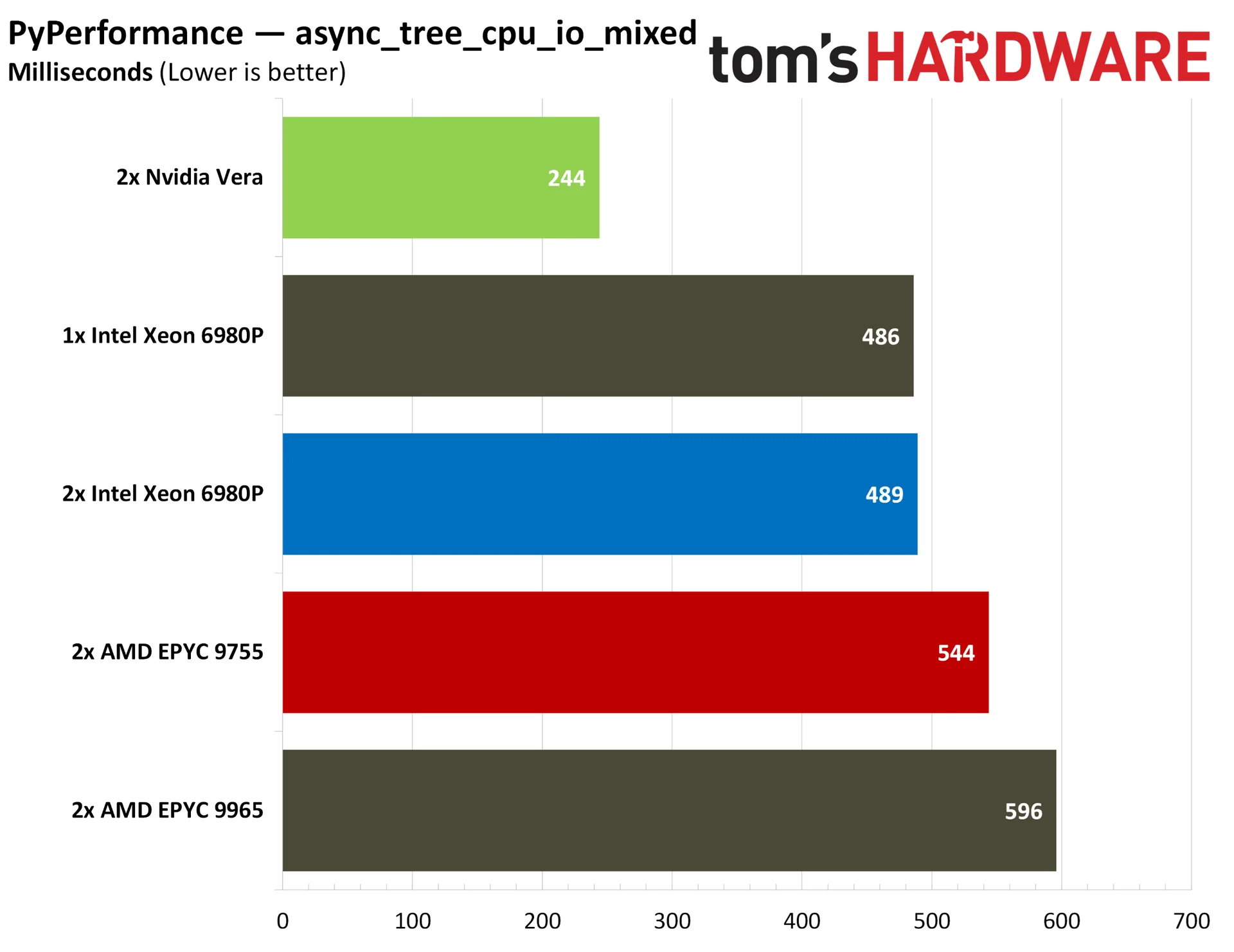
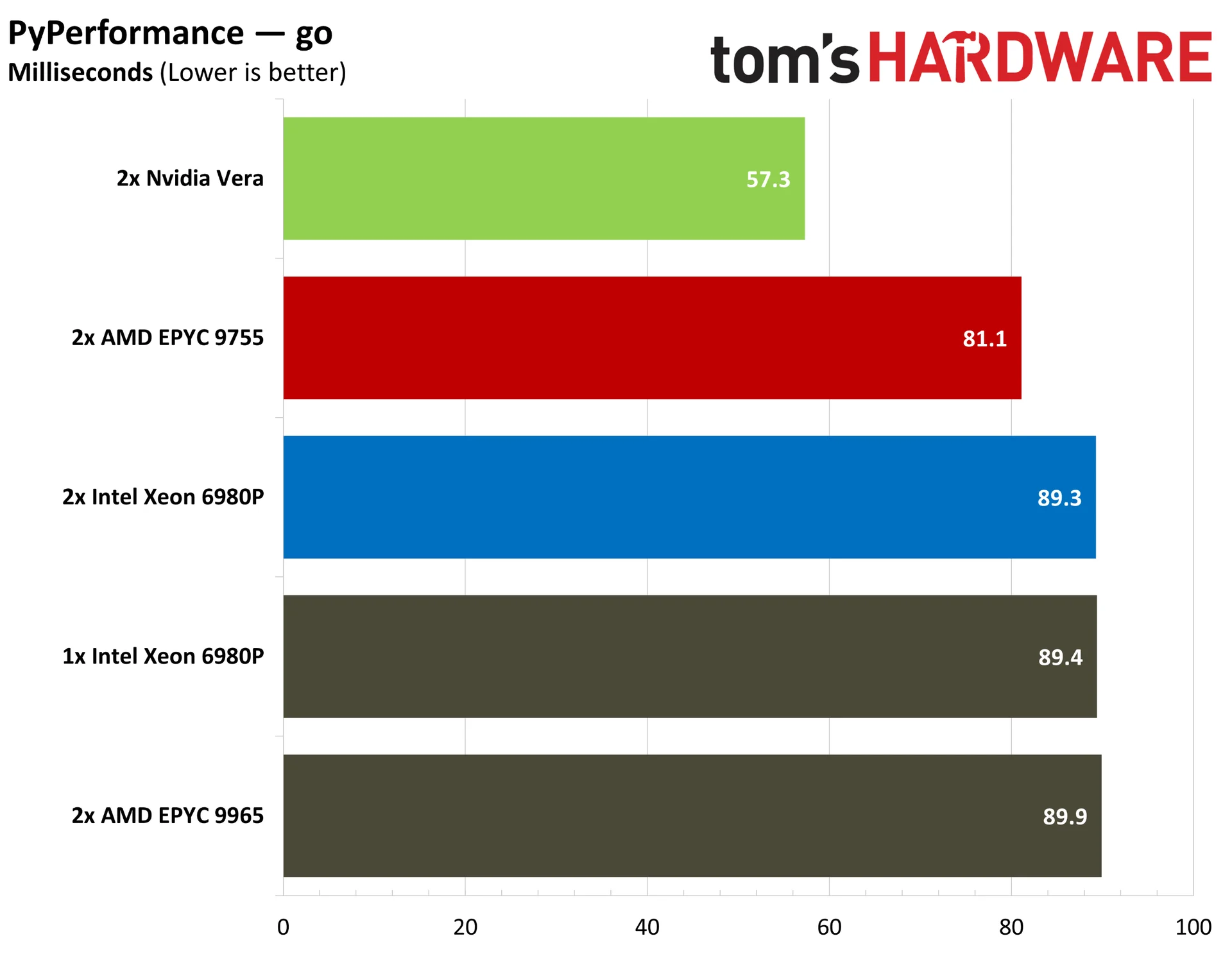
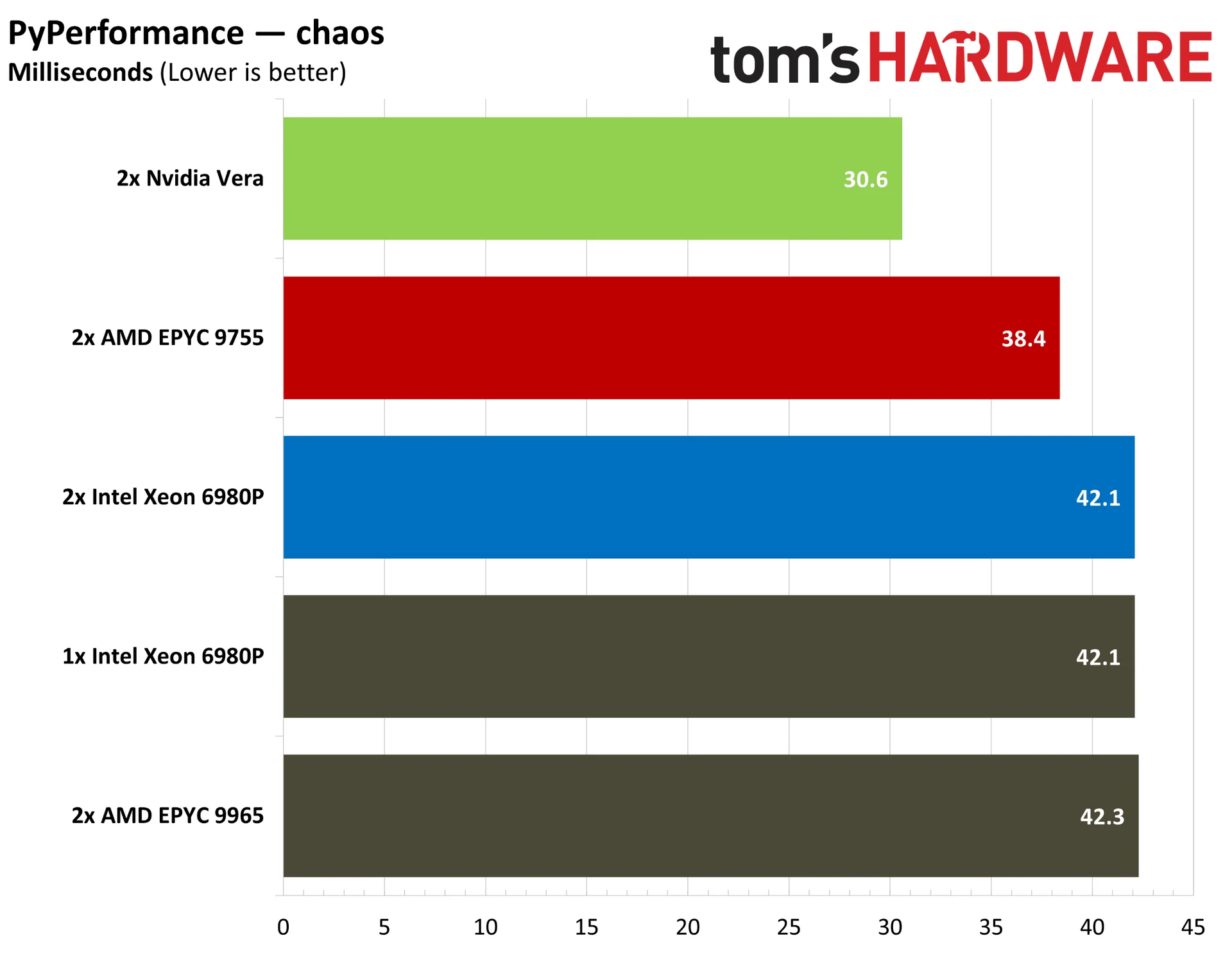
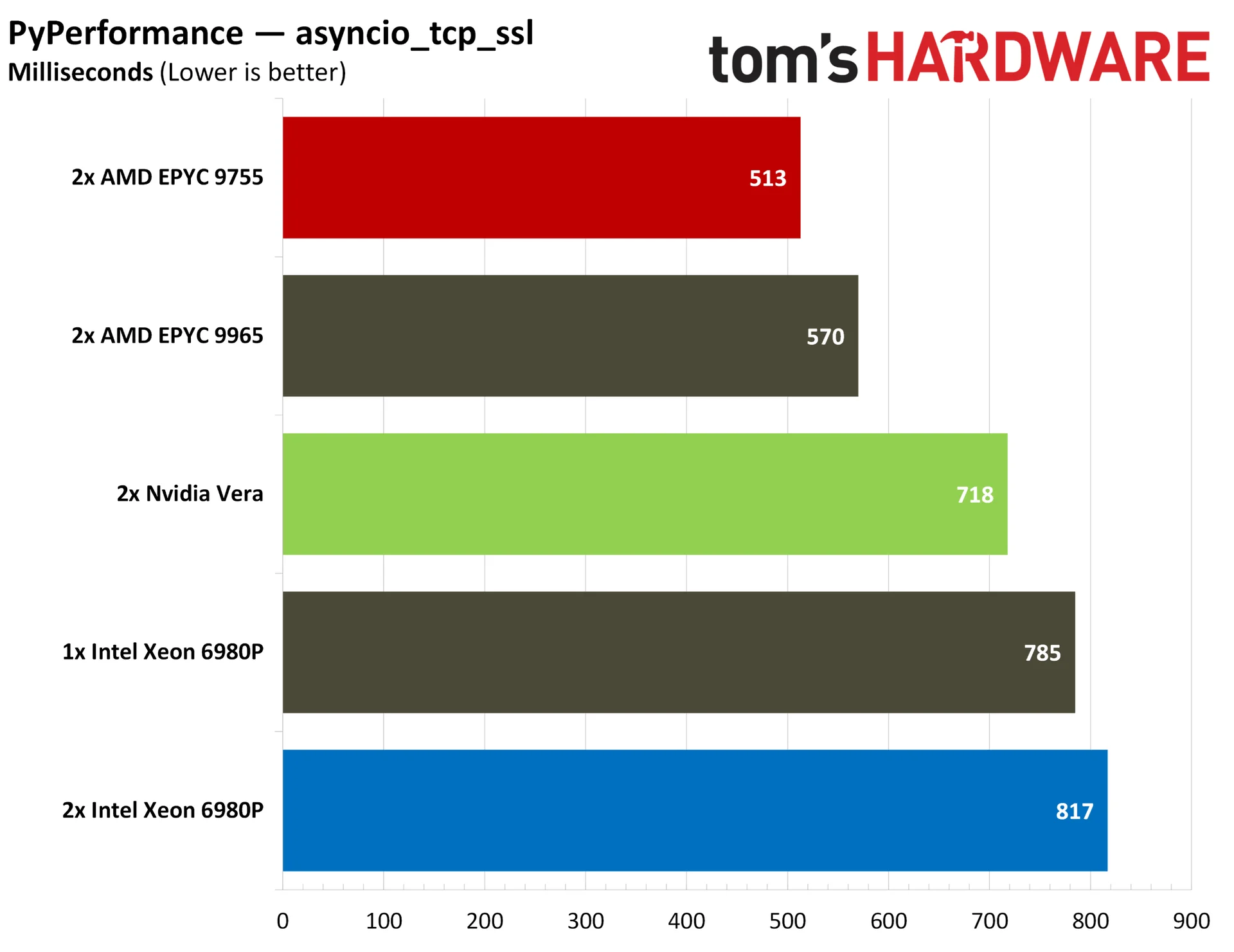
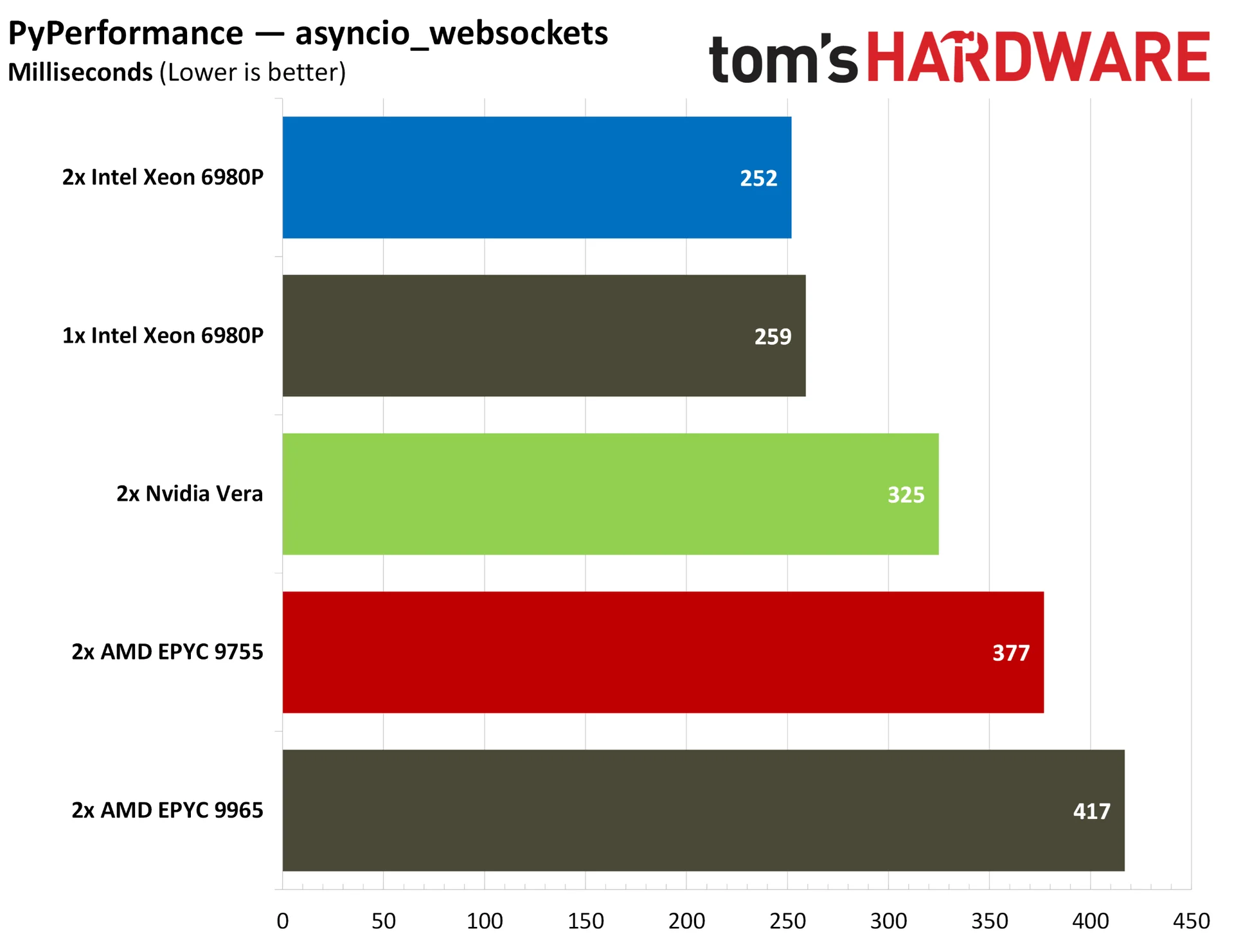
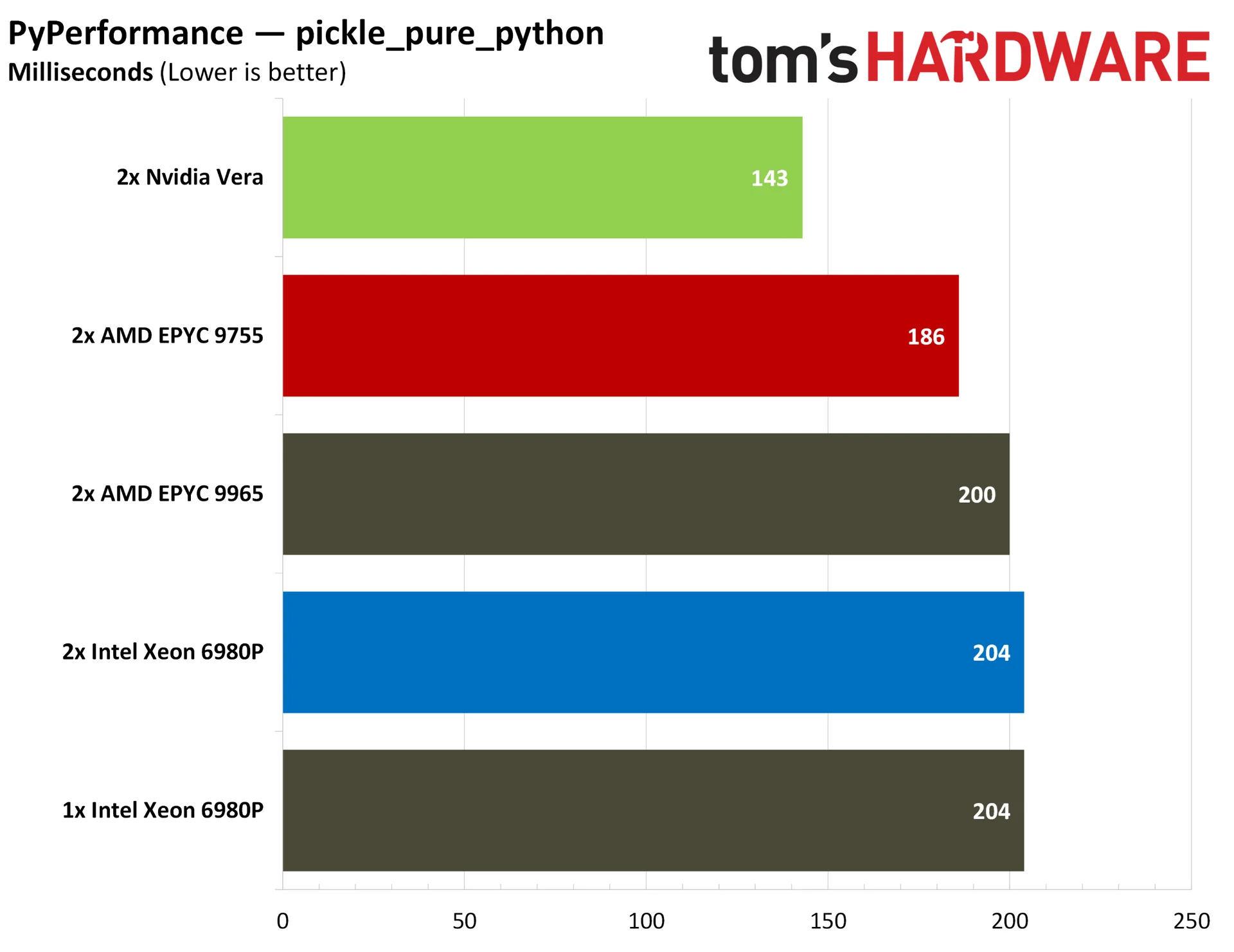
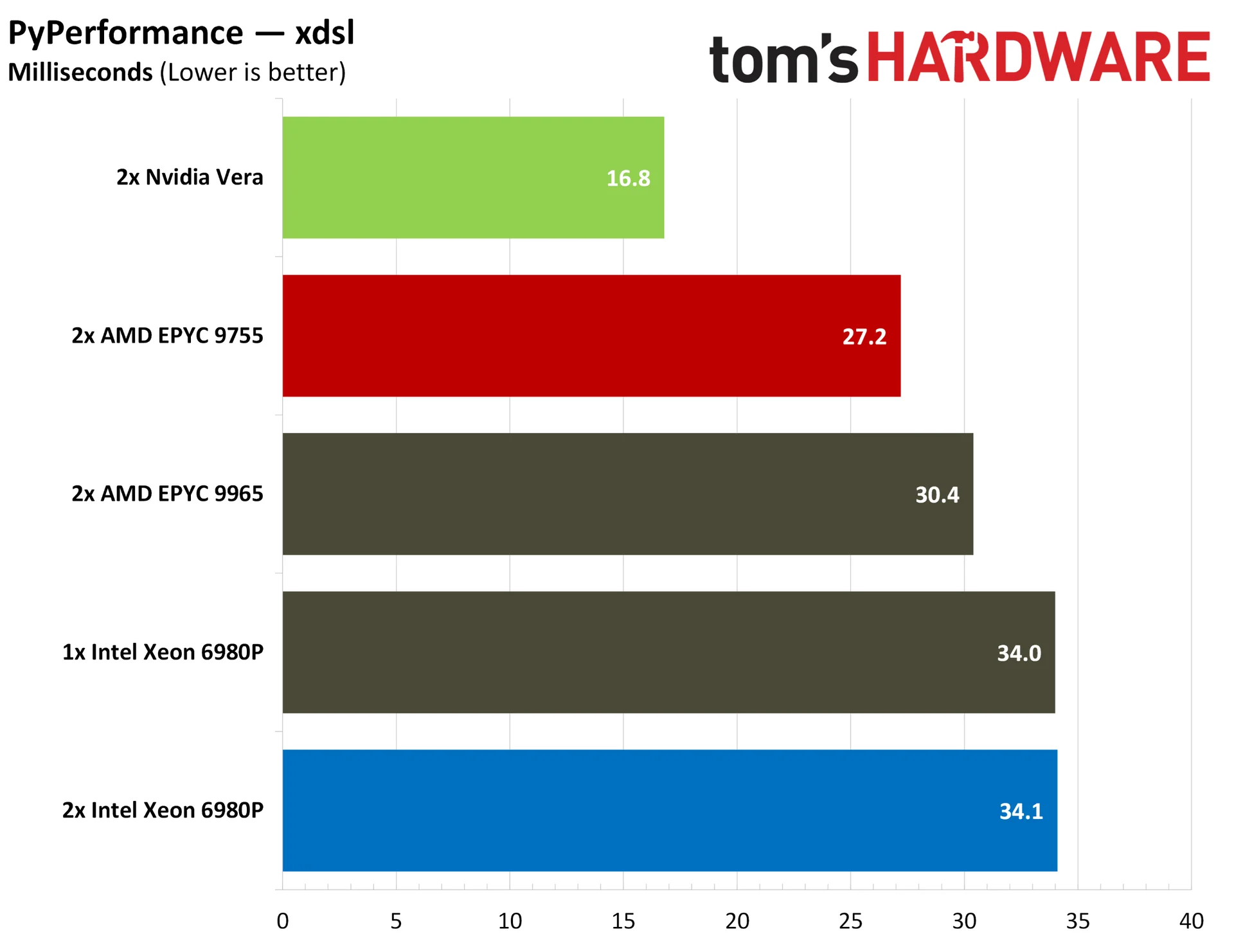
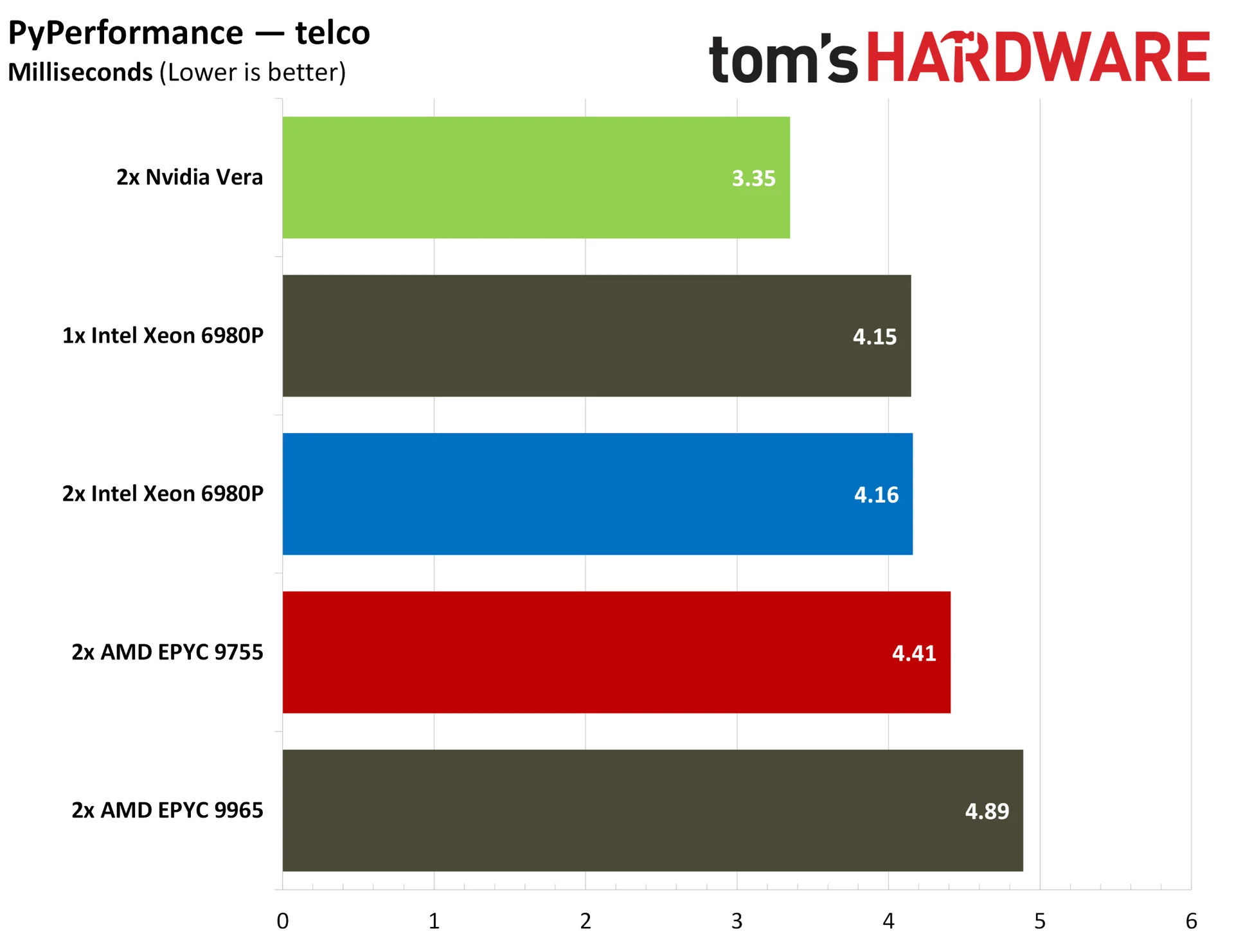
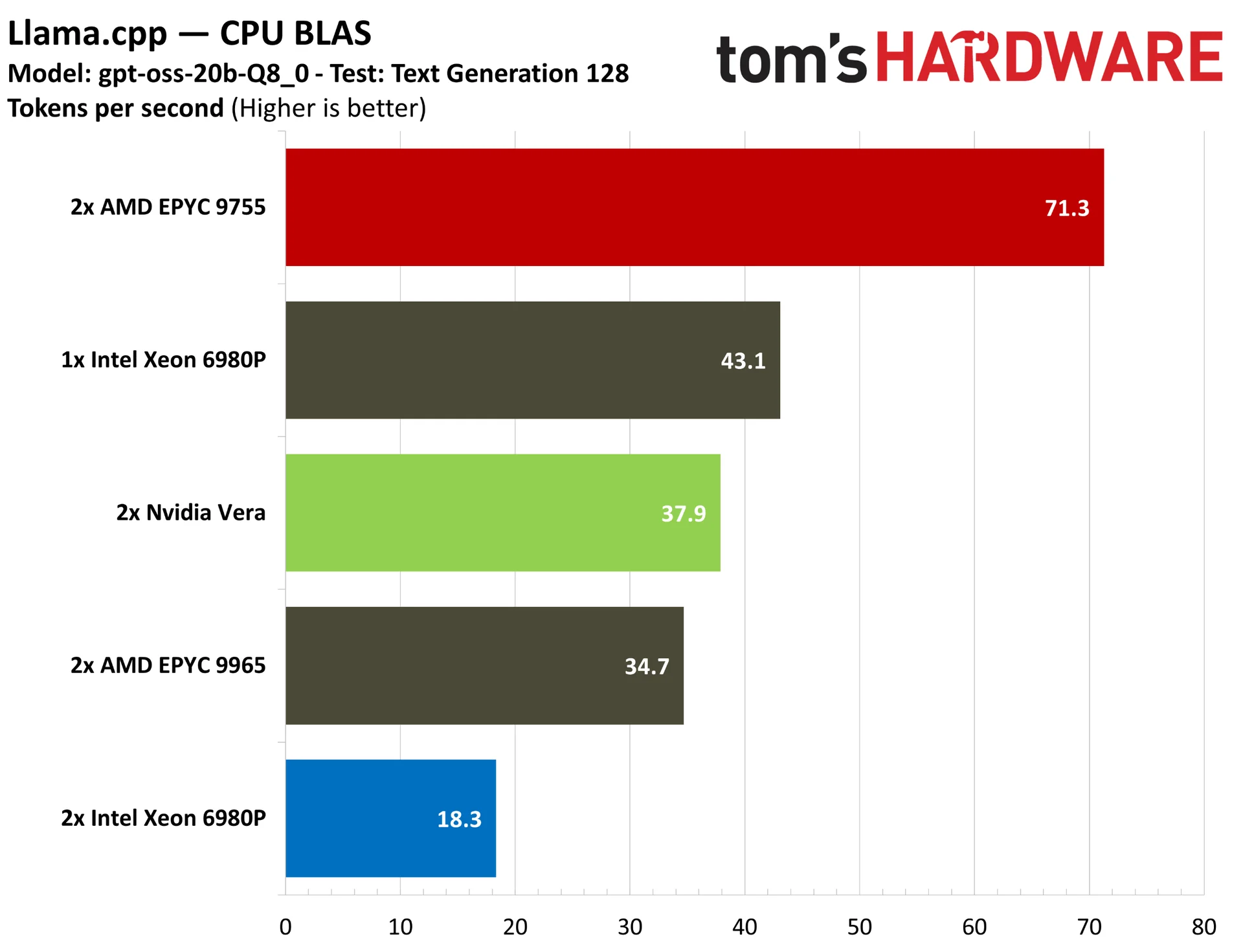
Python performance is a meaningful signal for agentic AI workloads. There’s no single language for AI agents, but Python—and, to a lesser extent, TypeScript—underpins frameworks such as LangGraph, CrewAI, and AutoGen. Vera’s performance here is a real strength, though it shouldn’t be mistaken for a complete measure of AI capability.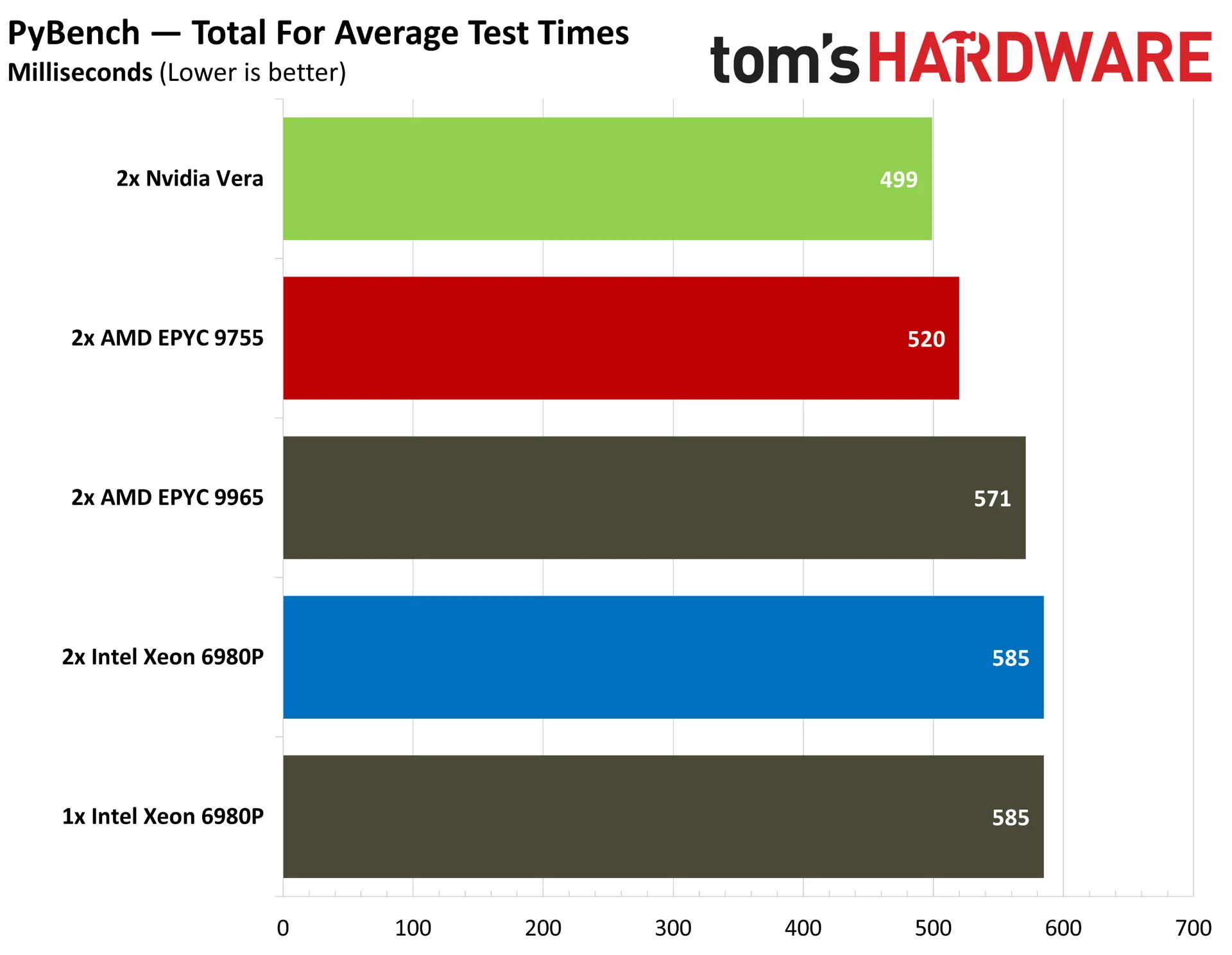
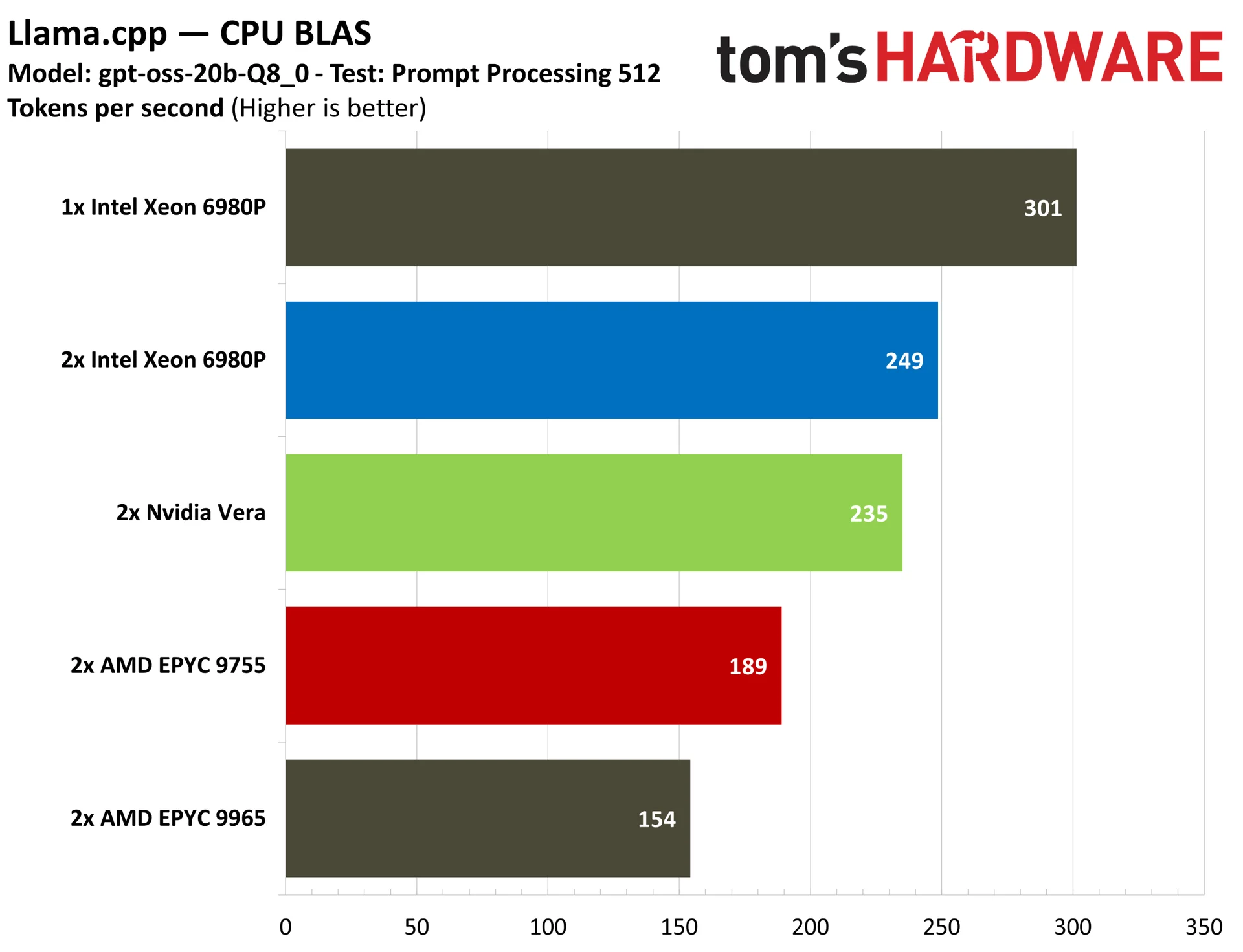
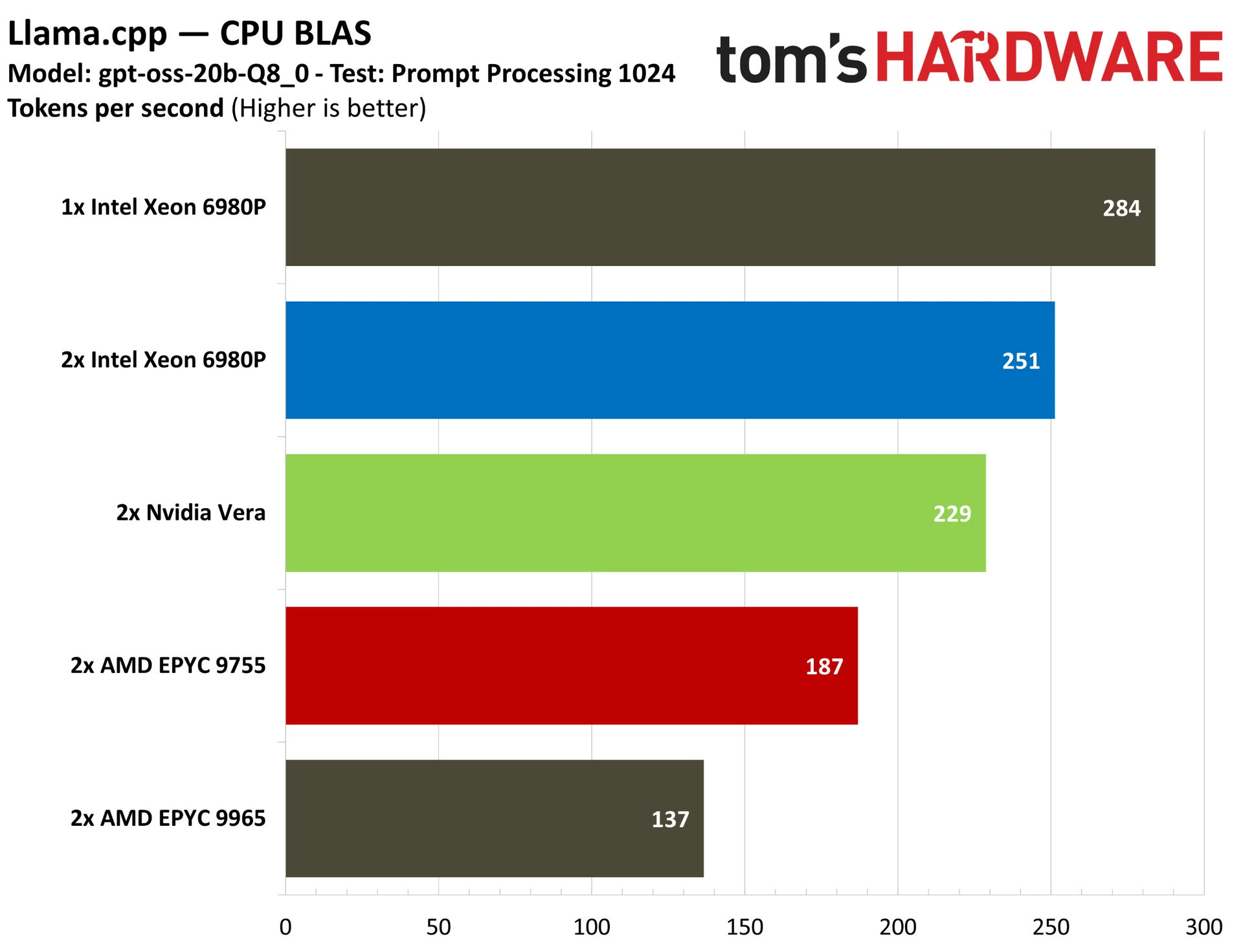
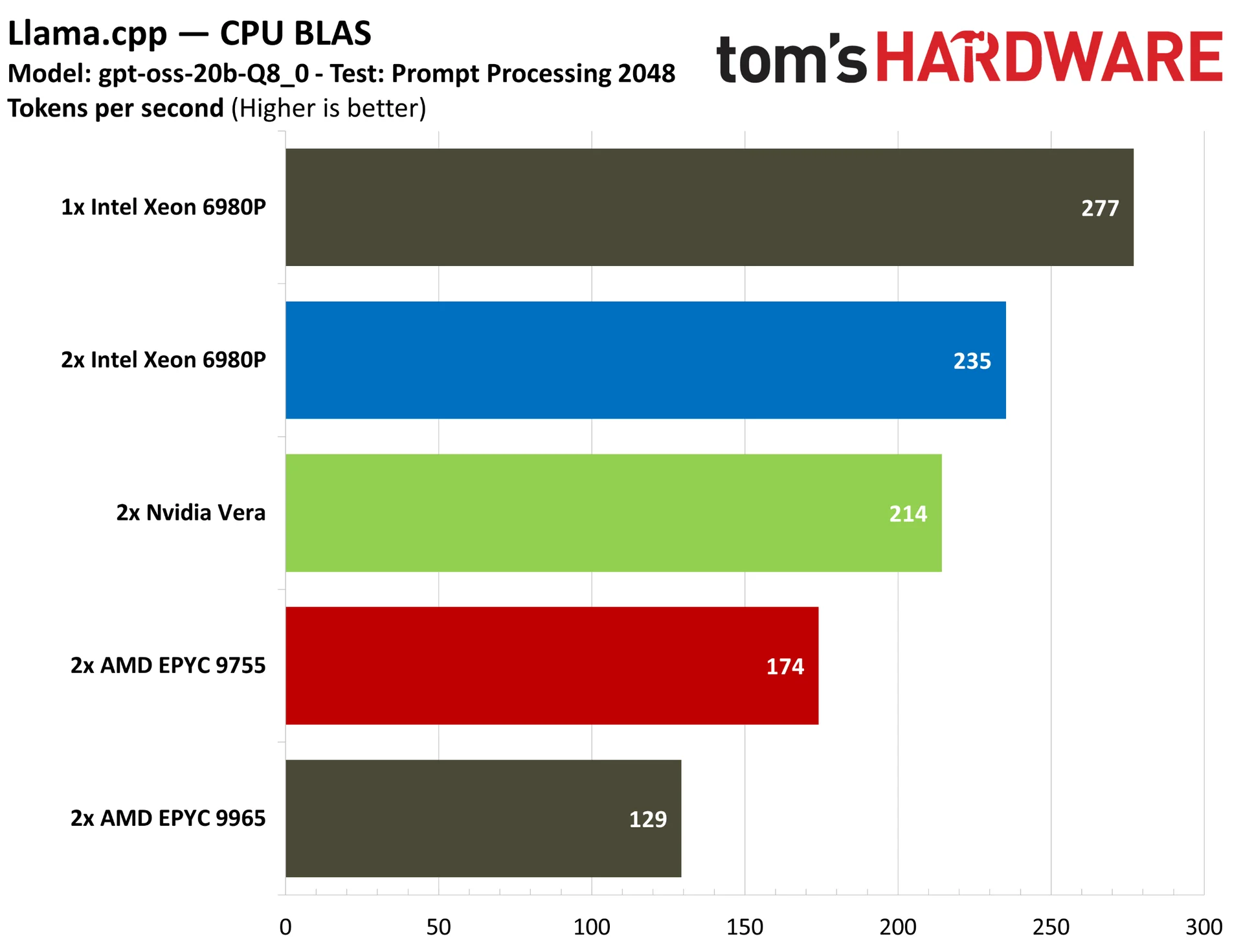
Nvidia Vera memory and compression benchmarks
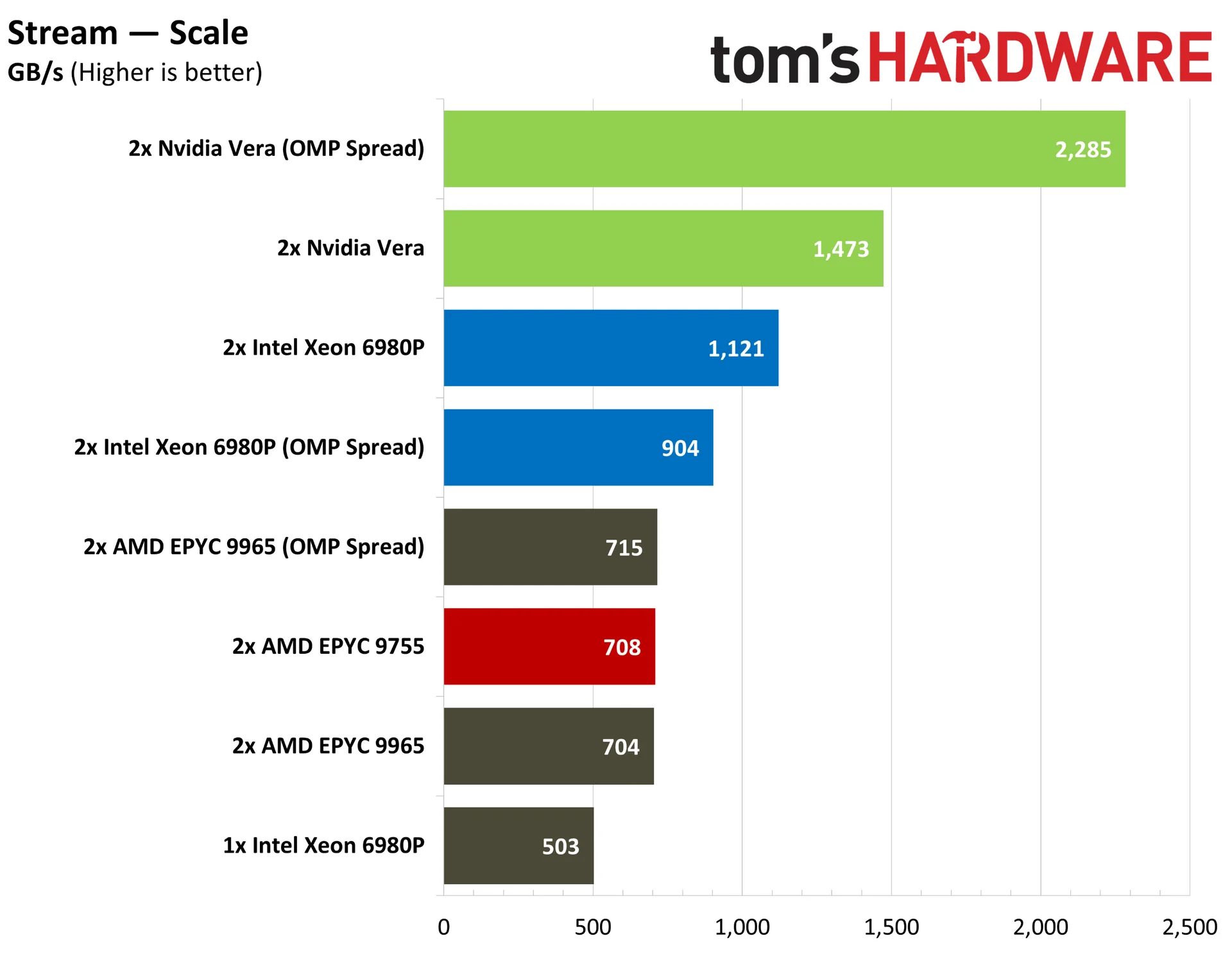
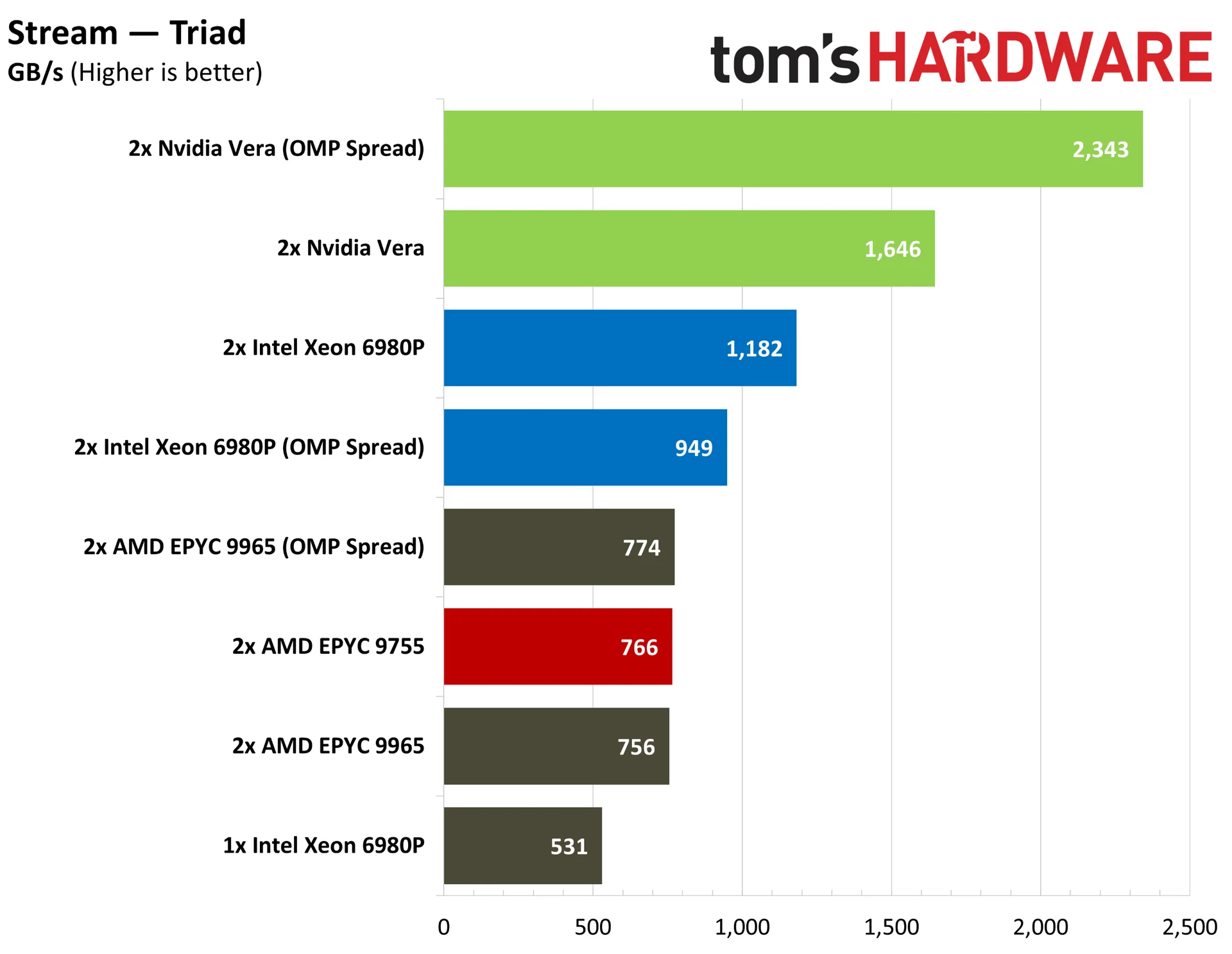
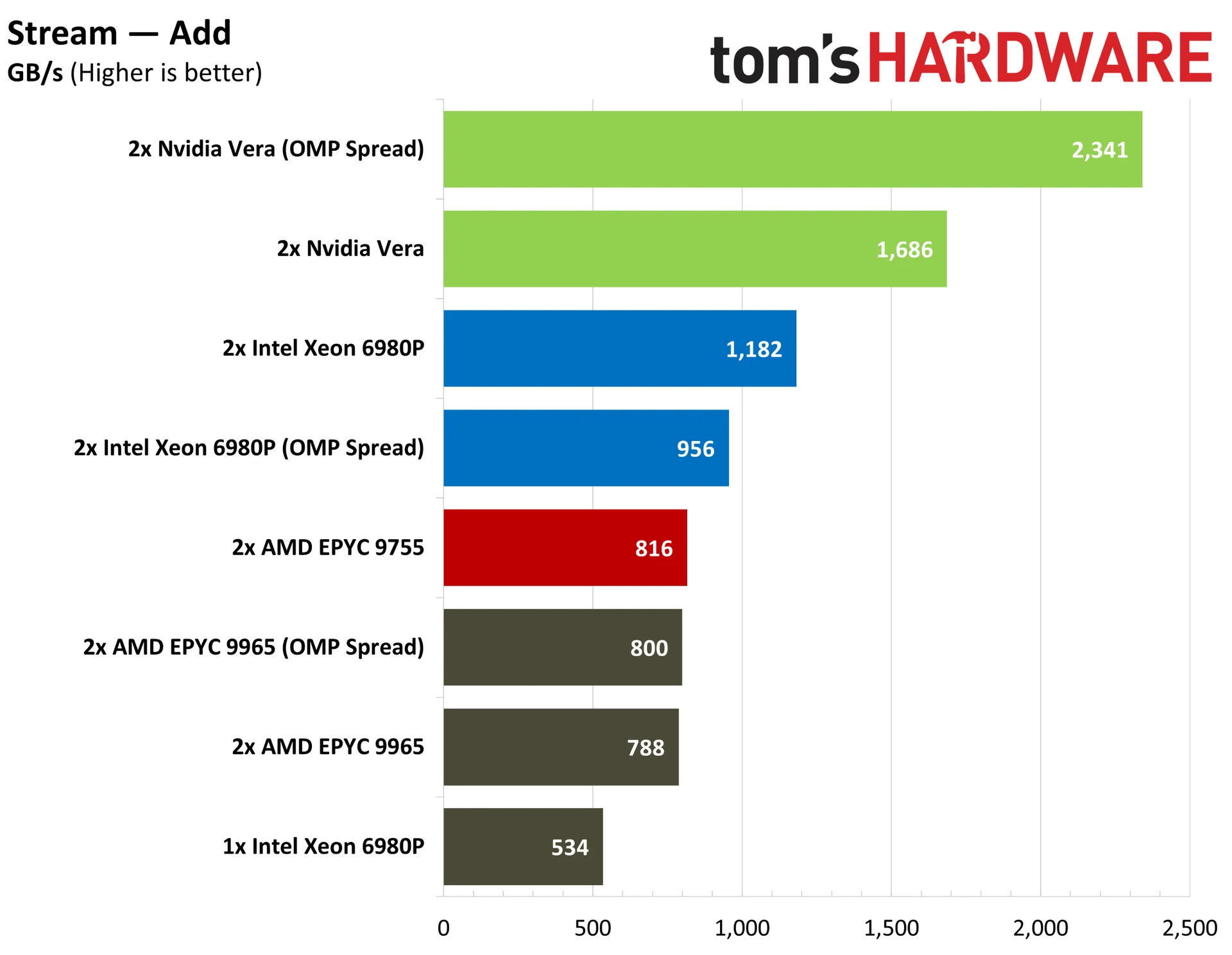
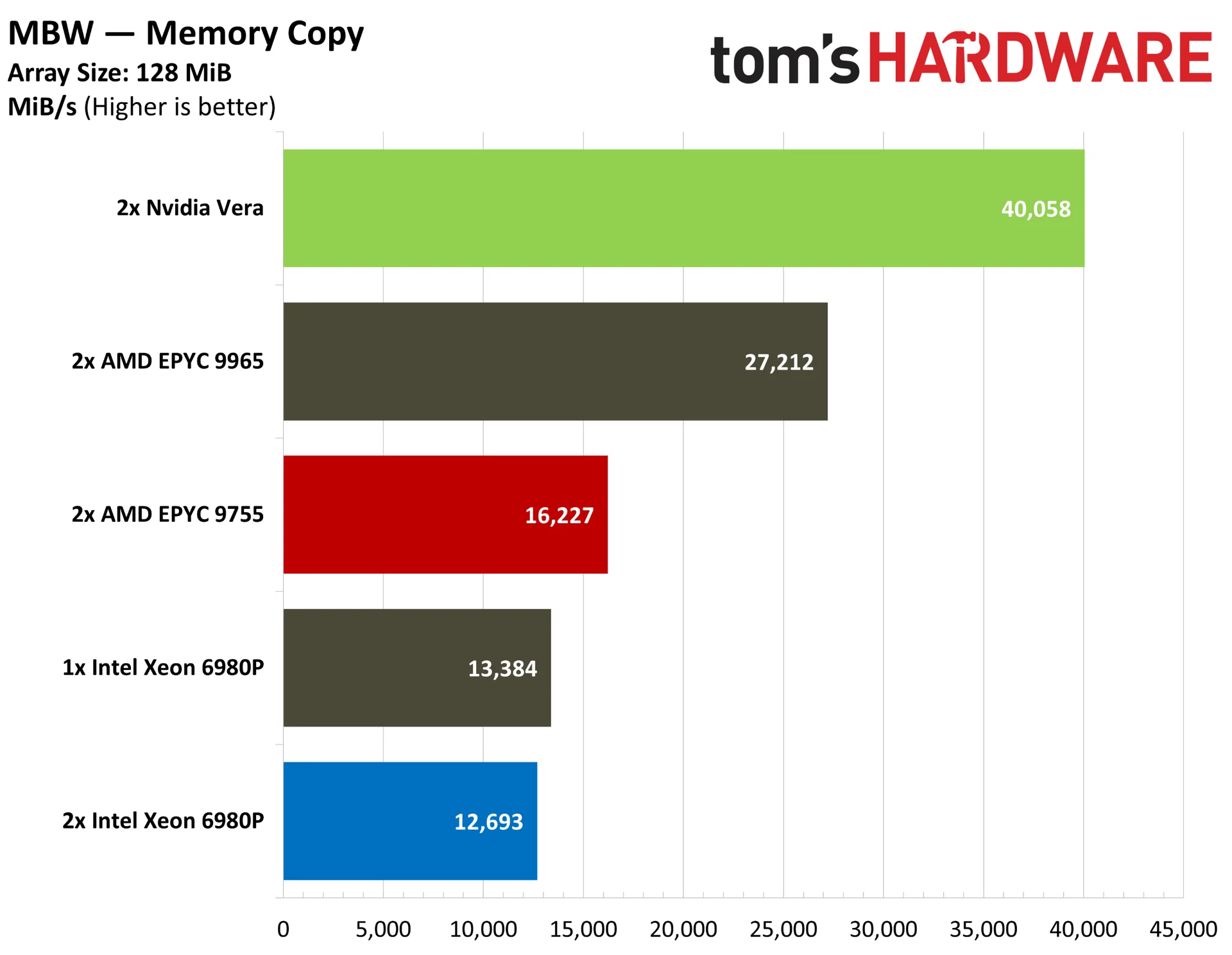
Memory bandwidth is one of Vera’s clearest advantages, and STREAM gives that claim a strong showing. Vera’s memory bus is more than twice as wide as Grace’s, and it uses LPDDR5X-9600. Nvidia rates the interface for up to 1.2 TB/s of bandwidth, with up to 1.8 TB/s between Vera sockets.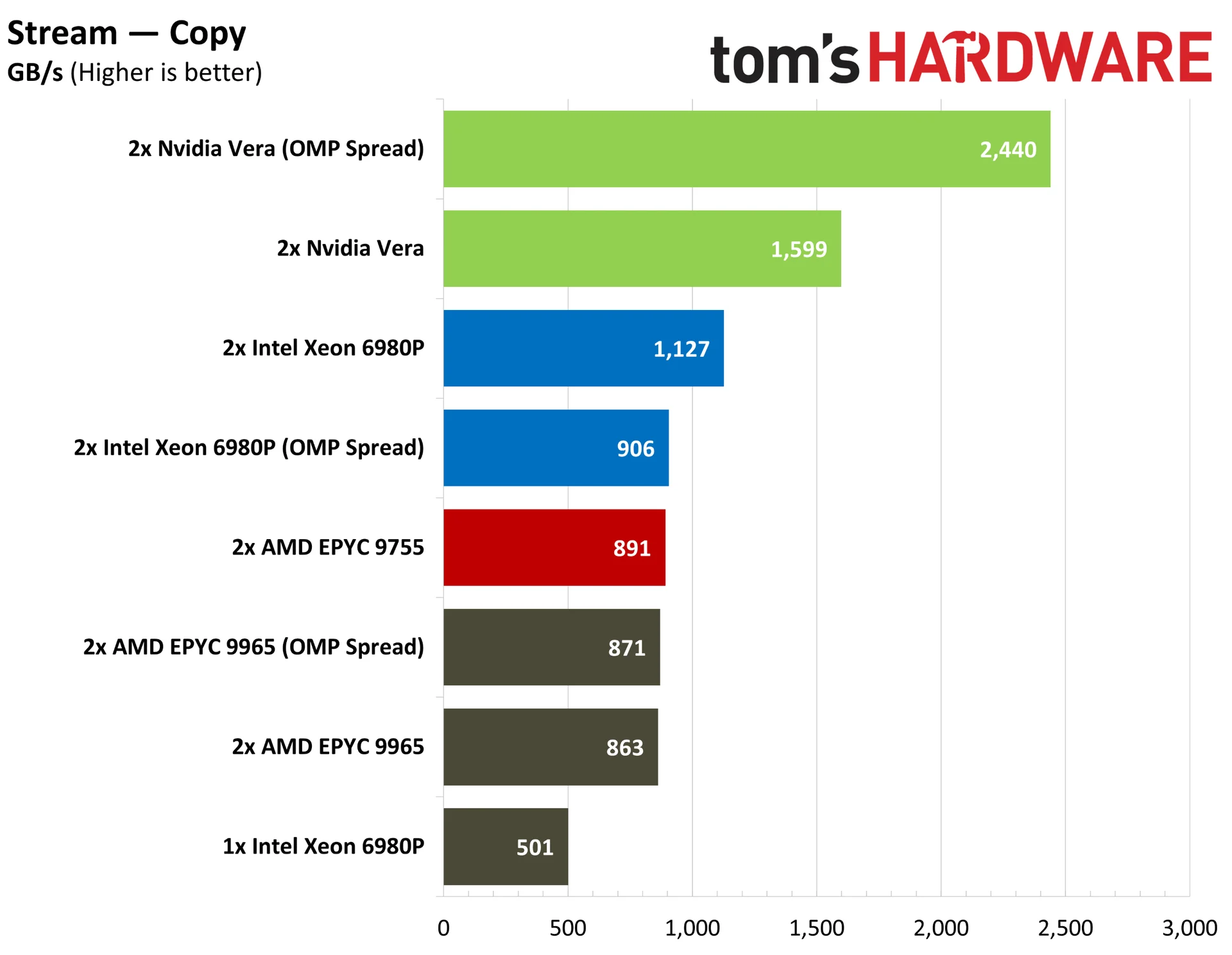
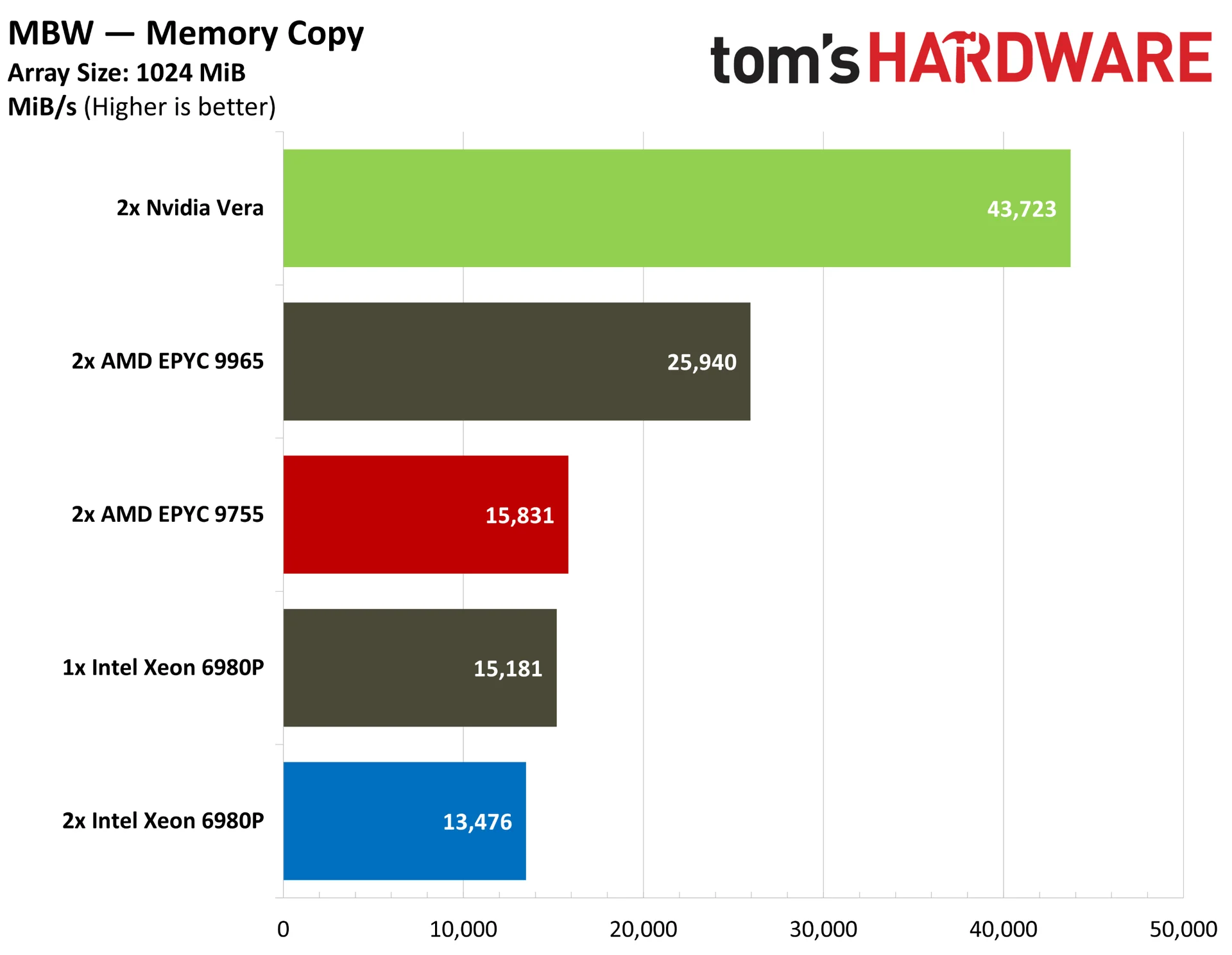
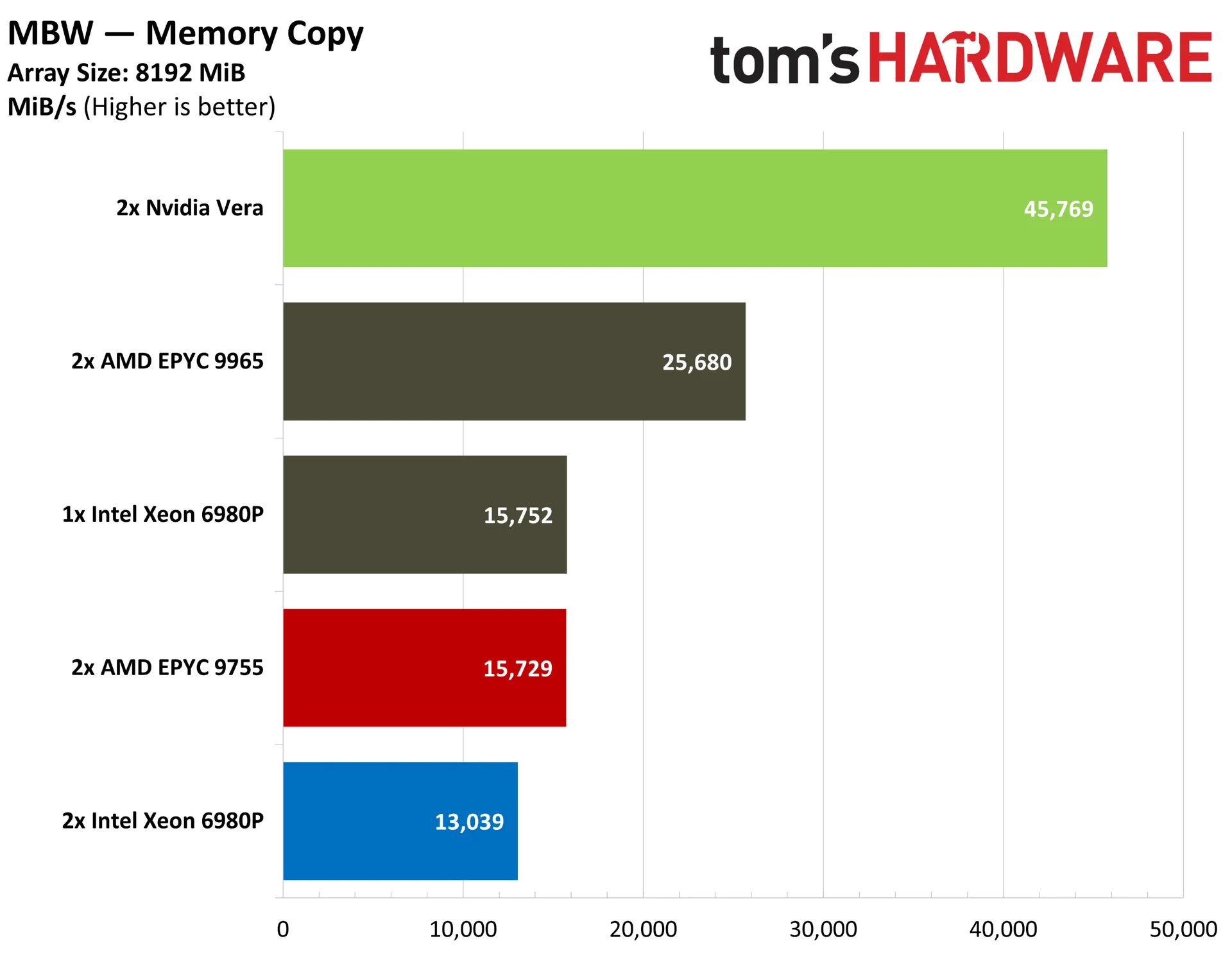
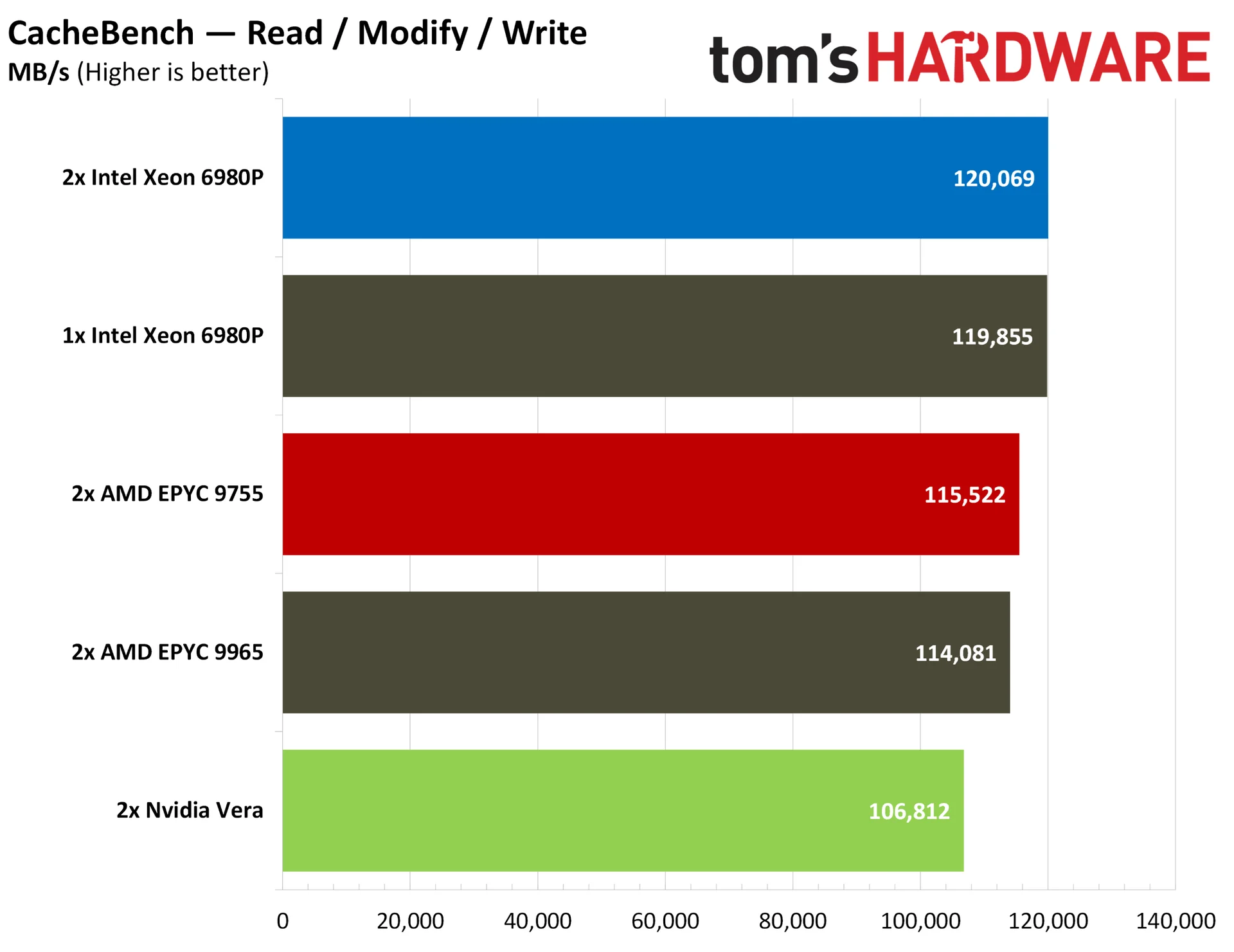
Compression results depend on the workload
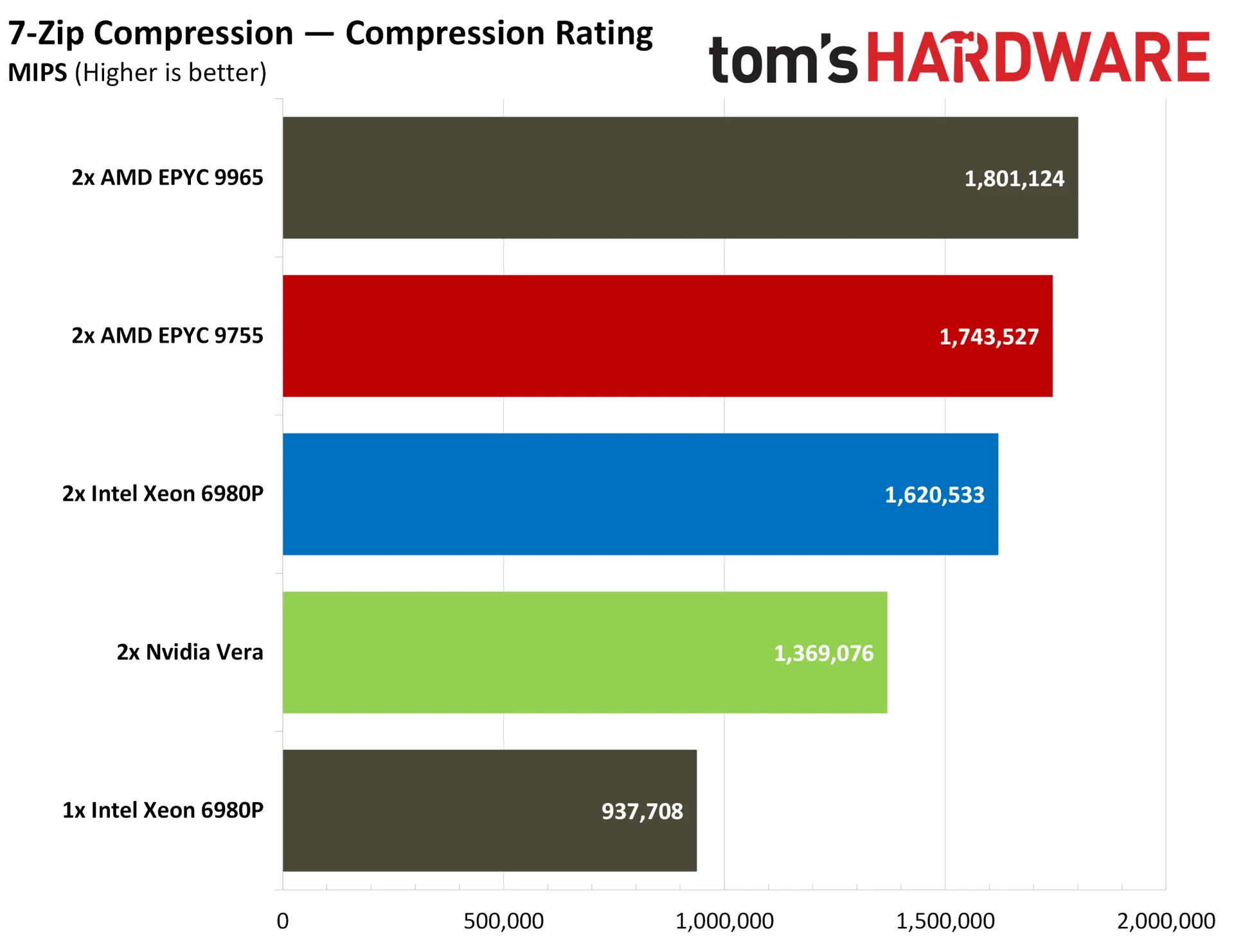
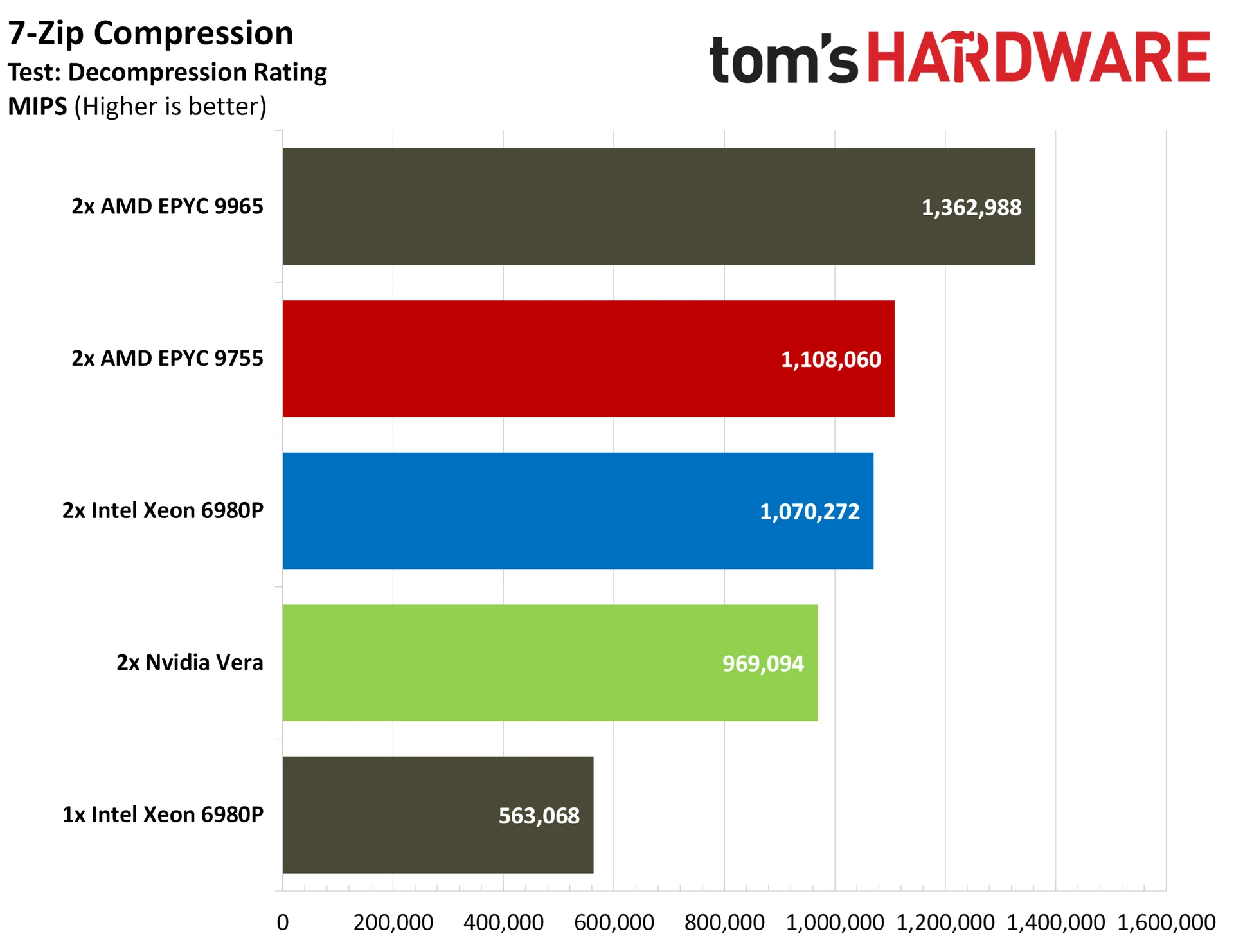
Vera’s compression results are a reminder that one benchmark rarely tells the whole story. With Zstd, it leads at both level 3 and level 19, across standard and Long Mode runs. Decompression is less favorable: AMD’s Turin processors pull ahead, leaving Vera around the level of—or behind—a dual 6980P system. And 7-Zip, which has traditionally favored Zen, puts both Turin configurations at the top; Vera trails the dual 6980P in both compression and decompression.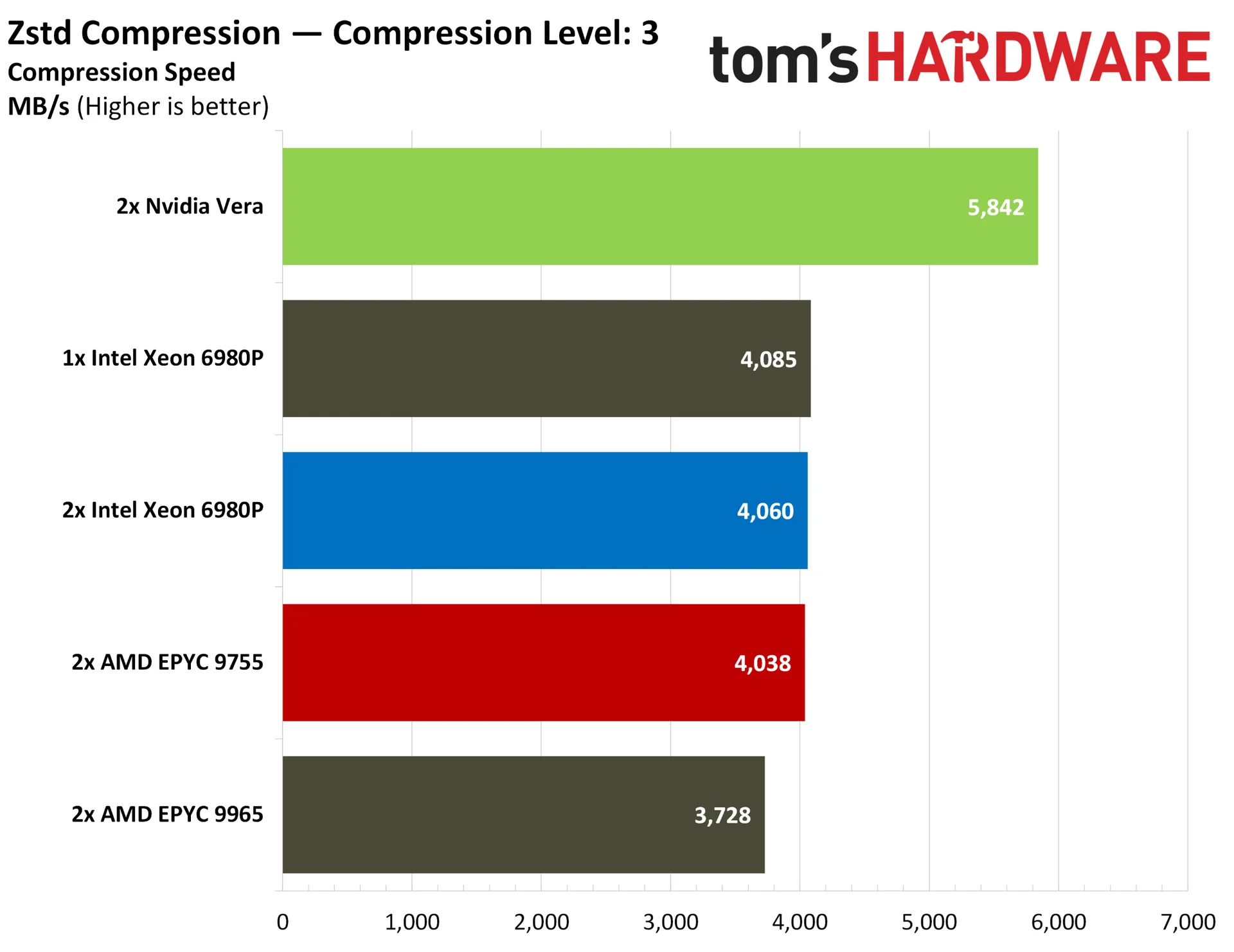
Java and database workloads show a more mixed picture
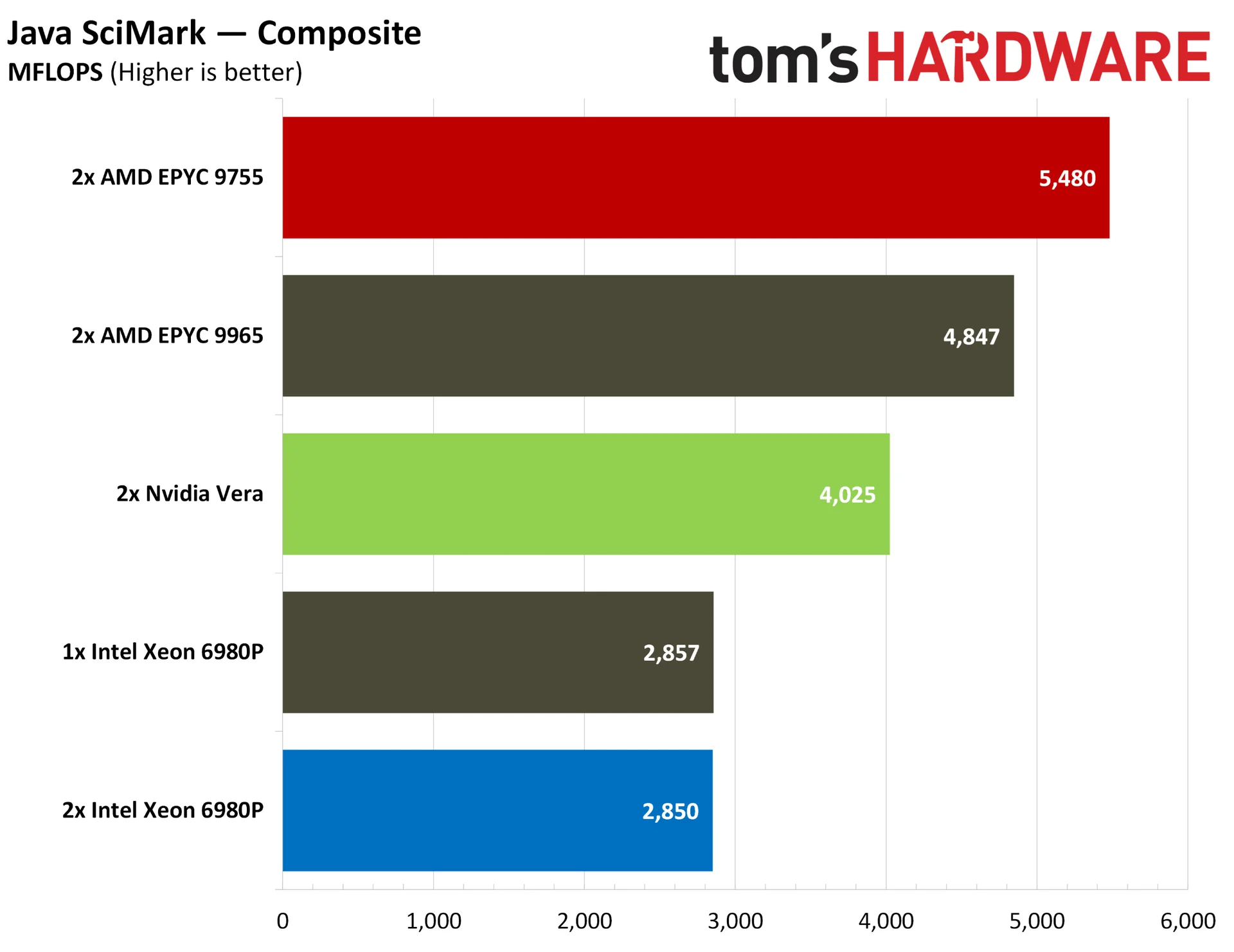
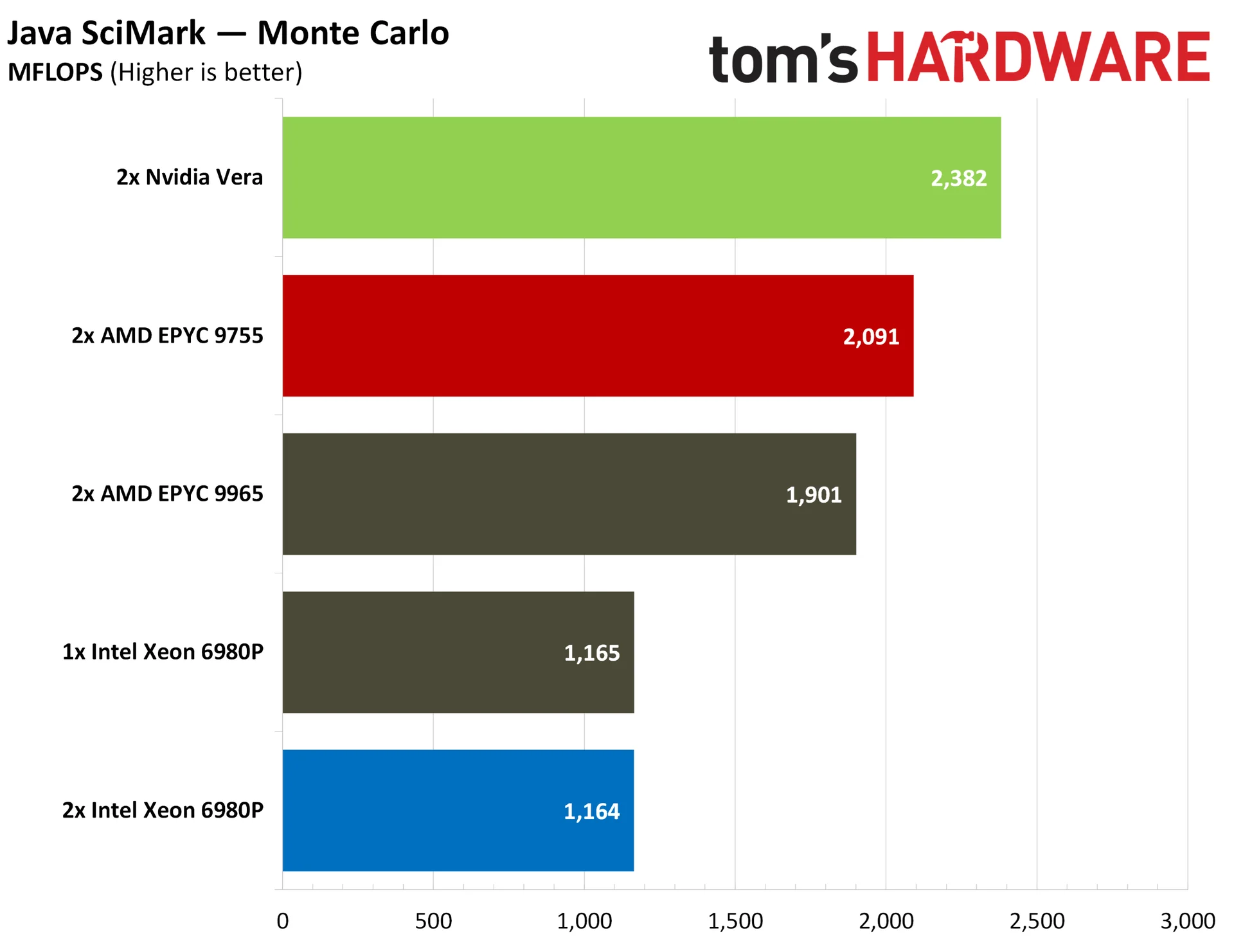
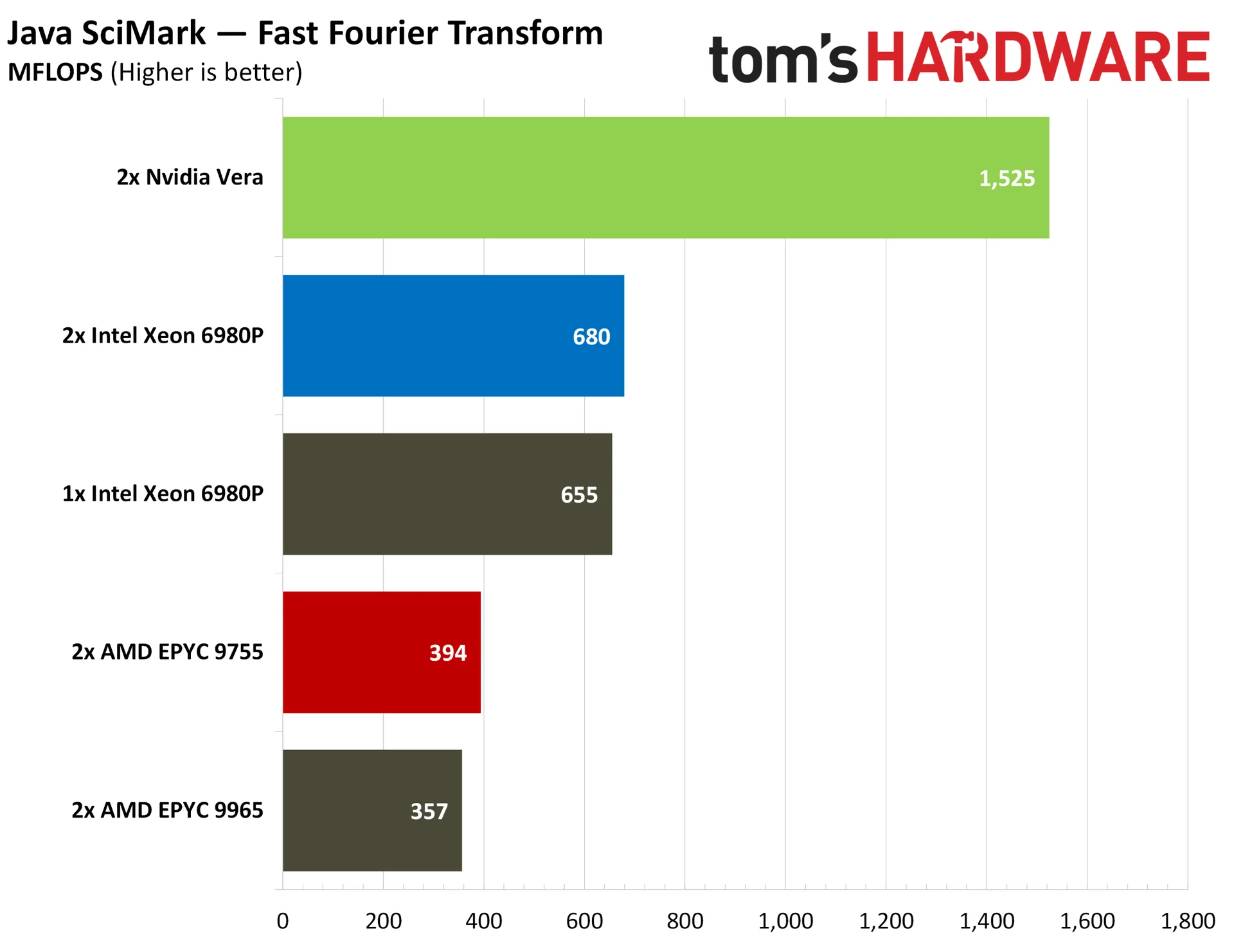
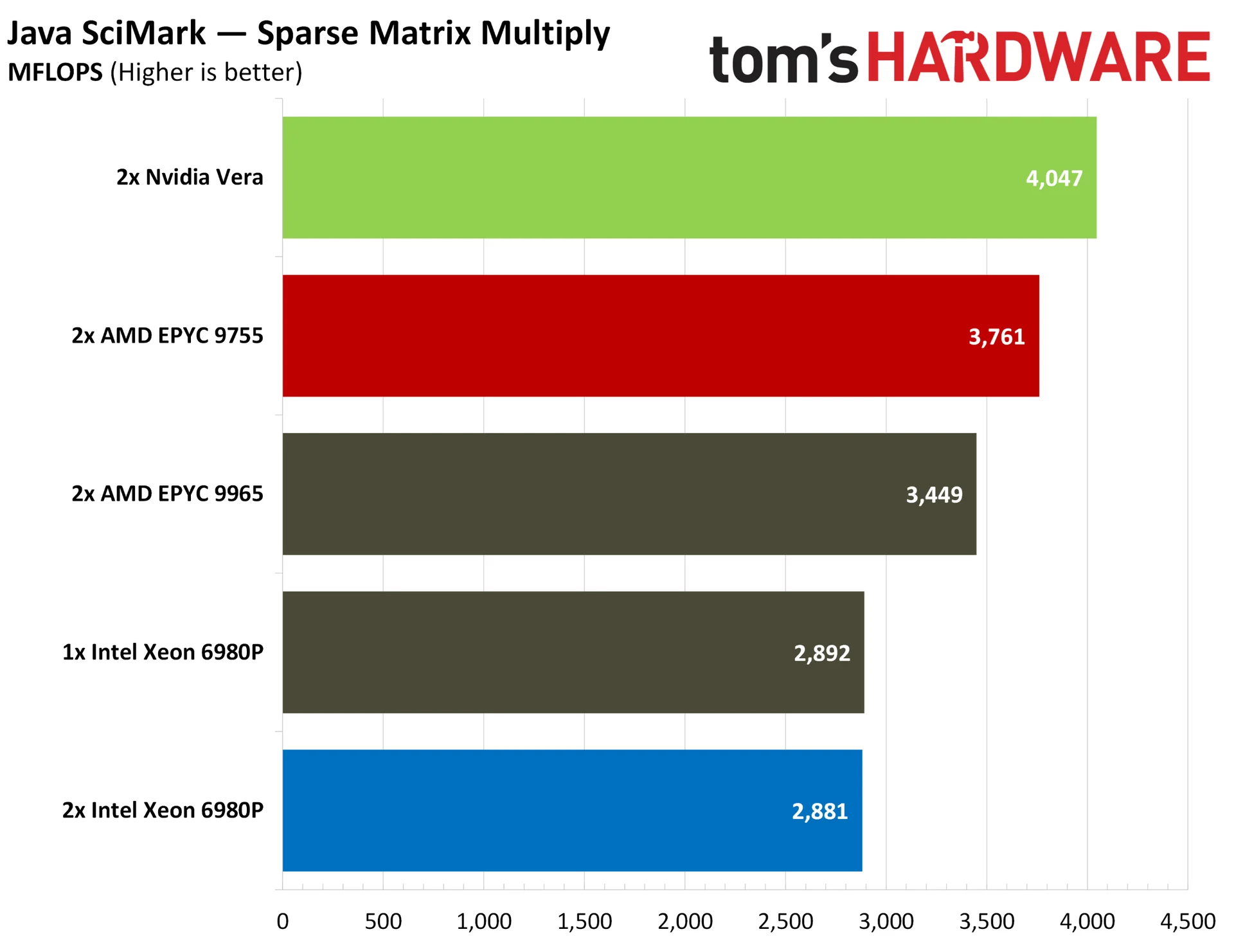
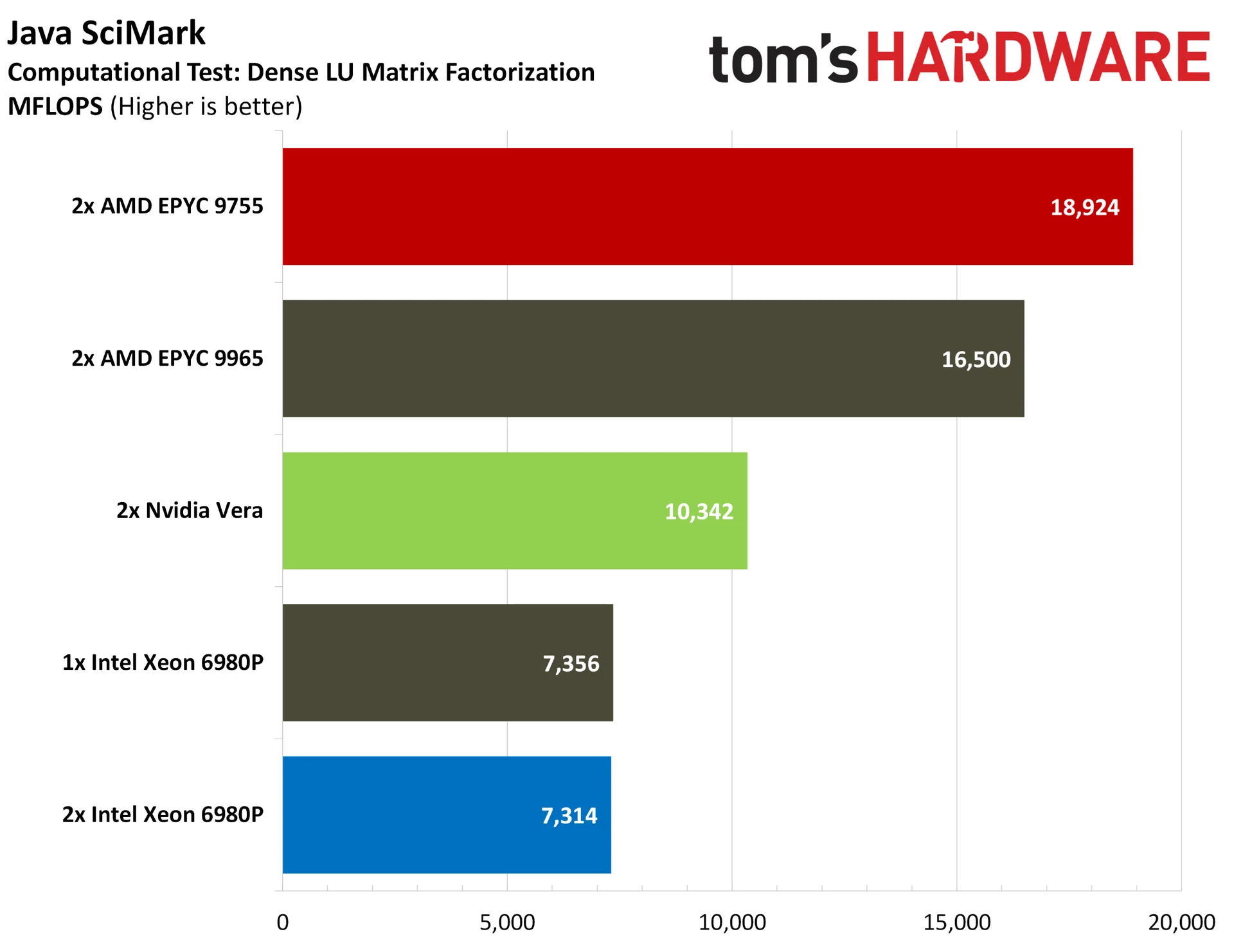
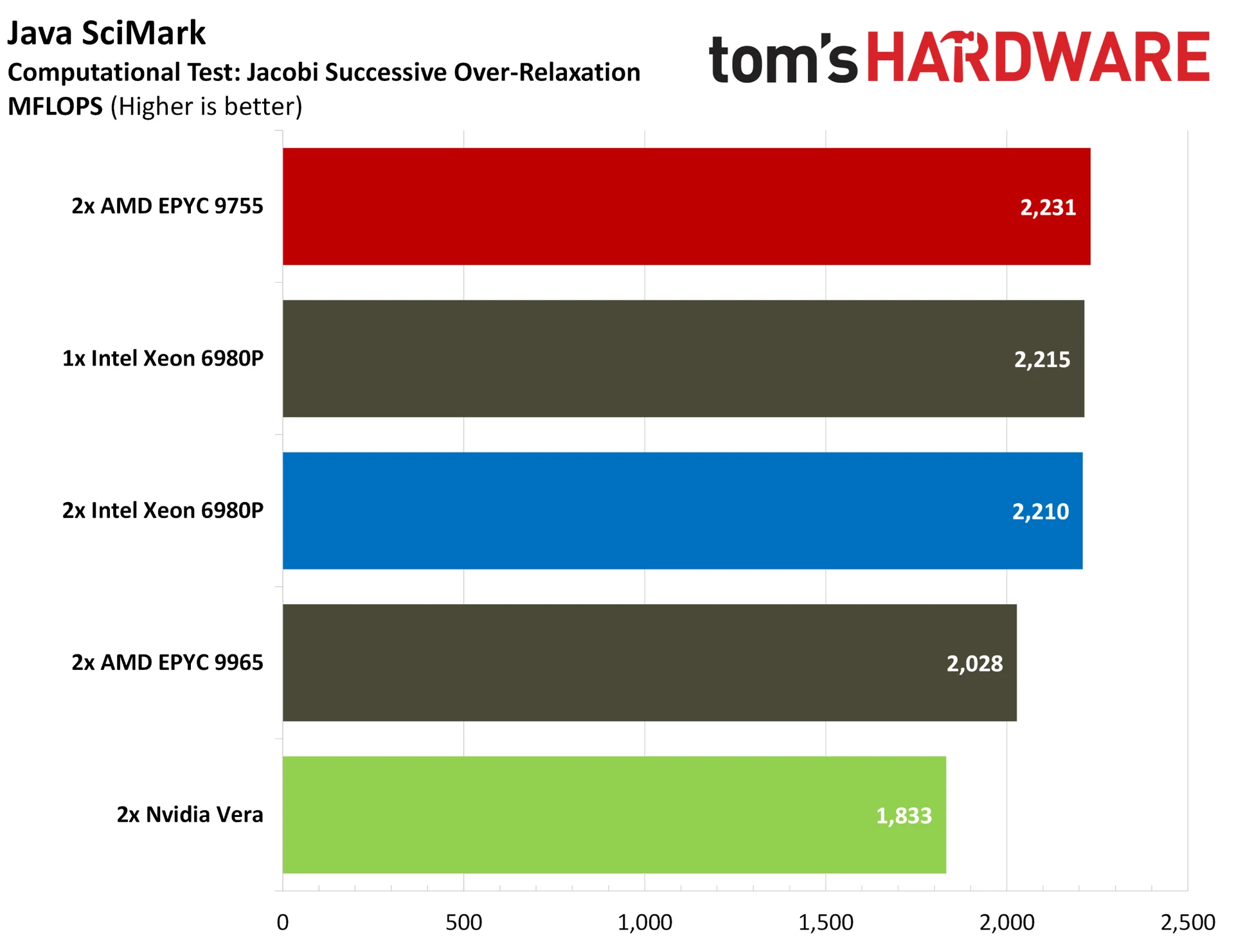
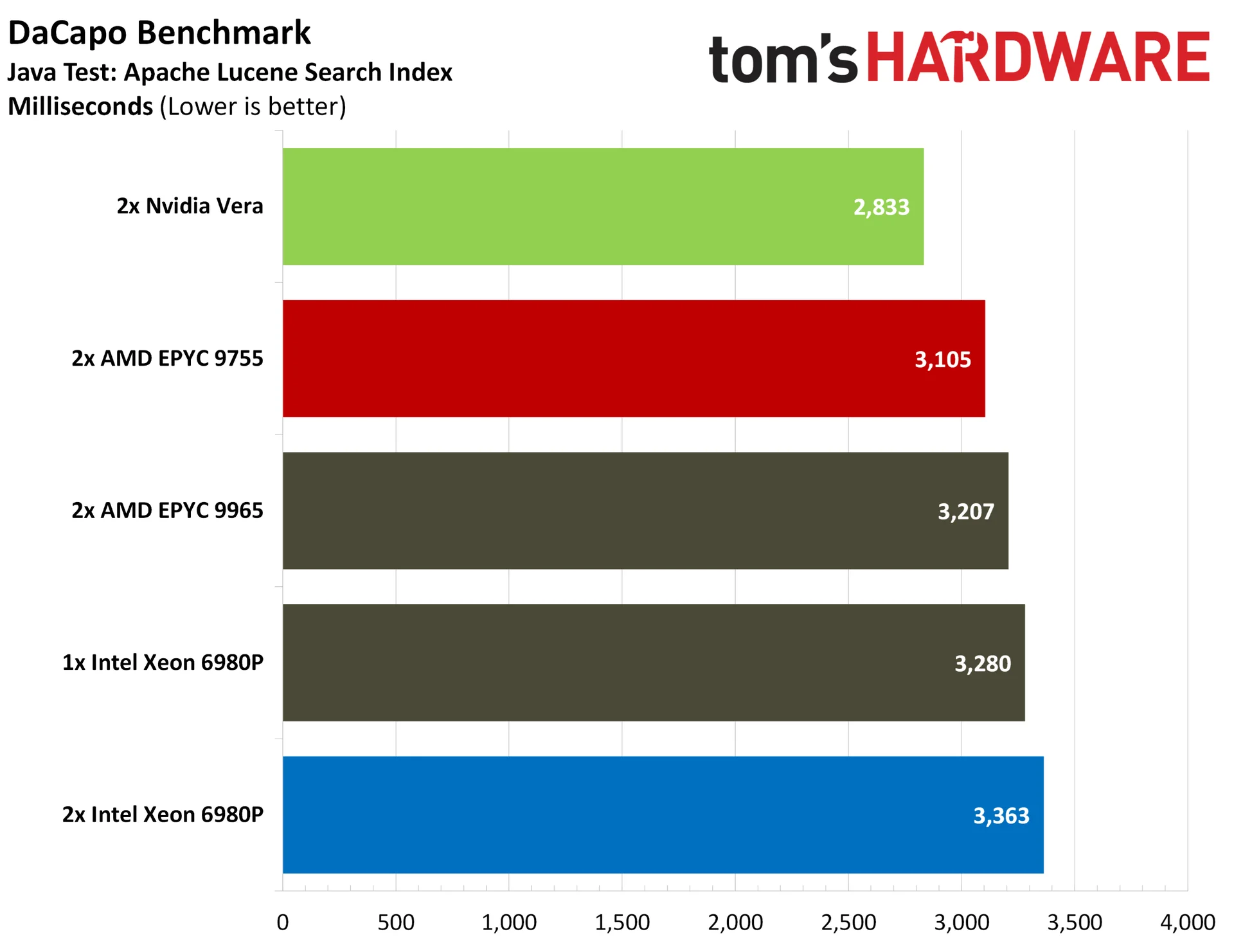
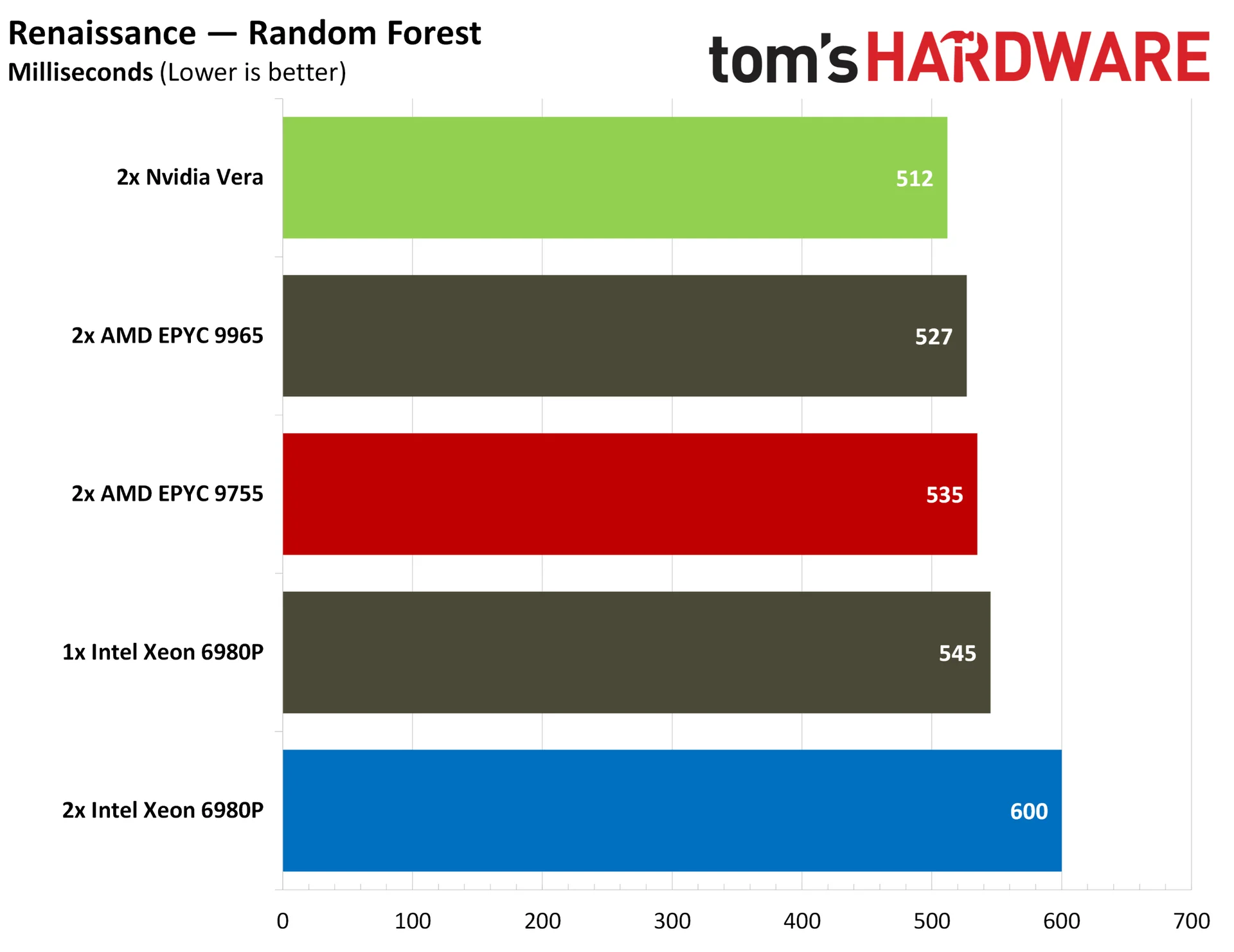
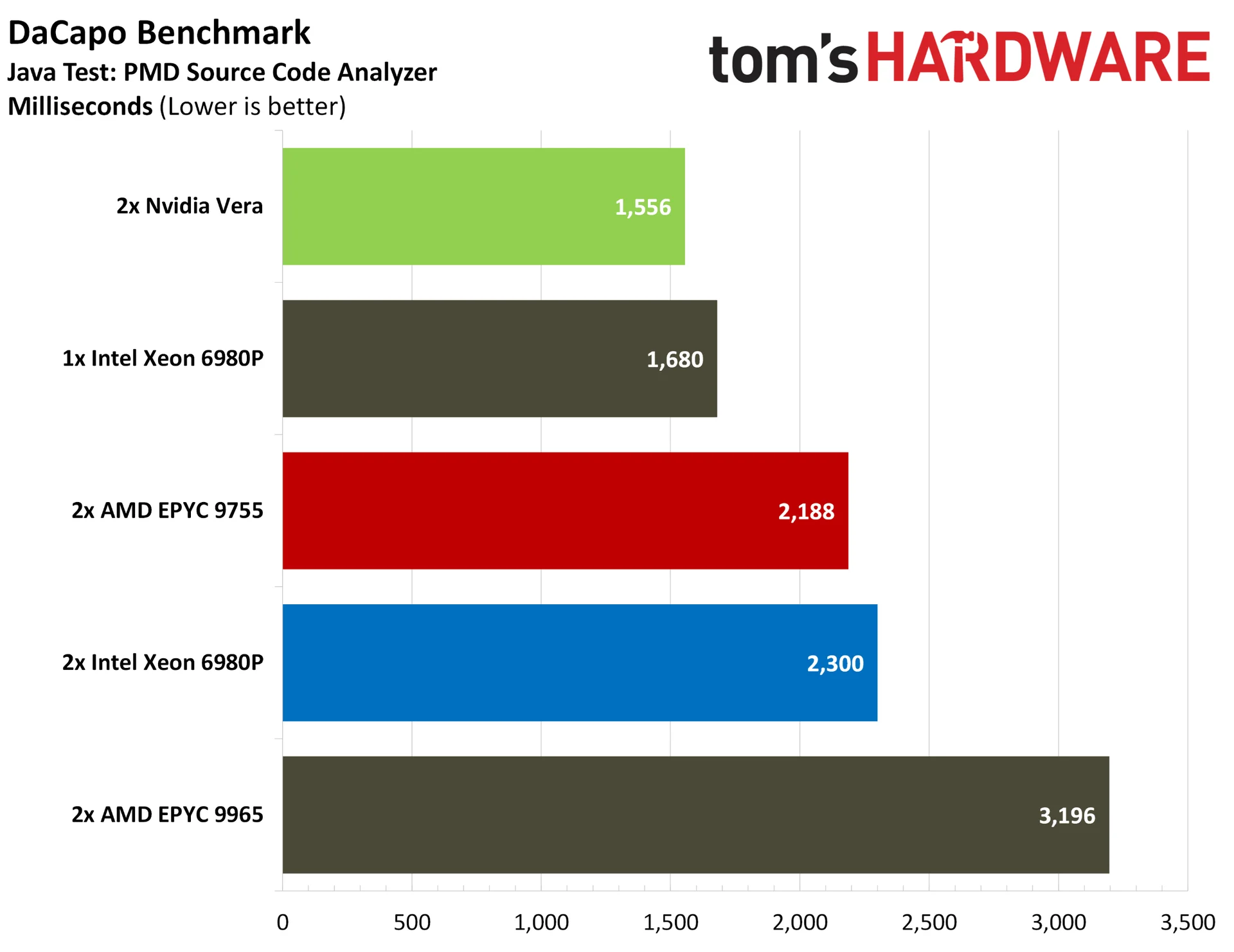
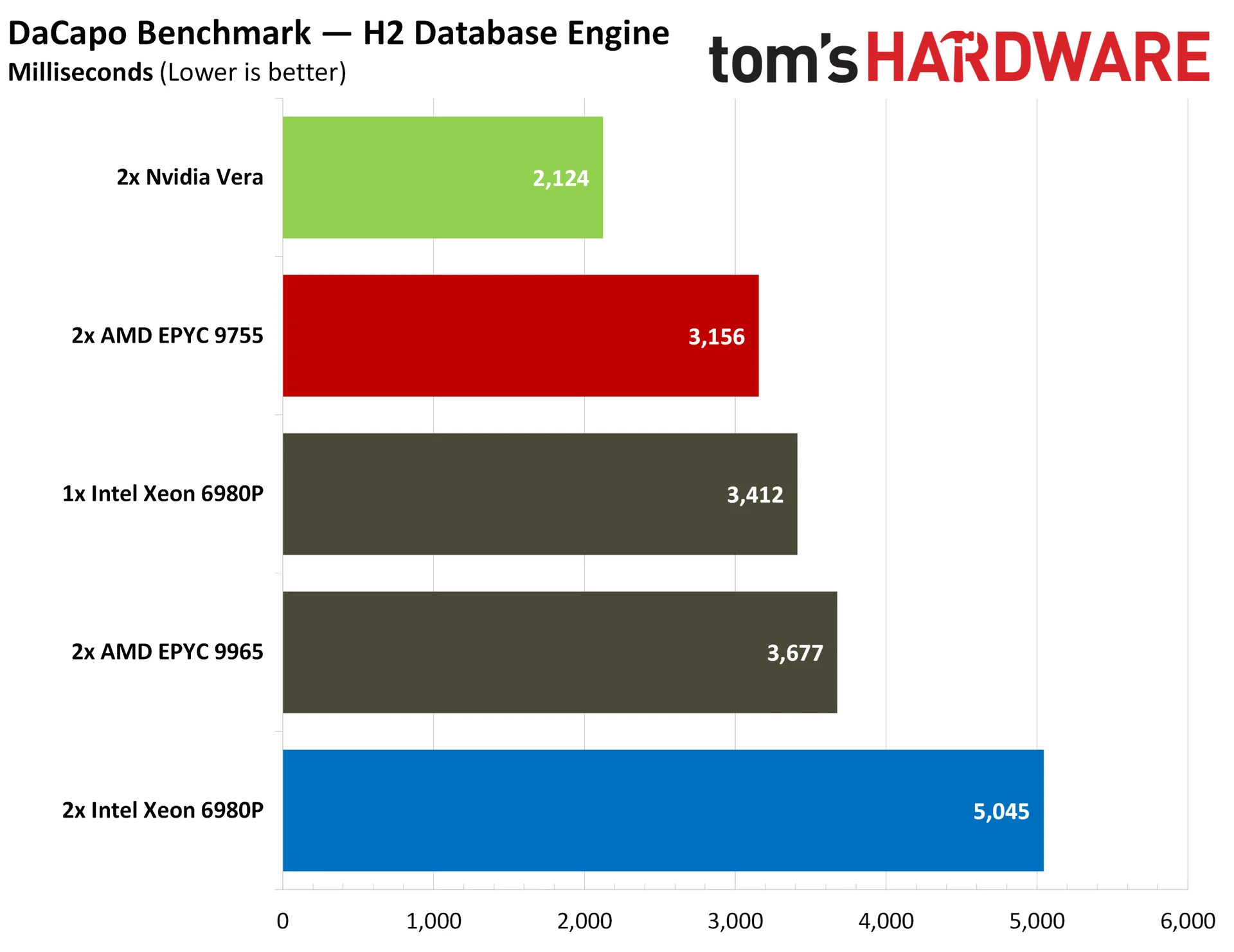
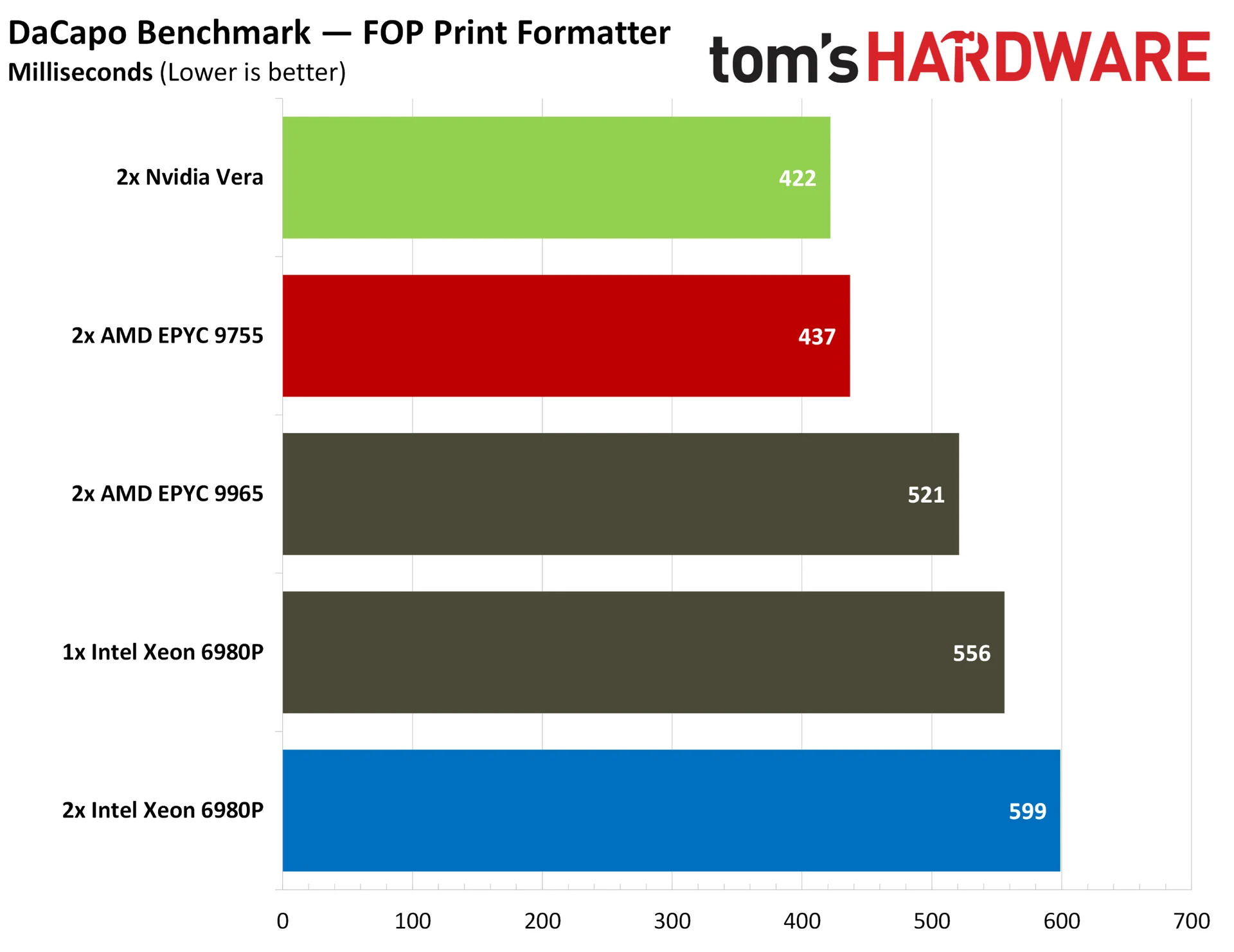
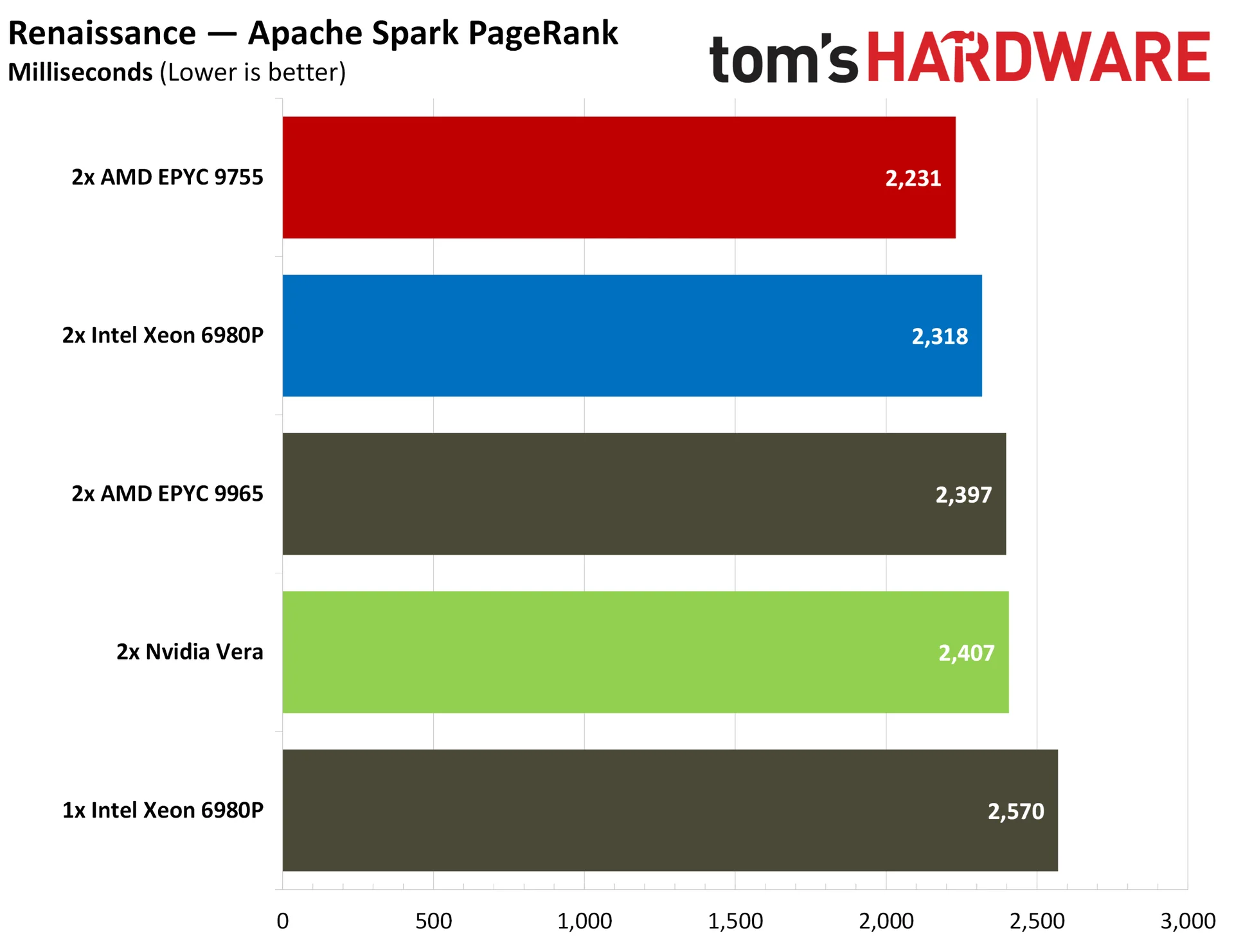
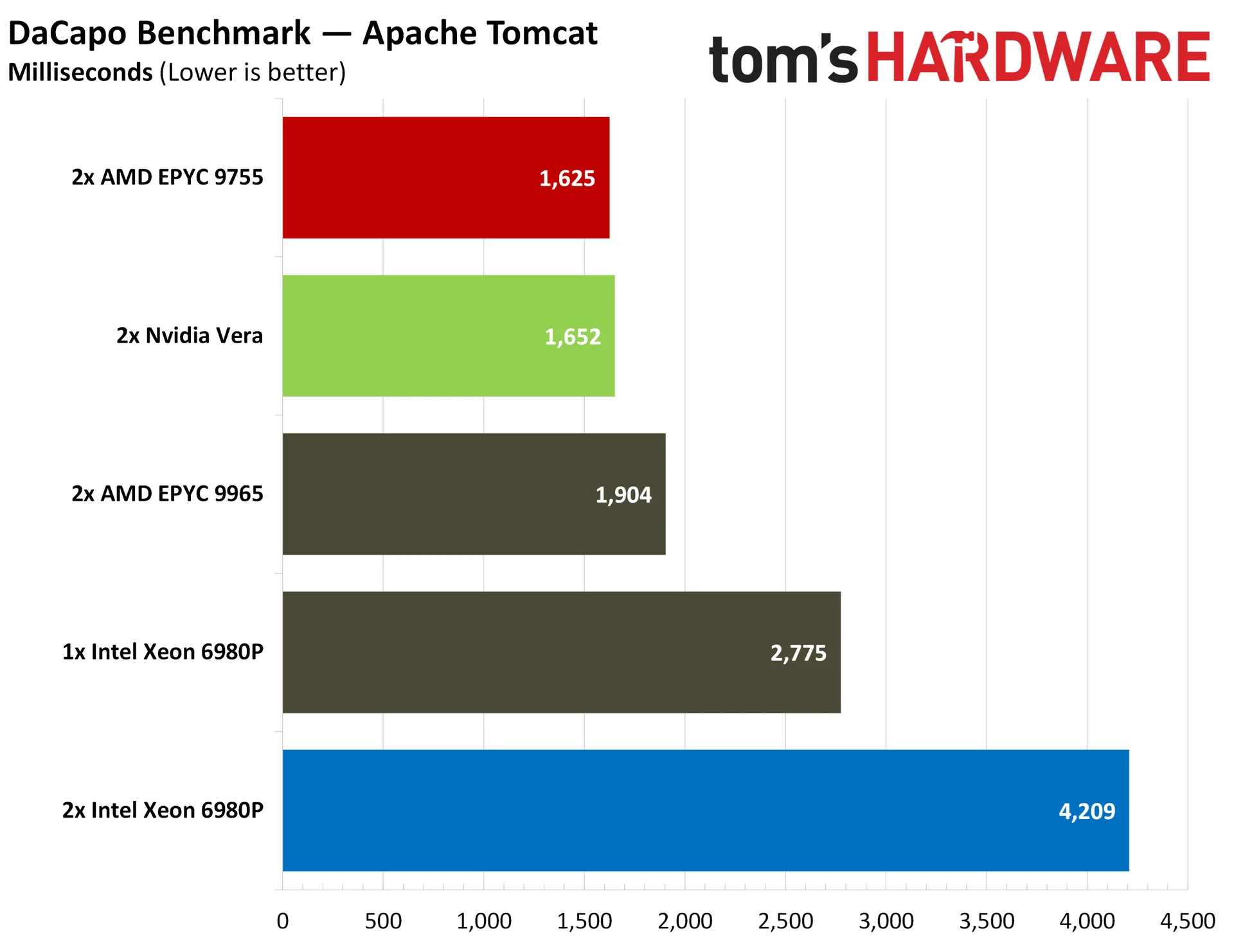
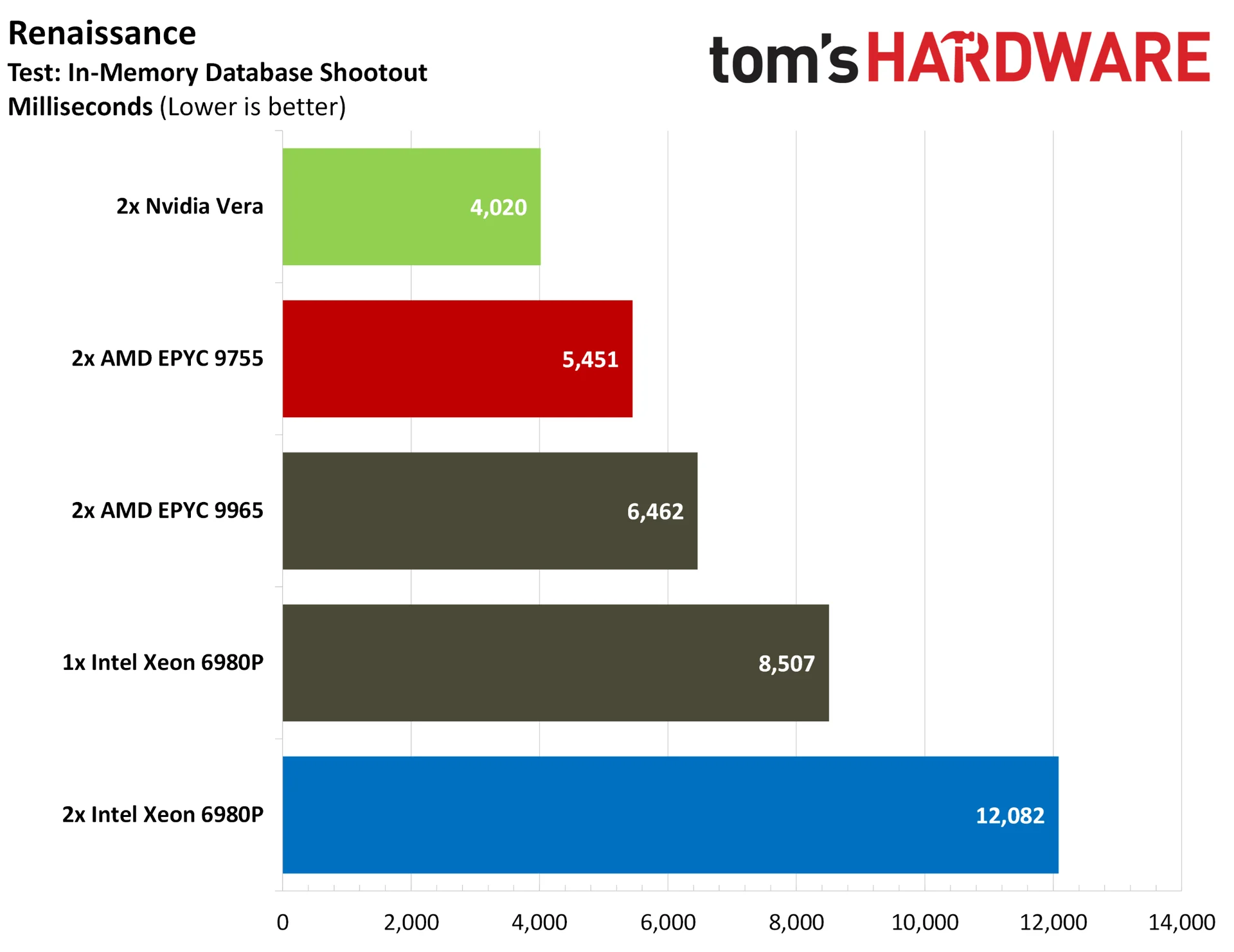
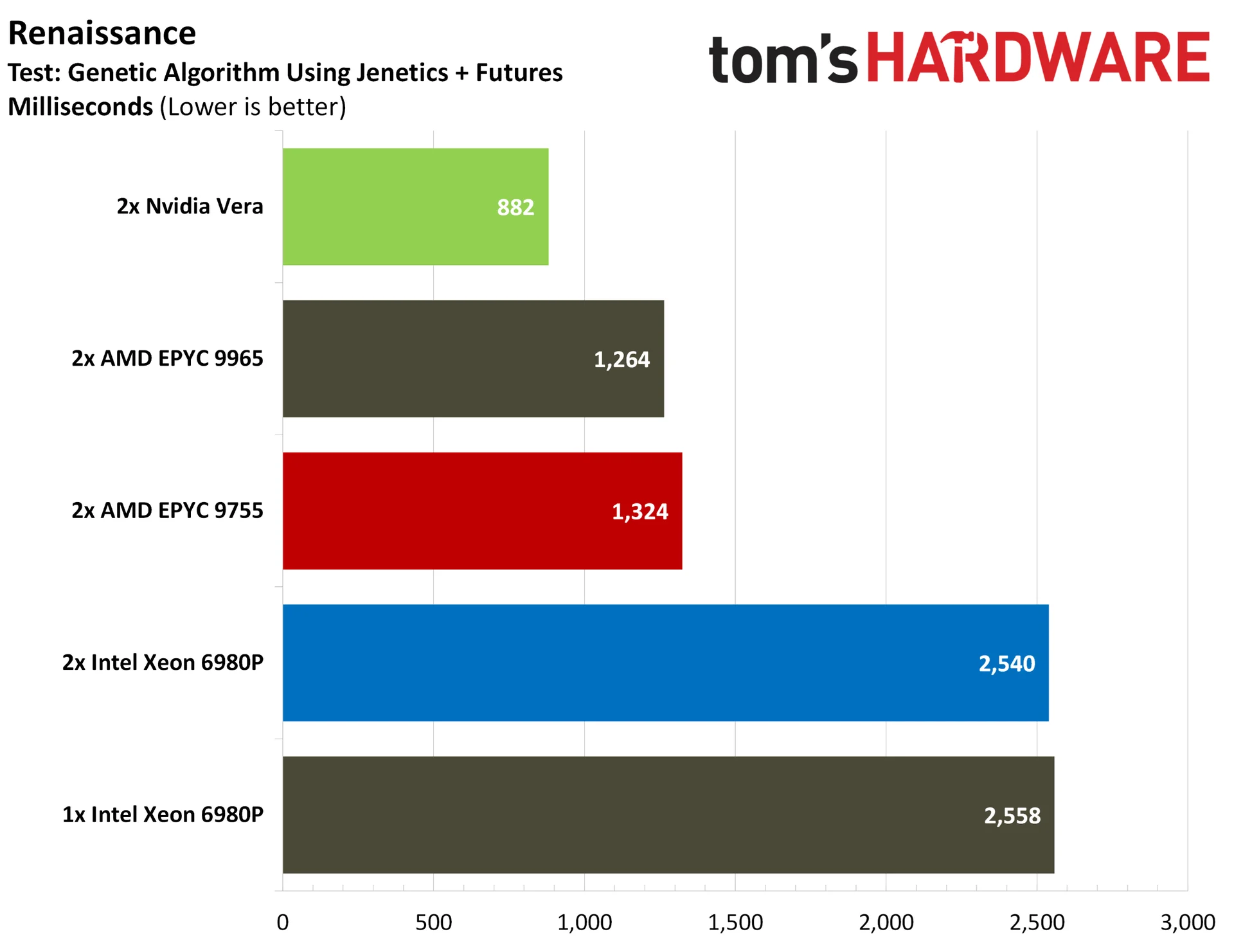
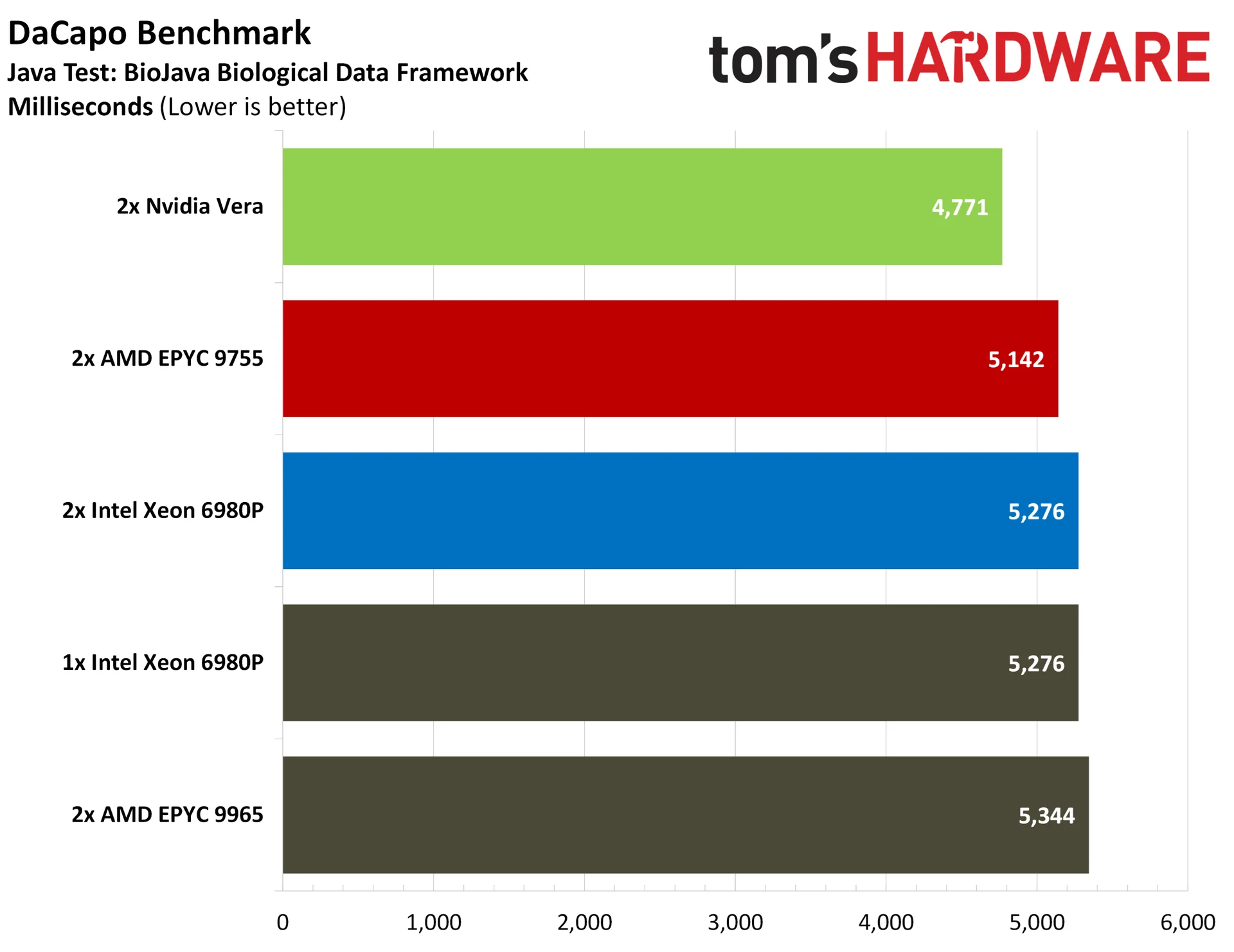
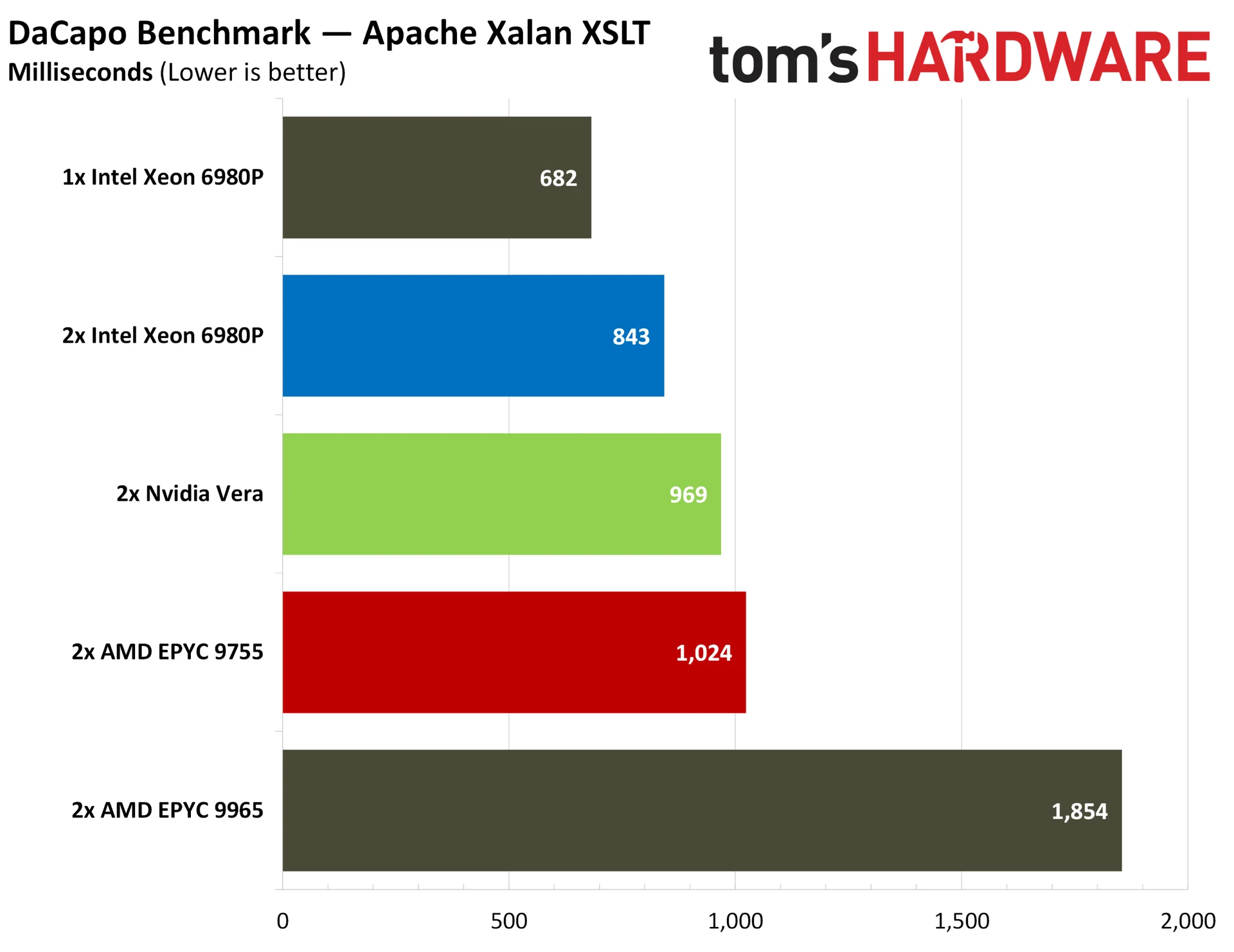
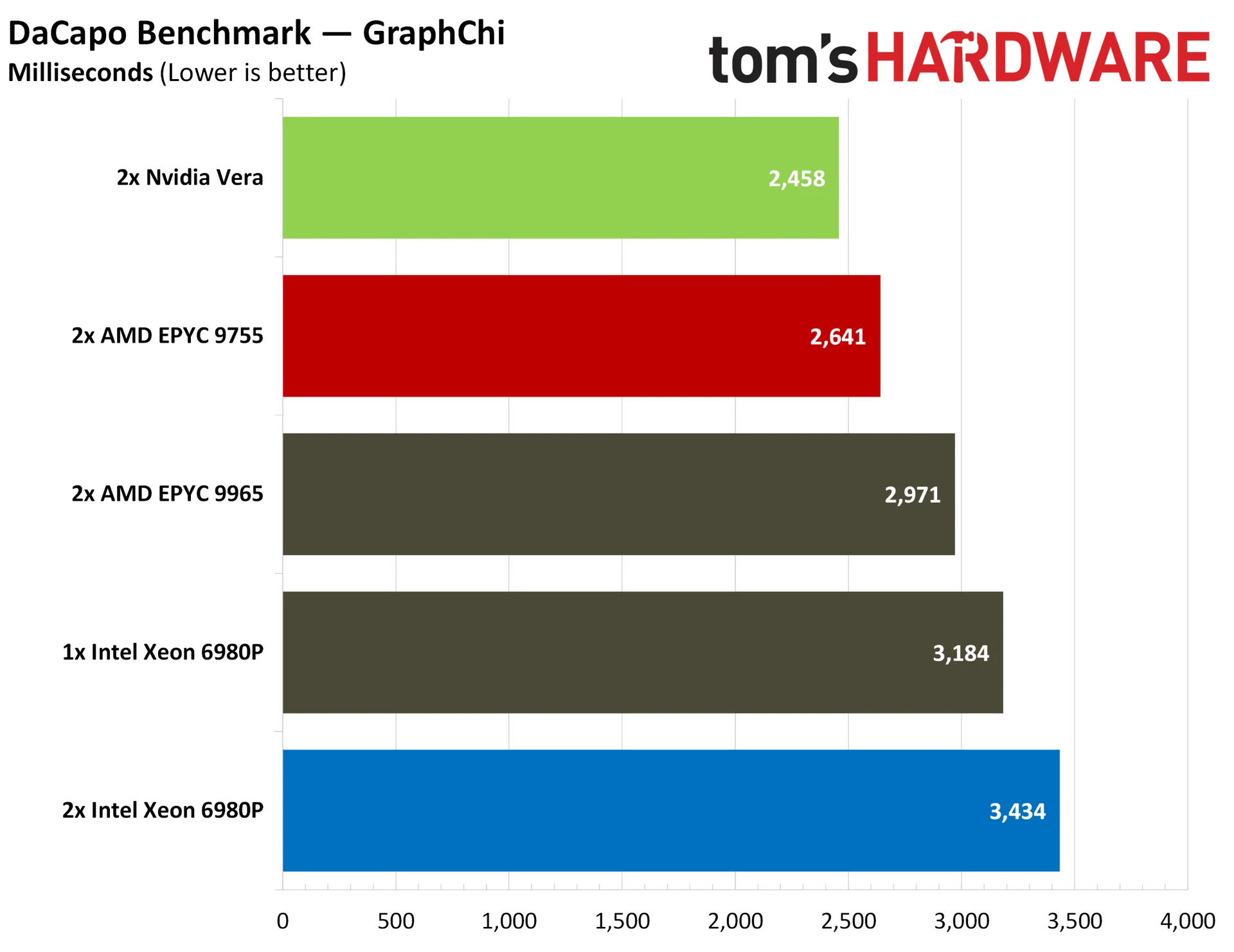
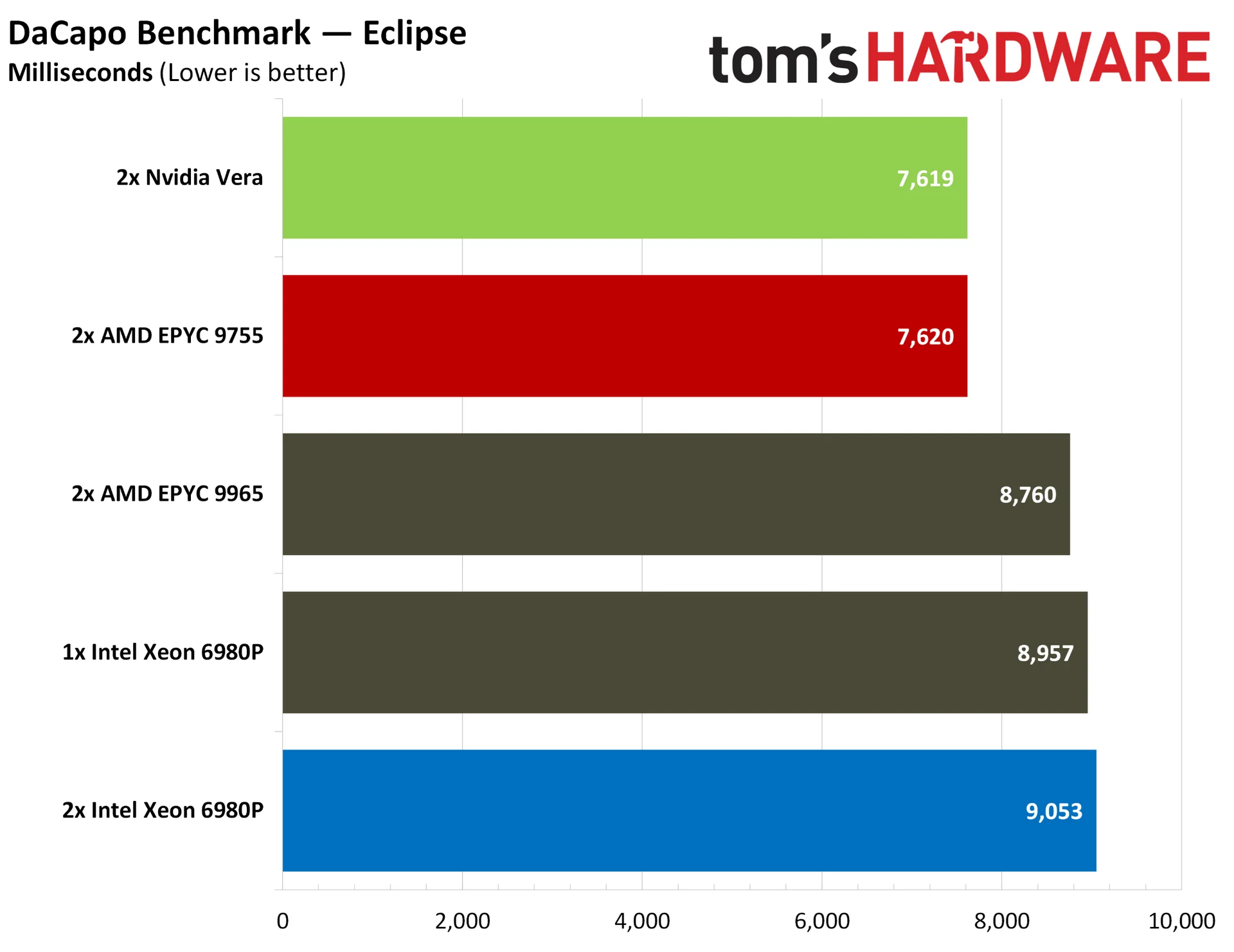
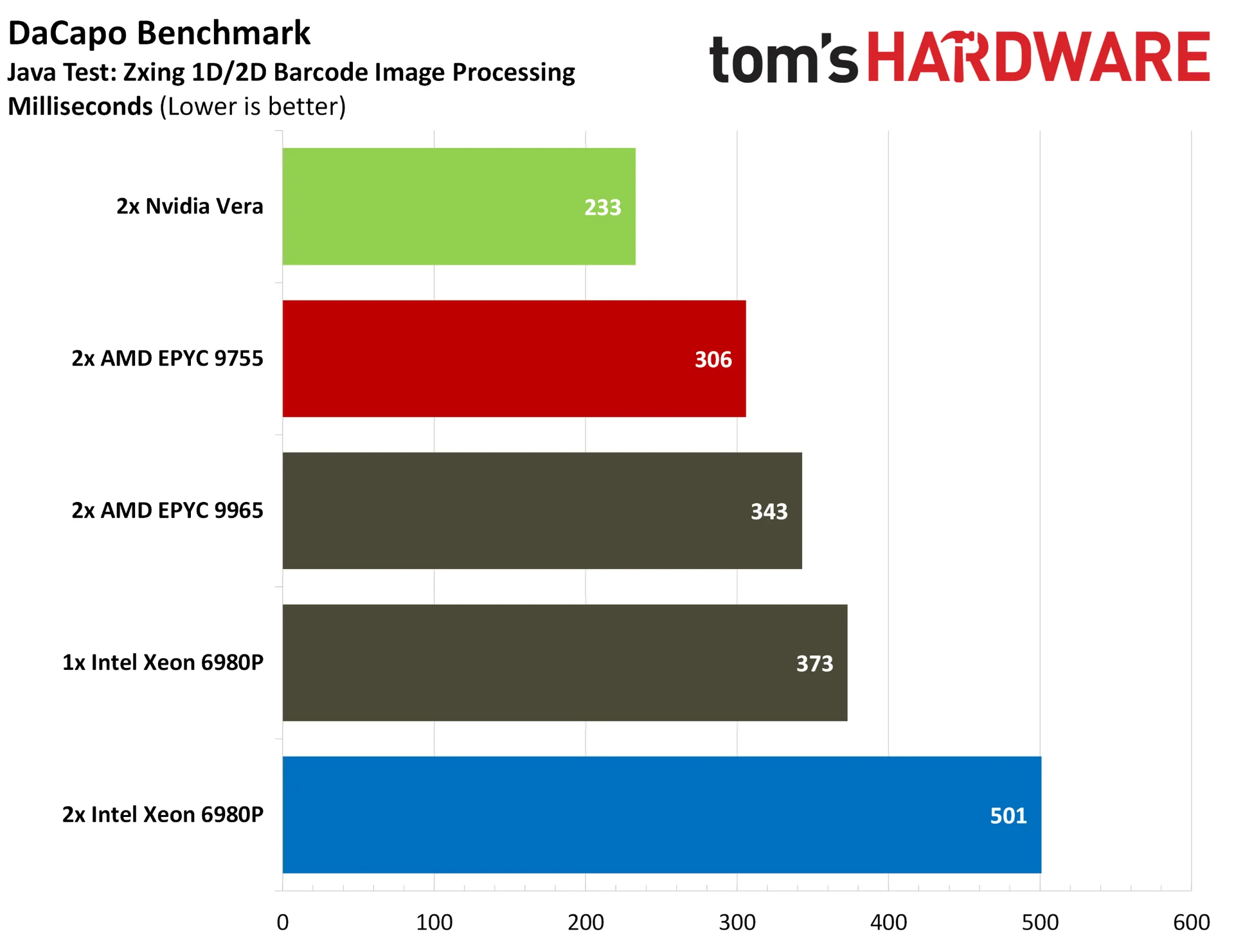
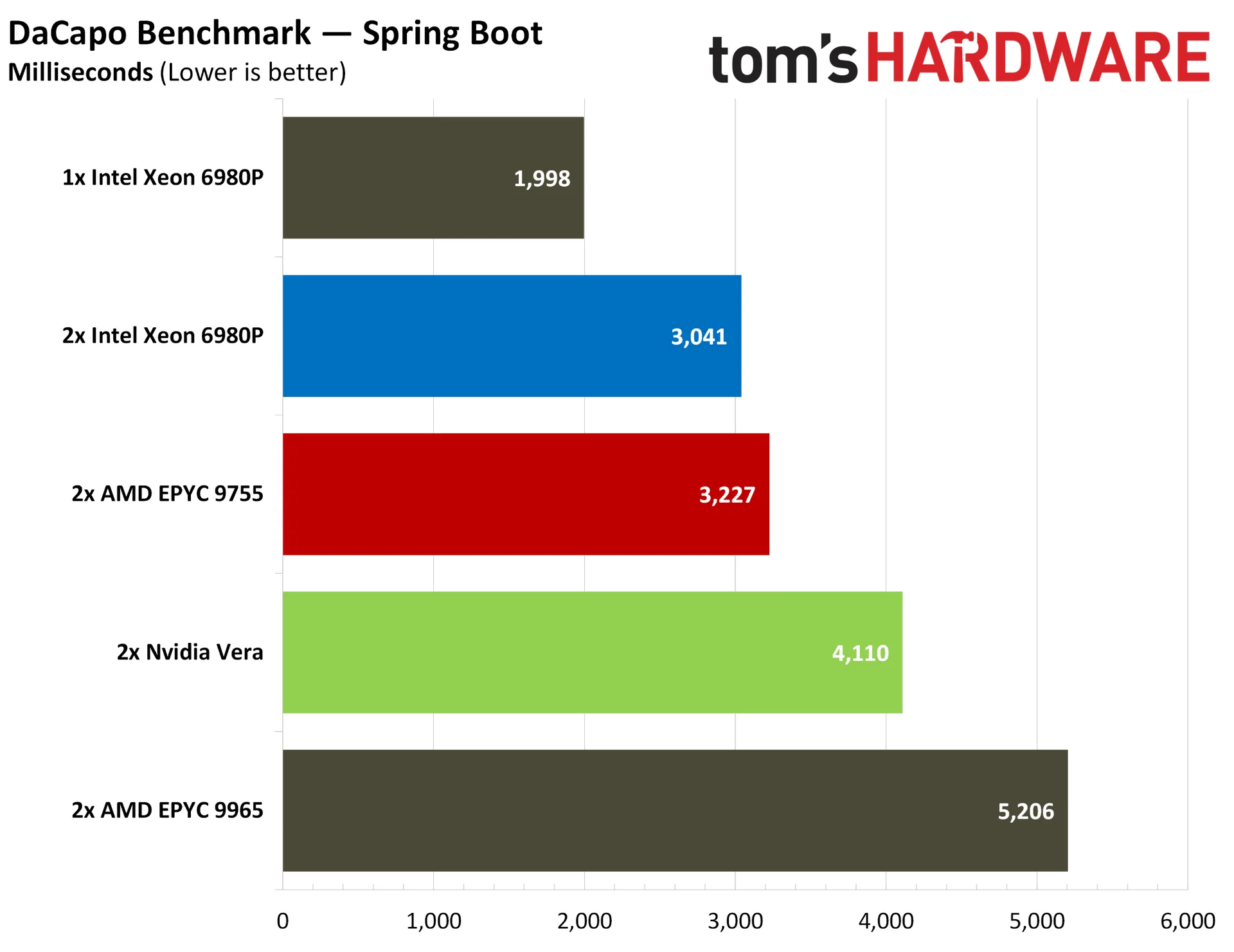
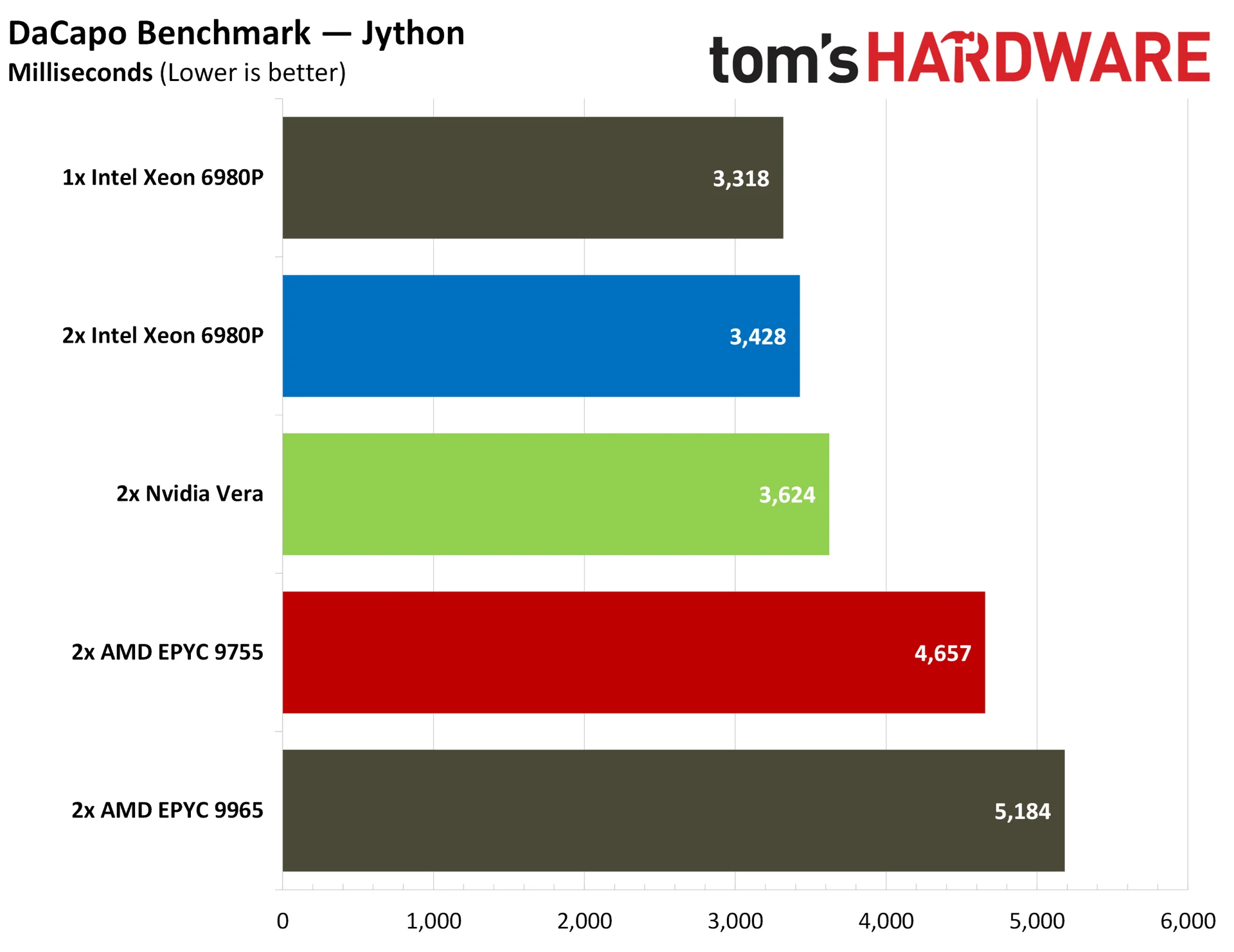
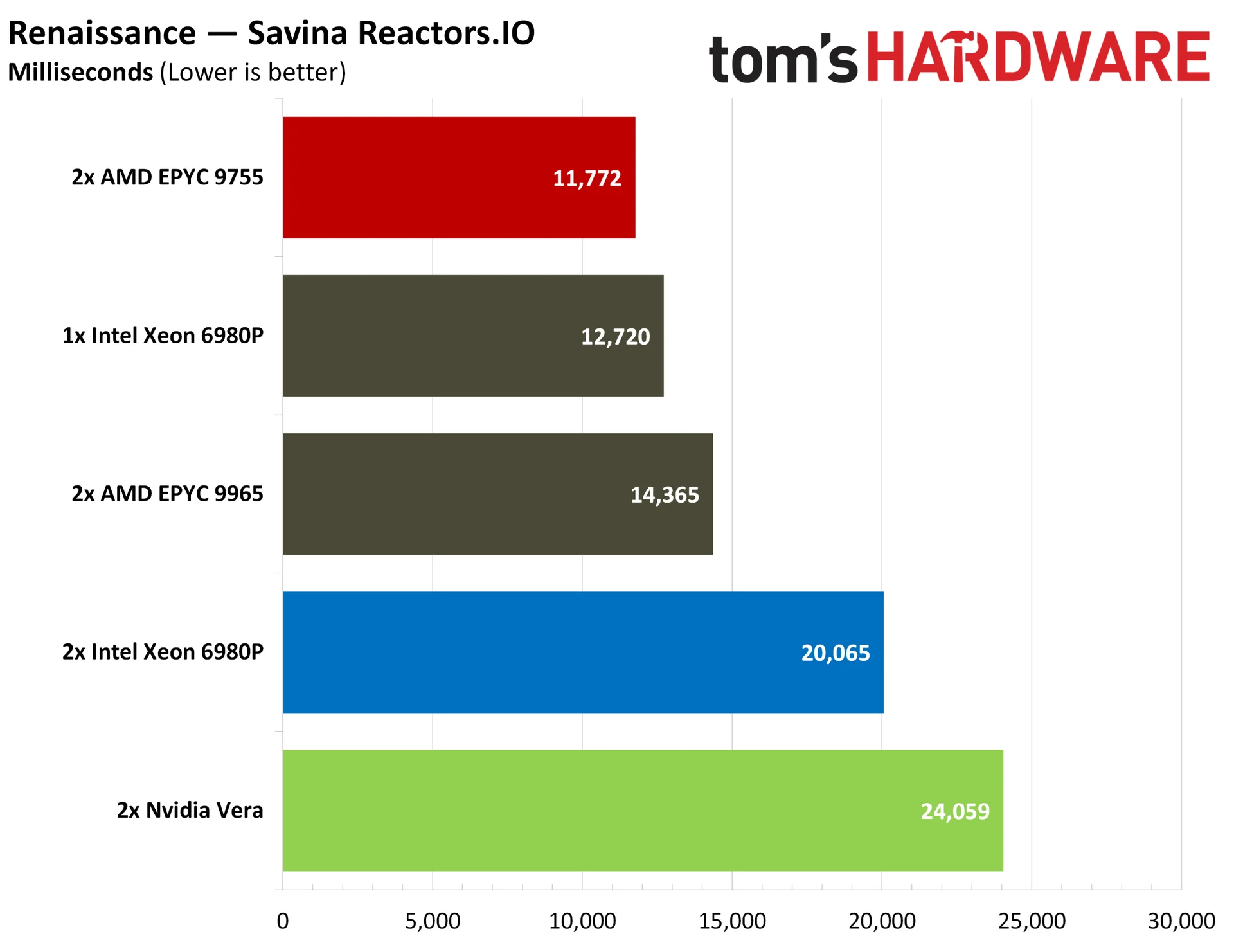
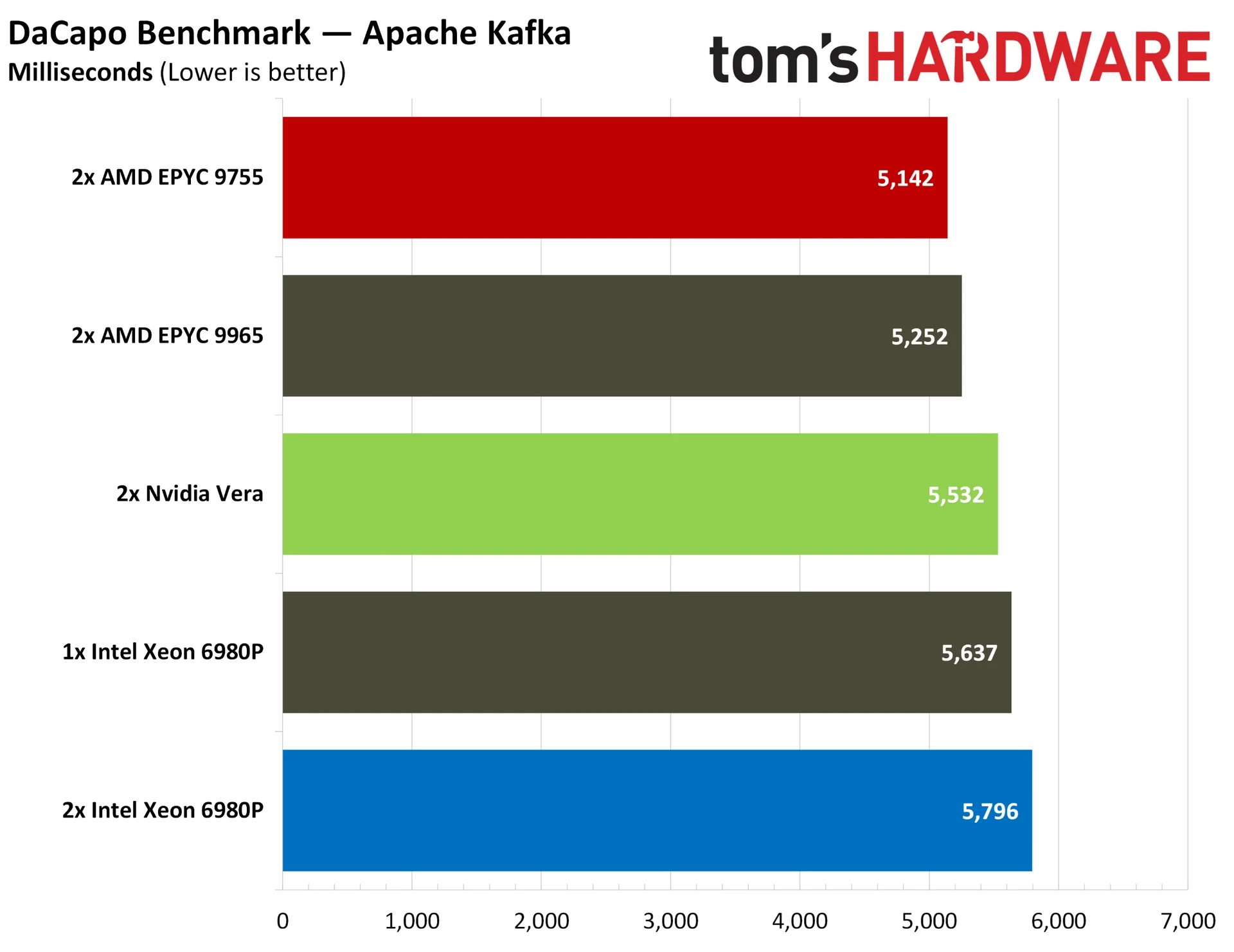
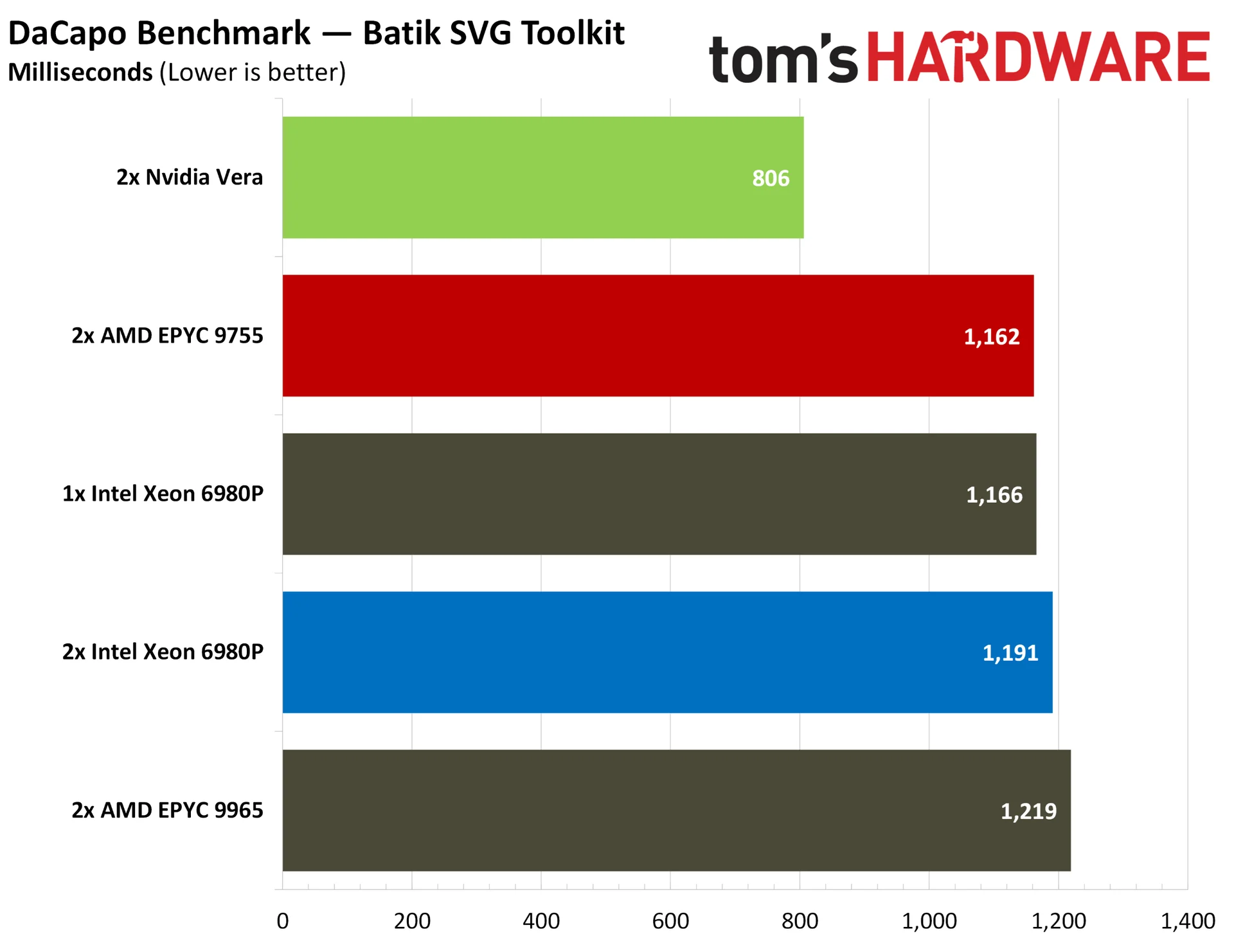
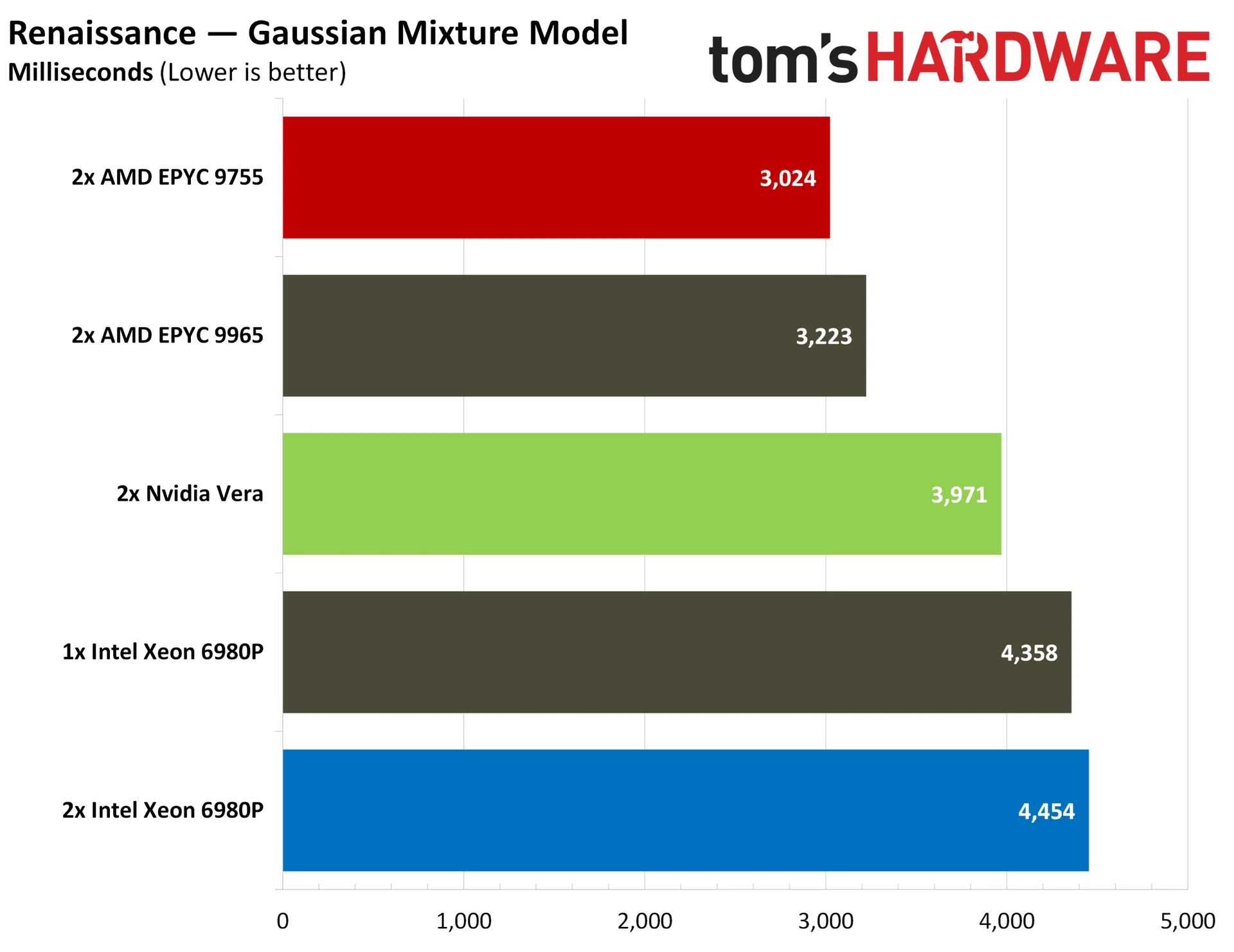
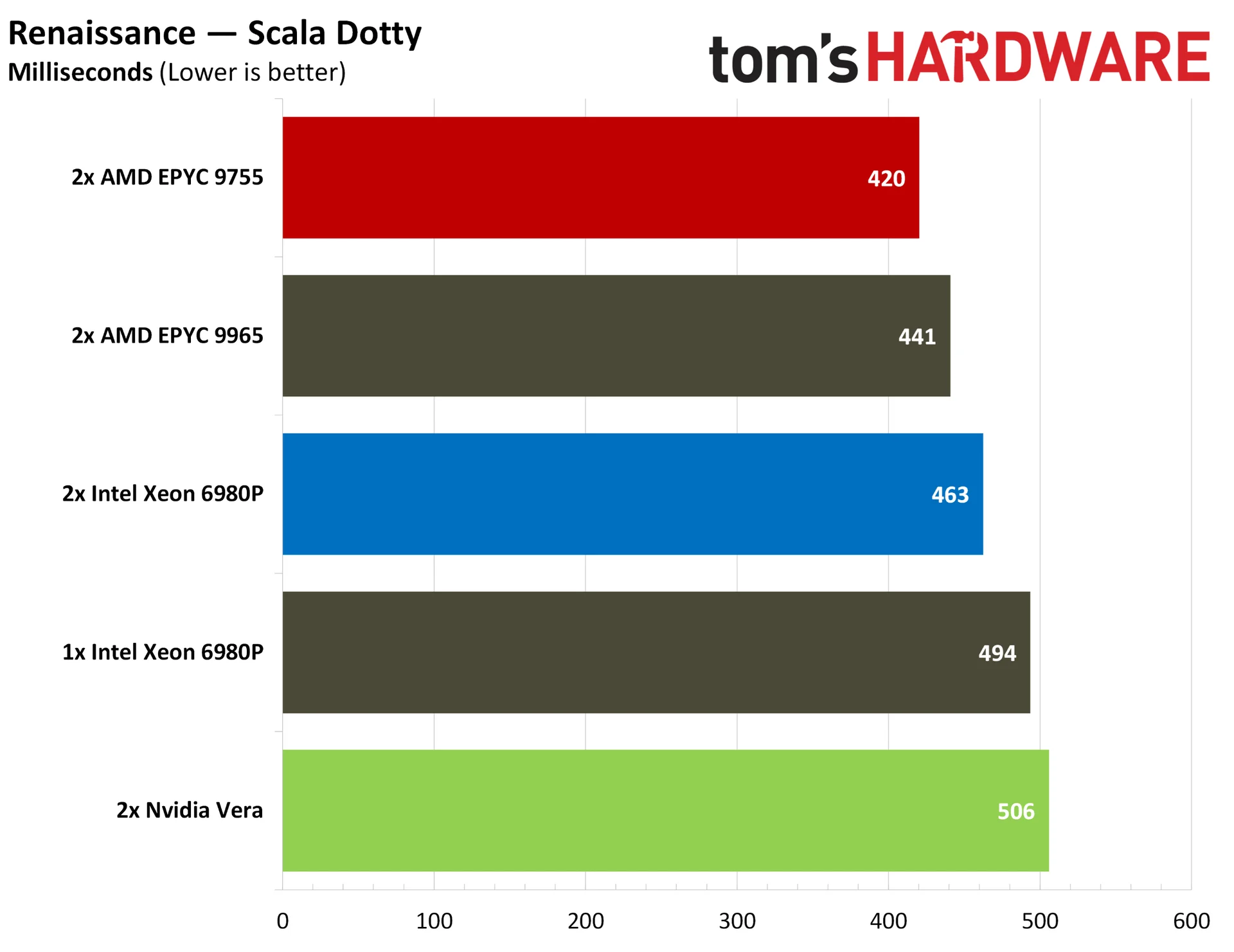
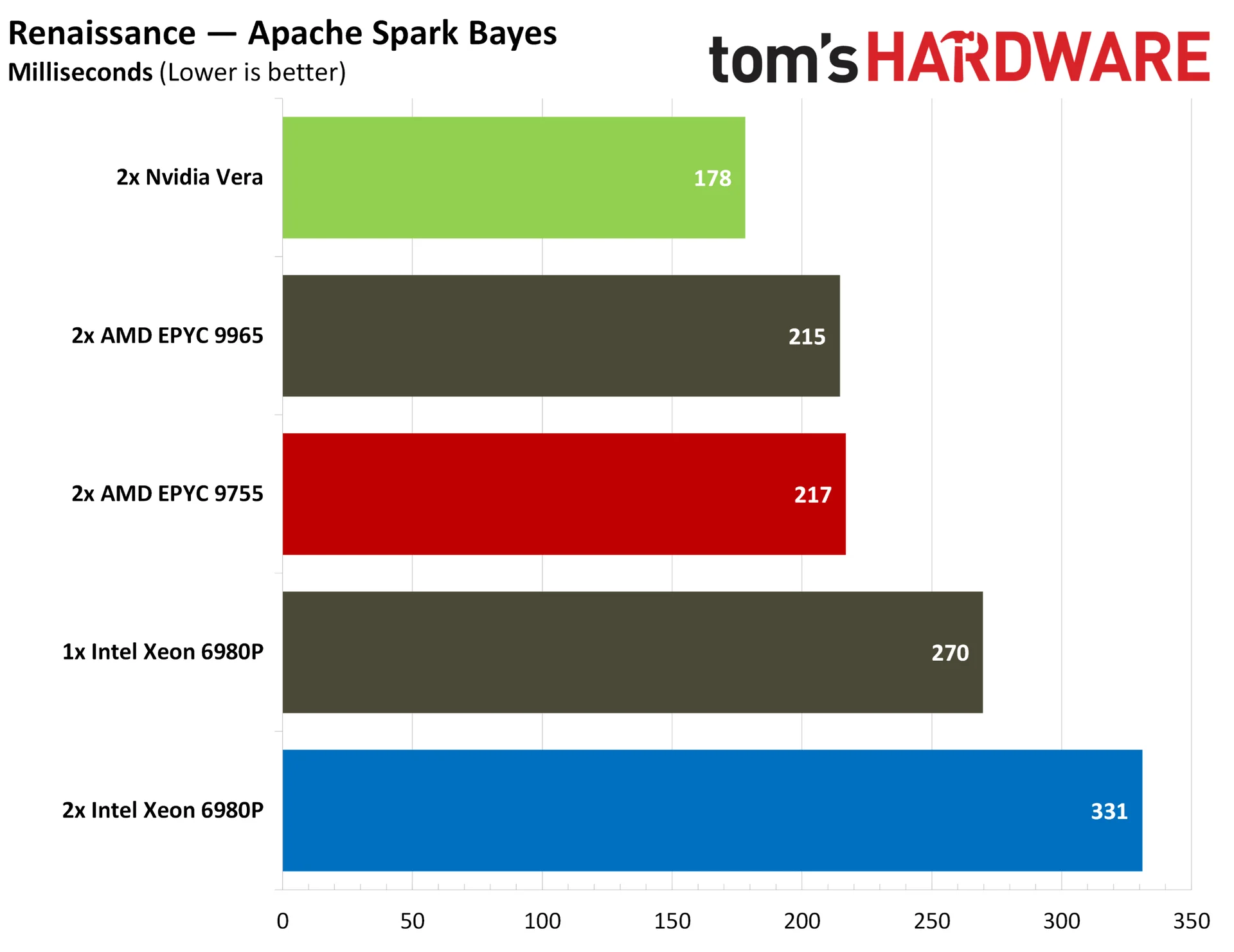
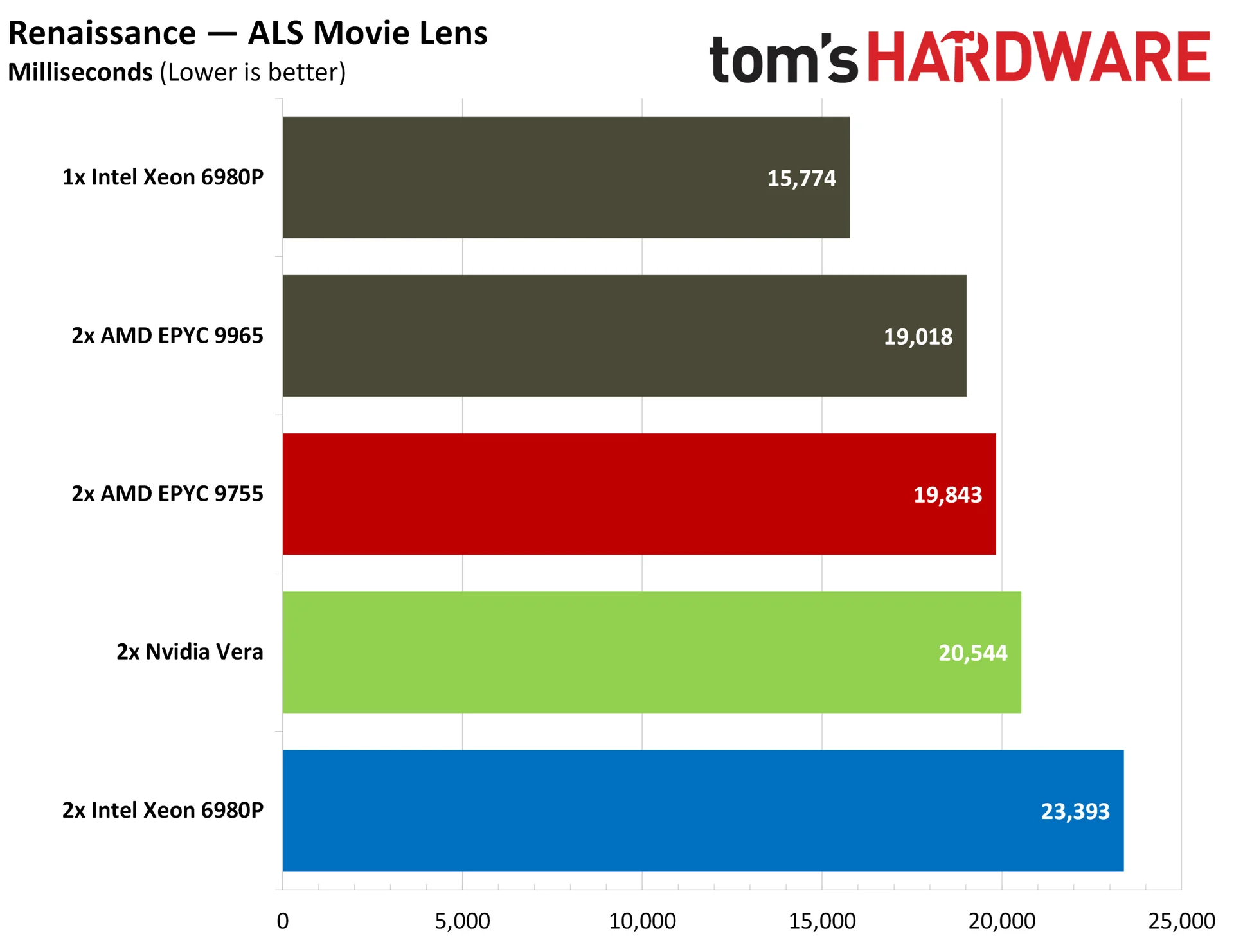
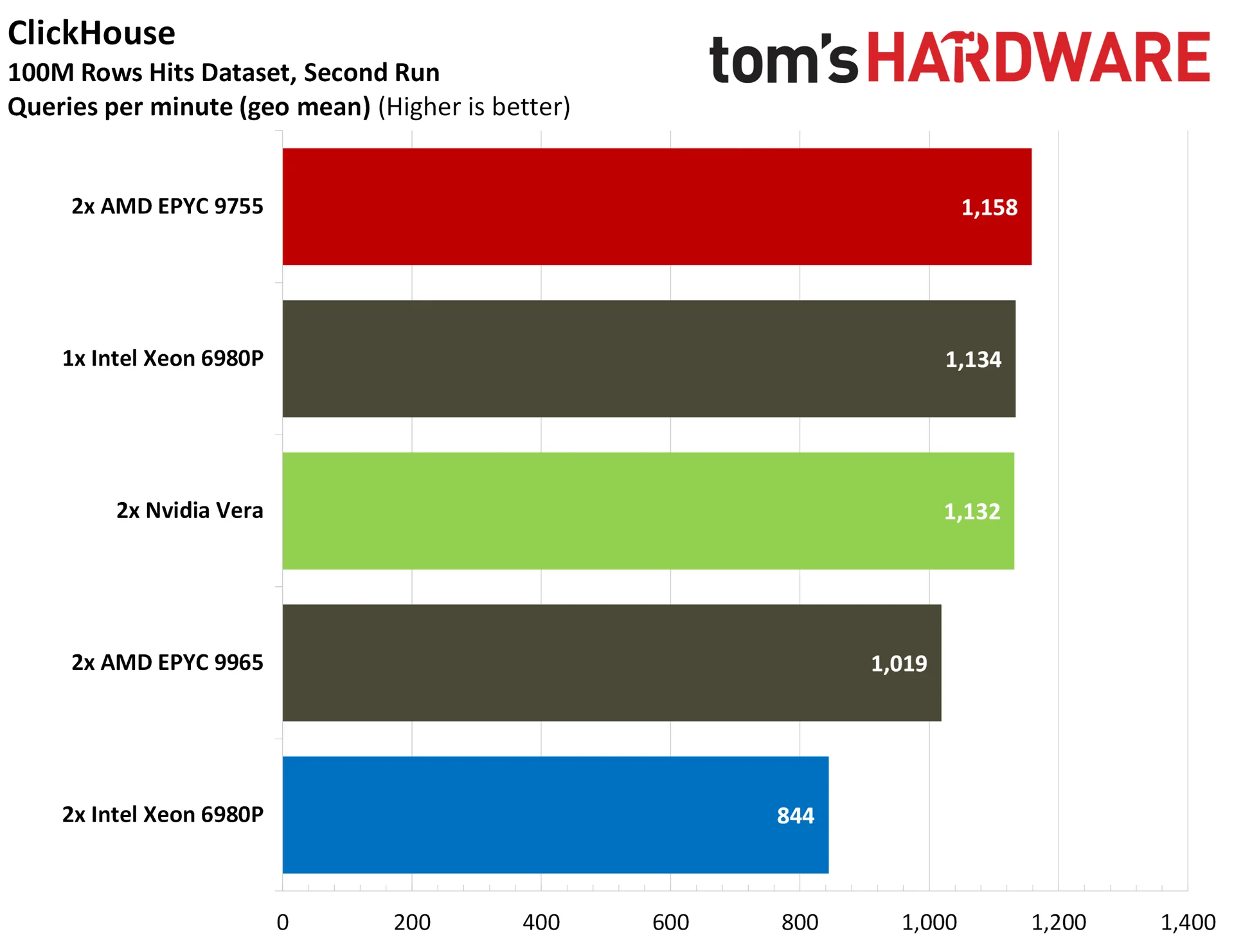
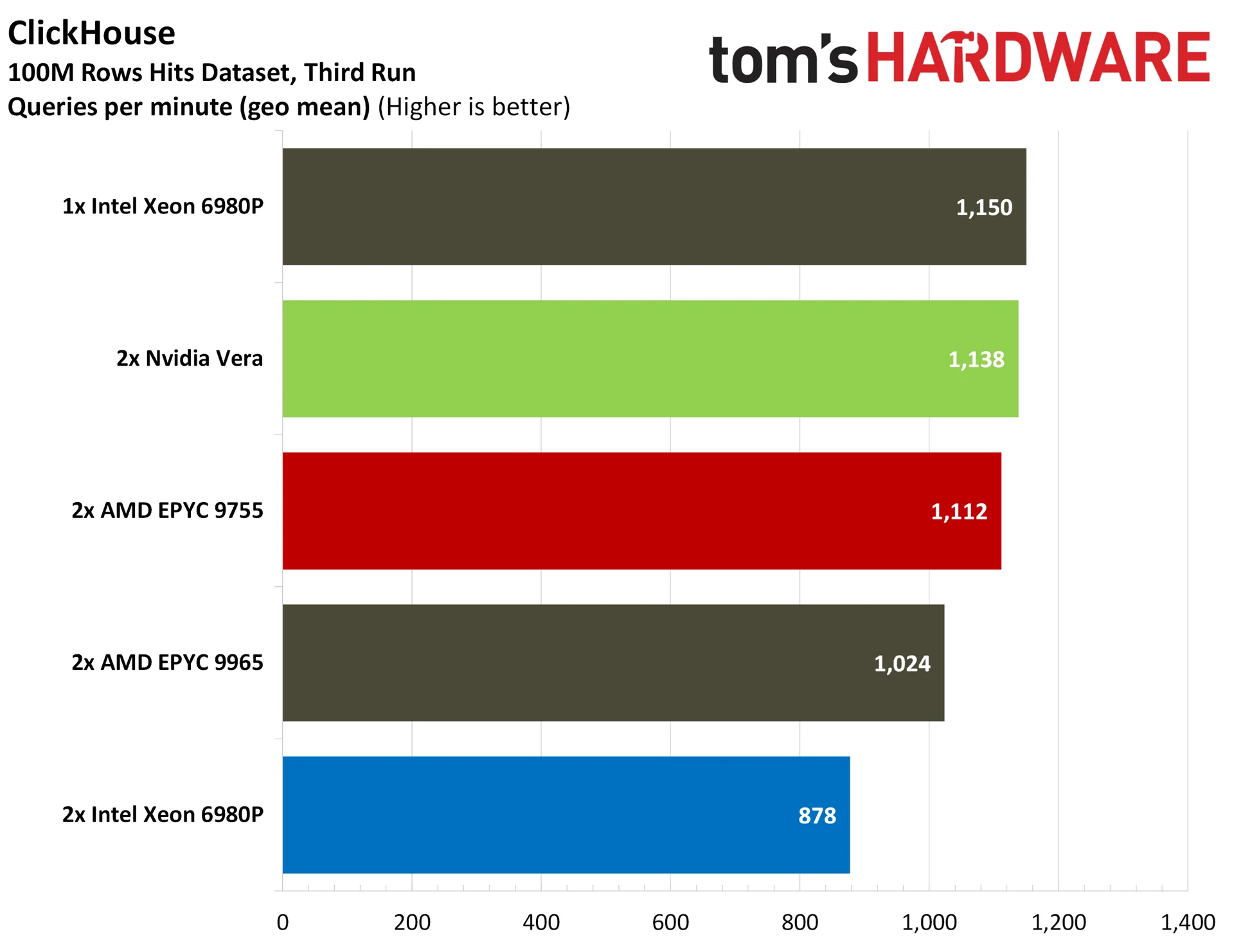
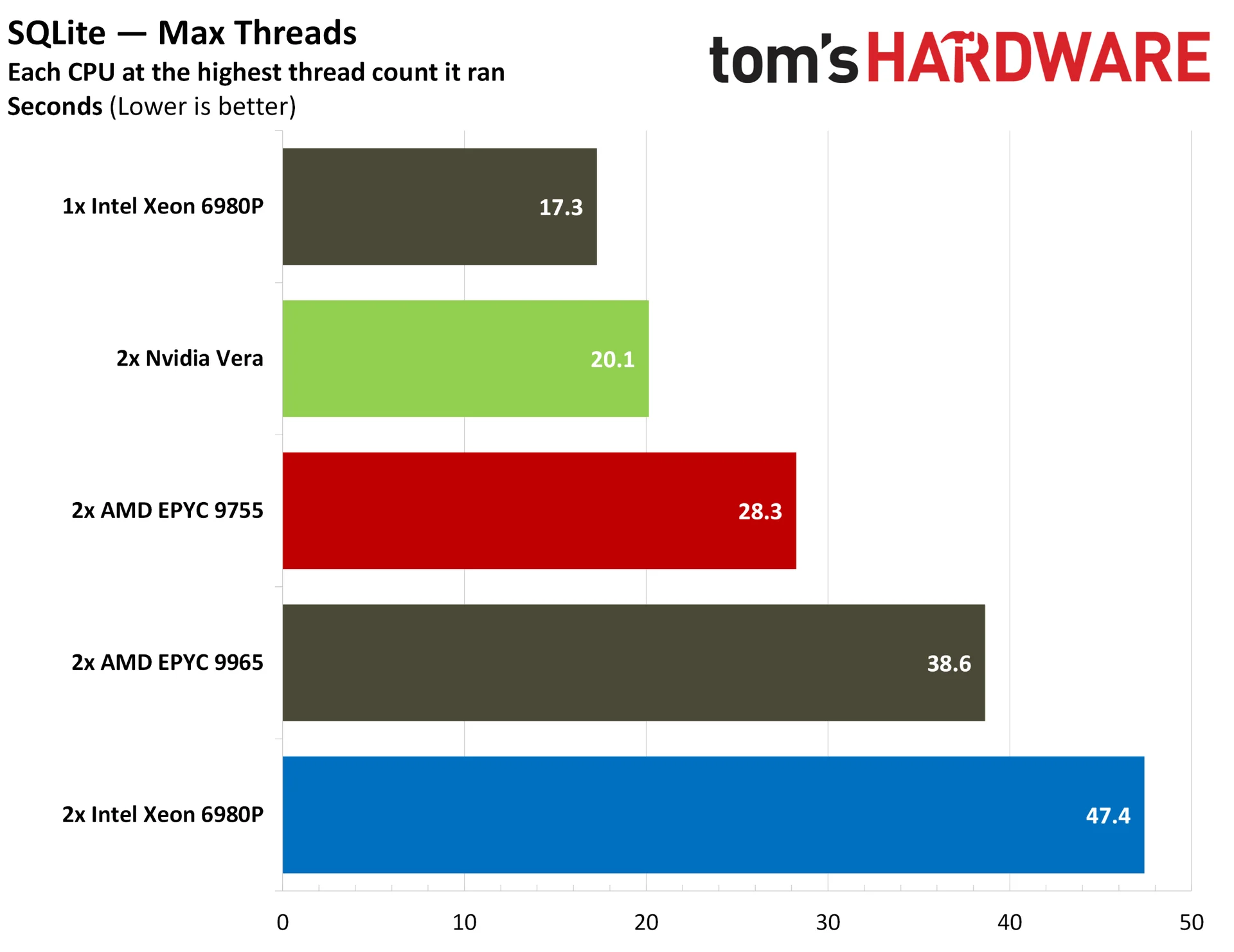
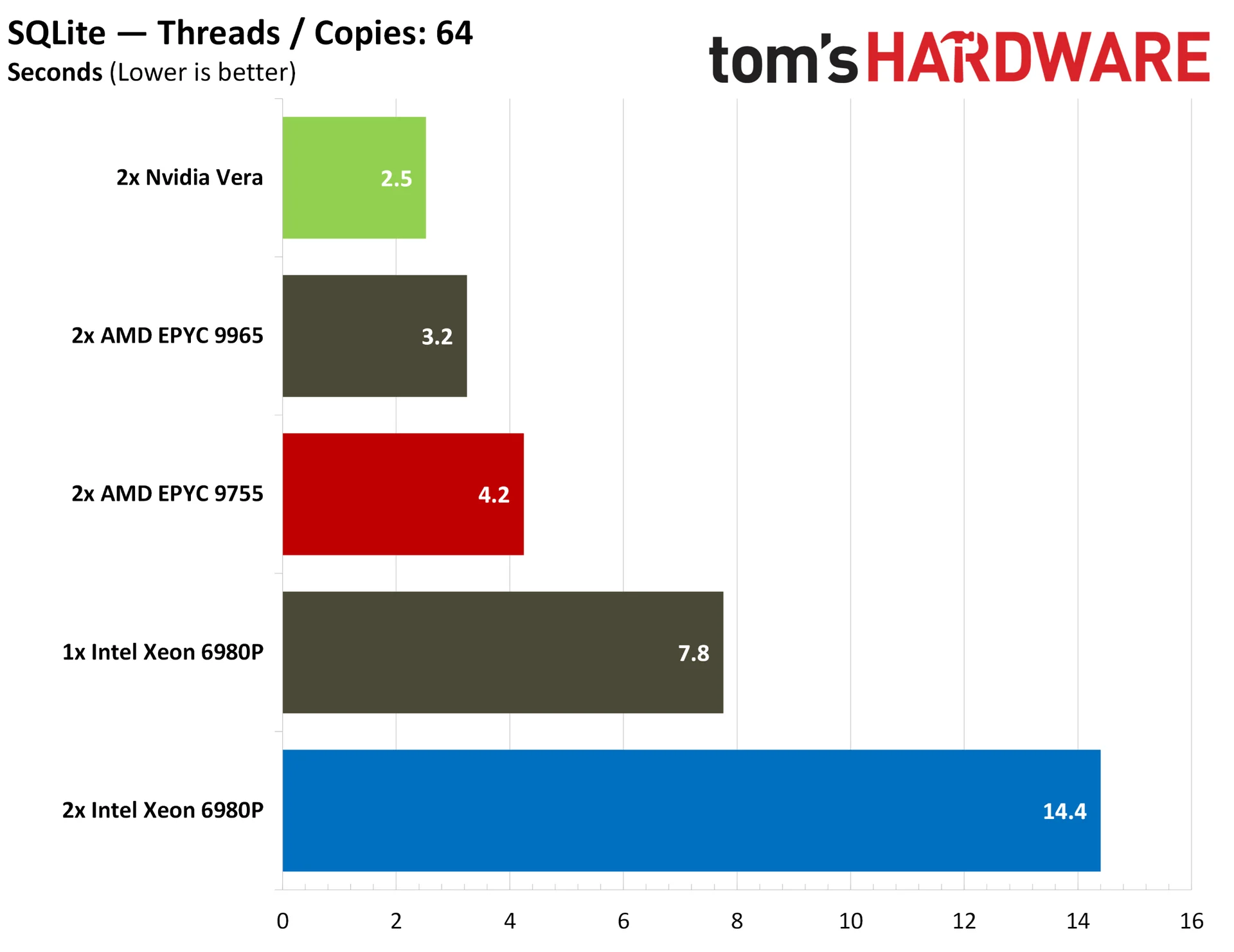
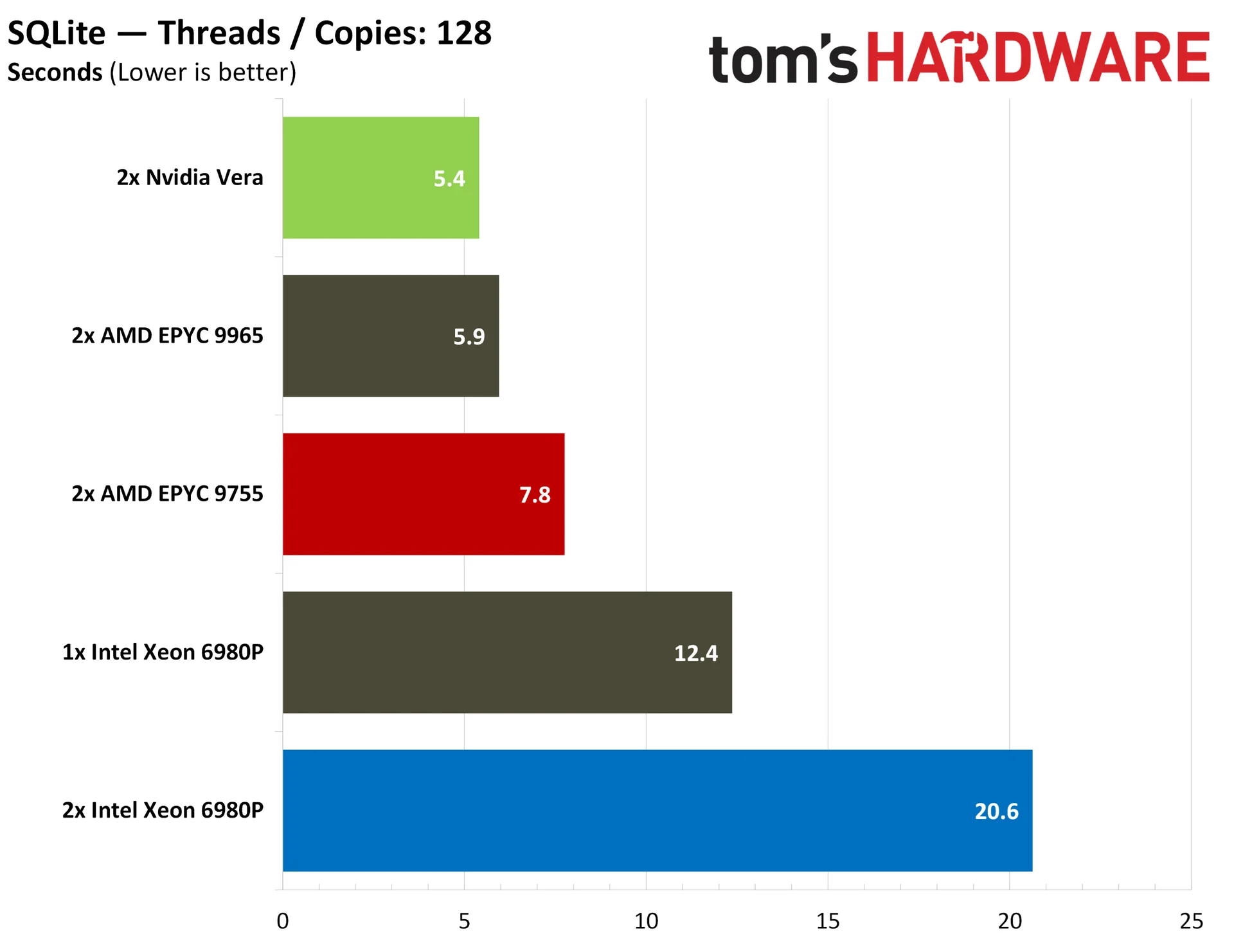
For teams building around Java, the relevant point is that Vera can be strong in specific kinds of computation without winning the overall score. We used Java SciMark, DaCapo, and Renaissance. In SciMark’s composite result, AMD’s Zen 5 based 9755 comes out ahead. Vera, though, holds its own in FFTs, sparse matrix multiplication, and Monte Carlo simulation, while trailing in dense LU factorization and Jacobi SOR. DaCapo covers a range of real Java workloads with a focus on native performance; Renaissance also spans varied Java workloads, with an emphasis on virtual machines.