Xreal’s Aura pairs a lighter glasses form factor with Android XR apps and sports experiences, and its launch pricing makes the hardware more accessible than originally planned. The glasses are available in the U.S., Canada, Japan and South Korea, with orders expected to ship from mid-November. That combination gives Aura a clear pitch: a wearable display that can do more than mirror a screen, without asking buyers to start with a headset-shaped device. The harder question is whether its software and everyday comfort will make that pitch useful after the novelty wears off.
Launch pricing cuts up to $200
On October 27, Xreal set the Aura’s limited-time price at $1,099 for the 12GB/256GB model and $1,299 for the 16GB/512GB version. That’s about $200 below the prices announced earlier this month. The reduced prices are scheduled to run through December 2026; afterward, the models return to $1,279 and $1,499, respectively. A lower starting price can broaden the audience for a new kind of device, but these are still expensive glasses, and the higher-capacity model pushes the purchase further into premium territory. Buyers will have to decide how much the additional memory matters for the apps and experiences they expect to use.
Customers can order through Xreal’s storefront or buy from Best Buy. Xreal plans to add other retailers and select Google Stores in the U.S. and Japan in 2027. That wider availability could make the product easier to see and try before buying, which matters for glasses whose fit, display and comfort can be difficult to judge from a product page. For now, the launch is limited to four markets, so the company’s broader retail plans remain a later step rather than part of the initial buying experience.
Xreal co-founder and CEO Chi Xu described the product as a way to use spatial computing while staying aware of the surrounding environment. He said the company wants Aura to support work, entertainment, play and creation. Those are broad ambitions, and each puts a different demand on the hardware: a work session needs practical software, while entertainment depends on display quality and comfort over time. Earlier reservations offered a sign of demand: Xu said they passed 10,000 units around August, and two reservation packages sold out. That’s evidence of early interest, though reservations alone can’t show how many buyers will keep using the glasses once they arrive.
Android XR brings apps and sports into view
Aura runs Android XR and combines Google’s Gemini AI with Qualcomm’s Snapdragon Reality Elite platform. The software provides access to millions of Google Play apps and games alongside experiences designed for XR. That breadth could give buyers familiar starting points, rather than requiring them to learn an entirely separate catalog from day one. But a large app library isn’t the same as a large library of experiences that feel well suited to glasses; the distinction will matter as users move from trying Aura to relying on it.
Sports apps give the platform a more specific use case. The NBA app for Android XR offers multiview for NBA League Pass subscribers, plus matchups and stats. NASCAR XR adds a live 3D track map and driver telemetry, bringing race data into the wearer’s field of view. These features show how a spatial display might add information around a live event instead of simply placing a video in front of the viewer. The value will depend on whether that extra information is readable and helpful while someone is following the action. A display can show more; it still has to show the right things at the right time.
The hardware includes a 70-degree field of view and a Sony Micro-OLED display with 1200p resolution and a 120Hz refresh rate. Audio is tuned by Bose. Launch games include Project Hail Mary: Journey Among the Stars, developed through an Amazon MGM Studios partnership, and Fallout: Factions from Modiphius Entertainment. Taken together, those specifications and launch titles suggest Aura is meant to handle both media and interactive experiences. They don’t, by themselves, settle how natural the device will feel during extended use, or whether its software will make good use of the available display area. The test is in the experience.
Glasses form, broader ambitions
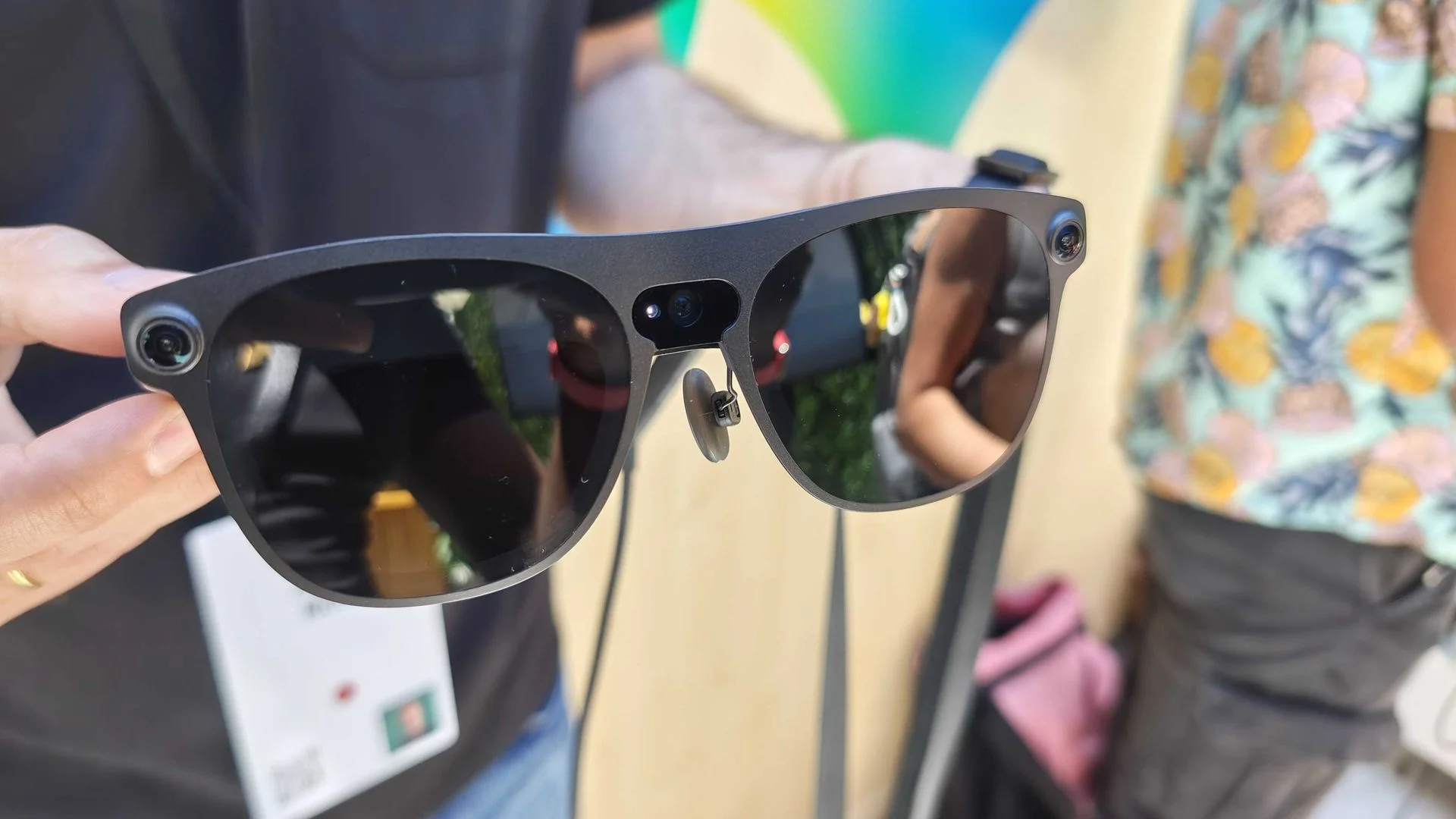
Android Central’s hands-on at Google I/O 2026 found that Aura packs a headset-like range of capabilities into glasses weighing 95 grams. Xreal is positioning that form factor for both immersive media and everyday use, with the app catalog and dedicated XR experiences doing much of the work of making the device practical. The lighter profile is a meaningful design choice because it addresses one of the obvious barriers to wearing a display: a device that feels too much like specialized equipment may be harder to bring into ordinary routines. Yet a lower weight is only one part of comfort, and the hands-on account doesn’t establish how the glasses will feel across different users or longer sessions.
This is more significant than it looks: familiar glasses can make spatial computing feel less like a separate activity and more like an option that’s available when useful. And yet, that promise depends on the software meeting people where they are. (And this is the part most people overlook.) A broad app catalog may help with discovery, but a handful of thoughtful experiences could matter more than sheer volume if they fit the display and the setting. If you’re working in this space, Aura’s mix of general apps and sport-specific tools is a useful test of whether a single wearable can serve both casual and focused use.
What will determine whether Aura sticks
The launch combines a lower entry price with a wide software pitch. The clearest test ahead is whether Android XR’s familiar apps and purpose-built sports content can make spatial displays useful beyond occasional viewing. Buyers will also be weighing the price against how often they expect to wear the glasses, since a device used only for a few showcase moments has a different value proposition from one that fits into regular entertainment or work habits. Here’s the thing: specs can establish what Aura is capable of, but repeated use will establish what it’s good for.
For now, Xreal has put several pieces of that argument on the table: a glasses-style design, access to Android XR software, dedicated sports experiences and a temporary price reduction. The open question is whether those pieces add up to a daily habit. That said, the combination gives potential buyers concrete uses to evaluate rather than an abstract promise of spatial computing. Aura’s reception will depend on whether those uses feel comfortable, clear and worthwhile once the first impression passes.