MCP servers turn an AI application’s access to company systems into a security design question. A single host can connect a language model to databases, file shares or CRM tools through a shared protocol. That standardization can speed integration, but it also creates a path from an AI app to sensitive systems. My read is that security teams should define that path and its limits before the first production rollout.
This is a familiar sequence for security leaders: a CTO has won approval for an initial LLM application, and the security team learns about the project once delivery is underway. Model behavior may be the most visible concern, but the less familiar infrastructure around it deserves equal attention. Model Context Protocol (MCP) servers need explicit controls because they translate requests between an AI host and the tools it can reach.
MCP makes integrations easier to repeat
The protocol is comparable to ODBC, the database connectivity standard that spared applications from needing custom code for every database. ODBC gave applications a common interface and database vendors a driver model. MCP applies a similar idea to AI applications: the host uses standardized methods to communicate with an MCP server, and that server translates requests into the connected tool’s native format.
That structure offers a practical advantage. A host can connect to multiple servers, and teams can add tools without building a bespoke integration for every application. But a reusable connection layer also concentrates access. If a host can reach several MCP servers, a mistake or compromise affecting that host may expose more systems than any one integration suggests.
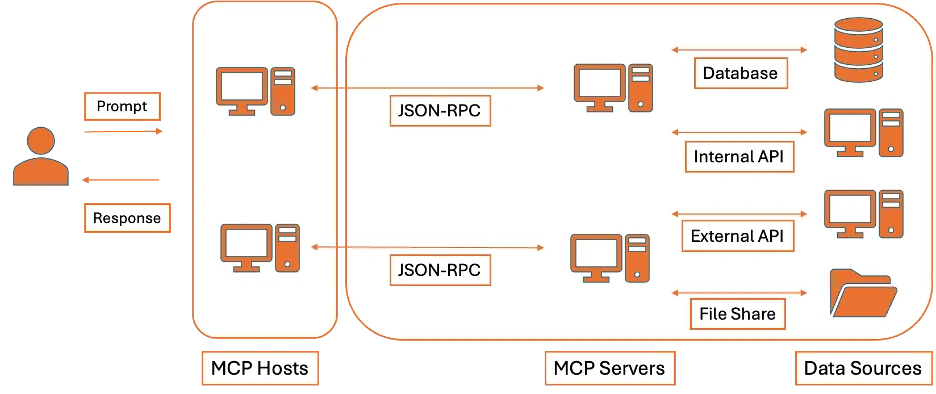
Fig.1 – MCP architecture.
Greg Neville
Hosts run inside the organization’s environment, where teams can govern their inbound and outbound traffic. That makes segmentation and narrowly defined network rules meaningful controls: the host should contact only the systems and ports required for its work. The architecture diagram illustrates the host-and-server relationship; the example marketing application shows how those connections can sit inside a broader LLM workflow.
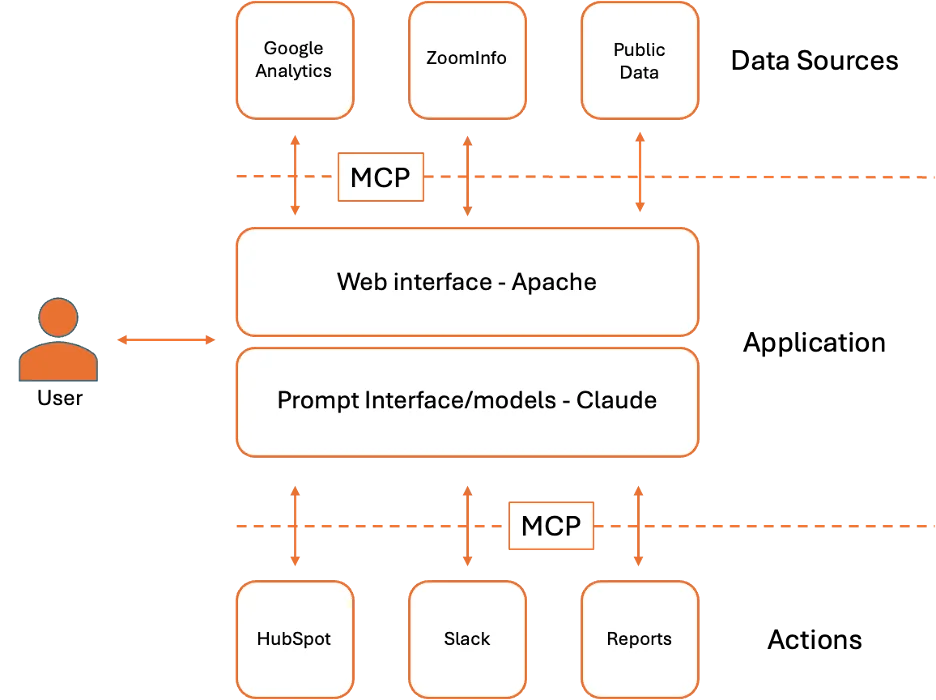
Fig. 2 – Example marketing LLM application.
Greg Neville
Set boundaries around data, tools and actions
The first security decisions should shape what information enters the model and what it can do with the response. Treat material from sources outside your control as untrusted. Validation and sanitization should account for strong authentication and authorization, attempts to inject malicious instructions or code, and sensitive data that should be blocked or filtered. Where protected or regulated information is involved, define what the application may receive before users begin relying on it.
Outputs need their own checks. Requiring a known structure can make responses easier to validate, while context-aware encoding and removal of unexpected data can reduce the chance that a response causes harm in a downstream system. For high-impact results, such as financial reporting, a person should review the output before it is accepted or acted on.
Keep each host’s available tools and each tool’s capabilities to the minimum the application needs. Grouping tools with similar access needs across separate MCP servers can help prevent a broad permission set from becoming the default. Scope access to the users, tenants and workloads that require the service, and keep tokens short-lived to limit the value of a stolen credential.
Server configuration matters too. Apply an established hardening baseline such as the CIS benchmarks, remove unnecessary or default accounts, close unused ports and adjust system settings to reduce exposure. Infrastructure-as-code can make hosts easier to rebuild as ephemeral systems, which can help contain the effects of a compromise. Encrypt data both at rest and in transit, and pair that protection with sound key management.
Make vendor and operational controls visible
Some MCP services may come from outside providers, so security review should cover the provider’s practices as well as the deployment inside the organization. Independent assessments such as SOC 2, HITRUST or ISO 27001/2 can provide evidence of controls. Contracts should spell out the requirements, and identified high-risk gaps should have remediation agreements. If protected health information is involved, the source recommends putting a Business Associate Agreement in place.
Logging is what lets teams reconstruct how an AI application behaved when something goes wrong. Record prompts and AI actions in enough detail to investigate misuse, prompt abuse and intrusion attempts. Those records should support detection and response, while the organization’s data handling rules determine what information can be retained.
For sensitive operations, require human approval before the model can carry out administrative actions on critical systems. The same principle applies when outputs could affect important decisions. A human review step gives the organization a chance to catch an unsafe instruction, an unexpected result or a failure in the application’s controls before it takes effect.
Test the controls before production
Policy documents don’t demonstrate that controls work. Preproduction testing should exercise the application’s actual permissions and network paths. Use fake examples of PHI, Social Security numbers, account numbers or other sensitive data relevant to the environment, then confirm that the system flags or blocks them as intended. Sign in with representative users and check which tools they can see and access.
Test network filtering in both directions to verify that only approved systems are reachable. Confirm the host follows the organization’s hardening policy, and check that critical events and actions appear in the logs. These checks turn broad requirements into evidence the project team and security reviewers can discuss.
- Submit synthetic sensitive data and verify that the relevant filters detect or block it.
- Check tool visibility and access with accounts that represent the intended users.
- Confirm inbound and outbound rules allow only approved systems.
- Compare server settings with the organization’s hardening policy.
- Trigger critical events and verify that they are recorded.
Prioritize risk in terms executives can act on
Security teams may identify these requirements after a project has already received executive backing. If the plan and delivery dates don’t reflect the controls, bring the issue to the appropriate leadership group. A Risk Committee can help rank requirements and agree on a sequence that addresses material exposure without needlessly stalling delivery.
An AI risk assessment should connect threats to the organization’s own systems and uses, then describe inherent and residual risk. The OWASP Top 10 for LLM Applications is one source for building a threat list. Teams can scope those threats to their environment and, for an initial pass, set aside items assessed as very low or low likelihood.
When presenting findings, translate technical exposure into business effects: lost productivity, downtime, damaged customer trust or fines, alongside sector-specific outcomes such as patient care issues, trading errors, poor credit decisions, unfair claims or underwriting, worker safety and service availability. Qualitative ratings can be useful, provided the team can explain the reasoning behind them. That keeps the discussion grounded in decisions executives can make.
MCP’s value comes from giving AI applications a reusable way to reach business tools. The same connection can widen access if teams leave its permissions, network paths and actions loosely defined. The practical measure of readiness is whether those boundaries have been specified, tested and monitored before the application receives production access.


