
For medical technologies to reach more patients, people need to understand what the treatments do—and what they can’t do. That’s the case Shuyuan Ling made in a WeChat post about targeted cancer therapy, published the day he spoke with TechNode. Patients who see a “target” as jargon invented by doctors, he said, may struggle to judge treatments built around it.
The same challenge applies to immunotherapy, CAR-T, and proton and heavy-ion therapy. “Healthcare inherently requires education,” Ling said. “If I do not do it, I cannot expect someone else to explain it for me.”
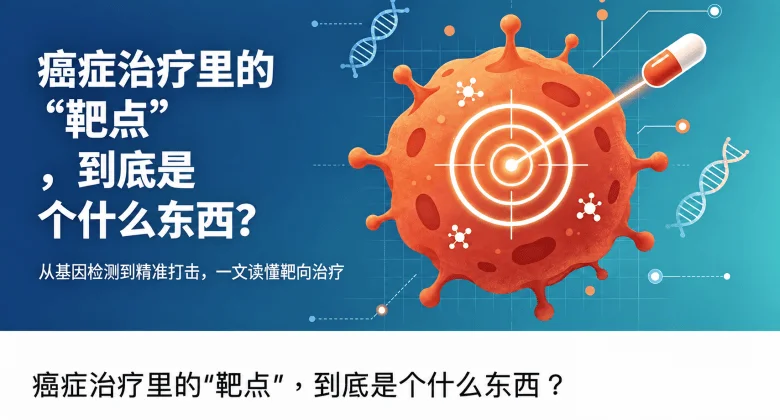
Education can expand the market
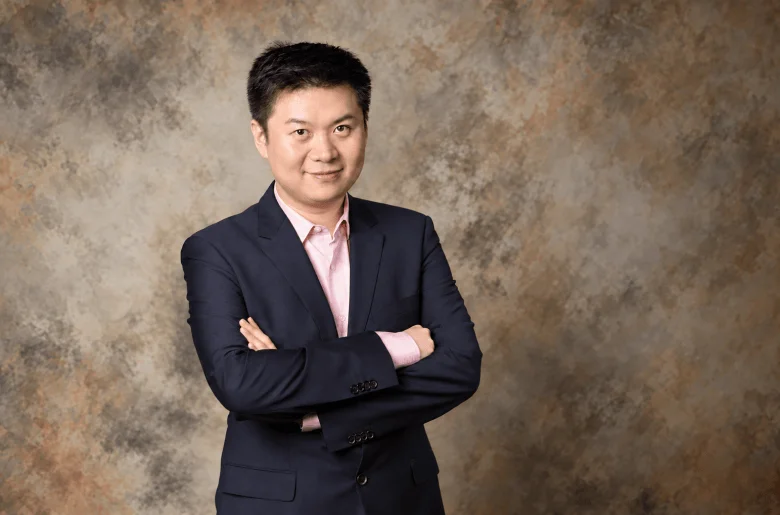
Ling is founder and CEO of Shanghai Aijin Artificial Intelligence, a venture-backed medical-imaging company and global supplier to Siemens Healthineers. Aijin’s Diffusion Go turns CT and MRI scans into 3D maps of the cortex, neural pathways, blood vessels, and lesions. Clinicians can explore those maps in the GoViewer platform for surgical planning, neuroscience research, drug development, brain-computer interfaces, and clinical validation.
Alongside that work, Ling writes for a WeChat audience, teaches as a guest, and uses familiar examples to explain medical services, insurance, private hospitals, and health decisions. He sees public understanding as part of the infrastructure that lets an industry grow: fewer misconceptions can mean safer choices and more informed customers, while investors can better track how policy changes affect medical businesses.
“The fewer misconceptions there are, the healthier the industry will be—and the more opportunities there will be,” Ling said. “You have to cultivate the soil first.”
Cooperation before competition
Ling describes neuroscience and medical innovation as a market that companies can build together, even as they compete for customers. Businesses with overlapping products can still exchange referrals to clinicians, investors, technical experts, and overseas opportunities. “First, we need to make the pie bigger; then we can compete for slices,” he said.
He links that approach to community health work, too. Ling said he has helped a brain-computer-interface company promote screenings for brain health, including Alzheimer’s and other neurological conditions, in Shanghai’s Jiading and Luodian districts. He is also planning book clubs, talks, and free consultations focused on dementia misconceptions and earlier attention to neurological health.
Technology and product development take priority
Aijin is raising funds from government and foreign capital, Ling said, but declined to name investors or disclose amounts because of non-disclosure agreement (NDAs). He said the company puts 70% to 80% of revenue into R&D, product development, clinical work, and registrations, with a smaller portion going to business development.
For Ling, fundraising serves a practical purpose rather than signaling progress on its own. “You raise money when you need it,” he said. “It’s a tool, not proof of a company’s development.”
He contrasts today’s clinically and technologically driven market with the relationship-led sales culture he associates with China’s healthcare sector in the 1980s and 1990s. “Relationships are replicable. Technology isn’t,” he said. Ling argues that market pressure after the pandemic and tighter oversight have favored companies with defensible technology, while businesses that depend on distributor networks face greater vulnerability.
Overseas growth depends on market fit
Aijin secured U.S. registration but couldn’t establish a lasting presence there, Ling said, because data-related constraints blocked the transfer of core technologies. He sees Europe as a possible next market, pointing to its scale and established healthcare systems, as well as what he described as a potentially more workable political climate. “A viable market needs economic scale, a sound healthcare system, and geopolitical predictability,” he said.
Ling characterizes U.S. medical imaging as more service-led and China’s as more focused on research and drug development. His account points to a practical growth agenda for Chinese medical technology companies: build overseas relationships, cooperate with local peers, and explain new tools clearly enough that clinicians and the public can see where they fit.