The Fathom’s home backup feature could make a sub-$30,000 EV more useful
Ford’s upcoming Fathom electric truck is expected early next year, with a stated price of $28,350. That’s far below the roughly $55,000 average transaction price for a new EV. The bigger story may be what Ford is putting in the truck: built-in bidirectional charging that can send battery power back to a home during an outage, keeping essentials such as lights and a refrigerator running. [Ford’s Fathom electric truck](https://www.cnet.com/home/electric-vehicles/ford-new-affordable-electric-truck-fathom/) is part of the automaker’s clean-sheet reset of its electric vehicle plans. Bidirectional power has generally come with more expensive EVs and extra home equipment. Ford says integrating the technology into what it calls [its cheapest EV yet](https://www.cnet.com/home/electric-vehicles/ford-bets-big-on-evs-30000-electric-pickup-coming-in-2027/) should make home backup power more accessible. Whether the full installation proves affordable will depend on the equipment homeowners still need. Ford has shown little of the truck itself. The public glimpses so far have been [camouflaged prototypes](https://www.fromtheroad.ford.com/us/en/articles/2026/universal-ev-production-system-progress-louisville-assembly-plant), and the company hasn’t yet revealed the Fathom undisguised.Power built into the truck
The Fathom will use Ford’s [Universal EV Platform](https://www.fromtheroad.ford.com/us/en/articles/2026/bidirectional-evs-scale-utility-interconnection), developed with help from Auto Motive Power, the startup Ford acquired in 2023. Bidirectional power was part of the platform’s design from the outset. Ford says the truck will include the inverter that converts battery DC into AC power for a home, with output estimated at 10 kilowatts. That removes the need for a separate wall-mounted inverter. The system is expected to meet UL 1741 requirements and IEEE 1547 standards for safe grid connection. The charging connector is expected to be NACS, the plug pioneered by Tesla and [now widely adopted by new EVs in North America](https://www.cnet.com/home/electric-vehicles/teslas-ev-charger-is-on-track-to-be-the-industry-standard-but-the-road-ahead-is-bumpy/). Ford also plans to use SAE J3068, a software protocol for managing high-power, heavy-duty AC charging between the wall unit and the vehicle’s onboard charger. The hardware details are still emerging, so those specifications will matter as the system gets closer to production.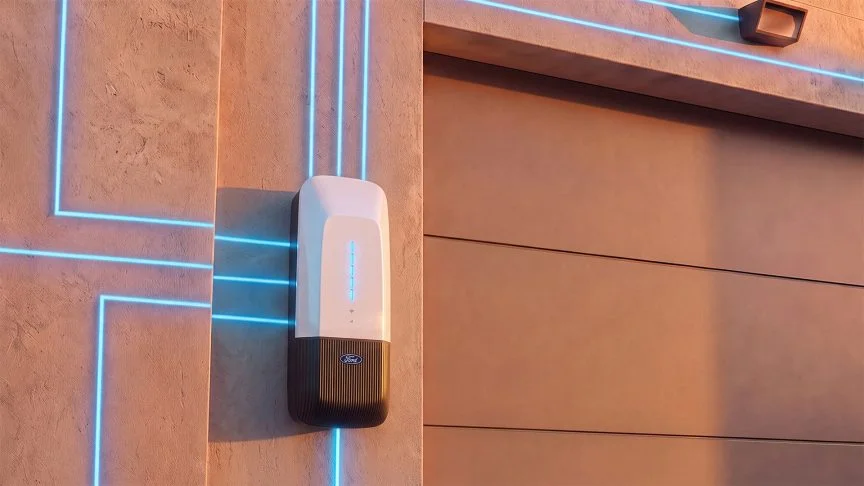
Some home equipment is still required
Moving the inverter into the vehicle should reduce the cost of the wall charger. It may also help households that need more than one charger, whether they have multiple EVs, a second home or a detached garage: the expensive power conversion hardware would be in the truck rather than repeated at each charging location. But “built in” doesn’t mean the home setup is equipment-free. Ford’s [Universal EV Platform information](https://www.fromtheroad.ford.com/us/en/articles/2026/fathom-ev-bidirectional-home-power) says the Fathom won’t need a wall inverter box, but homeowners will still need additional hardware to use bidirectional power. For Ford’s Home Power Management feature—which would let owners charge when electricity is cheaper and draw on the stored energy during more expensive peak hours—the company says they’ll need to install at least a Ford Home Power Station. Its price hasn’t been provided here, so the truck’s low starting price alone doesn’t tell us what a complete home power system will cost.Lower hardware prices could change the calculation
Ford hasn’t announced a price for the new component. It says it expects to make it cost half as much as the first-generation Ford Home Energy system, which launched at about $1,300. That points to roughly $650, though the final price is still unknown.

Backing up a home during an outage takes two more pieces of equipment: Ford’s Home Power Station and Home Backup Power Panel, sold separately. Ford says its second-generation versions should cost “at least 60% lower” than the first-generation package, which was around $5,000. A rough estimate puts the new hardware near $2,000.
That estimate covers equipment alone. Installation prices vary by location and by house; this guide to EV charger installation offers some context, but your own quote will depend on the job. Even so, lower hardware costs make the system easier to consider as electricity and fuel prices rise. For some owners, the savings could help it pay for itself sooner; this look at home batteries and energy bills explains why that calculation is getting more attention. The numbers here are promising, but without final prices and installation costs, the payback remains uncertain.