Apple’s creator software gets an AI push
The bigger story from Apple’s “Pro and Tell” week may be what’s happening to its software. Alongside its hardware announcements, Apple said Creator Studio is getting a set of AI features and creative tools. The additions span video, music, image editing and office work, but Apple hasn’t provided enough detail to judge how useful the AI will be in practice. That gap matters: a feature list can show where a company wants to go, but it can’t tell you whether the tools save time, produce work you’d actually keep, or fit naturally into an existing routine.
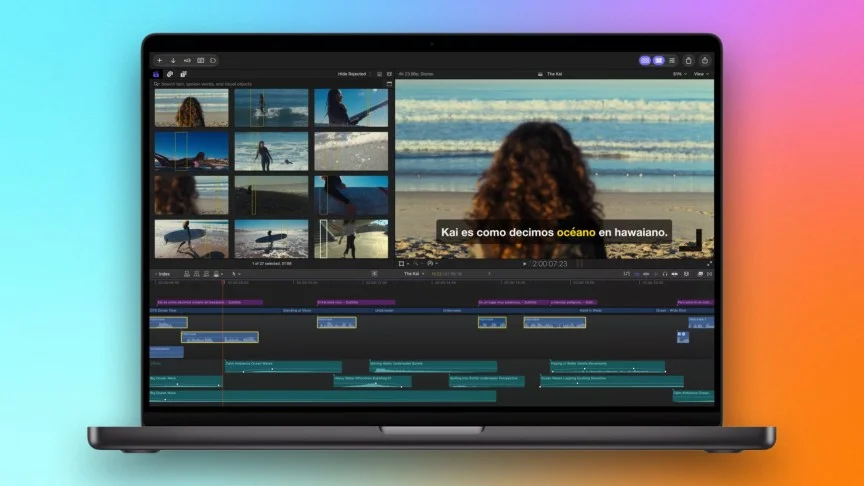
For video editors, Final Cut Pro will add built-in MotionVFX tools for visual effects and graphics. Integrating effects into the editing software could reduce the need to move between applications for certain jobs, though the announcement doesn’t establish how broad the selection will be or how much control editors will have. For professionals, those details often matter more than the presence of a new tool: speed is useful, but only if the result can be adjusted to suit the project.
Logic Pro is getting a beta AI assistant for music editors in the US, powered by models from Apple and OpenAI, plus a redesigned browser with Apple’s Liquid Glass look. A beta release gives users an early way to try the assistant, while also signaling that Apple is still testing how it belongs in a music workflow. An assistant may help with routine tasks or provide a starting point, but music editing depends on choices that are highly specific to a track and a producer’s intent. The announcement doesn’t yet say which tasks the feature handles or how reliably it does them.
Pixelmator Pro will gain an AI feature that can resize images and fill the newly exposed areas—a concept familiar from Photoshop’s generative fill. The practical appeal is easy to understand: changing an image’s dimensions can leave empty space, and an automated fill can offer a quick way to complete the frame. But generated content still needs inspection. A plausible extension may be enough for a casual image; work intended for publication or a client may need closer editing.
Apple is also bringing AI assistants to Keynote, Pages and Numbers. The idea resembles Google’s integration of Gemini across its productivity software. The comparison points to a broader contest over where AI belongs: as a separate destination, or as a feature inside the tools people already use. Whether Apple’s versions feel helpful or intrusive is still an open question. If you’re working in these apps every day, the key test will be whether the assistants reduce repetitive work without adding another layer to manage.
Existing Creator Studio subscribers will get the updated software as a free update in November. That gives current customers a clear path to the new features, but it doesn’t answer the most important product question: which additions will be available in a finished form, and what can they do reliably?
New features come with a subscription trade-off
Apple still sells its creative apps individually, including lifetime purchases, but the features covered here are reserved for Creator Studio subscribers. That bundle starts at $13 per month. If you buy a new MacBook, Apple includes a three-month trial. The distinction matters: the new capabilities come with access to several programs, but they also mean paying for a bundle even if you only need one app.
This is more significant than it looks. A subscription can make a collection of tools easier to access, but it changes the cost calculation for someone who previously bought one app and used it for years. The value depends on the mix of software a customer needs, how often the new features prove useful, and whether the subscription remains worthwhile after the trial. For a user who works across several apps, the bundle may be a reasonable fit; for someone focused on a single program, the monthly price deserves closer scrutiny.
A busy week for Apple
Creator Studio’s update arrived alongside new iMacs and MacBook Pros, as well as an OLED iPad Mini. Apple’s fall announcements have also included the iPhone 18 Pro lineup, the company’s first folding phone, the iPhone Duo, and a refreshed smart home lineup featuring the HomeView device. Taken together, the announcements make the week a broad showcase of Apple’s hardware and software plans. The software update is a reminder that a product launch can extend beyond the devices themselves: new tools may shape how customers use the hardware they already own.
More hardware could arrive Wednesday, the in-person day of the Pro and Tell event. Analysts have suggested Apple may unveil a touchscreen MacBook, which would mark a first for the company. That remains a possibility rather than a confirmed announcement, so it’s best treated as an open question until Apple says more. CNET is following the week’s Apple announcements and testing the iPhone Duo by folding it more than 75,000 times and counting.
What the update needs to prove
Apple is adding AI across several kinds of software at once, but the announcement leaves the details uneven. Some features are described in concrete terms, such as Pixelmator Pro’s image expansion; others, including the assistants in productivity apps, remain open-ended. And this is the part most people overlook: placing an assistant inside a familiar app doesn’t automatically make it useful. It still has to produce results users trust, give them enough control, and avoid interrupting work that already flows well.
For now, the update’s significance rests on what Apple has announced, not on demonstrated results. The subscription also ties the new features to a broader purchasing decision, while the November update gives existing subscribers a date to watch. The numbers here are underwhelming as a measure of usefulness: a monthly price and a list of features say little about the time saved or the quality of the output. The real test will come when users can try the tools in their own projects.
More AI features across familiar software. That’s the promise; execution will decide whether they earn a place in the workflow.