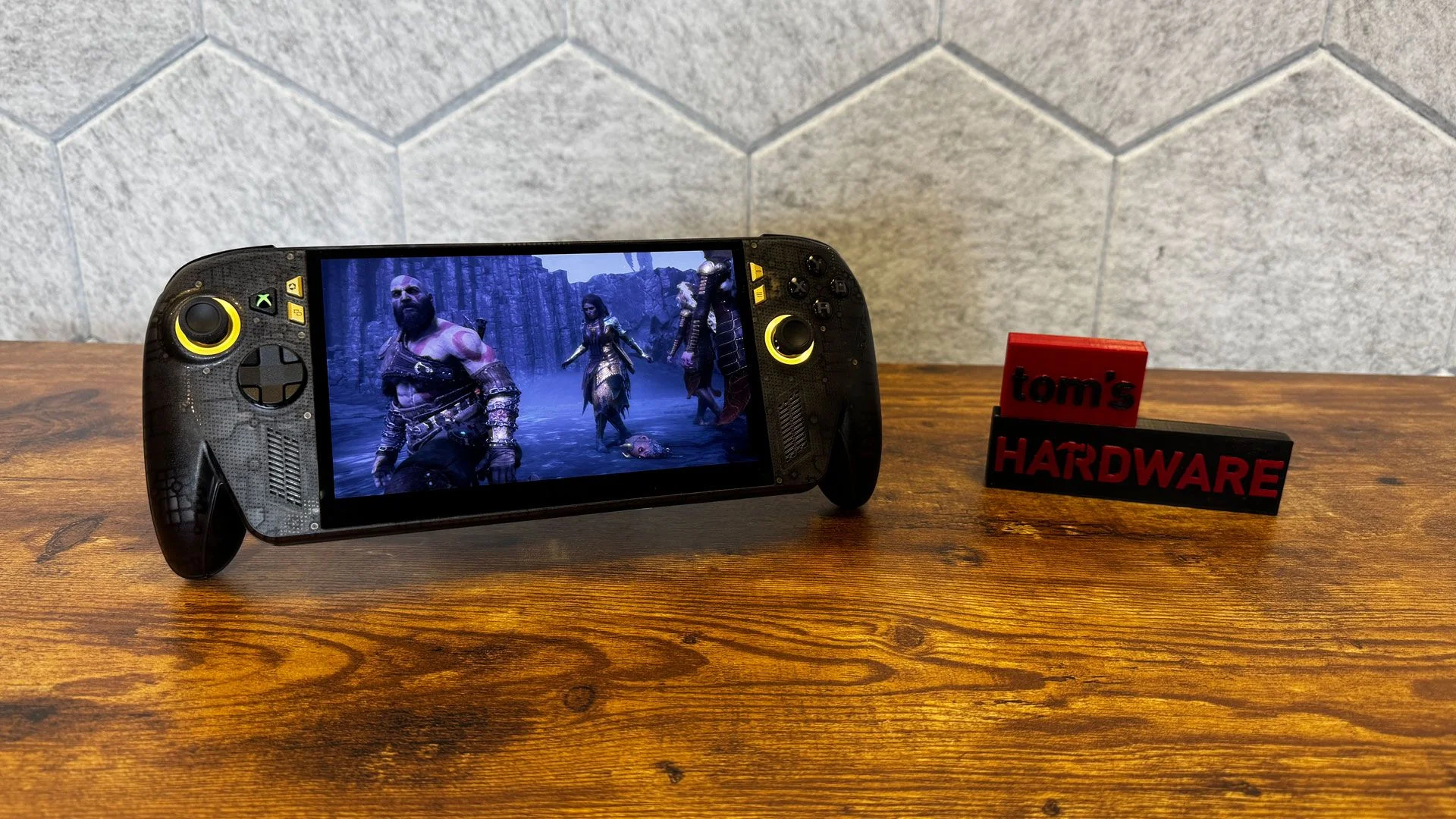
The Asus ROG Xbox Ally X20 makes a case for a premium handheld through feel and visibility, rather than faster gameplay. Its 7.4-inch OLED screen, TMR joysticks and rubberized grips refine the original Ally X, while the shared Ryzen AI Z2 Extreme chip leaves performance unchanged. At $1,299.99, that makes the X20 a comfort and display upgrade for new buyers—not a compelling replacement for owners of the earlier model.
Familiar performance, more considered controls
Inside, the X20 retains the AMD Ryzen AI Z2 Extreme processor and 16-core AMD Radeon RDNA 3.5 graphics found in the original Ally X. Its 24GB of soldered LPDDR5X-8000 memory and 1TB PCIe 4.0 NVMe SSD also remain. That shared foundation means the new model doesn’t bring a frame-rate boost or a different tier of gaming performance.
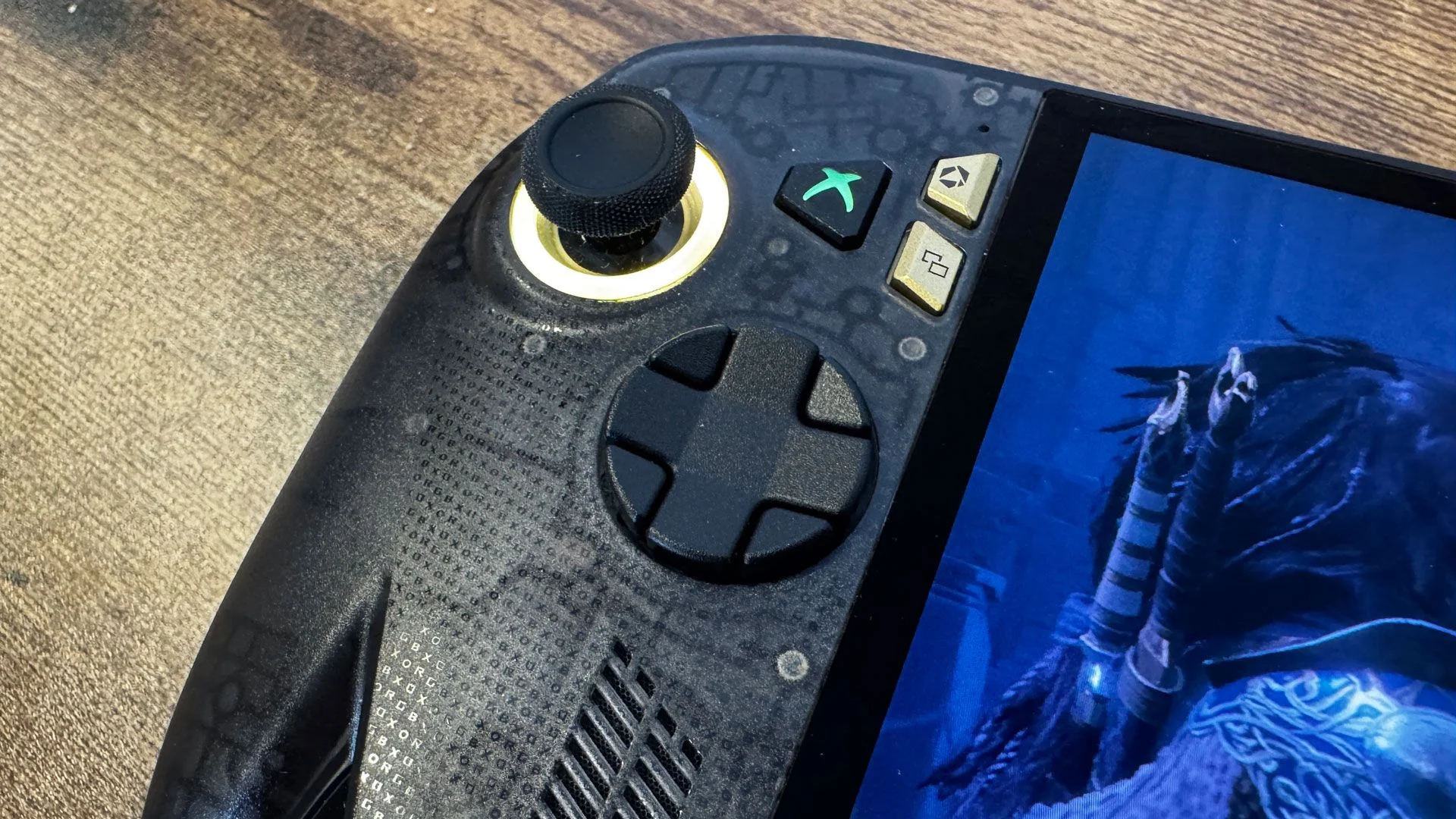
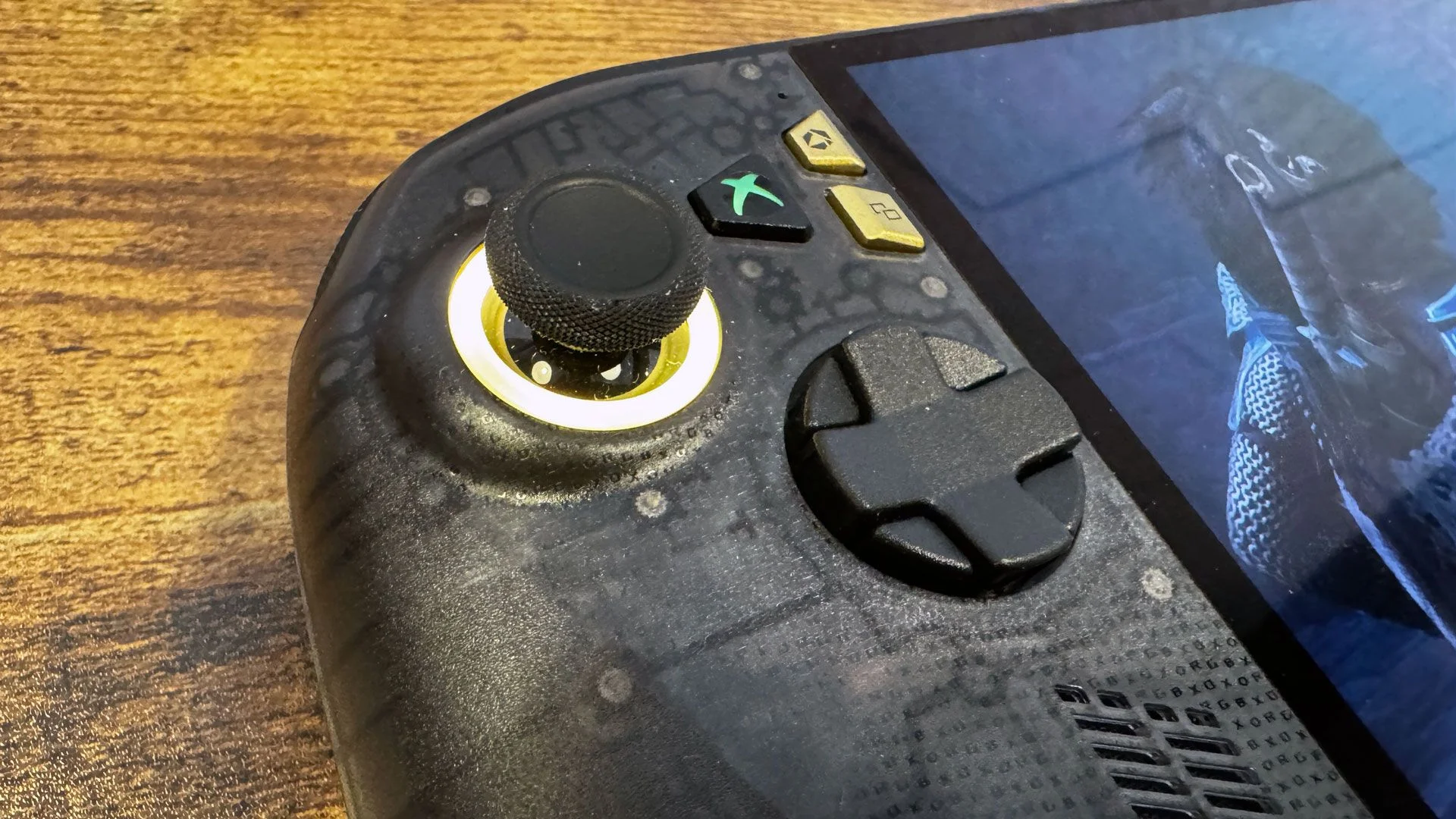
The changes become apparent when you pick it up. Rubberized material on the rear grips gives the chassis a more substantial feel, and the new TMR joysticks feel tighter. TMR is intended to reduce wear over time, addressing a part of a handheld that gets frequent use. The reviewer’s hands-on impression was positive, though the article doesn’t offer long-term durability results.
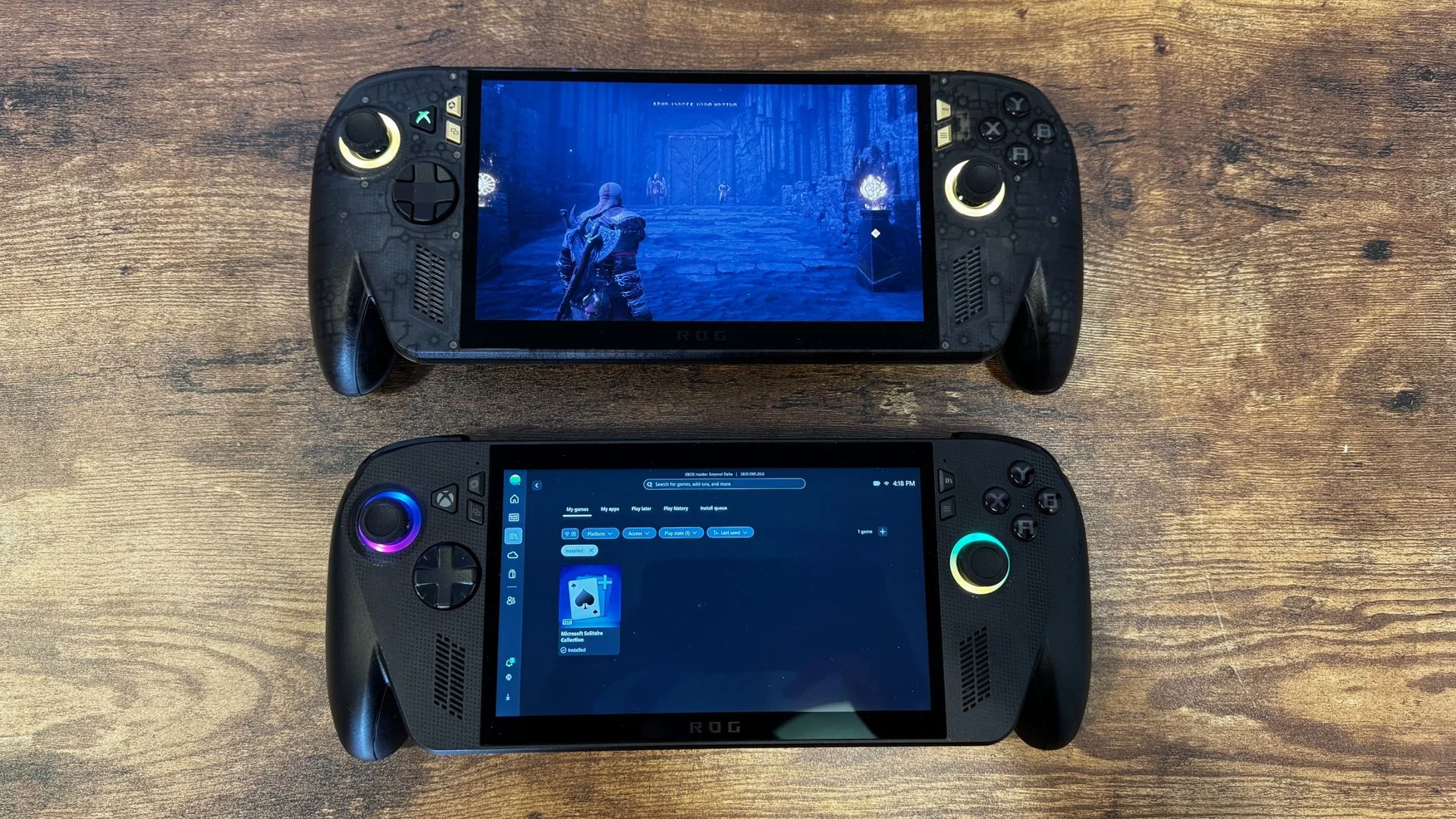
The directional pad is another practical change. It can twist between four-way and eight-way configurations: the former gives clearer cardinal directions for platform and action-adventure games, while the latter may suit fighting games better. Switching modes felt awkward during testing, so the extra choice comes with some friction.
Asus has also changed one of the menu controls. The library button on the original becomes a screenshot button on the X20. That’s a more immediately useful shortcut for capturing gameplay, although it can also make accidental screenshots easier.
OLED brings the clearest visual upgrade
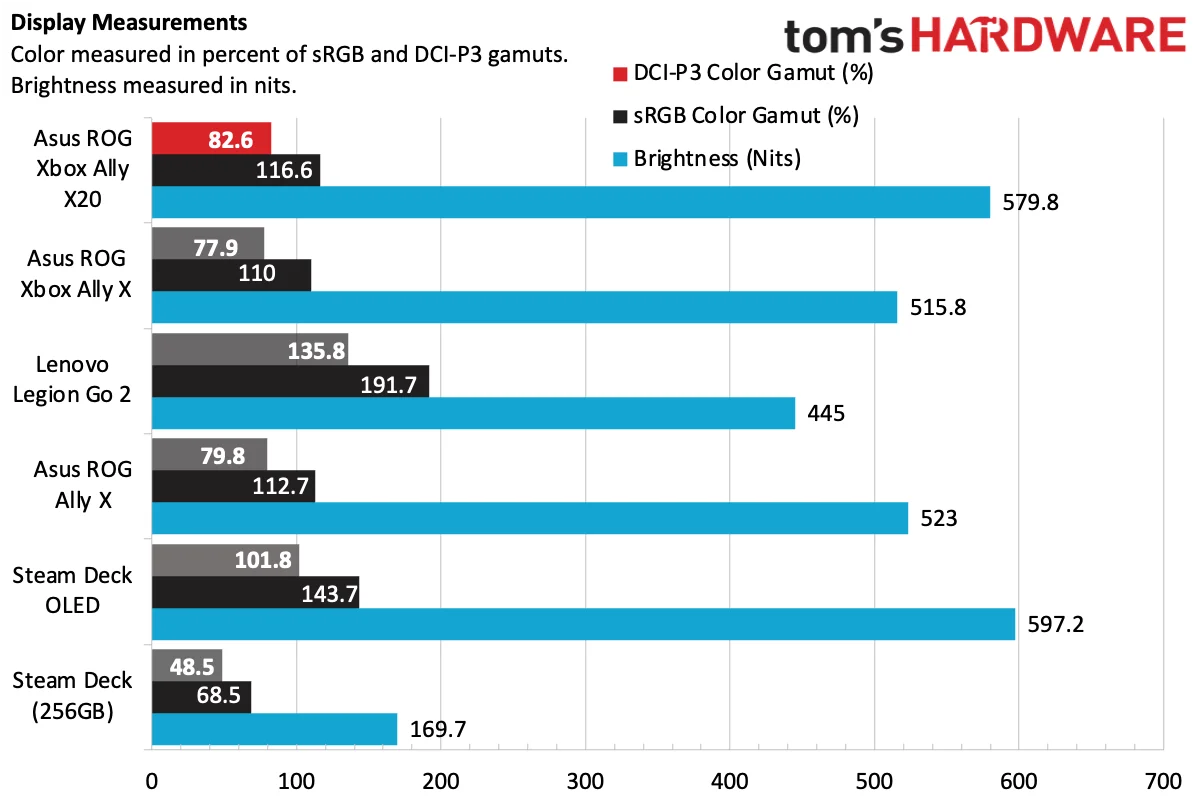
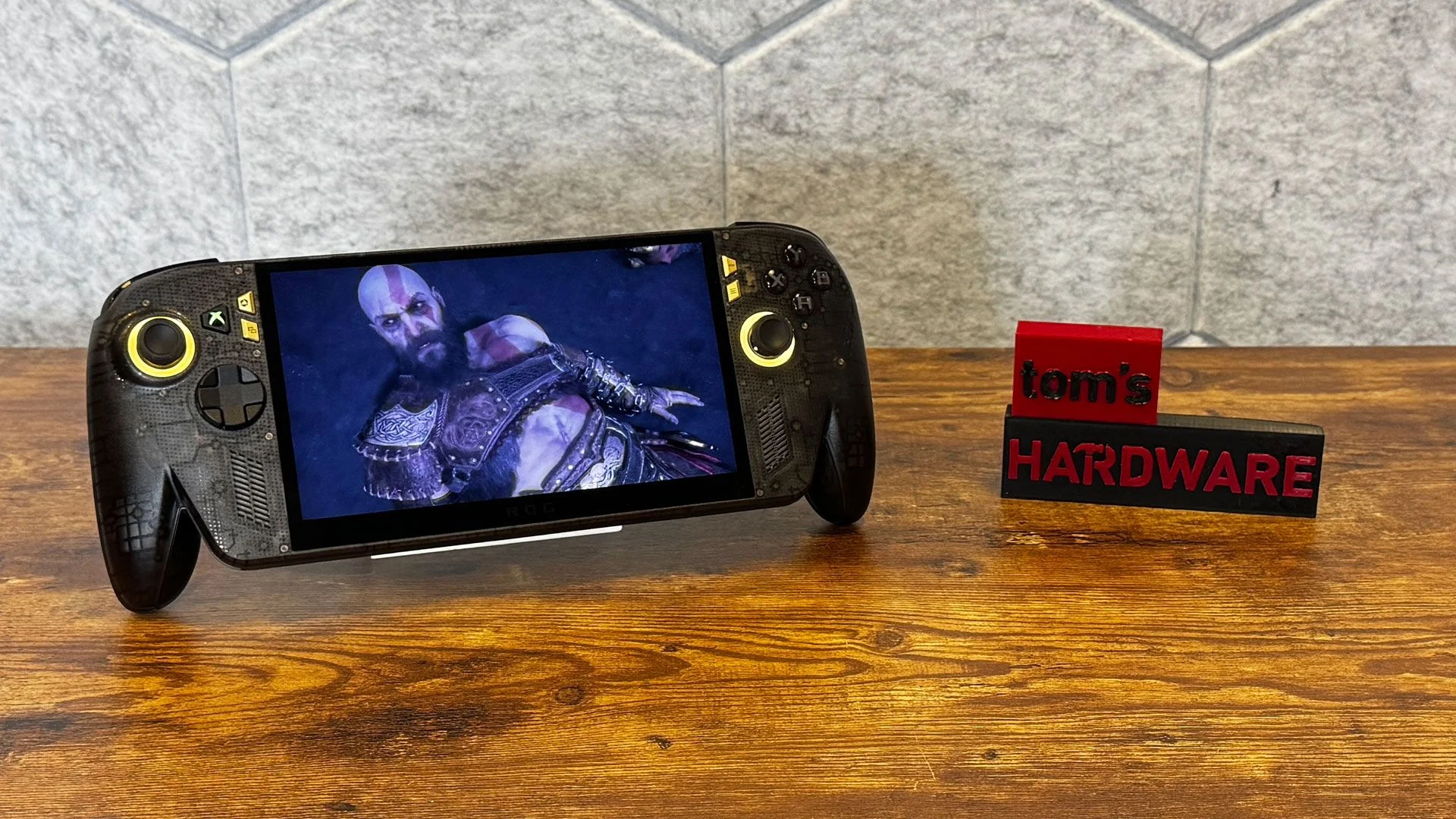
Both handhelds have 1920 × 1080 touchscreens, but the X20 moves from the original’s 7-inch IPS panel to a 7.4-inch OLED running at 120Hz. The larger screen and narrower top bezel are visible differences; the switch to OLED matters more. The reviewer found the panel brighter and more engaging, with only a modest advantage in measured color tests.
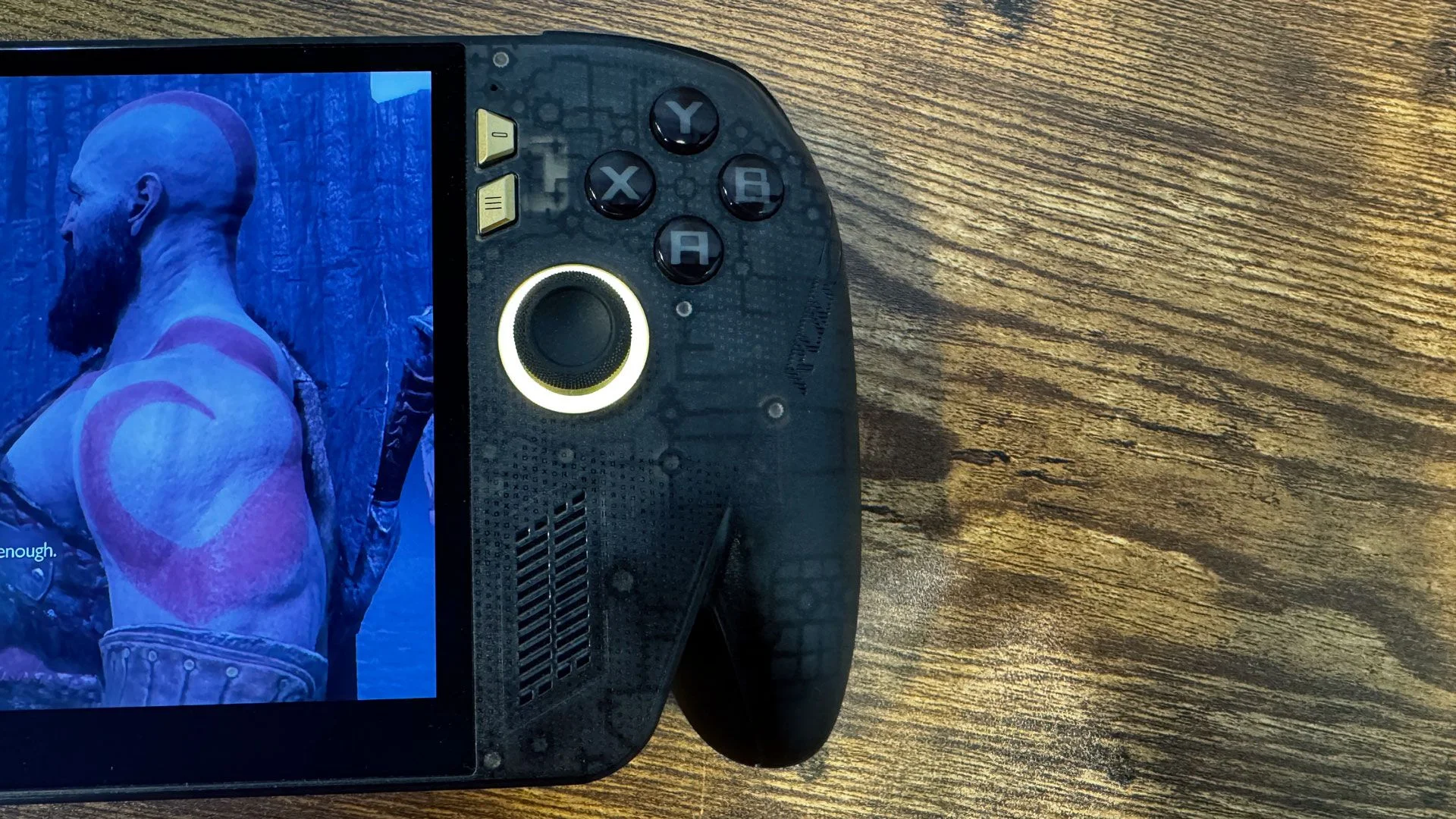
In Forza Horizon 6, the reviewer saw saturated paintwork and detailed greenery around the tracks. In God of War: Ragnarok, OLED’s deep blacks helped dim light sources stand out in darker scenes. The screen didn’t measure as well as the Steam Deck OLED’s panel, but the reviewer still considered it a strong display on its own.
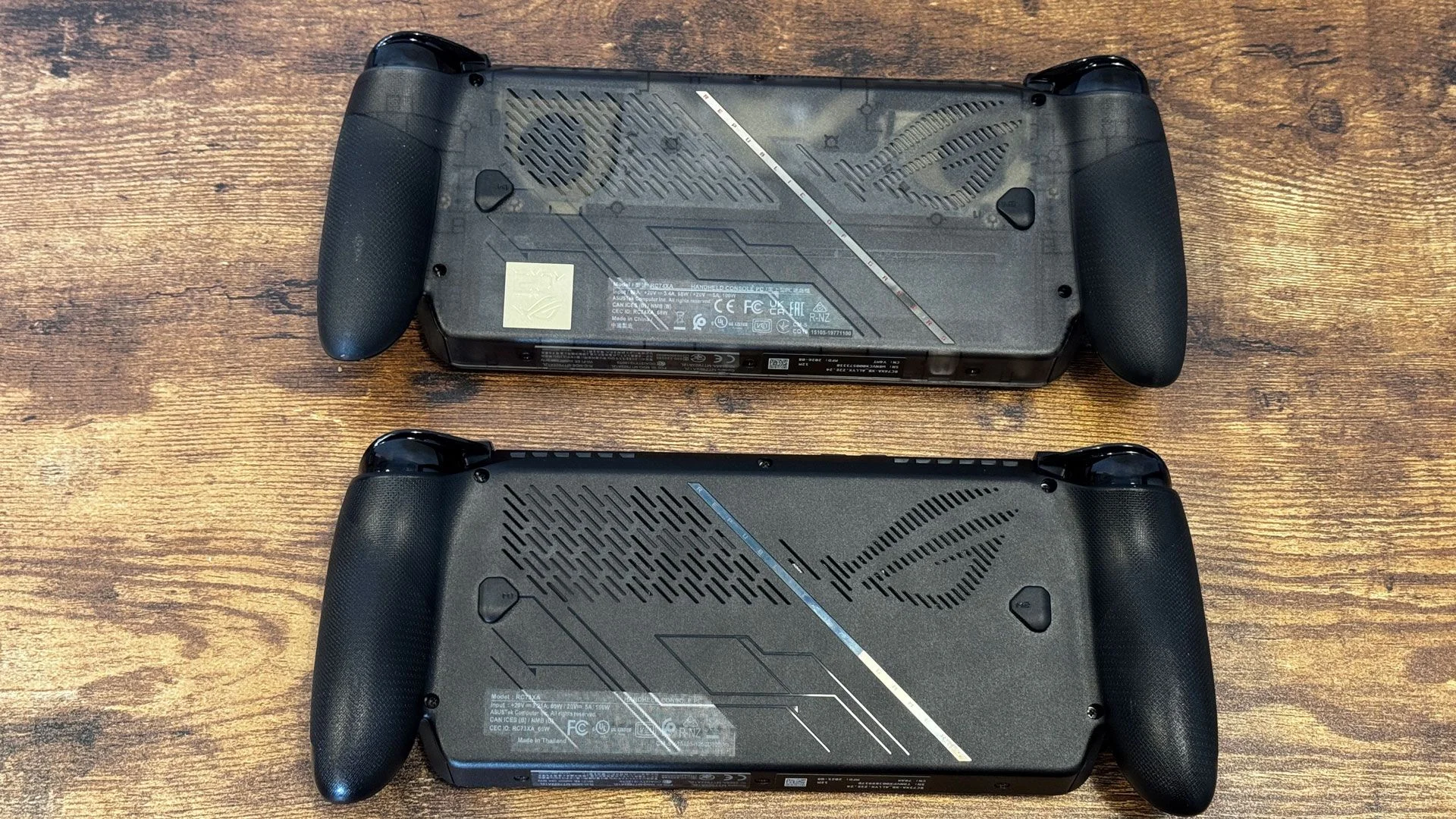
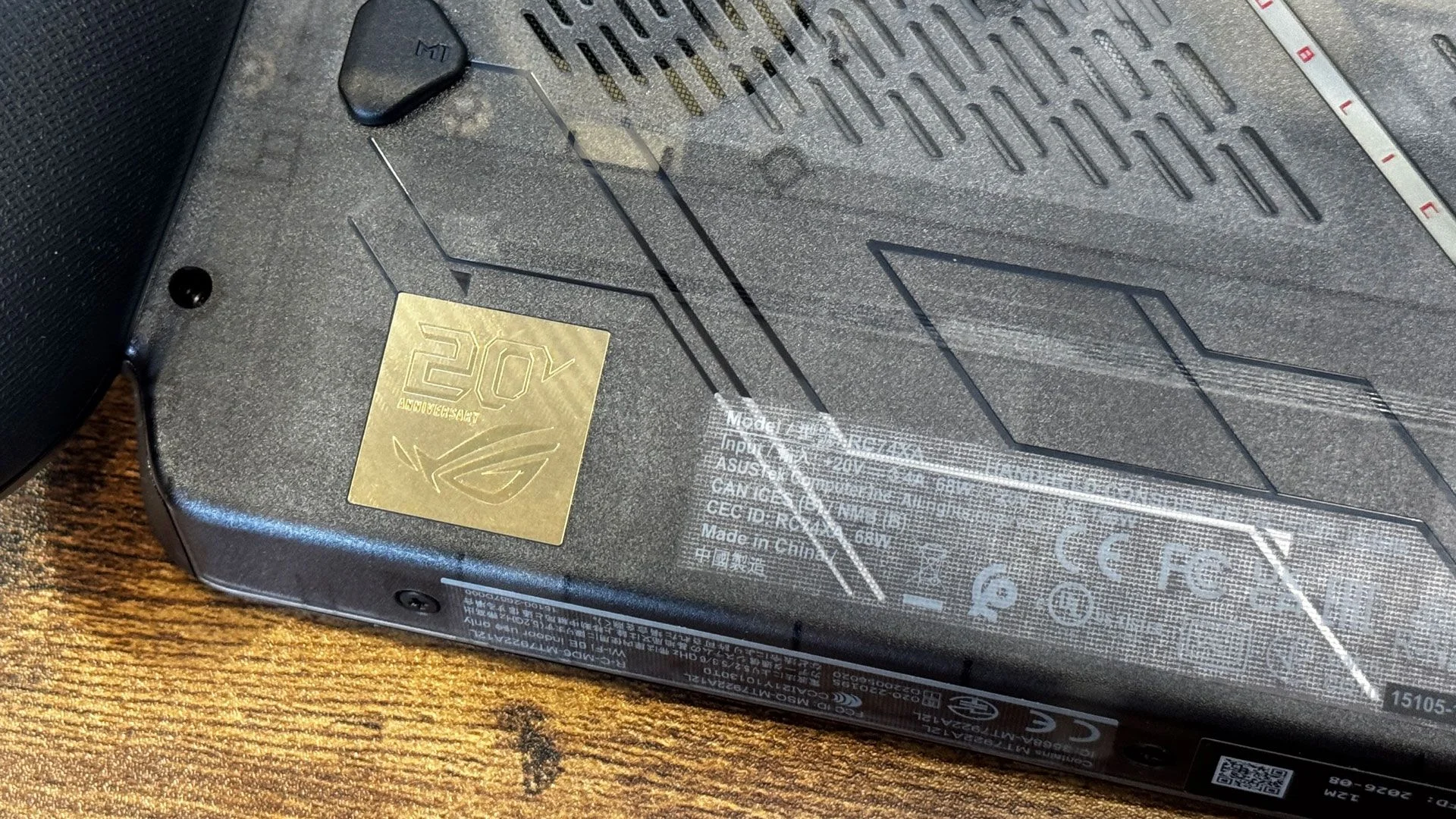
Asus pairs those internal and display updates with a distinctive anniversary shell. The X20 uses black-tinted transparent plastic, gold menu buttons and a gold stripe across the back, where the original has a silver accent. A prominent “20th Anniversary” ROG badge marks the rear. The reviewer preferred the earlier model’s simpler appearance and found the status lights shining through the plastic above the screen distracting.
Battery and software retain the same trade-offs
The X20 keeps the original’s 80Wh battery. In a demanding-game test with God of War: Ragnarok, the reviewer used 17W performance mode, 50% screen brightness, low graphics settings and AMD FSR 3.1.4 at 720p. After one hour and 15 minutes, the handheld had 47% charge remaining. That points to roughly two and a half hours under those conditions, though the result isn’t a direct comparison with the original Ally X, which lasted about three hours in a different game test. The OLED panel may contribute to higher power use.
Asus carries over the Full Screen Experience, which keeps parts of Windows from loading until the user switches to desktop mode. The setup saves memory and can help performance. Armoury Crate SE handles joystick lighting, power settings and calibration for the joysticks and triggers. The handheld runs Windows 11 Home and comes with a one-year warranty.
Specifications and price
Processor | AMD Ryzen AI Z2 Extreme |
Graphics | AMD Radeon RDNA 3.5 graphics (16 cores) |
Display | 7.4-inch, 1920 x 1080, OLED touchscreen, 120 Hz |
Memory | 24GB LPDDR5X-8000, soldered |
Storage | 1TB PCIe 4.0 NVMe M.2 2280 SSD |
Networking | Wi-Fi 6E, Bluetooth 5.4 |
Ports | USB4 Type-C (Thunderbolt 4 compatible), USB 3.2 Gen 2 Type-C, 3.5 mm headphone jack, microSD card reader (UHS-II) |
Battery | 80 WHr |
Power Adapter | 65W |
Operating System | Windows 11 Home |
Dimensions | 11.42 x 4.76 x 1.08 ~ 2.00 inches (29.0 x 12.1 x 2.75 ~ 5.09 cm) |
Price as Configured | $1,299.99 |
The X20 costs $1,299.99, a $300 premium over the original Ally X, which remains available for $999.99. A $2,499.99 bundle adds XR glasses, a Pelican case and a Dbrand Killswitch case. The bundle’s extras push the price well beyond the core device, so the standard model is the more relevant comparison for most buyers.
There’s also a performance-focused alternative in the source’s comparison: MSI’s Claw 8 EX AI Plus, powered by Intel Arc G3, is listed at $1,799. It may offer stronger gaming performance, but it costs substantially more than either Ally. The X20’s appeal is instead its combination of screen quality, controls and a more solid feel.
Who should choose the X20?
For current Ally X owners, the case for switching is thin: games run the same, and the original’s IPS screen remains bright and colorful. The X20’s OLED blacks, tactile changes and TMR sticks are worthwhile refinements, but they don’t change what the handheld can play or how quickly it runs those games.
For someone buying a first handheld PC, the decision comes down to whether those refinements justify $300. If the Ally will serve as a primary gaming machine for several years, the brighter OLED, improved grip and updated controls make the added cost easier to understand. If value matters more, the $999.99 model delivers the same underlying gaming performance. The X20’s clearest advantage is the experience in your hands and on its screen, so that’s where buyers should focus their comparison.