The iPhone Duo’s teardown reveals a foldable built with more repair access than its category usually allows—and a hinge whose moving parts may help explain reports of early screen damage. iFixit gives the phone a provisional 5 out of 10 for repairability, its highest score for a foldable. The score still depends in part on replacement parts becoming available, but the disassembly offers a detailed look at the design choices behind the rating.
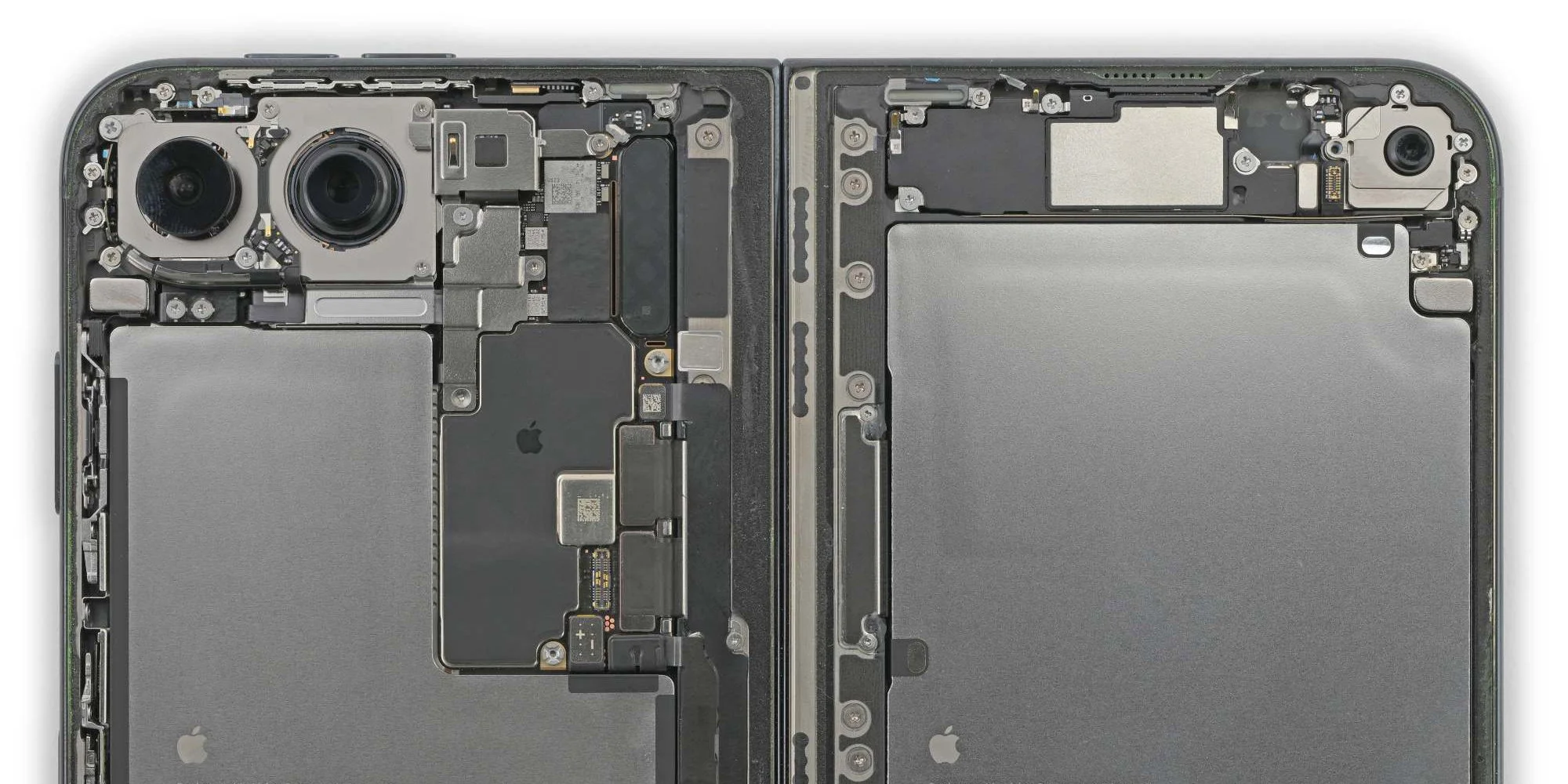
For product teams watching the foldable category, the findings point to two stories at once. Apple has made several components easier to remove, including the outer display and batteries. At the same time, iFixit’s analysis identifies a concentrated area around the hinge where the display may face mechanical stress. The teardown raises plausible questions about failures without establishing a cause.
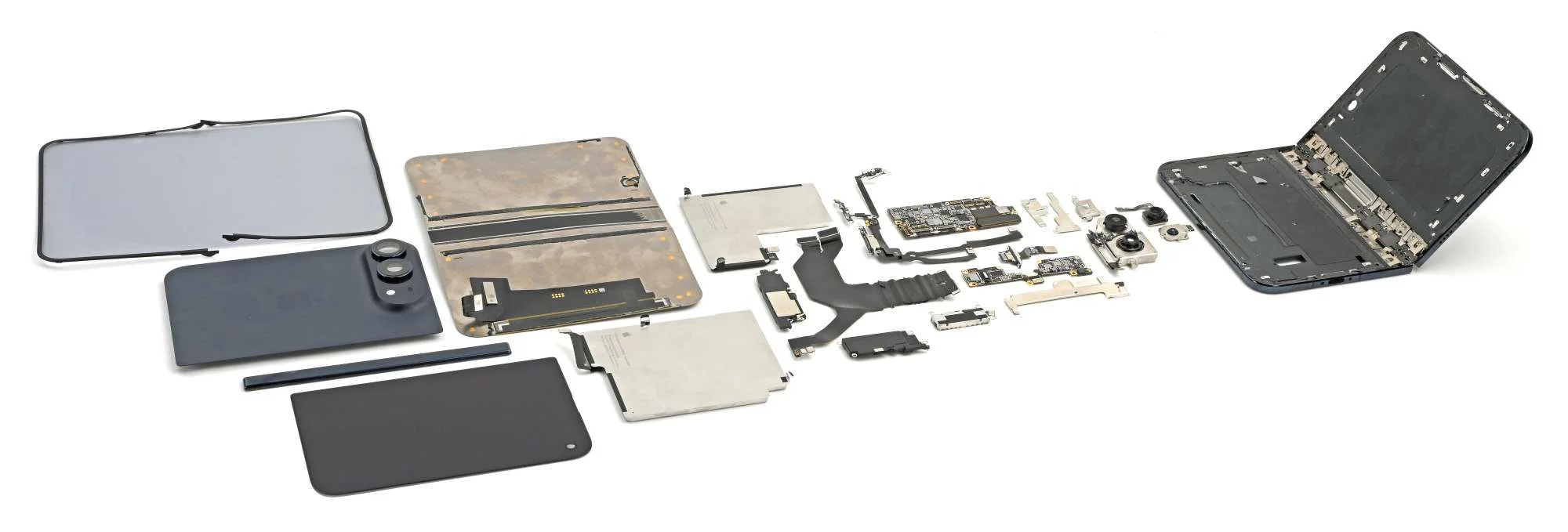
A complex hinge with a dust-test caveat
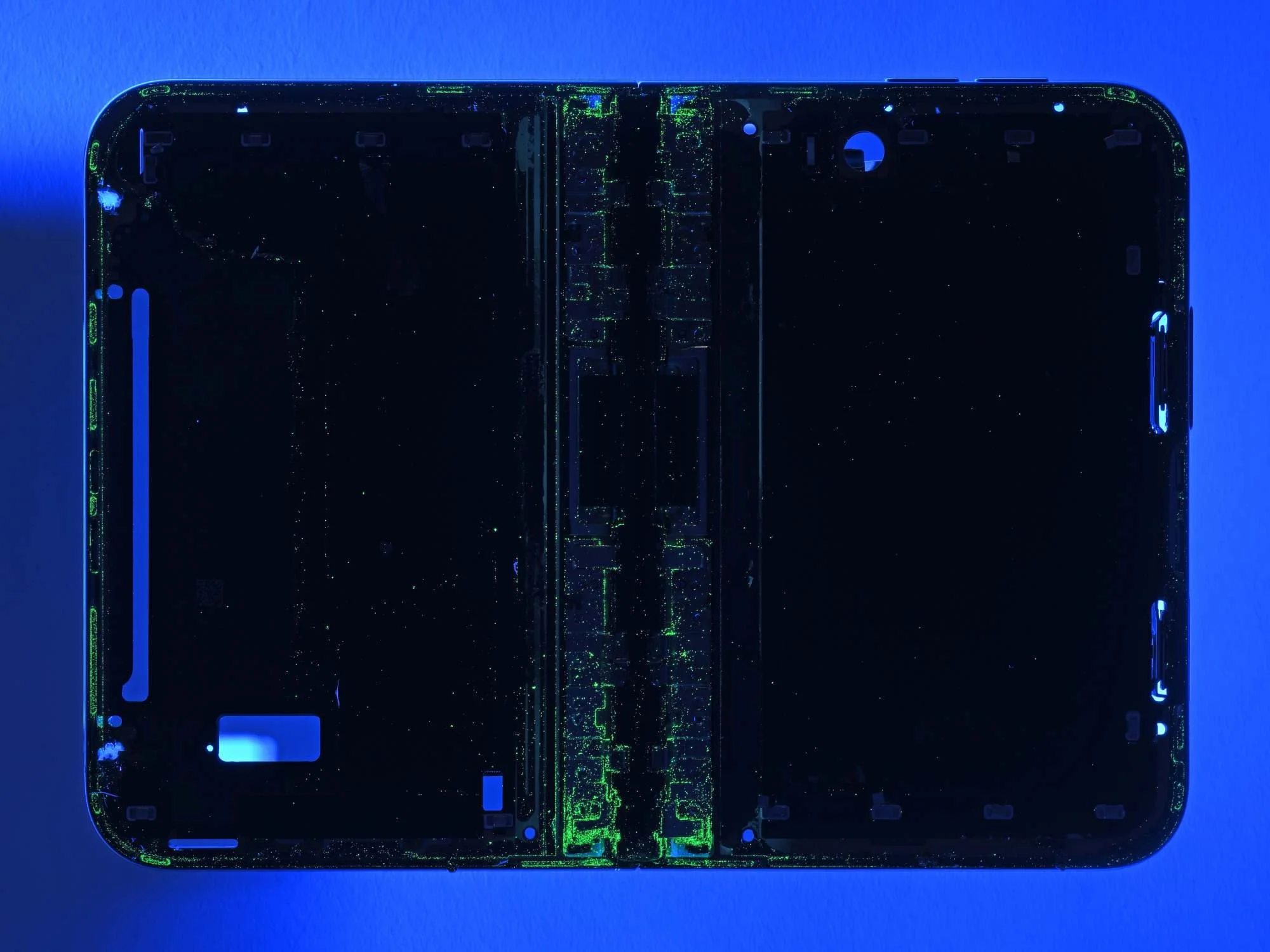
iFixit begins its investigation with a fluorescent dust test, tracking particles as they enter the phone during disassembly. The iPhone Duo carries an IP68 rating: it is rated as dust-tight and for submersion in water up to 6 meters deep for 30 minutes. During the test, the hinge starts making a crunchy sound. Yet the teardown finds relatively little dust inside it, especially compared with other foldables iFixit has examined.
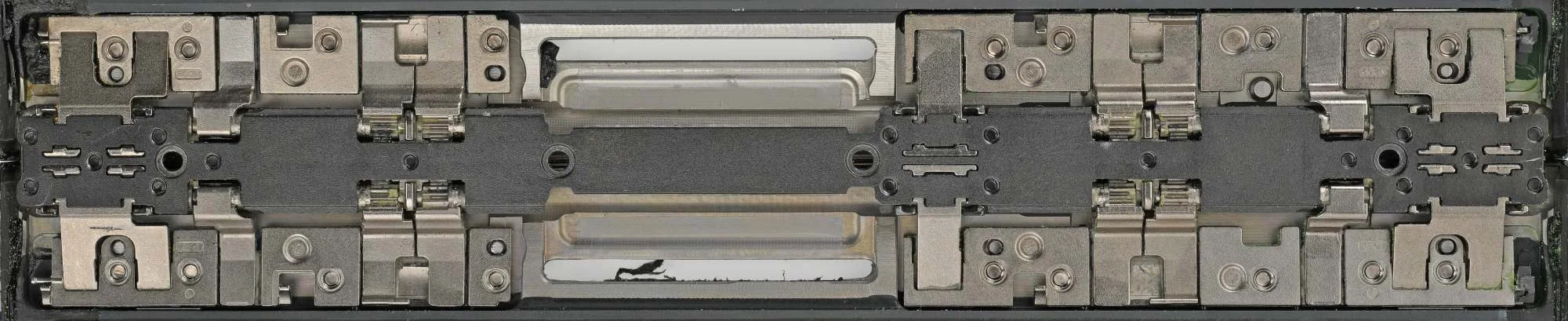
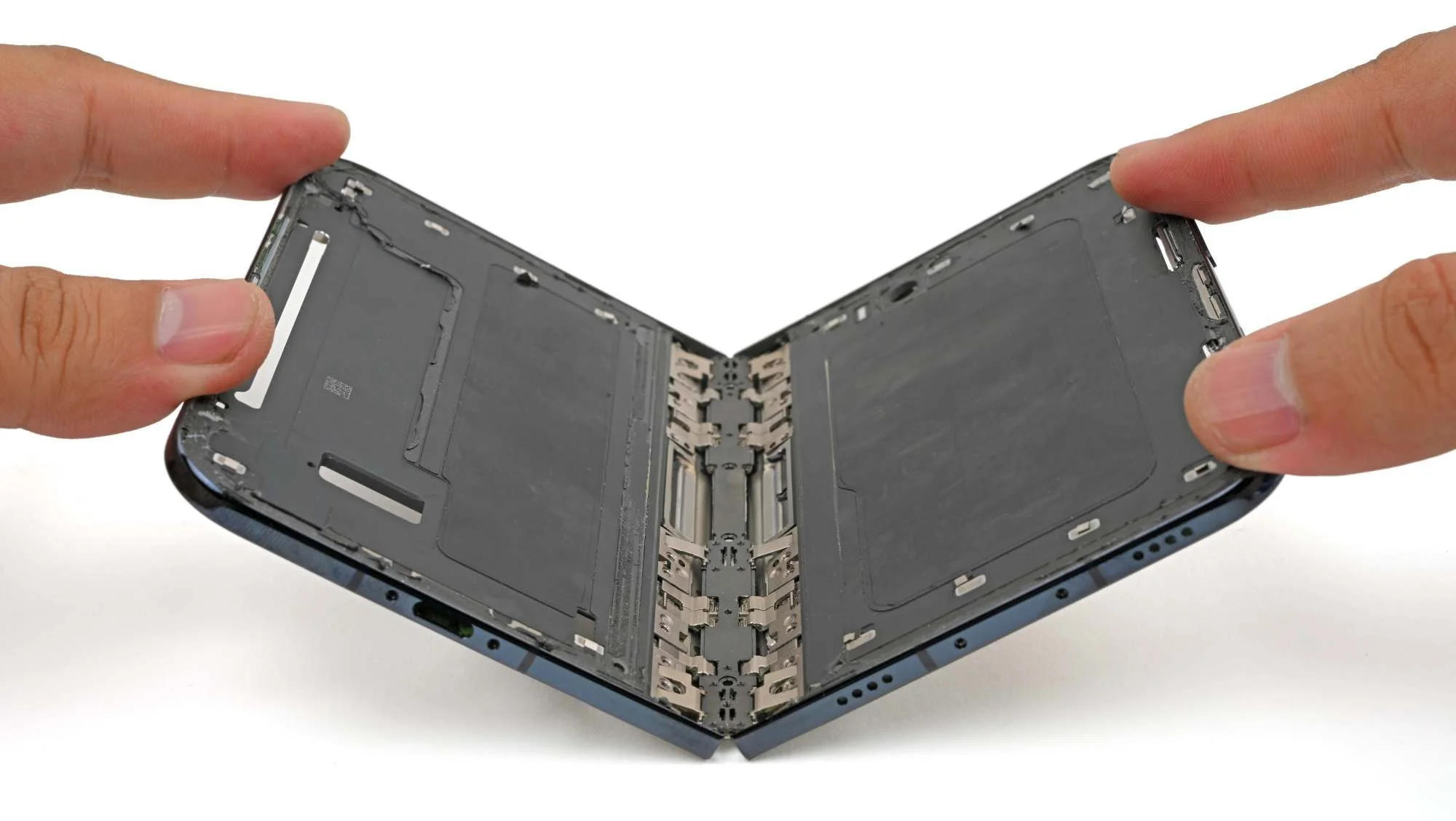
That distinction matters. The sound is an observation from the test, not proof that dust caused a malfunction. The hinge’s internals show why the assembly is a major engineering challenge: gears, springs and connected metal joints work together to guide the phone’s movement. A waterdrop-shaped cavity gives the display more room to bend, while curved guides control the joints and aim to reduce strain as the phone opens and closes.
Waterdrop hinges are already common in foldable phones, and Apple’s patents had offered hints about its approach. The teardown’s value lies in showing the assembled mechanism: a close network of moving parts, with guides intended to control how those parts travel. The design has to keep the display’s fold gentle while coordinating the phone’s structural support. That balance is central to both the user experience and the durability questions now being raised.
Where reported screen damage may begin
Some iPhone Duo owners have described hearing a crunch while folding or unfolding the phone, followed by bright lines on the inner display. Reports often point to a similar region: near the opening for the cable that links the phone’s two halves and the central hinge support. iFixit compared teardown footage, CT scans and Apple patents to construct a 3D model of the hinge and examine what might be happening there.
The team outlines several possible mechanical contributors. A central support bar could, in theory, fail to retract as the phone closes and press against the display. The curved rails that guide hinge movement rise above neighboring components during folding; if they don’t move as intended, they might come into contact with the screen. Several structural edges and components also converge near the reported damage area, potentially concentrating force on the display’s delicate layers.
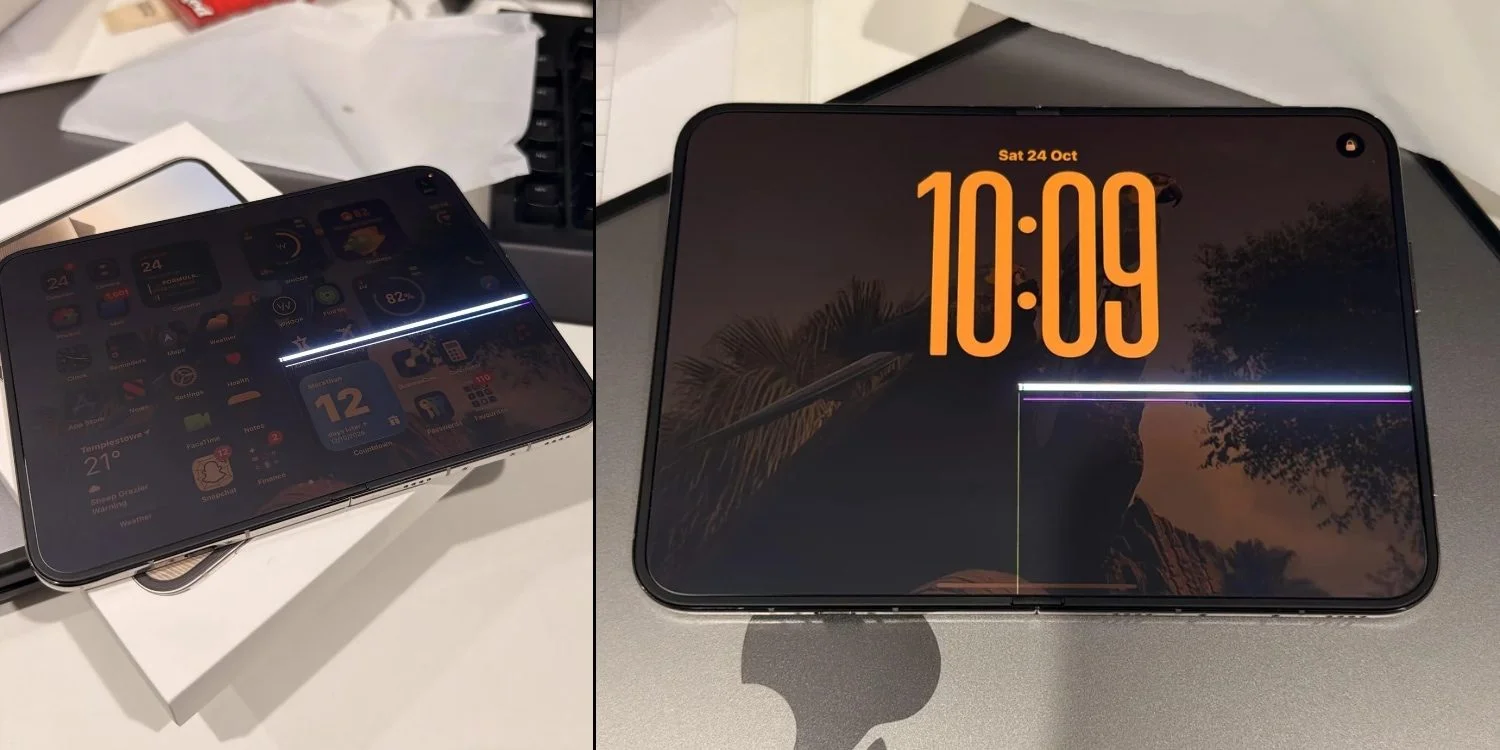
These are investigative leads, not a confirmed diagnosis. The teardown hasn’t shown that a particular hinge part causes the failures, and the reported pattern alone can’t settle the question. Still, the overlap between the affected screen area and a dense cluster of moving and supporting parts gives repair specialists a concrete place to focus future examination.
Display choices target crease visibility
Apple’s matte nano-texture surface is designed to scatter reflected light, making the crease less obvious. Under magnification, iFixit found a surface patterned with tiny rounded bumps. It also examined the display pixels and found some subpixels shaped like ovals, with their orientations varying across the panel rather than following one uniform arrangement.

An Apple patent describes a pixel arrangement that could reduce diffraction artifacts. iFixit suggests that this may help keep the crease from drawing attention, alongside the texture’s effect on reflections. The teardown doesn’t quantify how much either feature changes what users see, but it connects the panel’s microscopic structure to a practical design goal: making the fold less visually distracting.
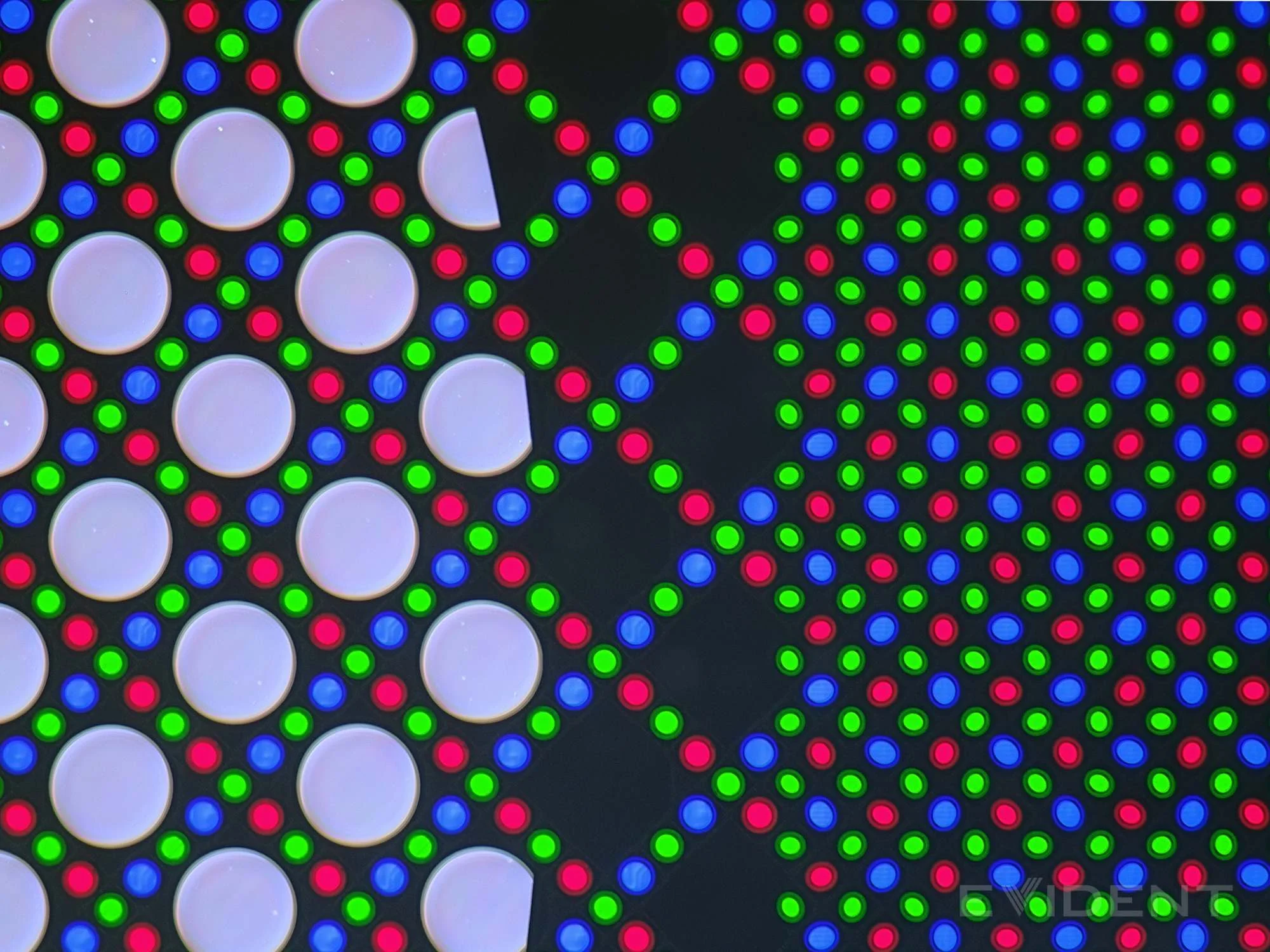
The area above the inner display’s selfie camera uses another modified pixel pattern. Wider gaps let more light reach the camera beneath the screen, while pixels in that region become rounder and more regularly arranged. iFixit compares the approach with the under-display infrared camera on the iPhone 18 Pro. These details show how the display changes locally to accommodate hardware underneath it.
Repair access is more straightforward in a couple of places. Clips hold the inner display’s surrounding bezel, allowing it to come away without breaking. The outer display is also relatively easy to remove, an advantage because several internal repairs require taking it off first. Those choices help explain the repairability score, though parts availability remains a condition attached to iFixit’s provisional assessment.
Battery design offers a repair bright spot
The phone has two battery cells, positioned in separate halves: one beneath the back glass and another beneath the outer display. Replacing both means opening both sides. The larger cell is rated at 11.567 Wh and the smaller at 7.506 Wh, for a combined capacity of 19.073 Wh.
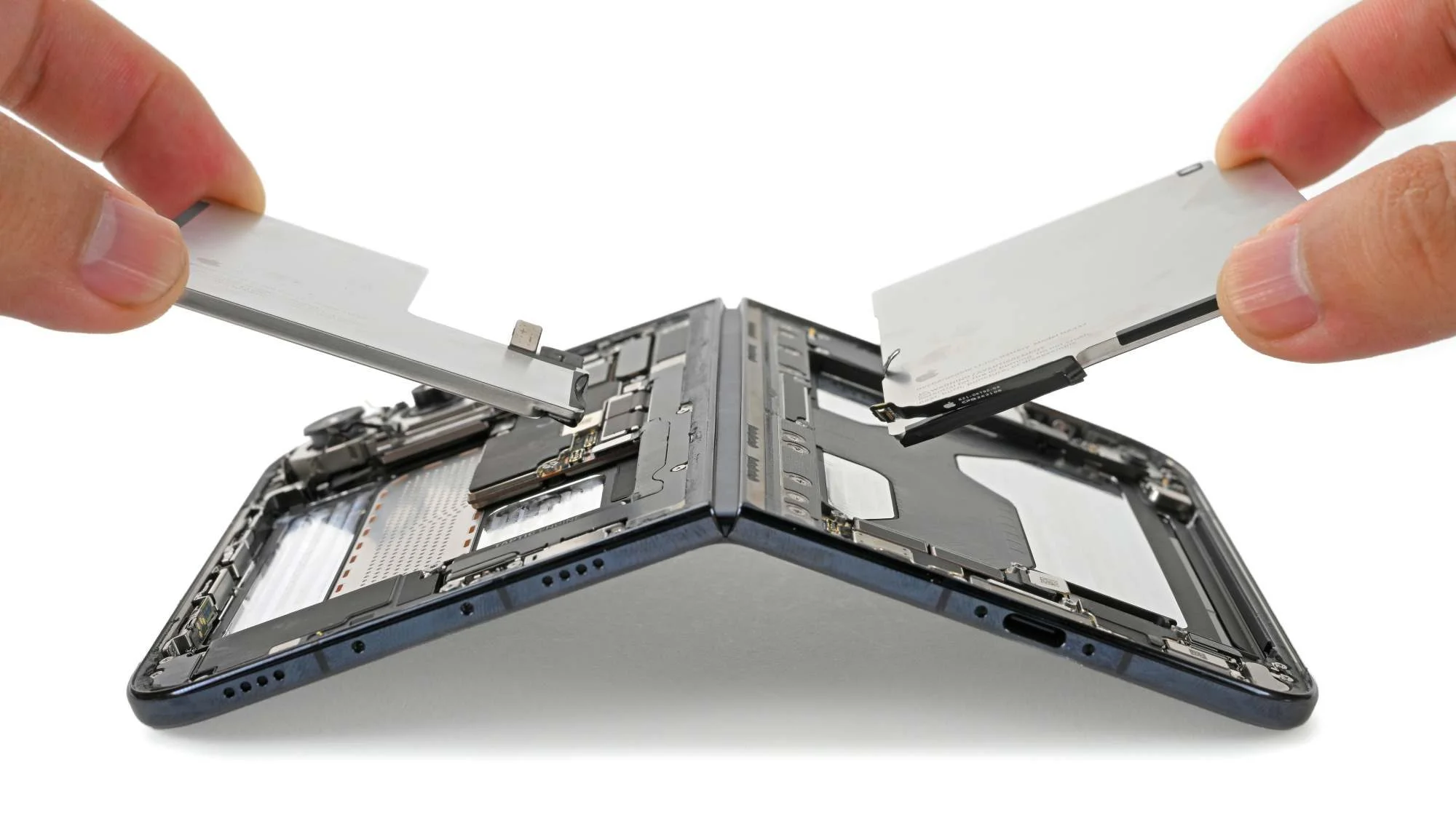
iFixit highlights the electrically releasable adhesive used for both batteries. It lets repairers remove the cells without relying on forceful prying, and the team calls the process the best battery-removal experience it has seen in a foldable phone. That’s a meaningful design detail in a device where the batteries sit on opposite sides of a complicated assembly.
The teardown also examines the redesigned logic board and the display’s multiple layers, which move independently to accommodate folding. Together, the findings give the iPhone Duo a more nuanced repair profile than a single score can show: some service steps appear unusually approachable, while the hinge and its relationship to the inner screen deserve close attention. The most useful next evidence will be whether further inspection can connect the reported failures to a specific part or movement.
Read iFixit’s in-depth iPhone Duo teardown for more detail.