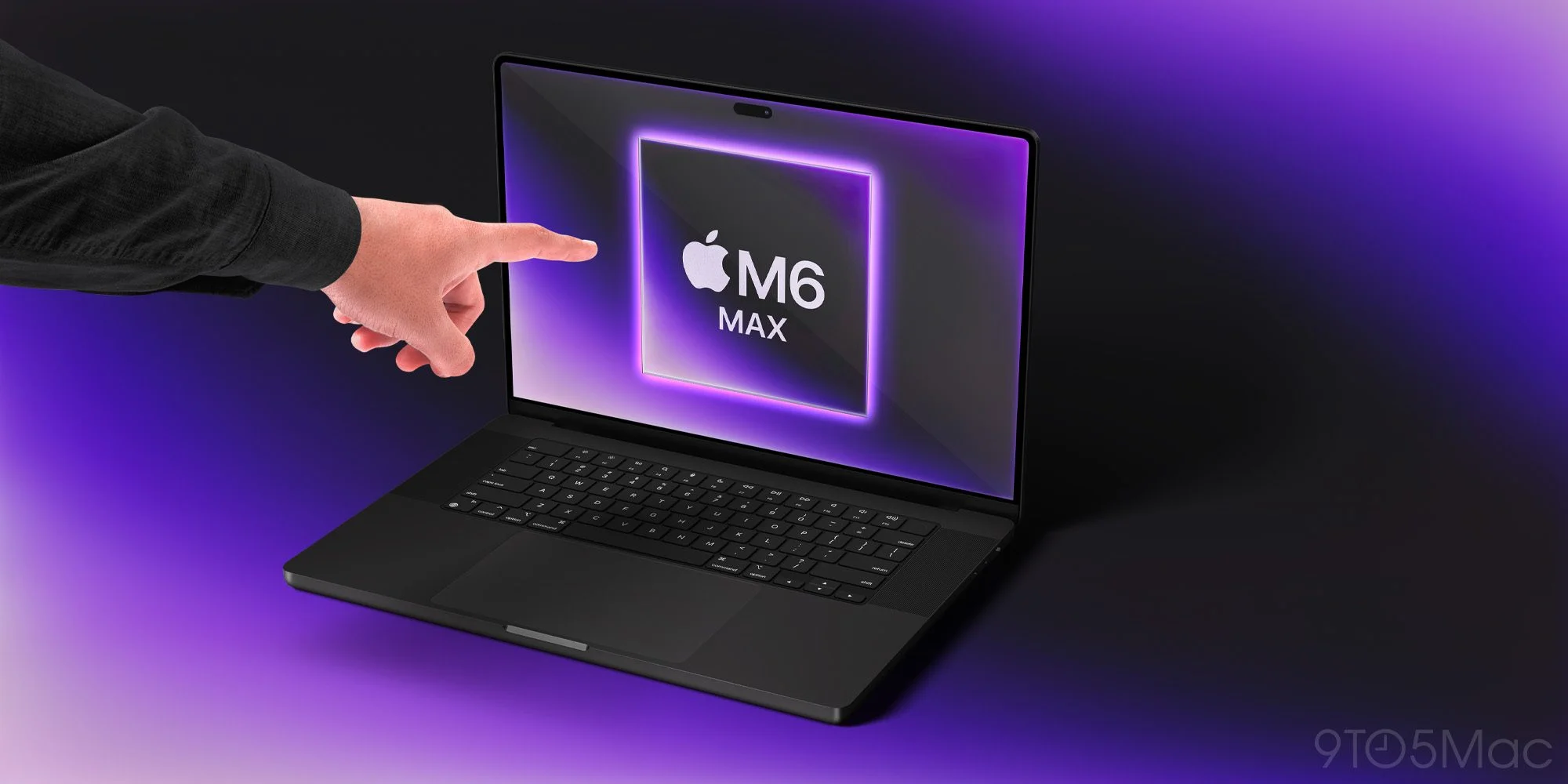
Apple’s first touchscreen MacBook Pro appears poised to add a new way to interact with macOS, at a steep premium. Bloomberg’s Mark Gurman reports that the 14-inch OLED model with an M5 Pro chip could start at $2,899, while a 16-inch version may begin at $3,399 or higher. Apple is expected to outline the machines at its October 28 “Pro and Tell” event, though the reported prices and timing should be treated as expectations until the company confirms them.
Touch models would sit above current MacBook Pros
The reported prices would put the redesigned laptops well above the M5 Pro models’ earlier starting prices of $2,199 for 14 inches and $2,699 for 16 inches. Those earlier figures predate Apple’s June price increases; compared with them, the new entry points would be at least $700 higher in four months. The comparison is striking, but it spans two price points in a changing lineup, so it doesn’t by itself show how Apple will price every configuration.
Apple reportedly plans to keep selling non-touch MacBook Pro models alongside the OLED machines. Gurman said current 14-inch and 16-inch models, priced at $2,499 and $2,999, remain stocked in retail stores. That points to a tiered range: buyers could choose an existing design, or pay more for a different display and input method. The details still depend on what Apple announces, including which chips and configurations it offers at each price.
That distinction may matter less to buyers who want the new chassis. The report suggests customers seeking the redesign will have to pay the premium even if touch input isn’t a priority. That’s a meaningful trade-off: a buyer drawn to the thinner body or OLED display may also be paying for a touchscreen they rarely use. At $2,899, the 14-inch model would exceed the $2,799 starting price of Apple’s 17-inch MacBook Pro from 2006, according to the report. The historical comparison makes the figure vivid, though it doesn’t tell us how the two machines compare in value.
A thinner chassis brings cooling and hinge changes
The OLED display and touchscreen are part of a broader physical redesign. Gurman reiterates that the new models will be thinner and lighter, with slimmer bezels and a redesigned hinge intended to keep the display steady when users tap it. The hinge detail addresses a practical concern: tapping a laptop screen can move the panel, so touch input has implications for the feel of the whole machine, not just its software.
One less visible change concerns thermal management. Apple has reportedly reworked the cooling system to route more airflow through the hinge while reducing weight. That ties the mechanical redesign to a familiar engineering constraint: making a laptop thinner can leave less room for airflow and cooling hardware. The report doesn’t explain how the new arrangement performs under heavy workloads, so its practical effect will be clearer once the machines are available for evaluation.
Apple’s decision to add touch also reflects a long internal discussion. Sources told Gurman that CEO Tim Cook approved the project roughly four years ago, partly in response to repeated customer requests. One person familiar with the decision recalled Cook saying, “He said we should just do it.” That account suggests the feature followed sustained demand, but it doesn’t reveal how Apple plans to balance touch with the keyboard and trackpad that define Mac use today.
John Ternus oversaw development, according to the report. Gurman says Ternus argued internally that Apple had fallen behind, and that touchscreens had become a standard expectation in laptops. The product’s arrival would mark a shift in Apple’s Mac input strategy after years of keeping touch interaction on the iPad. This is more significant than it looks: adding a screen that accepts touch can change how people approach everyday tasks, even if the keyboard and trackpad remain central.
Launch timing and the price question
Preorders are reportedly planned for October 28, with availability potentially starting November 6. The timing would put the touchscreen models alongside new Macs powered by Apple’s M6 chips, which were announced October 27. If the dates hold, buyers may have to assess the touchscreen Pro in the context of several Mac announcements at once. The report doesn’t settle which configurations will ship first or how the new models will compare with those other machines.
The price will shape how the new feature lands with Mac buyers. Apple appears to be positioning OLED, touch input and the revised enclosure as a package at the top of its laptop range. For professionals considering an upgrade, the practical choice may come down to whether the display and chassis justify paying hundreds more than the existing Pro models. If you’re working in this space, the distinction between wanting a new design and needing touch will be central to that decision.
What the shift could mean for Mac buyers
Here’s the thing: a touchscreen isn’t automatically useful just because it’s new. Its value will depend on how well it fits the work people already do on a Mac, and whether the screen, hinge and software make touch feel natural. The report establishes Apple’s plan to add the input method, but it doesn’t yet answer those questions. For buyers, the announced feature is a reason to pay attention, not proof that the premium will be worthwhile.
And yet, Apple’s move could change expectations for future MacBooks. Once touch arrives at the high end, customers may begin to see it as part of the Mac conversation, even if they continue to rely on a trackpad for most tasks. That could put more attention on how Apple distinguishes the Mac from the iPad as both offer touch interaction. The source doesn’t describe any broader product strategy, so the clearest immediate test will be whether buyers find the new controls useful enough to accept the higher price.
For now, the headline is a costly redesign with several linked changes: OLED, touch, a thinner body and revised cooling. A single sentence fragment captures the unresolved question. Worth the premium?