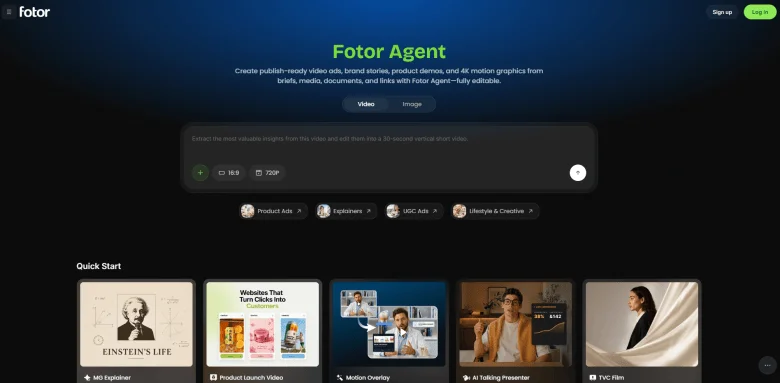
AI video tools can produce striking footage, but commercial teams need more than a convincing first draft. Product details change, subtitles need correction and brand elements must land in the right place. Fotor Agent is built around that production gap: it turns a text brief into a structured video project that users can revise piece by piece.
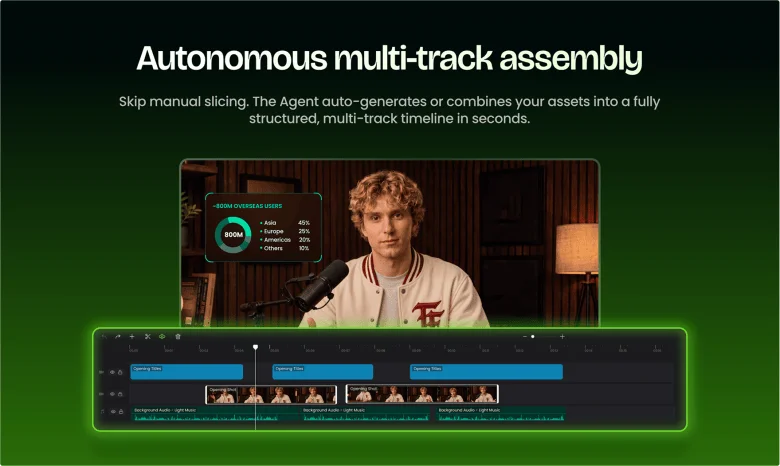
Launched in August, the tool extends Fotor’s photo editing and visual design work into video production. Users describe the video they want, then Fotor Agent helps assemble visual assets, subtitles, audio and animation. A multitrack timeline lets them review and adjust the result without rebuilding the whole video when one detail changes.
From a prompt to a project people can edit
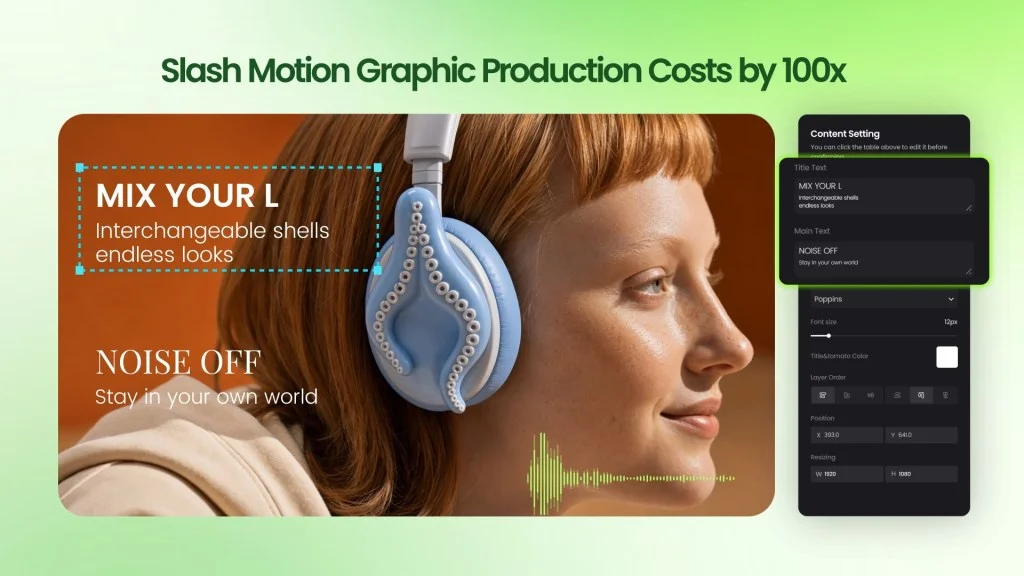
Jackson Zhang, Fotor’s COO, said the system plans content around a user’s creative goals and coordinates asset generation, graphic rendering, subtitles, audio and animation. The result is assembled as a unified project rather than a finished clip with its component parts hidden.
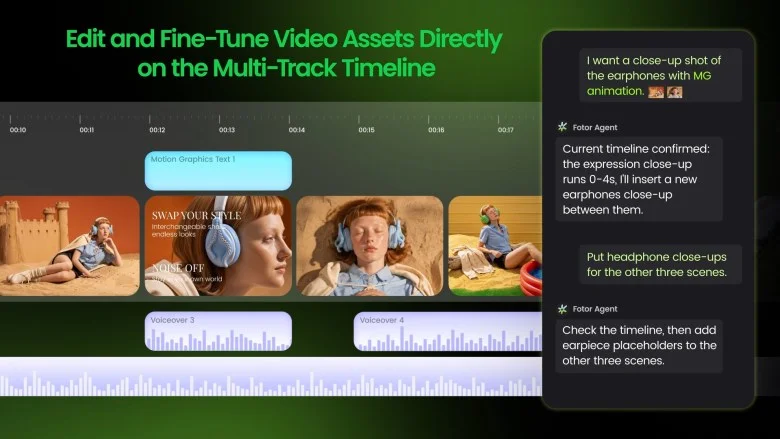
That distinction matters in product explainers and other commercial formats. A useful sequence may need to coordinate shots with text, charts, voiceover and motion graphics; a polished individual shot won’t carry the whole production. Fotor Agent is designed to let users change text, data, logos, visuals and animations independently, then refine their timing on the timeline.
Here’s the thing: editability may prove more valuable to business users than another jump in image quality. If a product specification or campaign detail changes, teams need to correct the relevant section quickly and keep the rest of the video intact. That workflow could make AI generation more practical for repeatable content, provided the edits remain reliable.
Workflow is the product’s central bet
As foundation models improve, platforms built on similar third-party systems may produce visuals of comparable quality. Zhang said Fotor uses those models for most tasks, alongside its own image-processing algorithms and editing tools in selected cases. He sees the harder work in planning a production, creating motion graphics, editing with precision and delivering an effective final result.
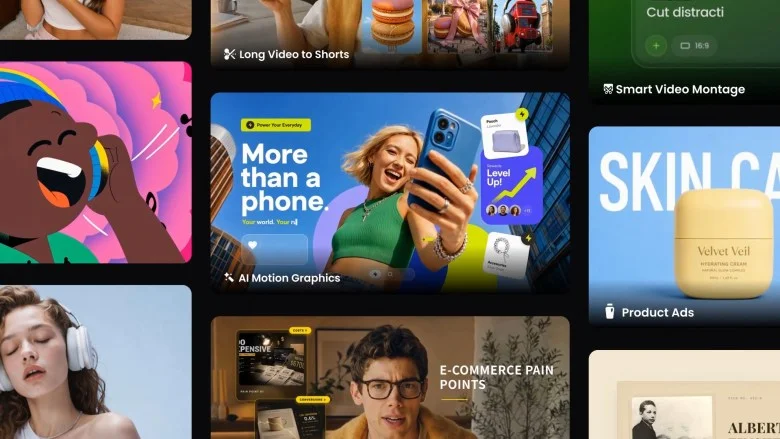
That focus helps explain Fotor Agent’s emphasis on motion graphics and structured projects. Product promotions, educational videos and data visualizations often combine charts, text, animation and brand assets. Users need those elements produced quickly, but they also need control over each one.
The joined-up workflow still faces familiar technical hurdles. Assets made by different models may not look consistent; complex instructions can be misread; and a local change can affect other parts of the video. Fotor’s approach makes those problems visible as editing challenges rather than treating generation as the end of the process.
Early revenue, with adoption still to prove
Fotor Agent is aimed at creators, e-commerce merchants and brand marketing teams, whose tolerance for inaccurate copy or product information is low. Zhang said the product has generated paid revenue since launch, while remaining in an early period of promotion and optimization.
Fotor says it has more than 12 million monthly active users across over 200 countries and regions. Those figures describe the company’s wider platform, though, and don’t establish Fotor Agent’s own growth or retention.
The company reaches international users through SEO, influencer marketing, community activity and paid advertising. It also works directly with creators and brands in local markets. Zhang said localization for video requires attention to visual style, communication preferences and practical production needs, as well as language.
Fotor Agent now has to show that its workflow saves enough time to earn continued use and payment. Early revenue is a sign of demand, but the product’s longer-term test is whether teams return to it for real production work.
Automation with a human editor in the loop
Zhang expects AI Agents to handle more planning, asset organization and production tasks over the next one to two years. That could let small teams make videos that previously called for several specialists. Creative direction still belongs to people: they decide what a video should say and whether the finished cut meets its purpose.
For Fotor, the immediate work is improving editing accuracy and convenience. Commercial videos depend on correct text, data and branding, and the ease of fixing those details after generation will shape how useful the tool is in practice.
The next phase of AI video competition may turn on dependable delivery as much as visual realism. Fotor Agent’s promise is to take on repetitive production work while keeping creators in control of the final cut. Its progress will depend on how reliably that balance holds when real projects need changes.