LEQI’s next test is whether a scooter business can become a durable international mobility brand. The Shenzhen company is pushing beyond two-wheelers into products such as rideable luggage, while adapting its technology and customer support to markets with different travel habits and rules.
Editor’s note: A 2026 QYResearch report ranks LEQI’s Megawheels brand fourth among manufacturers in the global two-wheeled self-balancing scooter market. Megawheels also ranked first in Japan and had 2 million users. Behind those numbers lies LEQI’s ambition to navigate foreign markets and build a lasting global business.
Mobility built into everyday objects
LEQI was founded in 2016 to address short urban journeys: the roughly two-kilometer trips that can be inconvenient by car, slow on foot, or poorly served by transit. Its range now includes electric scooters, self-balancing vehicles, e-bikes, electric motorcycles and riding luggage.

The L3 Smart Electric Suitcase makes that expansion tangible. Listed in the 2026 Red Dot Award: Product Design listings, it combines hand luggage with a rideable platform. A fold-out chassis and handle convert the case into a scooter, and its wide wheels are intended to provide stability for riding or sitting.
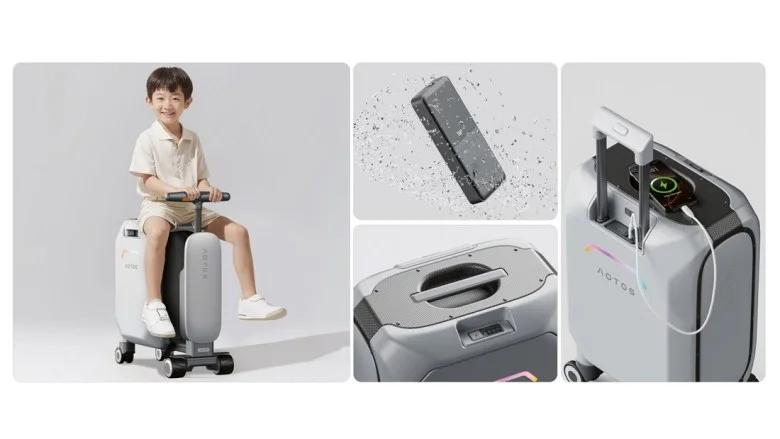
Red Dot’s description also points to a colored LED strip and sensors that let the suitcase follow its owner and avoid obstacles. The concept targets a specific travel frustration: covering long distances inside airports and train stations while managing luggage. Its practical value will depend on how well that mix of transport and baggage works in crowded spaces.
That kind of product asks LEQI to apply mobility engineering in a different setting. A suitcase has to move through terminals and fit the routines of travelers; a commuter scooter must be portable and useful every day. Shared components can help, but each product still needs its own design priorities.
A platform of related engineering
LEQI’s portfolio spans commuting, recreation and sport, from e-bikes and electric riding luggage to high-speed electric motorcycles and dirt bikes. Across those products, the company is developing electric-drive systems, battery management, sensor-based control and connected software.
Some of this work can carry across categories. Battery management and drive systems matter to both scooters and e-bikes; sensors and software can support control and interaction in several types of vehicle. The opportunity is to reuse engineering where it fits without forcing different products into the same template.
That distinction matters as the company broadens its range. Off-road motorcycles must handle demanding terrain, while riding luggage has to suit the constraints of air and rail travel. LEQI’s ability to tailor its core technologies to those demands will shape whether its portfolio feels like a coherent business or simply a collection of products.
Overseas reach and local demands
LEQI began a global branding strategy in 2021, operating Megawheels and LEQI as its own brands. It has sold internationally through Amazon, eBay, its website and business-to-business channels. A separate ranking places LEQI first worldwide in electric scooter shipments in 2025; Megawheels had 2 million users and ranked first in Japan.
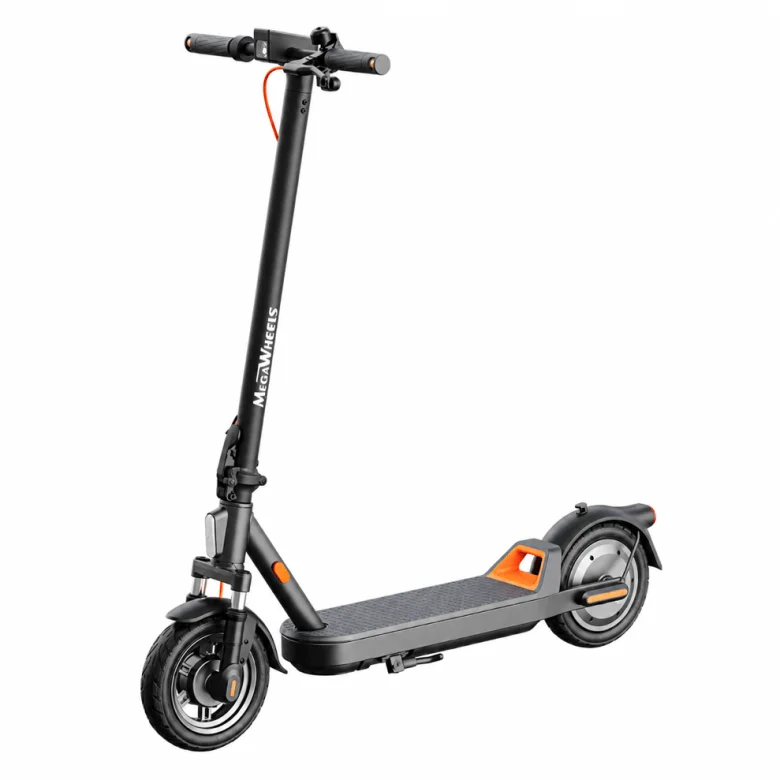
Shipment figures and user counts show reach, but building a lasting presence takes more. Online marketplaces make it easier to find customers without establishing retail networks from scratch. They also make comparisons on price, range and customer reviews immediate. Buyers may favor familiar brands when they’re weighing repair options and replacement parts.
Local rules add product work. Scooter speed limits, road access and approval requirements vary between countries, so models may need market-specific specifications. In a 2023 review, German technology publication heise described the LEQIsmart A11 as one of the few Chinese scooters with Germany’s Allgemeine Betriebserlaubnis, or ABE, road approval.
That example shows the value of meeting a market’s requirements, but compliance is only part of the customer experience. Local expectations, repairs and after-sales support all affect whether a purchase leads to trust and repeat business.
Funding for the next phase
In March 2026, LEQI completed a Series B funding round backed by Xiaomi Group and Shunwei Capital. The company plans to direct the funding toward higher-power-density electric-drive systems, AI-based real-time decision-making and adaptive control, and next-generation interaction systems.
Its plans also include faster overseas expansion and stronger global supply-chain and distribution networks. Those priorities point to the work that follows product launches: building the systems to manufacture, deliver and support new devices across markets.
LEQI’s reach across scooters, motorcycles and rideable luggage reflects a broader opening for hardware makers: familiar mobility technology can find new uses in daily routines. The harder question is whether those products can remain practical after the novelty fades. Local fit, reliable performance and service will determine how much of the company’s product experimentation turns into lasting use.