A bedroom boundary for the phone you keep reaching for
Brick’s pitch is simple: make the bedroom a place where your phone stops offering its usual distractions. The company’s new Brick Night activates app blocks when you enter a defined space, aiming to curb late-night scrolling and support better sleep. That automatic trigger is the interesting part. A tool that depends on remembering to lock down your phone can fail at exactly the moment you’re tired and least inclined to do it. Brick Night is the company’s first new product since its original Brick, which CNET’s author calls a favorite for limiting doomscrolling. The device arrives as 87% of US adults reportedly sleep with their phones in their bedrooms. Research has associated screen use in bed with poorer sleep quality, though that association alone doesn’t show how much a device like this can improve anyone’s sleep.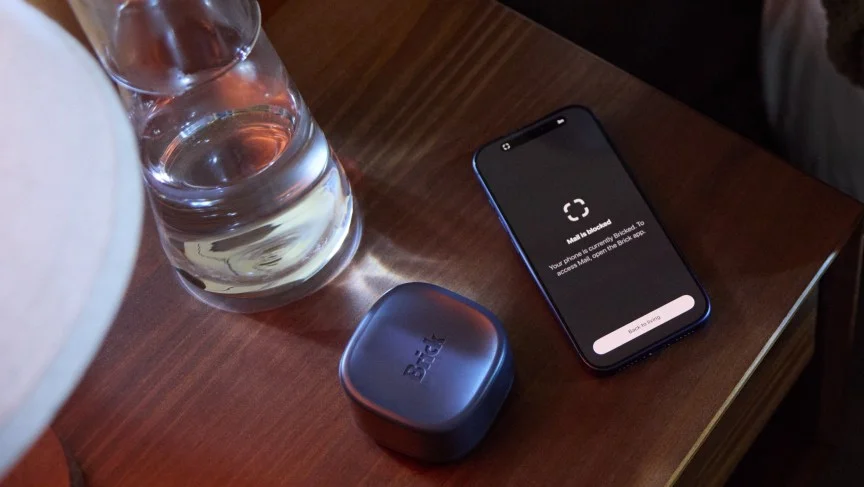
How the bedroom trigger works
In the Brick app, you choose which apps to block and set the hours when those blocks should apply. You then map a space of up to 25 by 25 feet and place Brick Night inside it, perhaps on a nightstand. The device uses Bluetooth signal strength, through the app, to estimate the phone’s proximity. During the chosen hours, entering the space activates the blocks; leaving it can lift them, depending on your settings.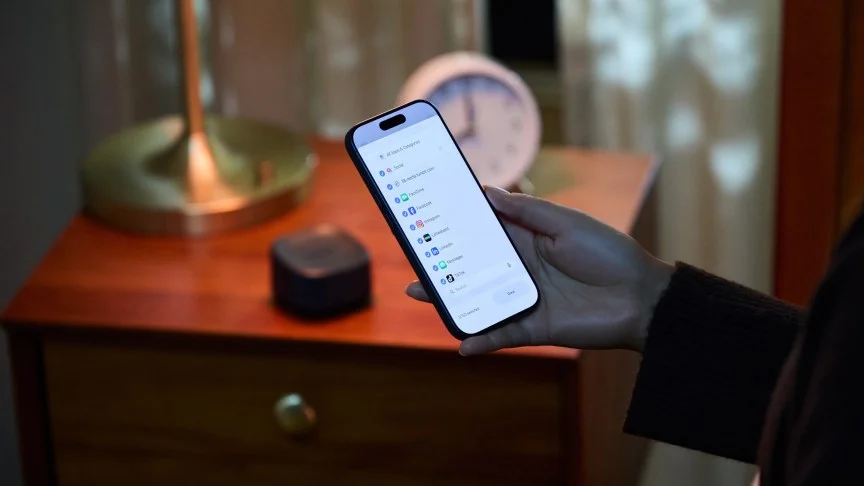
A different kind of Brick
The original Brick blocks apps according to schedules you set for specific days and times. To restore access, you have to tap your phone against the Brick itself. Brick Night replaces that manual step with a location-based rule: it switches blocks on when you enter the bedroom, or another configured space, and off when you leave. That change matters if the friction of unlocking is what helps you stick to a limit. But Brick Night’s promise depends on its proximity estimate and your chosen schedule doing what you expect. If you’re considering it for bedtime, the key question is whether an automatic boundary fits your routine better than a block you control directly. The original Brick is described in [CNET’s review](https://www.cnet.com/tech/mobile/this-60-brick-changed-how-i-use-my-iphone/). See [Brick Night](https://getbrick.com/products/brick-night) and the cited [sleep research](https://sleepeducation.org/screen-time-and-sleep-what-new-studies-reveal/).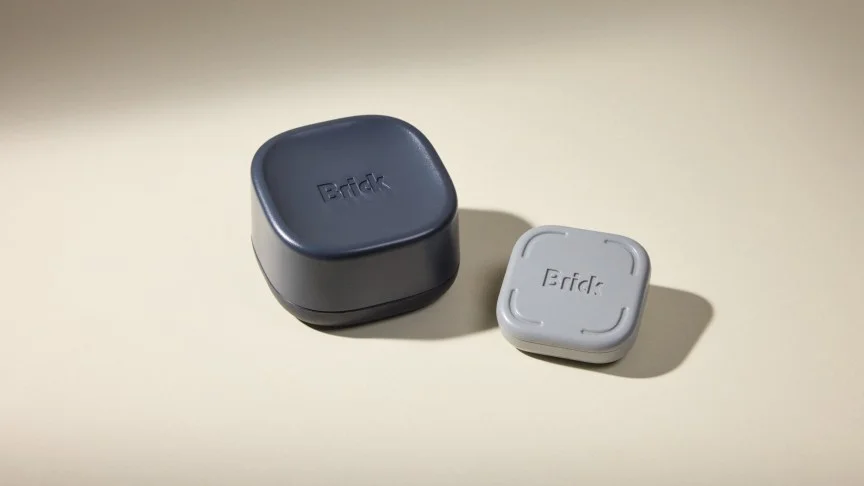
Choosing between Brick and Brick Night
The main difference is price: the standard Brick costs $59, compared with $129 for Brick Night. Buying the pair together costs $169, a $19 saving over purchasing each separately.
Brick’s maker positions the original for work, studying, time with family and mindfulness. Brick Night is aimed more squarely at sleep routines: winding down, waking up and keeping phones out of reach with a no-scroll zone. That distinction gives the higher-priced model a clearer bedtime focus, though the information here doesn’t explain what justifies the $70 gap beyond that intended use.
Availability and price
Brick Night is available in midnight blue for $129, exclusively through the Brick website. If you’re deciding between the two, the choice comes down to whether you want a general focus aid or a device specifically presented for the bedroom.