A $25 billion verdict puts Meta’s privacy record back in focus
The striking part of Meta’s $25 billion New Mexico penalty is the scale. A judge ordered the company to pay after a jury found that Facebook misled users about its data privacy practices, resulting in nearly 44 million violations of the state’s Unfair Practices Act. The ruling is among the largest penalties ever imposed on a technology company.
The case reaches back to Cambridge Analytica, the British consulting firm that obtained Facebook user data while working with Donald Trump’s 2016 presidential campaign. That data purchase has been credited with helping sway the election. Meta had already paid users $725 million to settle a related lawsuit; this judgment adds a far larger state penalty to the company’s record. The court ordered Meta to pay, and New Mexico’s attorney general said the jury found nearly 44 million statutory violations.
Meta may appeal. Its effort to cap the penalties at $3.45 billion failed, though the final amount could have been higher: some estimates put the potential bill at $219 billion. A Meta representative didn’t immediately respond to a request for comment.
“A New Mexico jury found nearly 44 million violations of our consumer protection statute, and this penalty order demonstrates that those violations carry real consequences,” Attorney General Raúl Torrez said. “Today’s result makes clear that no corporation is too powerful to be held accountable.”
In a historic ruling on Wednesday, a New Mexico judge ordered Meta to pay a $25 billion penalty for misleading users about its data privacy practices. Samuel Boivin/NurPhoto via Getty Images
The penalties keep coming; the behavior remains under scrutiny
This verdict lands amid a string of expensive cases. Two months earlier, Meta settled with multiple US states for up to $18 billion over claims that it deliberately designed social platforms to be addictive and harmful to children and teens. In New Mexico, the company was also ordered to pay $375 million in March and another $567 million in August over failures to warn the public about risks to children on services including Instagram. The states’ settlement and the August order add to the financial pressure.
And yet the payouts haven’t made one of the world’s biggest technology companies retreat from the public fight over its products. Meta faces recurring privacy criticism, including questions about its Muse agentic AI platform and its Meta Glasses hardware. This week, it suspended a Muse conversation sharing feature after reports raised concerns and researchers found that generated links could be opened by unintended recipients.
Smart glasses have brought another round of scrutiny. Critics have questioned whether Meta will add facial recognition to the devices; the company has also faced repeated privacy backlash over the issue. In September, reports said Meta was developing camera-free models. That may acknowledge some of the concern, but those models would sit alongside versions that still have cameras. The verdict is enormous. Whether it changes Meta’s product choices is a separate, still-open question.
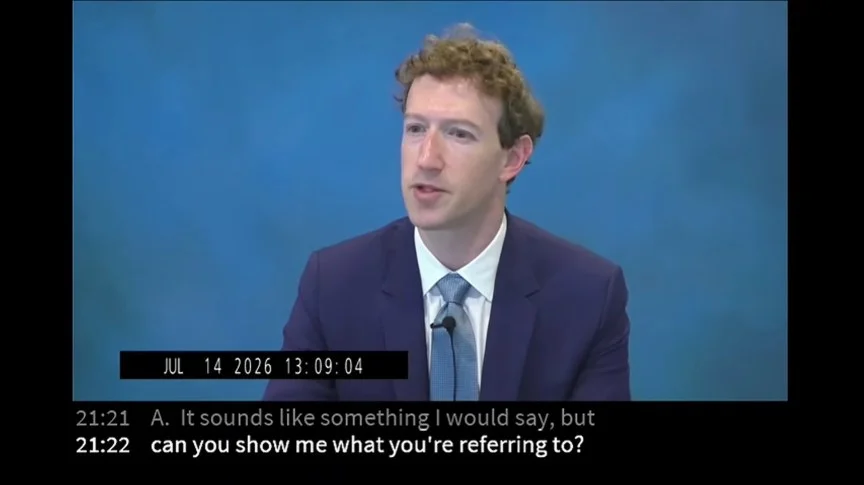
Meta founder and CEO Mark Zuckerberg testifies in July for a New Mexico data privacy case. New Mexico Attorney General's Office