Beyond the Speed: What It’s Like to Live With the Onyx RCR 80V
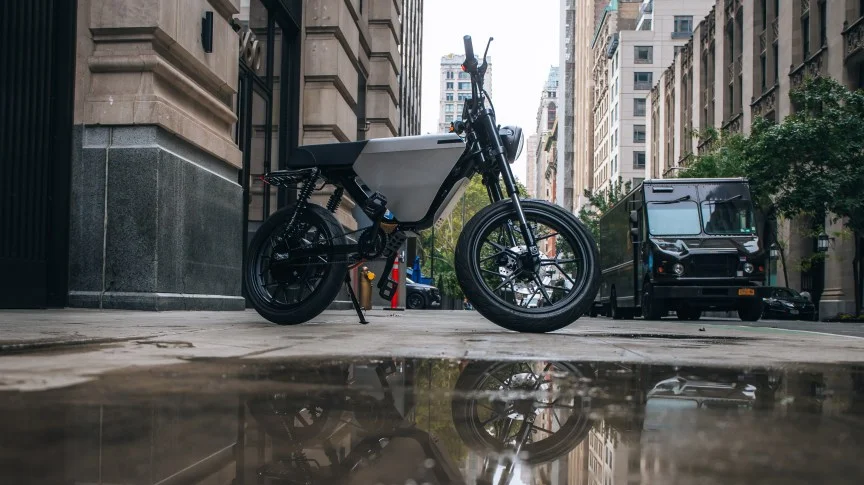
The Onyx RCR 80V can reach motorcycle speeds, but speed alone doesn’t tell you much about owning one. After hundreds of miles riding around New York, I came away more interested in its compact handling, electronics and the practical questions that follow a machine this unusual.
The acceleration is hard to miss. So are features such as Apple CarPlay and cruise control, along with small design choices that reveal themselves over time. The bigger test is less immediate: how easy is the RCR to repair, will replacement parts remain available, and what happens when its technology ages? A few hundred miles can’t settle those questions.
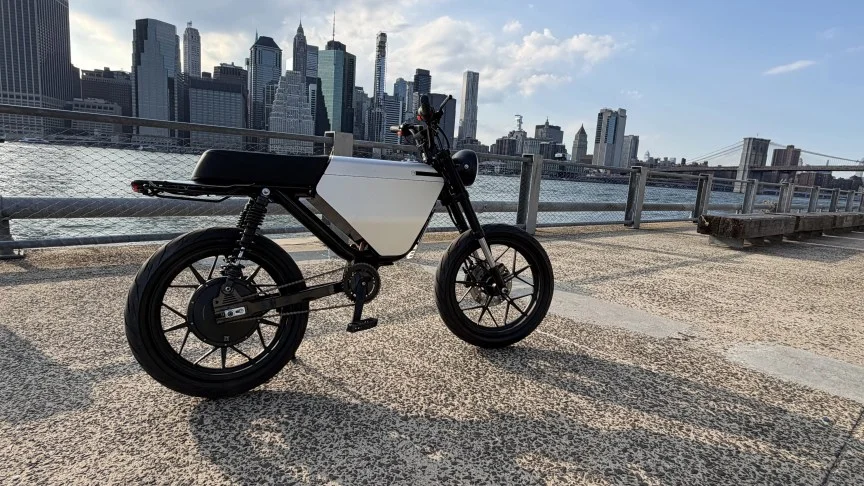
At $4,699, the RCR sits at the intersection of electric motorbike and compact e-bike. My read is that Onyx is aiming for BMX-like maneuverability, contemporary electronics and enough customization to let owners make the bike their own and keep it running. Riding it and speaking with founder Tim Seward offered a look at that thinking. Whether it translates into years of dependable ownership is still unclear.
Onyx RCR 80V specifications
The figures below are manufacturer claims, not independent performance measurements. Prices are current as of Oct. 14.
| Specification | Onyx RCR 80V |
|---|---|
| Starting price | $4,699 for Street; $4,899 for Dual Sport |
| Motor | Rear hub, advertised at 8kW nominal |
| Battery | Removable 80V, 45Ah / 3.6kWh |
| Claimed top speed | 65–75 mph, depending on configuration; advertised for off-road use |
| Claimed maximum range | 140 miles; the current table ties this to Cruise Tune Eco at 15 mph |
| Claimed acceleration | 0–30 mph in 1.7 seconds |
| Ride modes tested | Eco, Normal, Sport and Hyper |
| Wheels | 17-inch tubeless |
| Brakes | Hydraulic discs with 220mm rotors |
| Display | TFT touchscreen |
| Phone integration | Apple CarPlay / Android Auto |
| Other features | Reverse, cruise control, regenerative braking, turn signals and alarm/key fob |
| Advertised ready-to-ride weight | Approximately 155 pounds |
Sources: Onyx model and pricing overview, RCR product page, RCR feature page and Onyx’s brake and wheel description.
 Joseph Maldonado
Two versions, and a delivery that demands planning
The Street and Dual Sport use the same advertised motor and battery. The choice comes down largely to tires and fenders: Street gets 4-inch road tires, with fenders optional; Dual Sport has wider 4.5-inch tires with more aggressive tread and includes fenders. Onyx’s model comparison lays out the differences.
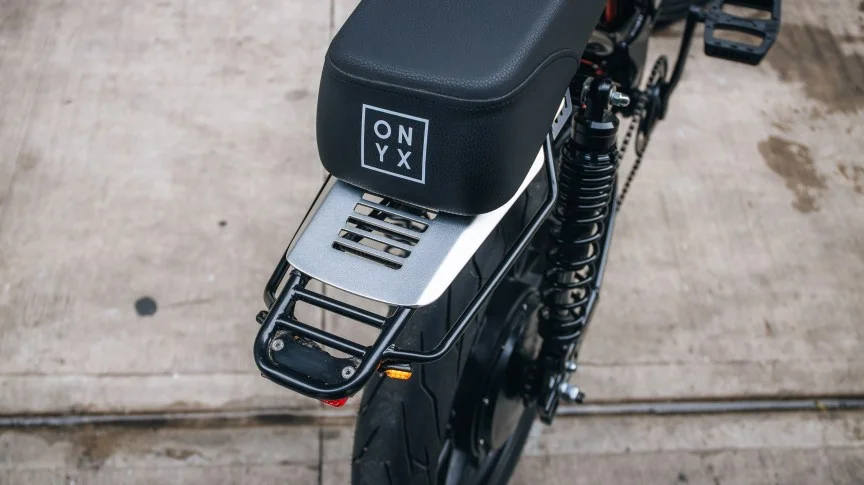
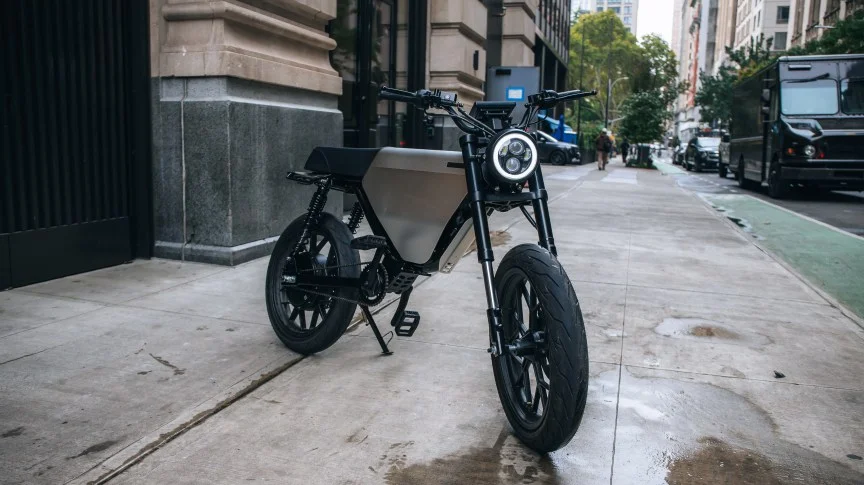
The less glamorous part is getting the RCR into your life. It arrives as freight and needs final assembly, and at roughly 155 pounds ready to ride, it’s a two-person unpacking job in my view. Think about where you’ll store it before placing an order. I live up three flights of stairs; that shapes my daily experience more than a few extra miles per hour ever could.
It has pedals, technically. At a price approaching $5,000, I suspect most buyers have other plans for them.
 Joseph Maldonado
Compact proportions, useful power
I’m six feet tall, weigh about 260 pounds and usually ride with a backpack. The RCR carries me without drama. Most of my trips have been at 15 to 35 mph, often in Normal mode, and I rarely want more speed. What matters is having power left for hills and quick acceleration instead of feeling like the bike is straining under a heavier rider.
That’s a more persuasive case for the motor than a headline top-speed number. Seward made a similar point about developing the RCR around San Francisco, where steep streets put usable power to work every day.
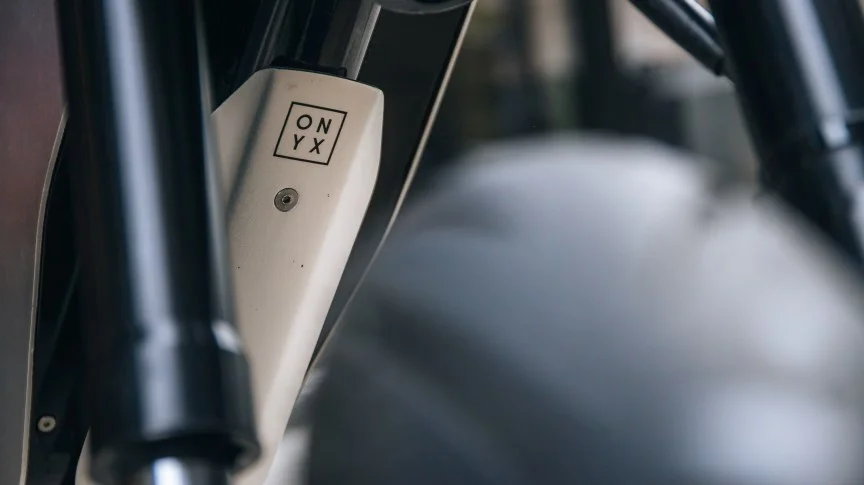
The bike’s character also reflects its founder’s background. Timothy Kevin Seward, an industrial designer whose portfolio includes work for Sonos and Bird, started Onyx to blend classic motorbike styling with electric propulsion. His portfolio gives a sense of that design history.
Seward has described the RCR as combining motorcycle performance with BMX-like maneuverability. I raced BMX growing up, and I recognize the influence in how easily the compact frame moves beneath me and threads through tight spaces. The weight is a sharp reminder that this is no BMX bike, though.
“It’s like a blank canvas that you can customize… It’s not a BMX at all, but it definitely has some influence from when I was a kid,” Seward says.
 Joseph Maldonado
Ride modes are really about throttle response
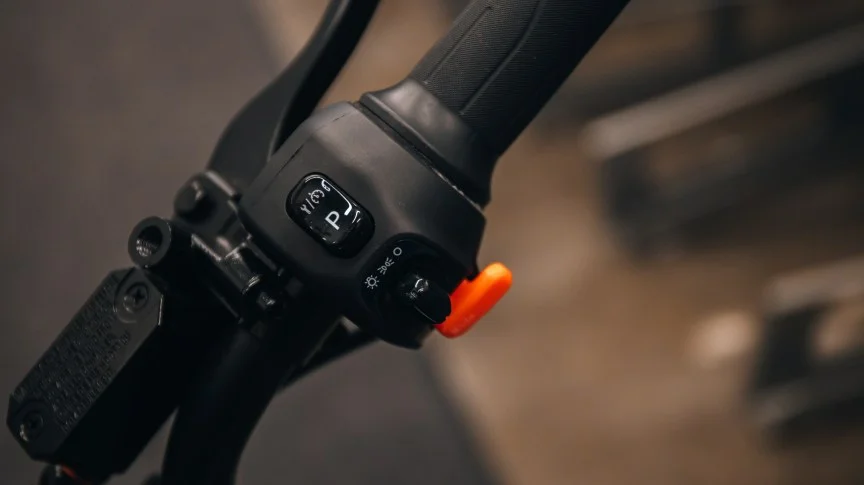
The same power can feel friendly or abrupt depending on how the bike delivers it. Eco and Normal have been smoother on my test bike; Sport and Hyper react more sharply to wrist input. That change in response matters as much as the modes’ speed limits, because it affects how precise I need to be with the throttle.
I like the flexibility. Normal suits an unhurried ride, while the quicker modes give me an immediate response when I want it. A softer setting helps, but it doesn’t make throttle discipline optional.
These notes describe the software installed on my test bike. They don’t compare Onyx’s newer Cruise and Thrill tunes.
My range notes are useful, but they aren’t a range test
I haven’t run the battery down under controlled conditions, so I can’t offer a verified full-charge distance. What I can say is that several hundred miles of riding haven’t left me anxious about getting home.
On a trip from around 151st Street in Harlem to East 26th Street, the display fell by about nine percentage points over roughly nine miles, including a route through Central Park. Longer rides around Queens and Brooklyn have ended with about 60% to 70% charge showing. My much lighter teenage son rode the bike on one of those outings; I recall a 17% drop, but that wasn’t a controlled comparison with my own riding.
The quiet motor stands out. There’s no high-pitched whine or wheeze, and power arrives smoothly from a stop through higher speeds. The battery readings also show how much route choice can matter: on a later Harlem-to-East 26th Street commute, a different route used 6% rather than the 9% I’d seen on the earlier trip. Distance alone doesn’t tell the whole story. Terrain, elevation, traffic, speed and riding conditions all affect consumption.
 Joseph Maldonado
Those percentages are what the display showed, not proof that each point represents a mile or that the bike can cover 100 miles. I didn’t record every distance under consistent conditions or complete a full discharge, so either claim would be guesswork. Rider weight, speed, acceleration and terrain all play a part. My narrower conclusion: the battery has been more than enough for the rides I’ve taken. If you plan to spend much of your time at high speed, expect different results.
Onyx recommends checking battery voltage for a better sense of remaining charge and range. That guidance reinforces why I treat the display percentages as observations, not precise measurements. Onyx’s battery guide explains its advice.
 Joseph Maldonado
Comfortable over rough pavement; less so over time
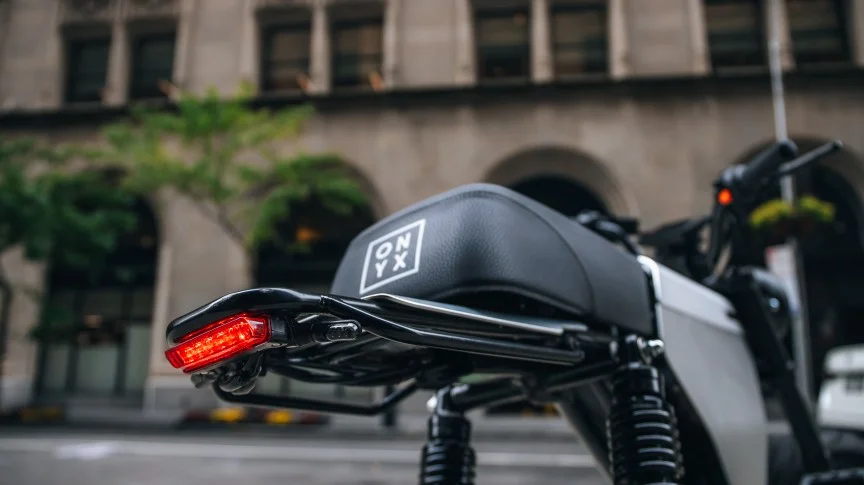
The RCR fits me better than I expected, and its suspension takes the sting out of New York potholes and broken pavement. The seat is well padded for shorter trips. Around the 90-minute mark, I start shifting around to get comfortable. Suspension can soften the road; it can’t stop a long ride from wearing on you. My size may be part of that equation.
The brakes have stayed reassuring over a few hundred miles. Lever travel feels much as it did when I started, and stopping power hasn’t seemed to fade. That’s a riding impression, not a measured stopping-distance or brake-wear result.
Reverse and cruise control earn their keep
Cruise control seemed like a small extra until I tried it on hills. The RCR has held its chosen speed on the inclines I’ve ridden, even with my weight aboard. That says more about usable power than a top-speed figure does.
Powered reverse was another welcome discovery. A bike this heavy benefits from being able to back itself out of a tight spot. Onyx describes both functions in its advanced controls guide.
 Joseph Maldonado
CarPlay is handy, until the bike’s own data gets buried
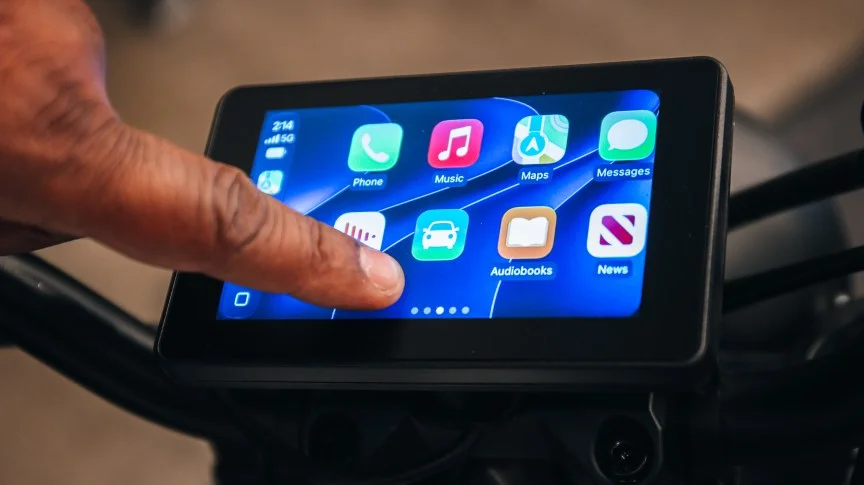
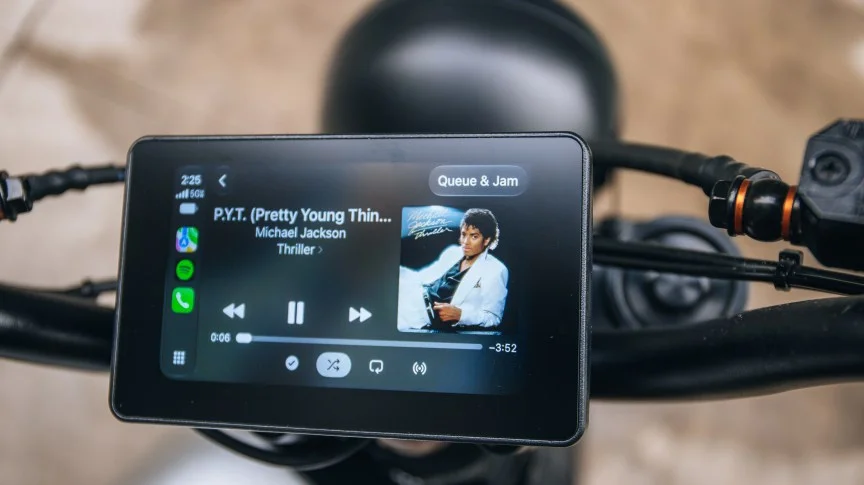
I didn’t expect CarPlay to become one of my favorite features. Navigation and audio controls on the built-in screen let me keep my phone tucked away. The tradeoff is that I want speed and battery status to stay visible, especially while taking a call, and the test bike doesn’t surface that information as clearly as I’d like.
Onyx told me a software update is intended to address the display. Navigation has its own limitation: CarPlay supplies driving directions, and I’d like the option to choose a route better suited to the vehicle.
“Having Android Auto and CarPlay in the bike makes me want to ride more … Part of the new update will show stats like battery level and mode on the side while using it,” says Seward, Onyx’s chief design officer.
 Joseph Maldonado
Good lights, subtle signals, and a need for fenders
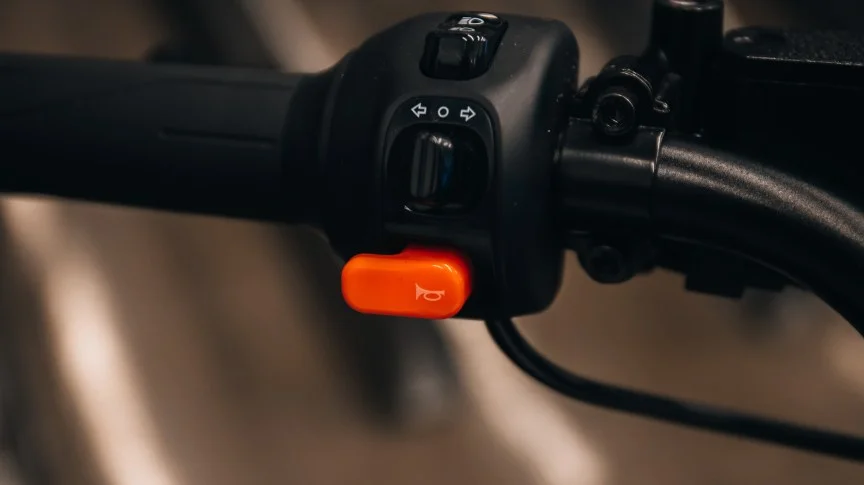
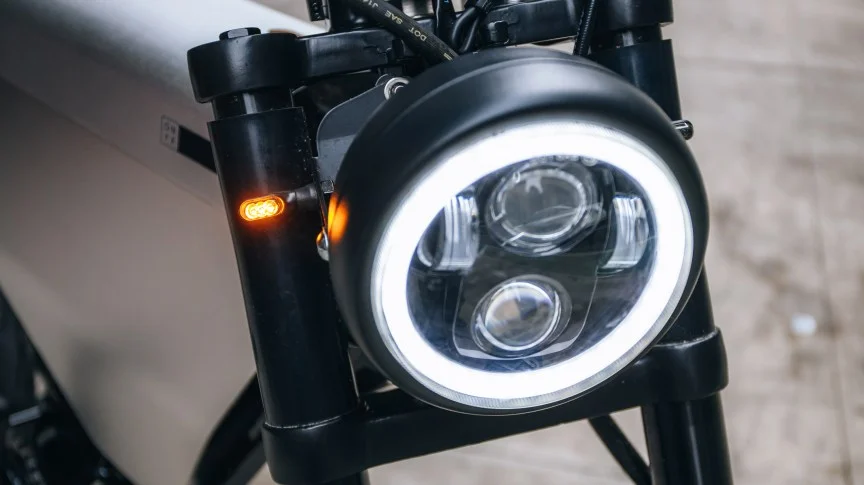
The turn signals sit close to the frame, which keeps them from sticking out where they could snag. In bright sunlight, though, their compact shape may make them harder to see. They also stay on until you cancel them yourself. The dash indicator helps, but I’d rather not discover I’ve signaled a left turn for the last 20 blocks. A Bluetooth connection indicator is a small but useful touch.
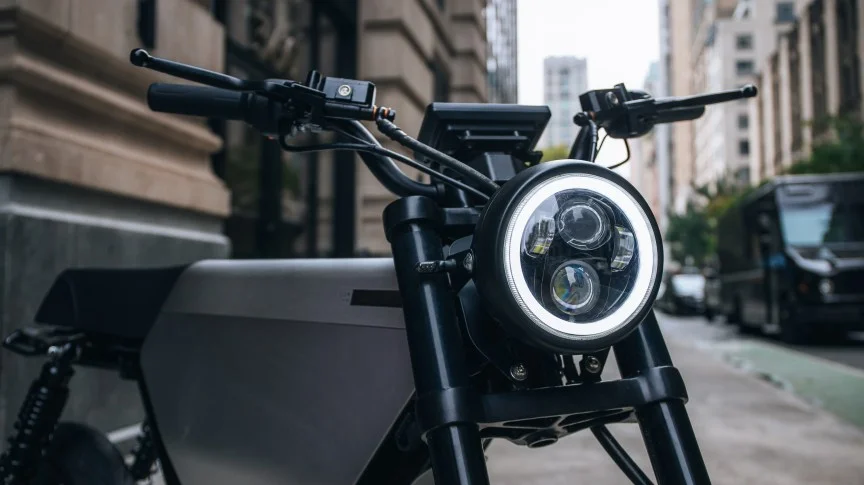
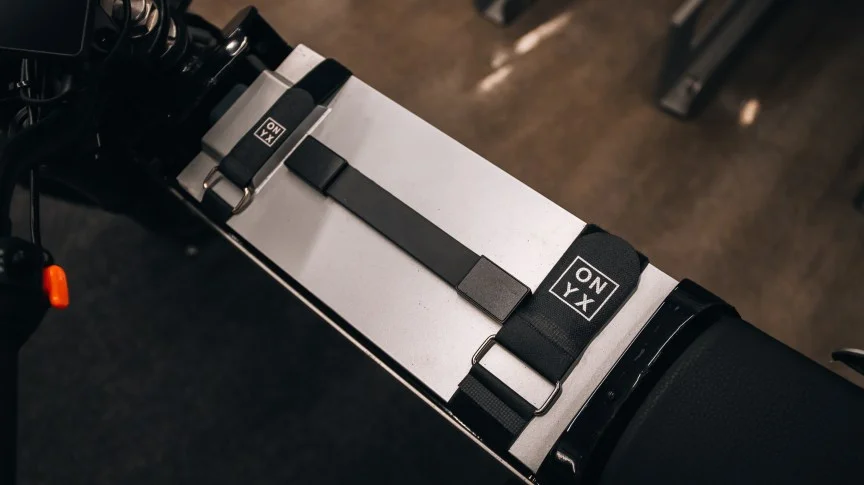
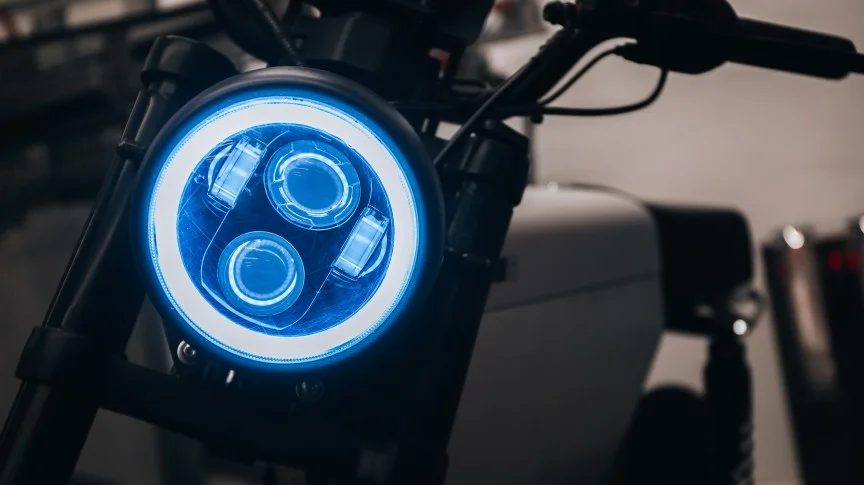
The headlight has served me well after dark. Its halo running light gives the RCR a distinctive face, and the main beam and high beam have covered my nighttime rides.
 Joseph Maldonado
I’ve ridden on wet pavement and in rain without noticing handling trouble, but that’s limited experience, not a thorough wet-weather assessment. Spray is the more obvious problem: my bike lacks the optional fenders, and city street water has a way of reaching everything. Fenders are near the top of my list before I do much more riding in the rain.
Tubeless tires make a roadside flat less involved
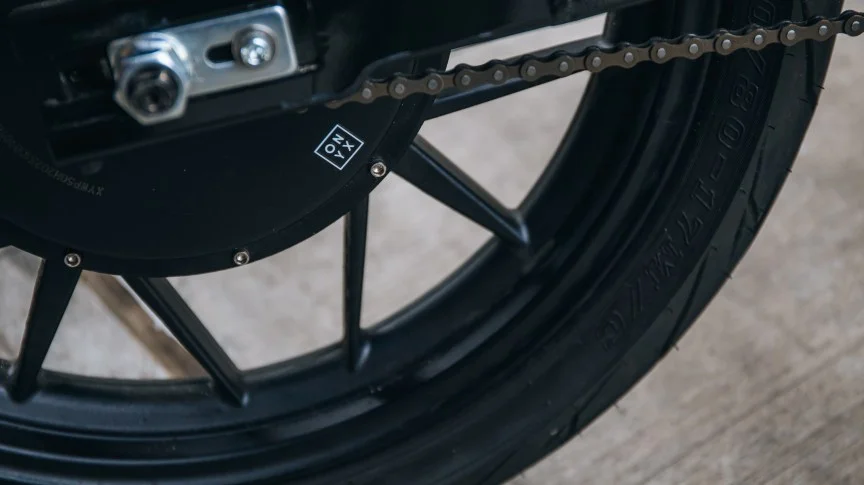
A tubeless setup matters on a motorized bike because removing the rear wheel to replace an inner tube can turn a flat into a substantial repair. Tubeless tires can still puncture, and I wouldn’t treat every roadside plug as a lasting fix for motorcycle speeds. But a plug can get you moving without immediately pulling the wheel.
“These are basically motorcycle wheels and tires, so if you get a nail, you can patch or plug it without taking the wheel off and replacing the whole tube,” Seward says.
 Joseph Kaminski
The fob is easy to forget; phone access remains a possibility
I store the RCR at my partner’s apartment because it has an elevator. I occasionally leave without the key fob, which is fine until I arrive and need it. The experience has made phone or NFC access sound appealing.
Seward said Onyx is working on app-based diagnostics, firmware updates and service support, and we discussed the possibility of phone access. I’d welcome that, along with tracking or movement alerts. For now, I keep an AirTag hidden on the bike. The rear wheel’s locking behavior also gives me some reassurance when it’s secured, though it doesn’t replace a physical lock.
Onyx links to a Superpower BMS app for battery monitoring on its RCR product page. That’s distinct from the wider app and unlocking functions we discussed; I haven’t confirmed those proposed features are available.
 Joseph Maldonado
The RCR’s pedals don’t answer the legal question
The RCR feels closest to a small electric motorcycle. That’s a useful way to think about the ride, but it doesn’t tell you whether this particular model can be registered for public roads. Insurance is available; registration eligibility is a separate matter.
New York defines electric-assist bicycles with a motor under 750 watts and limits on assisted speed. The RCR’s advertised power and performance are above those thresholds. Pedals and a low-speed mode don’t automatically make it a legal e-bike. Check New York DMV’s definitions before treating it as one.
I haven’t confirmed whether this exact configuration qualifies for New York registration. Buyers should settle that directly with the DMV and Onyx before planning a street commute. Don’t count on access to bike lanes or pedestrian routes.
 Joseph Maldonado
Why Tim Seward wants Onyx bikes to last
The idea behind Onyx makes more sense after hearing what founder Tim Seward wanted to leave behind. He had designed consumer electronics for Sonos, HP and Samsung, and disliked seeing products discarded soon after they hit the market. Customizing old gas mopeds offered another model: vehicles that could pass through many owners and keep going for decades.
These excerpts are edited for length and clarity from the interview transcript. Questions have been shortened, and the conversation is arranged by topic. Any future features mentioned are plans Seward described, not confirmation that they’re available now.
 Joseph Maldonado
CNET: What might riders not know about your background or the bike?
Seward: Before Onyx, I designed consumer electronics: products for Sonos, HP, Samsung and others that you’d find at Best Buy. I enjoyed the work, but not watching people throw those products away.
Then I started customizing gas mopeds that were 30 to 50 years old. By the time one reached me, it might have had all kinds of owners. I wanted to build things with that kind of staying power—products that would still be around even if Onyx weren’t. I didn’t want to keep making landfill.
 Joseph Maldonado
What battery health should an owner expect after five years?
Seward: We’re confident that our extra battery health protections will limit degradation to 10% over 10 years. At five years, you shouldn’t notice much change in performance, if any.
That’s a confident forecast, but Seward didn’t specify the testing, charging patterns or riding conditions behind it. I’d treat it as a claim to track over time, not a promised result or warranty.
Will owners be able to find parts years after a model is discontinued?
Seward: We try to keep hard-to-find parts available, even for products discontinued five or six years ago. The RCR 80V also shares many parts with aftermarket upgrades, which can help owners modify and maintain it for decades.
For an expensive electric vehicle, long-term repair options matter as much as the ride. Compatibility with aftermarket parts is encouraging, but it can’t guarantee that every component will remain on sale.
 Joseph Maldonado
What distinguishes Onyx from other electric motorcycle companies?
Seward: We’re building a global community of riders who support one another, along with the bike.
I saw that community at work before speaking with Onyx. I met John Angel while testing another bike, and he urged me to try the RCR. Another rider had already shared his experience and helped spark my interest.
That kind of network earns its keep when owners help each other understand a feature, solve a problem or choose a modification. Onyx also brings riders together in person through Onyx Week. Events in Los Angeles and New York have included organized rides, conversations with the Onyx team and time for owners and enthusiasts to trade ideas.
 Joseph Maldonado
What matters after the test ride
The RCR has more power than I need most days, but it handled my outings without leaving me worried about the battery. CarPlay and cruise control proved more useful than I expected. Longer rides exposed a less comfortable seat, and the display ought to keep showing speed and battery level during calls.
Seward’s comments put those strengths and shortcomings in context. He said customer feedback shaped the 80V, and his frustration with disposable electronics informs Onyx’s ambition to build bikes owners can keep.
 Joseph Maldonado
That promise is appealing, but design intent only gets you so far. Owners will need parts, repair information and service years from now. Onyx says it doesn’t repair, refurbish or rebalance batteries, which leaves a real question about long-term battery support. Here’s the company’s battery support policy.
The RCR is compelling because of the way it rides and the thinking behind it. Whether Onyx can sustain that appeal depends on how well it listens to owners and supports older bikes. Would I recommend one? Heck yeah!