Apple’s first foldable makes its strongest case through small design choices that make two screens feel like one device. That matters with a $1,999 starting price. After a little over a week with the iPhone Duo, I found its mix of practical camera tools and screen-aware software more persuasive than the novelty of a folding phone alone.
If you’ve secured one after the preorder scramble, you can switch between a 5.4-inch cover display for quick messages and notifications and a 7.6-inch inner screen for video, multitasking or social feeds. That phone-and-tablet flexibility is familiar from the Samsung Galaxy Z Fold 8 and Xiaomi 18 Fold, but the Duo adds a matte inner display that cuts glare and makes the crease less obvious. The screens also work together in ways that give the device a more considered feel.
Here’s the thing: a foldable has to earn its extra bulk and cost in everyday use. These four features are a good place to start. I’ve spent just over a week testing the phone in my iPhone Duo review, and the camera options show how the second screen can be useful beyond watching video. If you’re still shopping, carrier offers and trade-in deals may cut the price or help you get one before January.
Use Duo Preview and Smart Take for photos
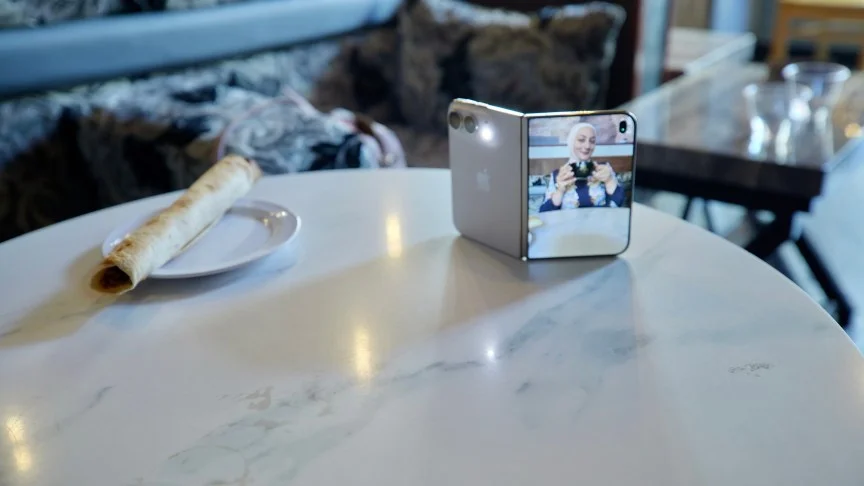
The Duo’s two displays change the mechanics of taking a picture. Its 48-megapixel rear cameras can produce better shots than the 12-megapixel selfie camera on the cover screen, and Duo Preview lets you see the composition while using those rear cameras.
Open the phone and launch Camera. In landscape orientation, tap the small Duo icon in the upper left, choose Duo Preview, then use the cover screen to check the framing and poses. It works whether you’re taking a rear-camera selfie or letting someone else photograph you.
Smart Take is aimed at group photos when nobody’s available to hold the phone. Half-fold the Duo, set it on a level surface and point it toward the group. Its AI watches for everyone to enter the frame and appear ready, then takes a picture; when people change poses, it can recognize the new scene and capture another. Duo Preview can help you check the setup on the cover display.
To switch it on, open Camera with the phone open or closed, tap the six-dot photo-options control, and select Smart Take. Tap the yellow-circled button beside the shutter to begin. The phone will take photos for about two minutes or until it has captured roughly 20 images, which you can review later in Photos.
There’s also Kid Cue for photographing children. With the phone unfolded, it plays a Snoopy animation on the cover screen to draw a child’s attention toward the camera. Enable it in Camera by tapping the Duo icon at the upper left and selecting Kid Cue.
StandBy mode gets more handy
StandBy works without a charger
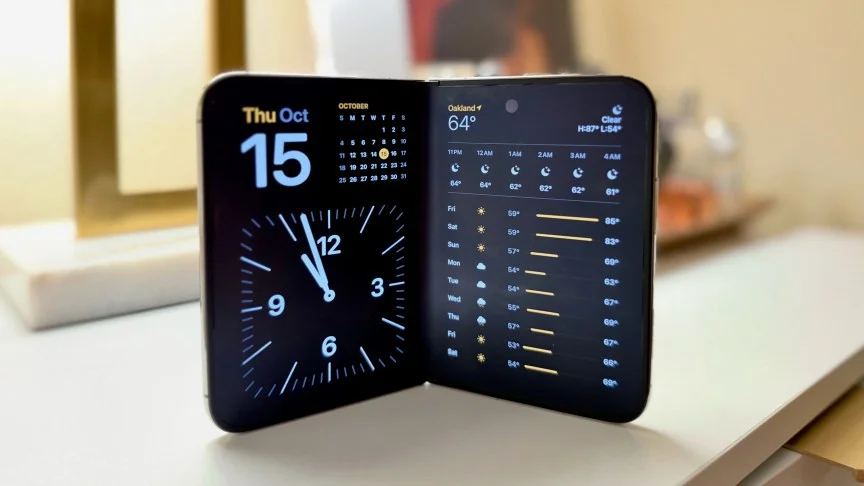
The iPhone Duo makes Apple’s StandBy feature more useful as a quick-glance display. Introduced in 2023, StandBy puts widgets such as the clock, calendar and weather on screen. The Duo’s twist is that it doesn’t need to be plugged in.
Lock the phone and set it down either upright or partly open in tent mode. StandBy can show your widgets alongside Live Activities, so a delivery update, score or rideshare arrival is visible without picking up the phone. Check Settings, then StandBy, to make sure the feature is switched on.
Fold it to fit the show
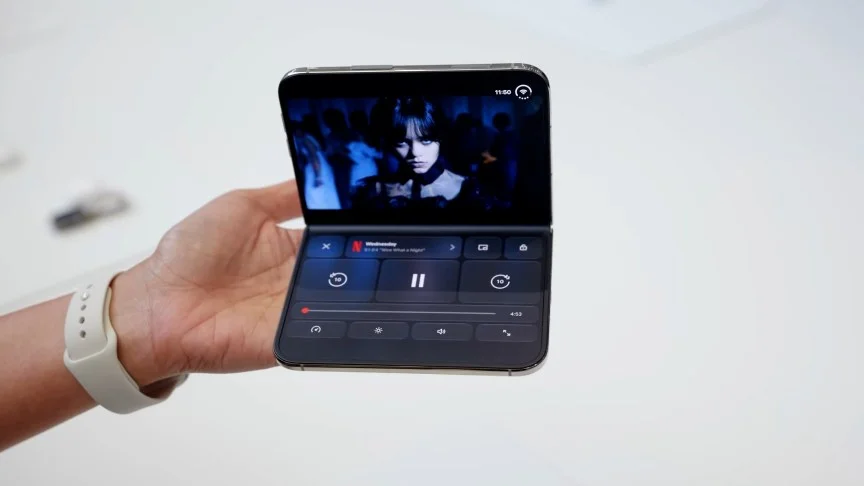
This is where the Duo’s folding design earns its keep: video can adapt to how you’ve set the phone down. Open it up and the 7.6-inch inner display gives shows room to breathe, with only narrow black bars above and below the picture.
Half-fold the phone and it becomes a small tabletop screen. In Netflix and Apple TV, playback stays on the upper half while the lower half holds controls for pausing, skipping, rewinding and captions. Netflix adds a subtle visual flourish, reflecting what’s on the upper display near the controls. It’s a neat touch, though the practical win is having playback controls without covering the show. The same general setup works with Apple TV.
Tent mode uses the 5.4-inch cover screen for video. I find it handy while tidying around the apartment: the screen is easy to glance at, and the phone can stand on its own. It’s smaller than the main display, of course, but still comfortable for most viewing. Nobody would mistake it for a cinema screen; that’s not the point.
Keep useful app pairs together
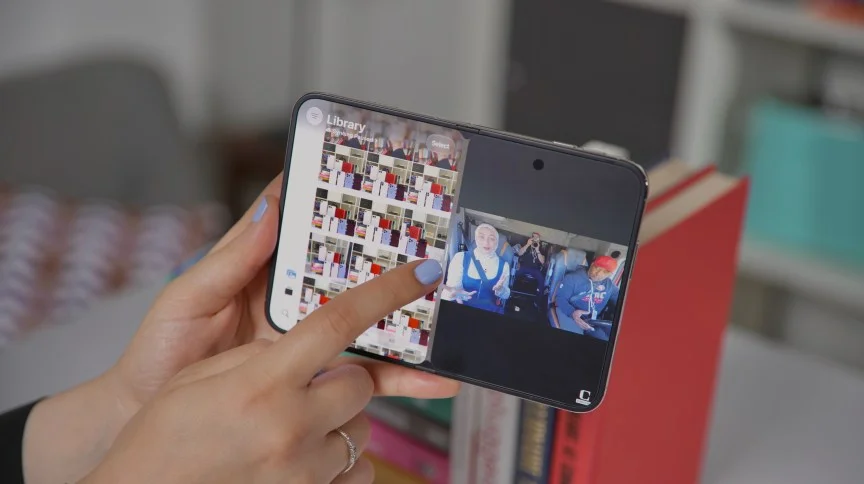
The Duo runs two apps side by side in landscape orientation. That’s enough to watch YouTube while messaging, and I prefer the breathing room to the three-app layouts some foldables offer, which can feel cramped.
The more useful detail is that iOS 27 lets you save a pair. Once you’ve placed two apps side by side, tap the divider between them. The combination is then available as a paired window in the App Switcher, ready to reopen if you’ve swiped away. It’s a small shortcut, but one that makes repeat tasks easier—and gives the Duo’s large screen a more practical role than simply stretching out a single app.


