Apple’s iPod Turns 25: The Song Catalog That Rode With You
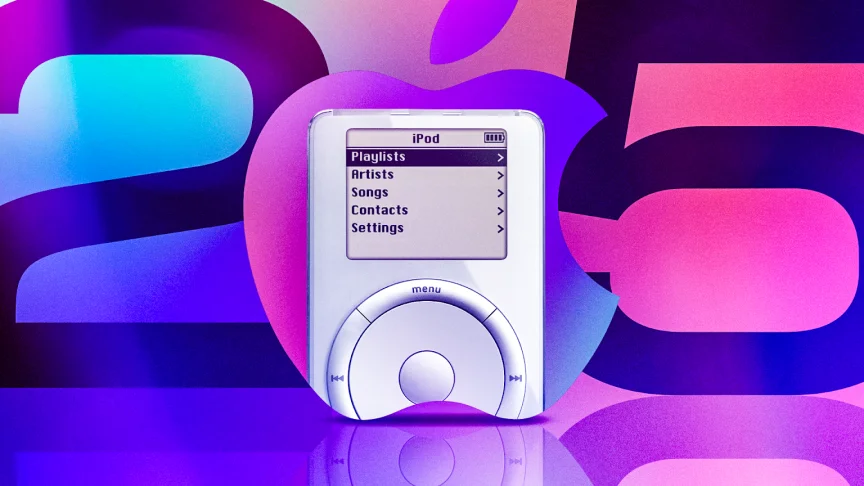
The iPod’s promise wasn’t just portability. It was abundance: a thousand songs in your pocket, ready whenever you were. For its 25th anniversary, Apple Music is marking that shift with a browser Easter egg that recreates the original iPod’s click wheel and lets you play music.
Think of the songs that were in rotation in 2001: Alicia Keys’ “Fallin’,” Outkast’s “Ms. Jackson” and Nelly’s “Ride Wit Me.” Away from a car stereo or home audio system, listeners often relied on skip-prone portable CD players, boomboxes or homemade mix tapes. A few early adopters had MP3 players such as the Diamond Rio or Creative’s Nomad Jukebox, but carrying a digital music collection still felt niche.
Apple’s original iPod changed the scale of the idea. Its smooth white casing held a hard drive with room for roughly 1,000 to 2,000 songs — an almost extravagant amount of music at the time. The obvious question was whether anyone needed that much at hand. The more consequential point was that Apple made the answer feel simple: yes, if the device made choosing and carrying music easy.
Released on Nov. 10, 2001, at a starting price of $400, the iPod helped make portable electronics feel more tactile, approachable and centered on information. It also offered a preview of habits that would later become familiar in the smartphone era. The bundled white earbuds became a street-level signal of the change: soon, white cables seemed to be everywhere.
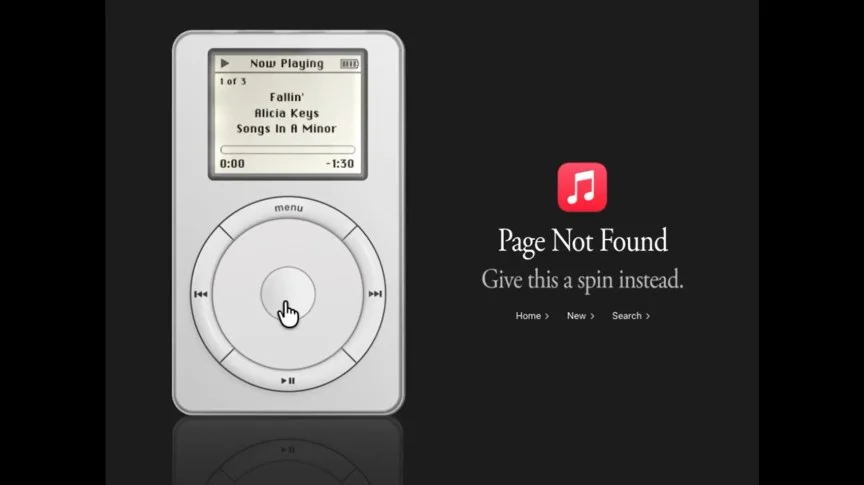
Here’s the thing: the anniversary celebration is more than a look back at a piece of hardware. Apple has put a mock iPod, complete with its scroll wheel and a selection of period-appropriate songs, on an Apple Music 404 page. It’s a playful reminder that the iPod’s lasting appeal came from the feel of using it as much as the music it stored.
Read more: iPhone Duo Review: Late to the Foldable Party, but It Steals the Show
Fadell remembers the deadline; listeners keep the iPod alive
Tony Fadell is often credited as the iPod’s central creator, though he led a much larger team. He joined Apple as a contractor and went on to run one of the company’s most successful product divisions. Today he’s considering the future of AI assistant devices, but marked the iPod’s anniversary this week in a LinkedIn post.
“We took it from approval to shipping in less than eight months,” he wrote. “There wasn’t time for endless refinements. We had to make decisions, trust our experience and stay focused on one clear promise: 1,000 songs in your pocket.”
Apple’s music player has outlasted its original moment because people want different things from it. Some longtime fans have kept their iPods running for decades, even though a hard drive in a portable gadget surviving that long is a small feat. The product also needed several generations to find its stride, Fadell says, eventually branching into models such as the Nano and the Touch. For a look at who still uses them, see our report on iPods still in use after 20 years.
Now a younger audience is discovering the appeal. Axios reports that Gen Z listeners are buying iPods and MP3 players as part of a nostalgia trend dubbed “friction-maxxing.” The term is a bit much; the appeal is easier to understand. A dedicated player gives music its own place, away from the phone and the endless pull of streaming apps such as Spotify. Axios has more on the trend.
Old iPods, new life
There’s a catch: collecting working iPods can get expensive. Listings for classic models on eBay can run to several hundred dollars. Sealed units are another story entirely: some sellers ask $25,000 to $60,000. Those are asking prices, not proof that anyone is paying them.
If you want the familiar shell without collector pricing, a hardware refresh could be a more practical path. Crowd Supply has shown a video promising a replacement motherboard for bringing broken iPods back to life. The project hasn’t launched; its status is posted on Crowd Supply. Independent repairers have also built a substantial library of modifications, collected at Hackaday.
And the iPod’s look isn’t the only way to get a dedicated music player. Fosi Audio’s DAP Neo costs $80, while CNET’s roundup of the best MP3 players of 2026 highlights the Shanling M0s and Android-based HiBy R4. If you’d rather carry no extra device, iPhone apps such as RetroPod and My Classic – Retro Console recreate some of the experience on iOS. Android users can try ClassiPod.
The revival says less about a single device returning than about a desire to make listening feel deliberate again. Whether that means restoring an old iPod, buying a modern player or installing an app depends on what you miss: the hardware, the ritual, or simply a music library that doesn’t compete with everything else on your phone.