A stronger $100 CPU with a naming problem
The Ryzen 5 5500F’s most important upgrade is easy to miss: despite its familiar name, it’s a meaningfully different chip from the Ryzen 5 5500. AMD has moved it to the Vermeer family, raised its boost clock and added PCIe 4.0. That gives the budget processor a stronger case against Intel’s Core i3-14100F, even if street prices are currently blunting the value. The 5500F is a six core, 12 thread Zen 3 processor with a 4.4 GHz boost clock and a $100 suggested price. Retail listings have been closer to $120. At that price, the numbers matter: the original 5500 trails the Core i3-14100F by 11% in average 1080p gaming performance, while the 5500F narrows the gap to about 3%. It also improves on the 5500 by 10% in average performance and beats Intel in multithreaded workloads. That’s a more substantial change than the “F” suffix suggests. AMD and Intel commonly use that letter for processors without integrated graphics, and the 5500F does lack graphics. So does the older 5500. The suffix tells you what’s missing, but says nothing about the more useful update underneath.What changed inside
The Ryzen 5 5500 is a Cezanne chip, from the same Zen 3 family as AMD’s APUs. It has 16MB of L3 cache and supports PCIe 3.0. The 5500F comes from Vermeer, like the Ryzen 5 5600X, and supports PCIe 4.0. Its boost clock rises by 200 MHz, from 4.2 GHz to 4.4 GHz. There’s a catch: the 5500F is the only Vermeer processor with just 16MB of shared L3 cache. Other Vermeer chips have at least 32MB, with X3D models offering more. The 5500F retains Cezanne’s smaller cache while gaining Vermeer’s PCIe 4.0 support. Both families use the same Zen 3 microarchitecture and L1/L2 cache arrangement. Here’s the thing: the 5500F’s label makes it sound like a basic graphics-less reissue, when the older 5500 is closer to that description. The 5500F is an updated processor, though its cache remains a compromise. | CPU (MSRP) | Street price | Architecture | Cores/threads | Base/boost clock | Cache (L2 + L3) | TDP / maximum power | |---|---:|---|---:|---:|---:|---:| | Ryzen 5 5600X ($300) | [~$160](https://www.amazon.com/dp/B08166SLDF) | Zen 3 (Vermeer) | 6 / 12 | 3.7 / 4.6 GHz | 35MB | 65W / 88W | | Ryzen 5 5600G ($260) | [~$190](https://www.amazon.com/AMD-Ryzen-5600GT-12-Thread-Processor/dp/B0CQ4DTJYX/) | Zen 3 (Cezanne) | 6 / 12 | 3.9 / 4.4 GHz | 19MB | 65W / 88W | | **Ryzen 5 5500F ($100)** | [**~$120**](https://www.amazon.com/AMD-Ryzen-5500F-Desktop-Processor/dp/B0HGMTDZM7/) | **Zen 3 (Vermeer)** | **6 / 12** | **3.0 / 4.4 GHz** | **19MB** | **65W / 88W** | | Ryzen 5 5500 ($159) | [~$90](https://www.amazon.com/AMD-5500-12-Thread-Unlocked-Processor/dp/B09VCJ171S/) | Zen 3 (Cezanne) | 6 / 12 | 3.6 / 4.2 GHz | 19MB | 65W / 88W | AMD includes its Wraith Stealth cooler. The 5500F has a 65W TDP and an 88W platform power limit; the bundled cooler is sufficient under load, so a separate cooler isn’t essential. [CPU Benchmark Hierarchy](https://www.tomshardware.com/reviews/cpu-hierarchy,4312.html) · [AMD vs. Intel](https://www.tomshardware.com/features/amd-vs-intel-cpus) · [Intel Core Ultra 7 270K Plus review](https://www.tomshardware.com/pc-components/cpus/intel-core-ultra-7-270k-plus-review) · [AMD Ryzen 7 9850X3D review](https://www.tomshardware.com/pc-components/cpus/amd-ryzen-7-9850x3d-review)The budget gaming tradeoff
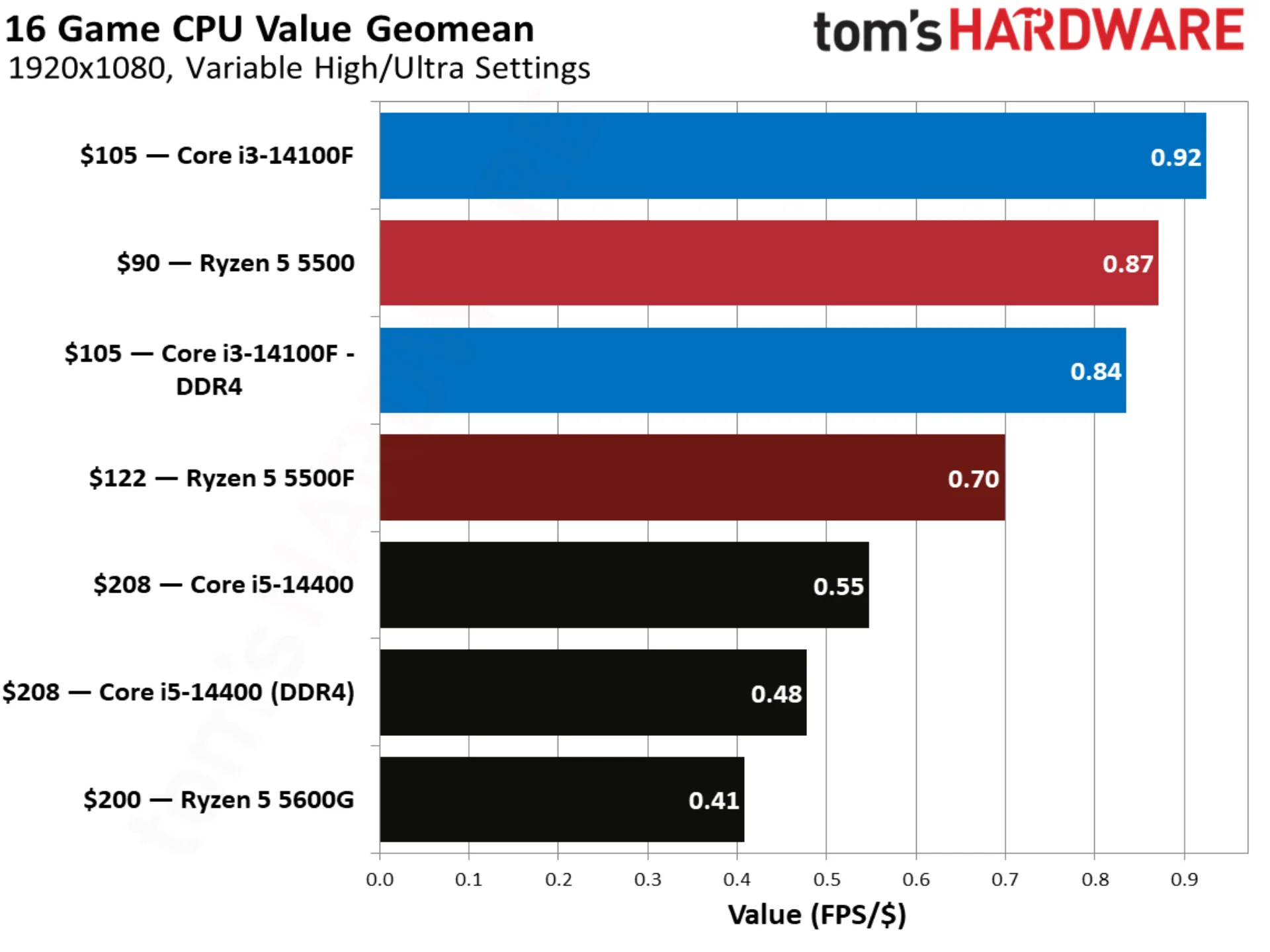
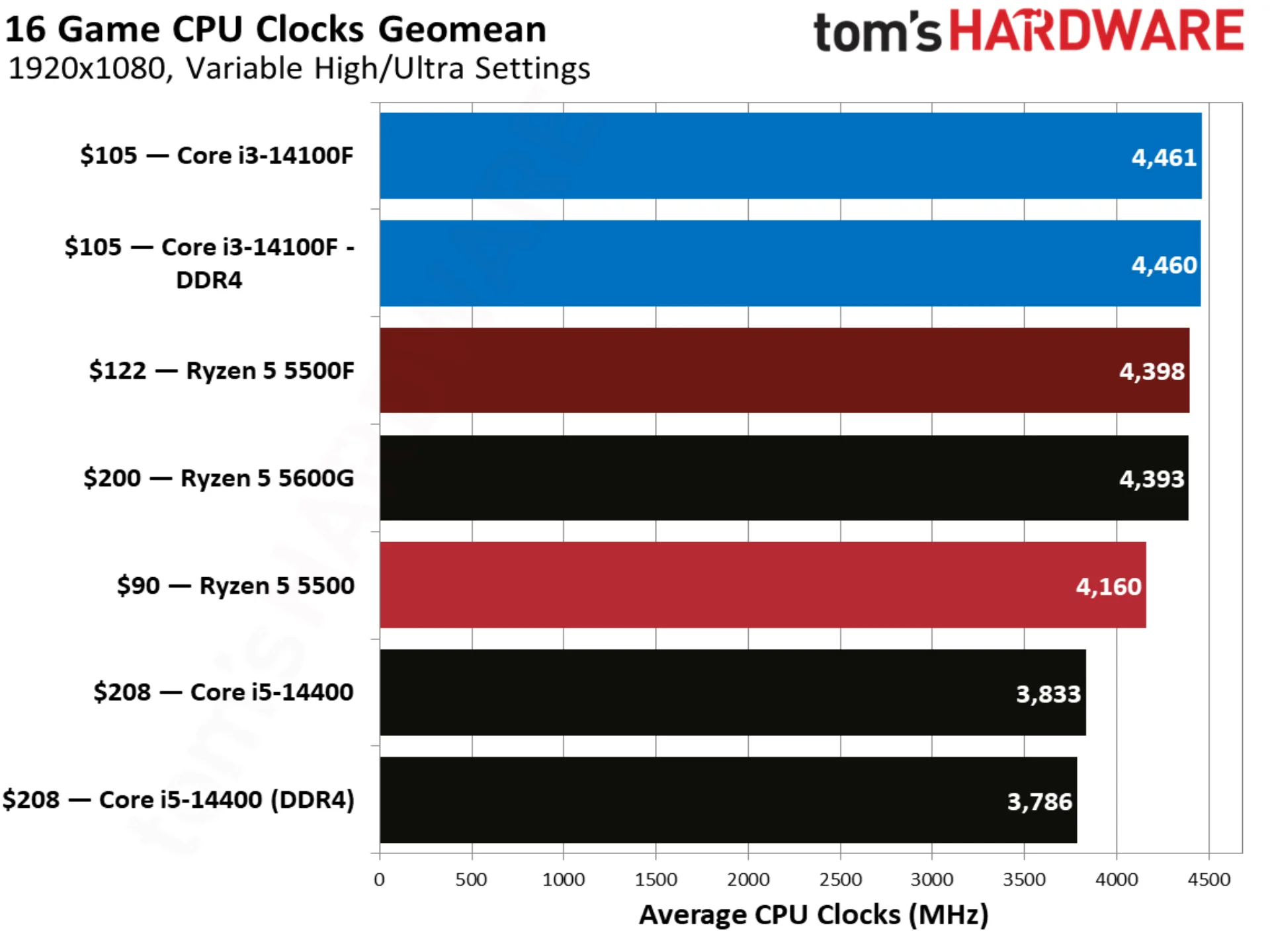
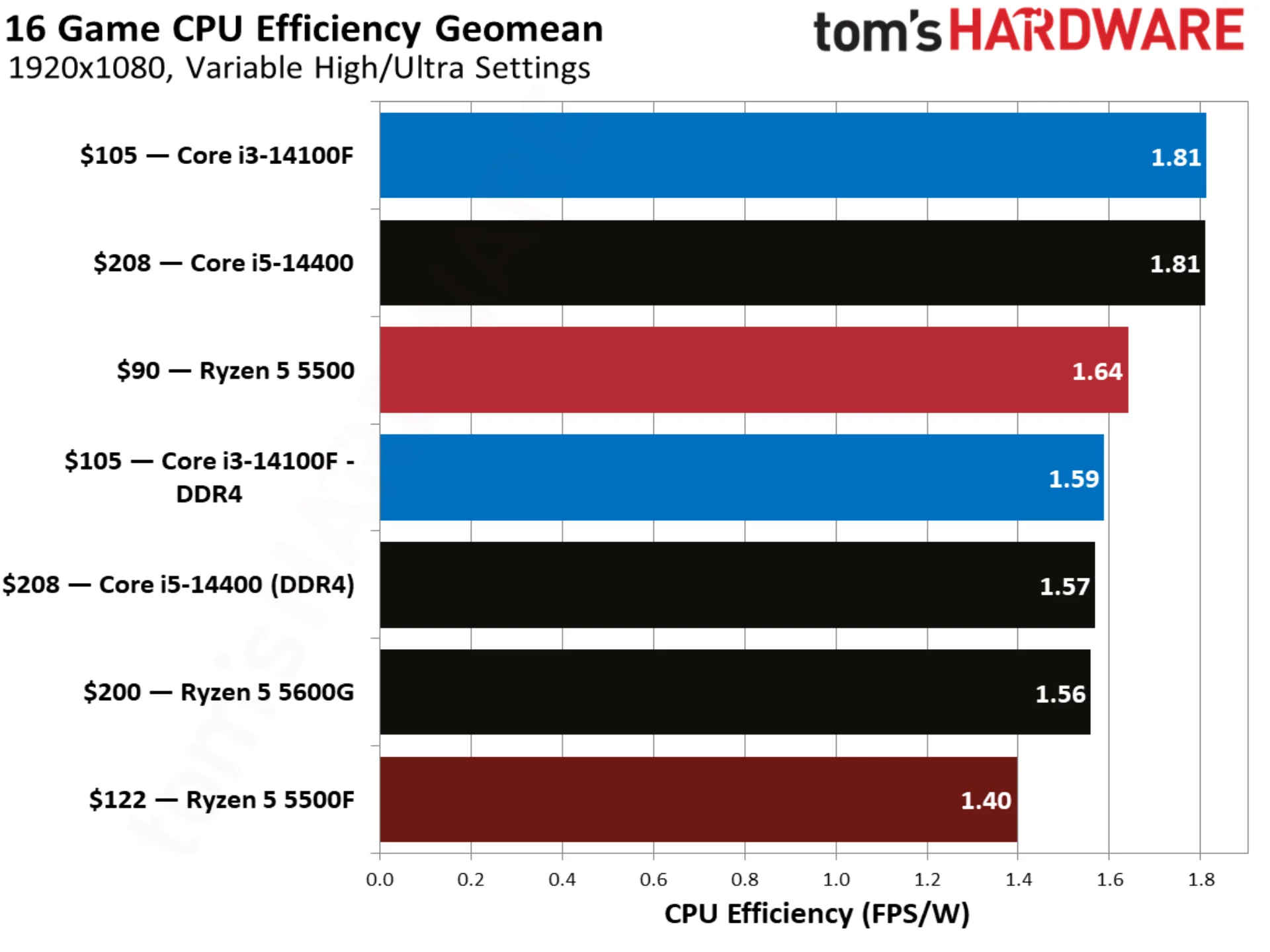
For a new budget gaming build, the 5500F is a stronger option than the old 5500, provided you’re building around DDR4. Cheaper CPUs don’t automatically make a cheaper system: DDR5 costs enough that a sale-priced Ryzen 5 7600X may not save money overall. Intel’s Core i3-14100F still holds a small gaming lead, but the 5500F closes the gap and adds PCIe 4.0, a key limitation of the original 5500. The test setup uses an RTX 5090 Founders Edition at 1080p with a mix of High and Ultra settings. That pairing can look excessive beside a $100 CPU, but it’s Tom’s Hardware’s standard CPU test method. In a separate [budget CPU comparison](https://www.tomshardware.com/pc-components/cpus/100-budget-cpu-shootout-ddr4), the 5500 and 14100F showed similar average scaling with an RTX 5090 and an RTX 4060; the less powerful card lowered baseline performance, but didn’t materially change the comparison. With these processors, a modern graphics card is likely to leave you CPU-bound, and using the RTX 5090 makes comparisons across a wider range of processors possible. The test also compares Intel’s Core i5-14400 and Core i3-14100F with DDR4 and DDR5. In earlier [Raptor Lake Refresh DDR4 testing](https://www.tomshardware.com/pc-components/ddr5/re-examining-the-ddr4-gaming-gap-with-intels-lga-1700-cpus-in-mid-2026-performance-drops-of-14-percent-on-average-and-up-to-25-percent-in-some-games), DDR5 improved average 1080p gaming performance by about 15%. Those results provide context; the practical contest here is between DDR4 systems, given the cost of DDR5.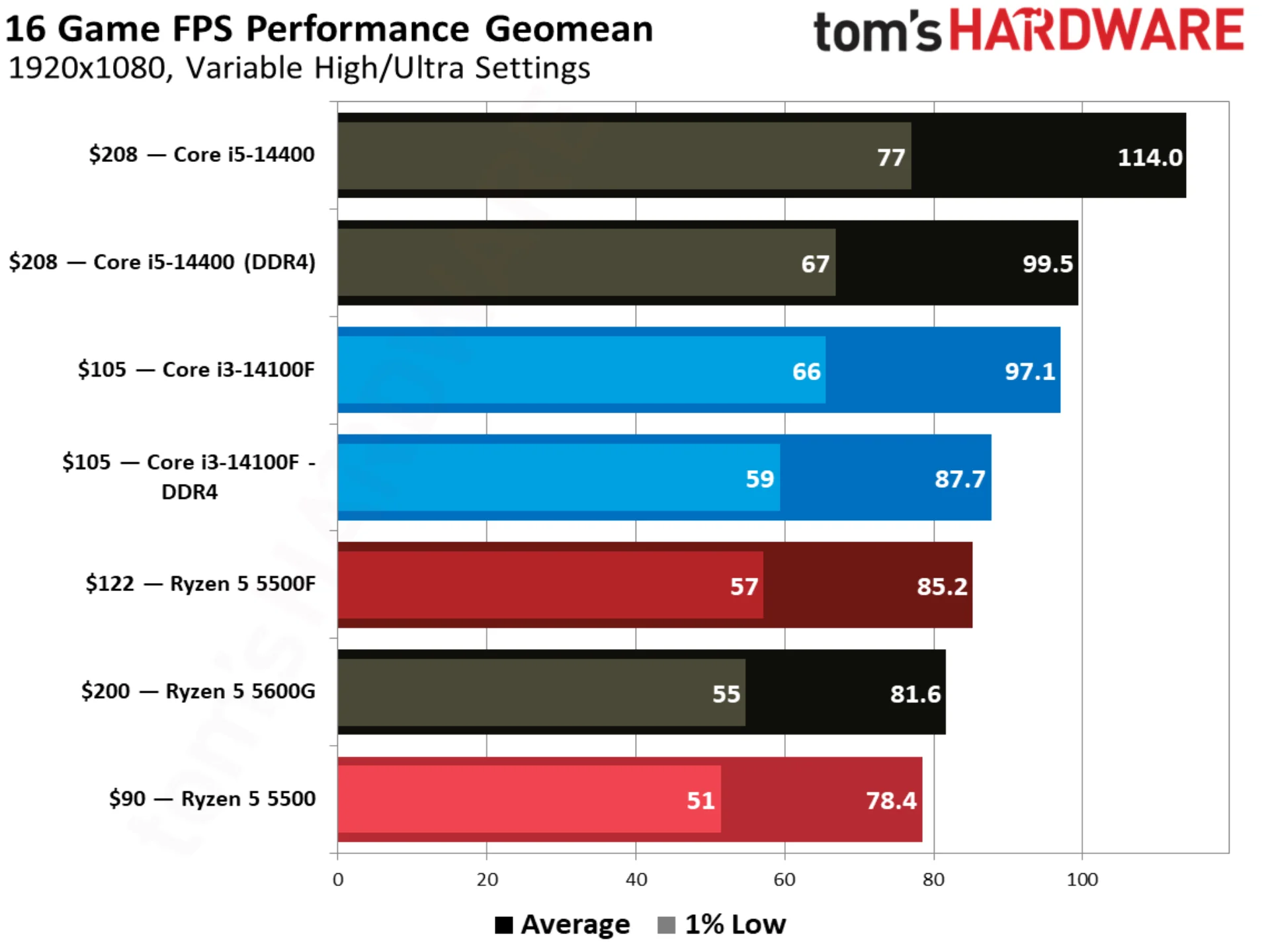
007 First Light benchmarks
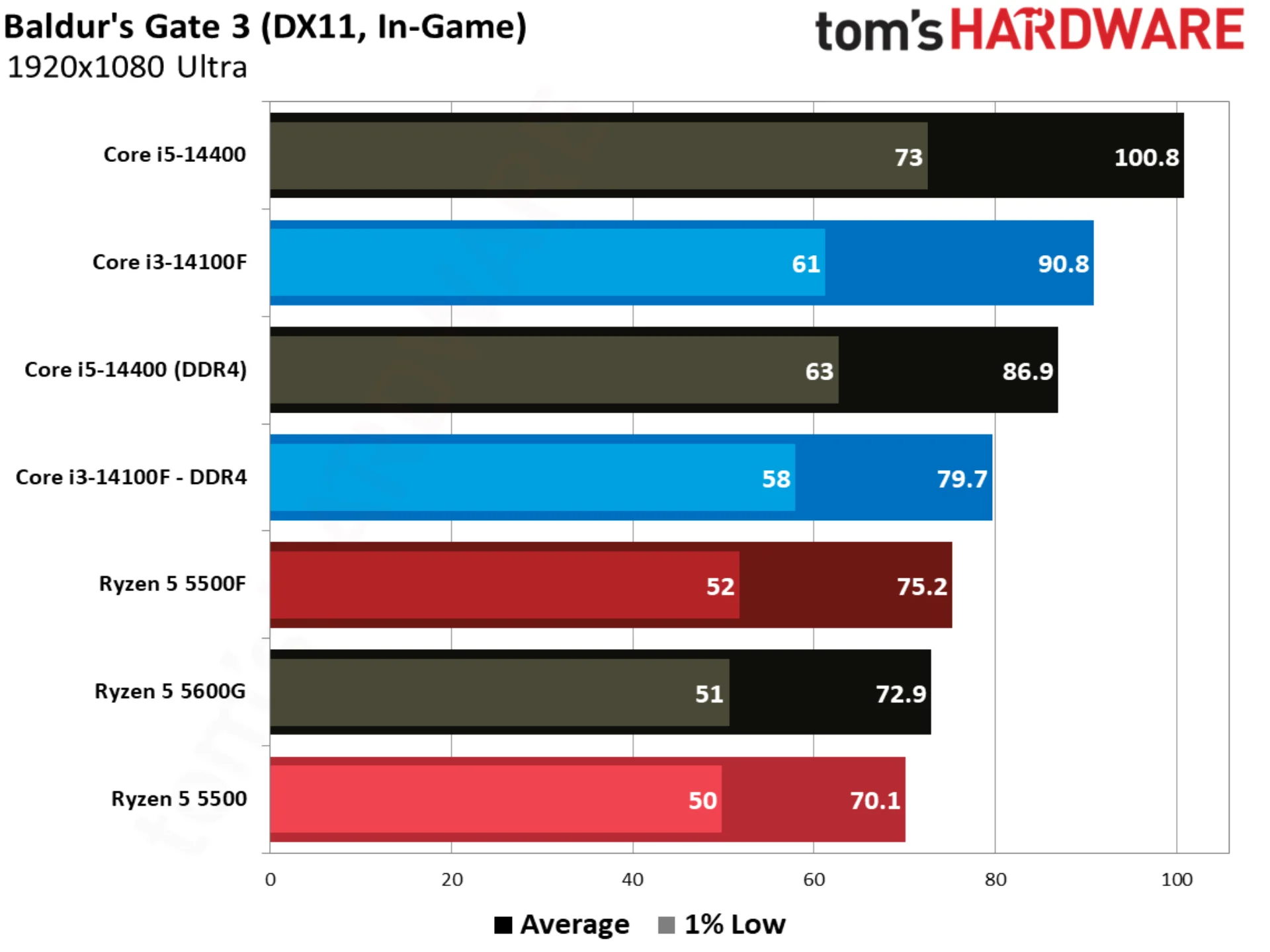
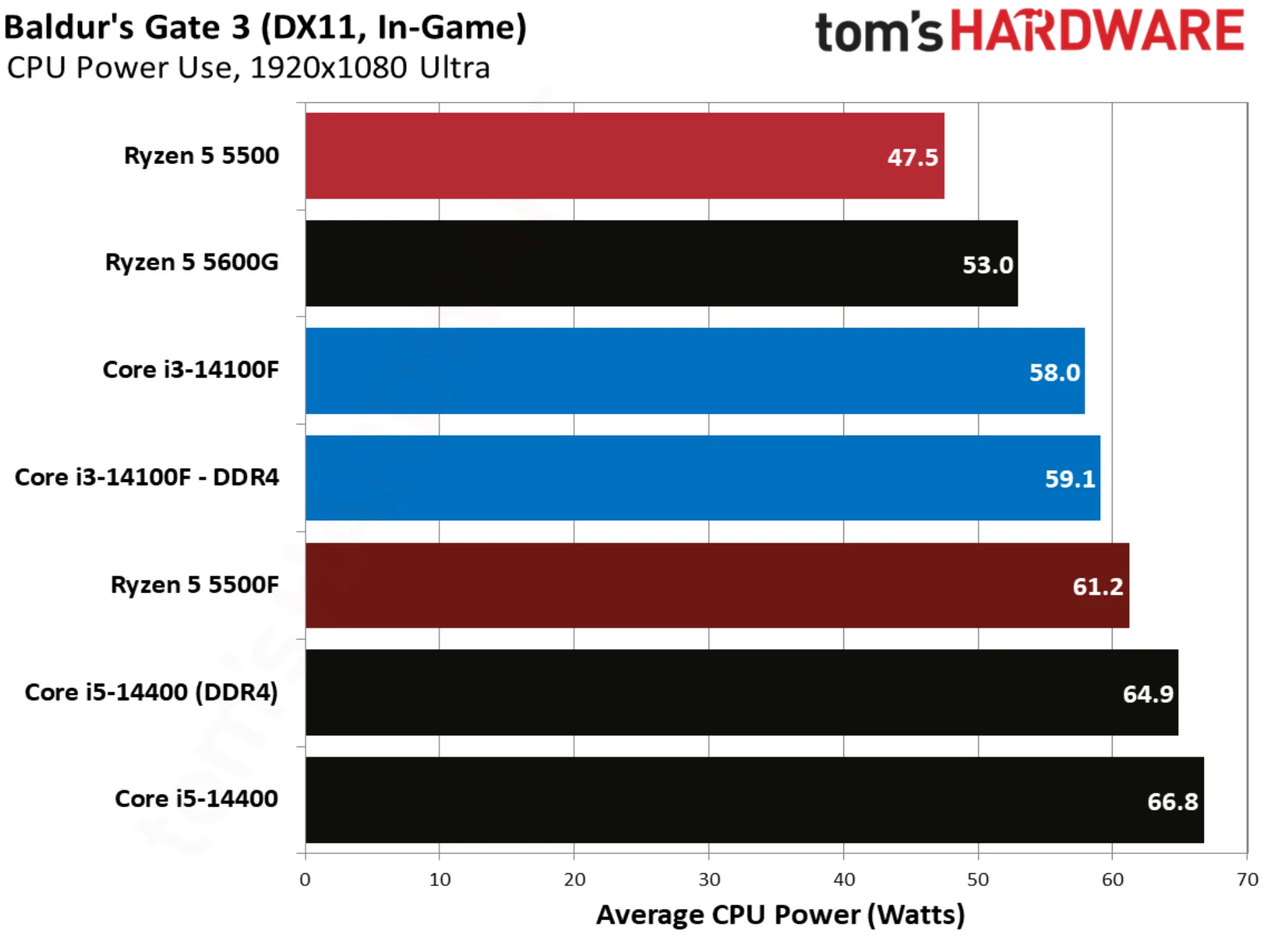
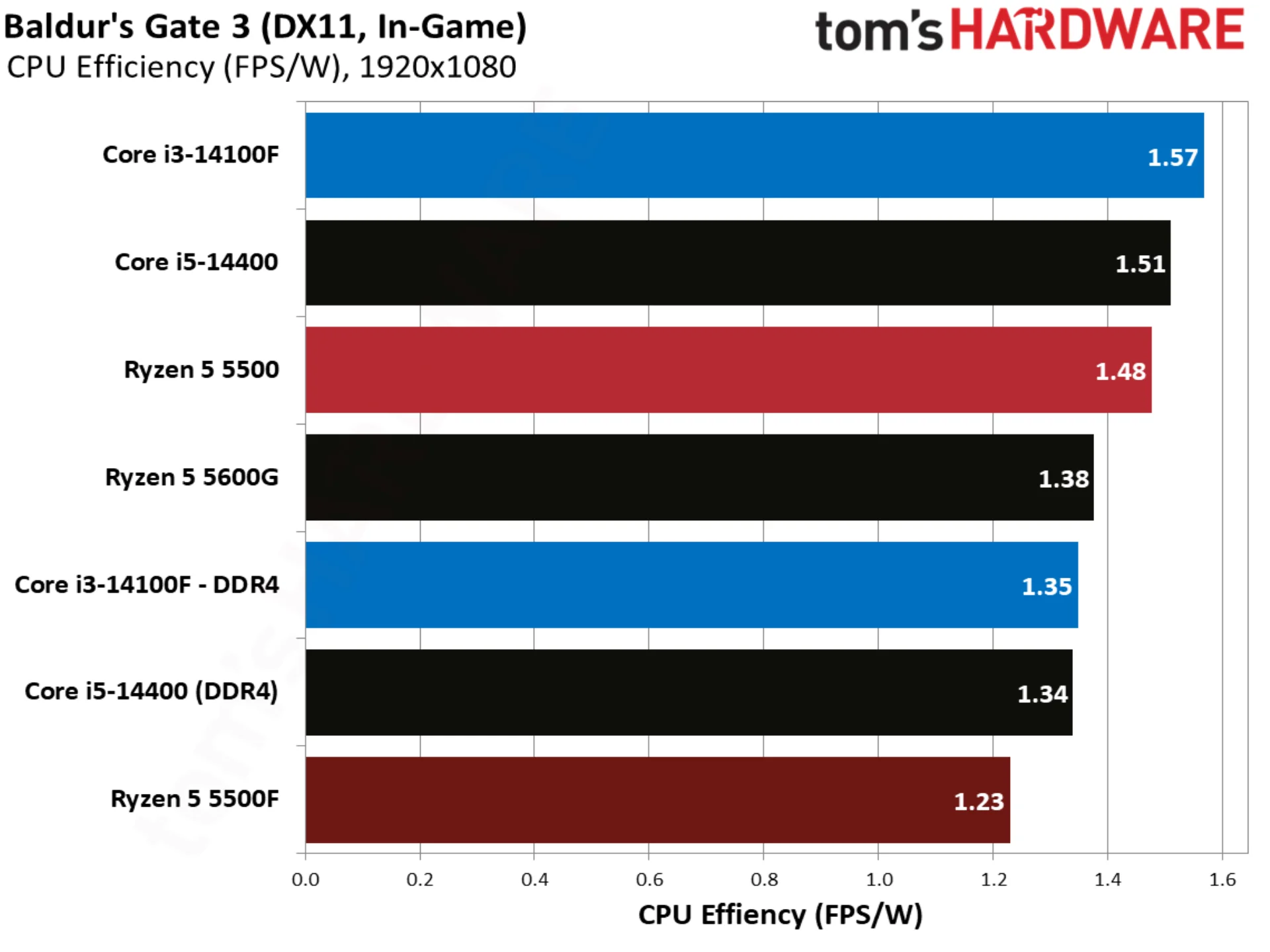
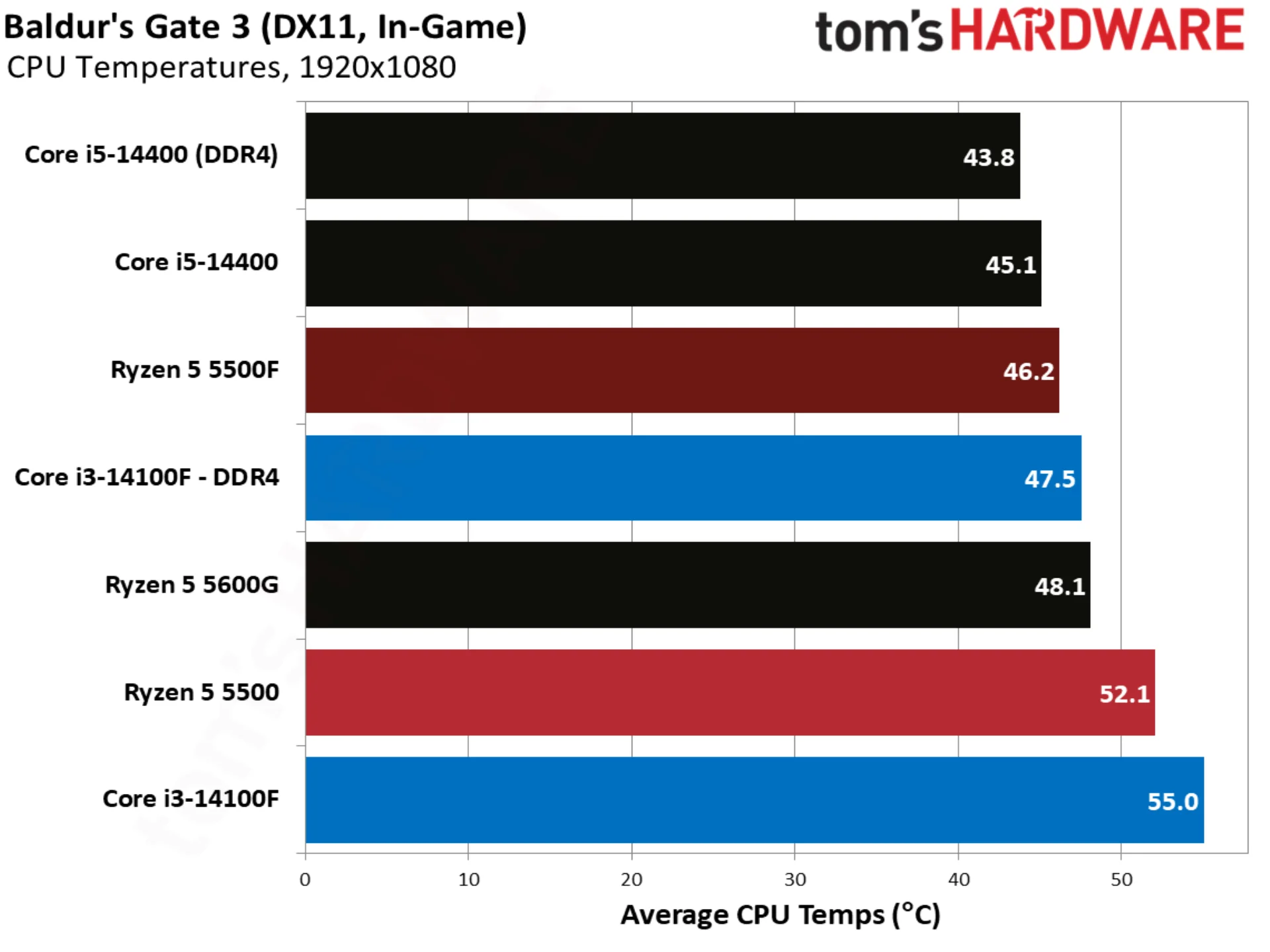
Baldur’s Gate 3 benchmarks
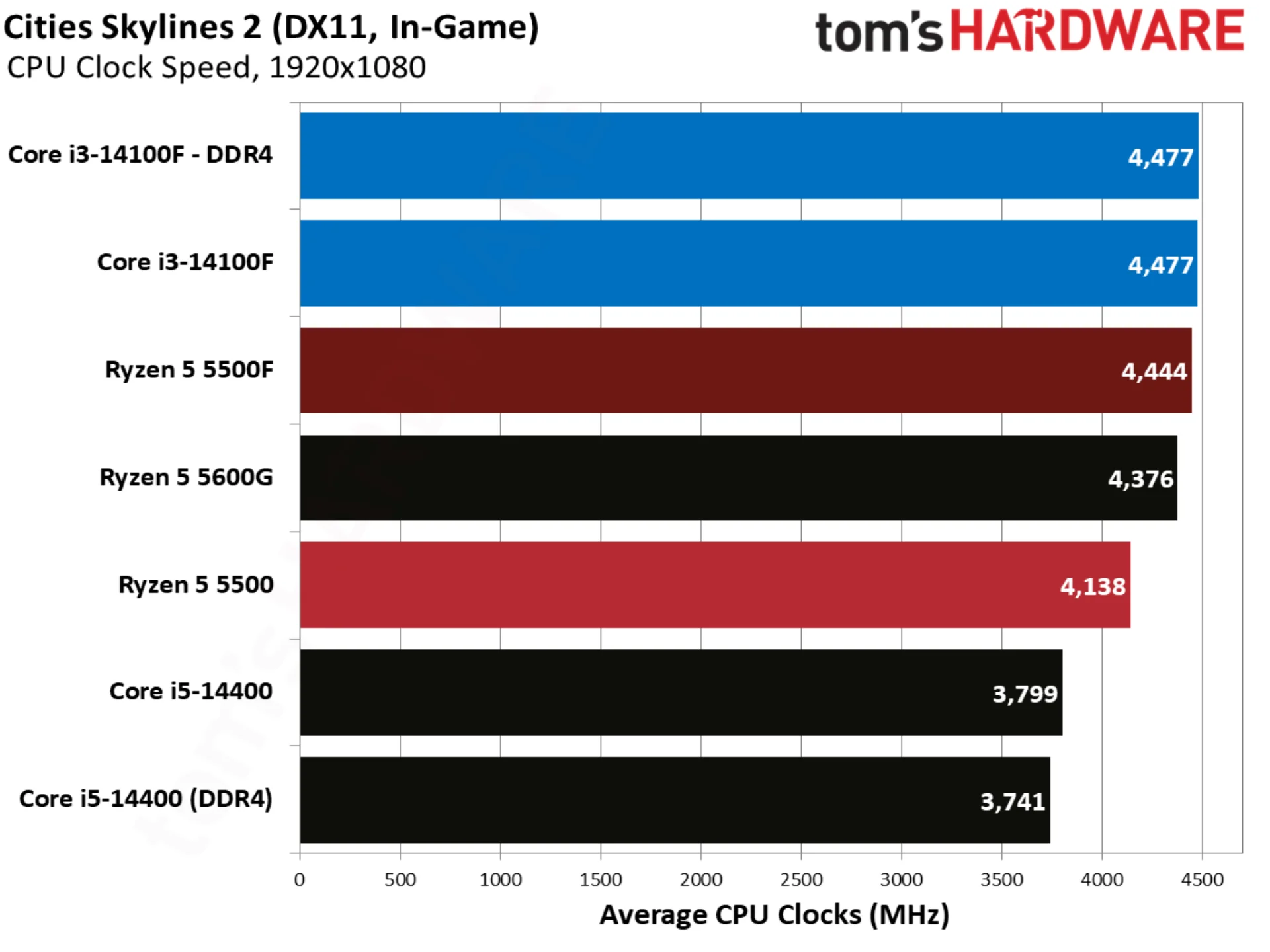
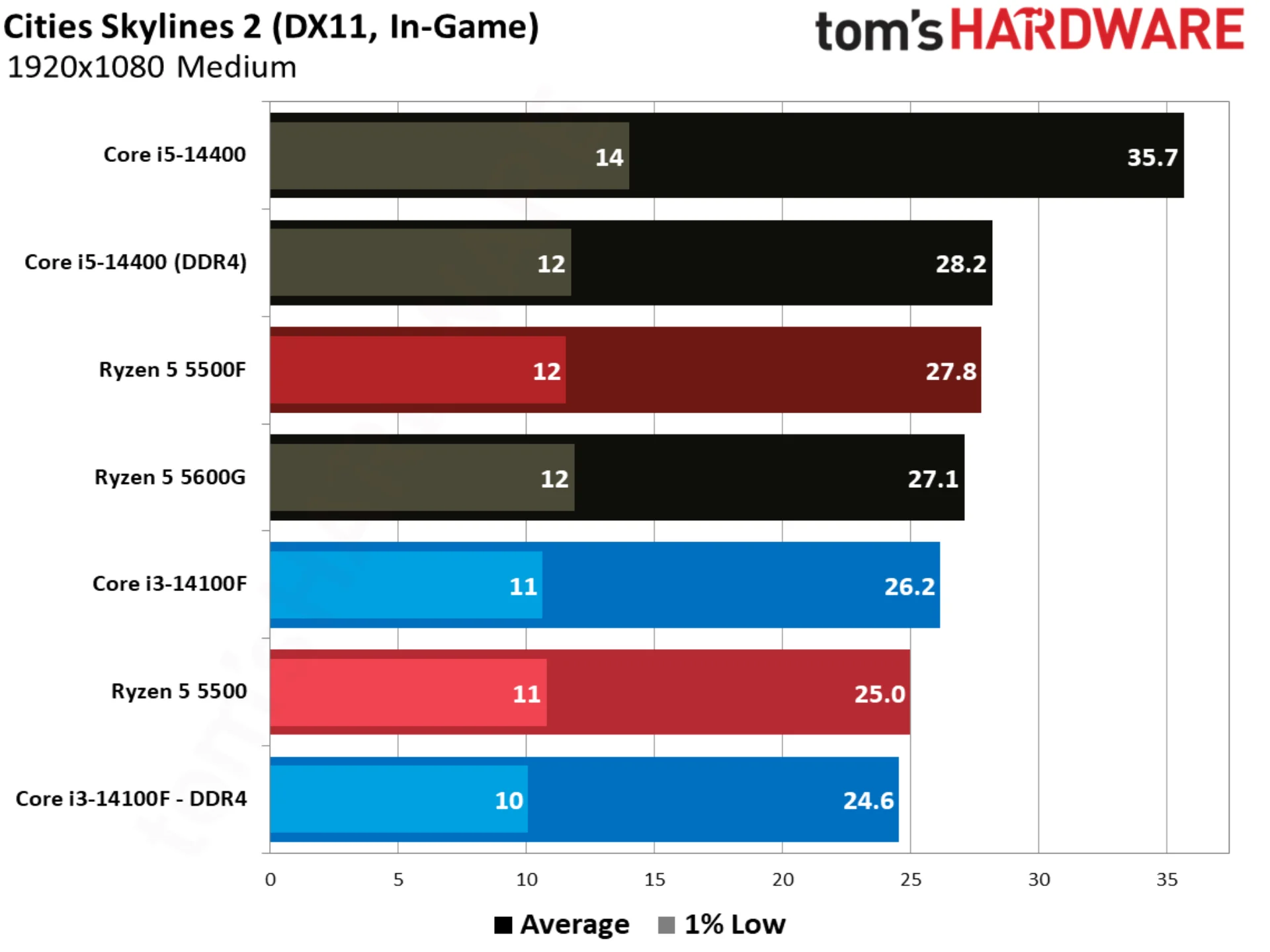
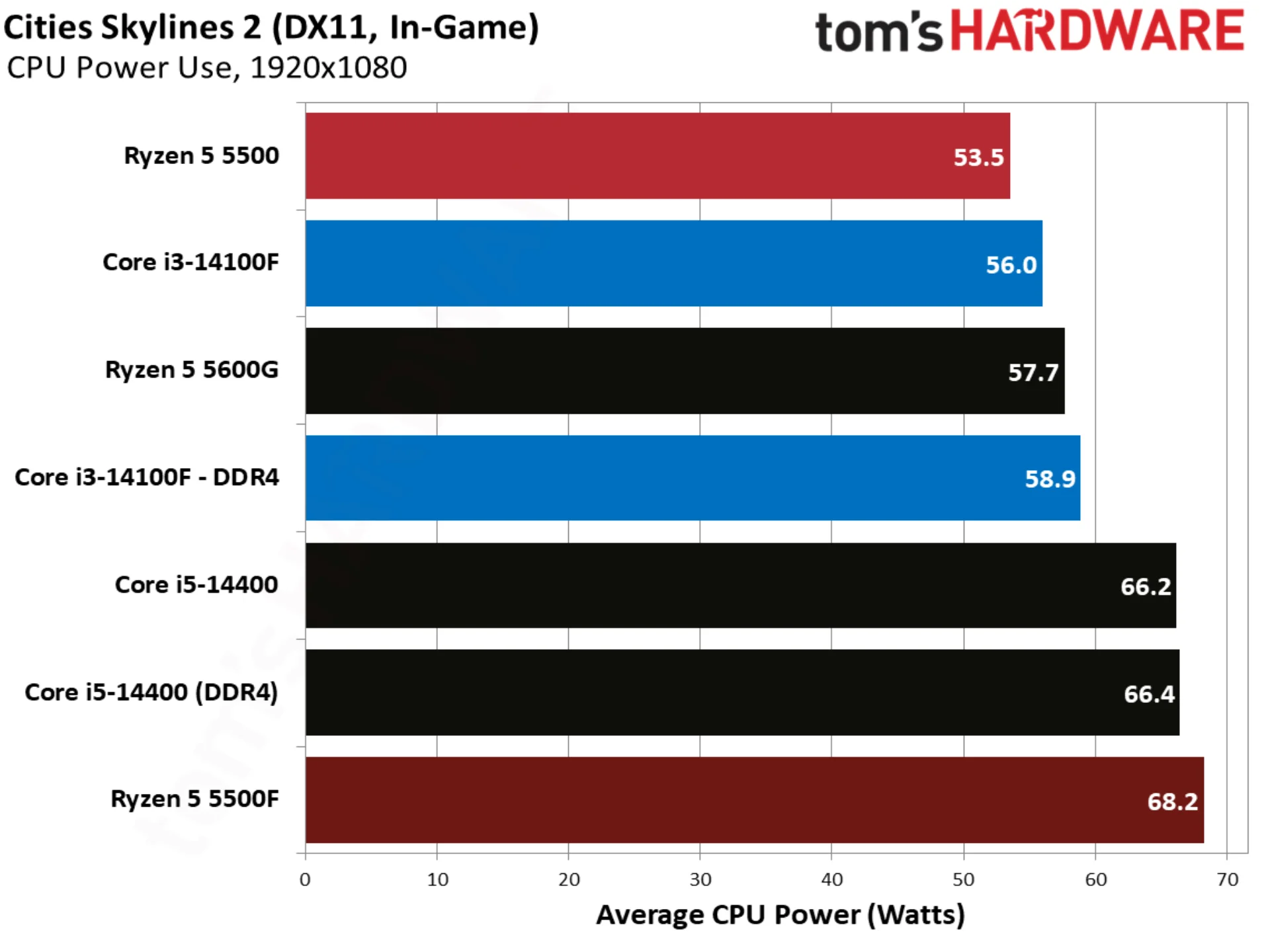
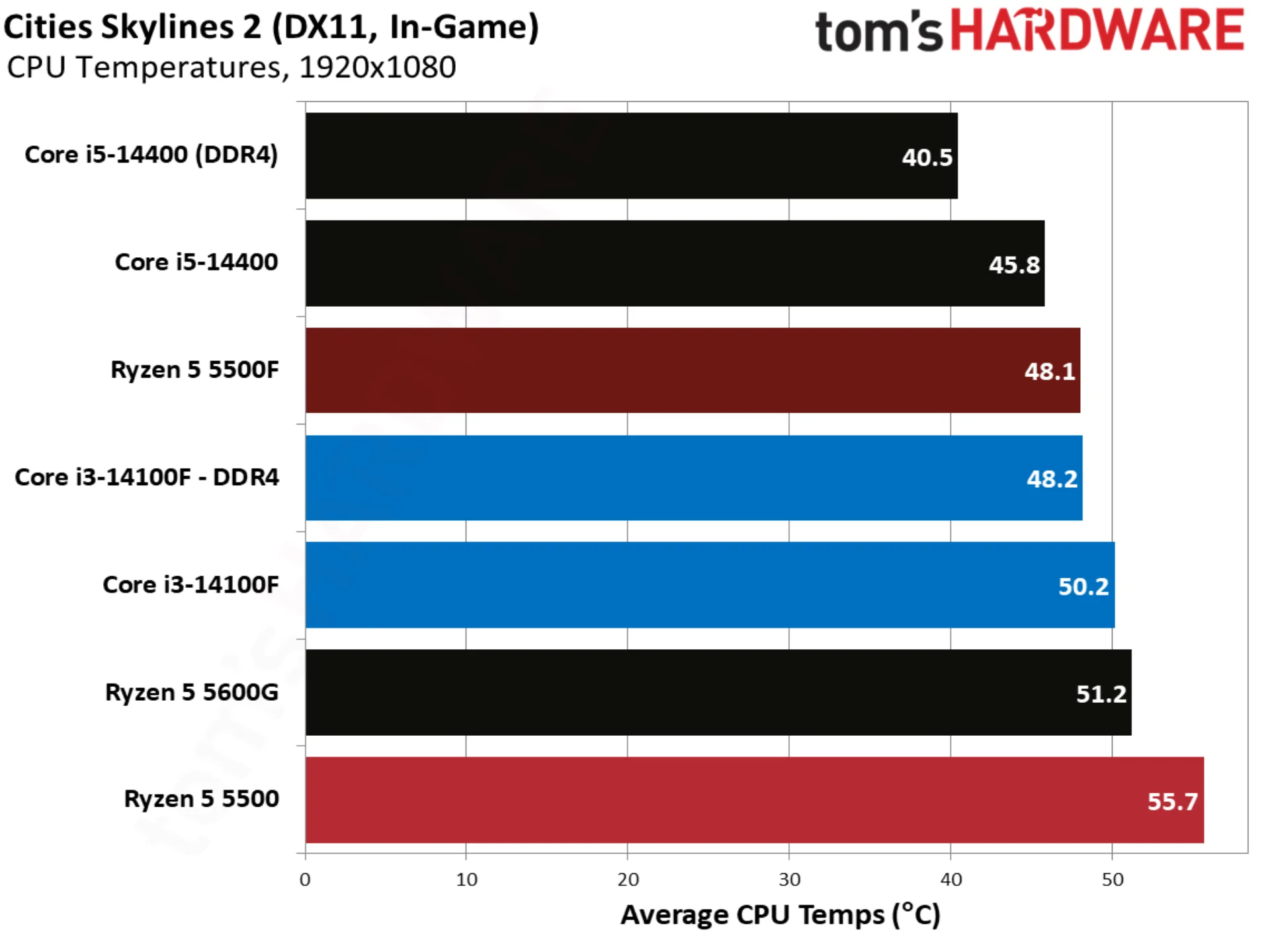
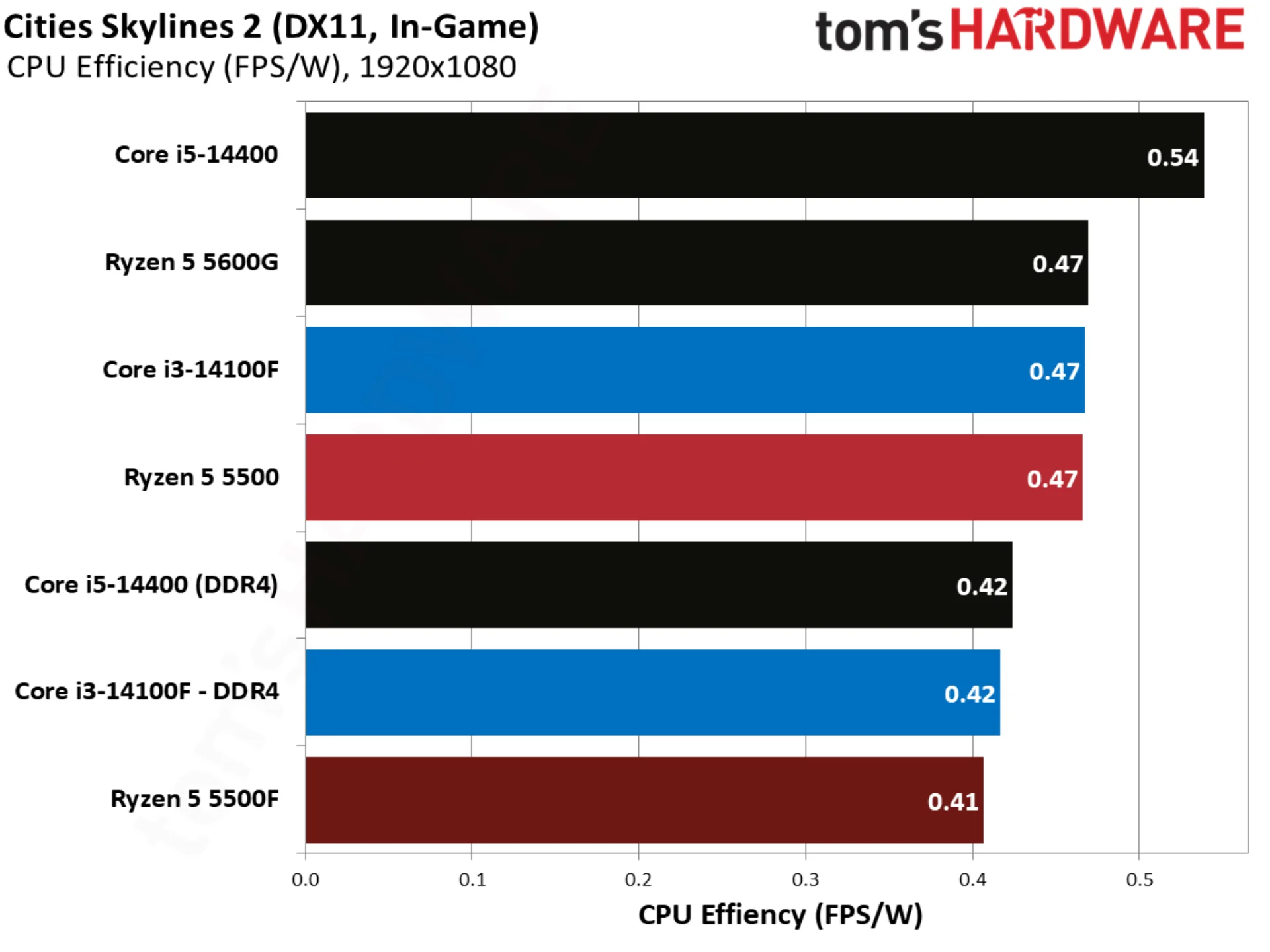
Cities Skylines 2 benchmarks
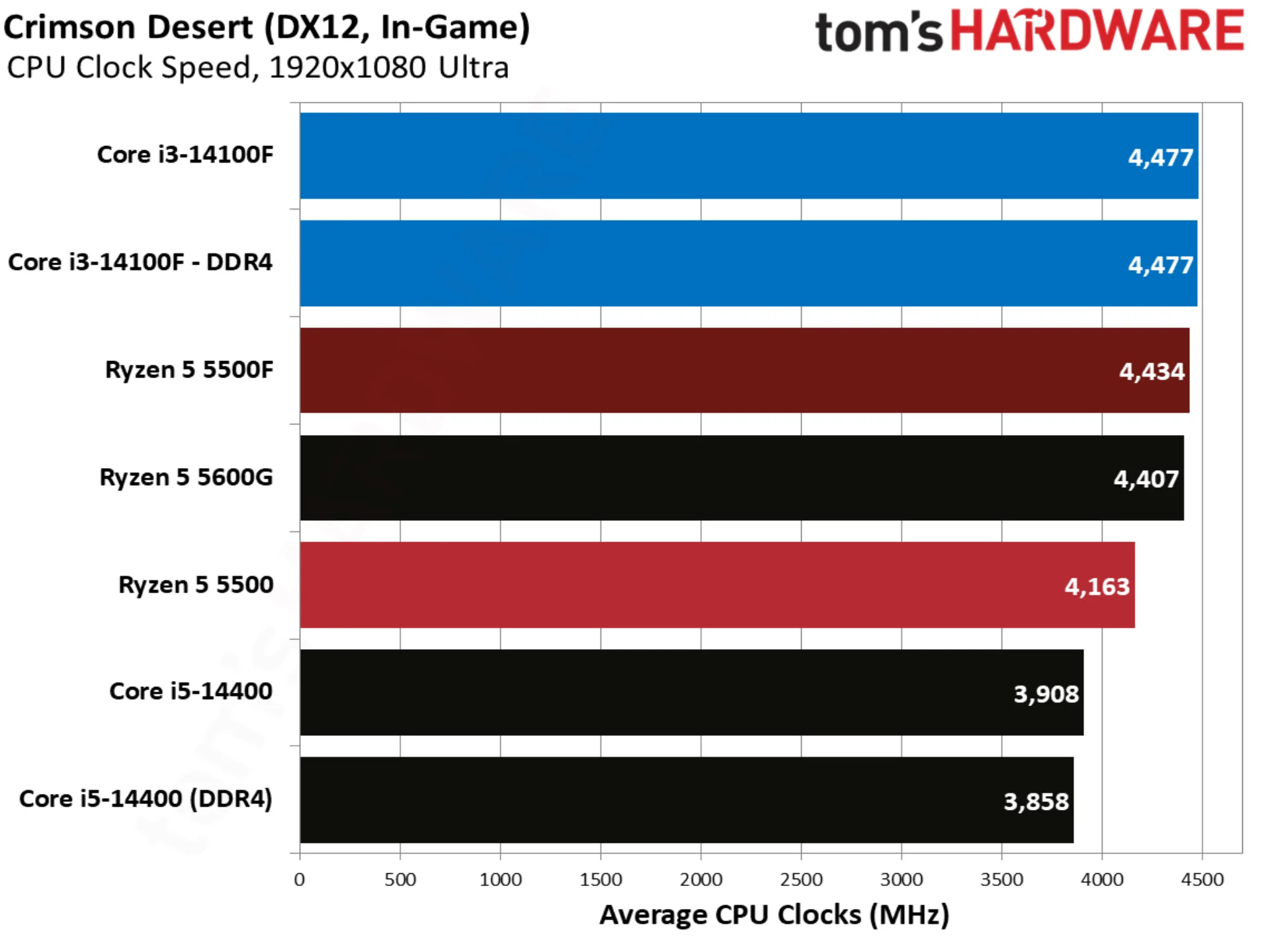
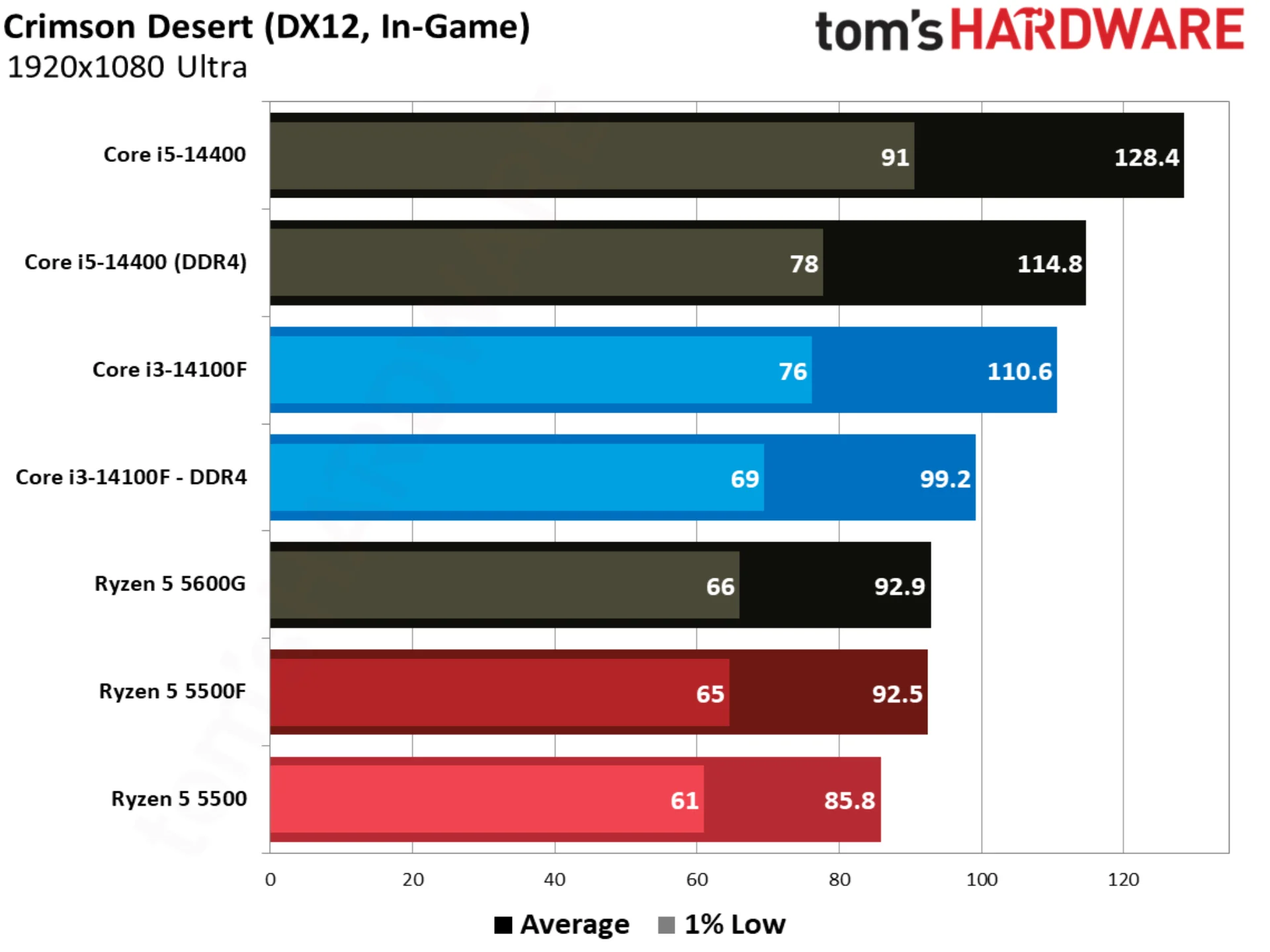
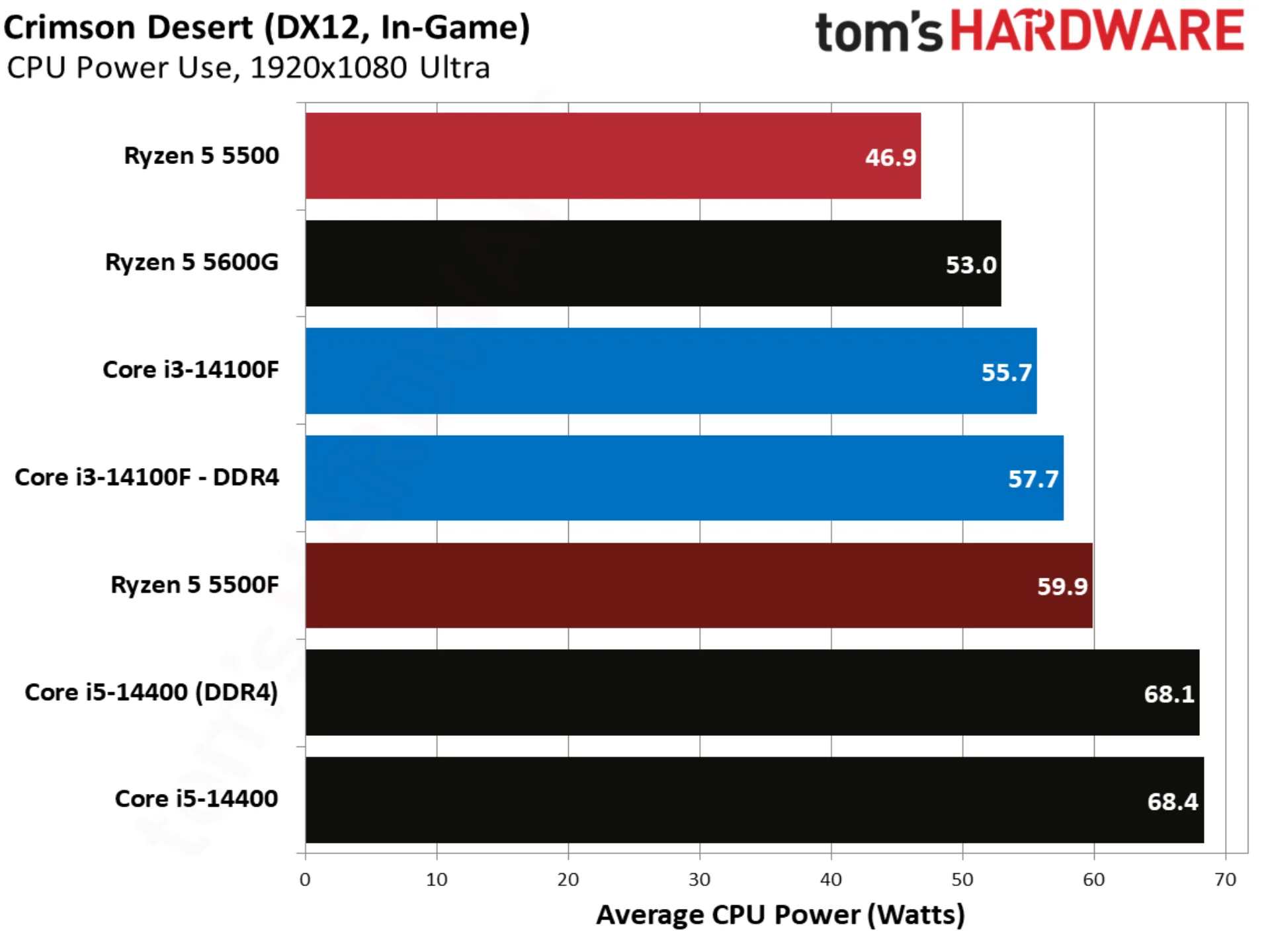
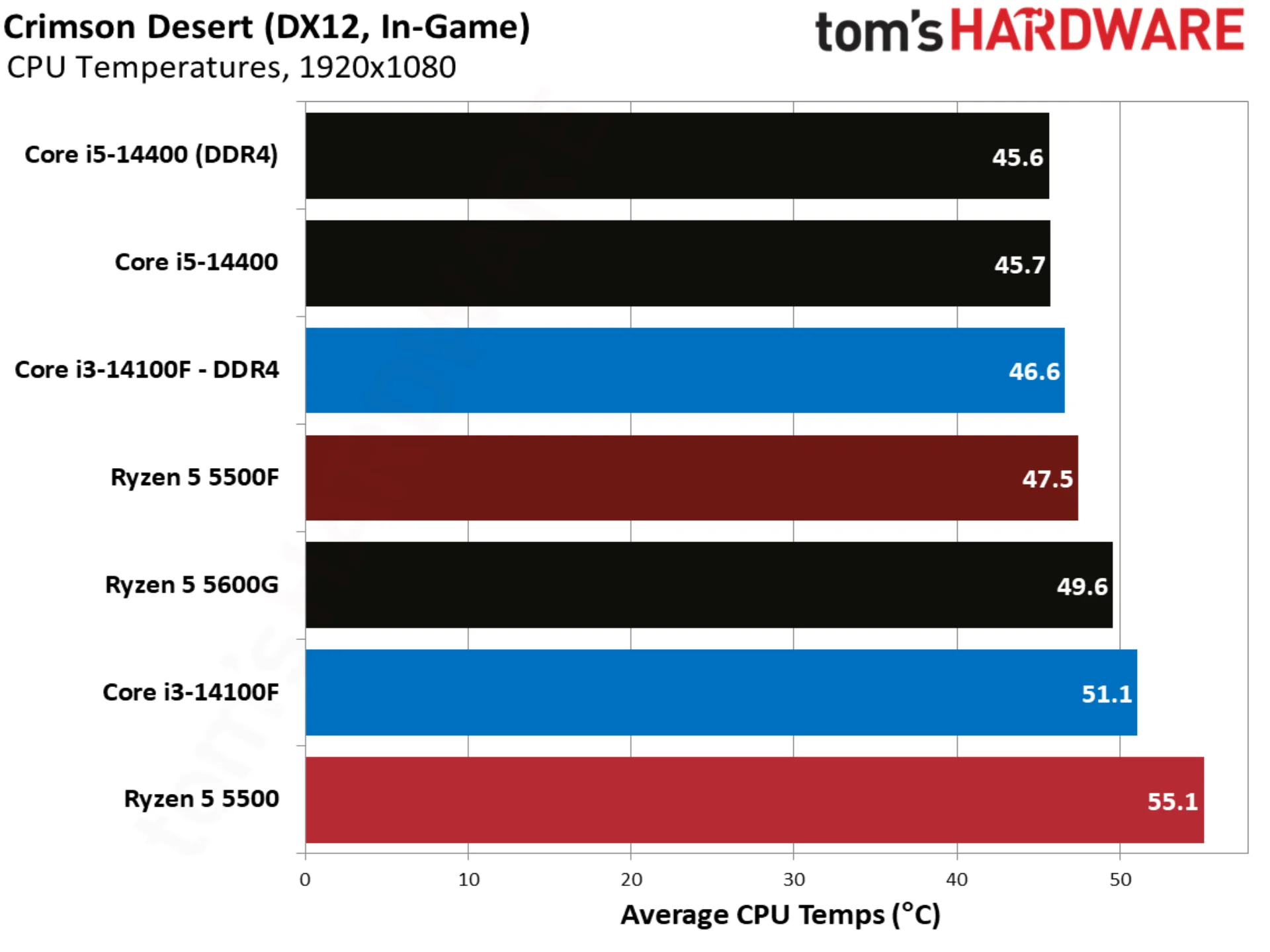
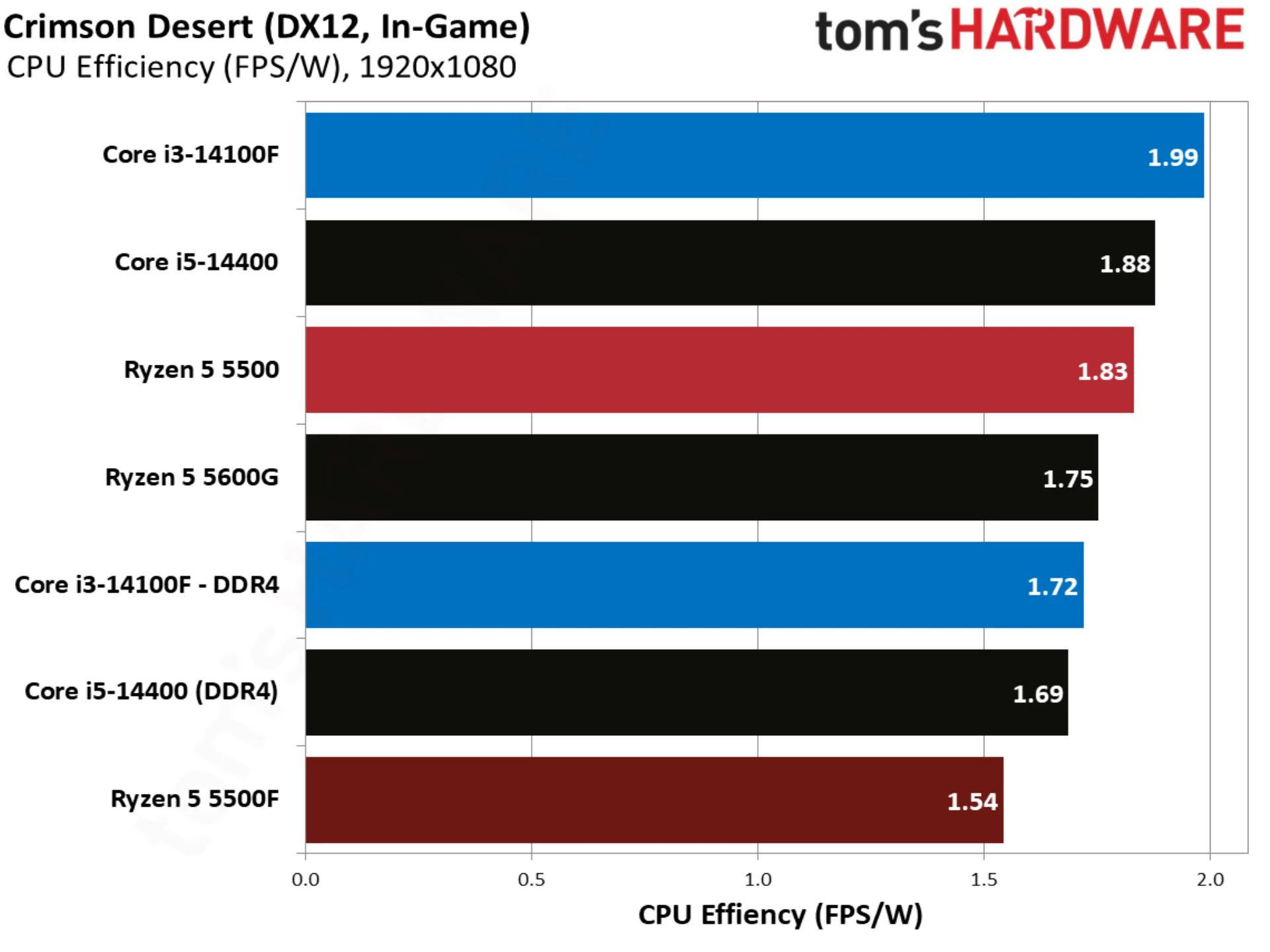
Crimson Desert benchmarks
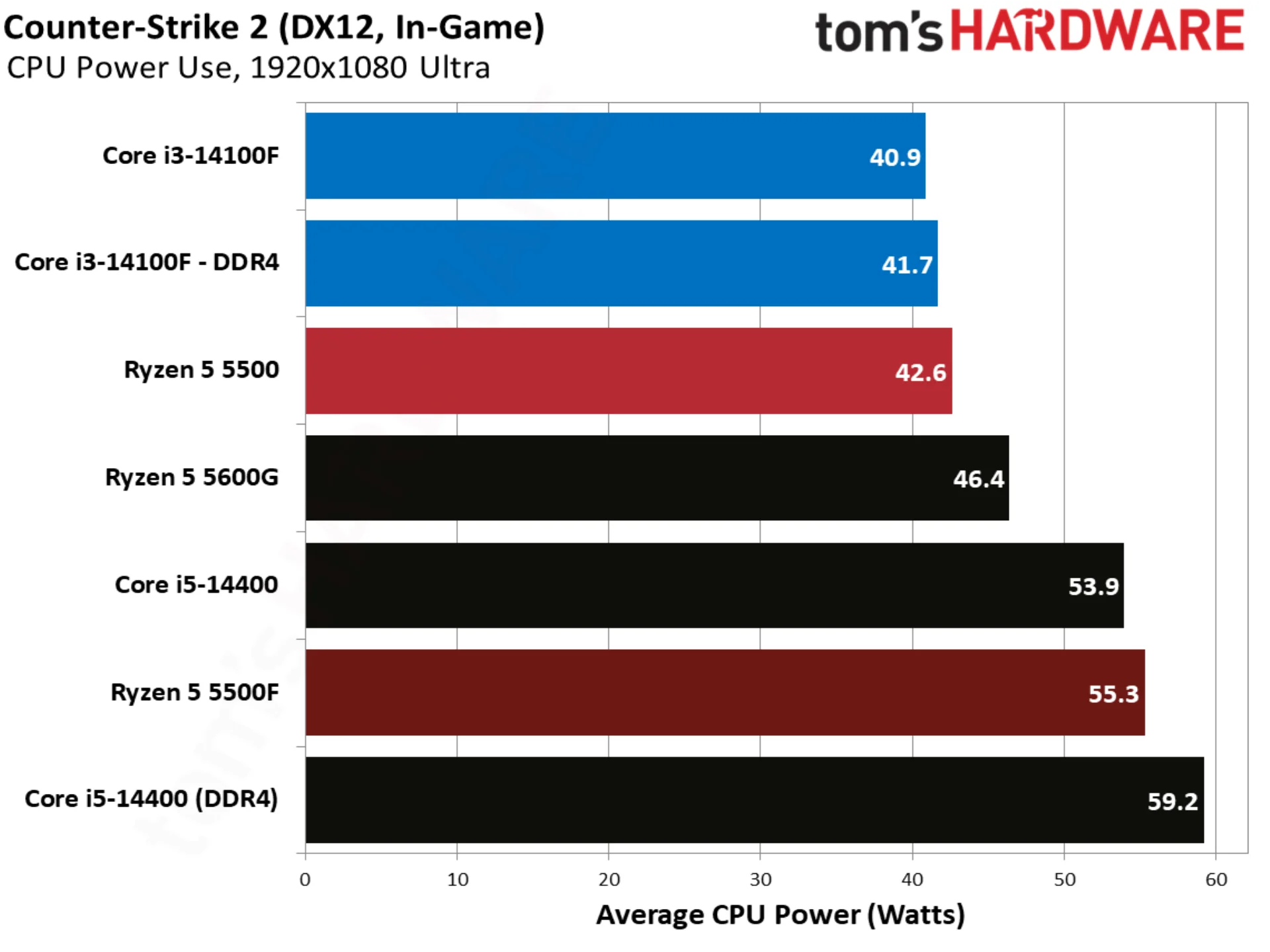
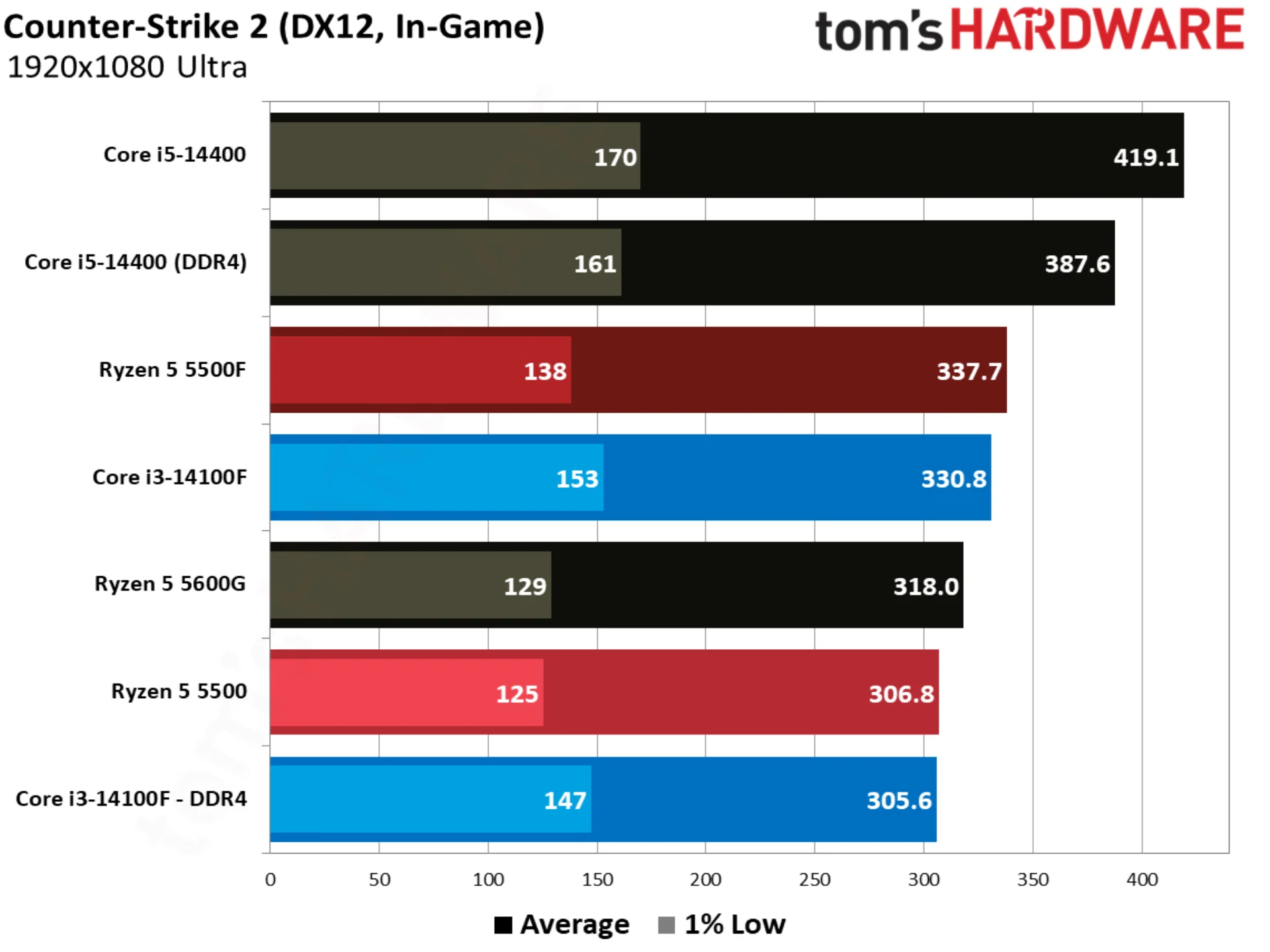
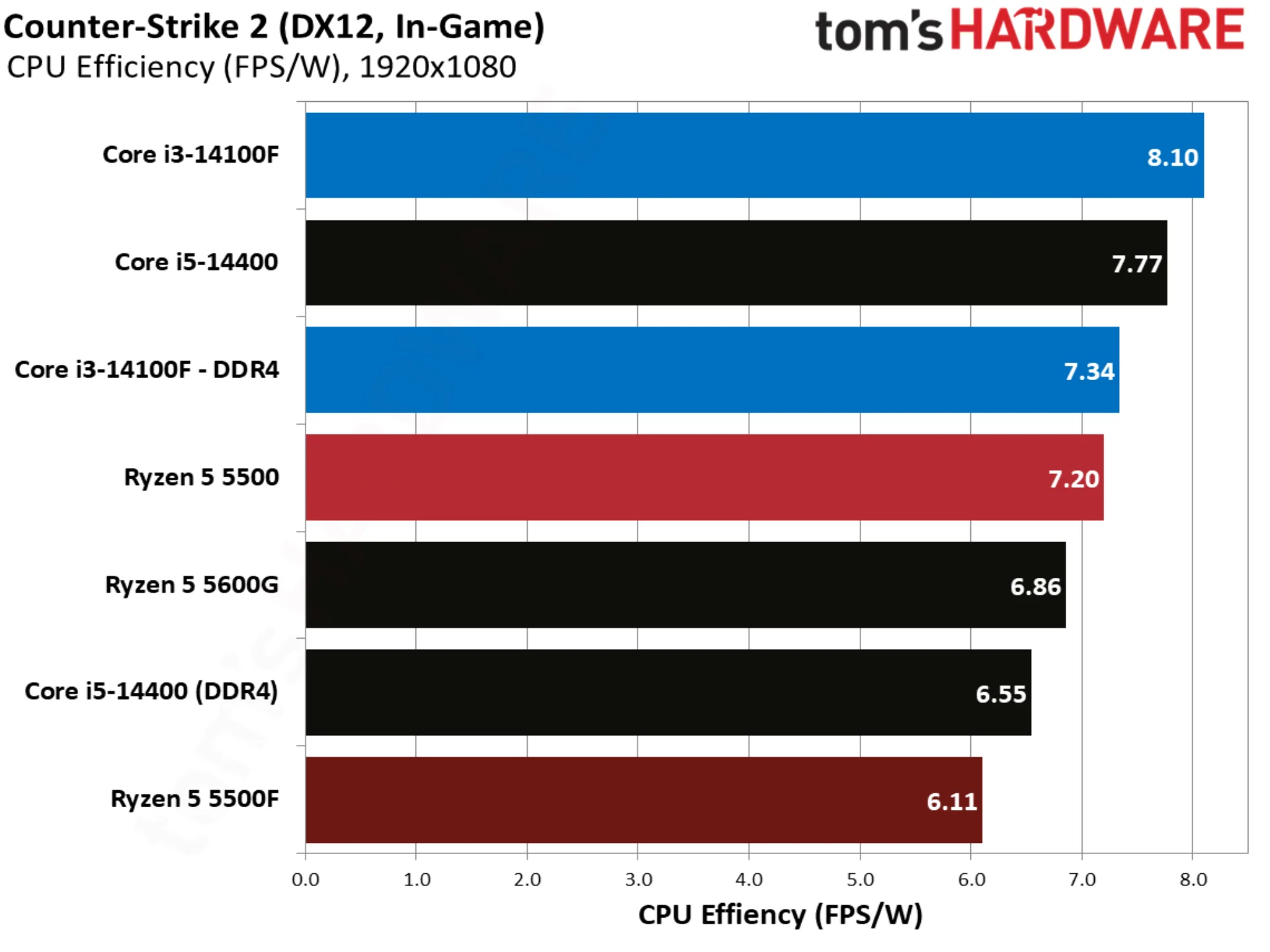
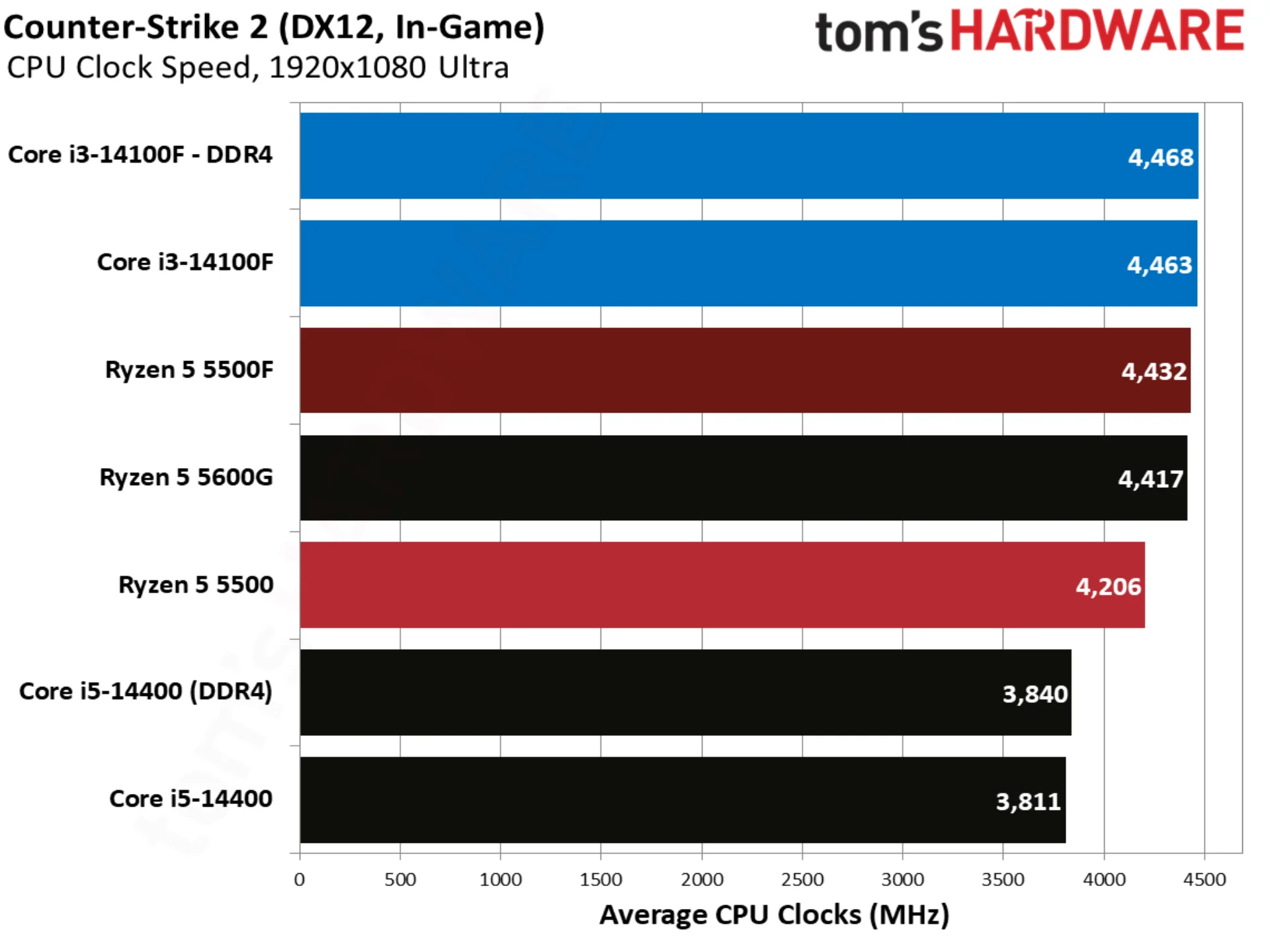
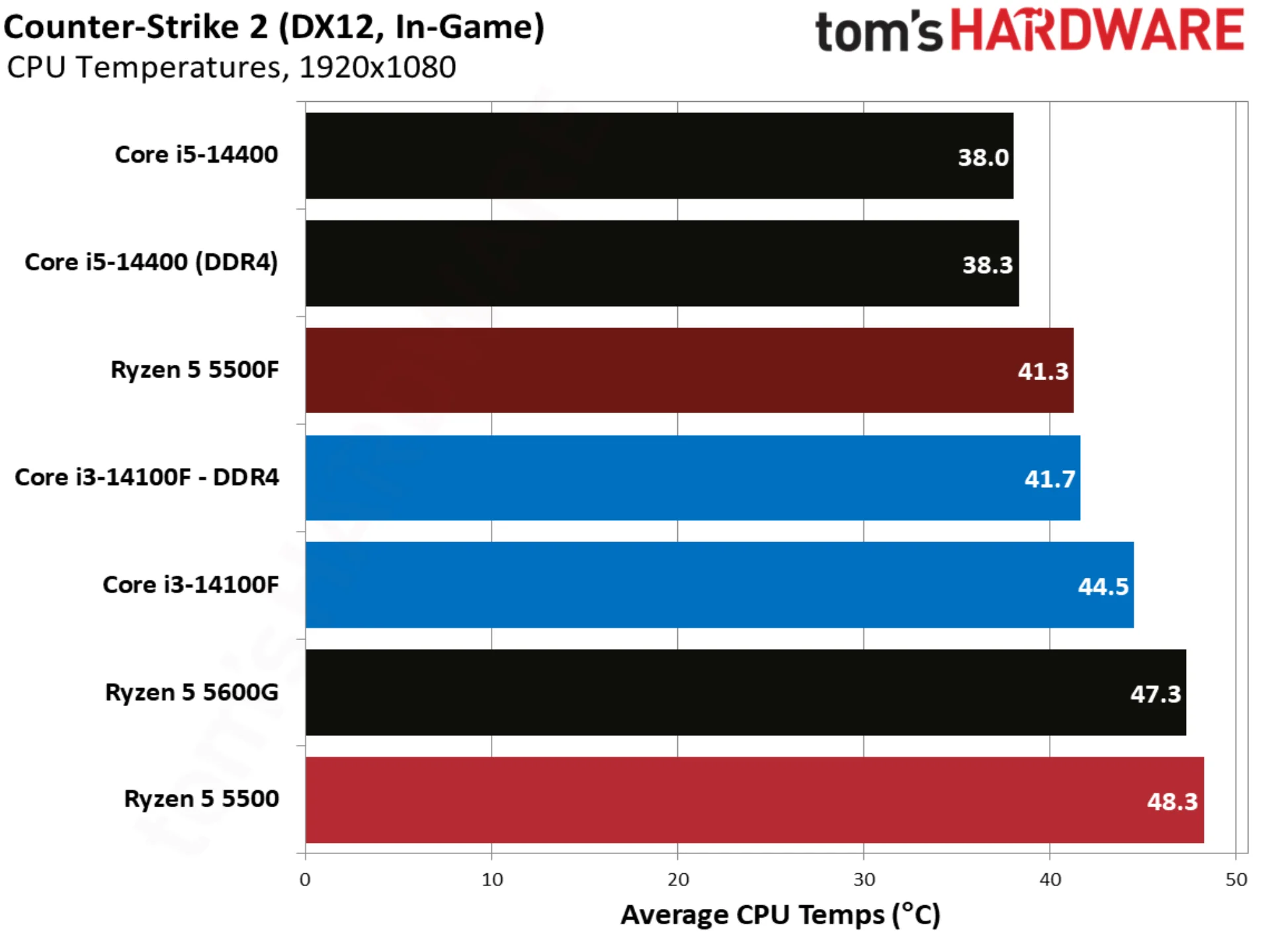
Counter-Strike 2 benchmarks
Cyberpunk 2077 benchmarks
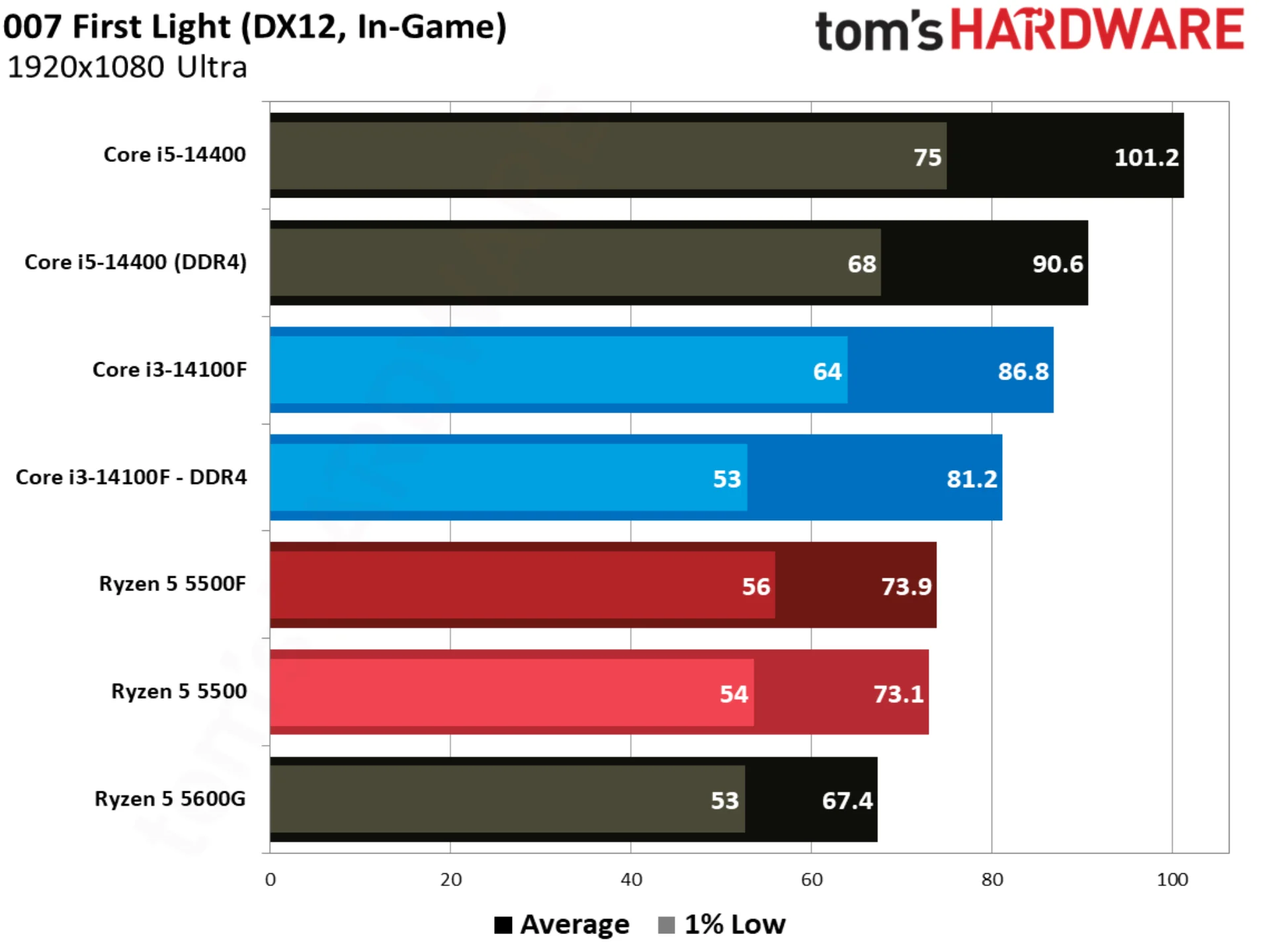
The Ryzen 5 5500F’s gaming results are a mixed bag, but the pattern is clear: it often closes the gap with Intel’s Core i3-14100F, and in several games it moves ahead. That’s more significant than any single win. The base Ryzen 5 5500 frequently trails Intel; the 5500F’s faster clock changes that matchup, though it doesn’t do so consistently.Cyberpunk 2077 and The Blood of Dawnwalker
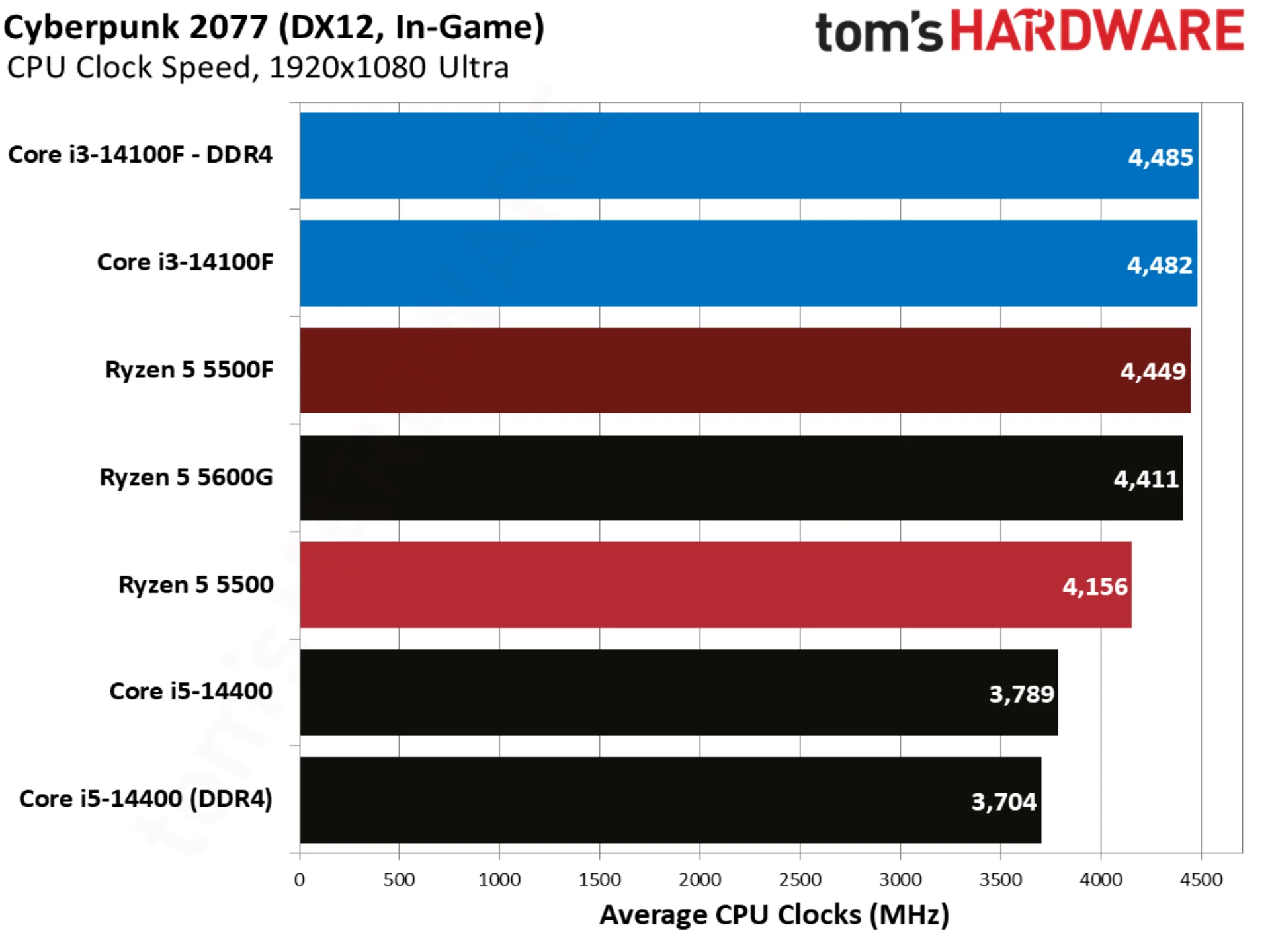
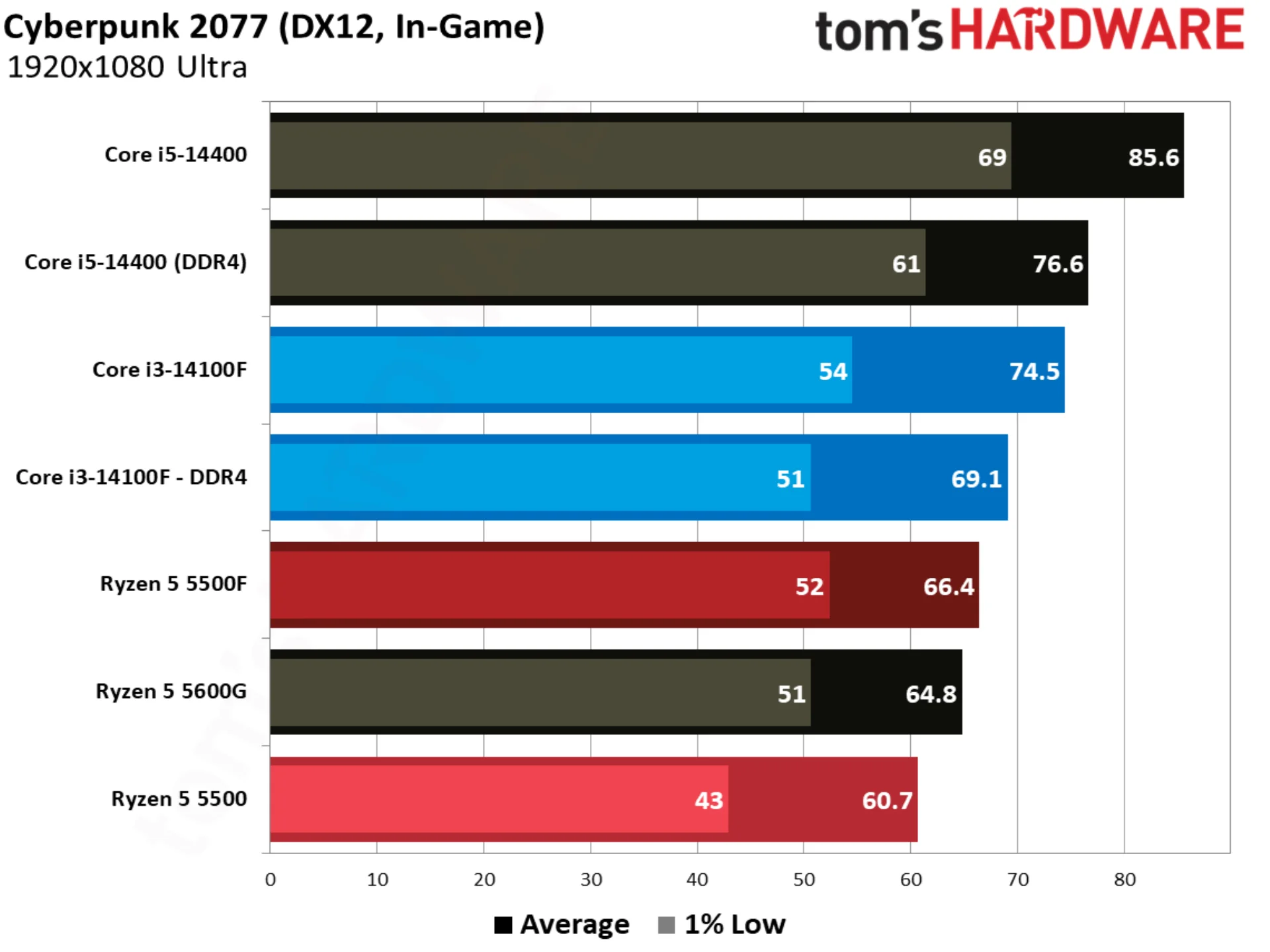
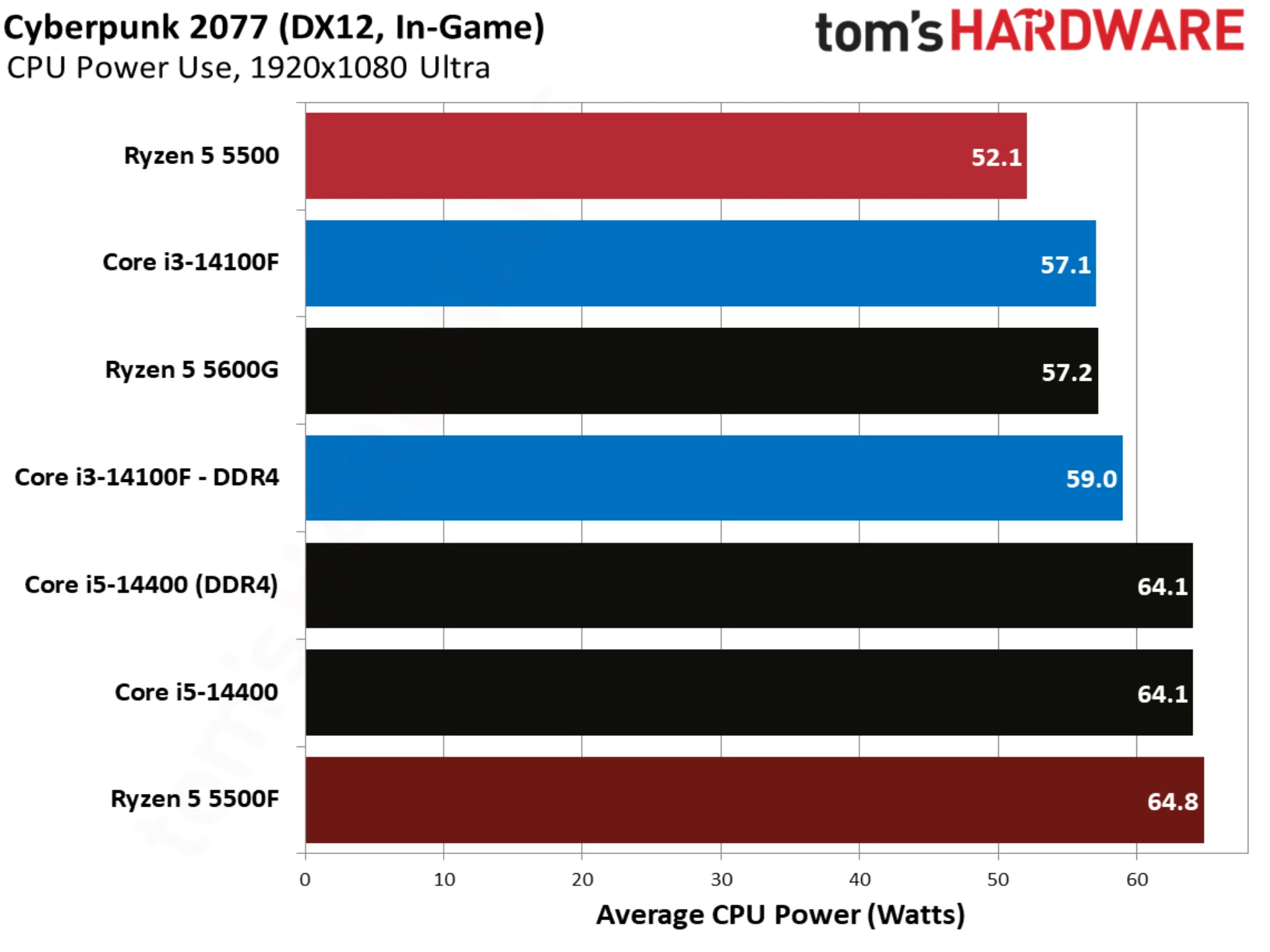
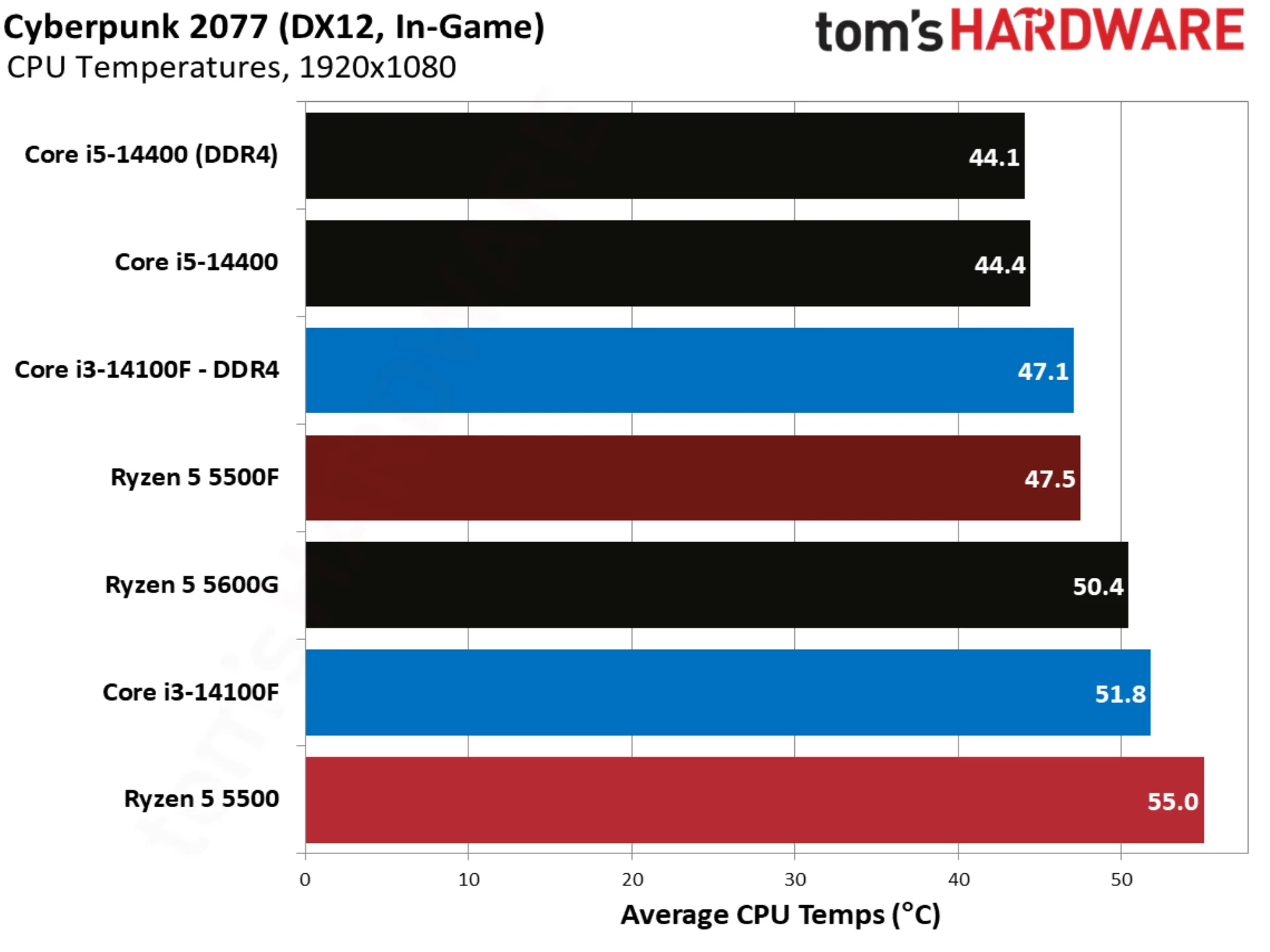
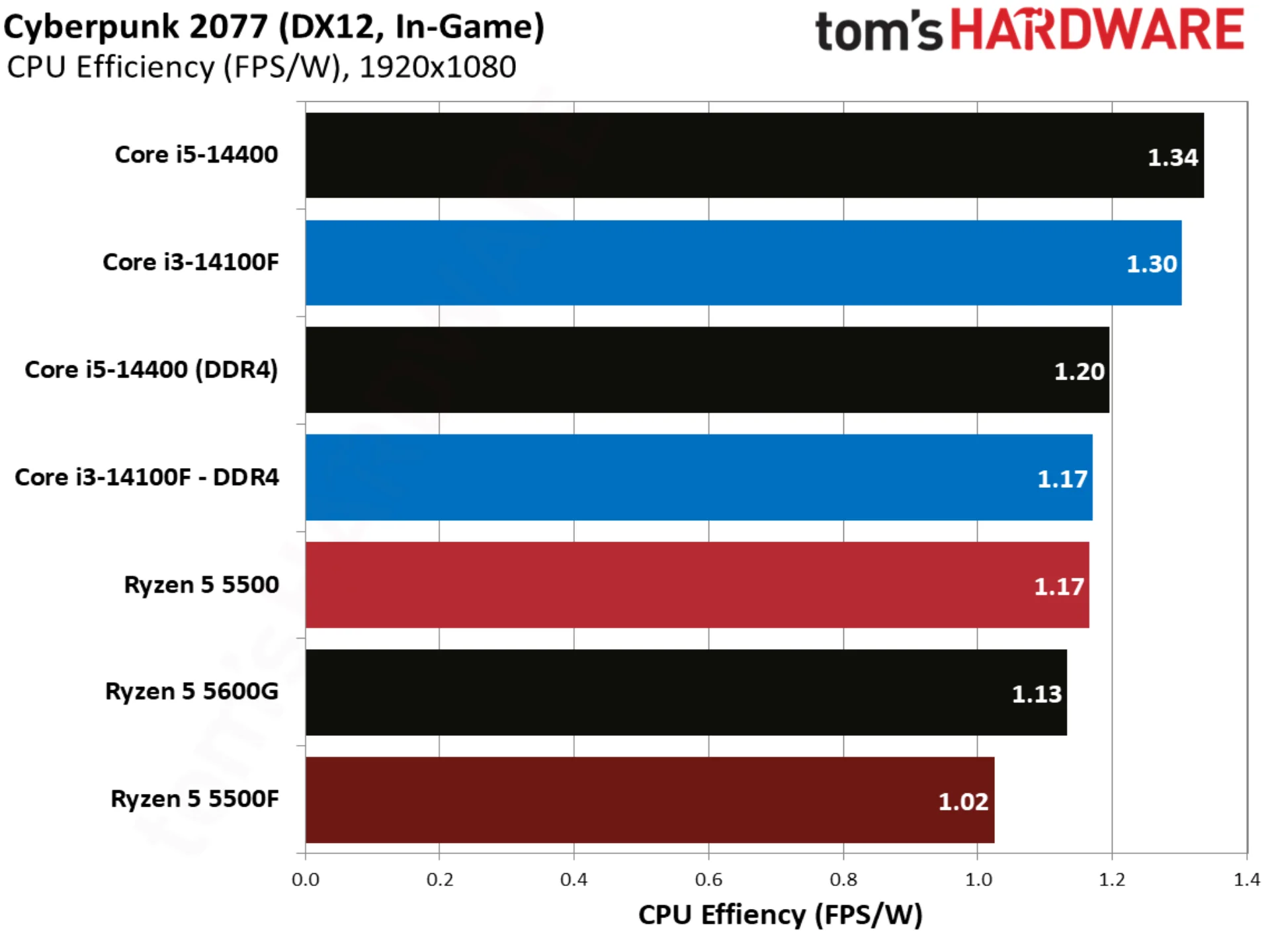
Cyberpunk 2077 is one of the 5500F’s stronger showings: it beats the Ryzen 5 5500 by 9.2%. Intel’s Core i3-14100F still comes out on top, but its lead over the 5500F is only 4.1%. Against the base 5500, Intel’s advantage is 13.8%. The 5500F makes that contest substantially closer.
The Blood of Dawnwalker
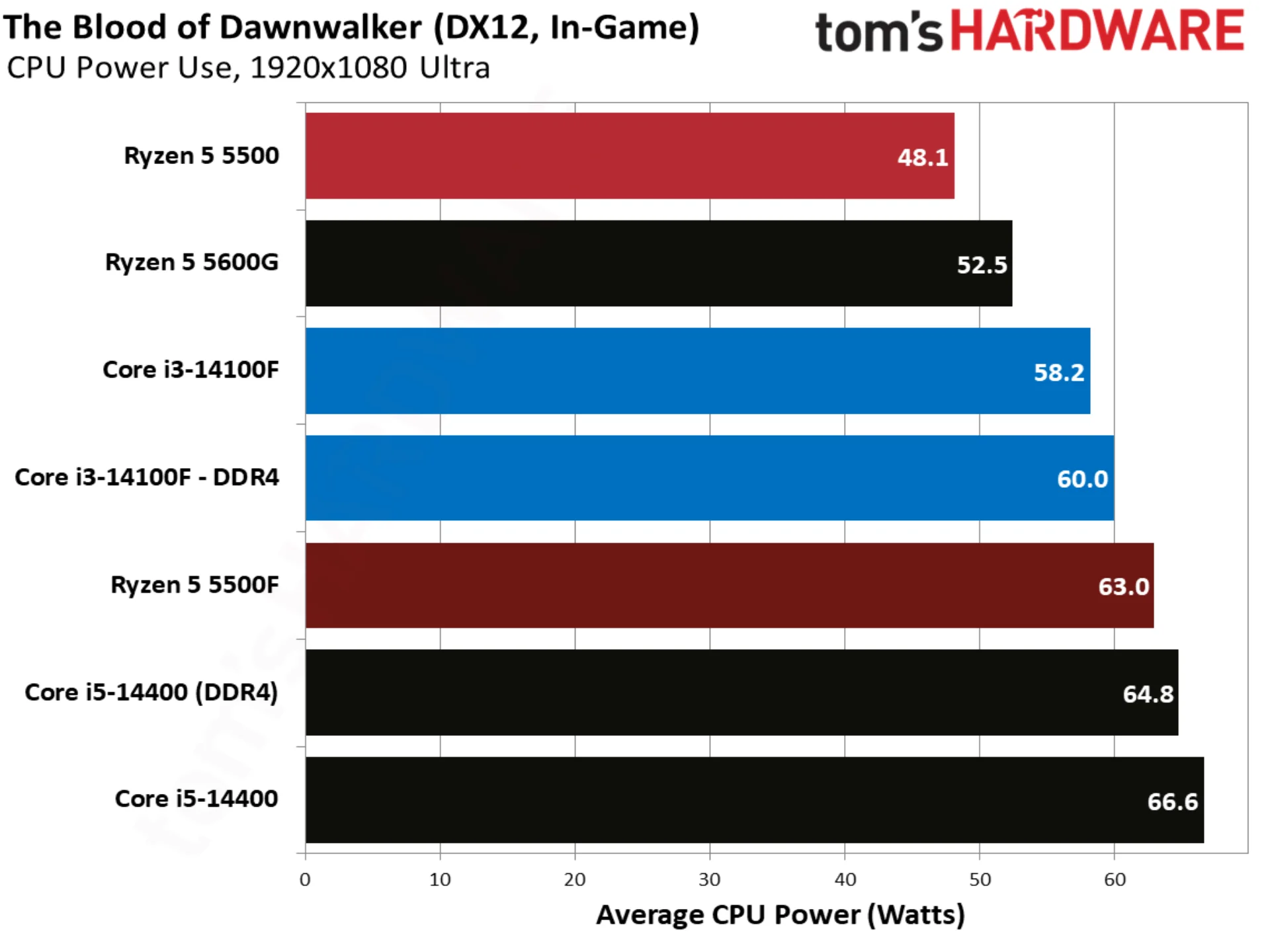
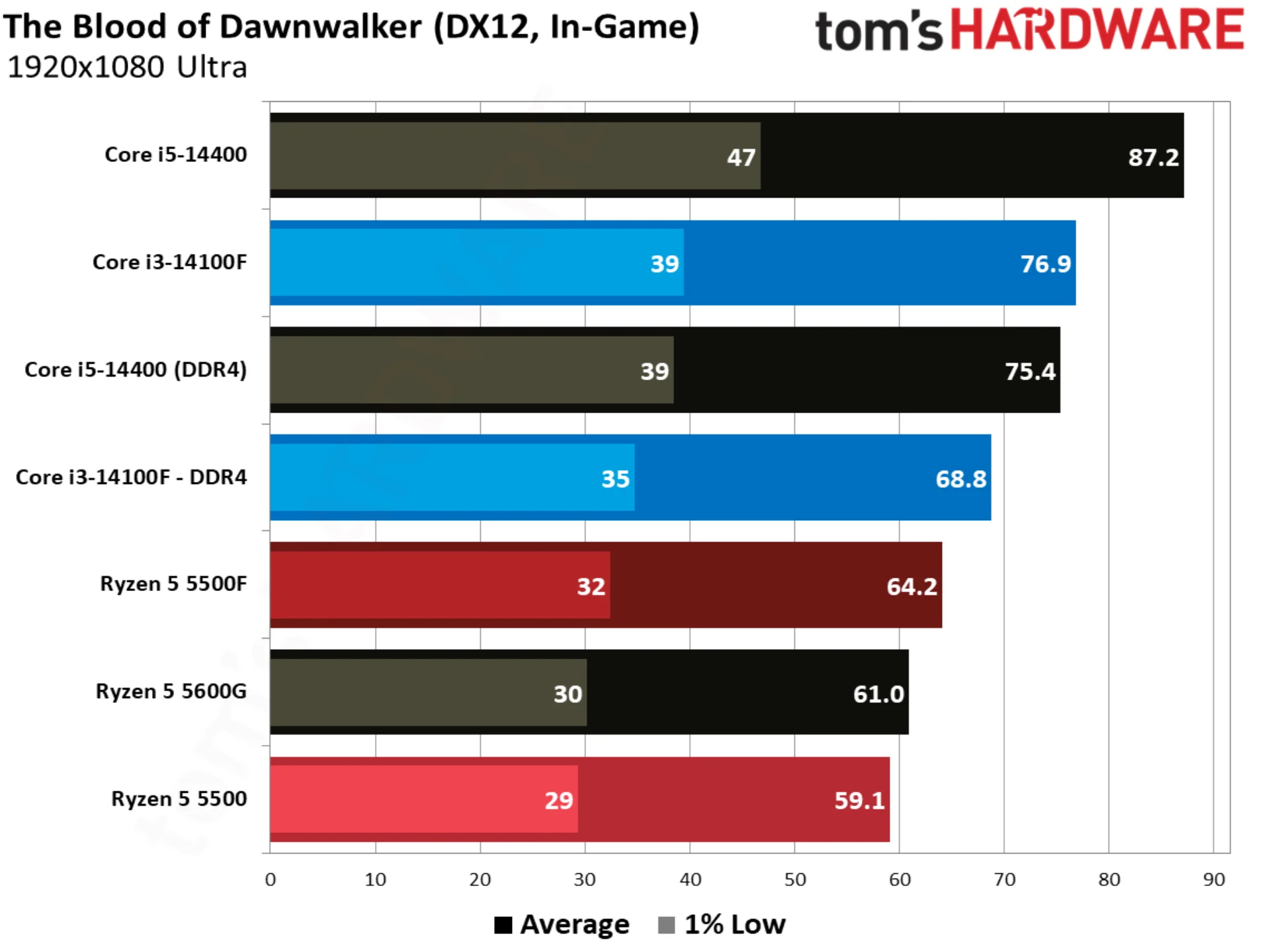
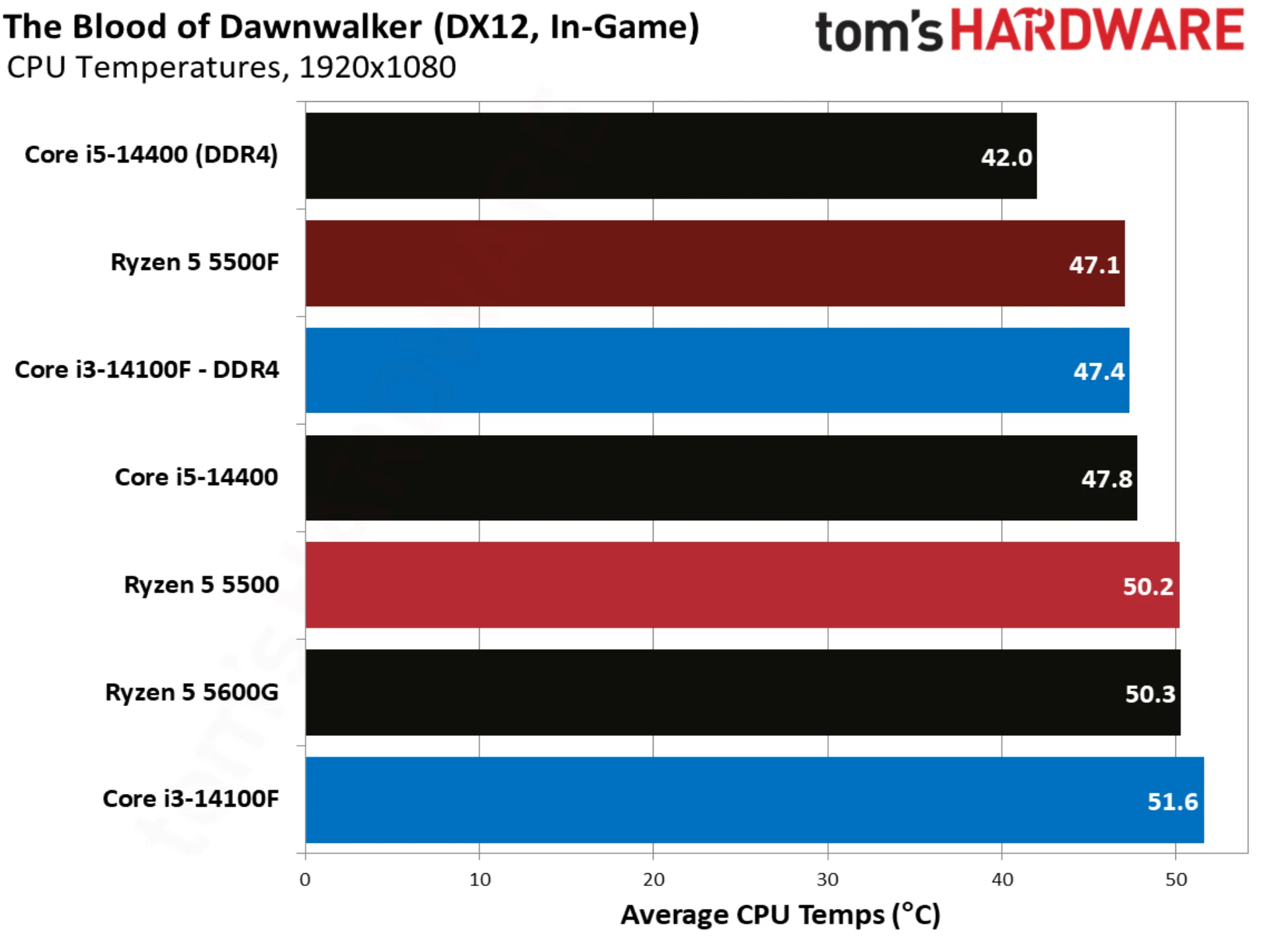
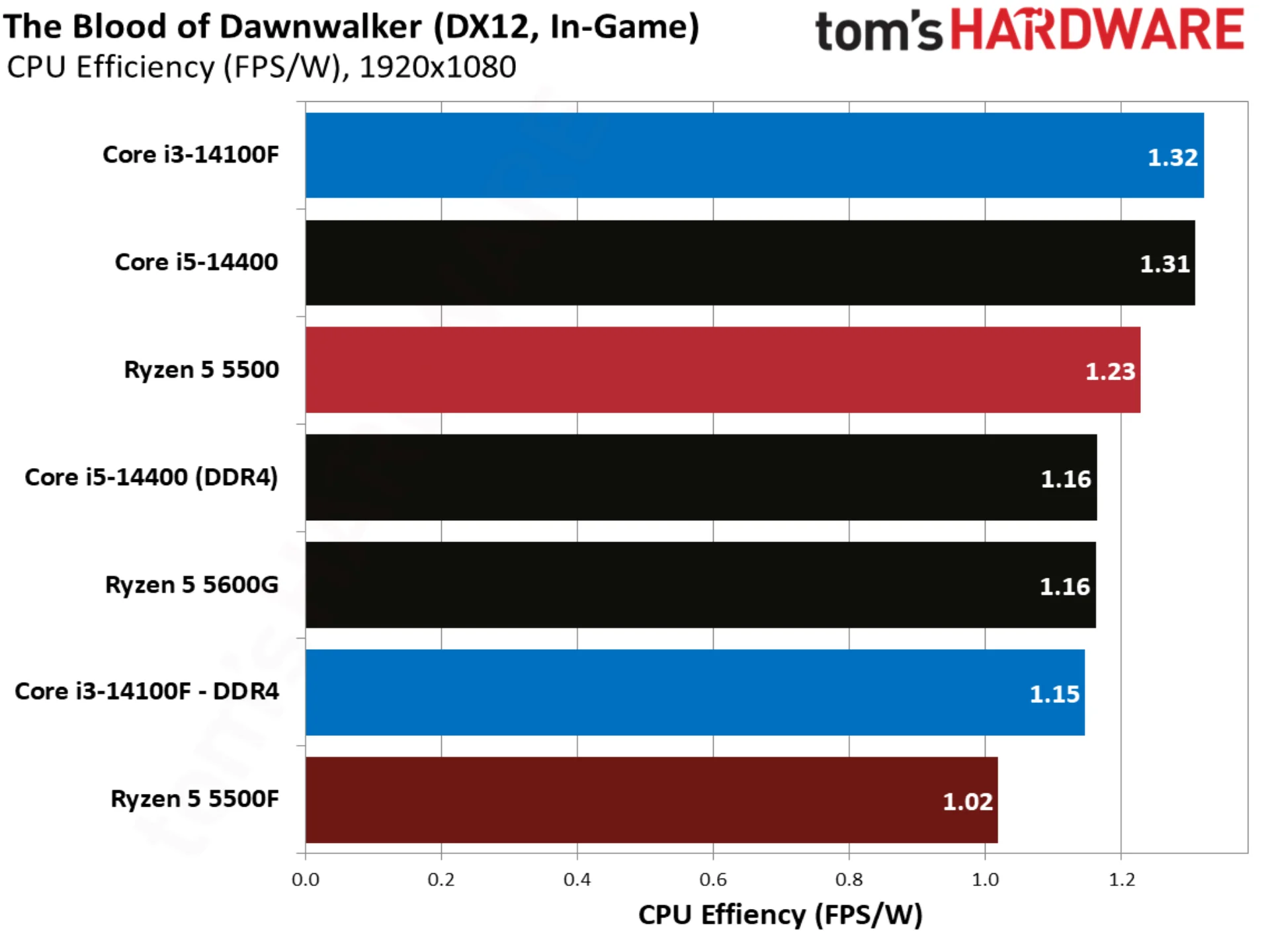
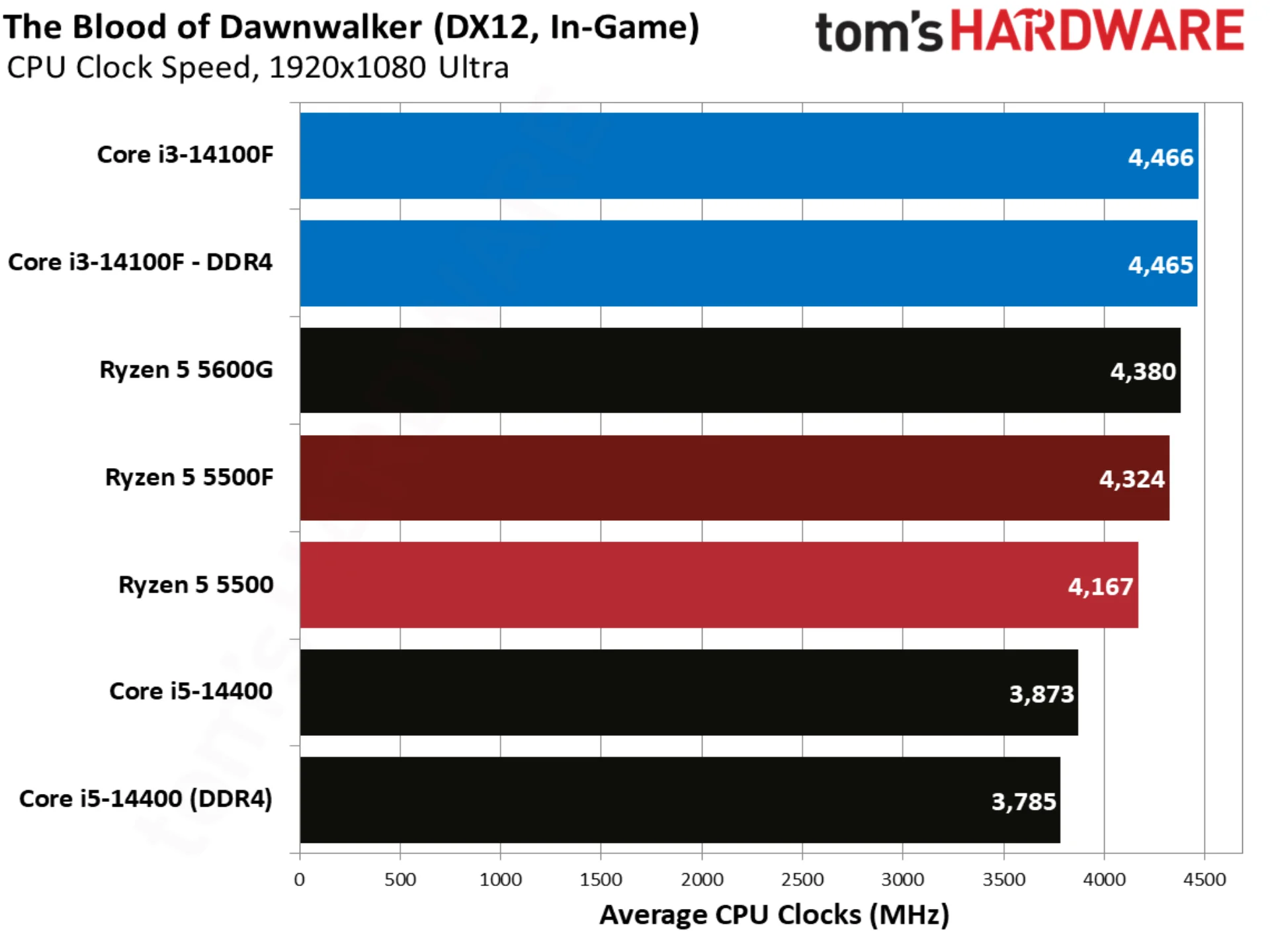
Our newest test, the Unreal Engine 5 game The Blood of Dawnwalker, sends the player through a dense city area that drives CPU use up and can cause stuttering. The 5500F beats the Ryzen 5 5500 by more than 8%, but Intel remains faster. It’s a demanding scenario, though the results alone don’t show whether that lead comes from higher average frame rates, smoother delivery, or both.
F1 2024 and Final Fantasy XIV
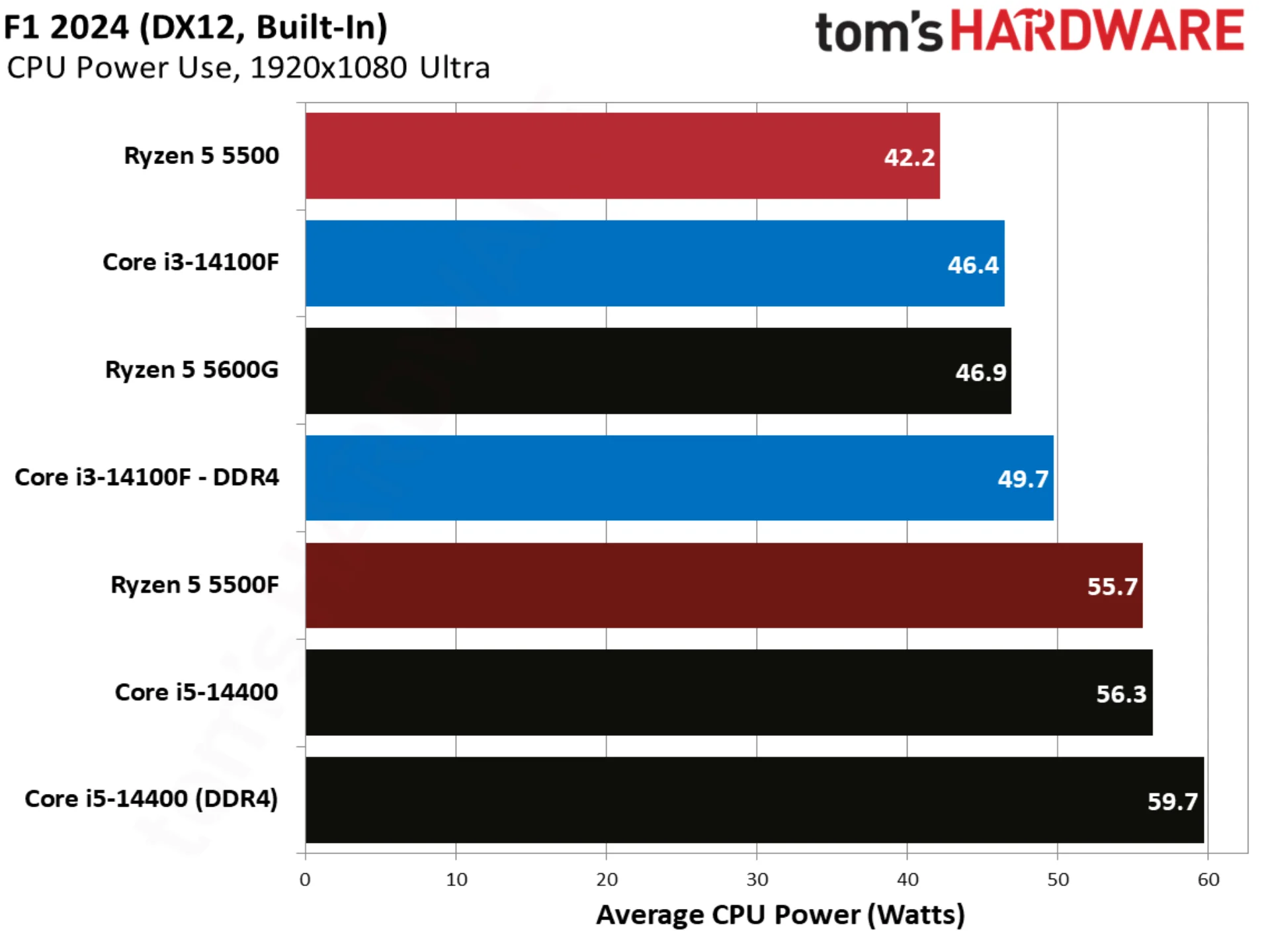
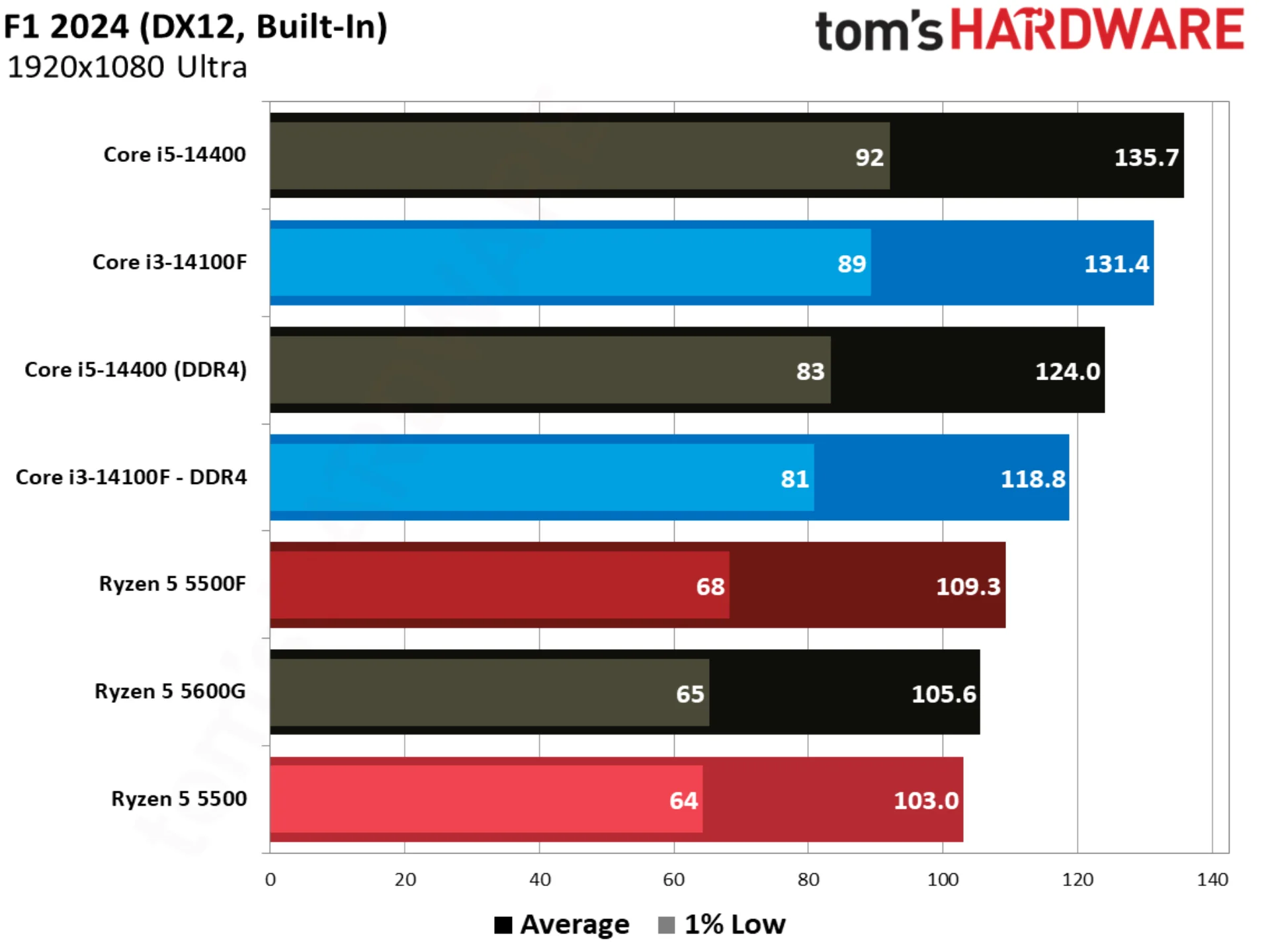
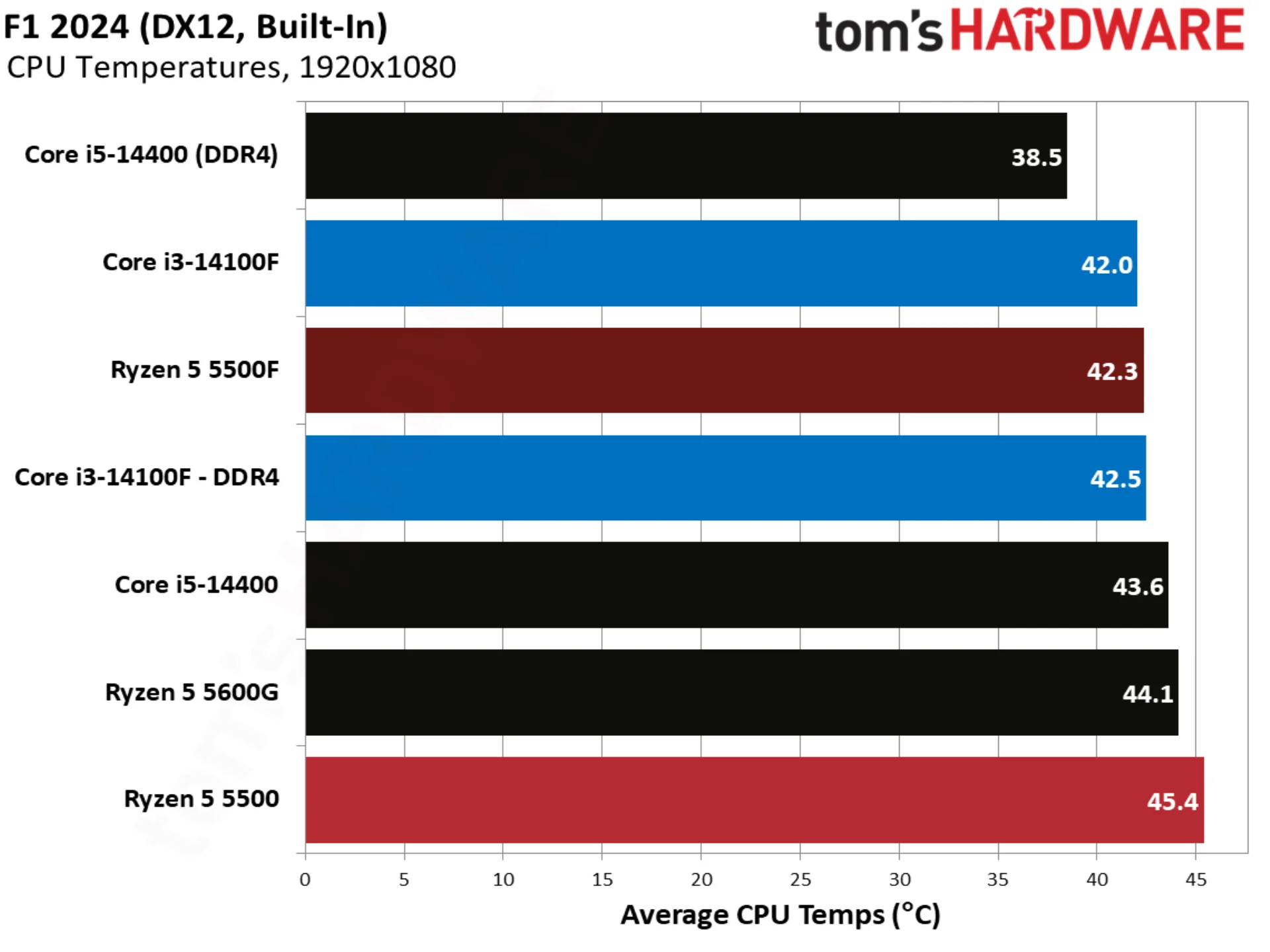
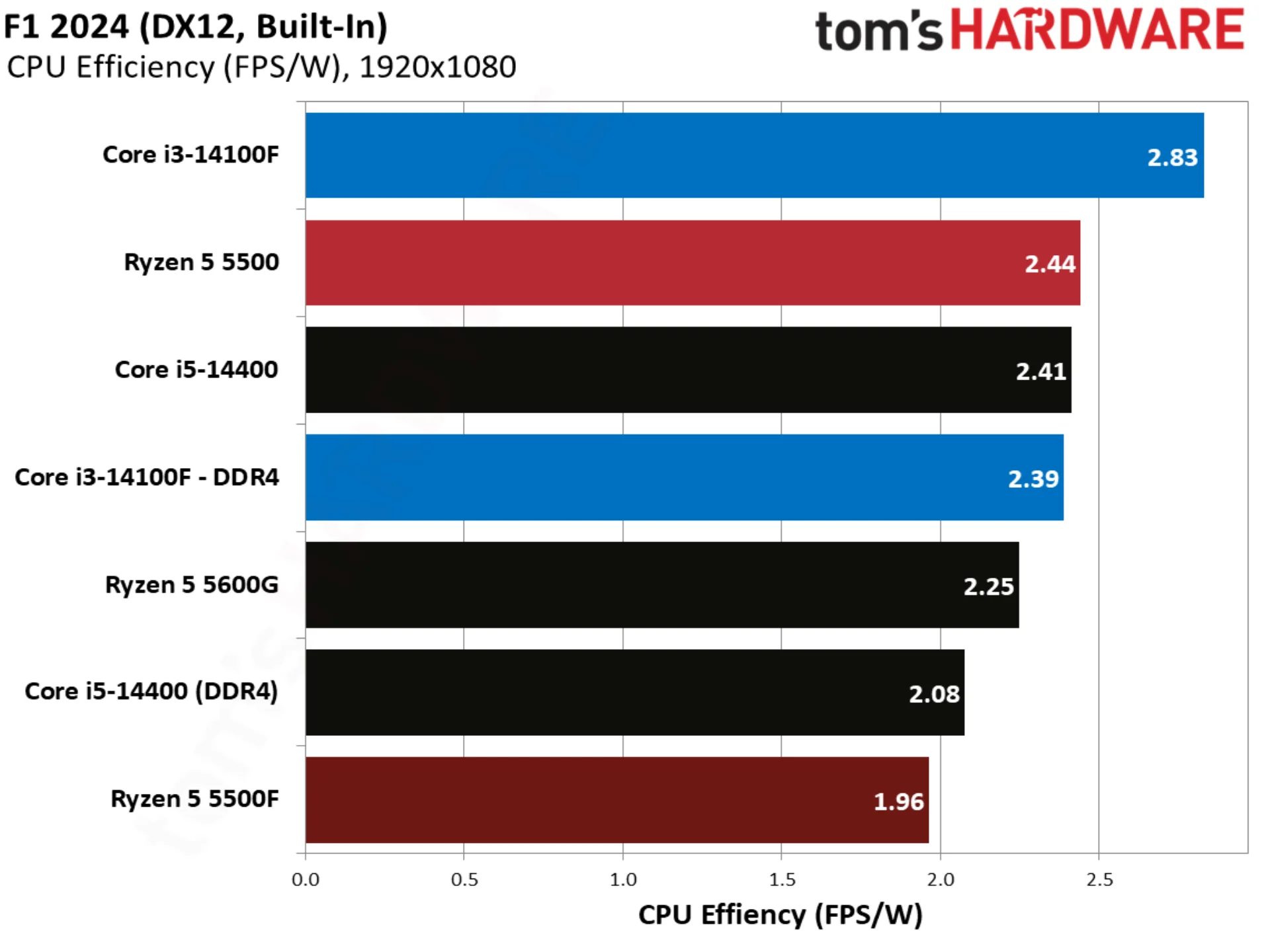
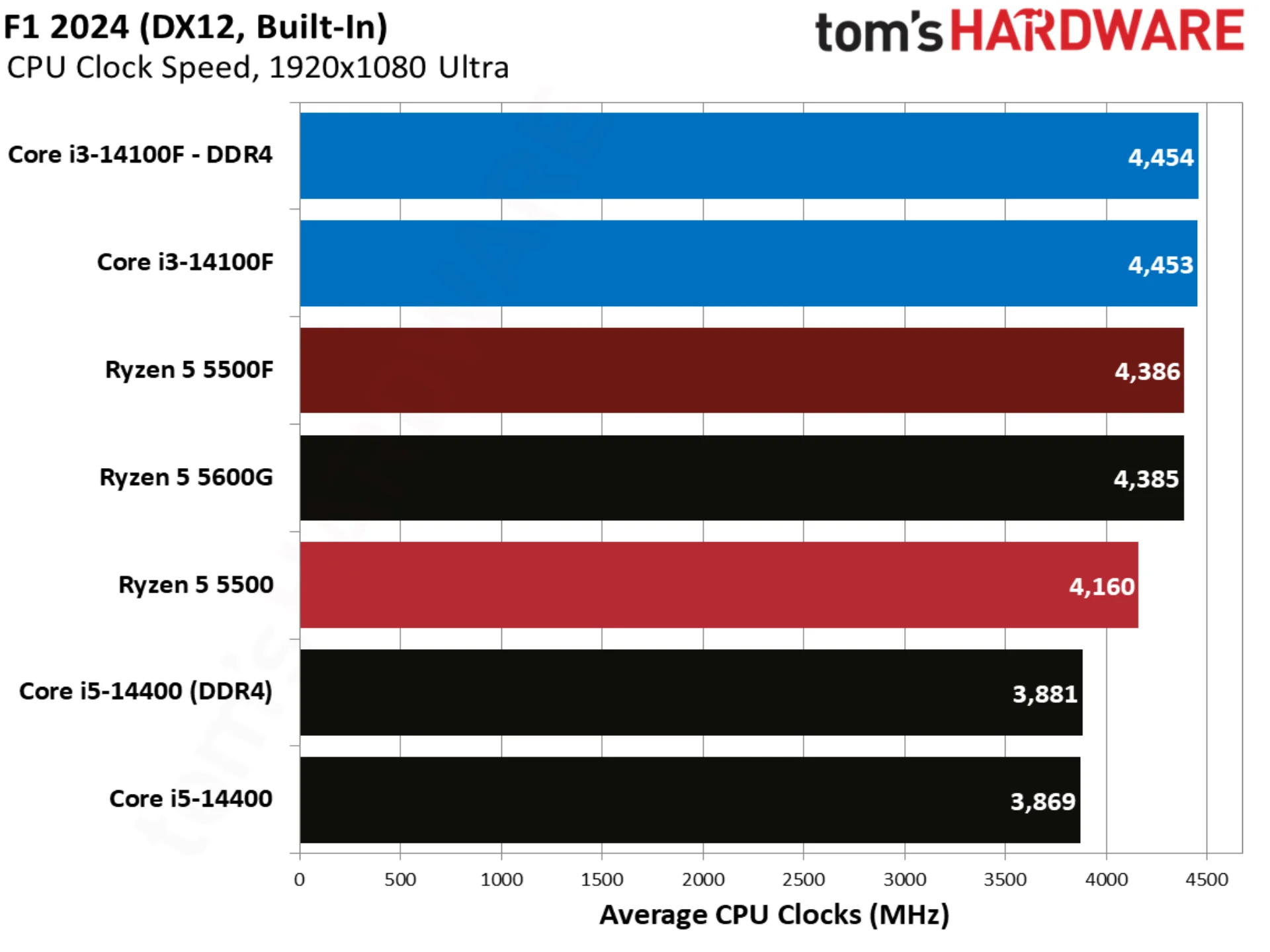
F1 2024 tends to favor AMD when tested with newer, faster processors. Here, lower down the product stack, Intel takes the lead despite the 5500F improving on its predecessor. That reversal is a reminder that benchmark trends at the high end don’t necessarily predict how budget chips compare.
Final Fantasy XIV
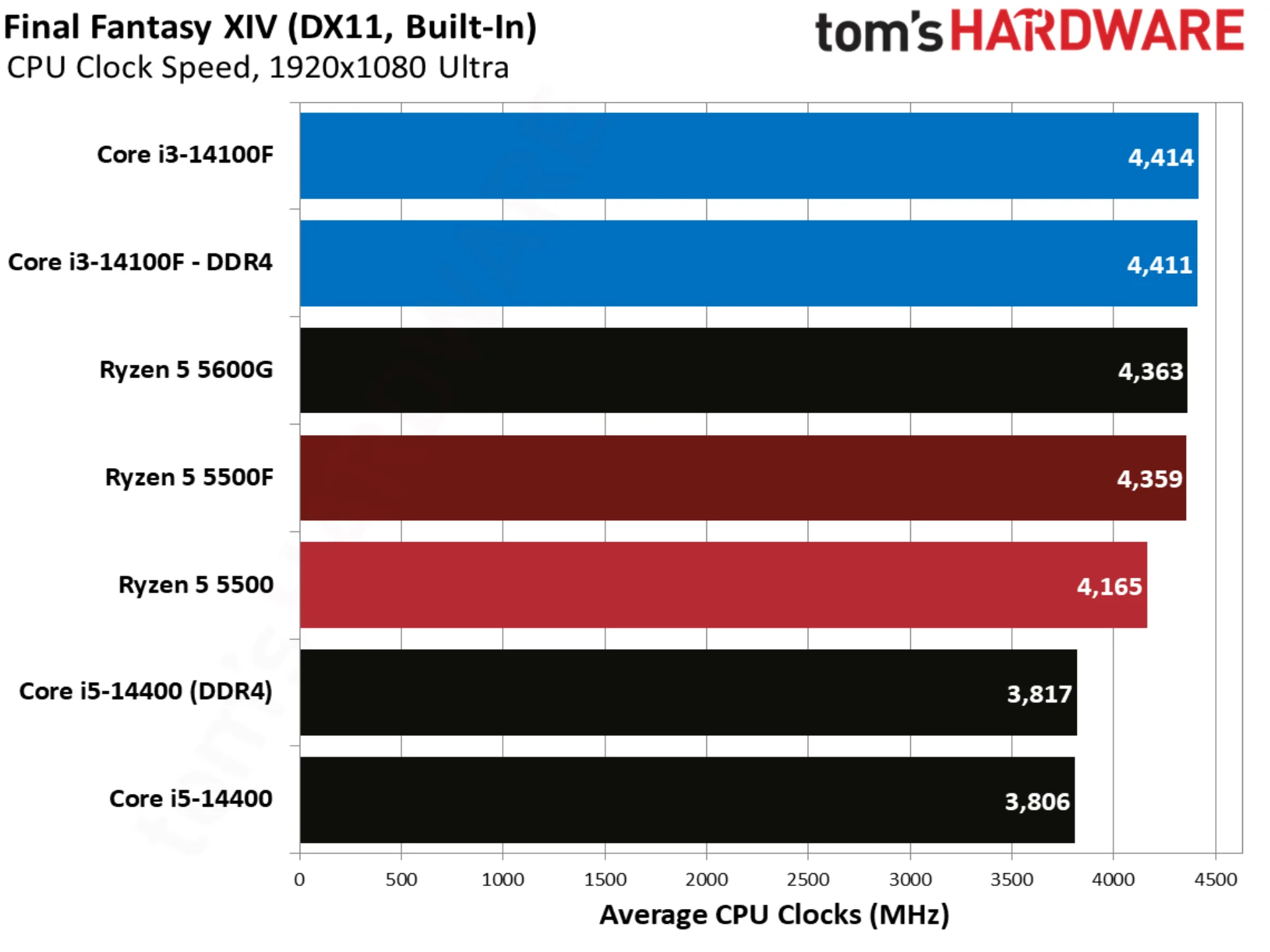
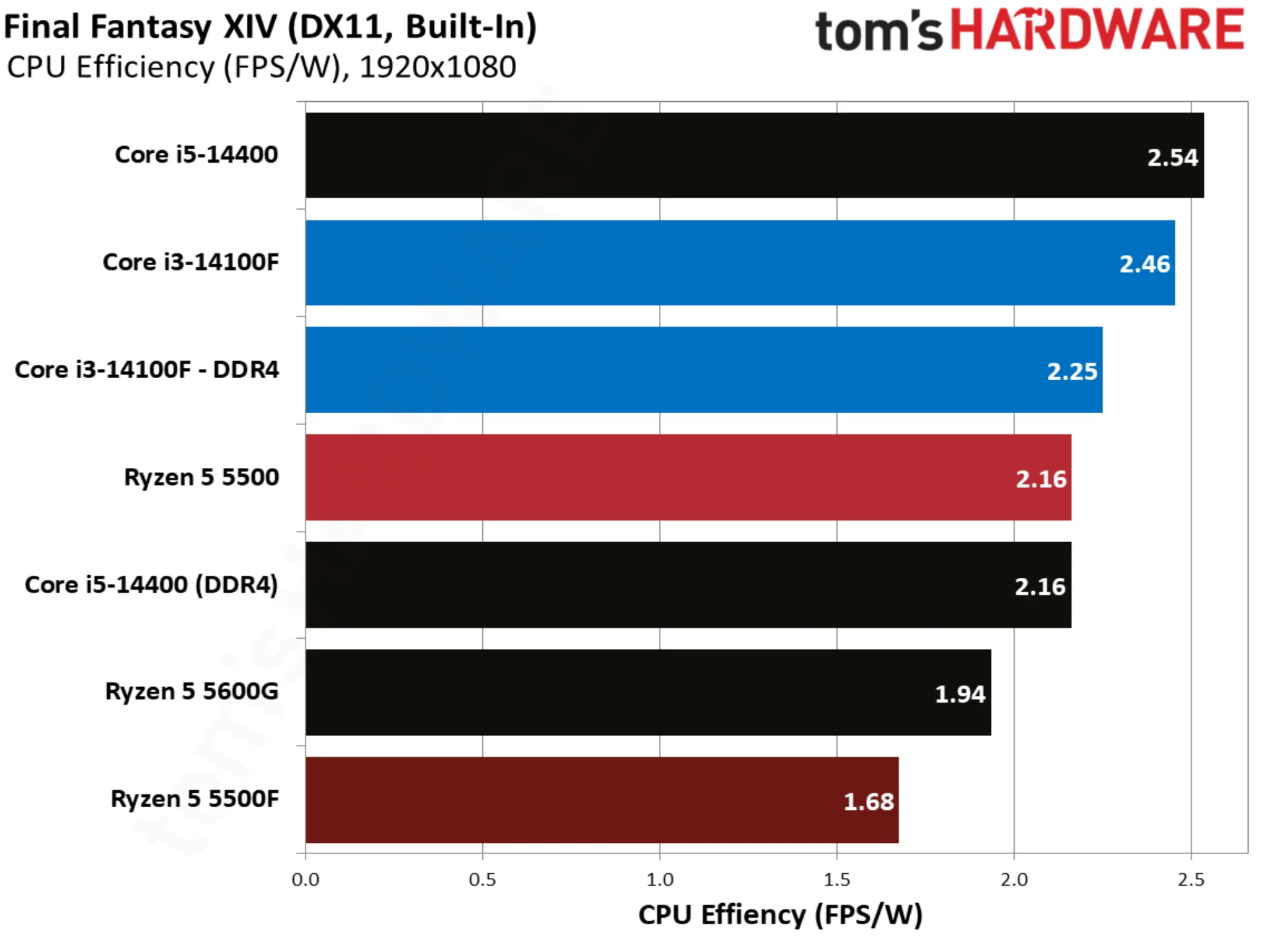
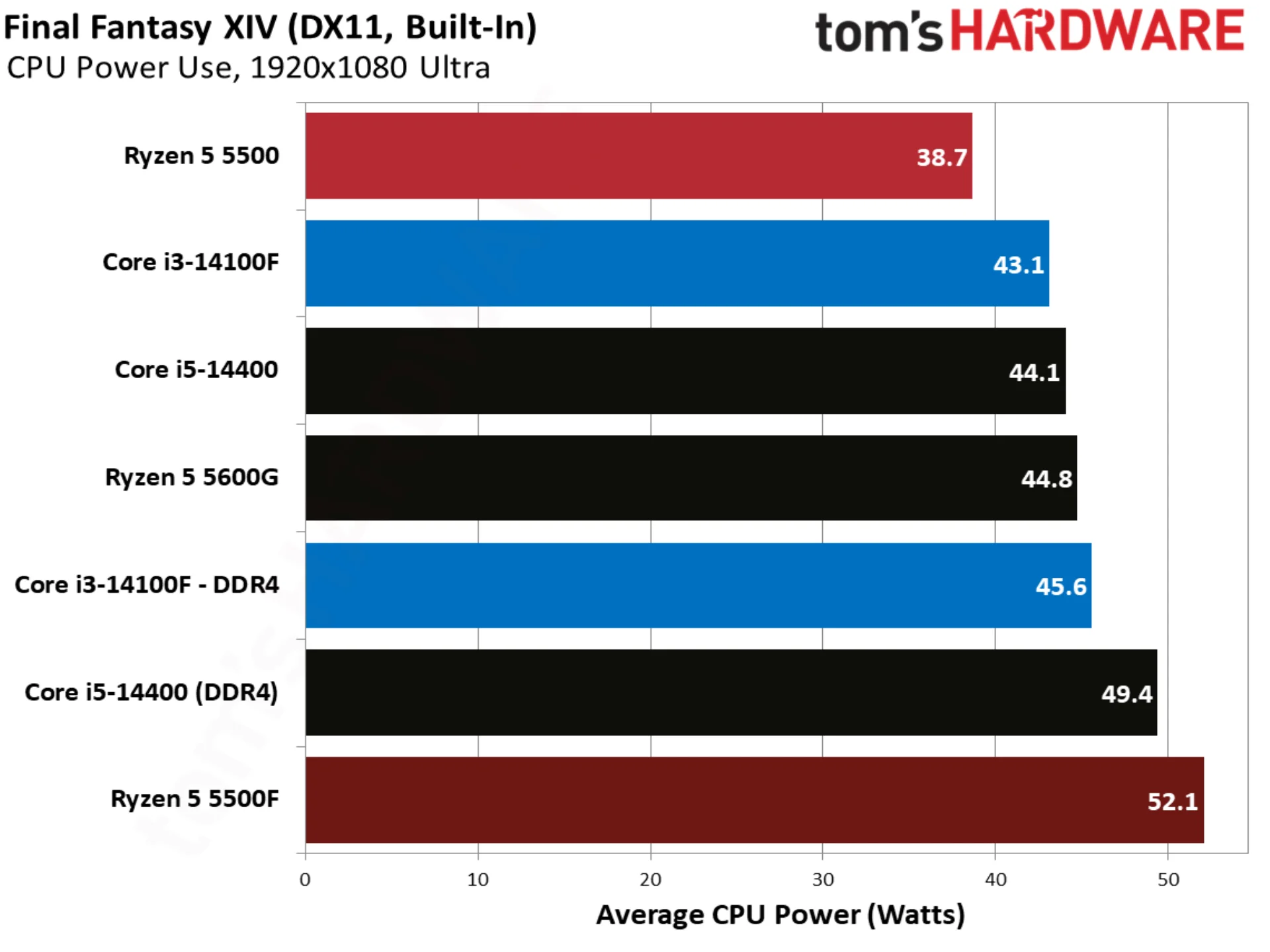
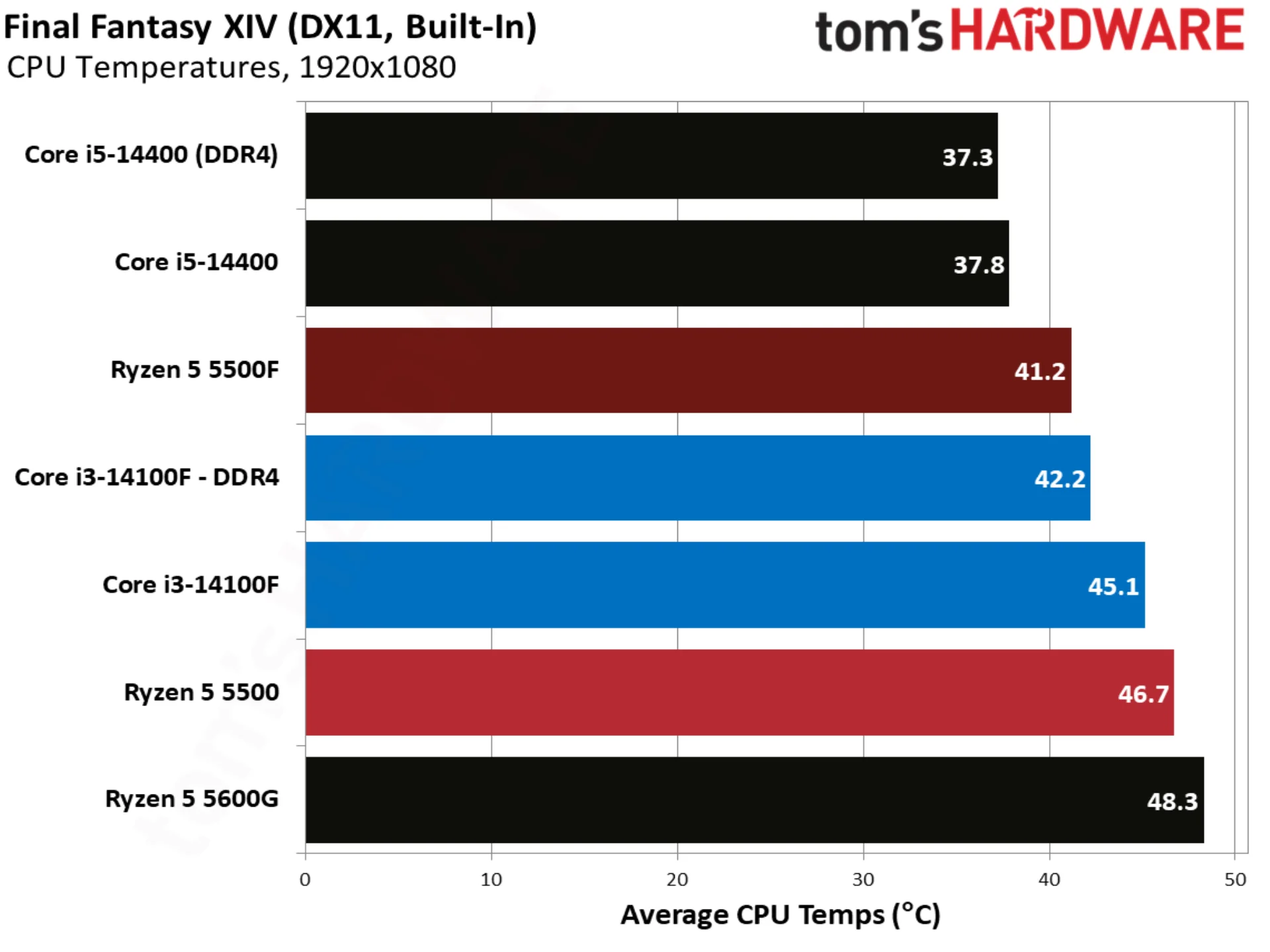
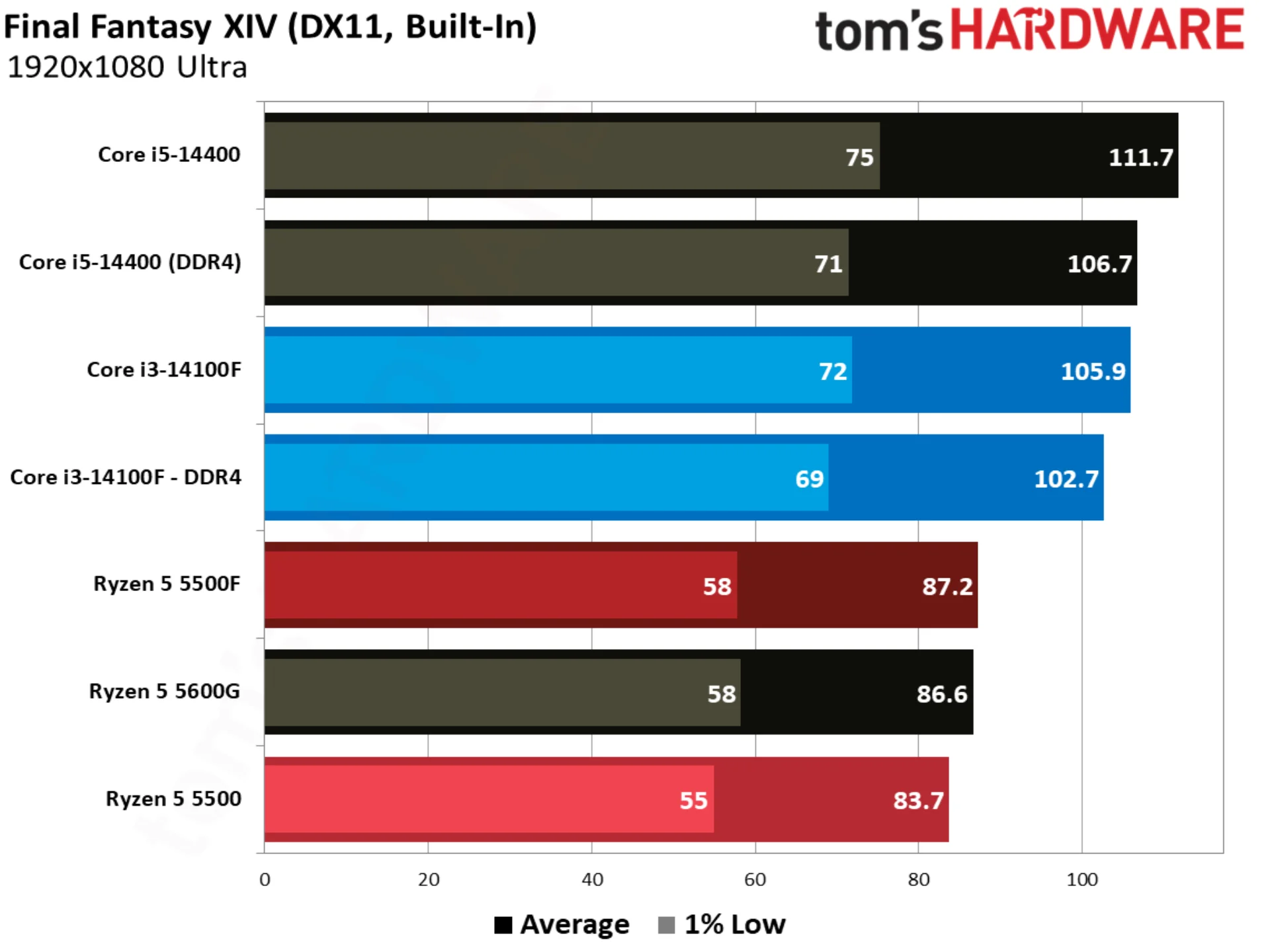
Final Fantasy XIV is broadly balanced between AMD and Intel, but it strongly rewards AMD’s X3D chips. None are in this comparison, and the 5500F trails the Core i3-14100F by 15%. Moving the Intel chip to DDR5 adds little here, so memory generation doesn’t erase the performance gap.
Flight Simulator 24 and Forza Horizon 6
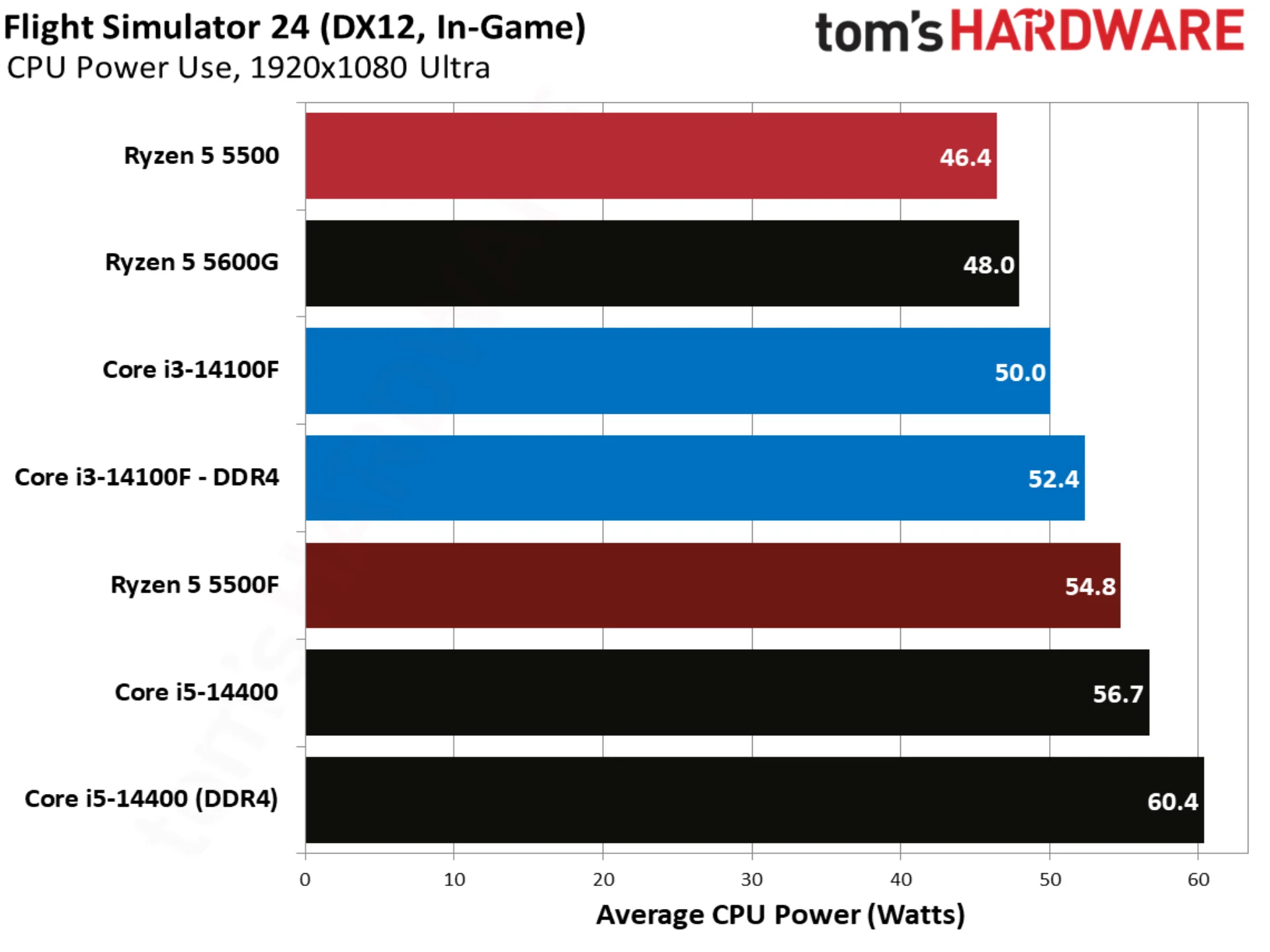
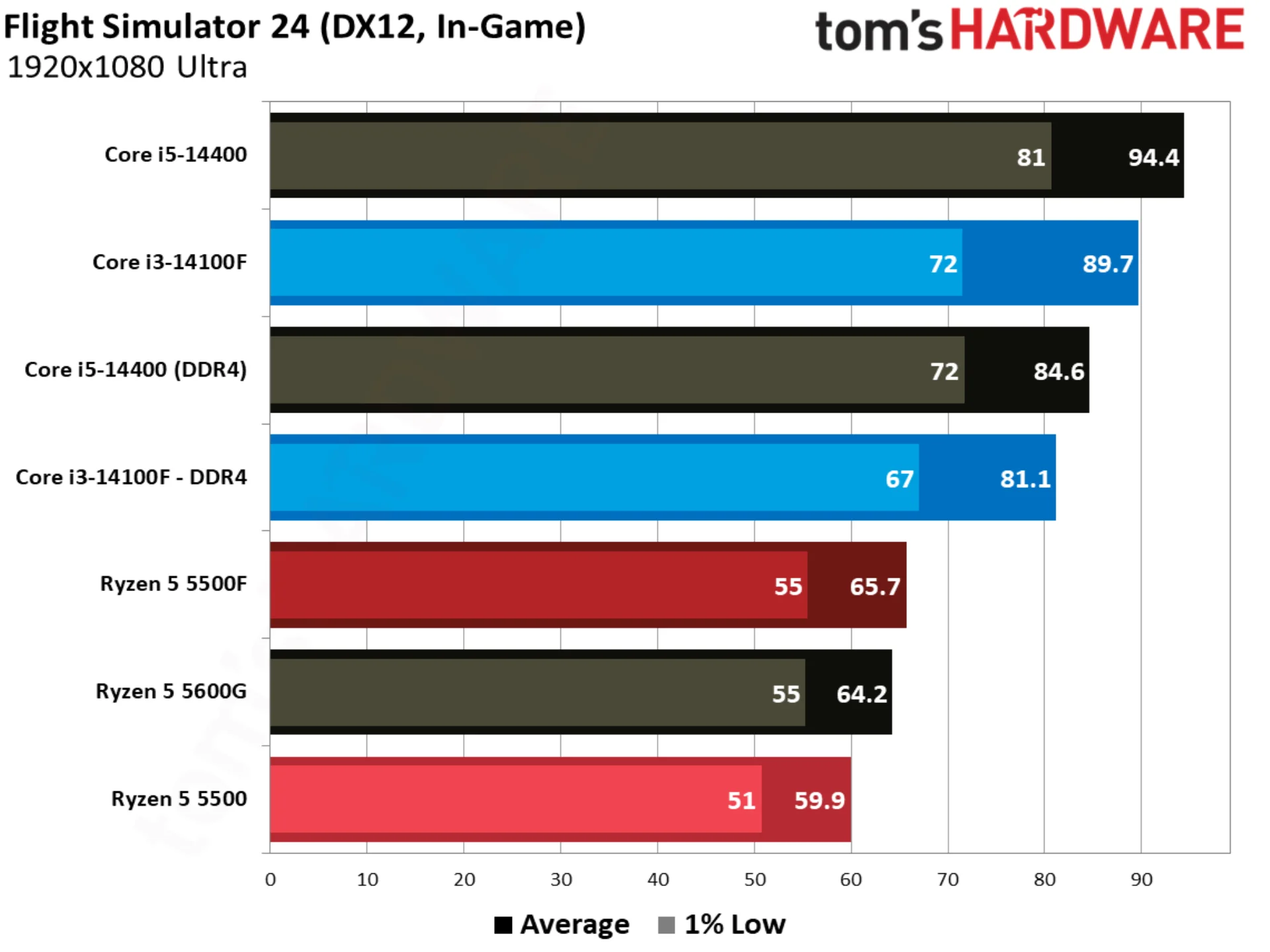
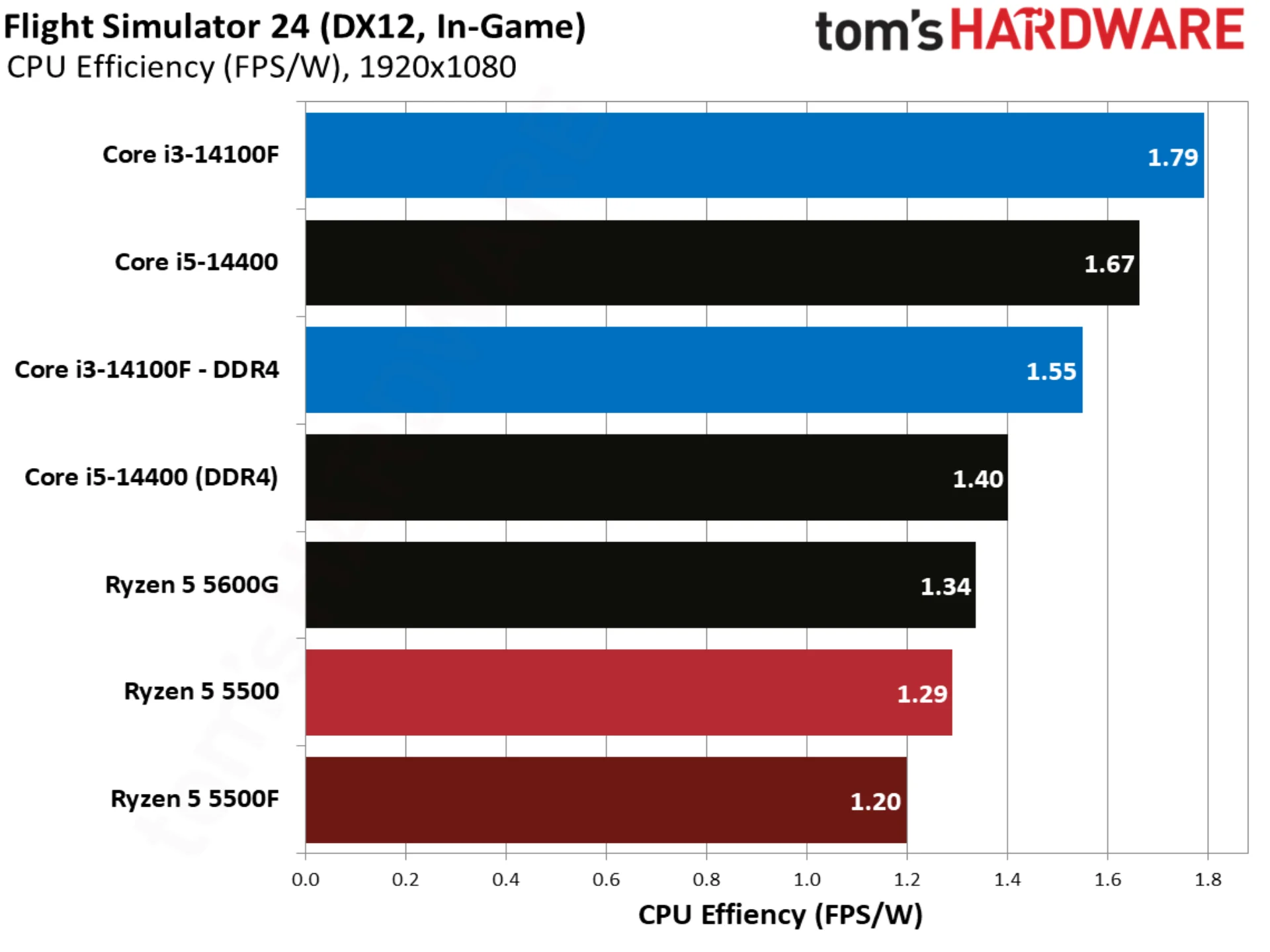
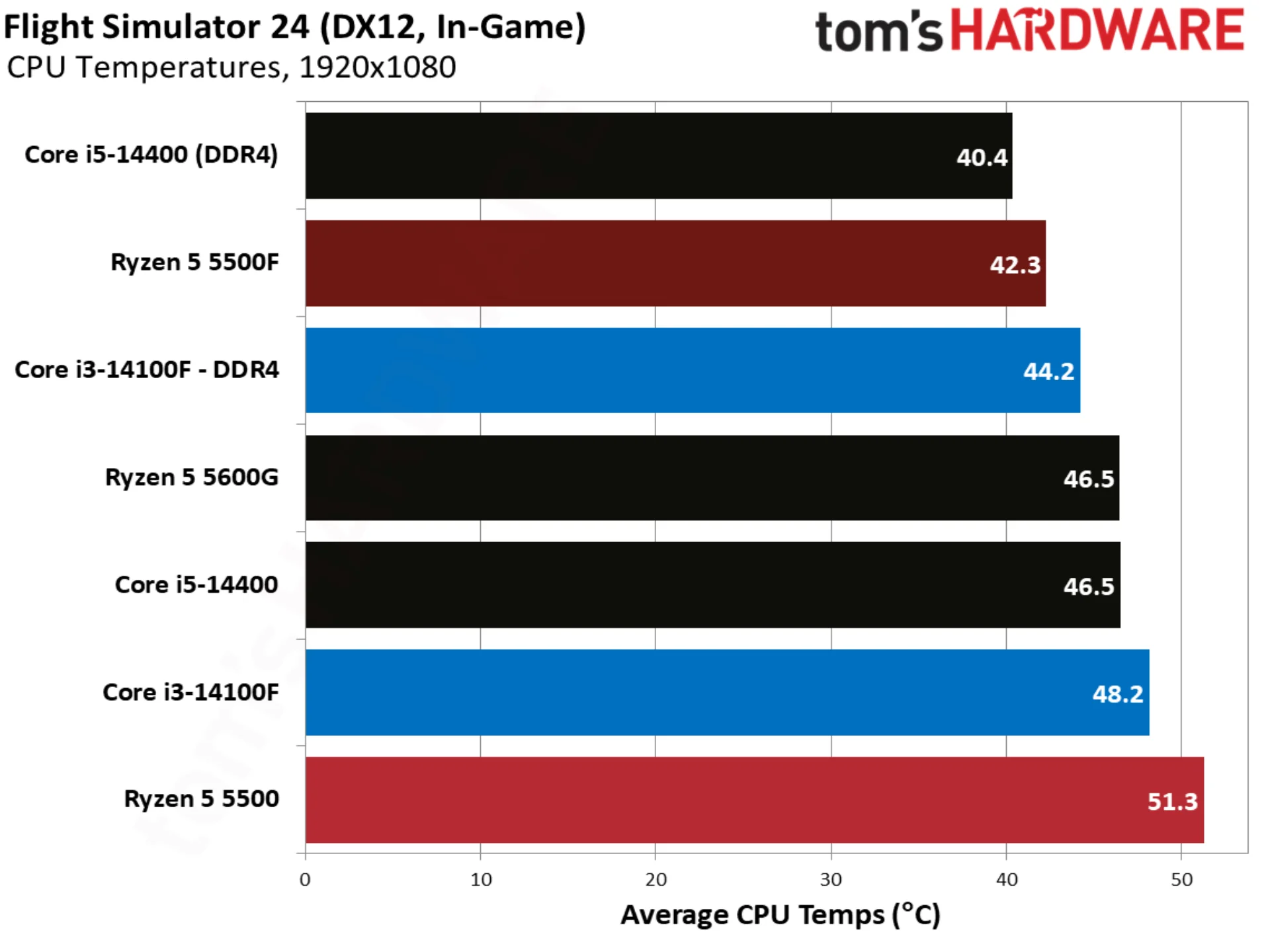
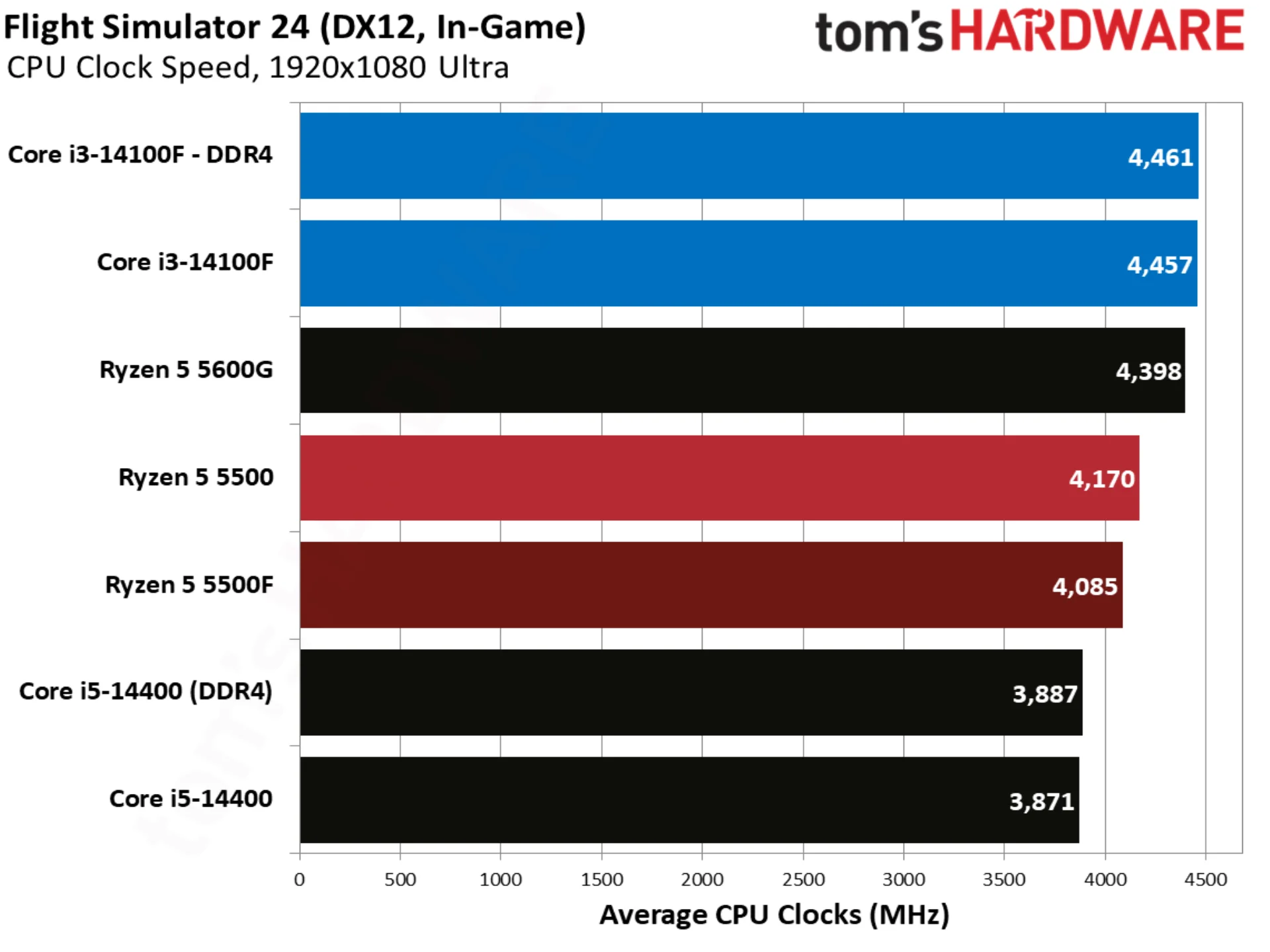
A 9.6% gain over the Ryzen 5 5500 gives the 5500F a useful bump in Flight Simulator 24, where even a few extra frames can matter. Still, Intel’s Core i3-14100F is 18.9% faster. That’s a clear win for Intel in this title.
Forza Horizon 6
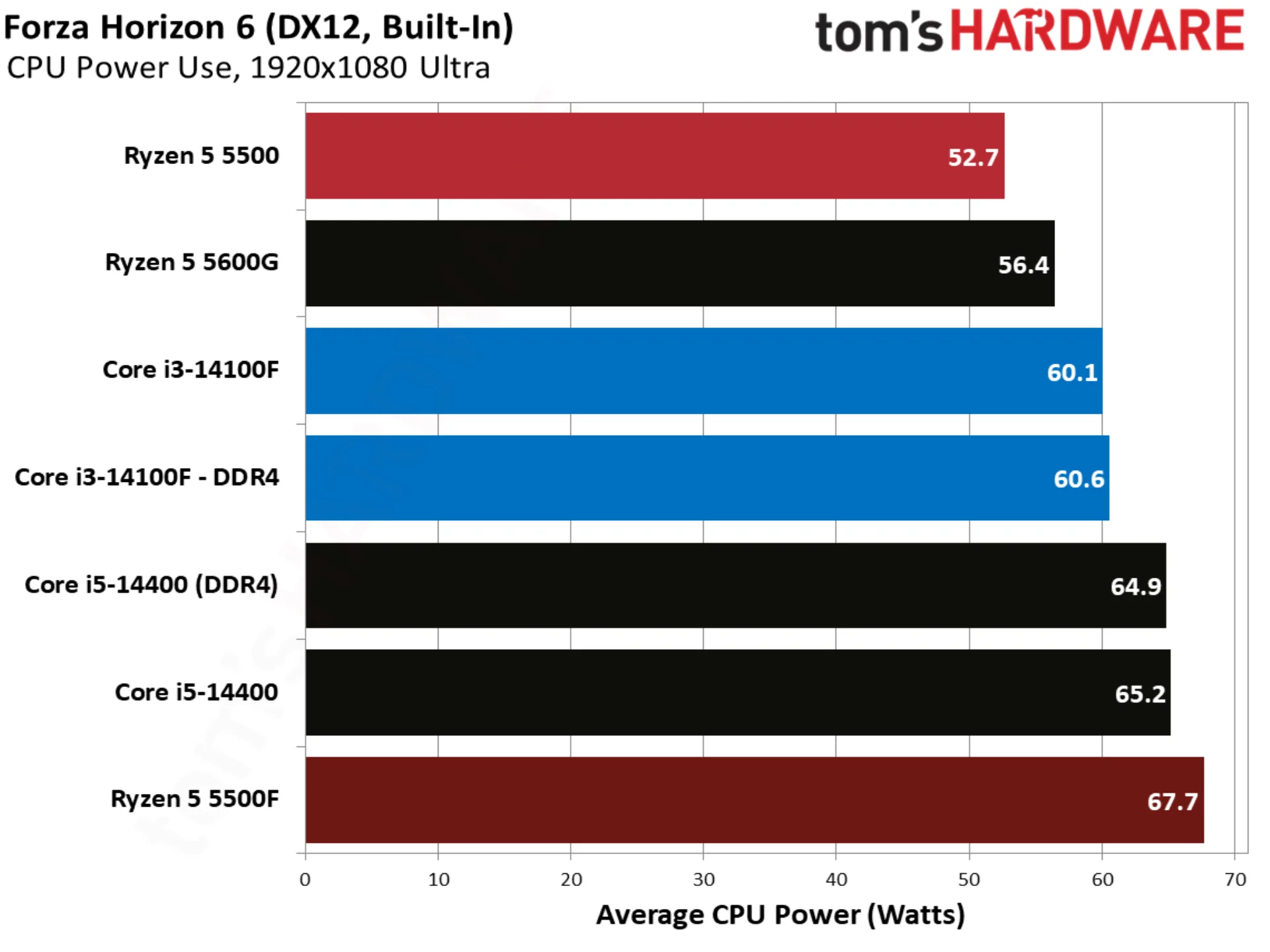
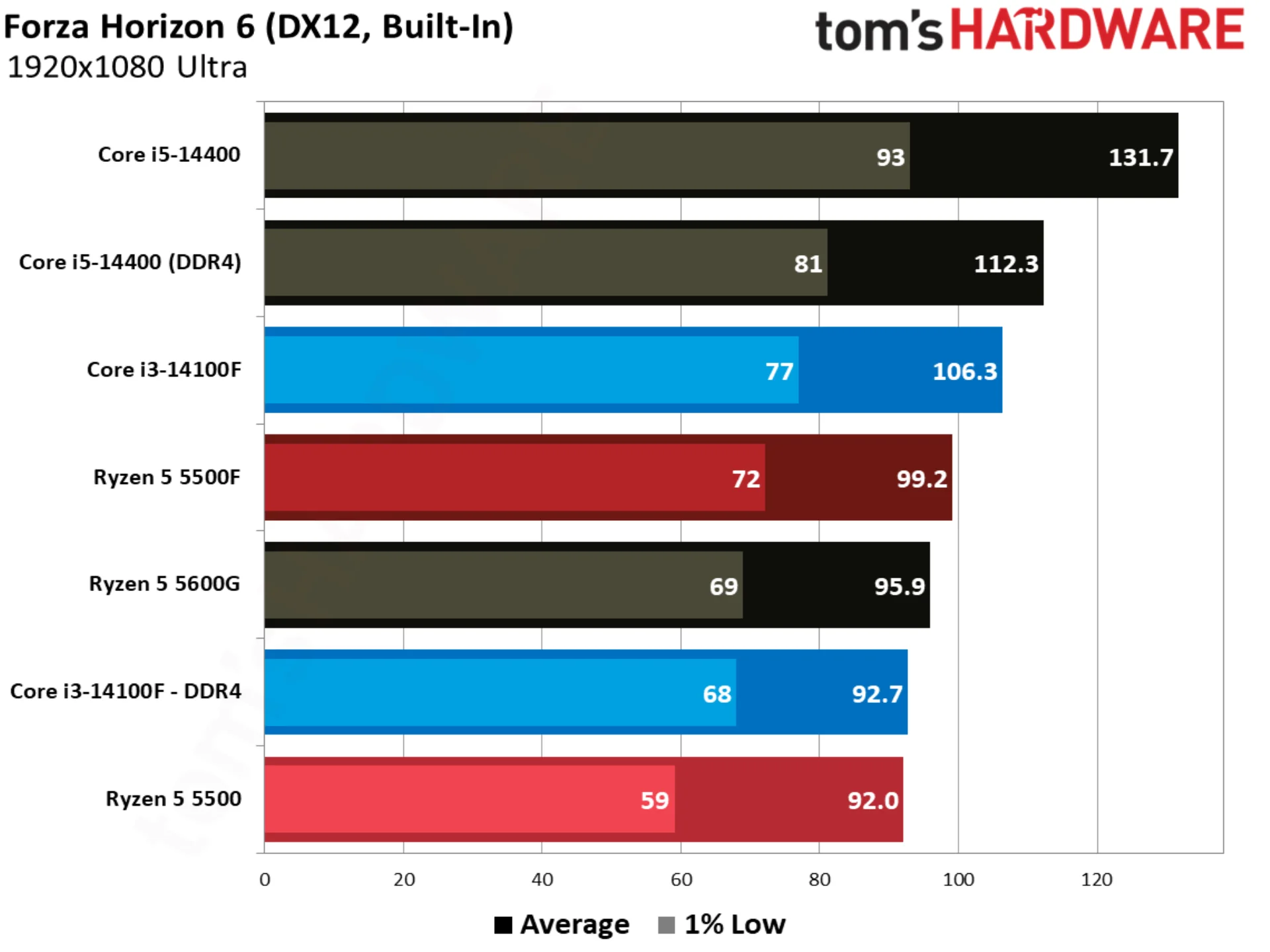
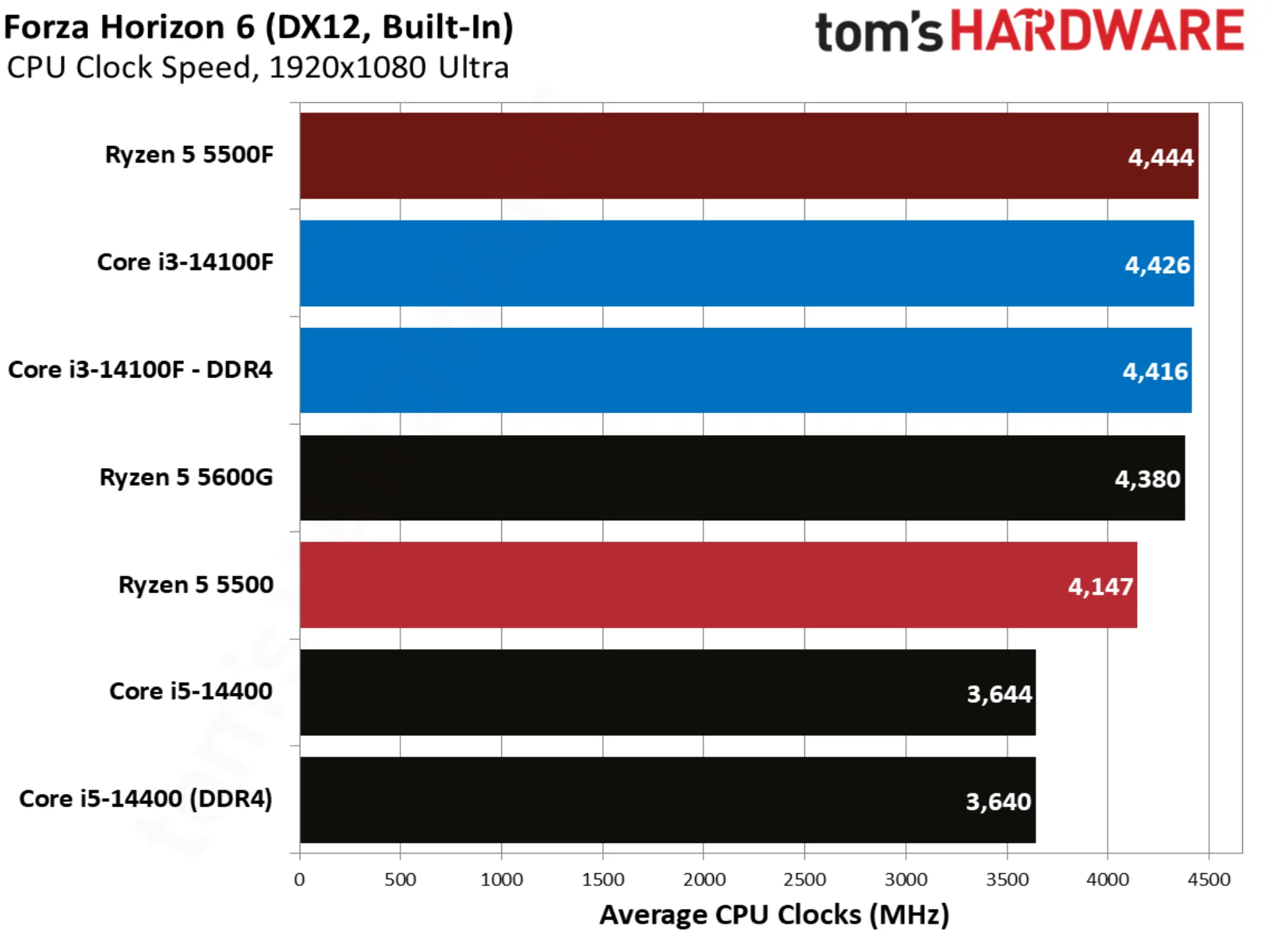
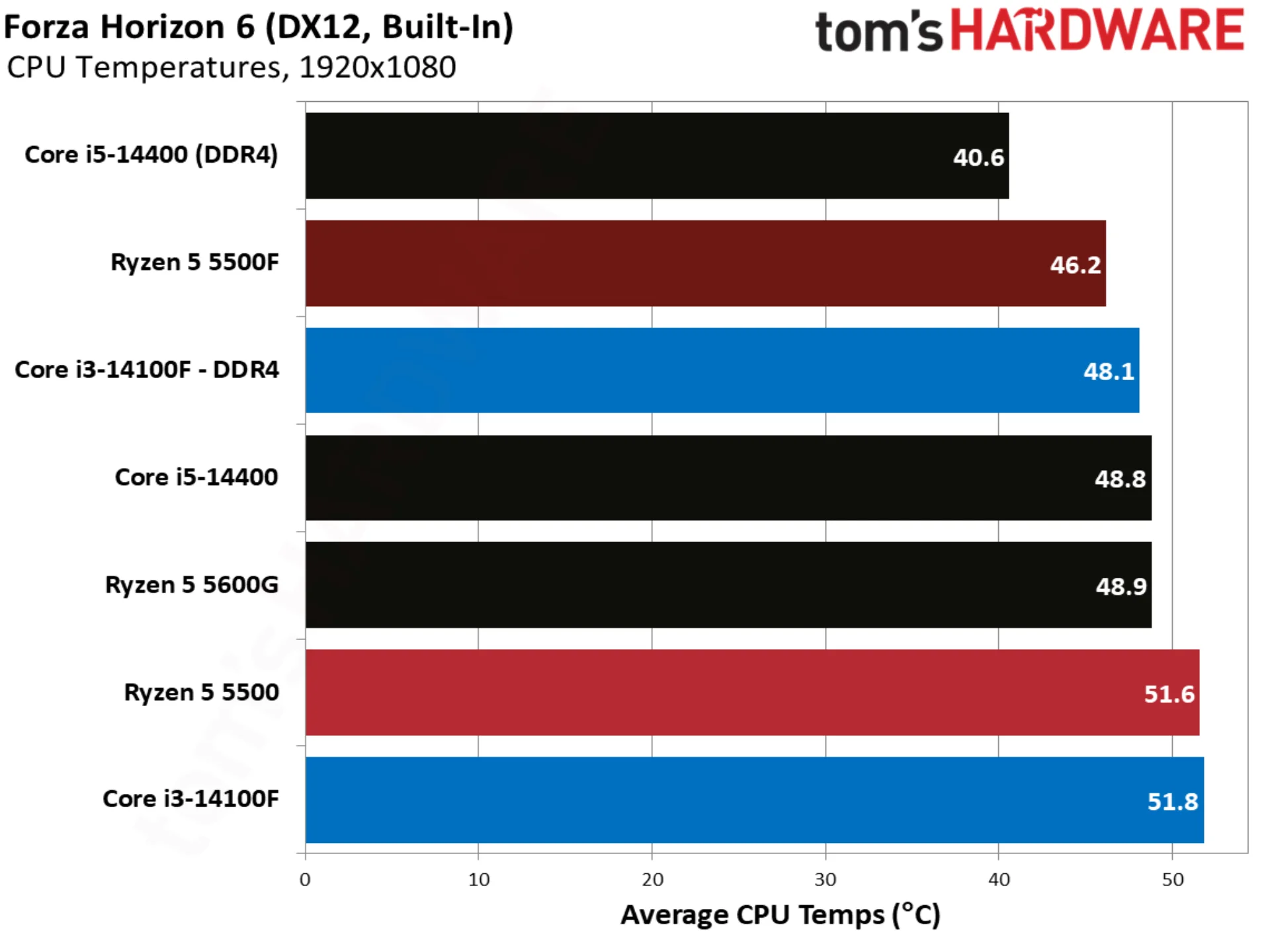
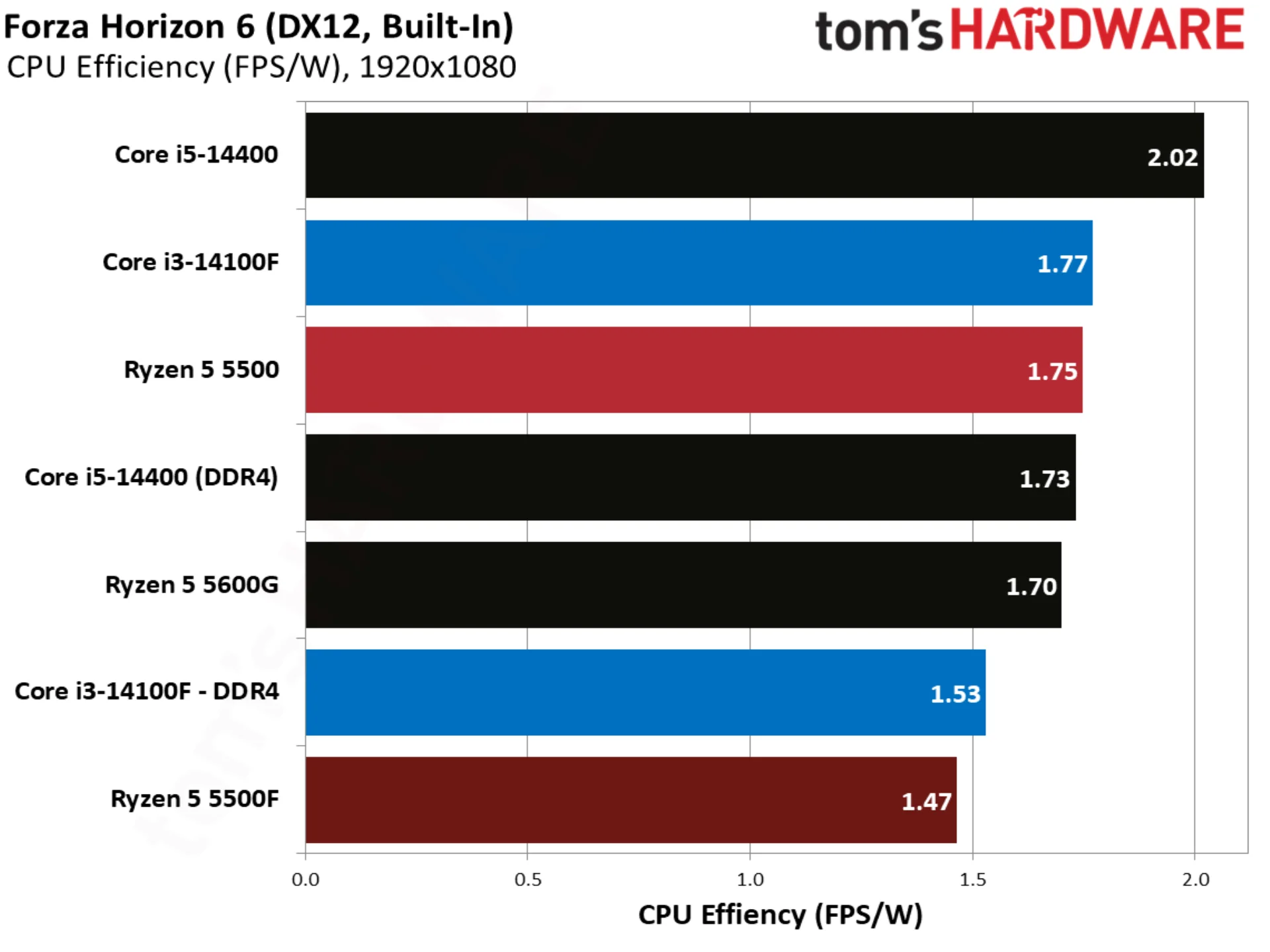
Forza Horizon 6 is a better case for AMD. The Ryzen 5 5500 was already on par with the Core i3-14100F, and the 5500F pulls 7.8% ahead. The 14100F paired with DDR5 still leads, but this is one of the 5500F’s more convincing results.
Marvel Rivals and Onimusha: Way of the Sword
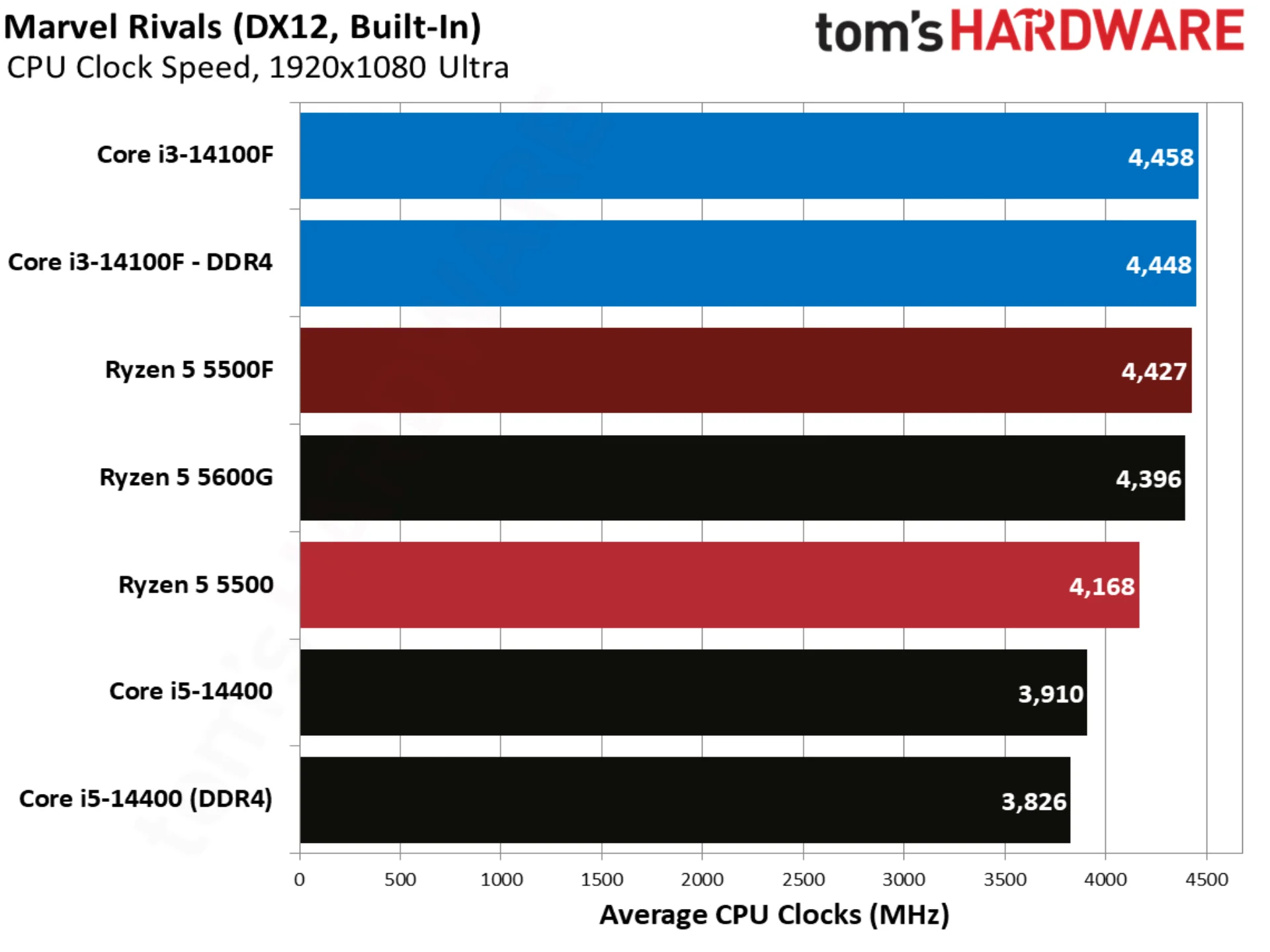
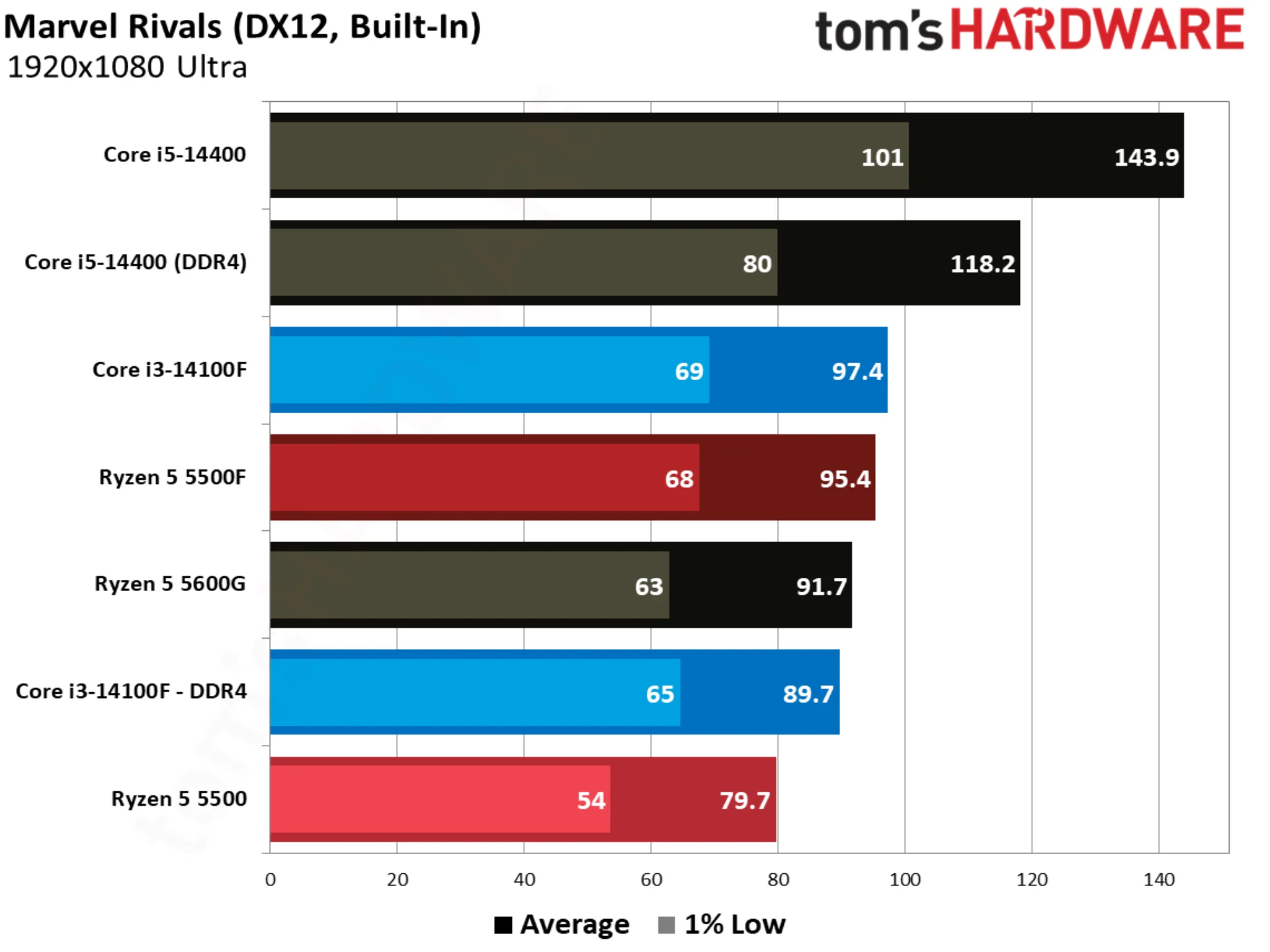
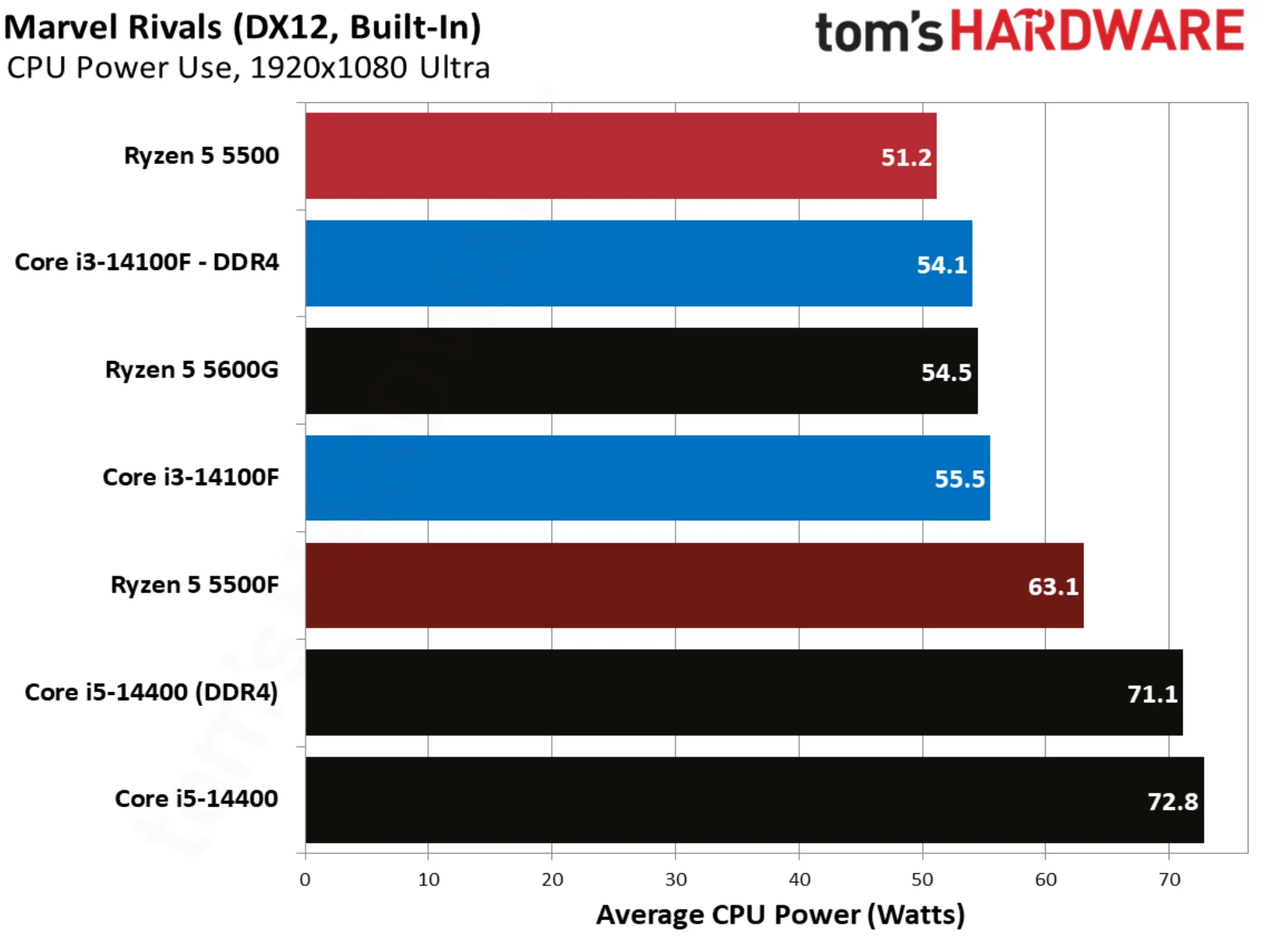
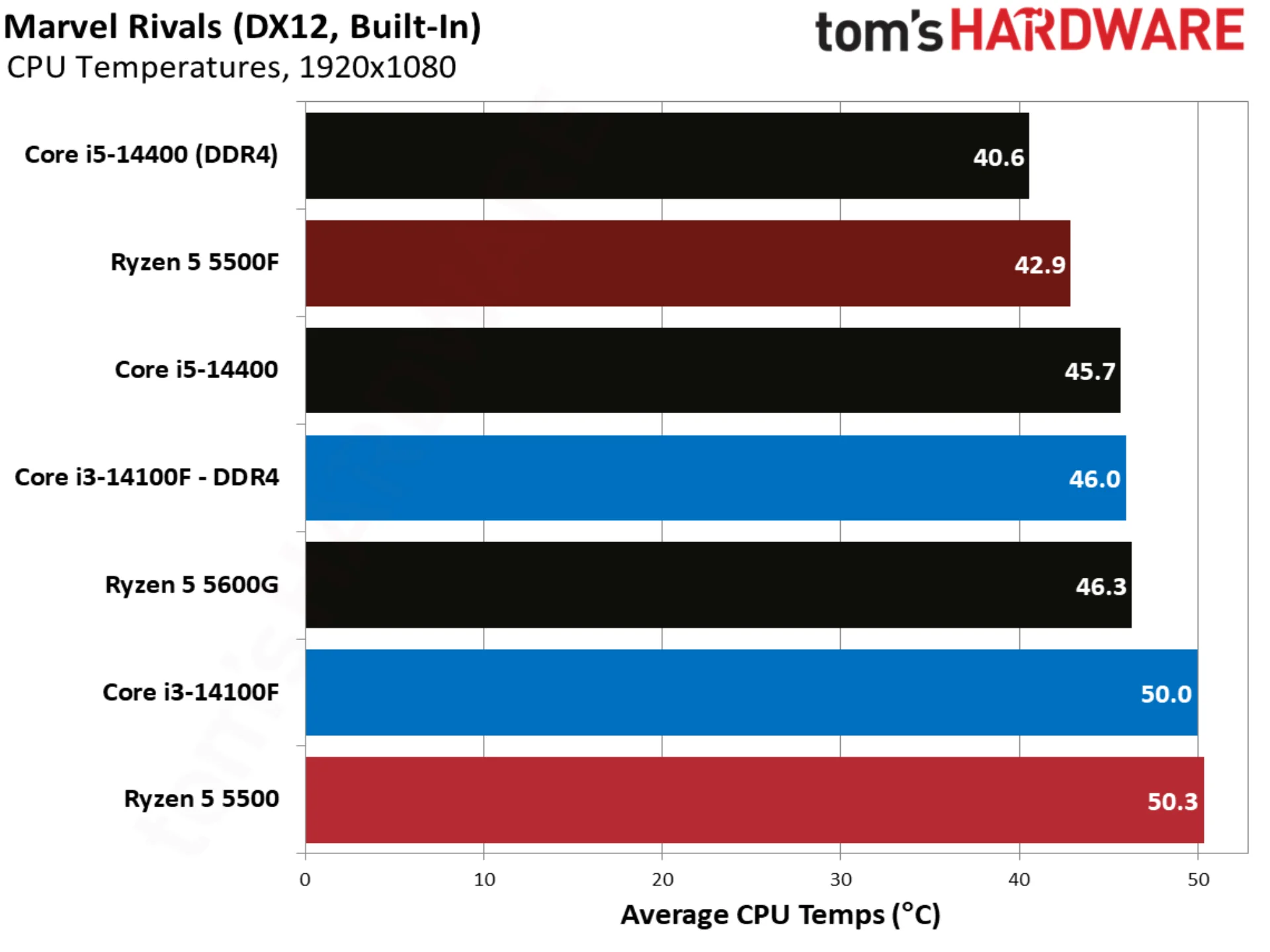
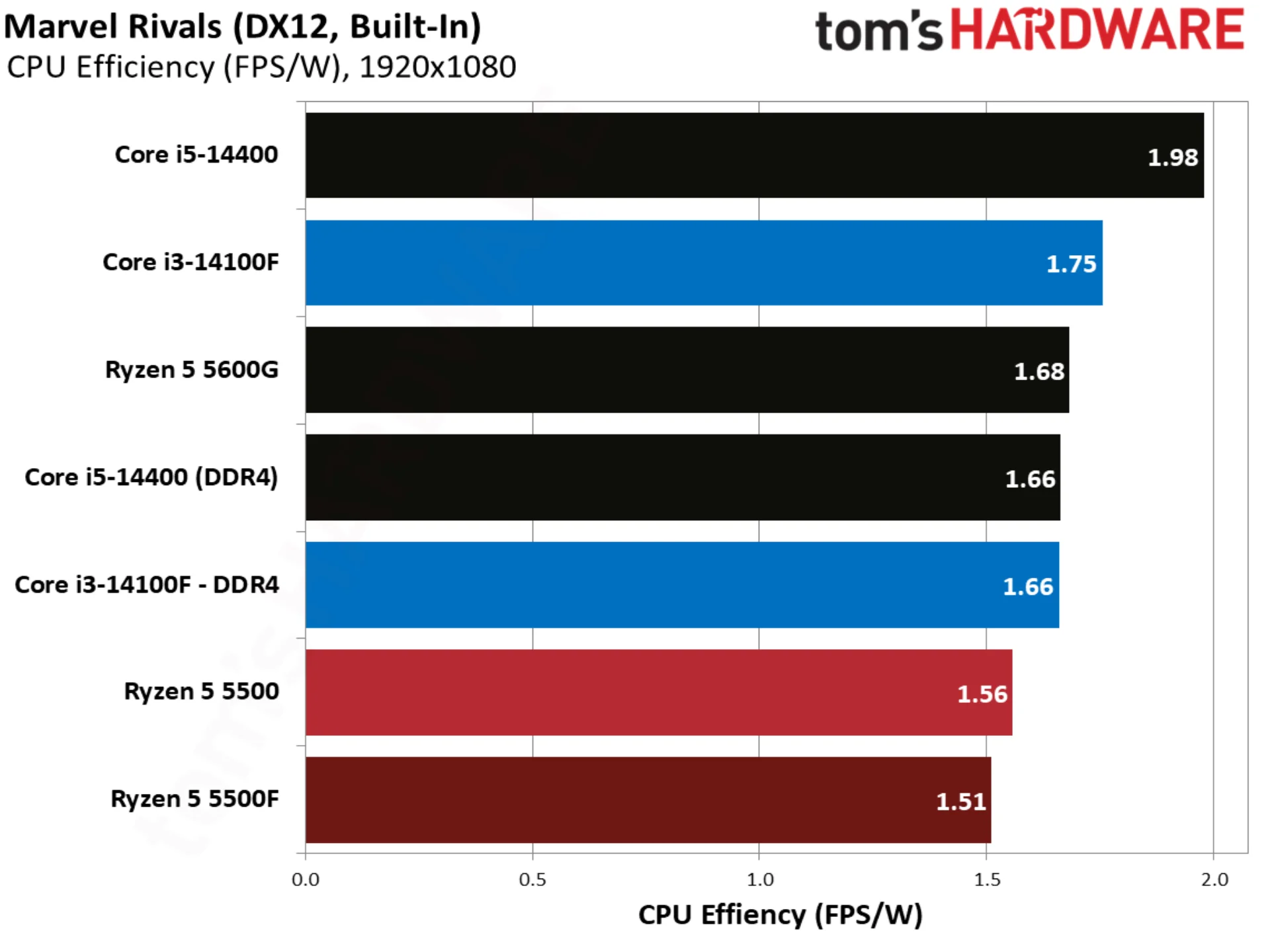
Marvel Rivals is a particularly telling result because it’s both widely played and a title where the 5500F reverses the base 5500’s deficit. The Core i3-14100F beats the Ryzen 5 5500 by more than 12%; the 5500F instead leads the Intel chip by 6.3%. That looks like the kind of matchup AMD wanted the 5500F to improve, and in this game, the improvement is real.
Onimusha: Way of the Sword
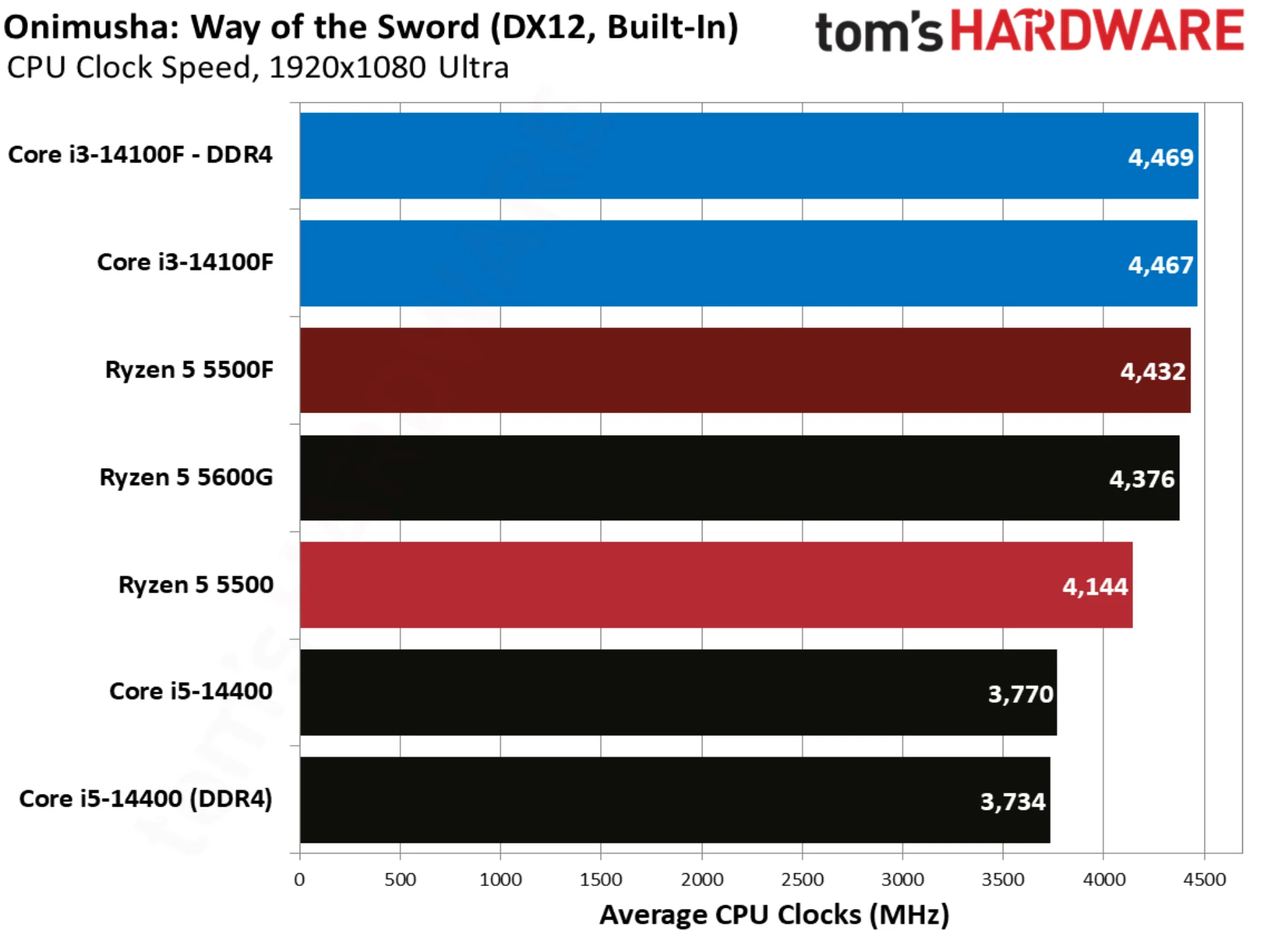
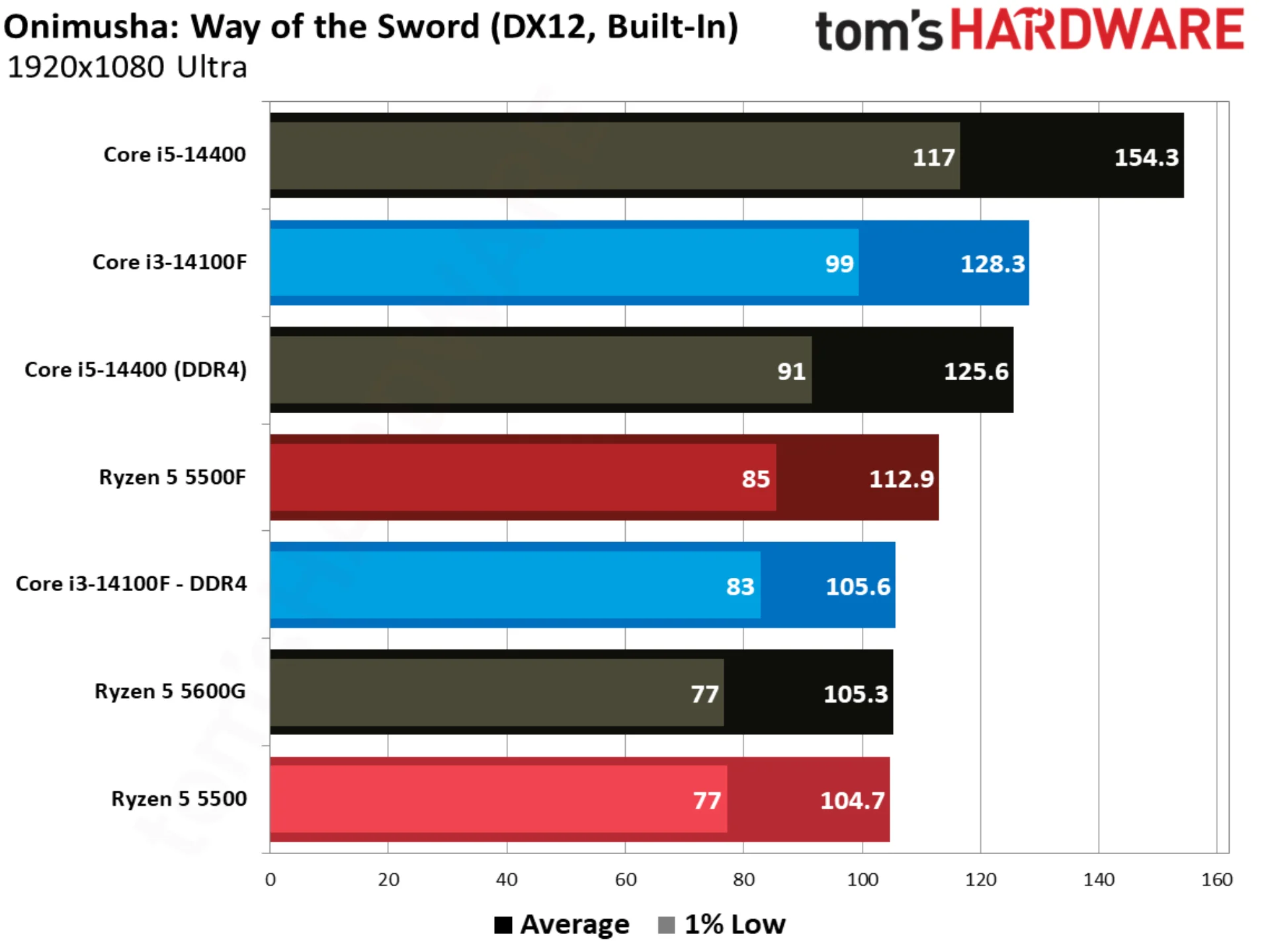
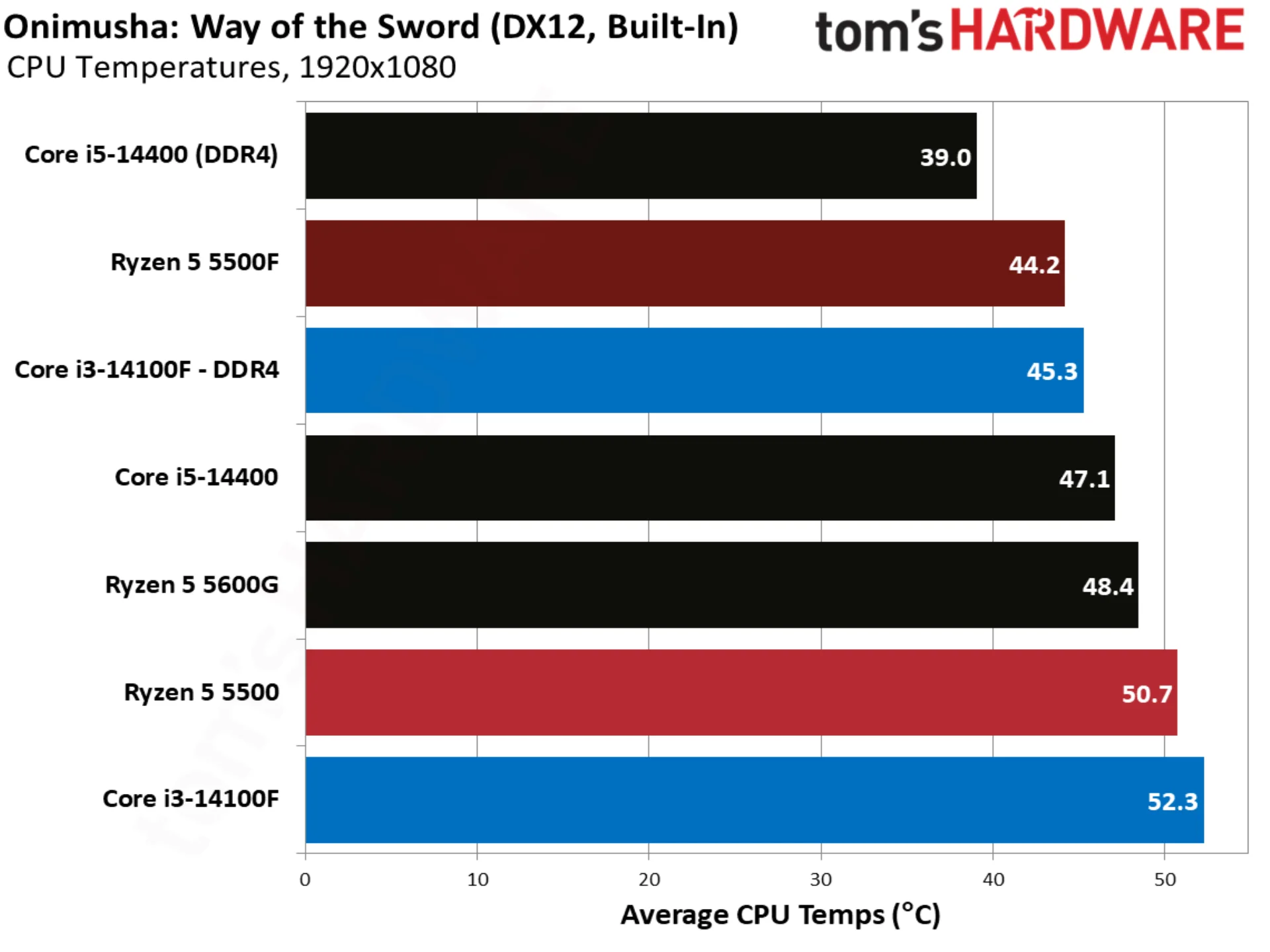
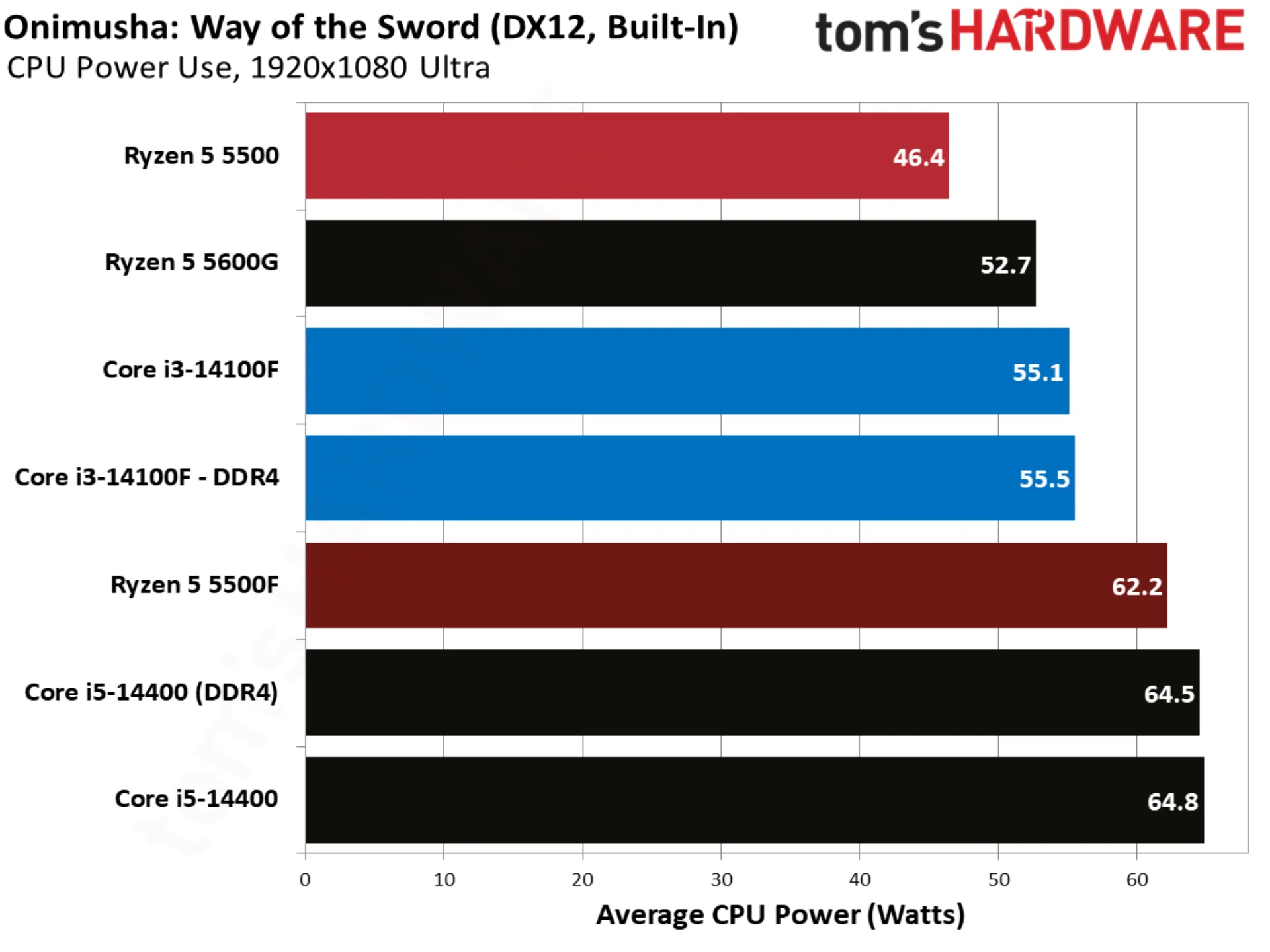
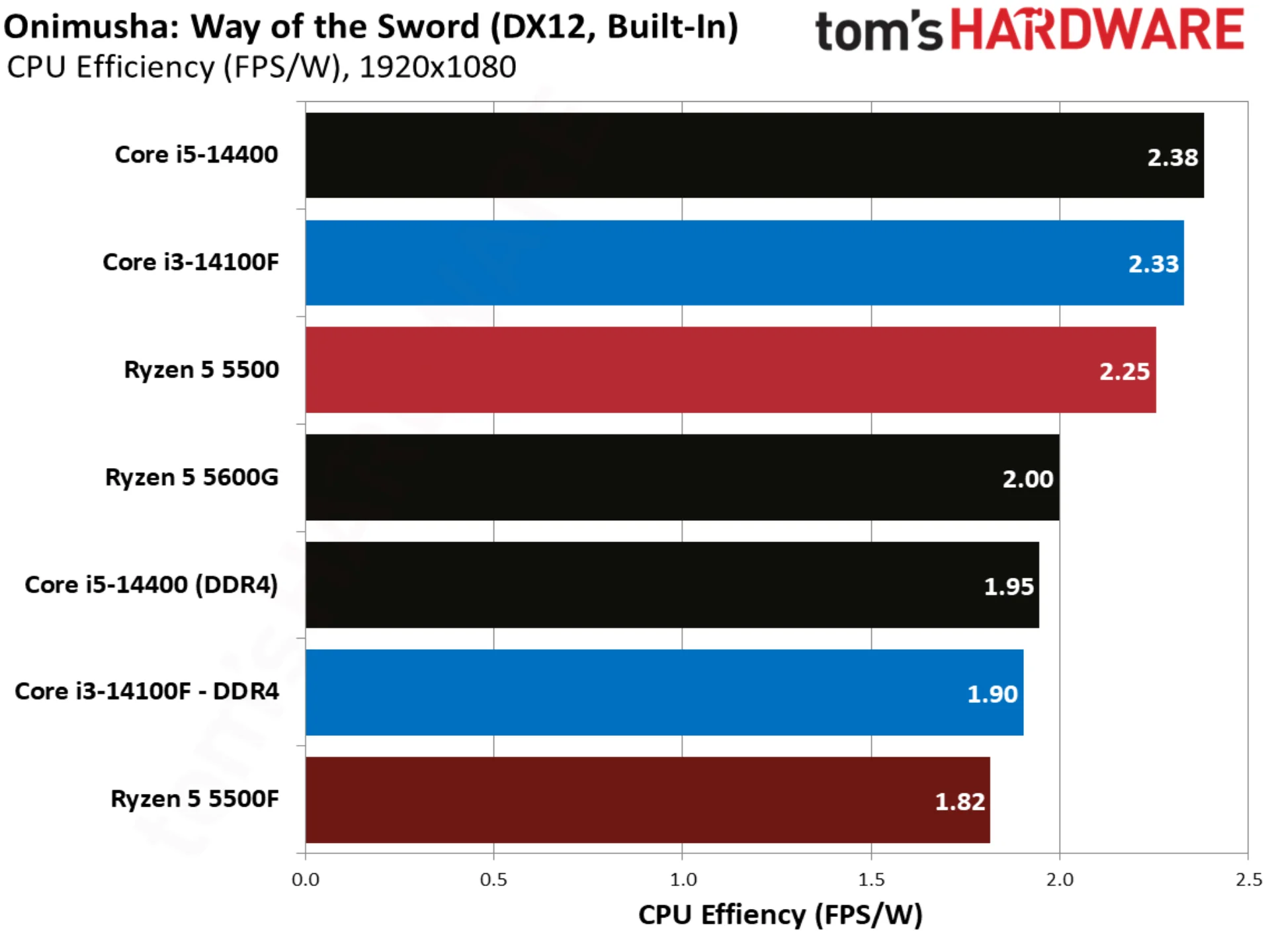
In Capcom’s RE Engine powered Onimusha: Way of the Sword, the Ryzen 5 5500 and Core i3-14100F perform about the same. The 5500F breaks that tie, finishing 6.9% ahead of Intel.
Spider-Man 2 and Starfield
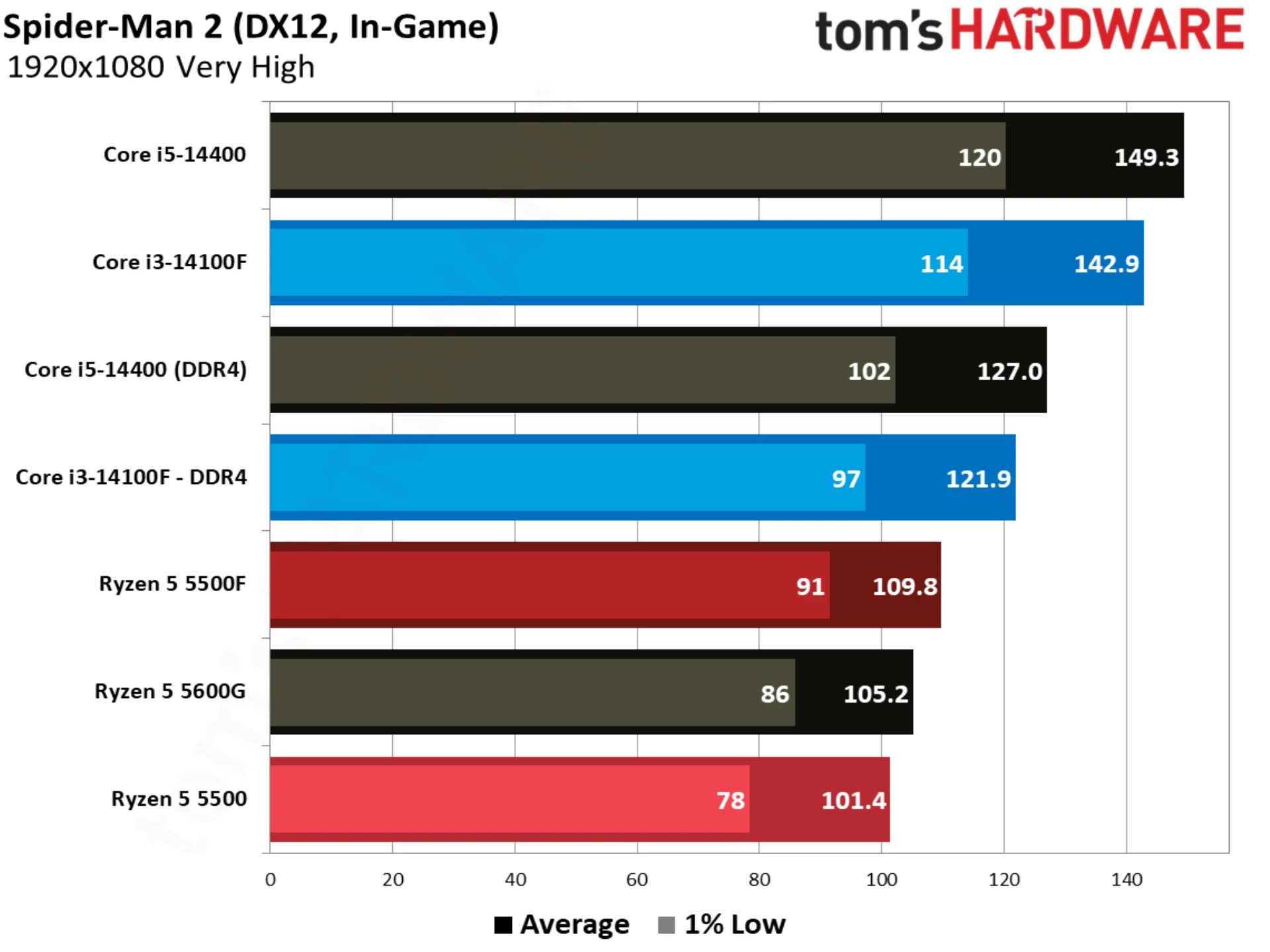
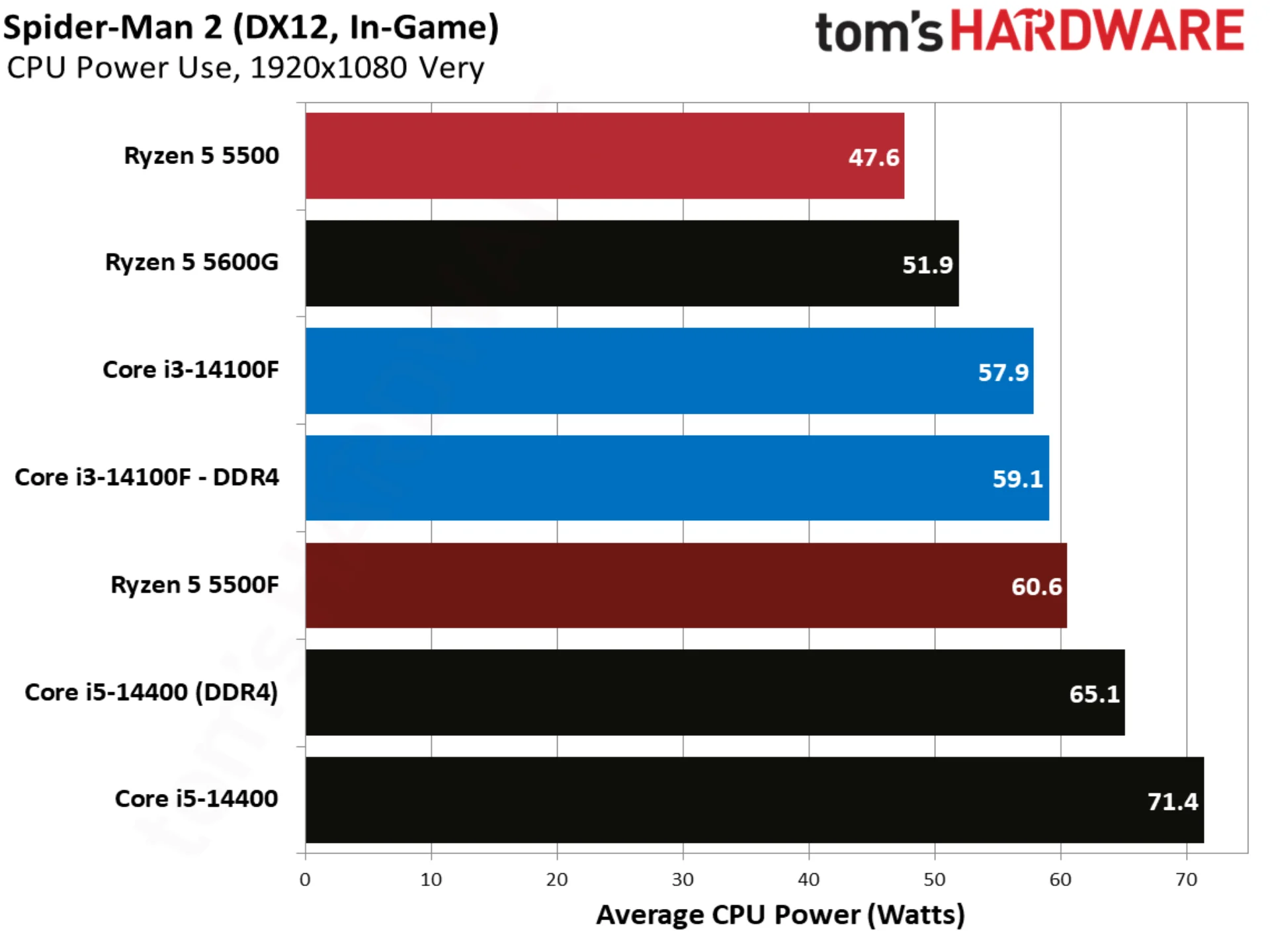
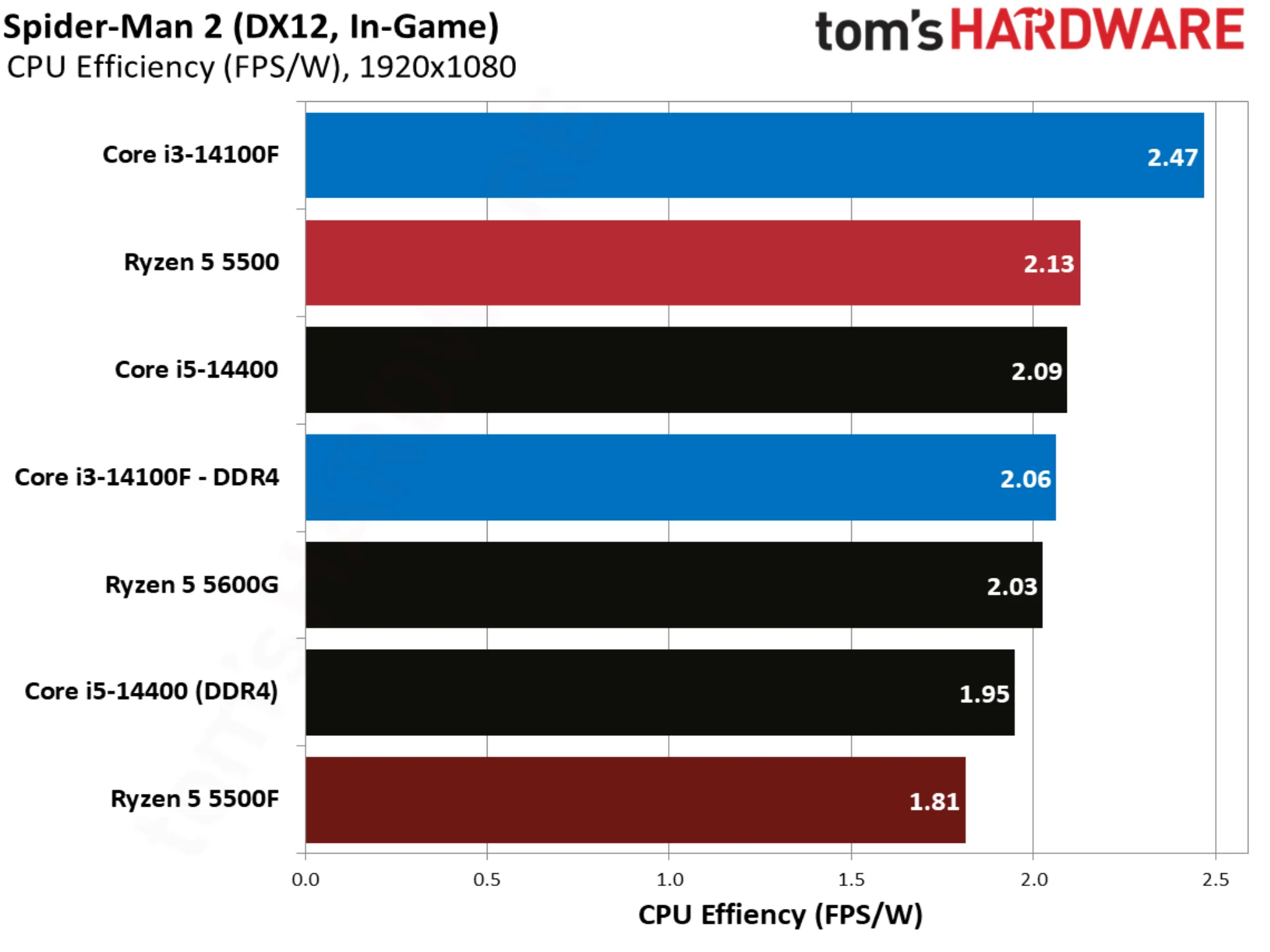
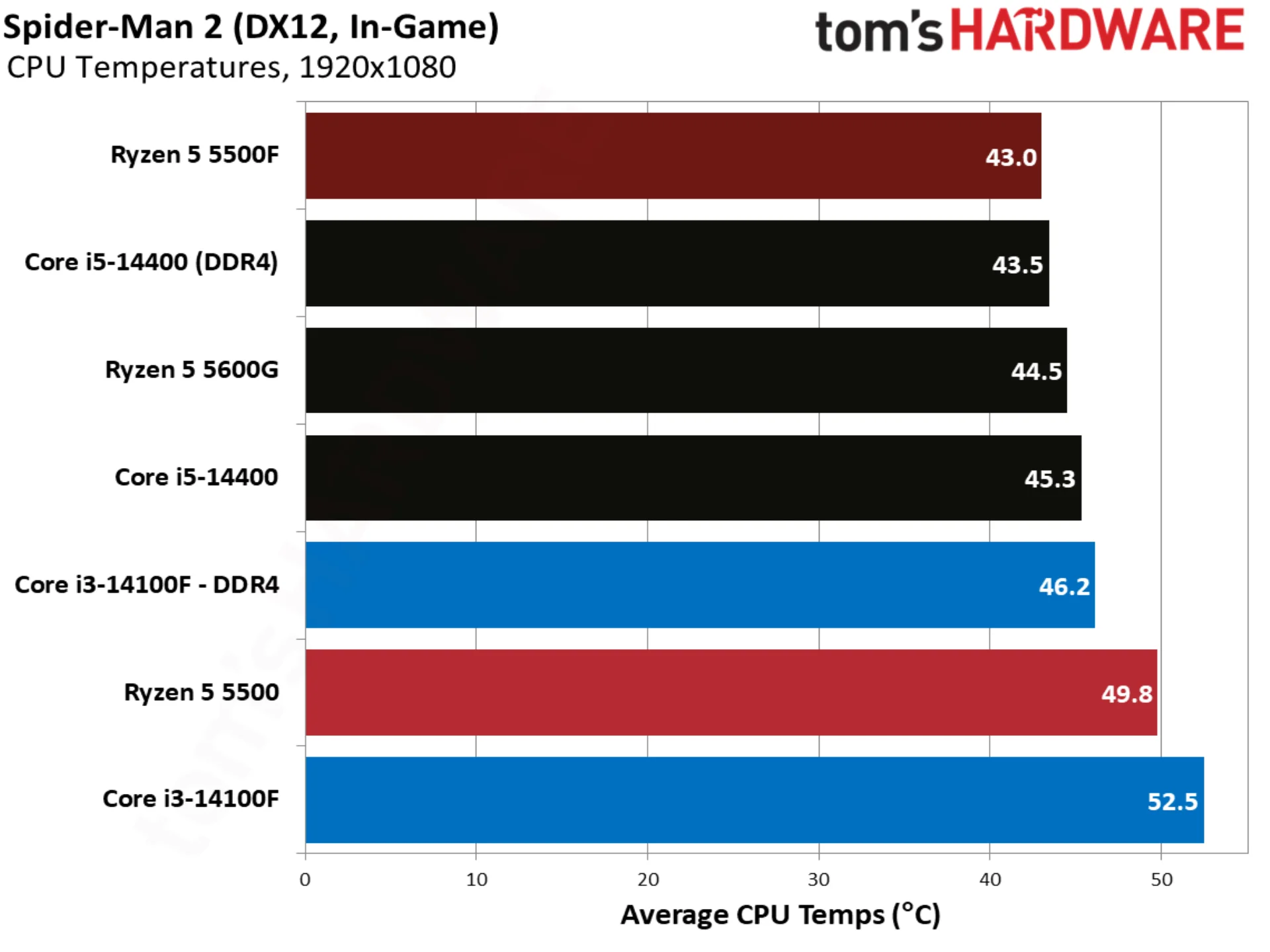
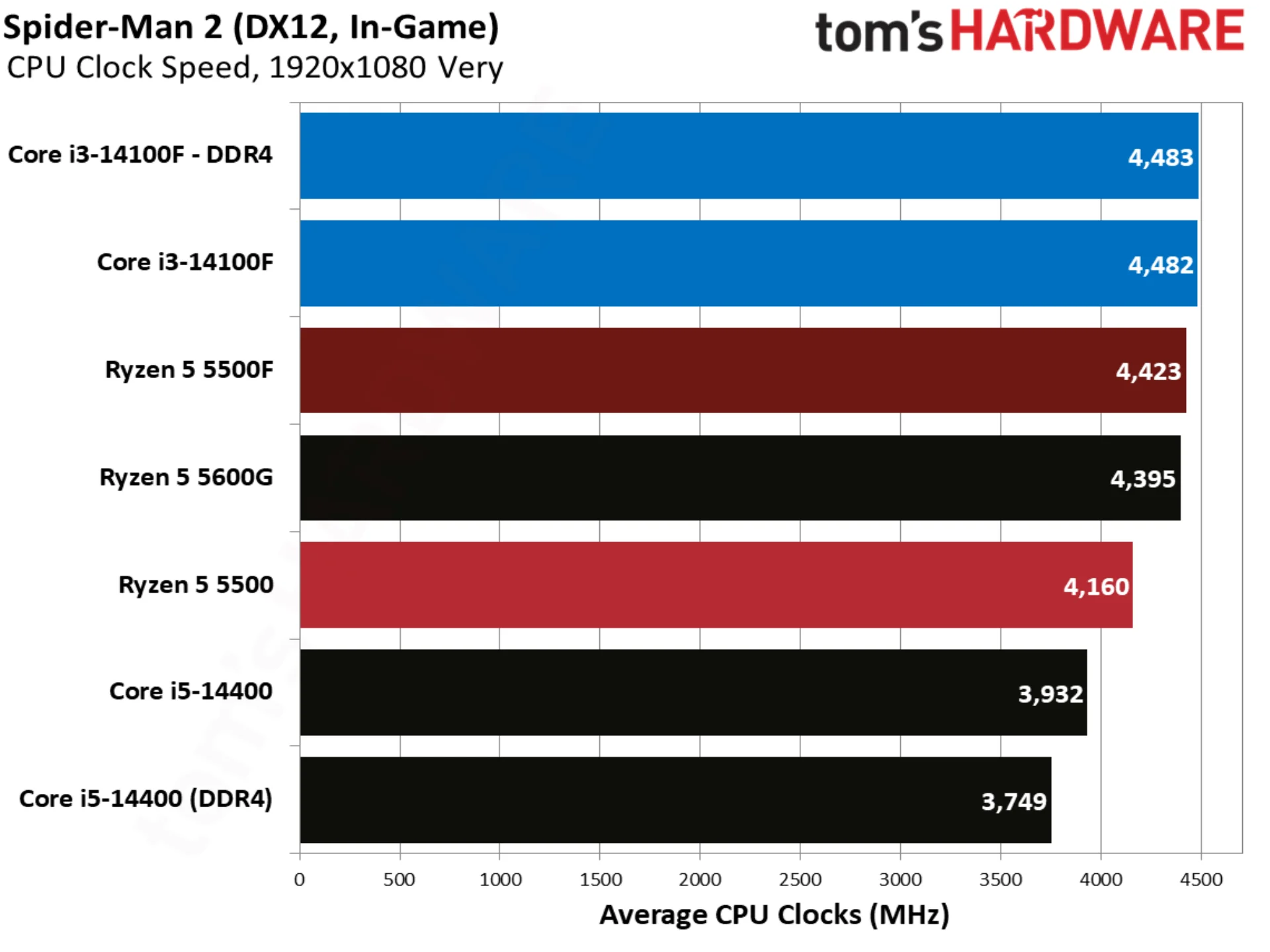
Spider-Man 2 is demanding on the CPU, and Intel’s advantage returns sharply: the Core i3-14100F is more than 20% ahead of the base 5500 and still leads the 5500F by 11%. AMD narrows the distance, but doesn’t catch up.
Starfield
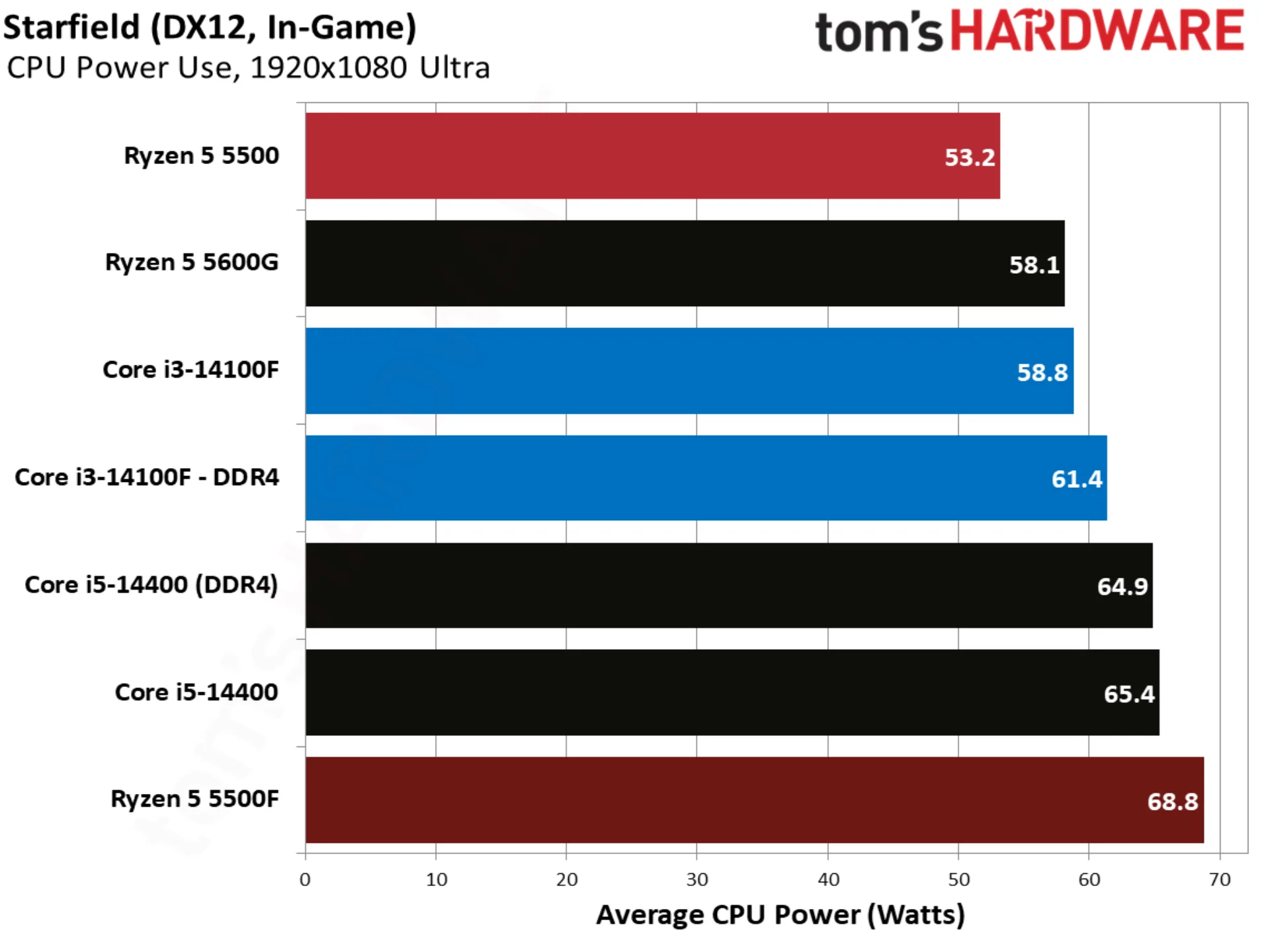
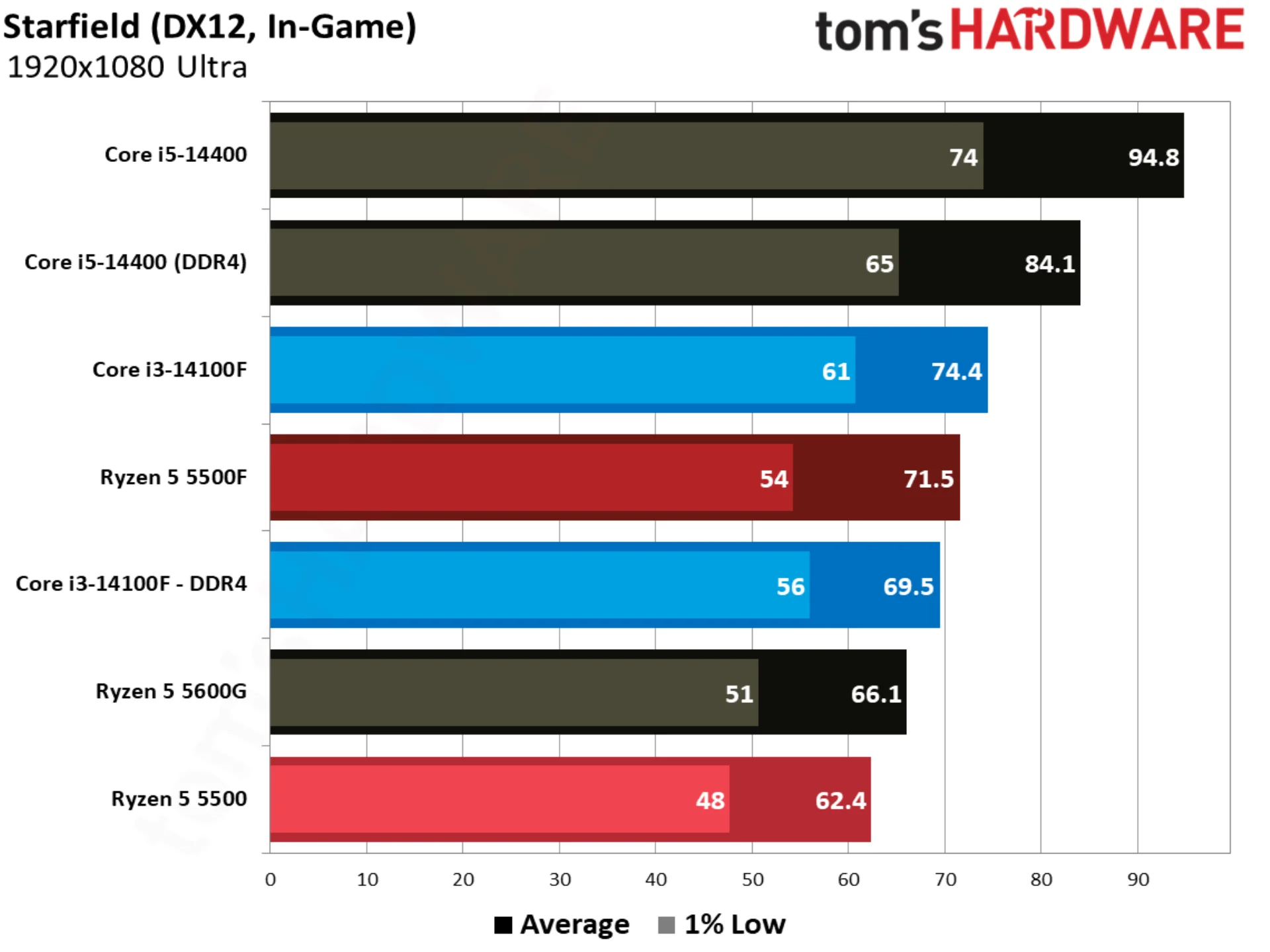
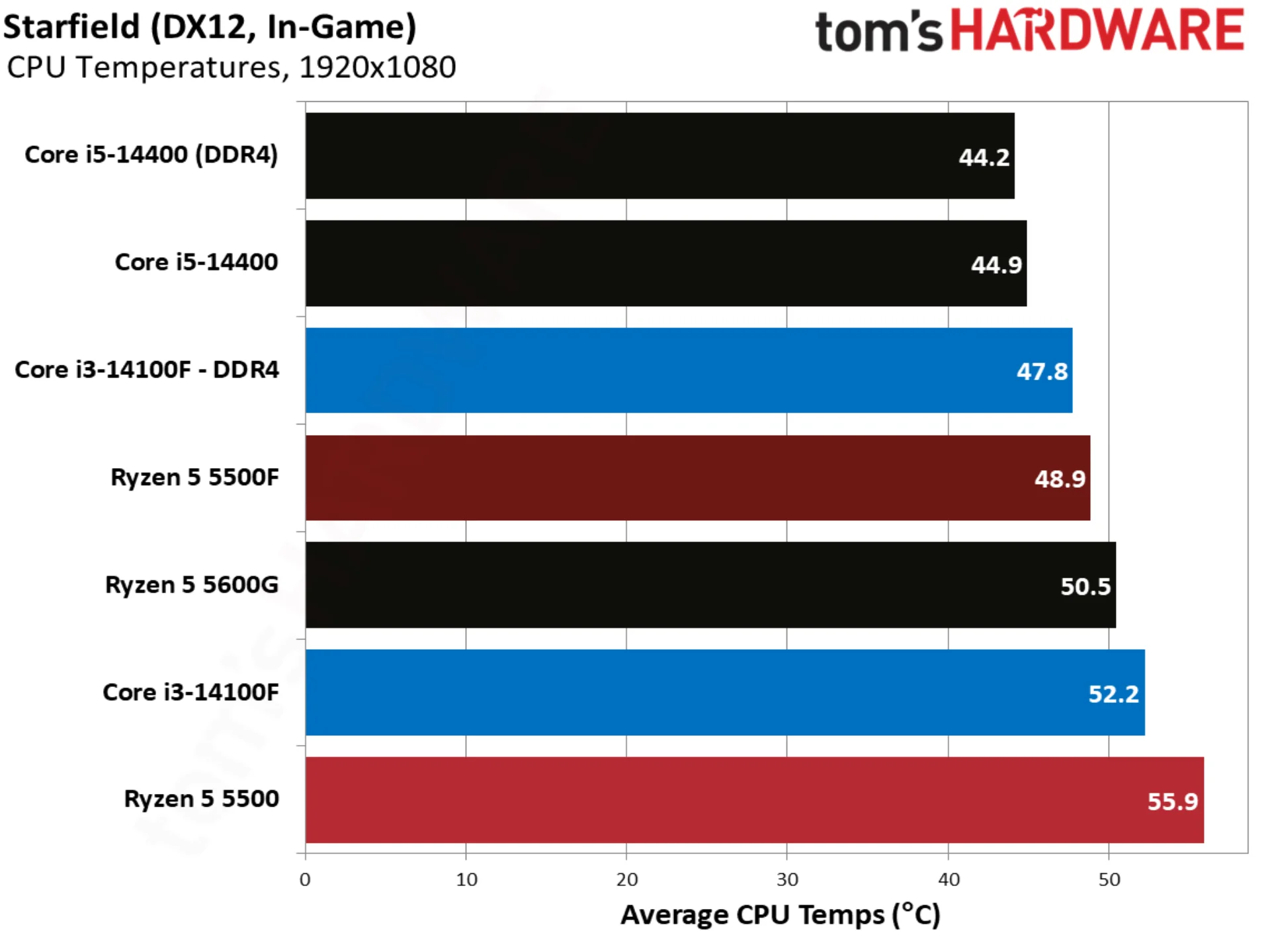
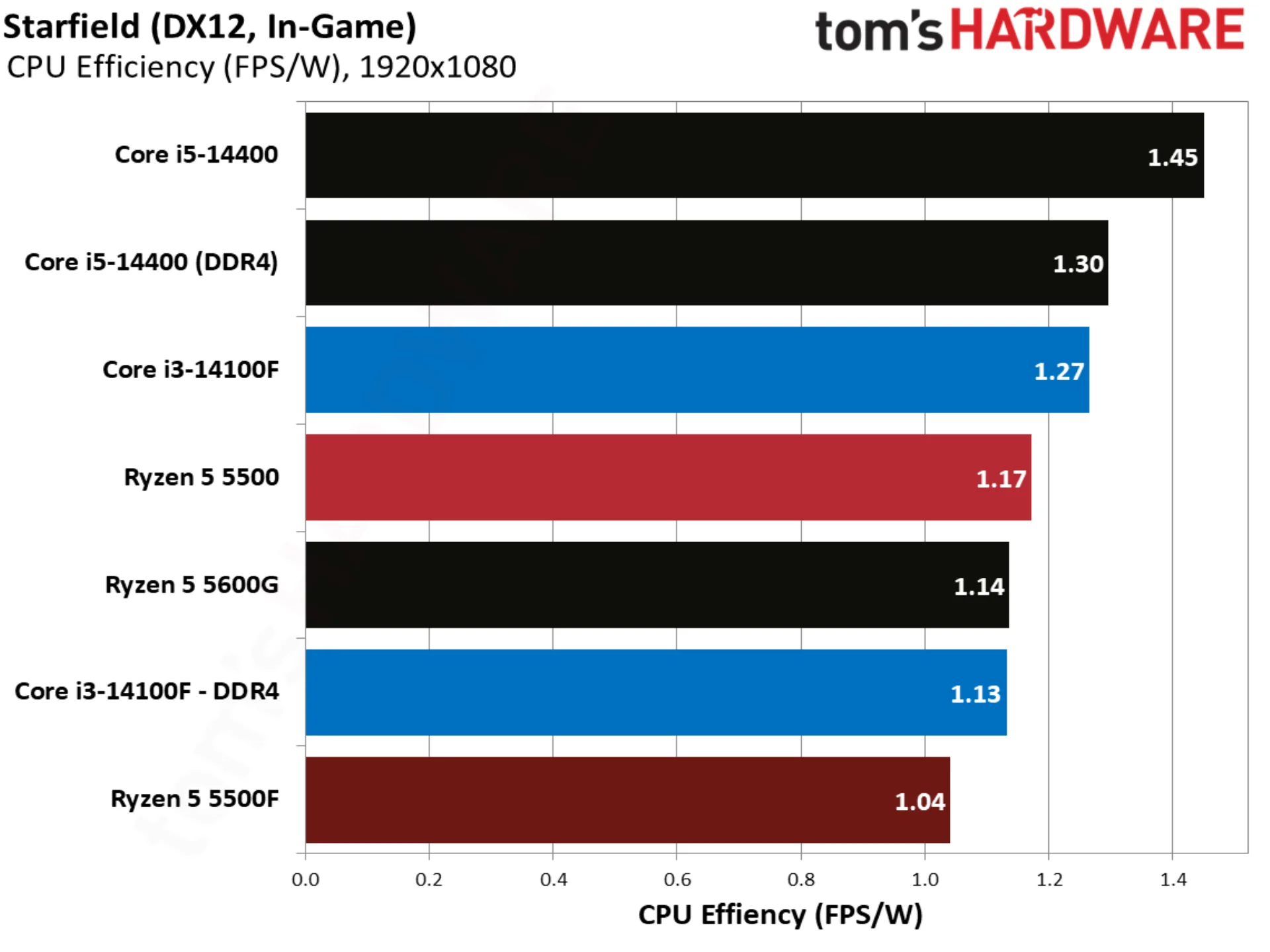
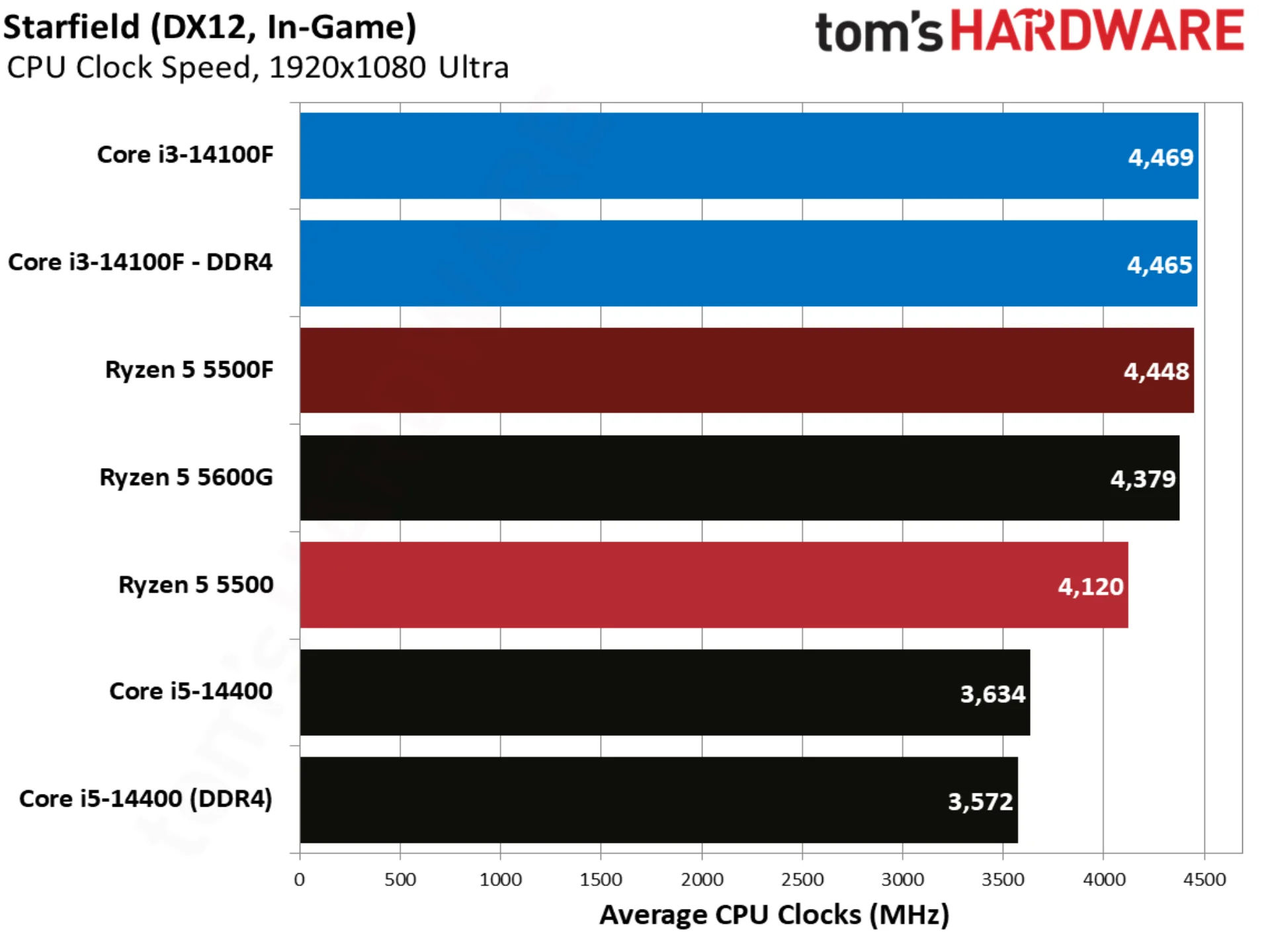
In Starfield, the 5500F edges past the Core i3-14100F, but only narrowly. Intel posts slightly better 1% lows, so the average result doesn’t tell the whole story about playability. Even so, the 5500F again changes the comparison with the base 5500 in AMD’s favor.
Warhammer 40K: Space Marine 2
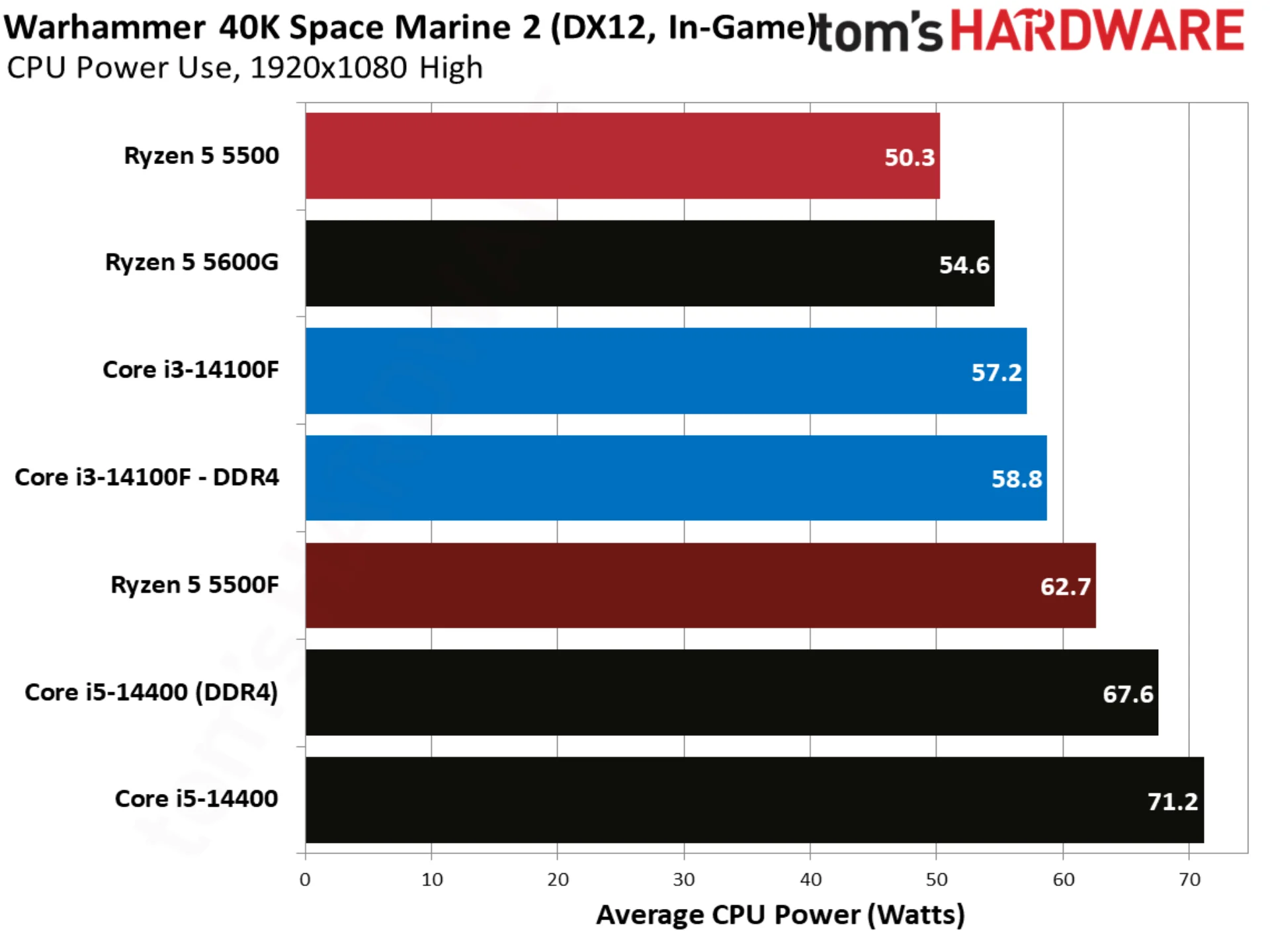
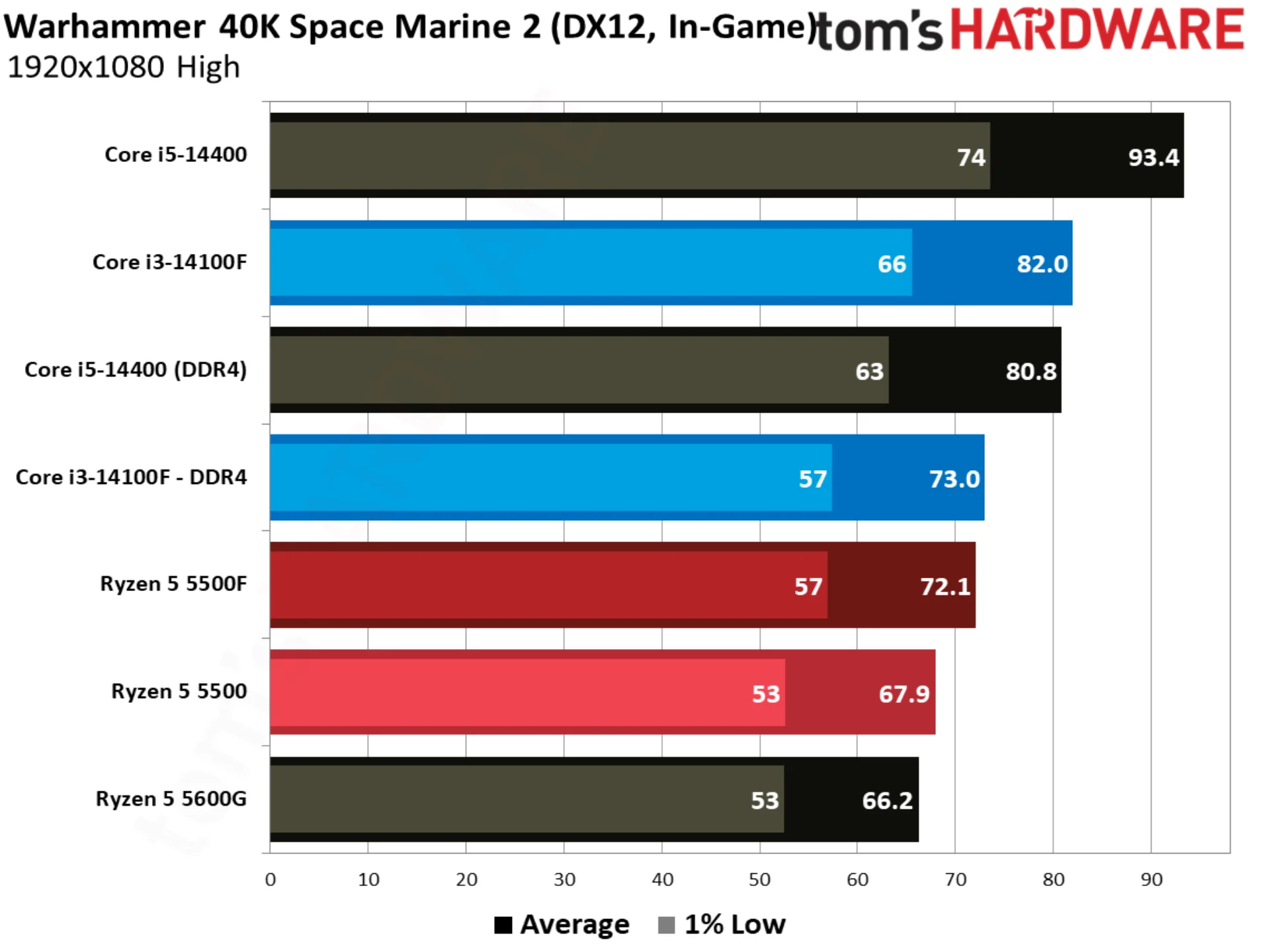
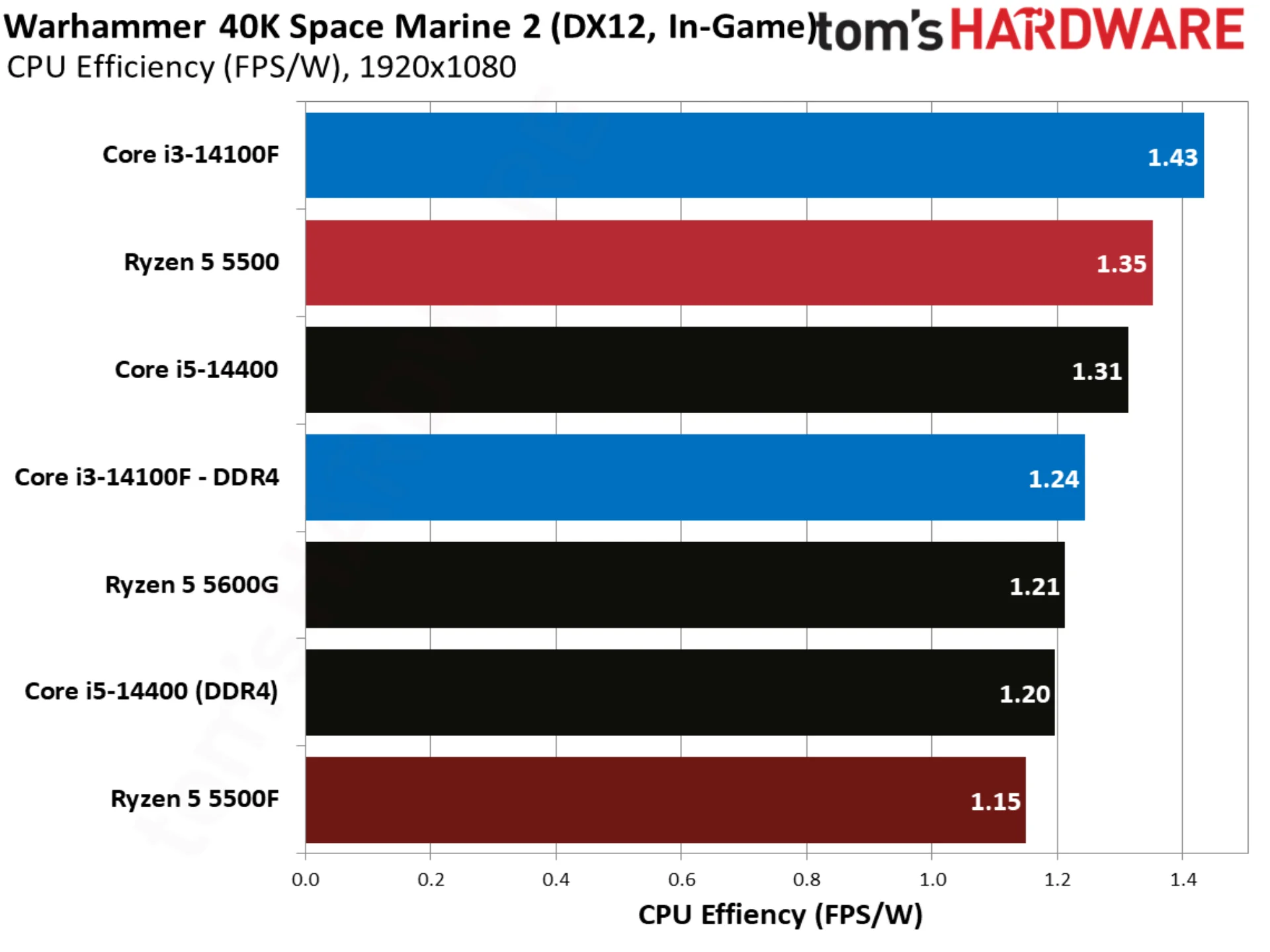
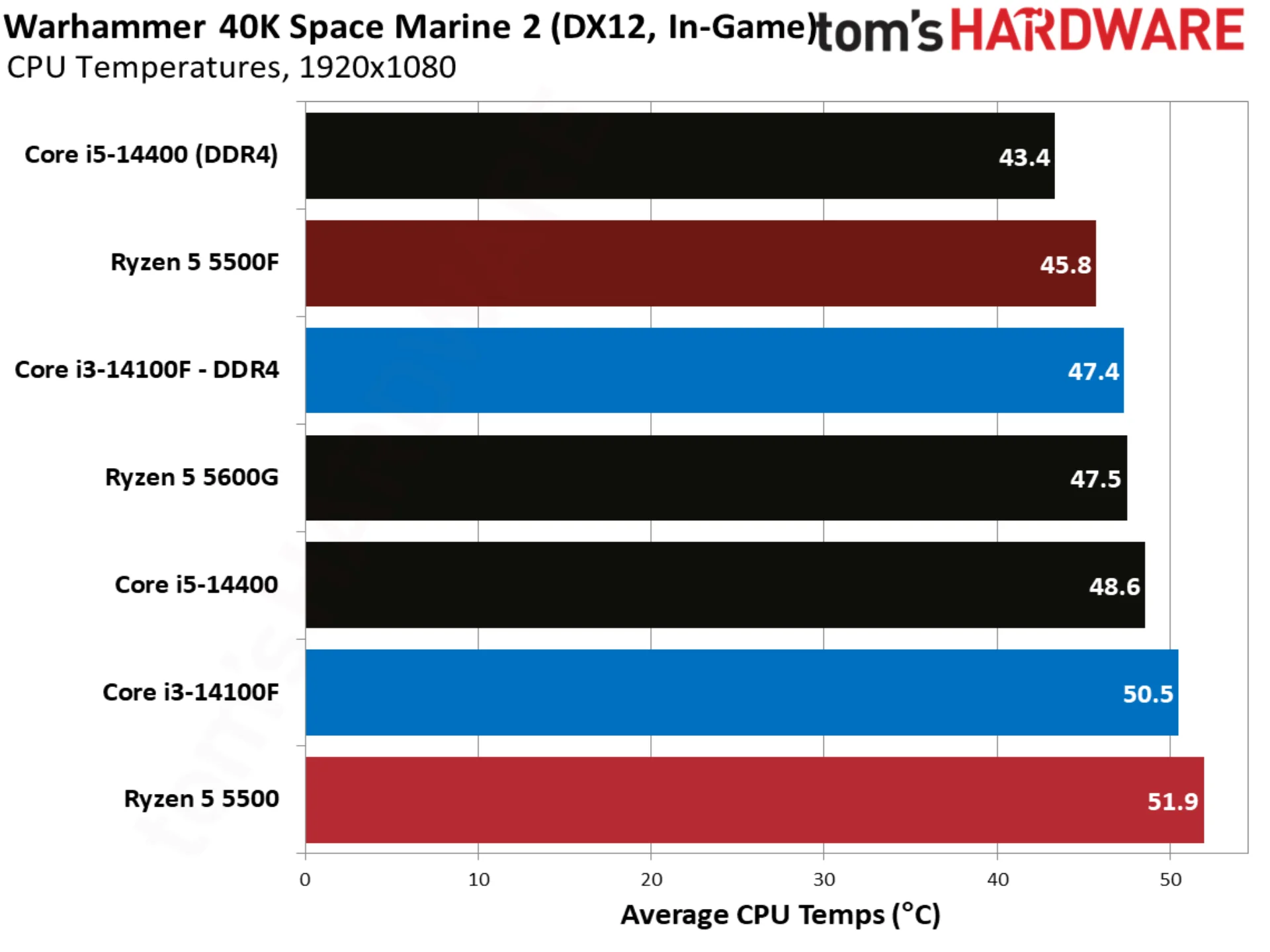
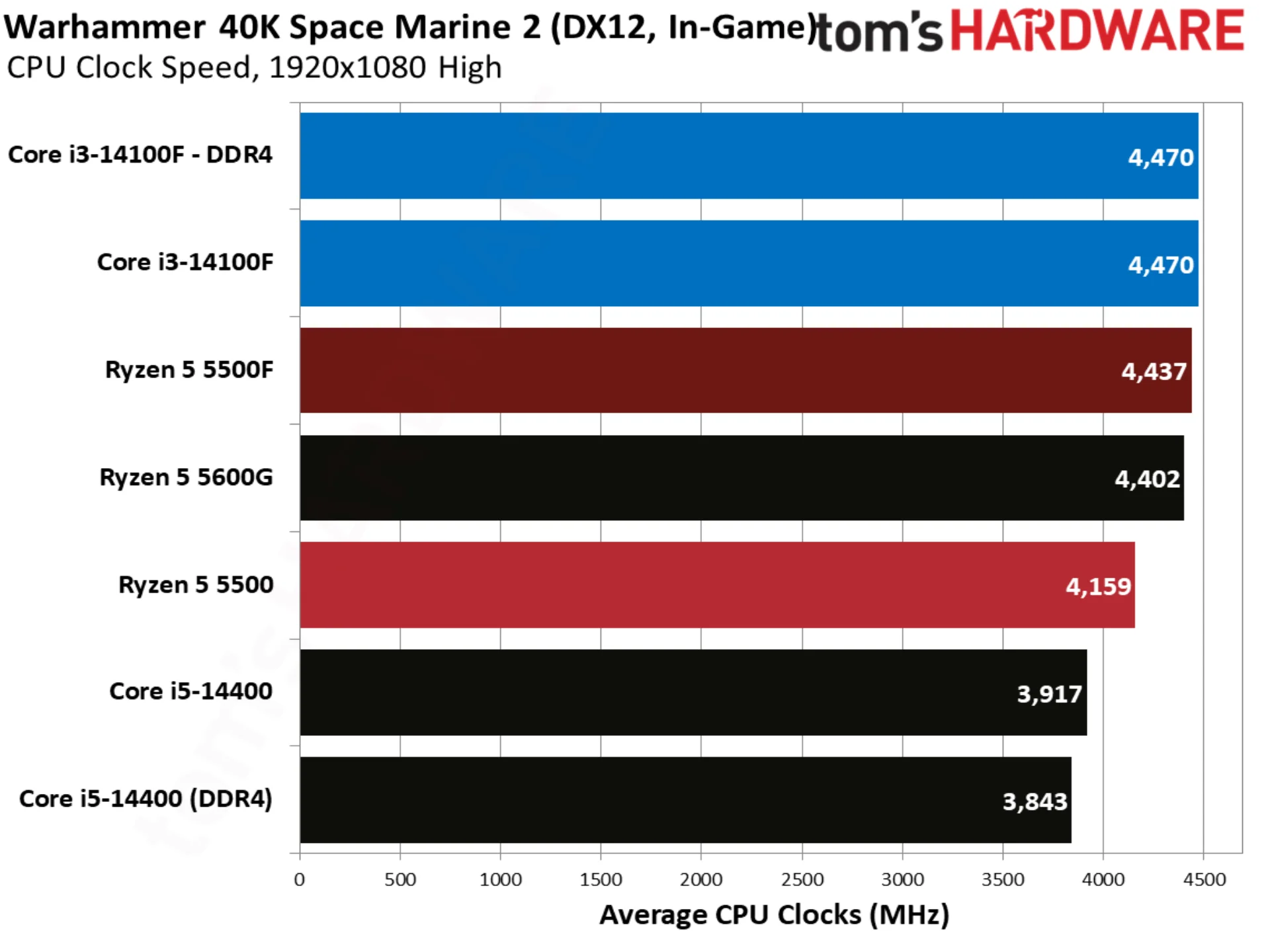
Warhammer 40K: Space Marine 2 ends this run of game tests in a draw: the 5500F matches the Core i3-14100F, after the original Ryzen 5 5500 fell nearly 7% behind.
MORE: CPU Benchmark Hierarchy
MORE: AMD vs. Intel
MORE: Intel Core Ultra 7 270K Plus review
MORE: AMD Ryzen 7 9850X3D review
These game results sit alongside a meaningful core count difference. The Ryzen 5 5500F is a six-core Zen 3 gaming chip with a boost clock of 4.4 GHz. Intel’s Core i3-14100F uses four cores, a straightforward quad-core design rather than the hybrid layout Intel adopted in several recent desktop generations. That six-core floor gives AMD an advantage in heavily threaded workloads.
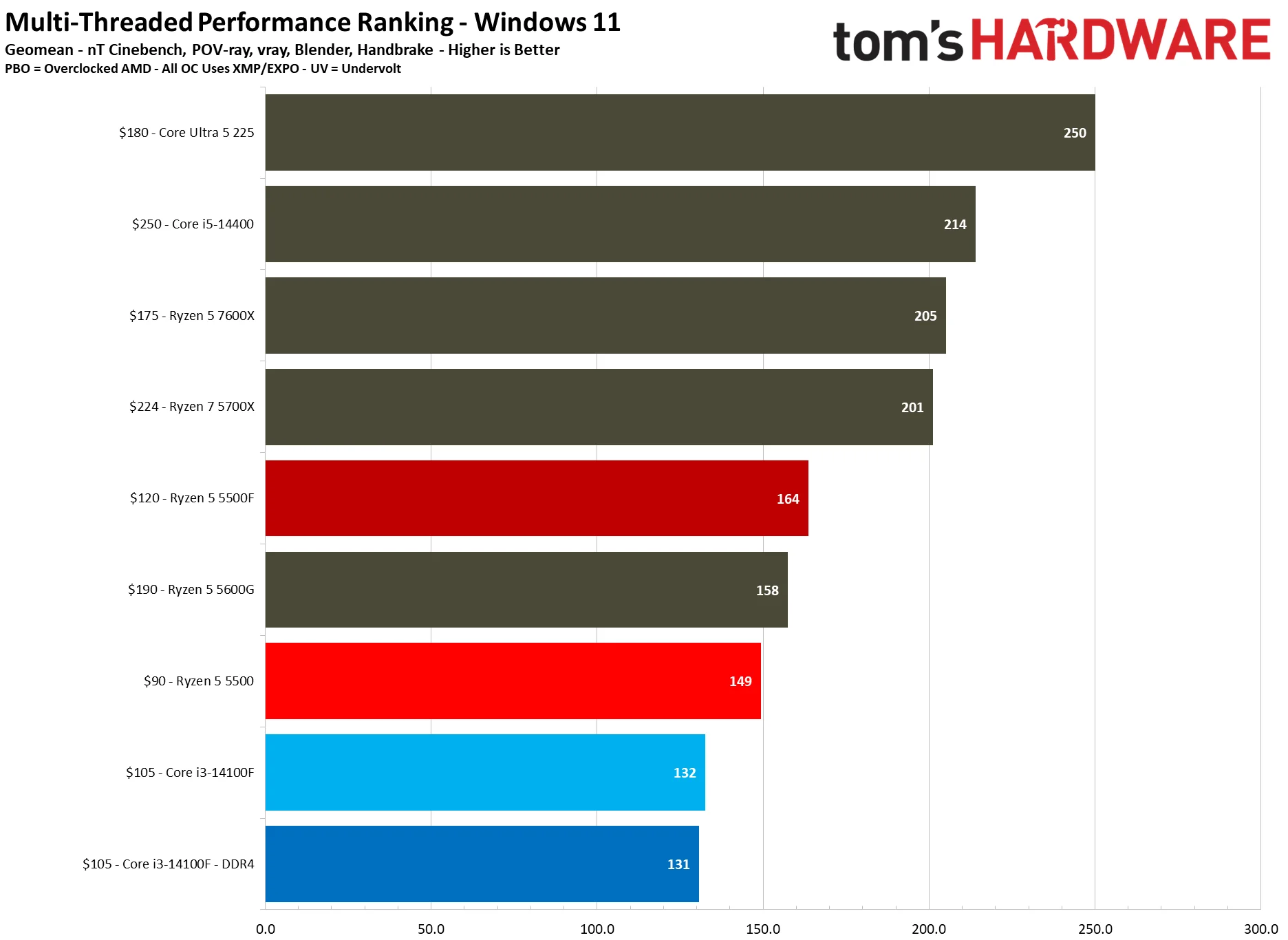
That shows up in the multithreaded geomean. The Ryzen 5 5500 already leads the Core i3-14100F by 12.8%; the 5500F expands the gap to 24.2%. It also scores 10% higher than the 5500. Intel’s chip sits at the bottom of this chart whether paired with DDR4 or DDR5, though the small number of quad-core CPUs on the market makes that comparison a narrow one.
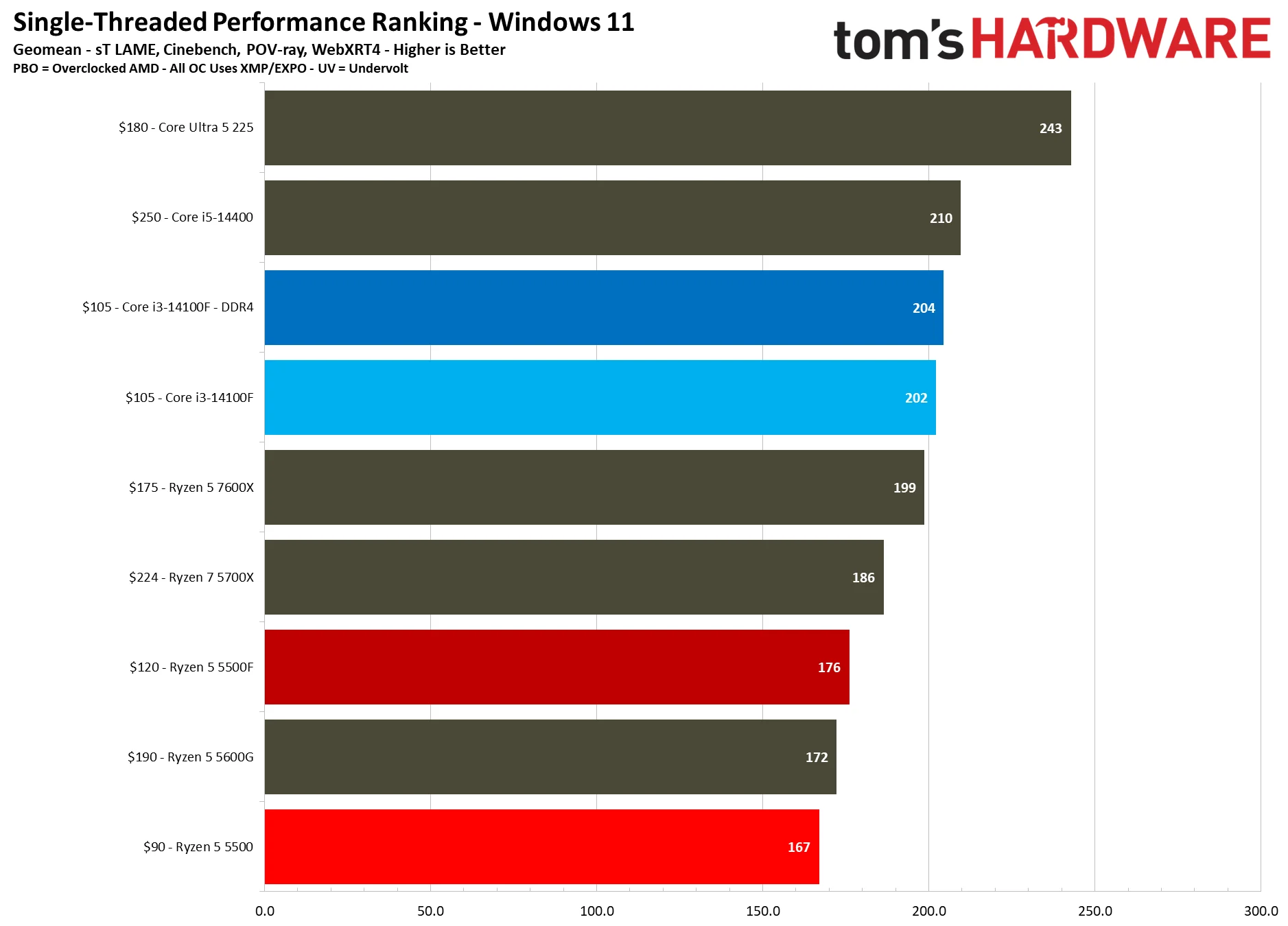
Single-threaded testing tells a different story. Intel generally has the edge here, and the age gap between AMD’s Zen 3 and Intel’s Raptor Lake architecture is part of the explanation. The 5500F improves 5% over the 5500 in the single-threaded geomean, almost exactly matching its 5% higher turbo clock. That’s a real gain, though a 4.4 GHz boost remains modest, and the chip has only 16 MB of L3 cache; other Vermeer processors, including the Ryzen 7 5700X, have 32 MB.
Rendering Benchmarks
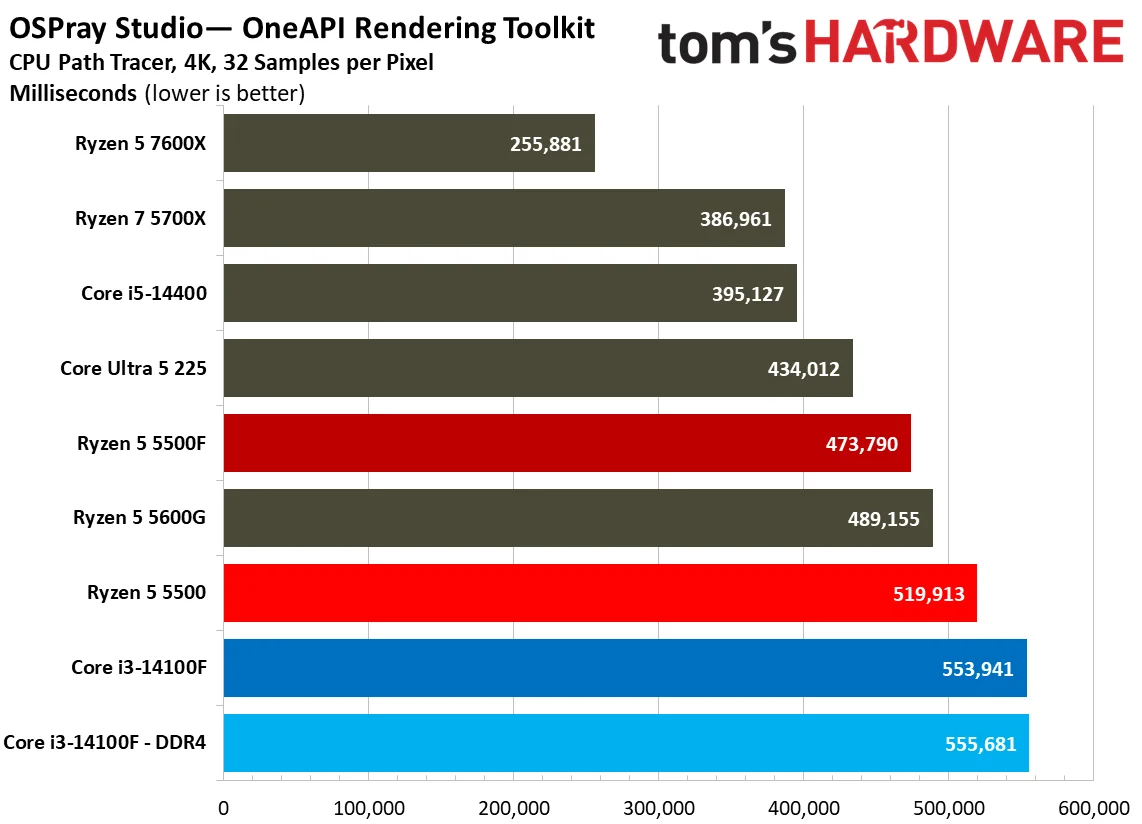
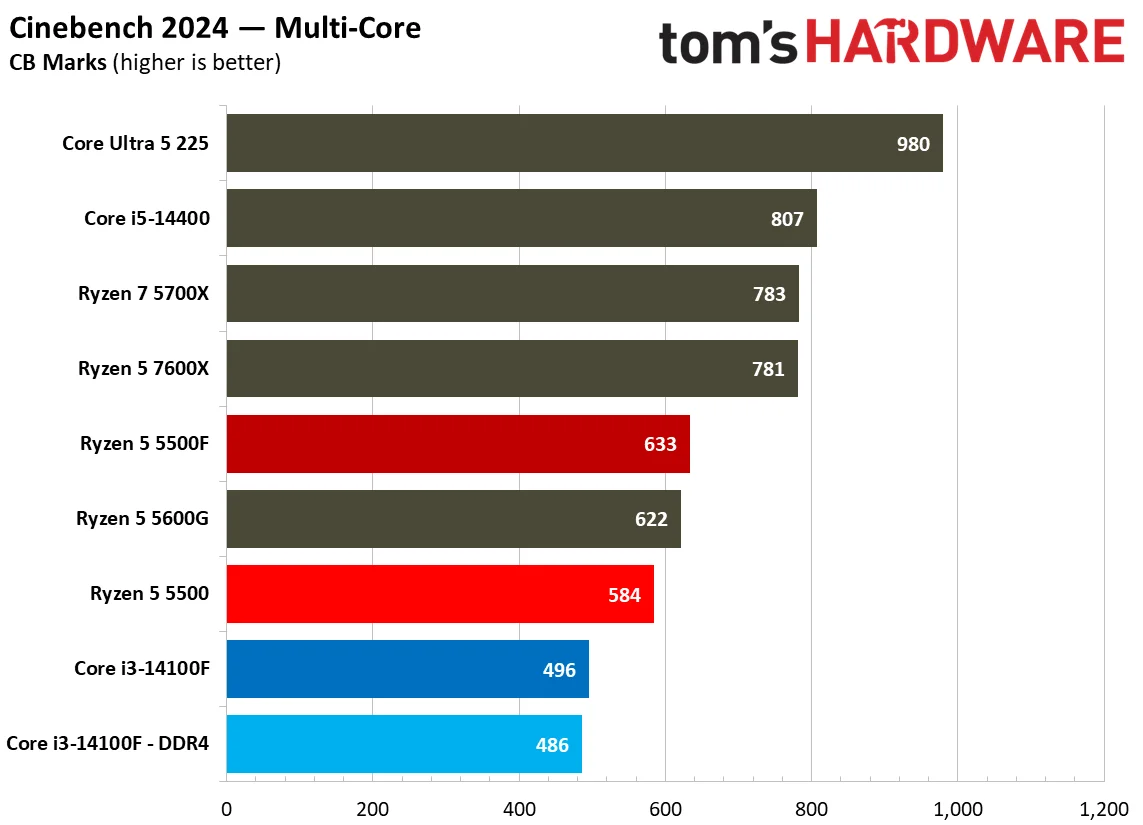
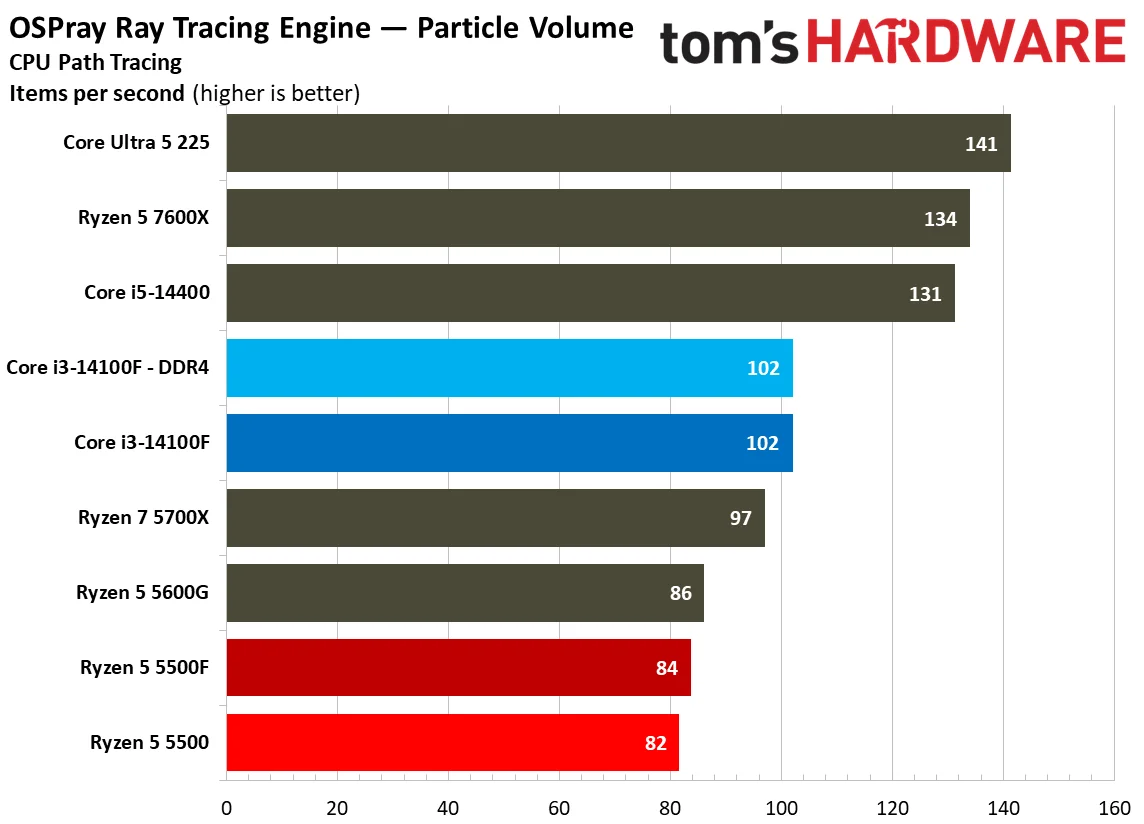
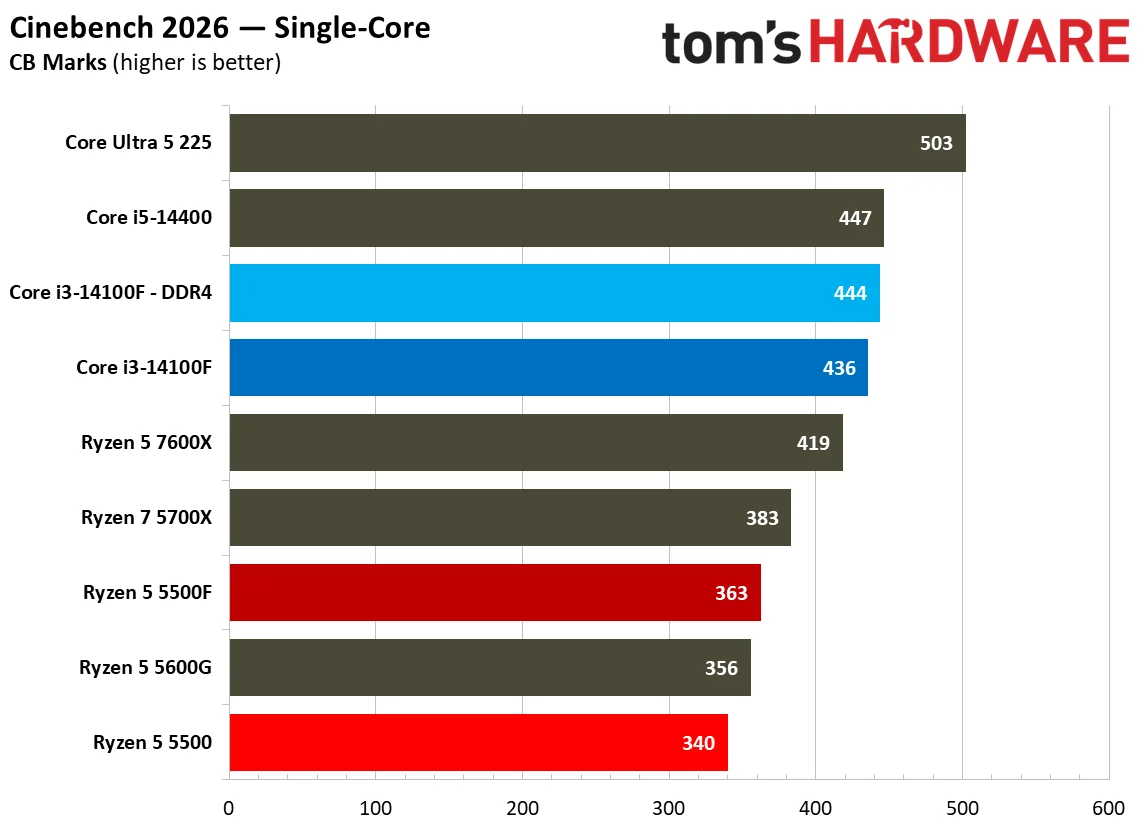
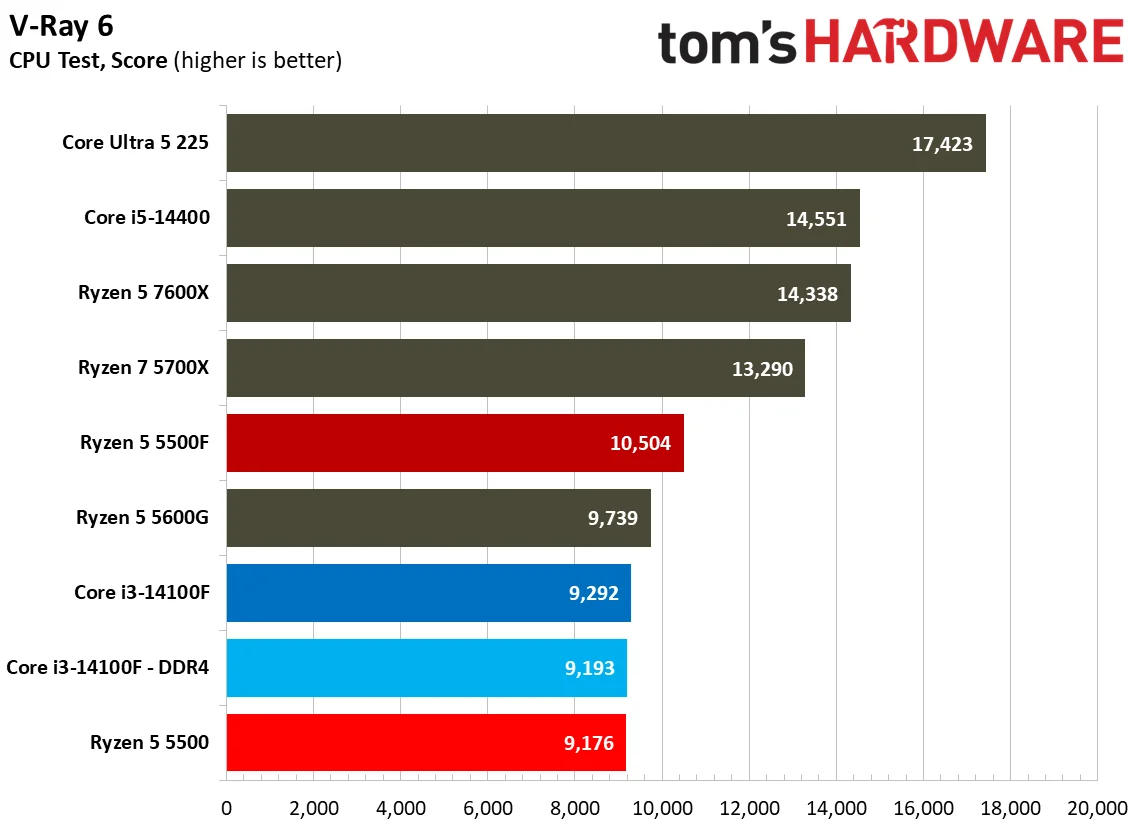
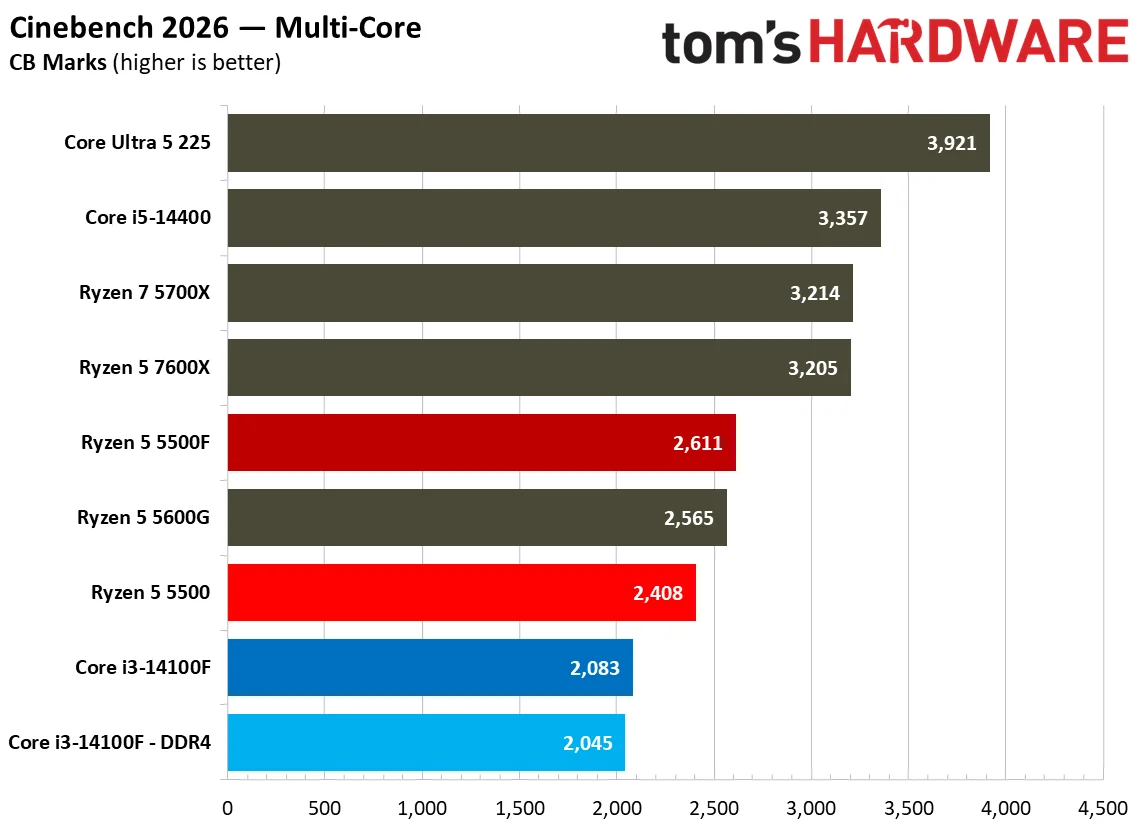
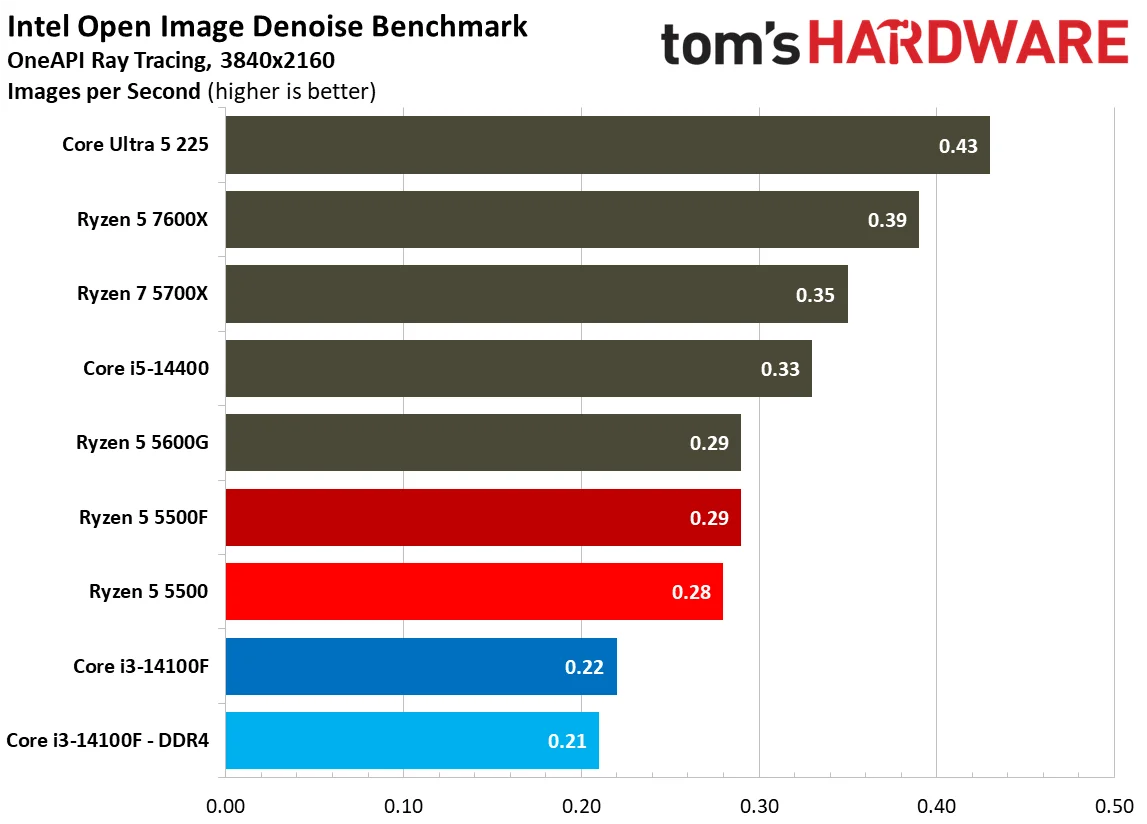
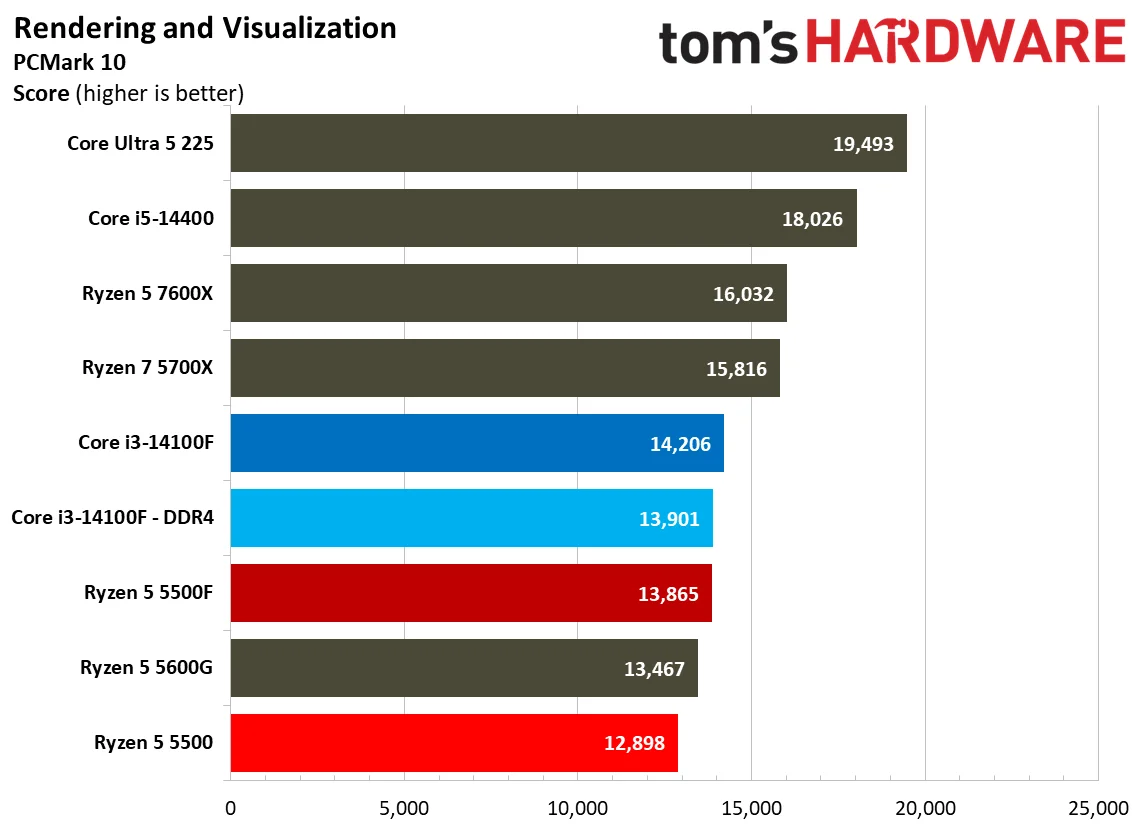
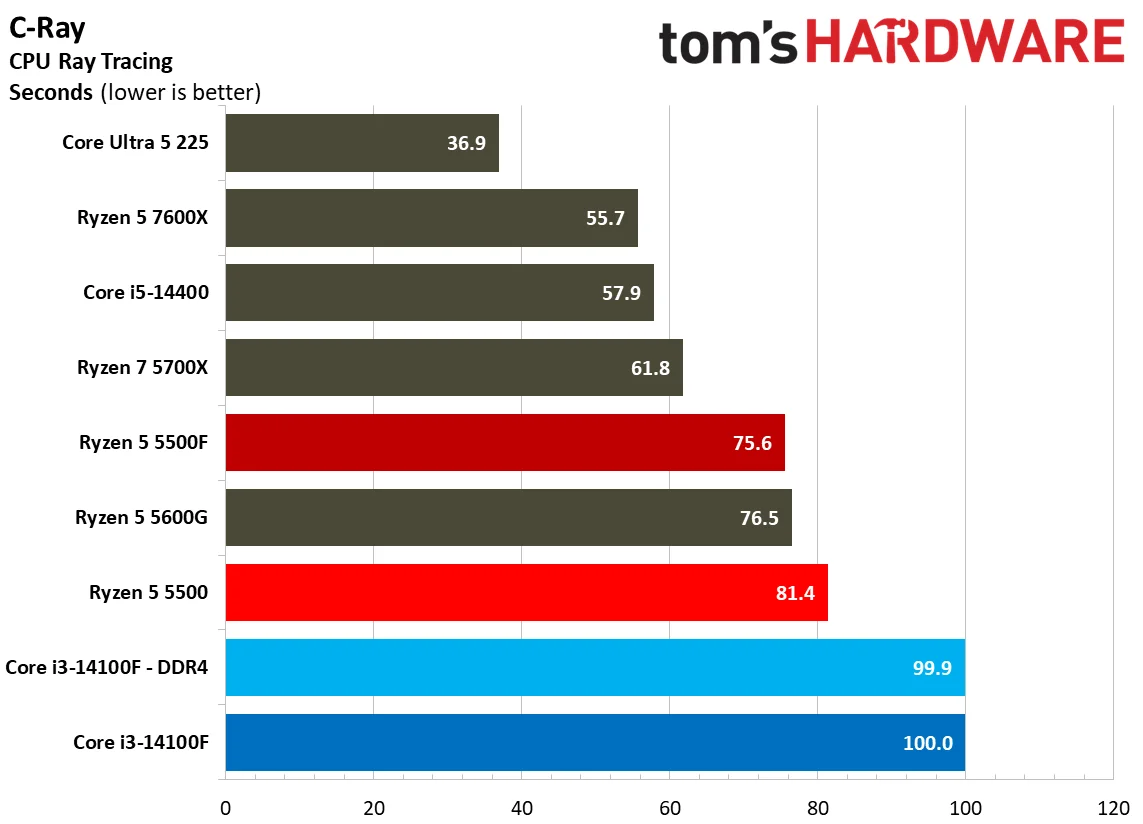
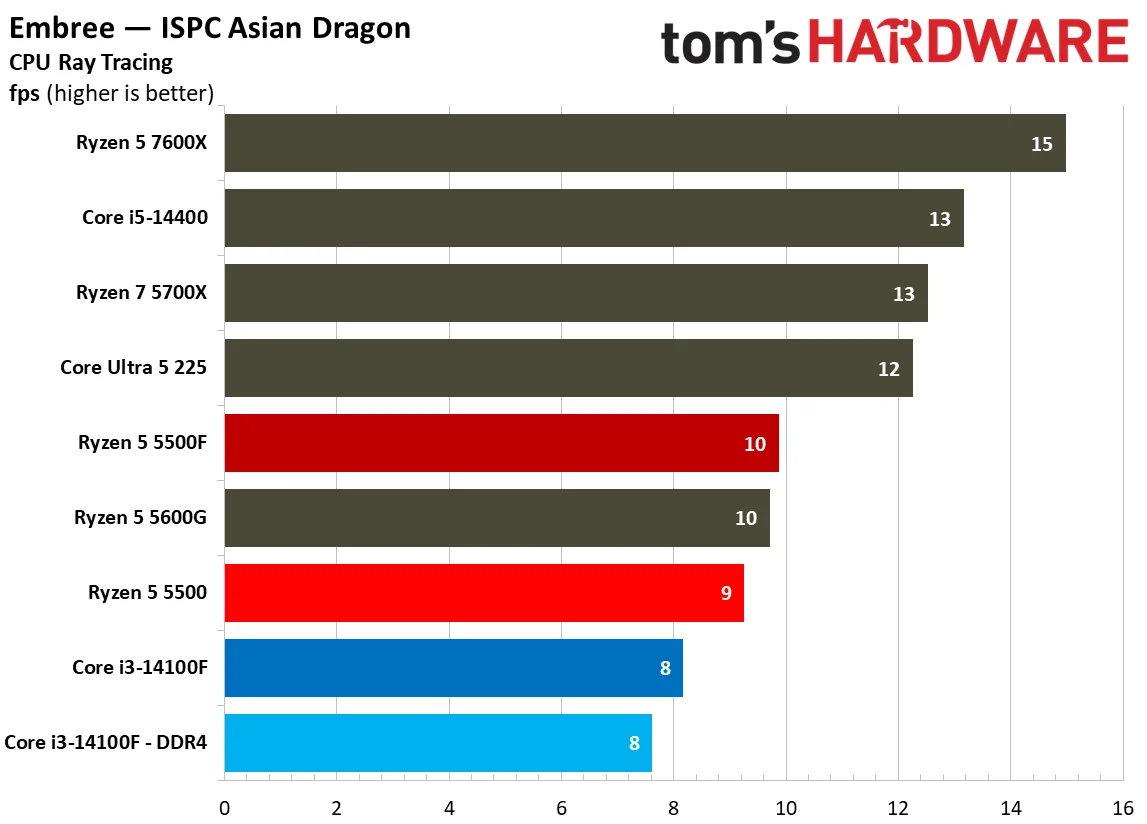
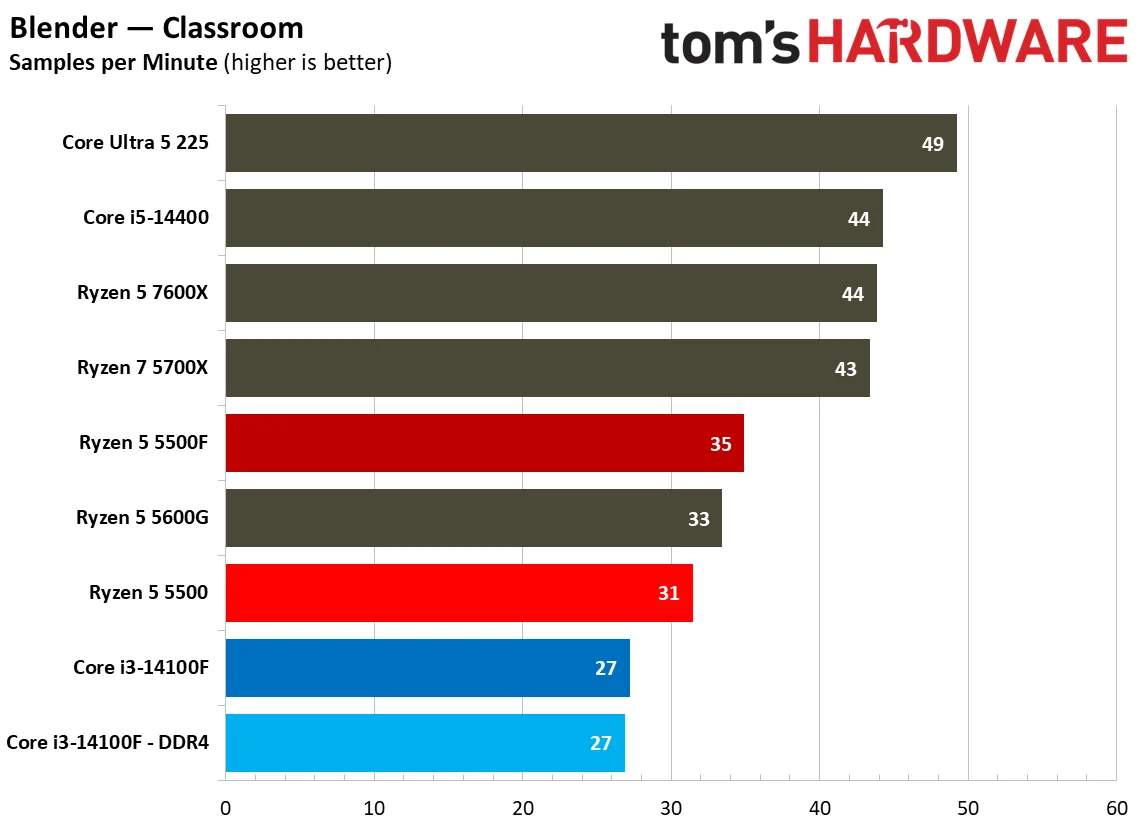
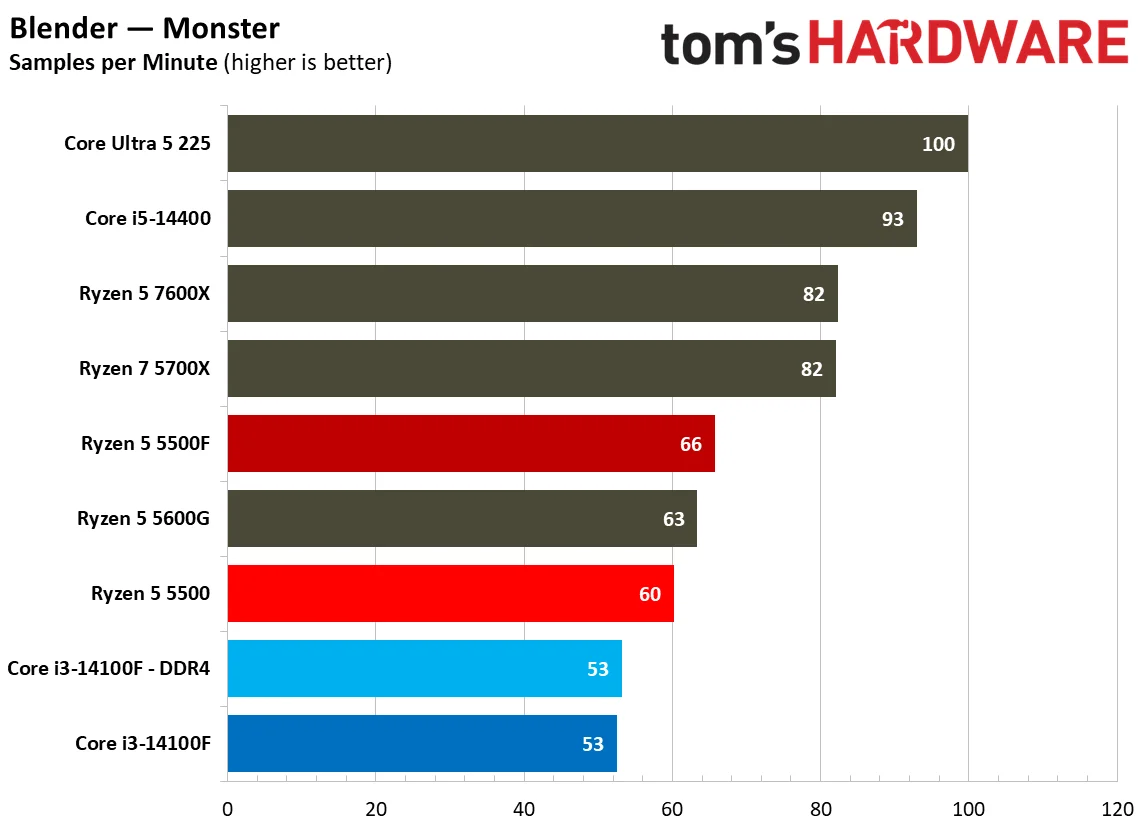
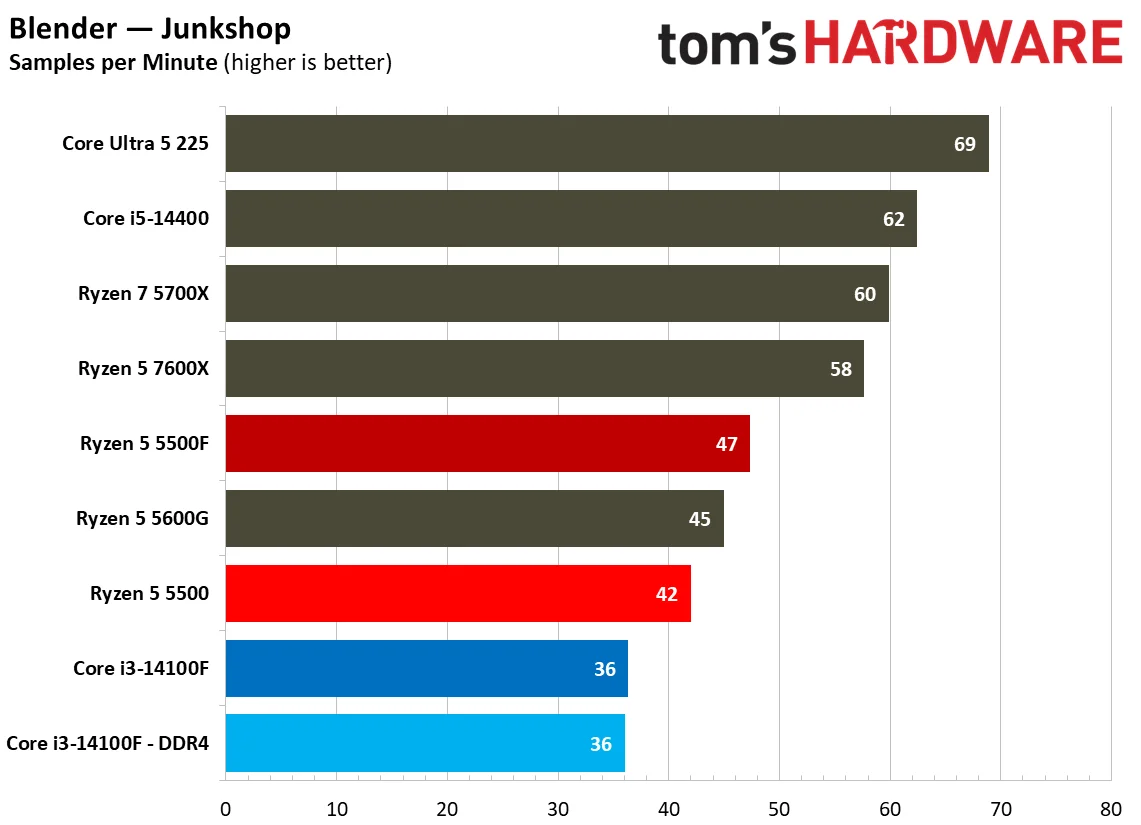
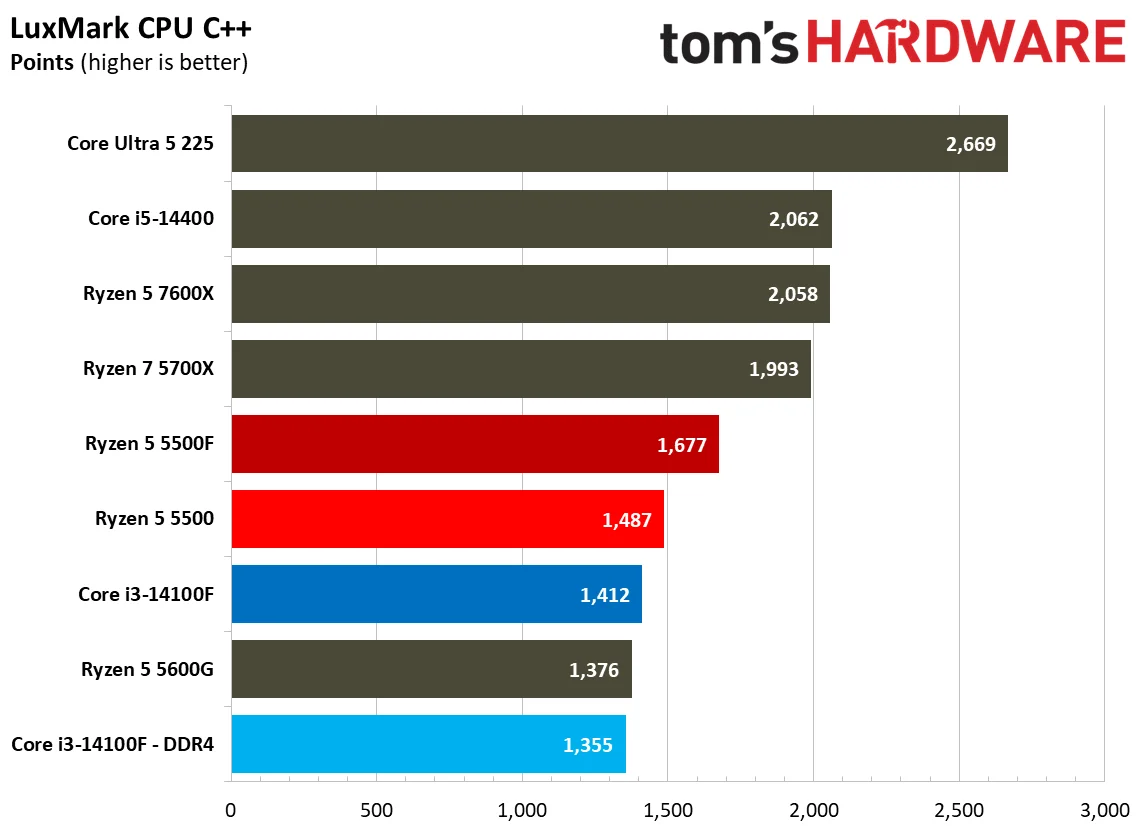
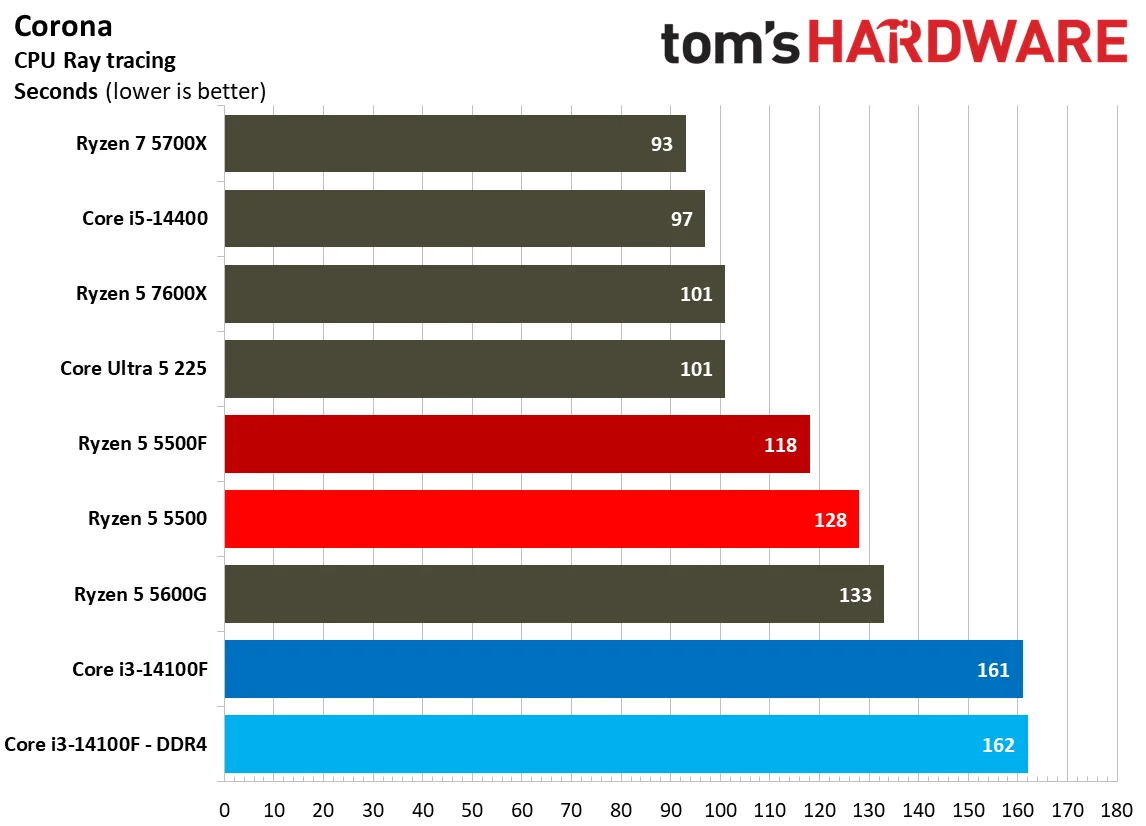
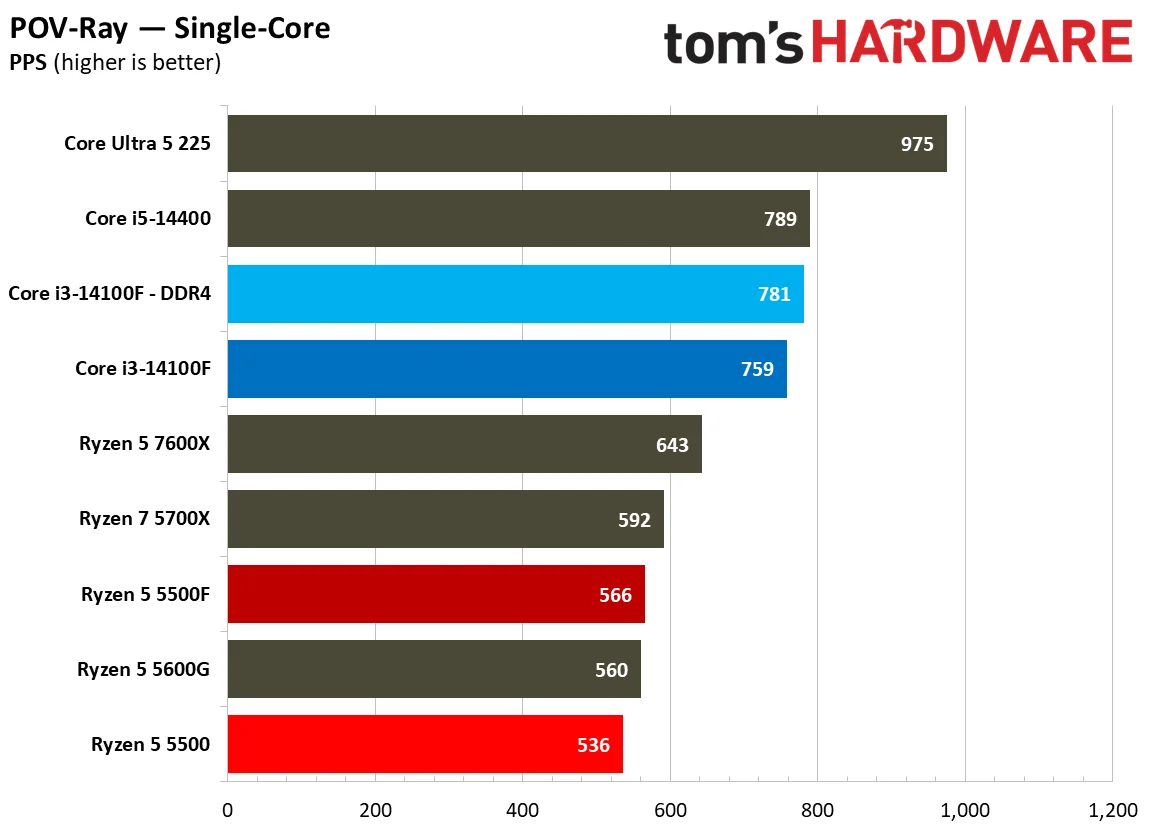
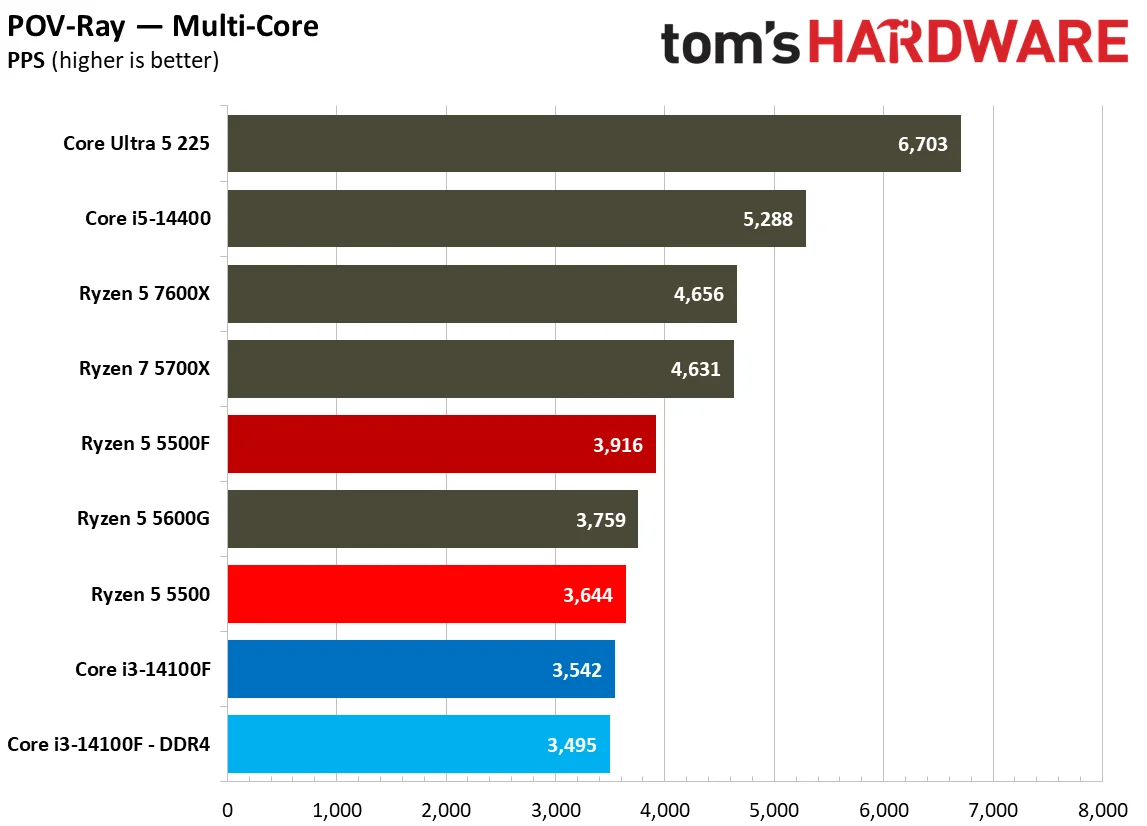
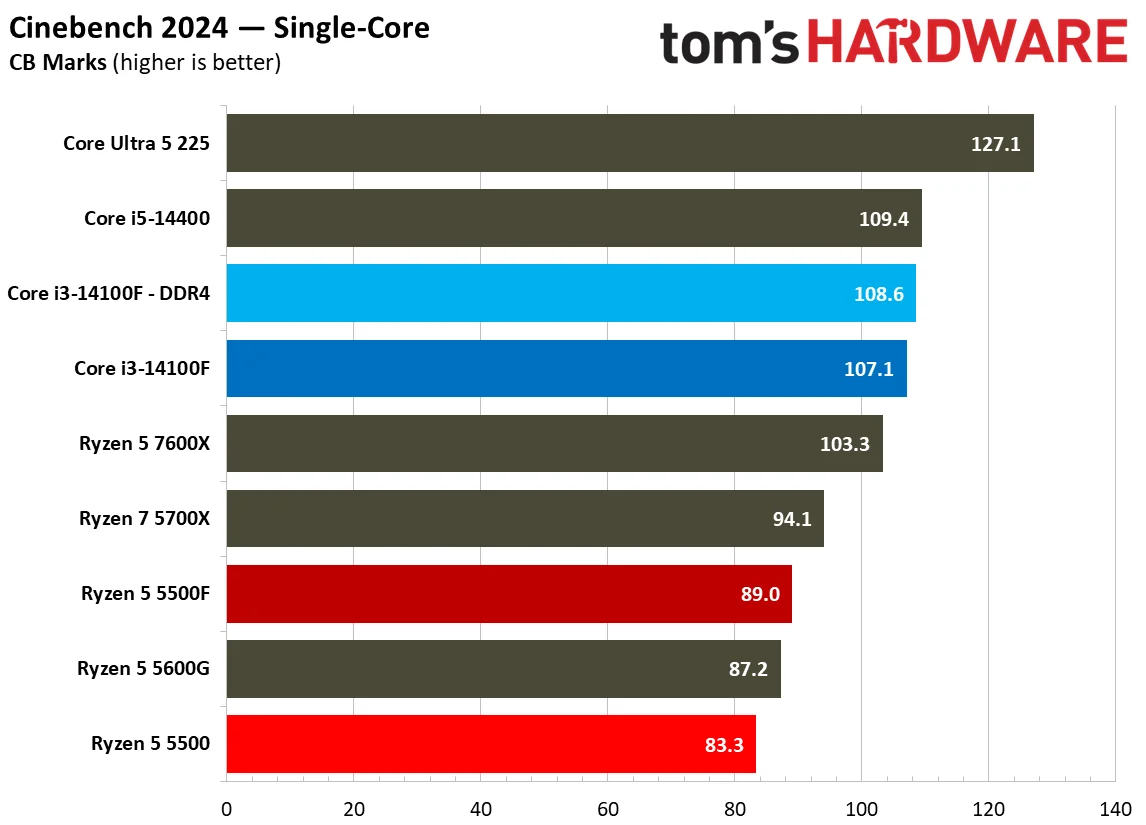
Rendering tests are useful here because they keep CPU cores busy for long stretches. That makes results in Cinebench and POV-Ray a meaningful part of the overall geometric mean, rather than a quick burst that may flatter a chip. The familiar split holds: AMD is stronger in multi-threaded rendering, Intel leads on a single core, and the Ryzen 5 5500F beats the 5500 by 5% to 10%, depending on the test.
Encoding Benchmarks
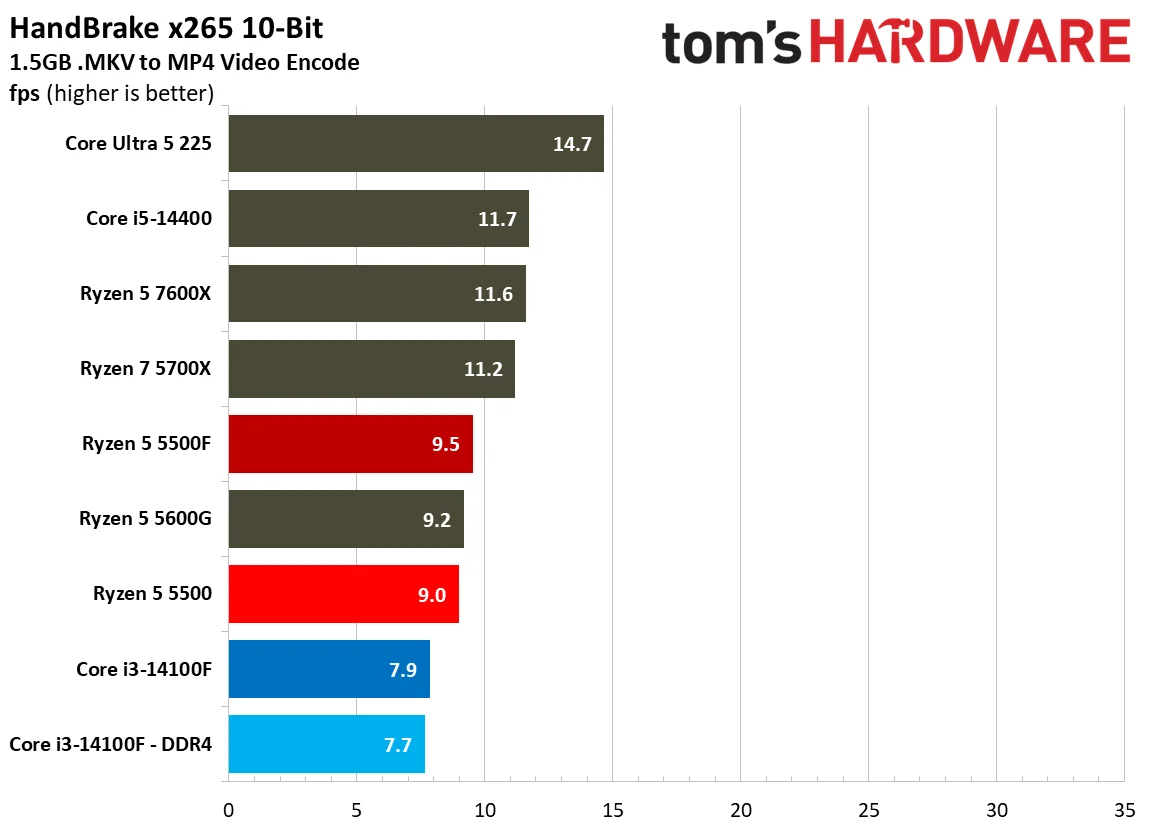
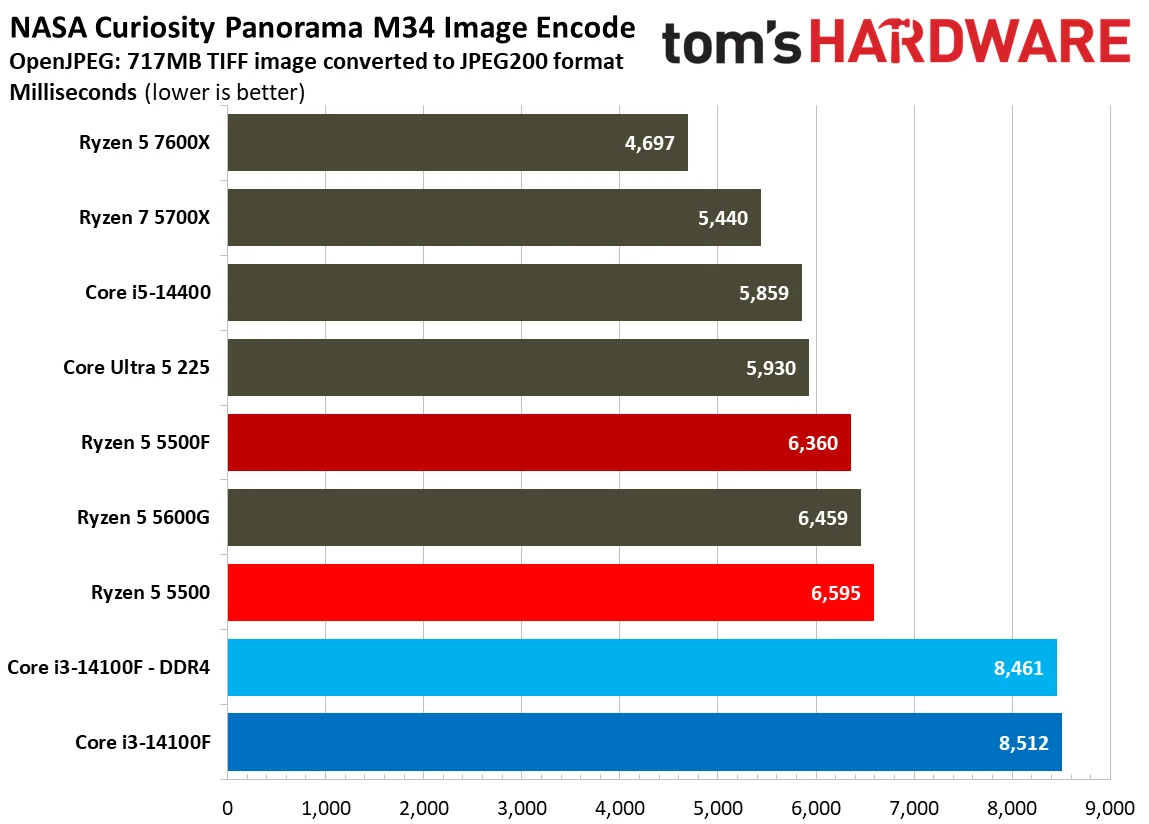
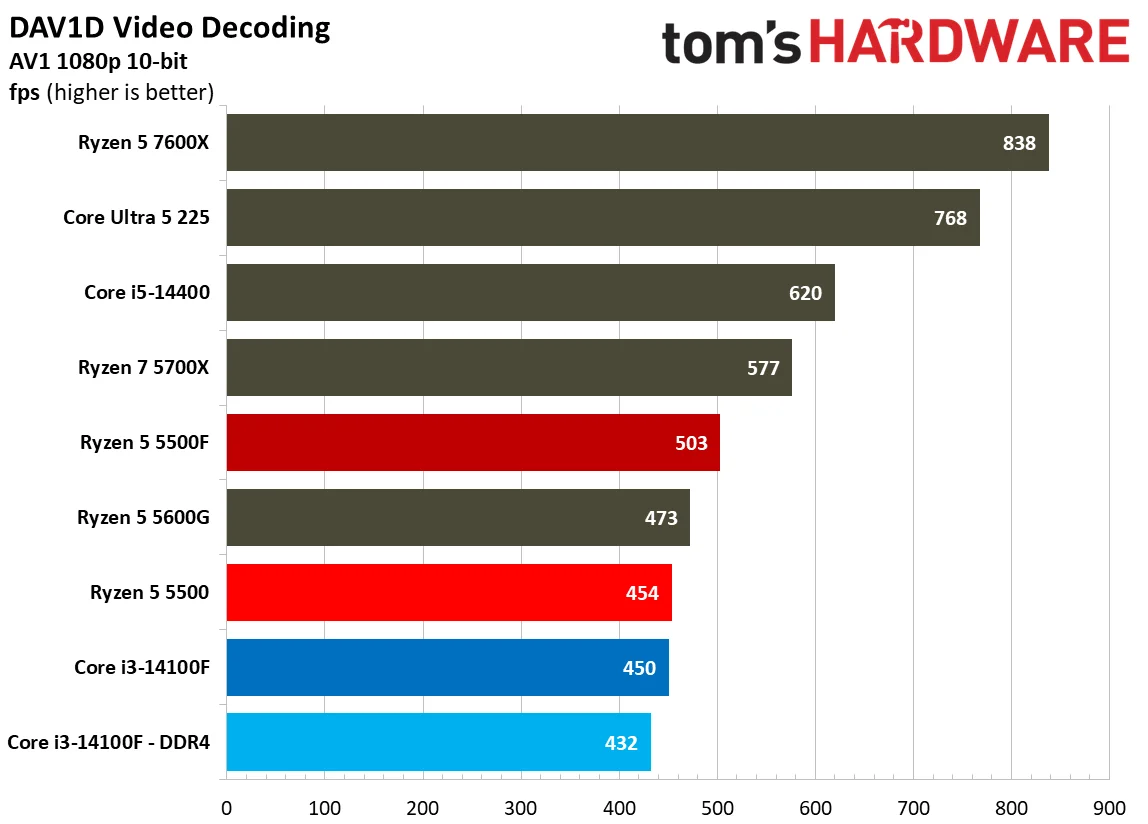
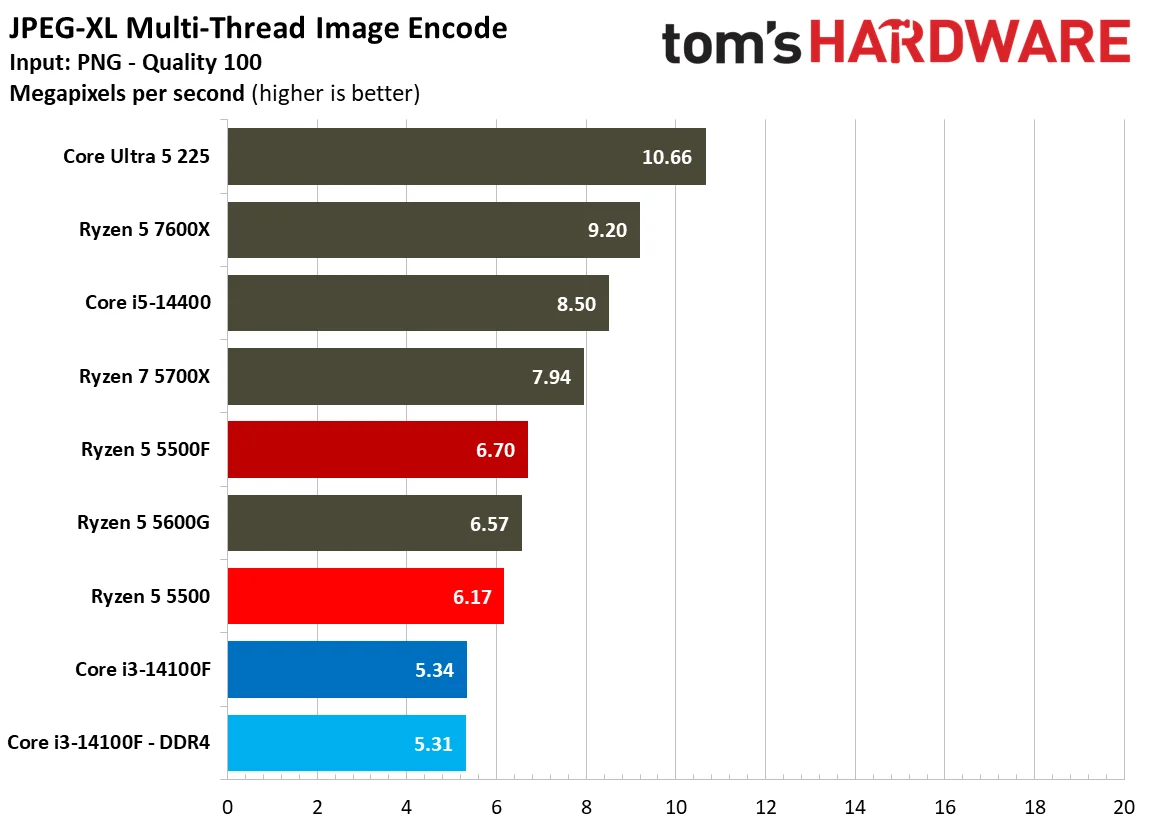
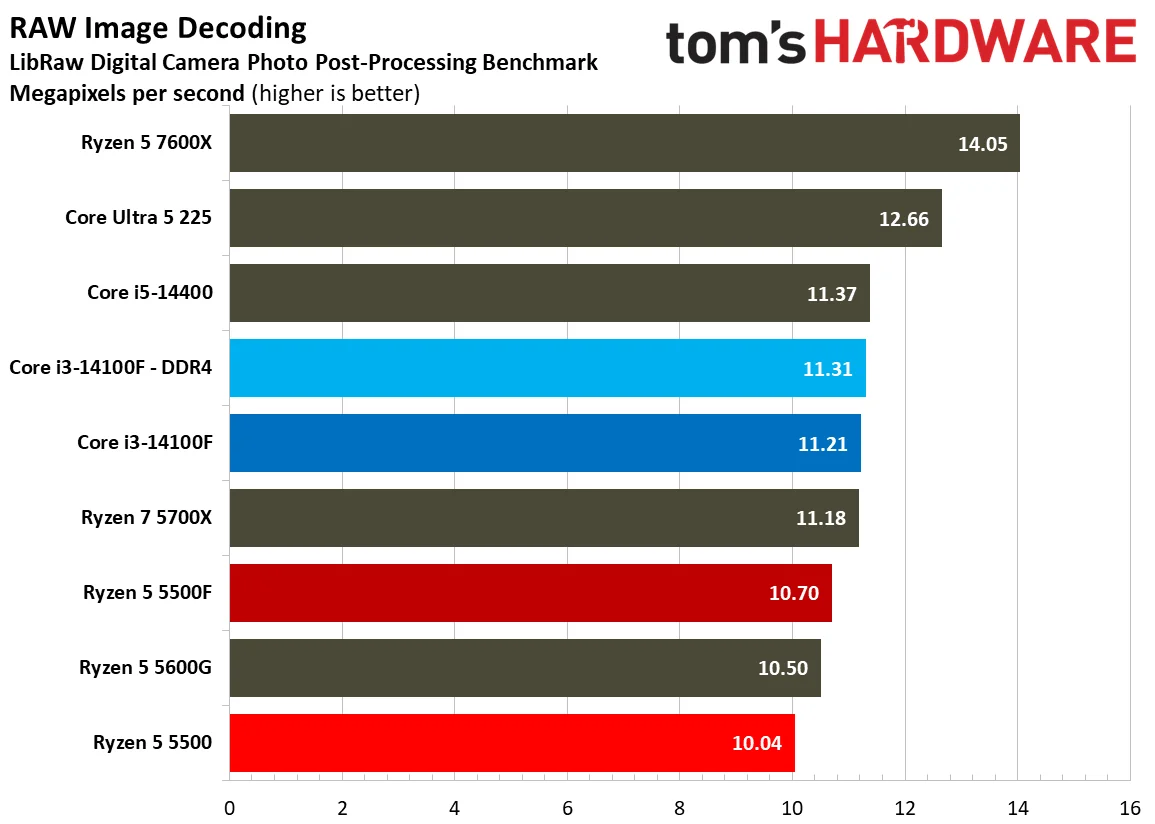
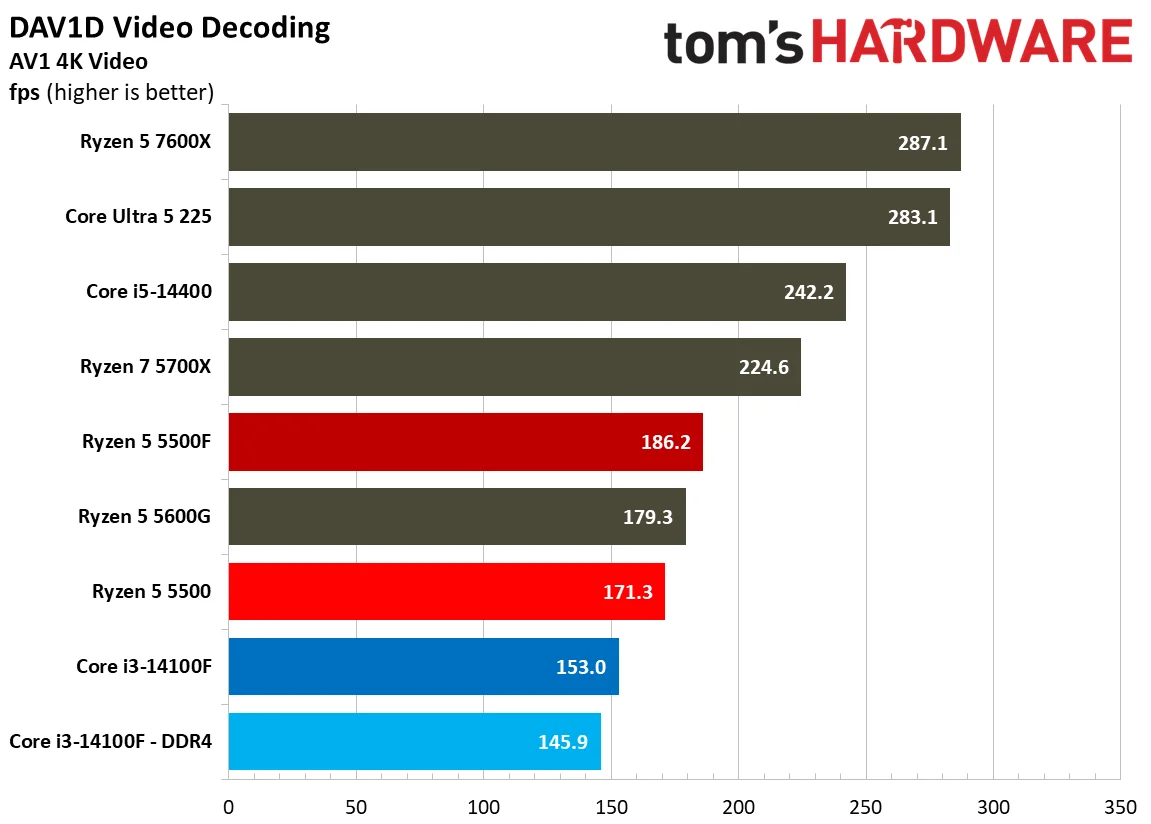
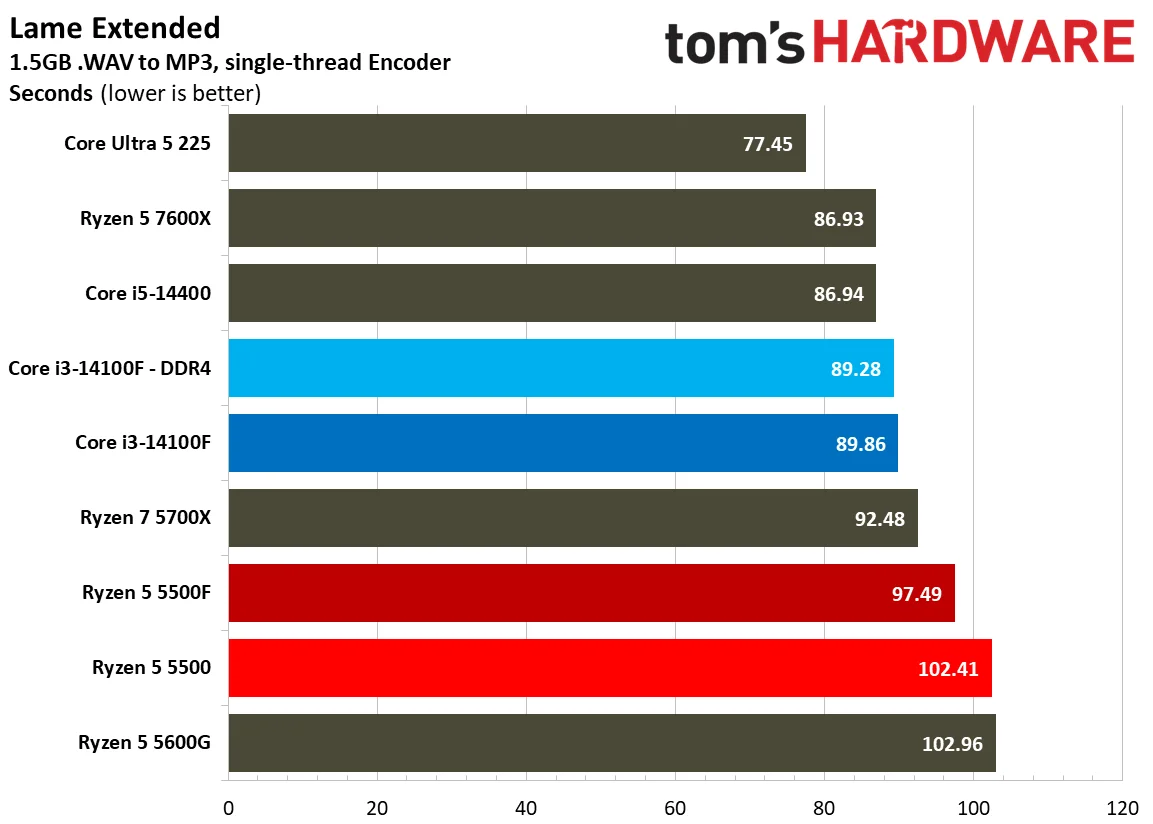
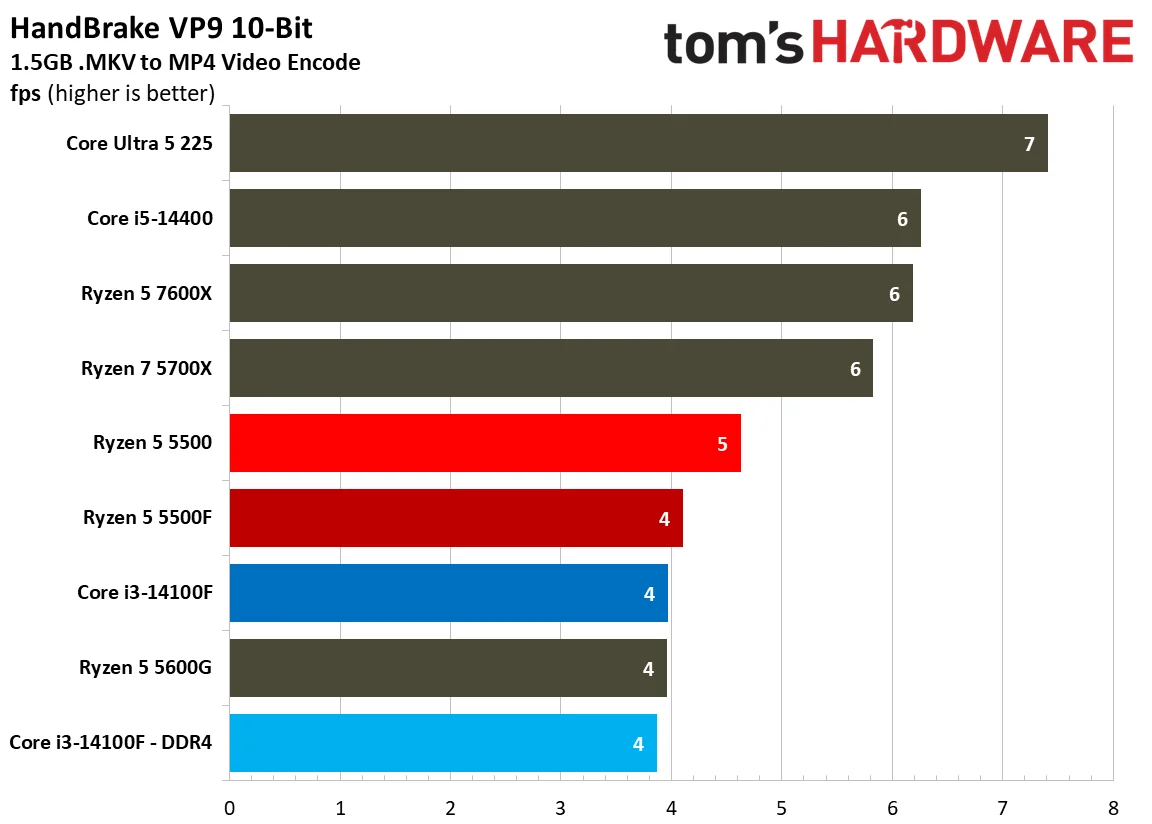
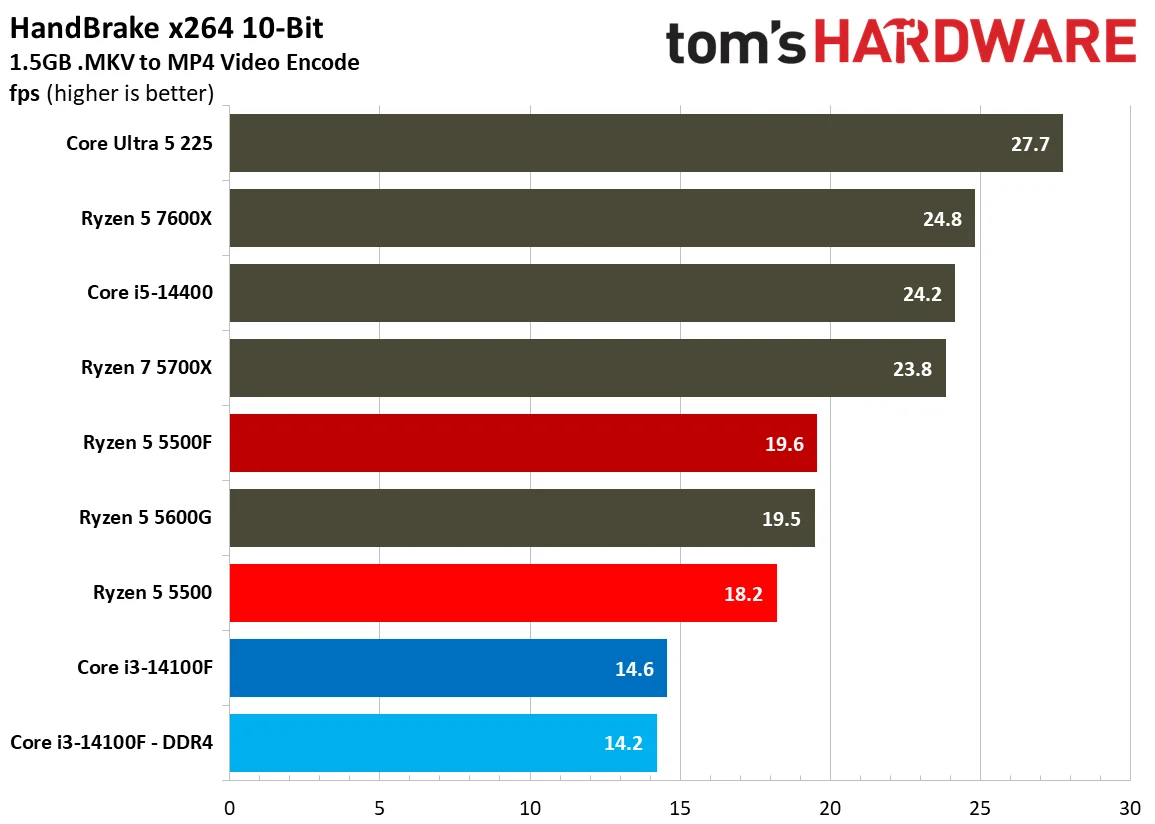
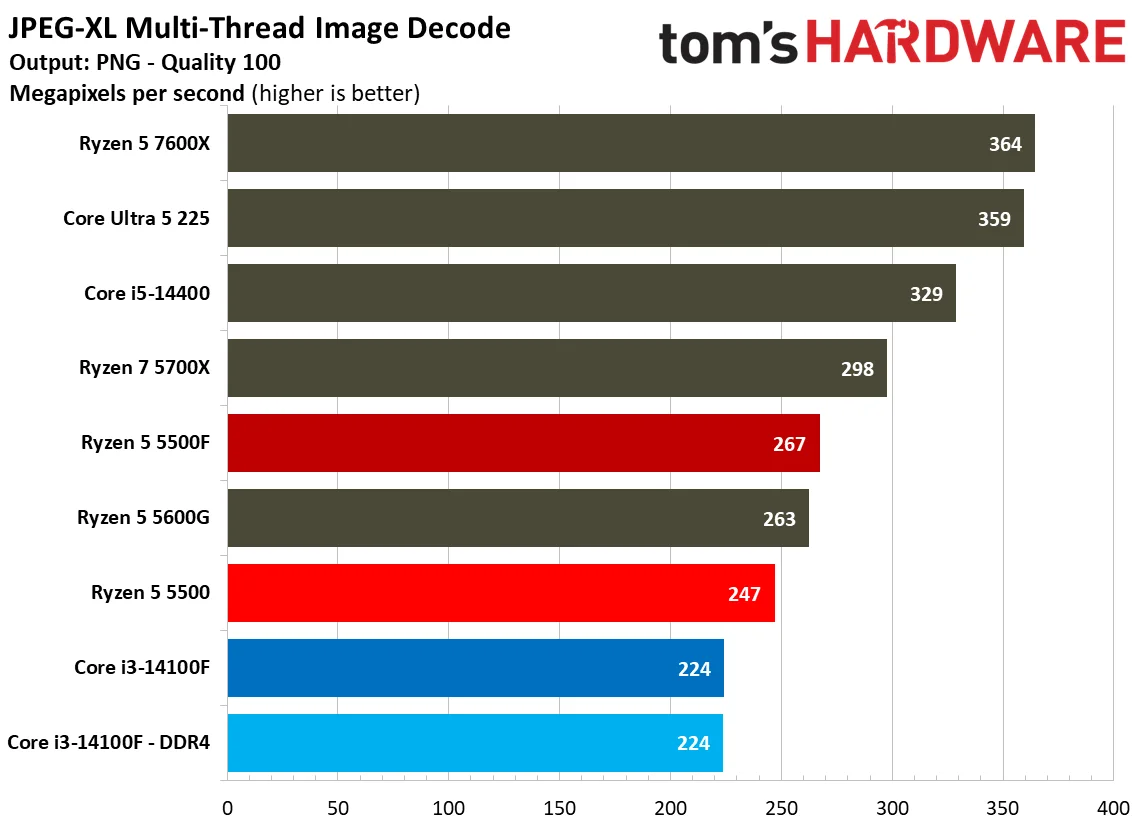
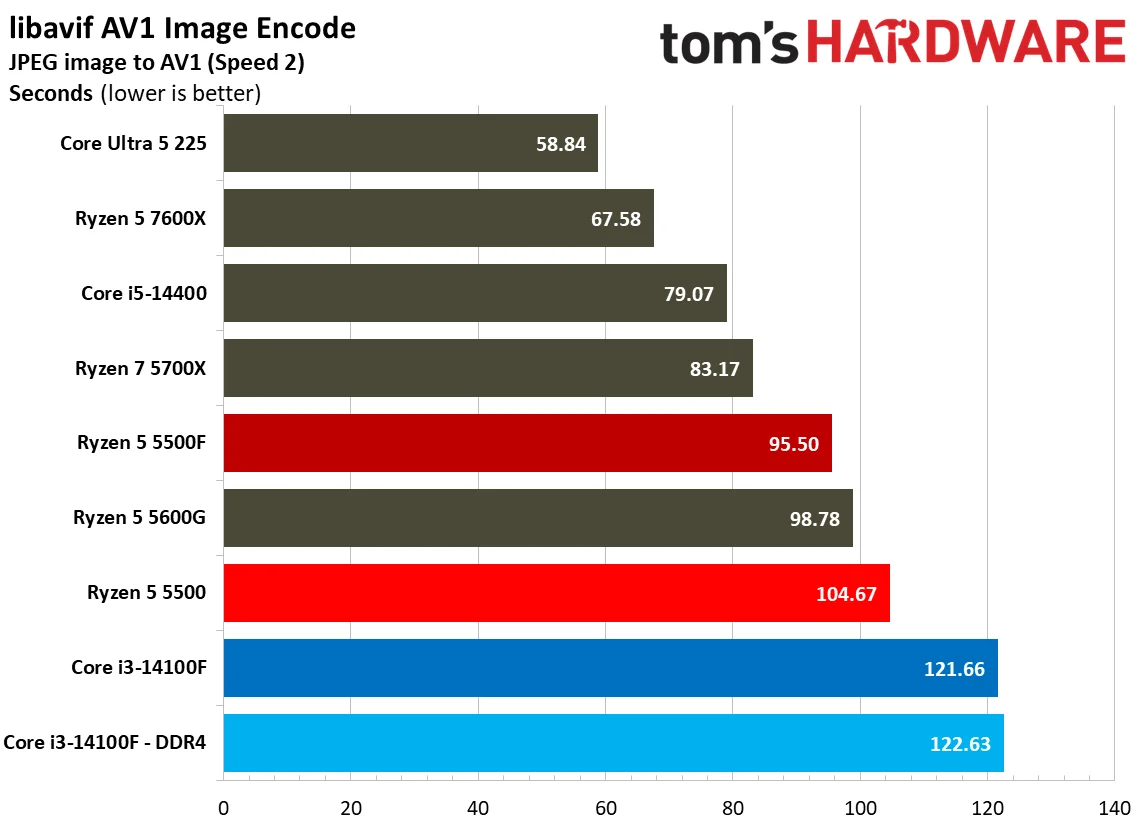
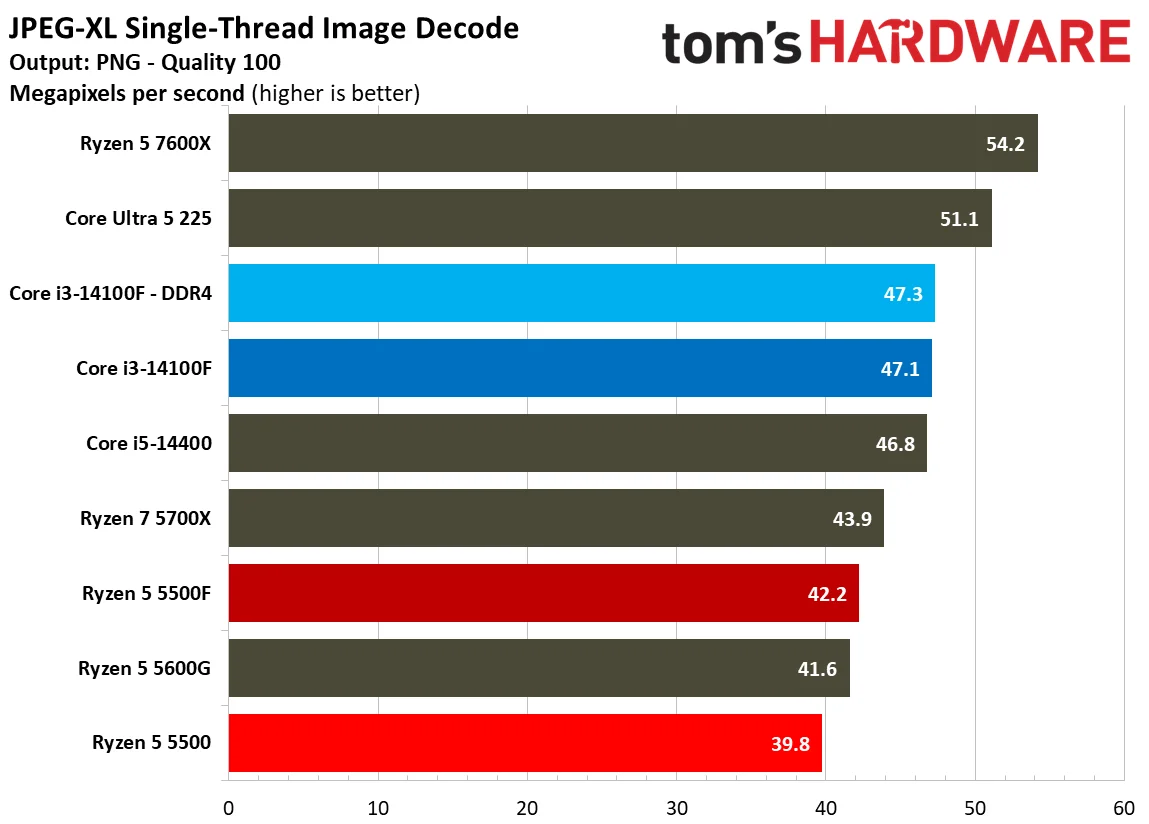
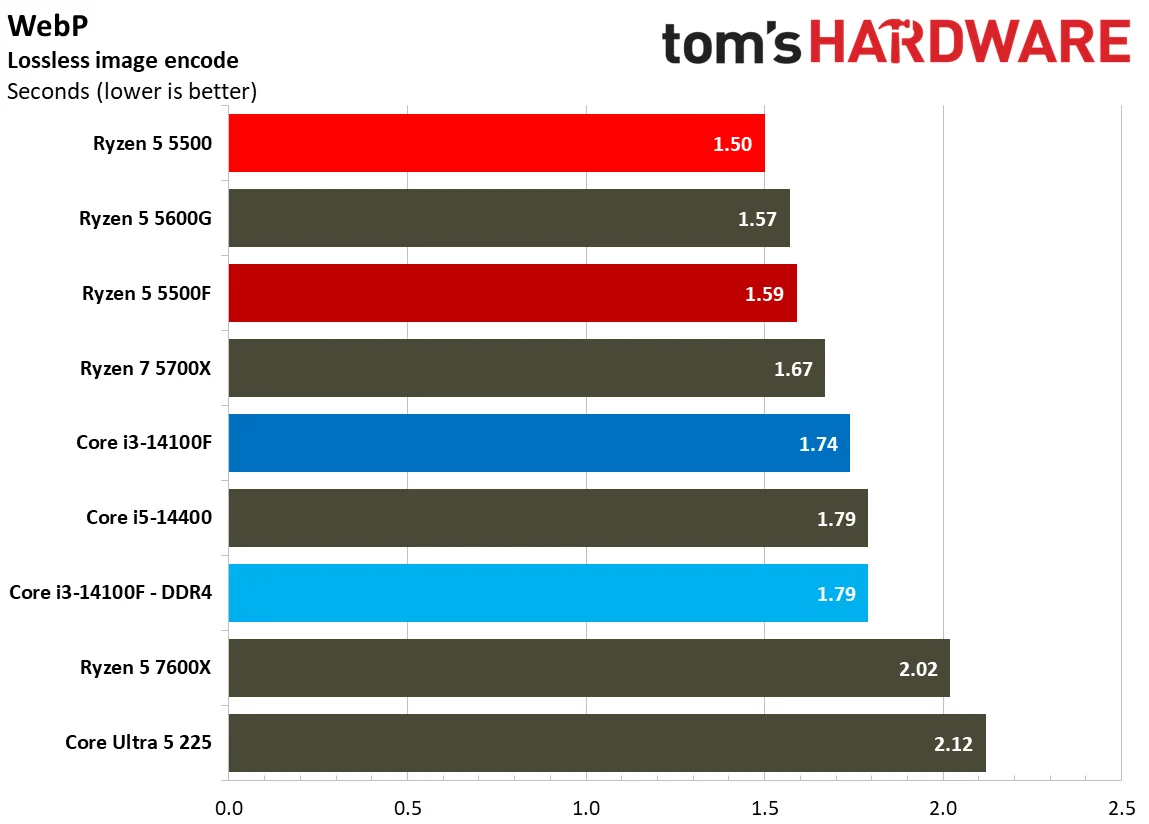
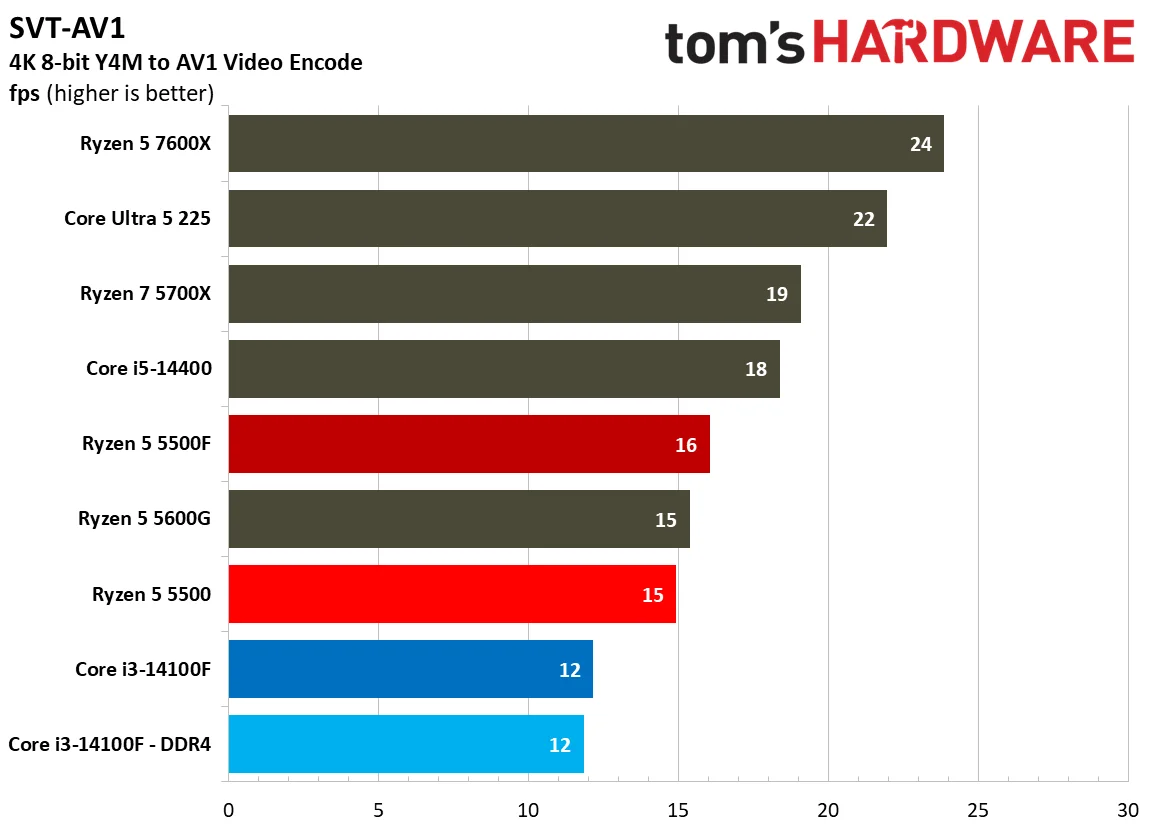
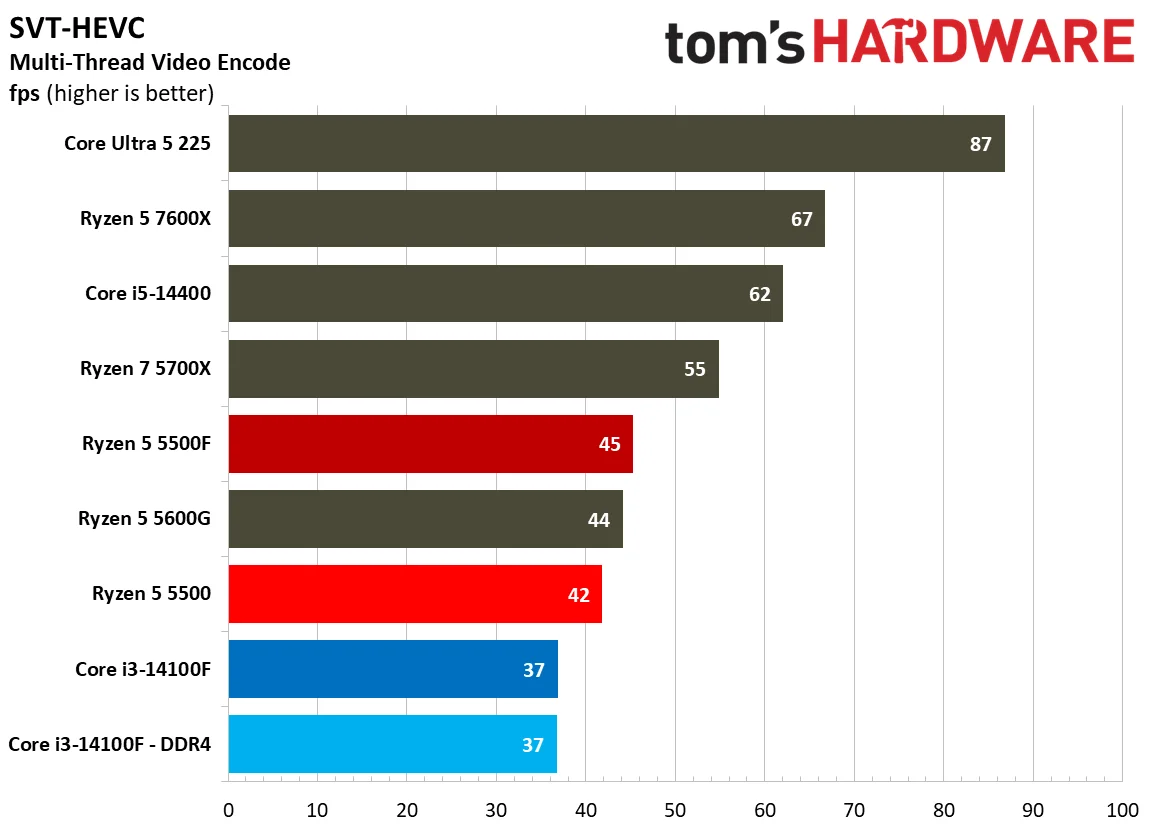
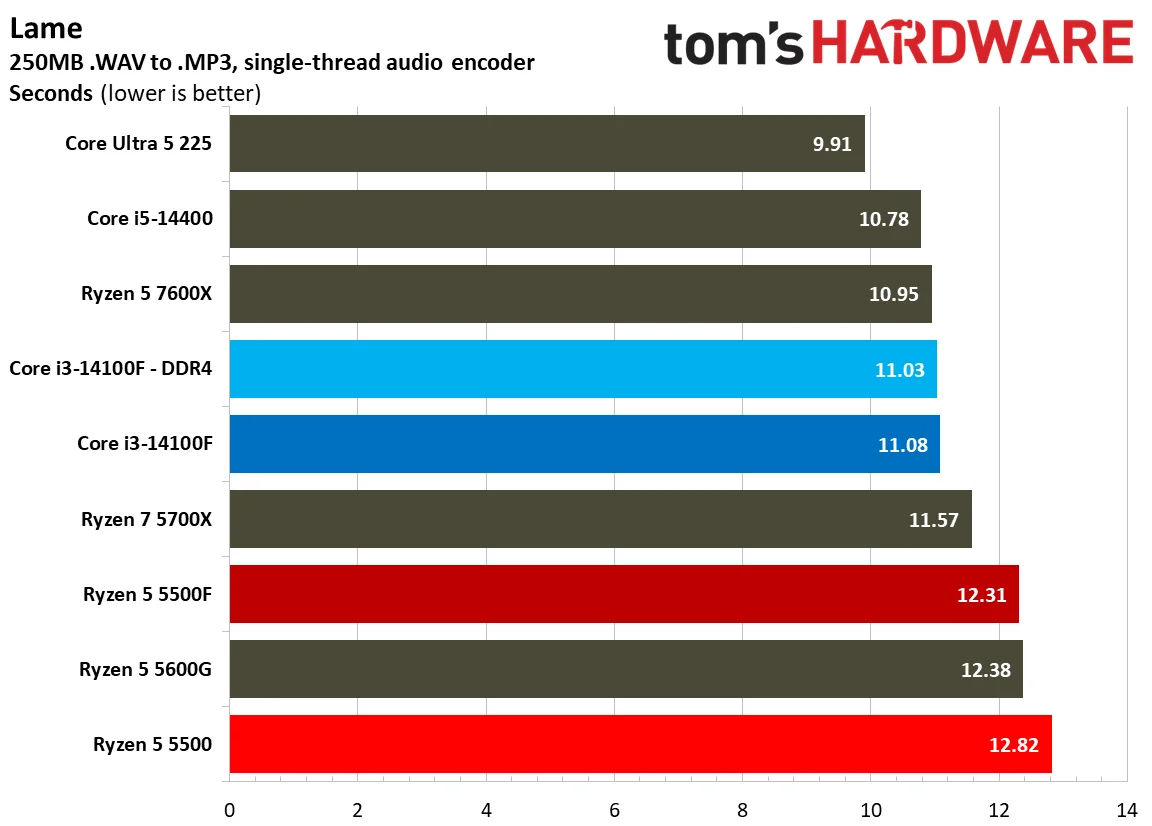
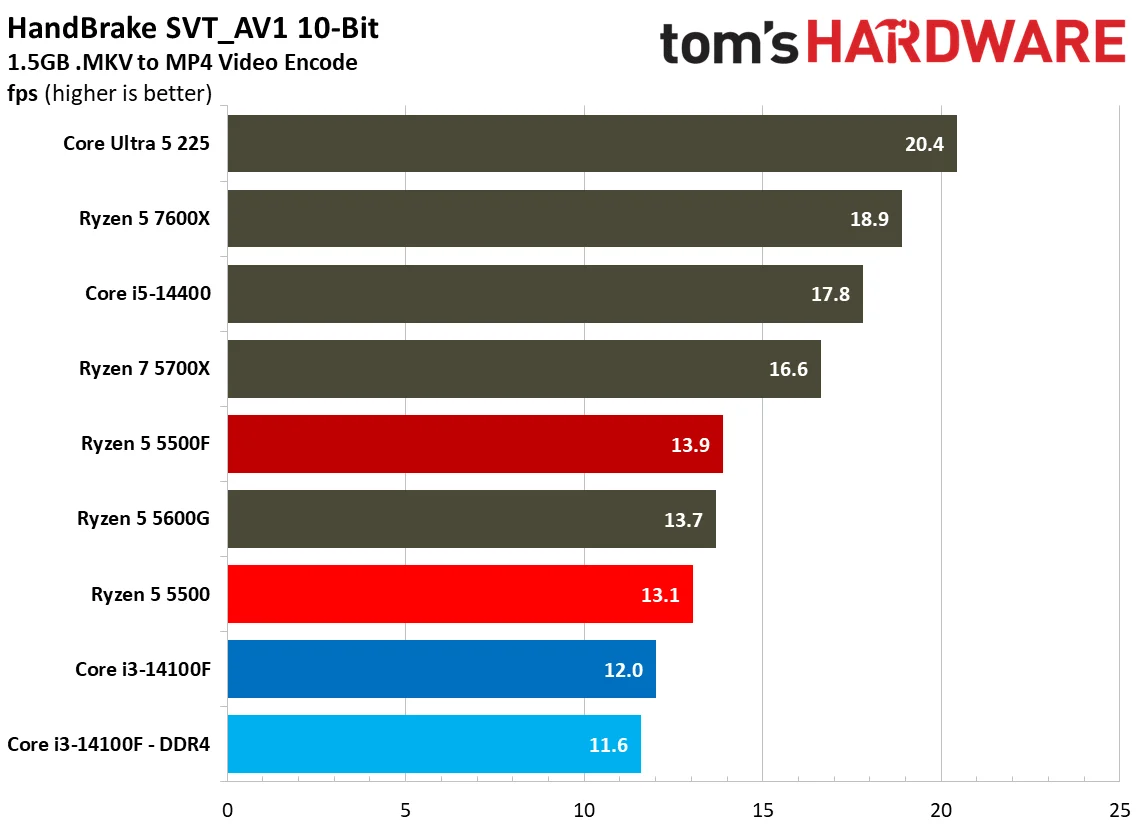
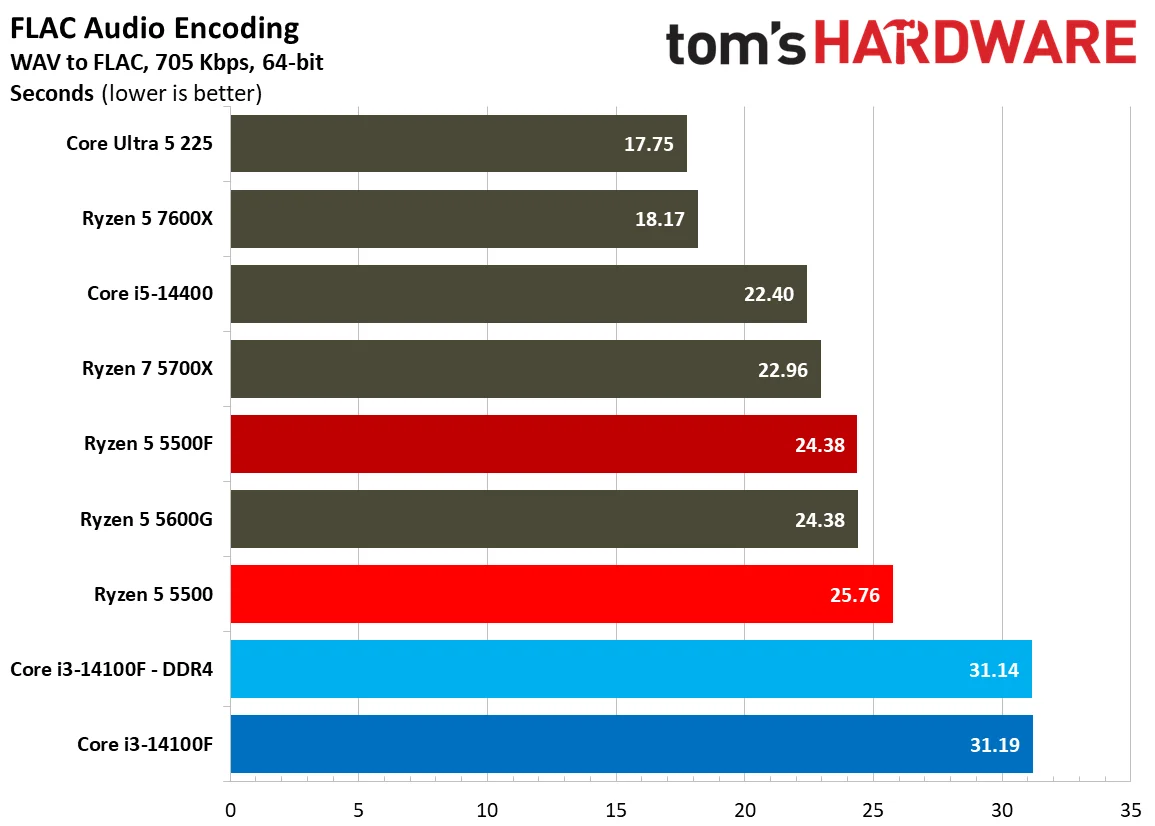
HandBrake’s heavily threaded video tests show how much these workloads depend on having enough cores. The Ryzen 5 5500F edges the 5500, but only slightly; the faster clock helps, while both chips—and the Core i3-14100—struggle with demanding encodes. LAME favors Intel in its single-threaded test, though that’s less telling for this group than the multi-threaded results.
The VP9 numbers make the limits plain: the Ryzen 5 5500 even finishes 1 FPS ahead of the 5500F, but both manage only about 4 FPS. At that level, the small gap between the two chips says less than the overall difficulty of the workload.
Creator App Benchmarks
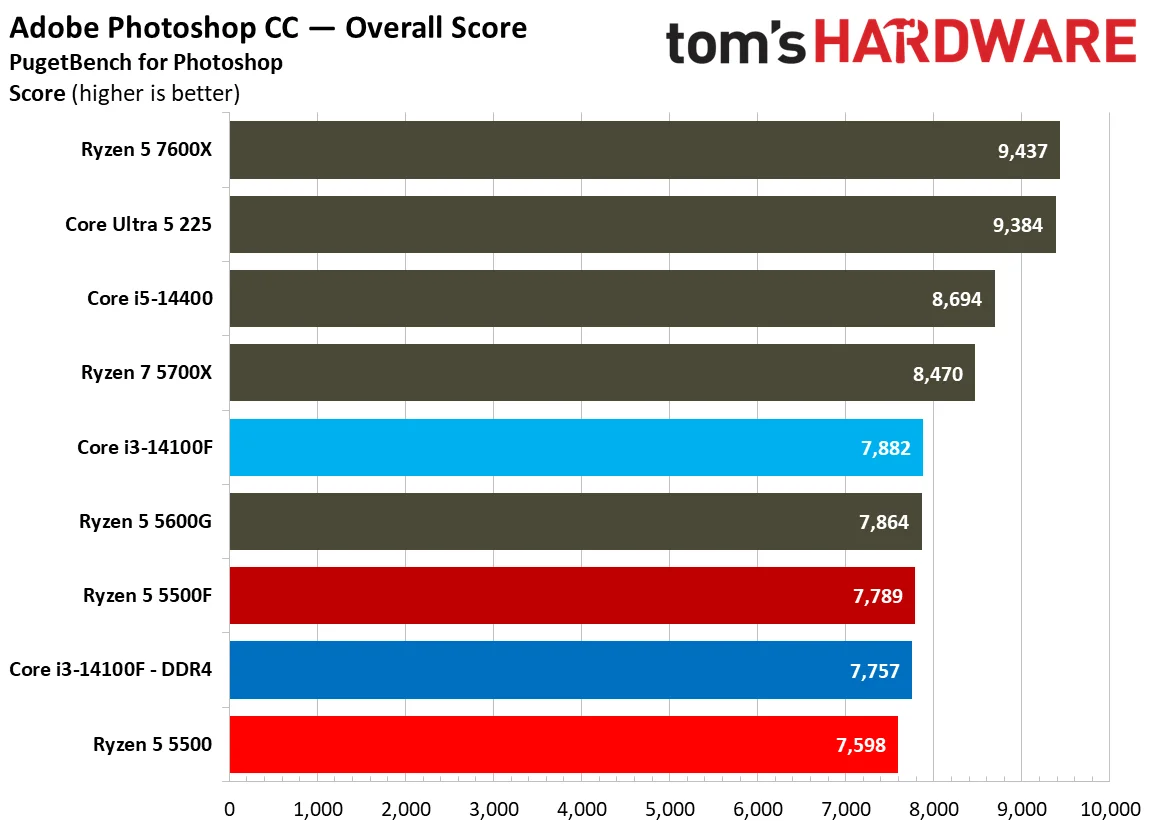
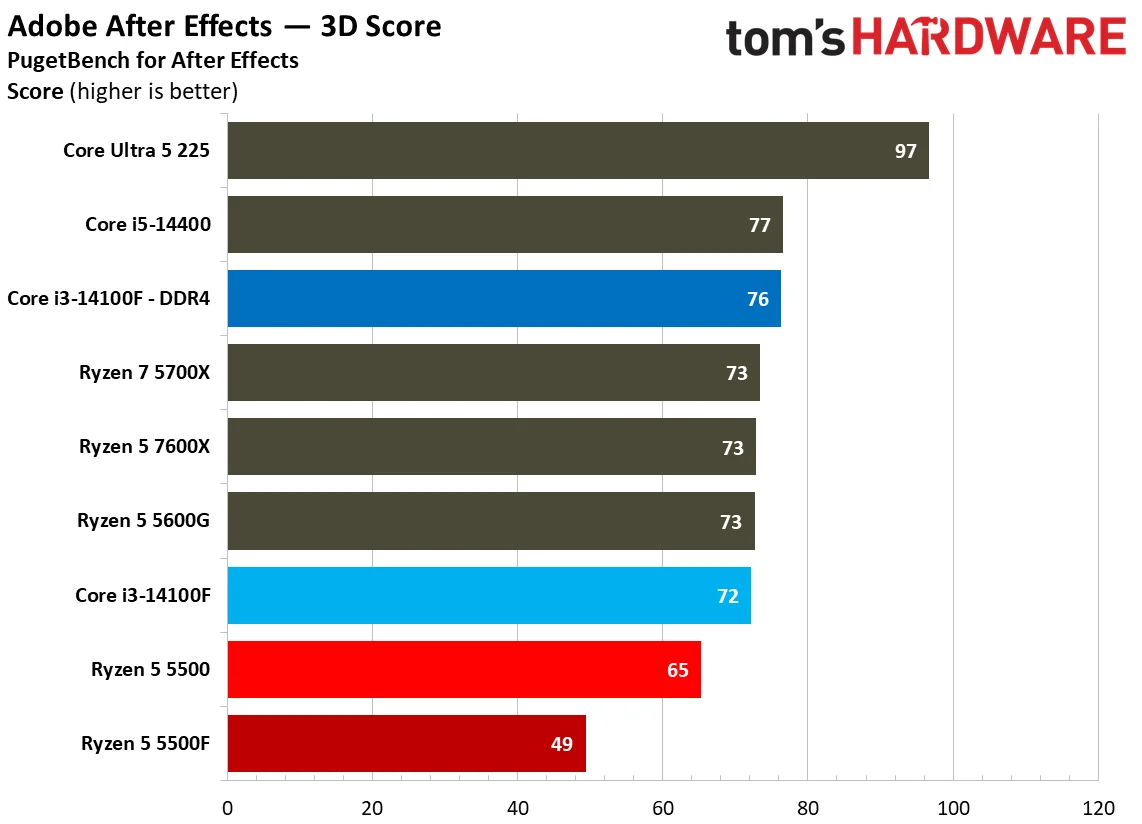
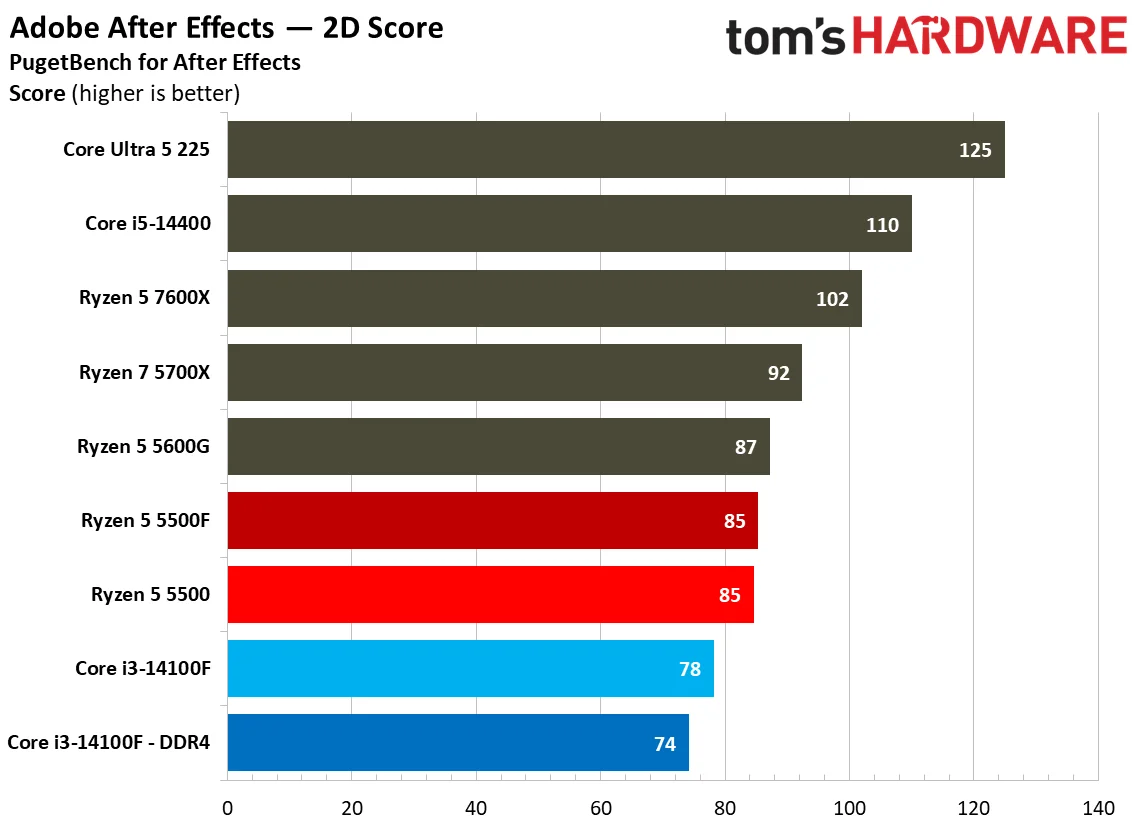
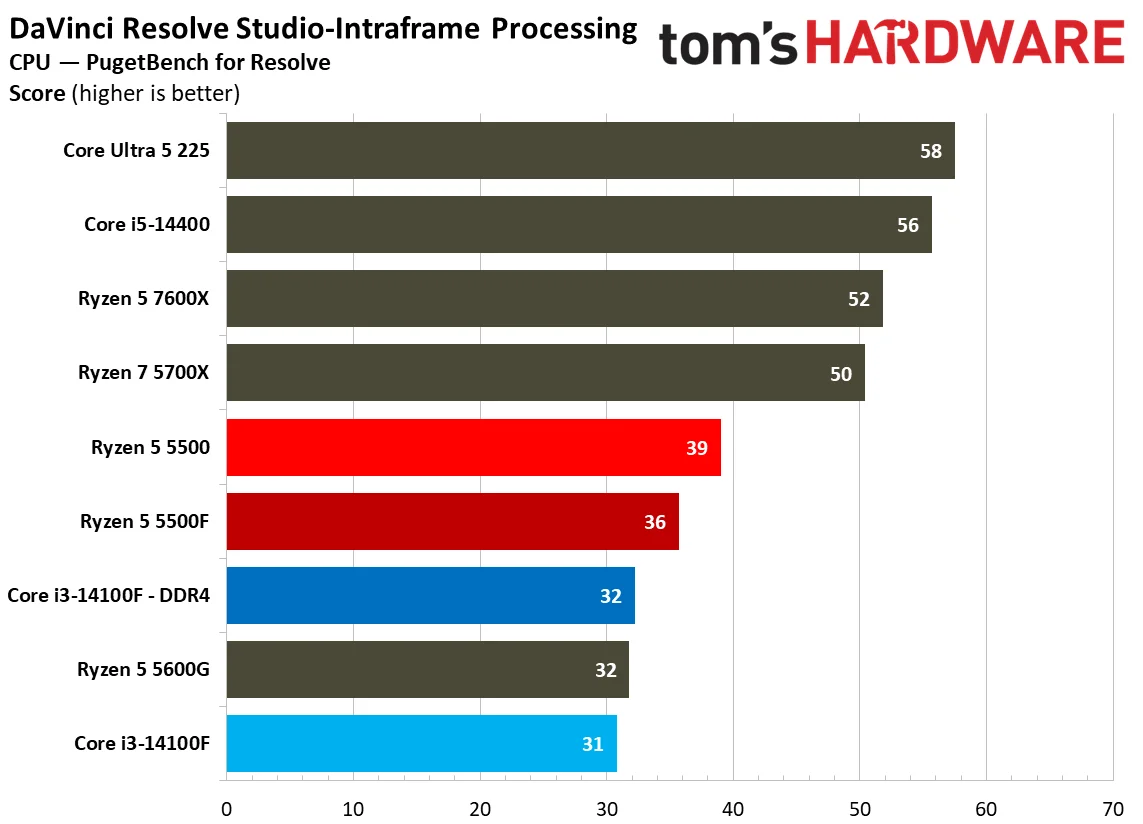
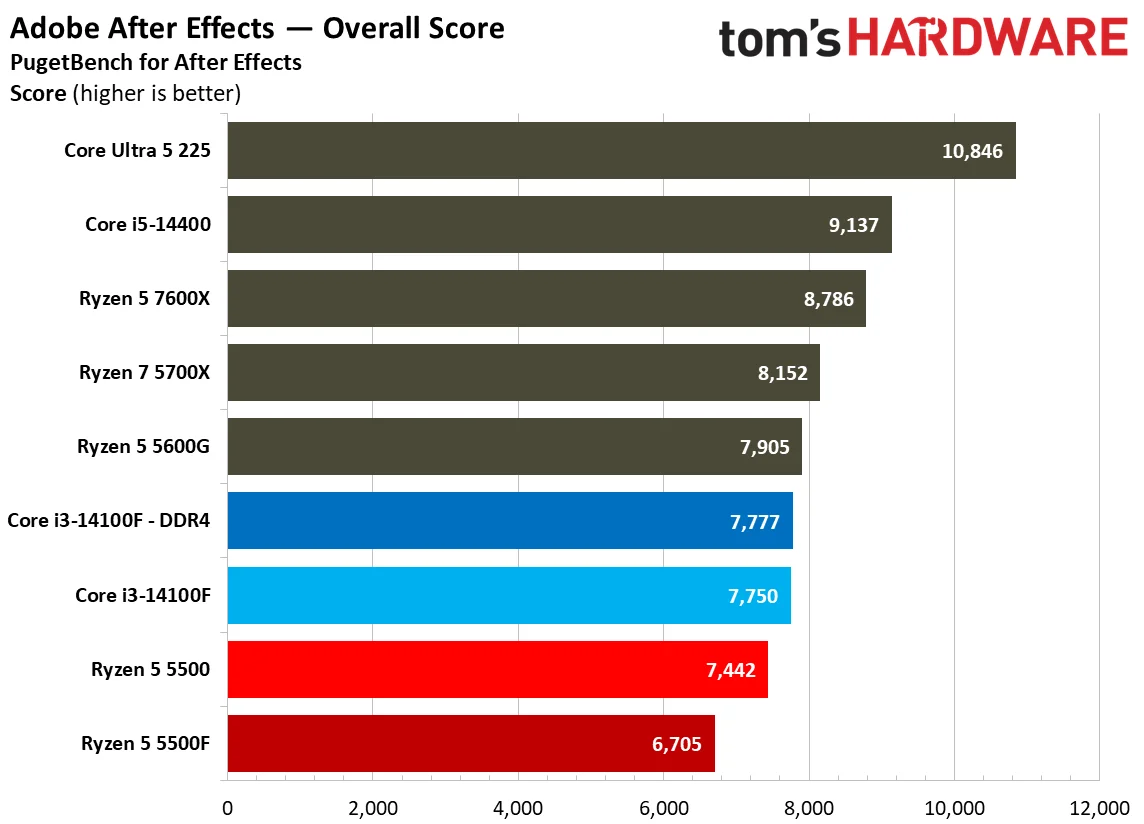
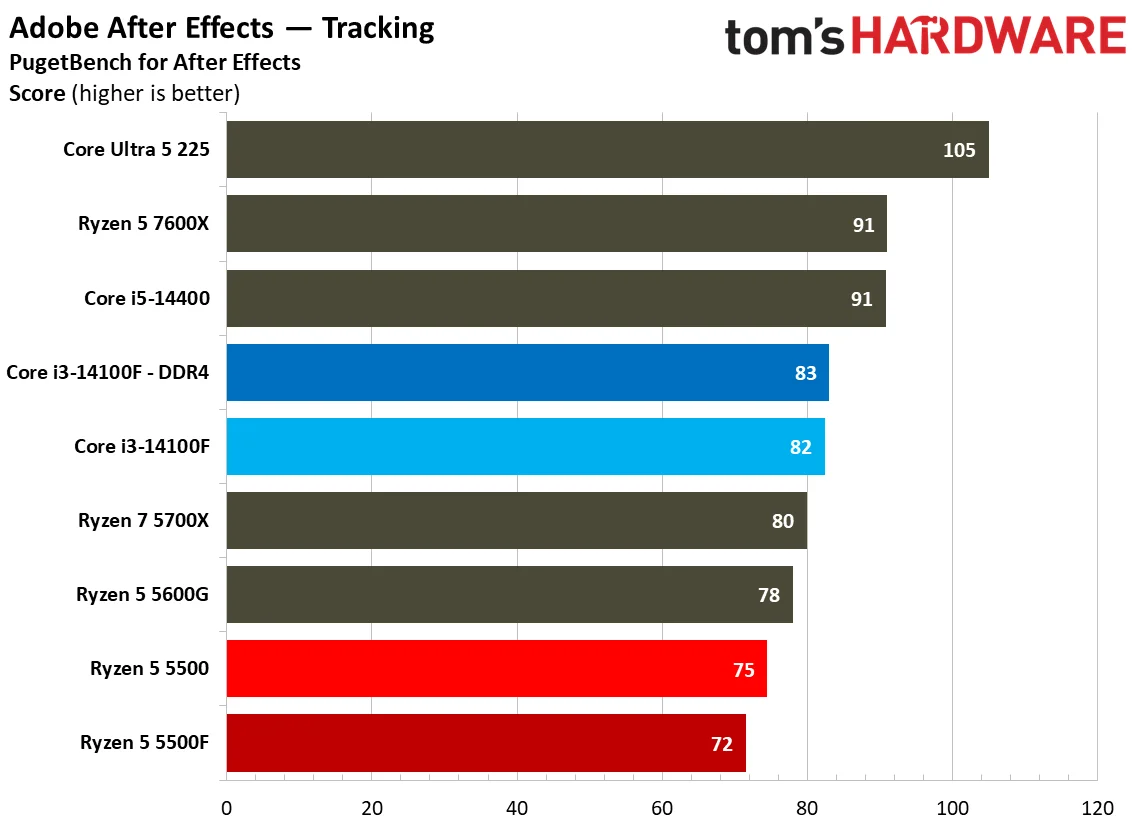
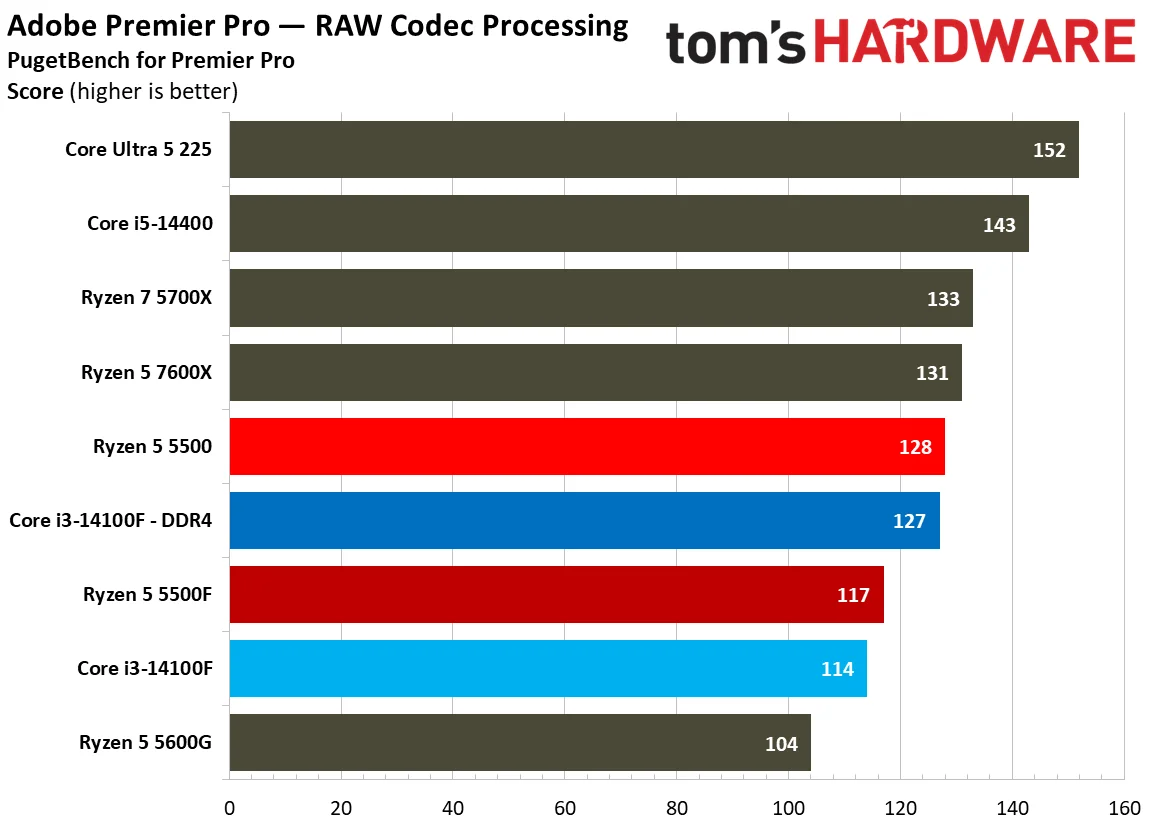
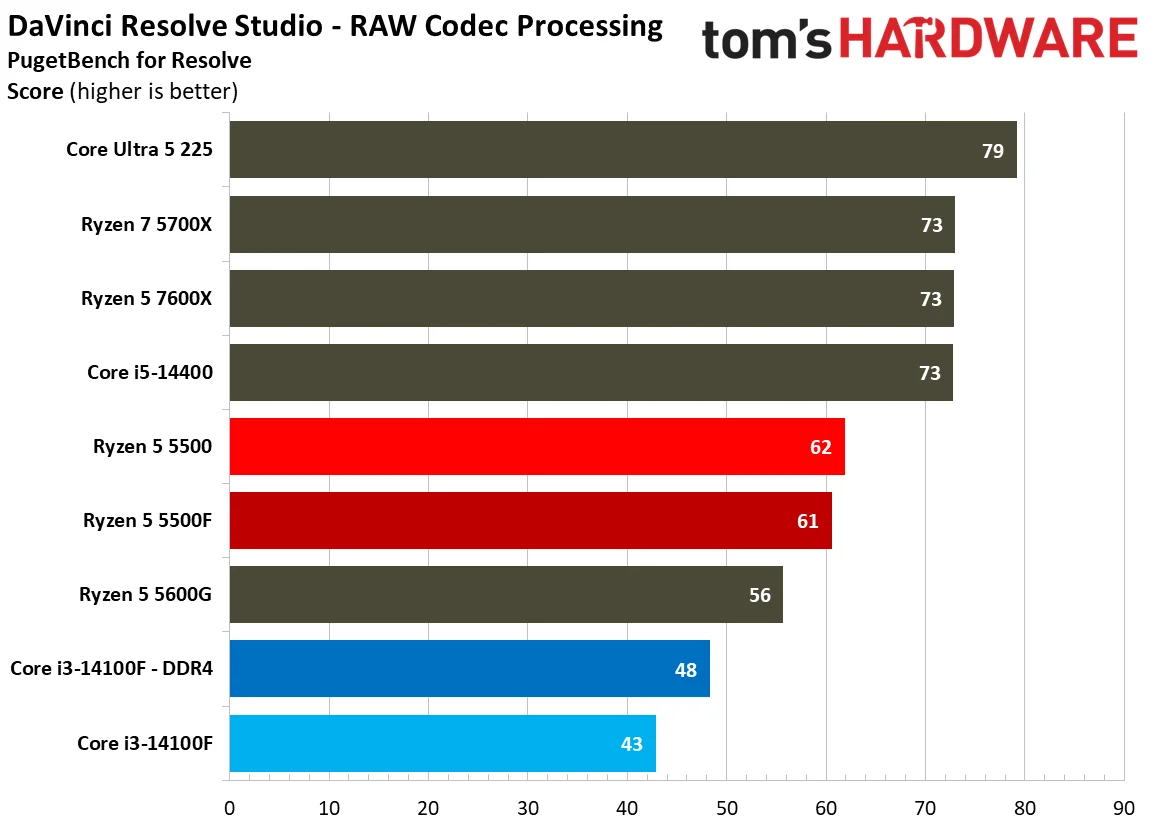
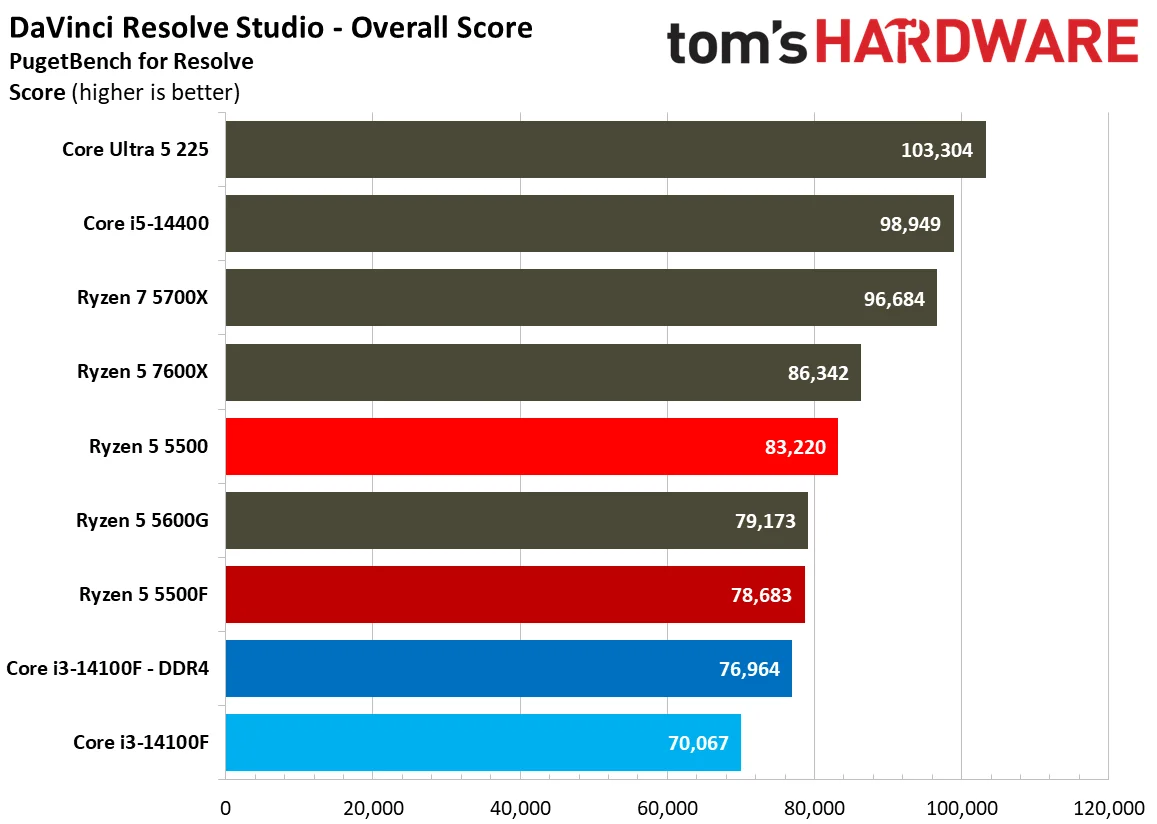
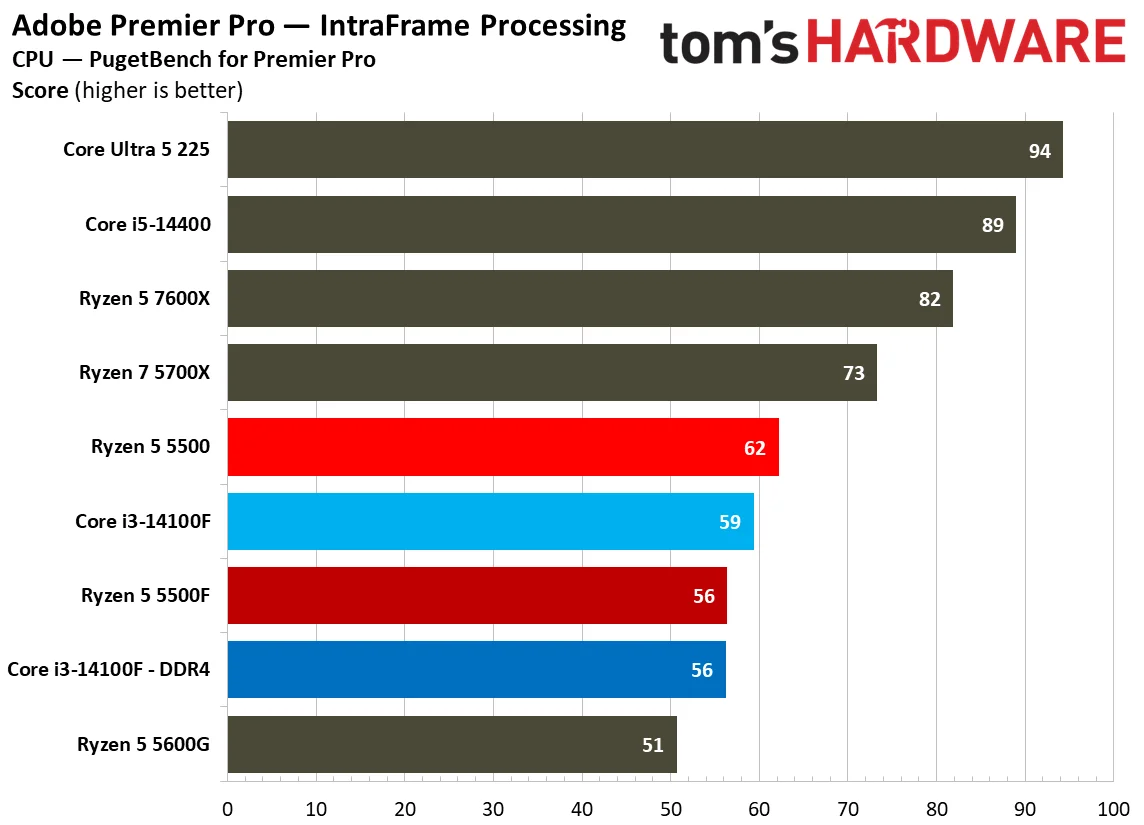
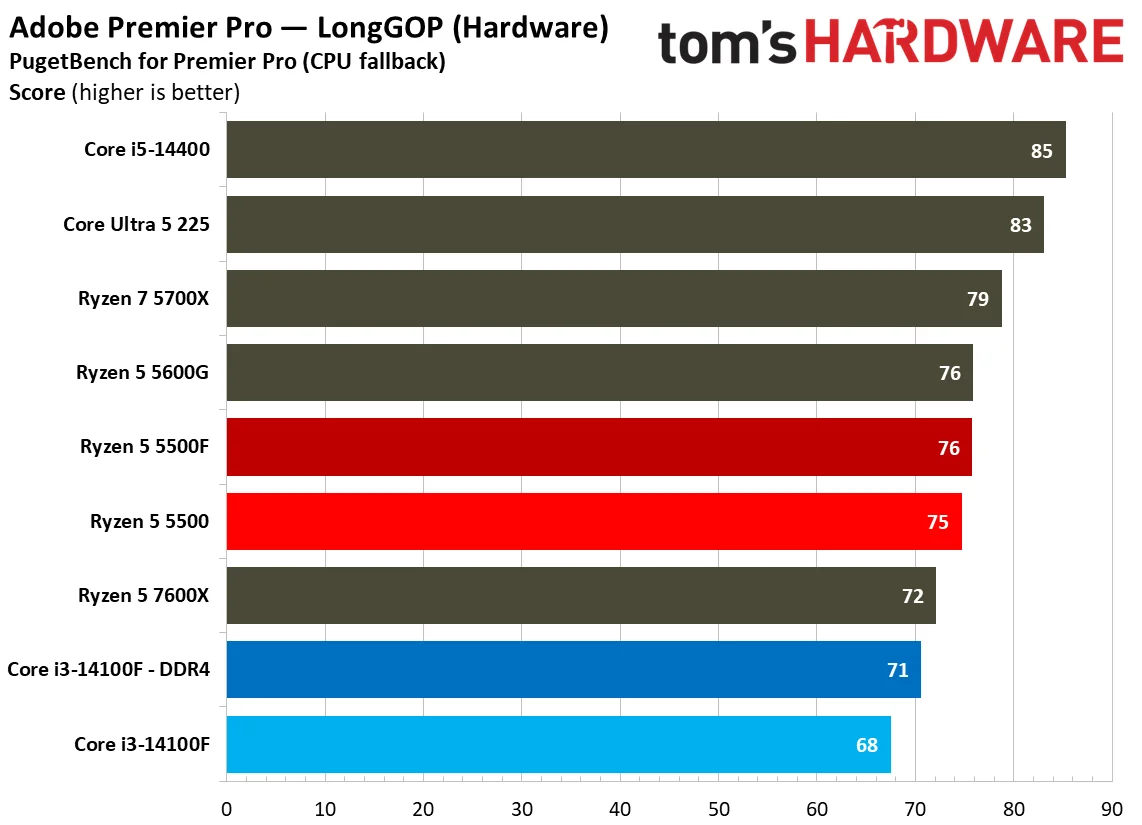
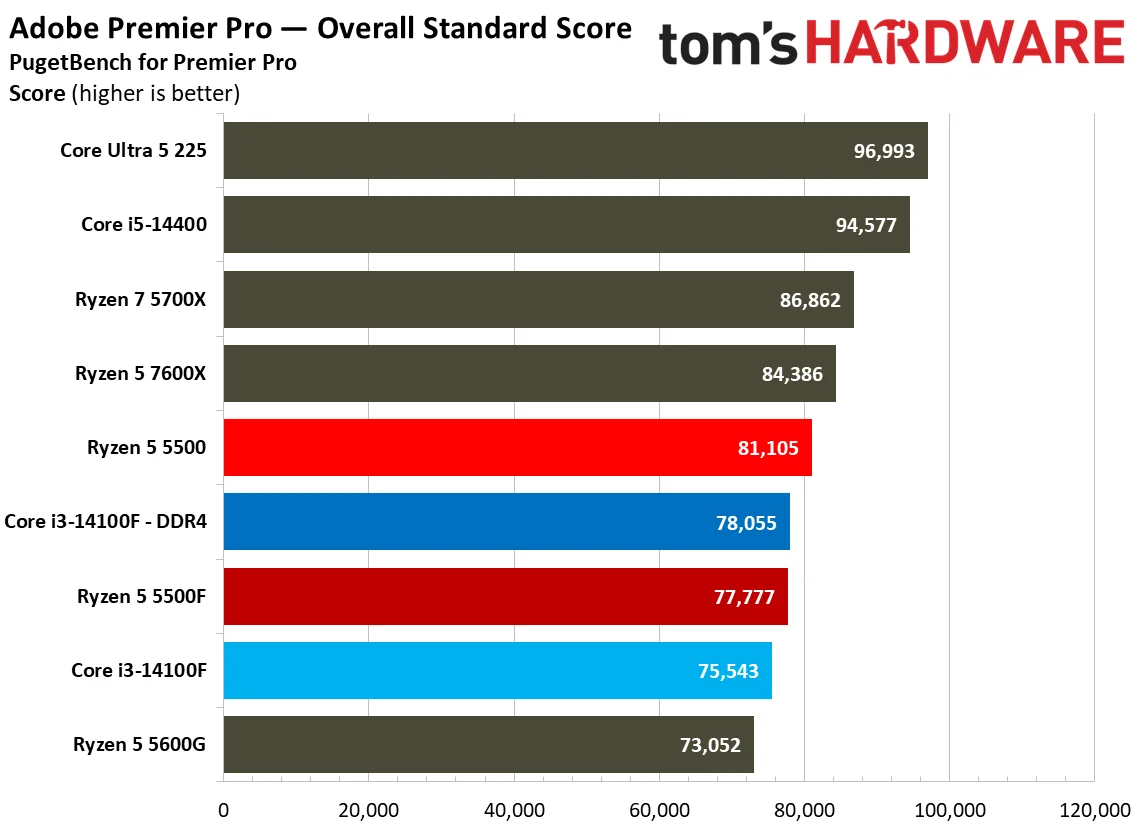
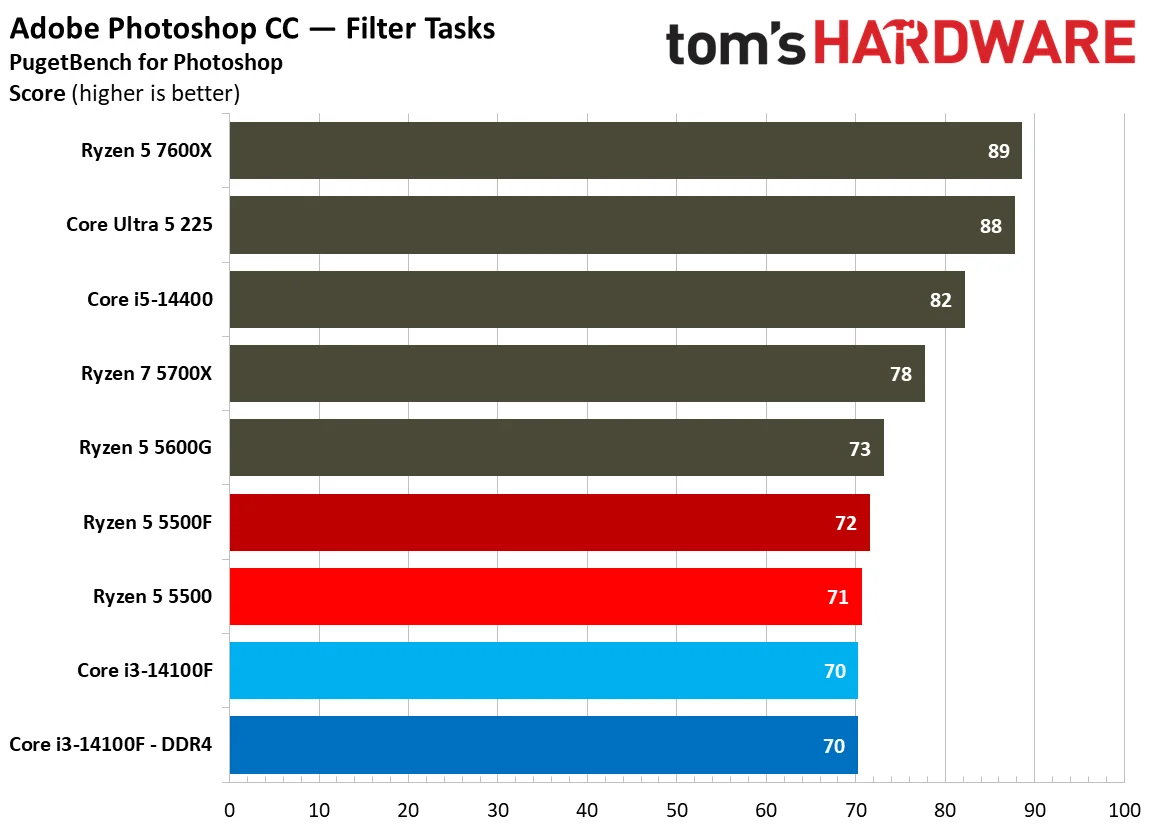
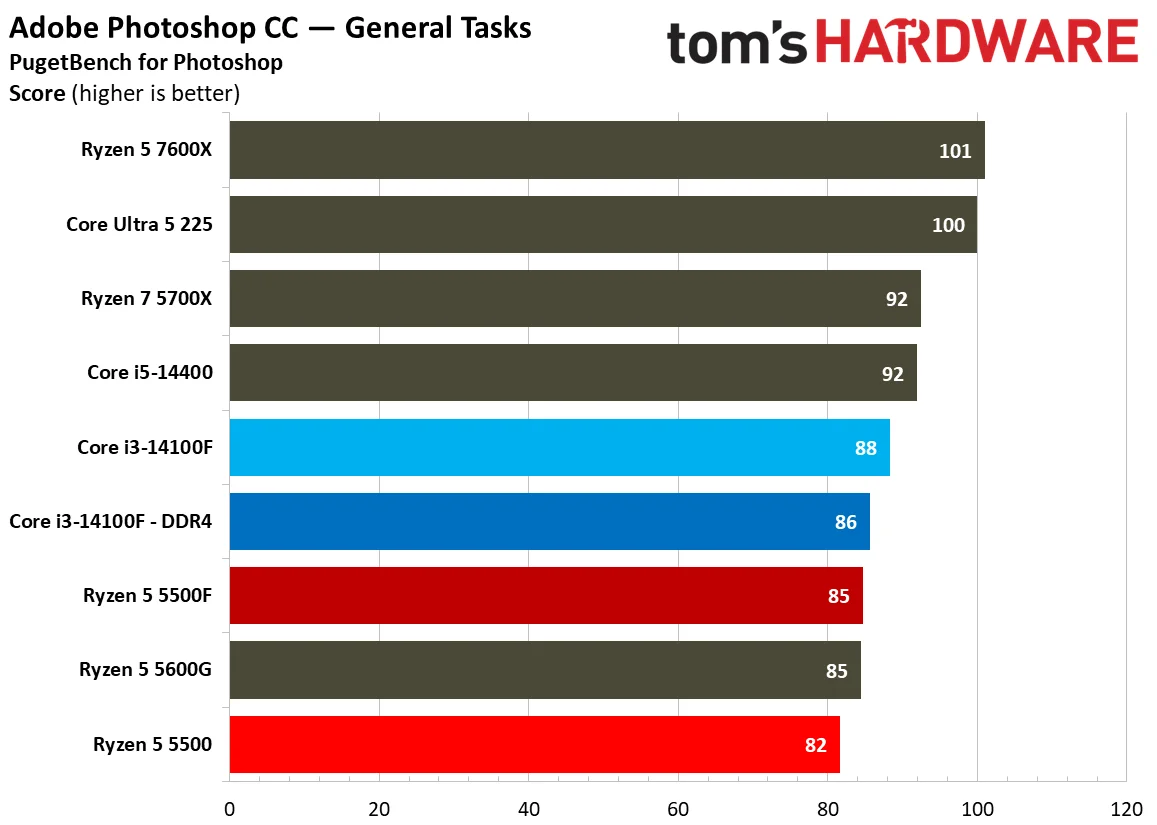
For anyone considering one of these roughly $100 CPUs for creative work, the benchmark pattern is a warning. The Ryzen 5 5500, Ryzen 5 5500F, and Core i3-14100F all hit limits in modern creator software—especially demanding timelines in Resolve and Premiere, and effects work in After Effects. Photoshop also levels the three processors, though the cause may differ by chip: even the DDR5 equipped Core i3-14100F runs into the same apparent bottleneck as its DDR4 counterpart.