The original iPod’s defining move was to make a personal music library portable and easy to manage. Unveiled by Apple CEO Steve Jobs on October 23, 2001, it promised space for 1,000 songs, quick FireWire transfers, and automatic syncing with iTunes for $399. Those features formed a single pitch: a large collection could live in your pocket, and adding music wouldn’t require treating the player like a separate computer. The price was high enough to make the iPod a considered purchase, so Apple had to explain why convenience and capacity justified it.
Apple entered portable digital music while rebuilding its business around the Mac OS X era. The iBook and iMac were established products, and Jobs saw the Mac as a hub for digital cameras, camcorders, DVD players, and music. His argument for music was practical as well as broad: people already owned collections, and a computer could organize those files before they went anywhere. Yet the market for portable digital players hadn’t settled on a product that made carrying a substantial library feel simple. Apple was betting that a better relationship between computer, software, and player could matter as much as the hardware itself.
A hard drive made the library portable
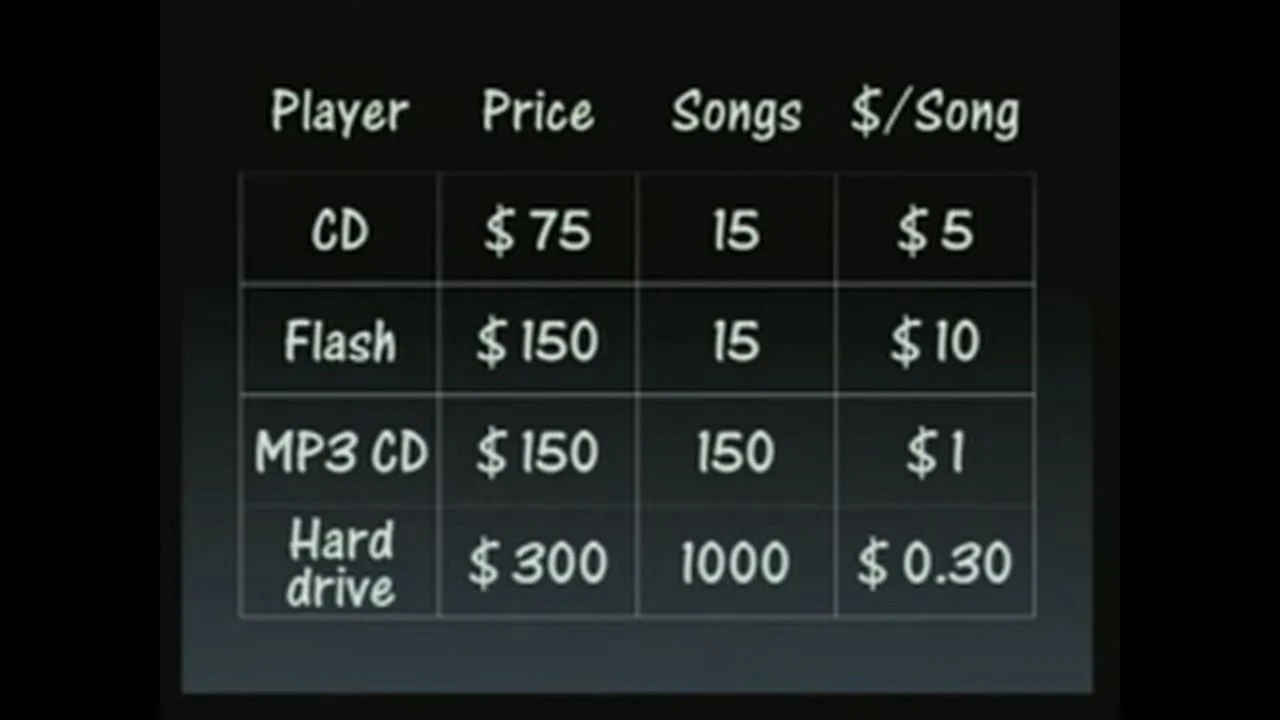
Consumers could already choose among CD players, MP3 CD players, flash-based players, and hard drive jukeboxes. Each format came with a trade-off between the size of a collection, the number of tracks available at once, and the ease of carrying the device. Jobs considered the hard drive the best foundation for Apple’s player. The iPod’s 5GB disk could store about 1,000 typical-length MP3 tracks encoded at 160Kbps, alongside support for WAV and AIFF files. Apple described its sound as CD quality. That figure made the product’s promise easy to grasp: instead of choosing a few albums for a trip, a listener could bring a much larger share of a personal collection.
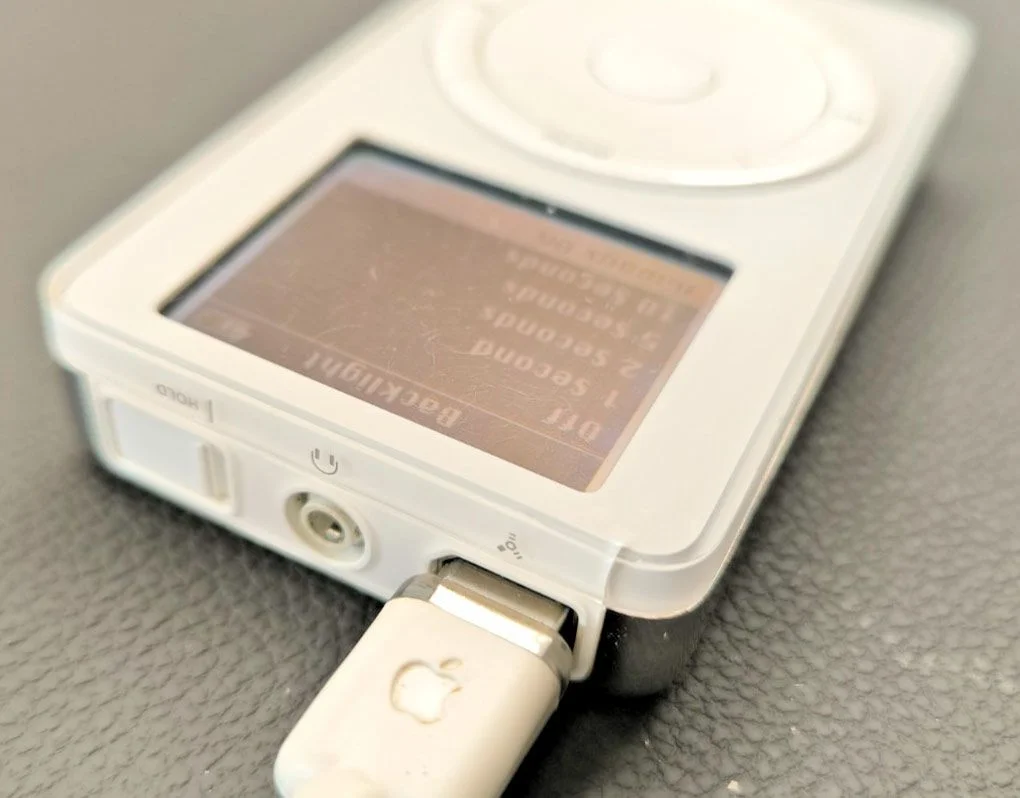
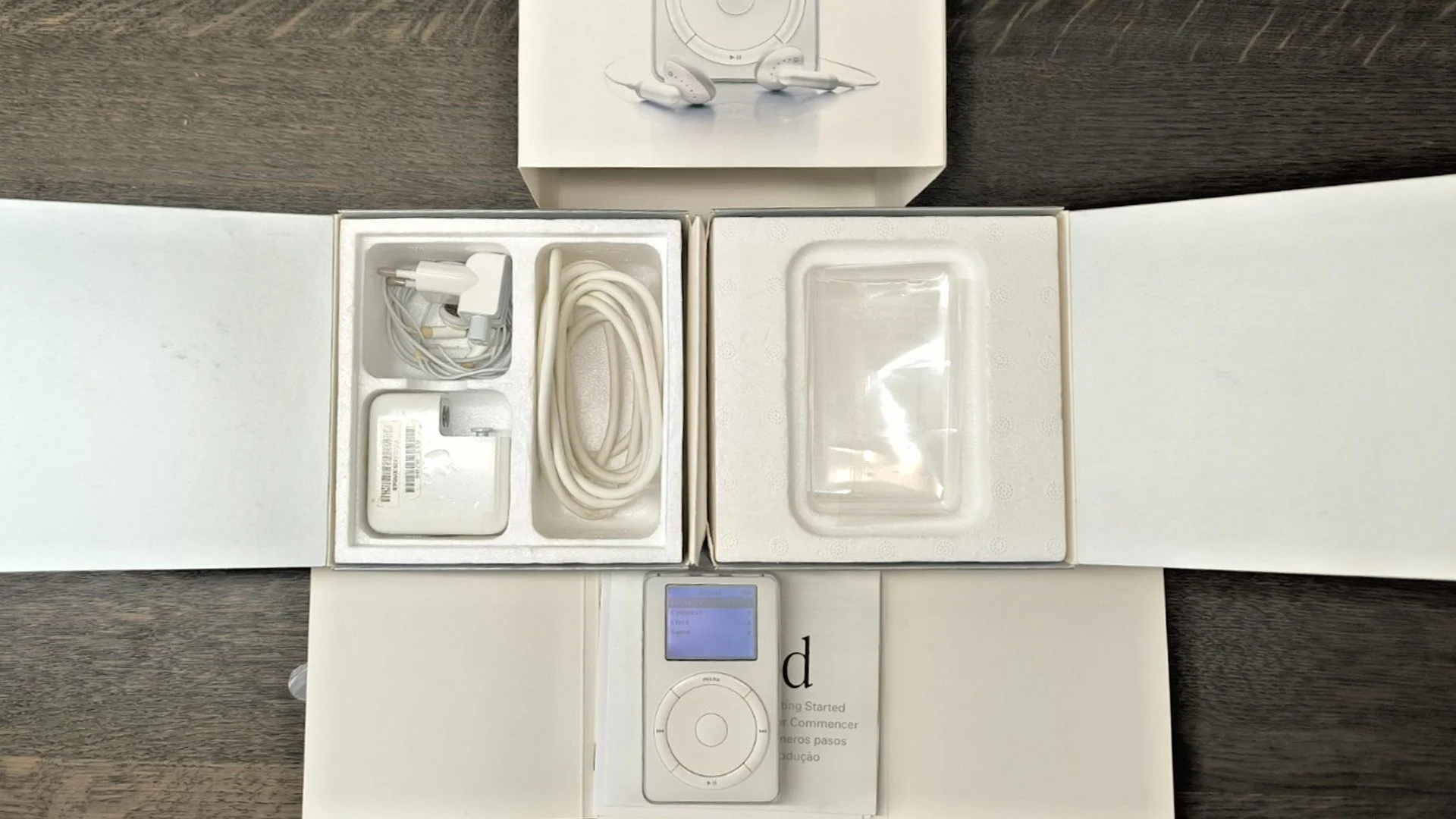
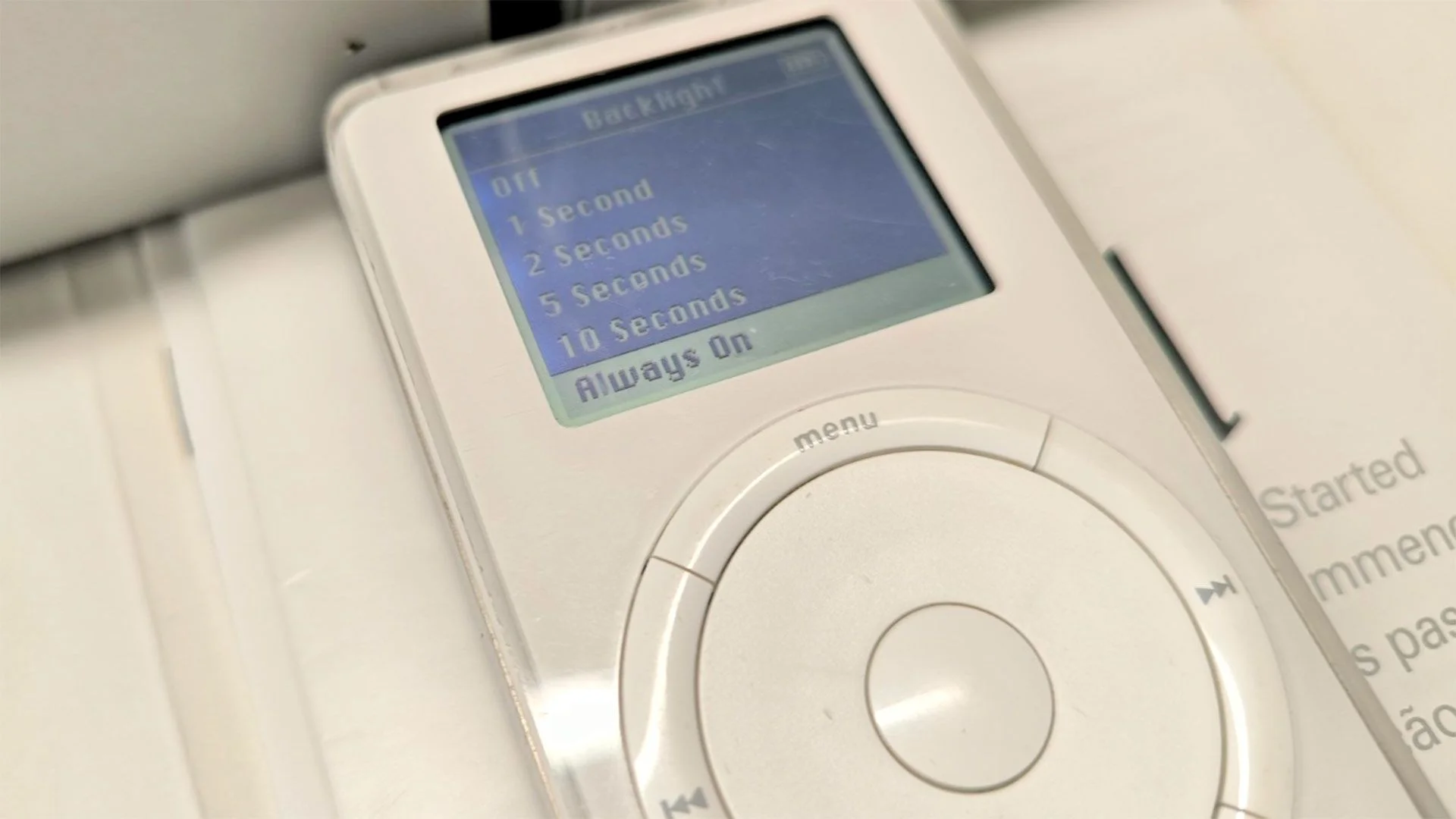
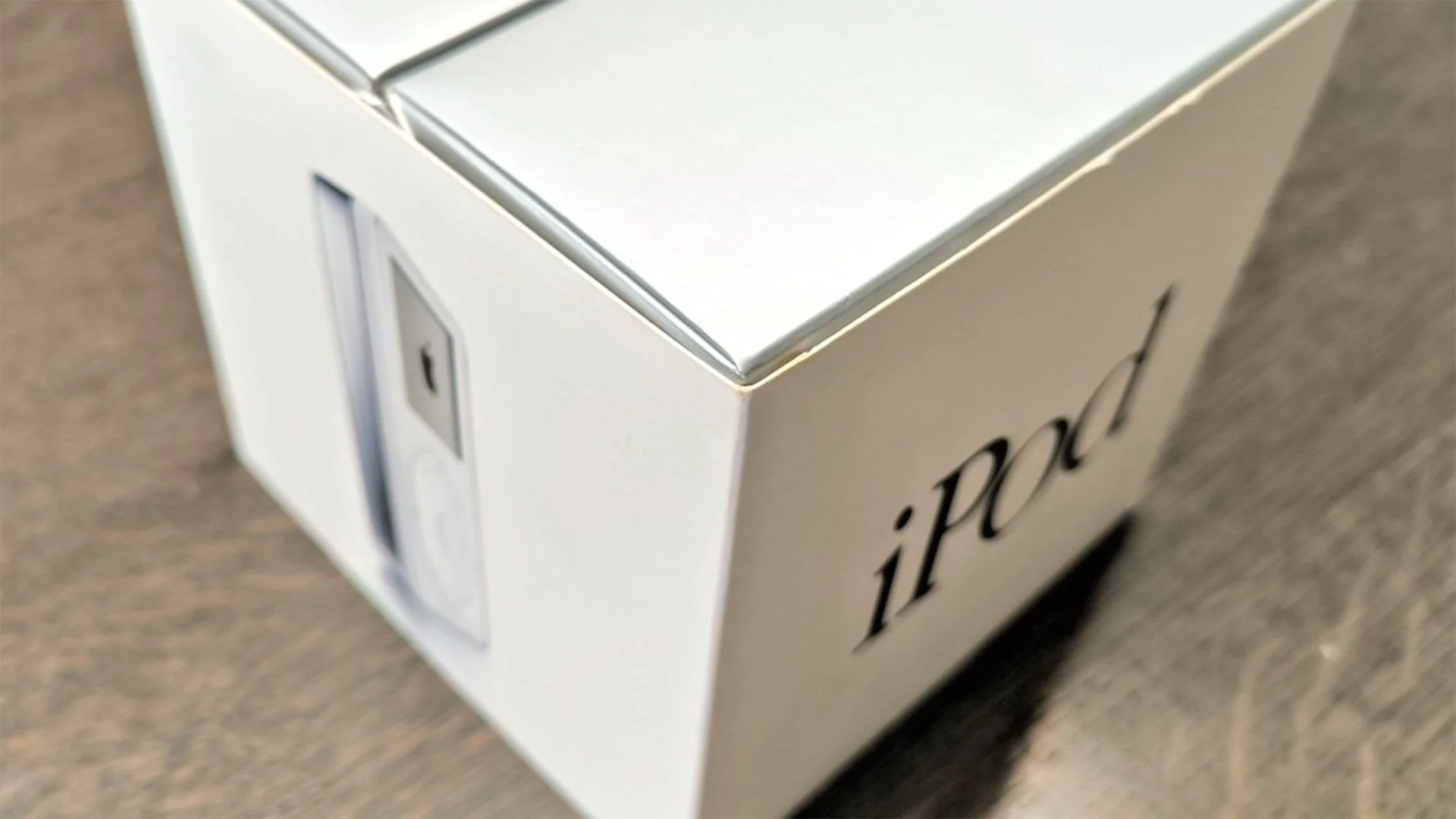
The capacity came from a tiny 1.8-inch Toshiba hard drive, just 0.2 inches thick. Apple fit it into a device measuring 2.4 by 4 by 0.78 inches and weighing 6.5 ounces—roughly the size of a deck of cards and, Jobs said, lighter than most cell phones. The dimensions mattered because a hard drive could easily have made the product feel like a pocket computer rather than a music player. Apple’s engineering challenge was to make that storage feel unobtrusive in daily use. Small enough to carry, large enough to change how much music came along.
Its FireWire 400 connection gave the iPod a practical edge over USB players of the period. Apple said transferring a CD’s worth of music took five to 10 seconds, compared with about five minutes over USB. Loading the full 1,000-song capacity was estimated at 10 minutes instead of five hours. These comparisons spoke to a common friction in digital music: a player with room for hundreds of tracks was less appealing if filling it took most of an afternoon. FireWire also connected the iPod to the Mac-centered workflow Apple was promoting. The same cable handled charging, and the device could also serve as a FireWire hard drive. One connection, several jobs.
Apple rated the rechargeable lithium-polymer battery for up to 10 hours of continuous playback. It said an empty battery could reach 80 percent charge in an hour. Those claims helped answer a basic question about a portable library: would the player last through a day of listening, and could it recover quickly when plugged in? A 20-minute skip-protection feature helped keep music playing while the device was in motion. The details didn’t eliminate the compromises inherent in a small hard drive and rechargeable battery, but they made the iPod’s everyday use part of the launch pitch rather than an afterthought.
Controls and software completed the pitch
Apple’s design focused on using the player with one hand. Its scroll wheel accelerated through long lists, while a piezoelectric clicker provided tactile feedback. Listeners could browse by playlist, artist, or song. Those controls addressed the interface problem created by the storage itself: a large library is only useful if you can find a track without turning navigation into work. The wheel offered a physical way to move through lists, and the clicker gave the user confirmation without needing a row of separate buttons. At the launch, Jobs demonstrated playback with Sarah McLachlan’s “Building a Mystery.”
The other key element was Auto-Sync. iTunes 2 arrived alongside the iPod, adding support for the player as well as features such as MP3 CD burning. Connecting the device kept its contents aligned with the music library organized on a Mac, turning the computer into the place to manage a collection and the iPod into its portable counterpart. That division of labor made the product easier to explain: maintain the library at home, then take a synchronized copy with you. It also tied the player’s convenience to Apple’s software. If you’re working in this space, that’s the strategic point to watch: the hardware’s appeal depended on a routine the computer and player shared.
What the iPod’s first design set in motion
The first iPhone arrived in early 2007, and the two products remained in Apple’s lineup together for more than a decade. The iPod’s run ended gradually: the final model, the seventh-generation iPod Touch, launched in May 2019, and Apple discontinued the line in May 2022. The long overlap shows how a dedicated music player could remain part of a product range even as the role of portable devices changed. The iPod’s original formula—capacity, fast transfers, simple controls, and a library that updated from a computer—helped define what people expected from a dedicated music player.
This is more significant than it looks. The original iPod didn’t just offer storage; it made the management of that storage part of the product’s appeal. Similar systems typically succeed when the pieces work together well enough that users don’t have to think about every transfer or file. (And this is the part most people overlook.) A full library can be a burden if browsing and syncing are awkward. Apple’s pitch joined those tasks into one routine, though it also made the Mac and iTunes central to the experience. That trade-off was clear from the start. Convenient, but tied to a particular ecosystem.
And yet, the first iPod’s details remain a useful measure of the product’s ambition. FireWire speed, a pocketable hard drive, one-handed navigation, and Auto-Sync each addressed a different part of the same problem: how to make digital music feel ready whenever the listener wanted it. The numbers here are underwhelming only if they’re read as a spec sheet; their meaning came from how Apple connected them to daily use. A device that carried a thousand songs, charged through its transfer cable, and kept its library in step with a Mac. For its time, that was a coherent product idea.