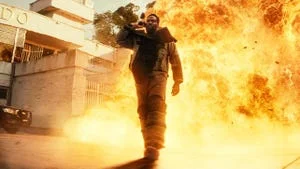
When tackling the adaptation of a beloved video game, especially one with the cult status of Mortal Kombat, filmmakers face the arduous task of honoring its legacy while introducing fresh storytelling elements. The recently released Mortal Kombat II seeks to not just meet this challenge, but to emphatically redefine the expectations of a martial arts film, pushing far beyond the campy foundations laid by its predecessors.
Reimagining Mortal Kombat for a New Generation
Under the keen direction of Simon McQuoid and the sharp penmanship of screenwriter Jeremy Slater, Mortal Kombat II emerges as a direct counterpoint to both the original film and the widely mocked 1995 iteration. It’s clear early on that they aim to express a sophisticated awareness of action cinema's missteps while crafting a visually and narratively compelling experience. This sequel doesn't shy away from the absurdities that define its source material; instead, it embraces them, molding them into a balanced narrative that centralizes character depth within its high-octane sequences.
Complex Characters and Grounded Performances
The writing team imbues hearts and antagonisms with intricate layers. The film introduces Johnny Cage, portrayed by Karl Urban, not as the brash and arrogant movie star of the games, but as a washed-up figure clinging to the shreds of his former glory. Urban’s performance captures a man riddled with self-doubt and existential malaise, embodying the tragic comedy embedded in Cage’s character arc. The transformation of Cage from a weary cynic into a reluctant hero creates an emotional anchor amidst the frenetic action.
Meanwhile, the narrative delves into Kitana's backstory, illustrating her fierce pursuit of revenge after witnessing her father's brutal murder at the hands of the tyrant Shao Kahn. This weighty narrative juxtaposes Kitana’s intense storyline with Cage's comedic misadventures, showcasing the film's ability to intertwine humor with gravitas. It’s a smart narrative choice that offers viewers a rich viewing experience while aligning with the franchise’s longstanding themes.
Action as Art: Choreography at the Forefront
What sets Mortal Kombat II apart in the crowded landscape of action cinema, however, is its commitment to elevating fight choreography to an art form. McQuoid and his team placed a pronounced emphasis on visual storytelling through action, ensuring that the fight sequences are not mere filler but pivotal moments that reveal character dynamics and motivations. Choreographer fight scenes are not just more complex; they make use of surroundings creatively, transforming environments into vital components of the combat experience.
In interviews, McQuoid revealed that the stunt team meticulously modeled these sequences, aiming for a level of intensity previously unseen in the franchise. The result is a series of battles that are not only spectacular but also essential to the advancement of the plot, serving as the spine of a narrative that doesn’t rely too heavily on dialogue. It’s a daring approach that could alienate some viewers but could also engage martial arts aficionados who appreciate clarity and depth in physical storytelling.
The Camp That Works
That said, Mortal Kombat II doesn’t shy away from its camp roots; it revels in them. The film acknowledges its predecessors while avoiding their pitfalls. Even with its more serious tones and character-focused storylines, it parades its absurdity joyfully. Clever quips, nods to classic action films like Big Trouble in Little China, and even laughable situations draw discerning fans back to the franchise's wildly imaginative universe. The camp serves not as a detriment but as a testament to the series' capability to entertain, even in the most outrageous of scenarios.
Not Without Flaws
Even the strongest films have their shortcomings, and Mortal Kombat II is no exception. For viewers unacquainted with the series or those expecting overt exposition, it can often feel like a whirlwind of references that may seem ineffectual without the context of the prior film. The reliance on significant character action rather than dialogue may divide opinions, leading some to view it as a stunning display of martial arts artistry while others may see it as lacking narrative substance.
Ultimately, for those who appreciate the blend of character-driven storytelling and choreographed fury, Mortal Kombat II delivers a thrilling experience. It marks a notable evolution in video game adaptations, offering a glimpse into what can occur when filmmakers recognize the camp while aspiring toward greater narratives.
Looking Ahead
If you’re entrenched in the realm of martial arts films or simply enjoy high-energy action that does justice to character development, keeping an eye on how Mortal Kombat II shapes discussions around video game adaptations could be worthwhile. This sequel could very well set a benchmark for future films to balance the ludicrous with depth, ensuring that when audiences tune in, it’s not just for the punches thrown, but for the stories being told.